
I receive compensation for content and many links on this blog. Be aware that websites may earn compensation when a customer clicks on a link, when an application is approved, or when an account is opened. Citibank is an advertising partner of this site, as is American Express, Chase, Capital One, and others. Any opinions expressed in this post are my own, and have not been reviewed, approved, or endorsed by my advertising partners. I do not write about all credit cards that are available -- instead focusing on miles, points, and cash back (and currencies that can be converted into the same). Terms apply to the offers and benefits listed on this page.
When I talk to people about earning miles, it’s inescapable that the majority of miles are earned from rewards credit cards. Most people want to know simply, “what is the best credit card.” If pressed I do have an answer to that question, but the best answer is that it’s usually two different credit cards that you pair together, taking the best of each.
The first thing to understand about rewards cards is that, in addition to their basic features as a payments tool, bundled financing, and consumer protections, there are really three different ways a card adds value. You need to understand this to make sure you’re using yours in the right way.
- Initial bonus. A card might offer 100,000 points as an acquisition bonus. That’s a great reason to get a card, but it isn’t a good reason to keep the card or to spend money on the card (once you’ve earned the bonus).
- Benefits. You might get free checked bags or priority boarding, lounge access, for free Disney+. Those can be great reasons to have the card, and keep the card, but aren’t reasons to spend money on the card (outside of the spend on those activities, potentially).
- Rebate on spend. The most rewarding card for the kind of spending you’re doing – that means earning the most points, and the most valuable points, that you can redeem for the rewards you value most.

When people ask about the best card, they’re usually talking about the one that gives them the best return on their spending. Although if they value a card’s benefits, they need to be careful to keep that issue separate – get that card, sure, enjoy the benefits, but don’t just default to using it for spending, too.
I think that the American Express Platinum Card® (see rates and fees) is great to have, it is incredibly valuable for its benefits, but my goodness do not actually spend money on that card outside of airline tickets.
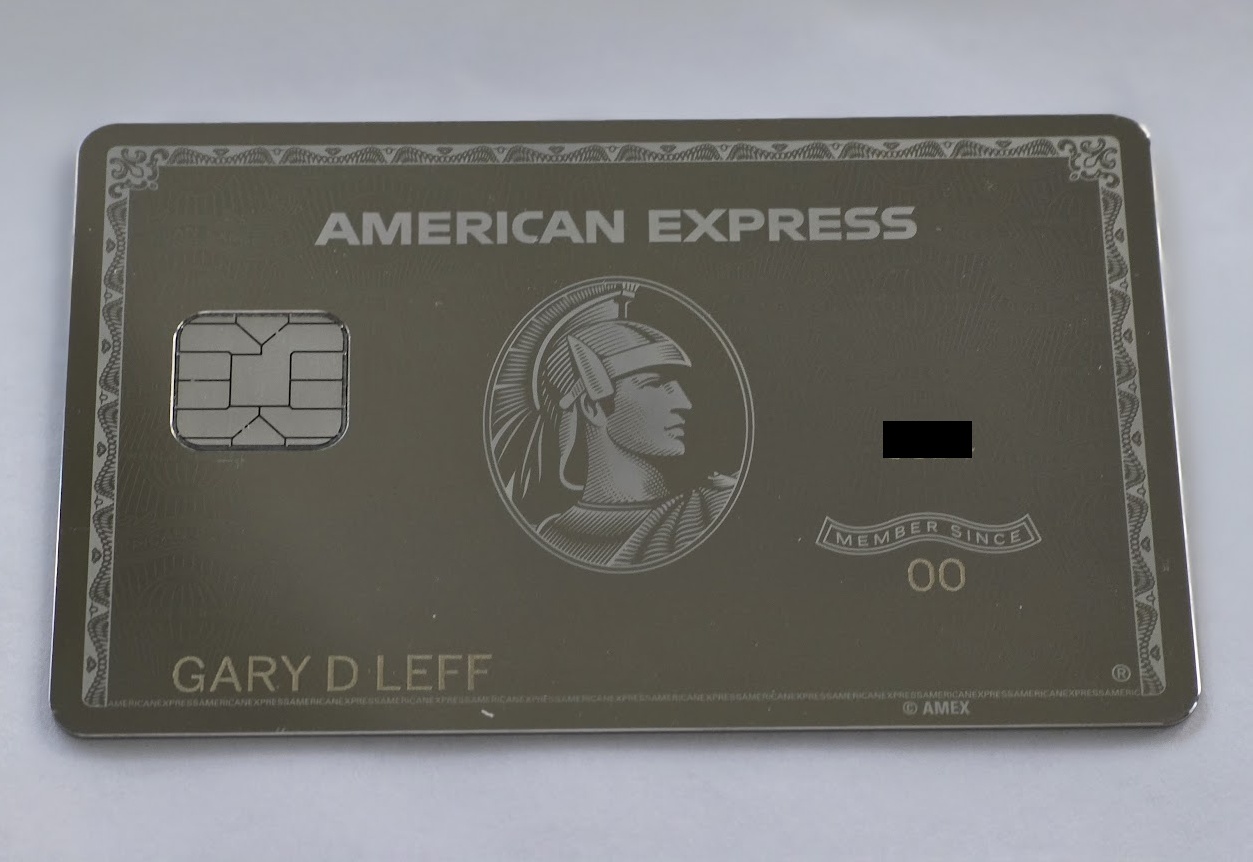
For spending the reason you want two cards is that you generally want (1) that earns the most points in the categories you spend the most, and (2) a card that earns more than one point per dollar on everything else. Don’t fall into the trap of getting a ‘grocery card’ and then earning just one point per dollar on everything else. You can frequently get two cards where the second one has no annual fee, even.
Here are some of the very best pairings:
- Ink Business Preferred® Credit Card (See rates and fees) has an offer to earn 100k bonus points after you spend $8,000 on purchases in the first 3 months from account opening.
What’s great is earning 3x (on the first $150,000 spent in combined purchases) on travel, shipping purchases, internet, cable and phone services, advertising purchases made with social media sites and search engines each account anniversary year.
It has the same points transfer partners as Sapphire Reserve. And if you have some of the no annaul fee Chase cards, you can move the points from those cards over to Ink Business Preferred and then transfer them to airlines and hotel programs.
And there are a number of Chase cards with no annual fee that earn points quickly, but on their own those points can’t be transferred to airlines or hotels. But if you earn points with one of those, you can transfer the points to your Ink Business Preferred® Credit Card and from there to miles and points in other programs.
For instance, the Ink Business Cash card earns 5x on the first $25,000 in combined purchases at office stores and on internet, cable and phone services each account anniversary year. It earns 2x on the first $25,000 spent in combined purchases at gas stations and restaurants each account anniversary year.
Freedom Flex earns 3X on dining and at drugstores and 5x in rotating categories, on up to $1,500 spend each quarter. The Freedom Unlimited card earns 1.5x on all spend (but 3x on dining and at drugstores). I have multiple Freedom and Ink Business cards, personally.

- Citi Strata Premier® Card (See rates and fees.) has a $95 annual fee. It earns 3x on groceries, dining, gas stations and on EV charging as well as flights and hotels. That’s really strong.
It’s offering 60,000 bonus ThankYou® Points after spending $4,000 in the first 3 months of account opening. And the points even transfer to American Airlines AAdvantage miles.
- oneworld: American Airlines AAdvantage, Cathay Pacific Asia Miles, Malaysia Airlines Enrich, Qantas Frequent Flyer, Qatar Airways Privilege Club
- Star Alliance: Avianca LifeMiles, EVA Air Infinity MileageLands, Singapore Airlines KrisFlyer, Thai Airways Royal Orchid Plus, Turkish Airlines Miles & Smiles
- SkyTeam: Aeromexico Club Premier, Air France KLM Flying Blue, Virgin Atlantic Flying Club
- Non-alliance: Emirates Skywards, Etihad Guest, JetBlue TrueBlue
- Hotels: Leading Hotels of the World Leaders Club, Accor ALL – Accor Live Limitless, Choice Hotels Choice Privileges, Preferred Hotels I Prefer, Wyndham Hotels Wyndham Rewards

There’s also a $100 Annual Hotel Benefit. Once per calendar year, you receive $100 off a single hotel stay of $500 or more (excluding taxes and fees) when booked through CitiTravel.com, applied instantly at time of booking.
You can supplement that strong earner with a Citi Double Cash card which earns 2x on everything and has no annual fee.
If you were going to get just one card for your spending, set it and forget it, and didn’t want to juggle products then I think the single best heavy spending card has to be the Bilt Palladium Card (See rates and fees).
It’s a $495 annual fee card. It earns the most points on most spending, and it earns the most valuable points. The only thing to flag is that there are some things, like tax payments, that it doesn’t earn points for. So if you’re relying on big quarterly tax deposits for your points-earning this isn’t the card for you.
You can earn 50,000 Bilt Points after spending $4,000 on everyday purchases in the first 90 days + $300 of Bilt Cash.
The card earns 2X points on everyday spend. Plus, you can use Bilt Cash to earn 3x on up to $25,000 in purchases, you get a $200 twice annual hotel credit (with a 2-night minimum stay), and earning the card’s 50,000 point bonus after $4,000 in non-housing spend in the first 3 months also gives you Gold status for a year and that lets you earn Bilt points through Rakutent at 1:1.
You can earn 3.3 points per dollar when spending 75% of the amount of your rent or mortgage and then using Bilt Cash to earn points when paying through through Bilt, and then earn 3 points per dollar redeeming Bilt Cash for points accelerator.
So the cap on earning 3 points or more is much higher than that. There’s actually a strategy to earn 4 points per dollar on all of your spending by foregoing Bilt Cash entirely.
You can spend points at 1.25 cents apiece directly through their travel portal, and they have the best transfer partners (and biggest transfer bonuses).
- Star Alliance: Air Canada Aeroplan, Turkish Miles & Smiles, United Airlines MileagePlus, Avianca LifeMiles, TAP Air Portugal Miles&Go
- oneworld: Cathay Pacific Asia Miles, Alaska Airlines Mileage Plan, Iberia Plus, British Airways Club, Japan Airlines Mileage Bank, Qatar Airways Privilege Club
- SkyTeam: Air France KLM Flying Blue, Virgin Atlantic Flying Club
- Non-alliance: Emirates Skywards, Southwest Airlines, Aer Lingus Aer Club
- Hotels: World Of Hyatt, IHG One Rewards, Marriott Bonvoy, Hilton Honors, Accor ALL – Accor Live Limitless, Wyndham Rewards

Still, I’m going to add 4x and 5x cards to my wallet. But the Bilt Palladium Card is also a great option as your ‘catch all card’ paired with the card that earns the biggest multiplier on your primary spend.

The other major 2x everywhere card to consider is the Venture suite.
While I love Capital One Venture X Rewards Credit Card (See rates and fees) for lounge access, and I think it’s easily worth the $395 annual fee considering it’s effectively rebated in value by the $300 annual credit for bookings through Capital One Travel and 10,000 bonus miles (equal to $100 towards travel) every year, starting on your first anniversary, if you don’t want to spend that much on an annual fee then Capital One Venture Rewards Credit Card (See rates and fees) still earns at least 2X miles on all purchases and they’re transferrable points. It has a $95 annual fee.
For rates and fees of the American Express Platinum Card®, click here.



And, ‘which two,’ depends… if you use Gary’s links, then all those cards can be ‘your two.’ Bah!
@Gary: When would you ever want to get the Capital One Venture Rewards Card? Its cost-benefit proposition is, in the mathematical sense, dominated by several other cards. Citi Strata Premier and Bilt Palladium being two cases in point. The card is now truly, obsolete.
Expect new benefits soon.
@L3 — If anything, maybe Gary meant Venture X (the one with lounge access)…