
Forty-three years ago, a brand new Boeing 767 climbed into cruise over Canada with 69 people on board and a fatal problem. At 41,000 feet, the airplane began to die. It had run out of fuel – because of a simple math error.
First came the warnings. One engine quit. Then the other. A state-of-the-art jetliner, one of the newest planes in Air Canada’s fleet, suddenly became a glider.
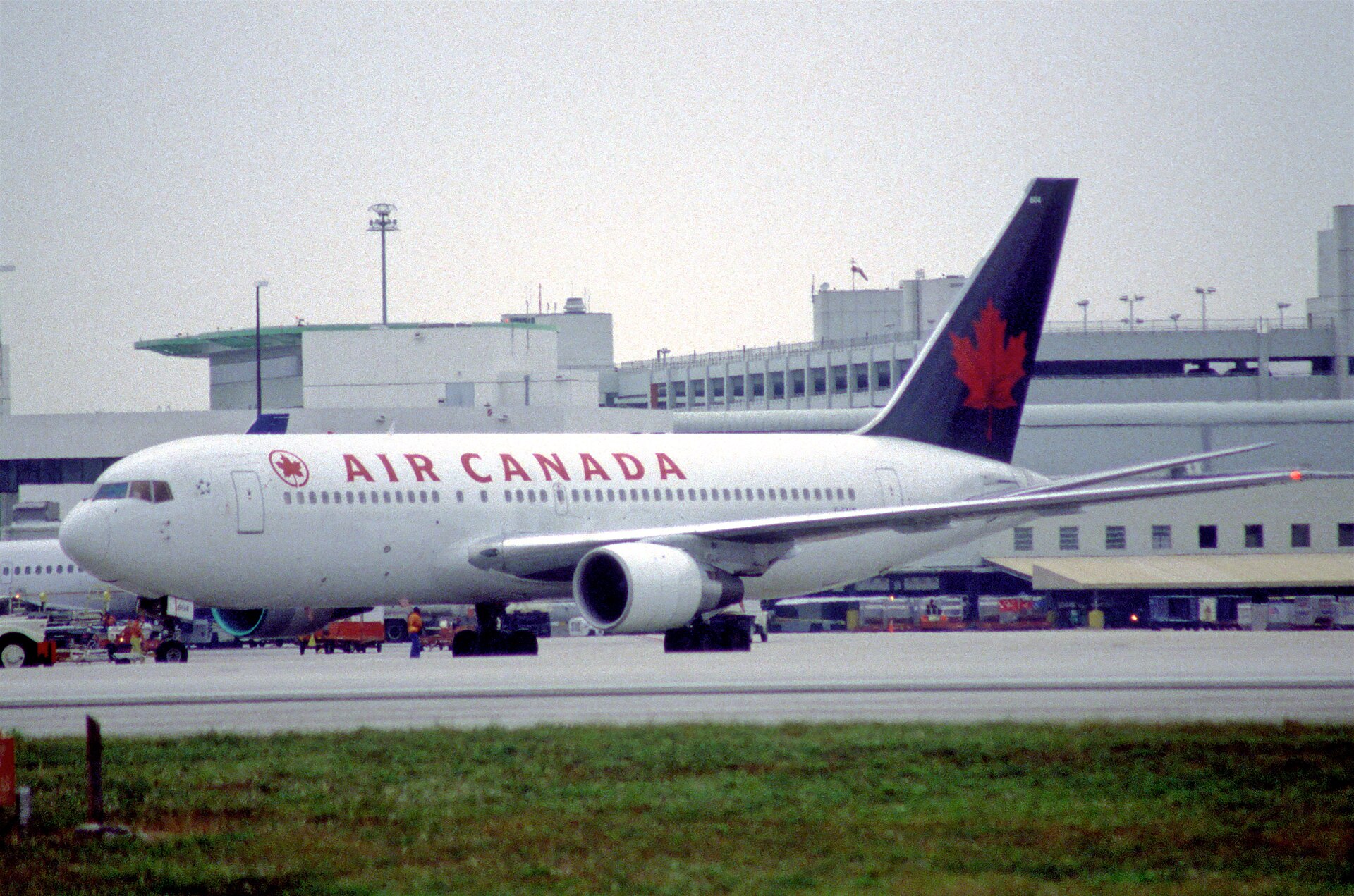
Credit: Aero Icarus at Wikimedia Commons
It ran out of fuel because of a conversion error. Canada was in the middle of shifting to the metric system. This 767 was the first aircraft in Air Canada’s fleet that used kilograms for fuel calculations. The people fueling and dispatching airplanes had spent their careers thinking in pounds.
Somewhere between old habits and new procedures, the numbers went bad. The fuel on board was measured and converted incorrectly. Everyone involved thought the airplane had what it needed. It did not. It departed with roughly half the fuel required.
- In Montreal, about 7,682 litres were measured on board. The flight plan called for 22,300 kilograms minimum.
- About 5,000 litres were added when a correct calculation would have required roughly 20,000 litres.
- The accident report says the aircraft left each airport with only half the fuel the crew thought it had.
The 767 was the only Air Canada type using kilograms for fuel and load calculations while the rest of the fleet still worked in pounds. And litres were converted with the 1.77 pounds-per-litre factor and then treated as kilograms.
The flight was Air Canada 143, operating from Montreal to Ottawa and onward to Edmonton on July 23, 1983. The aircraft was a Boeing 767-200, nearly factory fresh.
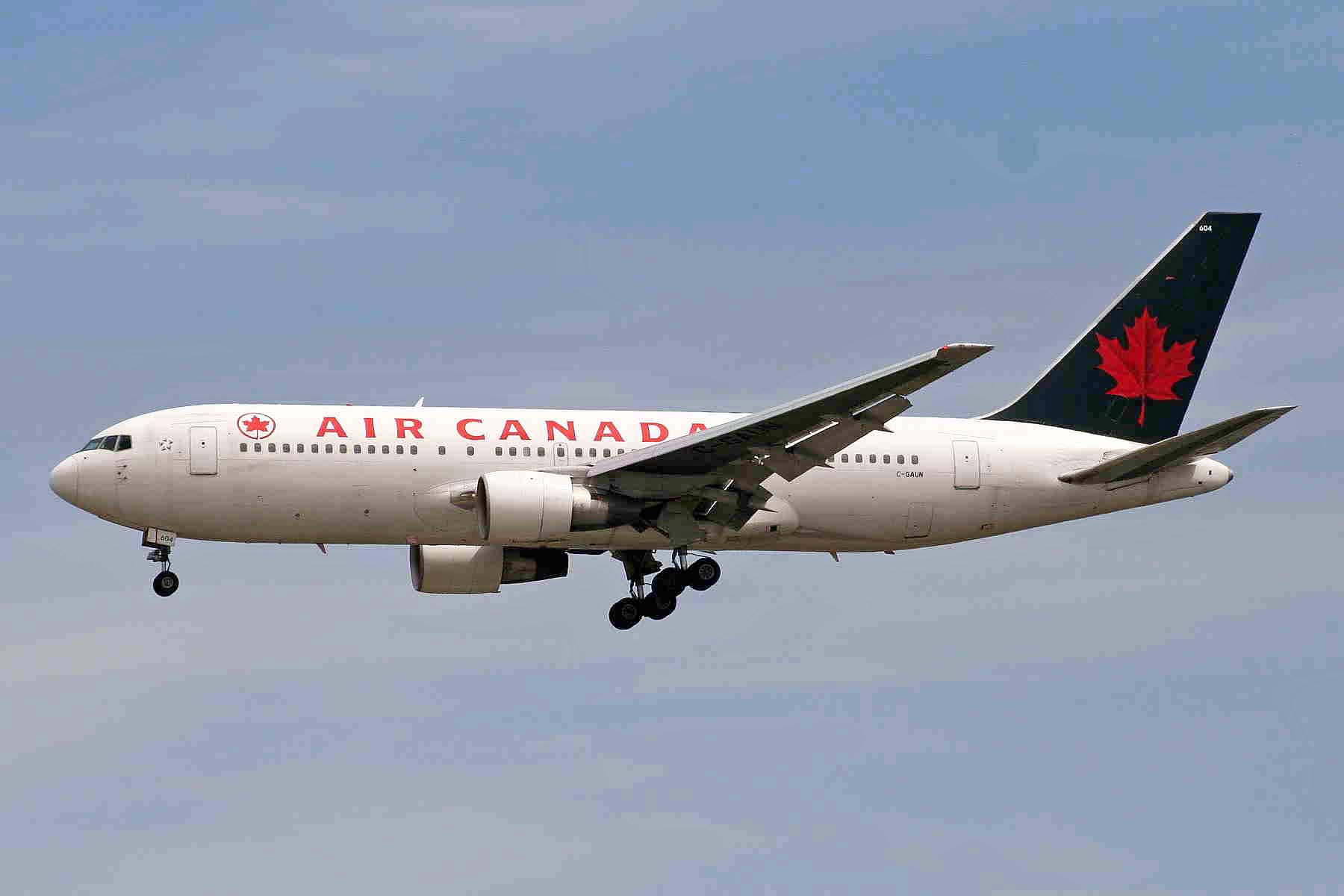
Credit: Ken Fielding via Wikimedia Commons
The fuel gauge system had issues, so the amount on board had to be checked manually. The airplane was dripsticked. Fuel volume was converted into fuel weight. And the crew and ground personnel wound up with the wrong mass for the fuel on board.
The jet climbed normally and settled into cruise. Then, over northern Ontario, the first indications of trouble appeared. Low fuel pressure. At first that looked like a system problem. Then one engine flamed out. The crew turned toward Winnipeg. Moments later, the second engine died too.
And silence, not the constant background vibration of powered flight, but the eerie absence of it. A big jet does not go quiet in the middle of the sky unless something has gone very, very wrong.
It was a 767 with no thrust, severely degraded systems, and one chance to reach pavement before gravity finished the job. The ram air turbine deployed into the airstream, giving the crew partial hydraulic power. They still had control. Barely. What they did not have was time.
The captain, Robert Pearson, had one thing going for him that almost no airline captain winds up actually needing in a jetliner: he flew gliders. His first officer, Maurice Quintal, made the call for an old Royal Canadian Air Force base at Gimli, Manitoba. Pearson pointed the powerless 767 at Gimli.
They did not know that the old base had been repurposed. They did not know that one of the runways was being used as a public drag strip. They did not know there were people on the ground that afternoon—cars, families, spectators, children.
They were descending toward what they expected to be a quiet, disused strip of concrete. Instead, they were dropping a widebody into the middle of a summer recreational scene. And because the engines were out, the airplane was coming in almost silently. No one below got the warning they should have had, with the sound of a jet on approach. Just a huge aircraft suddenly materializing out of the sky.
Pearson and Quintal still had another problem. They were high and fast. That’s preferable to being low and slow, but too much altitude and too much speed mean you may not be able to get rid of either before the runway disappears under you.
In a normal landing you use flaps, thrust, drag, configuration. In this case there was very little available. So Pearson did something airline pilots do not have to do in heavy jets: he slipped the airplane. He cross-controlled the 767, presenting its side to the airflow to increase drag and dump altitude. It was a glider pilot’s move in a commercial airliner. And it worked.
The main landing gear locked down. The nose gear did not. The airplane crossed the threshold, touched down hard, and the nose gear collapsed. Metal hit concrete. The nose scraped down the runway in a shower of sparks. Tires blew. The jet skidded, nose low, tail high, throwing fire and friction across the pavement while people on the ground scattered.
The airplane stopped before it reached the cluster of people further down the strip. No one on the ground was hit. Every one of the 69 people on board survived. They evacuated down slides.
The airplane became famous as the ‘Gimli Glider.’ That is what it was forced to become. It was repaired and put back into service and went on flying passengers for another quarter century.
(HT: @crucker)



I hope the pilot got the glory he deserved.
Thanks for sharing the story, Gary.