
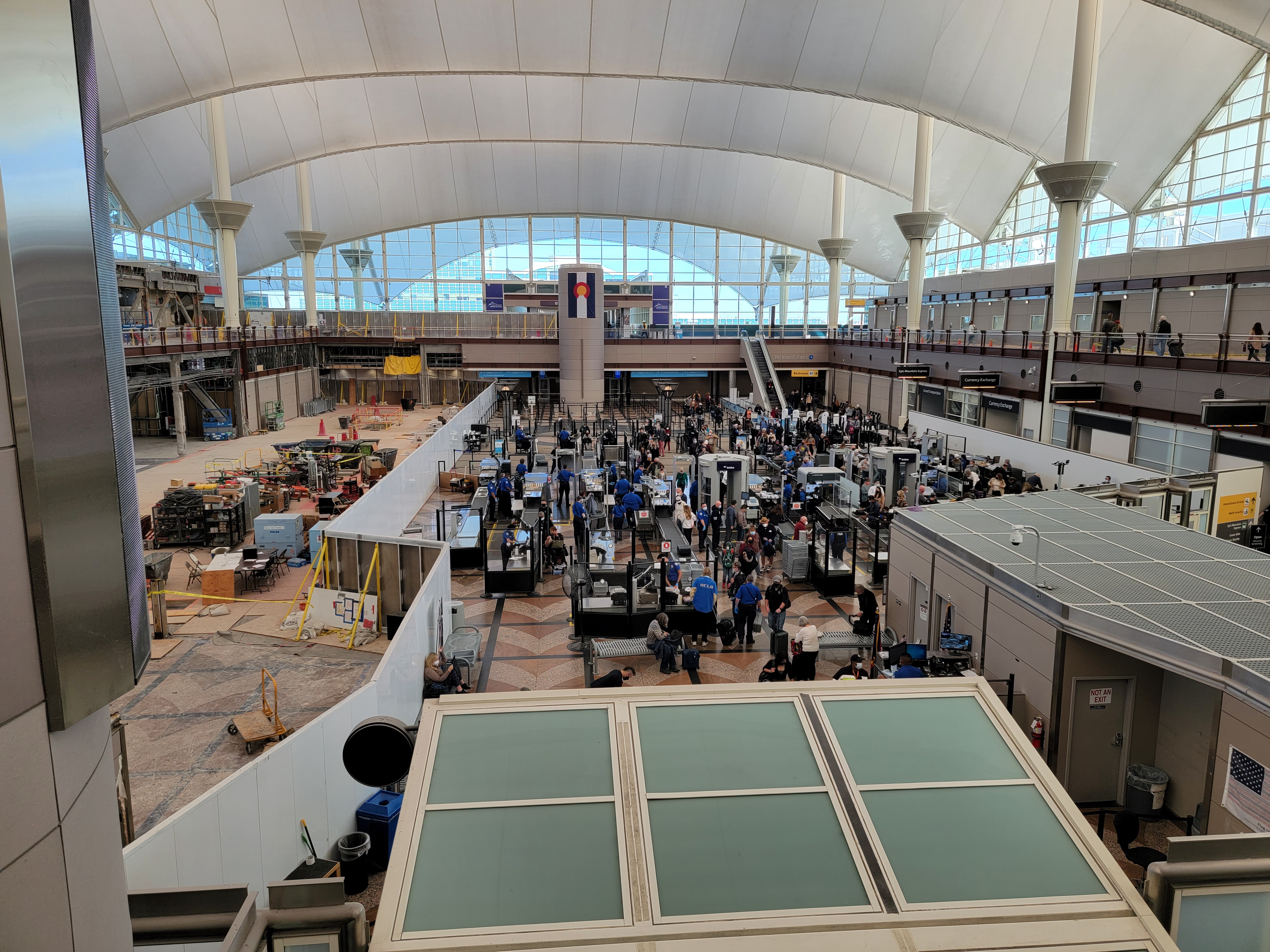
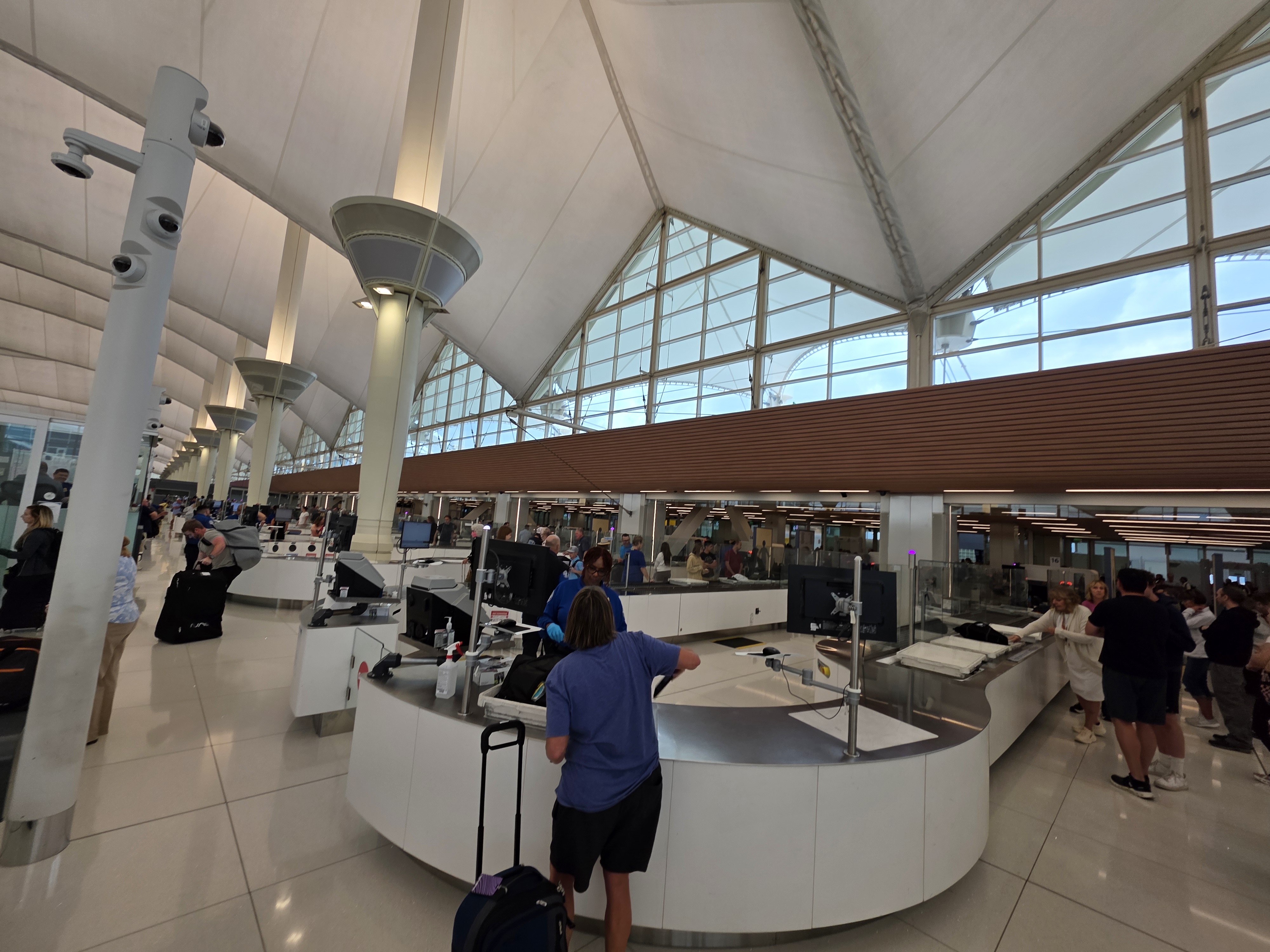
Denver International Airport asked passengers to donate $10 and $20 grocery and gas gift cards for TSA screeners working through the partial government shutdown with their pay deferred. The problem is that federal ethics rules and TSA’s own code of conduct bar screeners from soliciting or accepting gifts from travelers – or airports – and changing the type of card or moving the dropoff point away from the checkpoint does not fix that.
❗DONATIONS NEEDED❗ Support the dedicated TSA employees working without pay by donating $10 and $20 grocery store and gas gift cards. Visa gift cards cannot be accepted.
Drop off locations can be found at Final Approach cell phone lot and in the Jeppesen Terminal. pic.twitter.com/DZPs5gMuoV
— Denver Int'l Airport (@DENAirport) March 11, 2026
Now, they’re (1) asking for grocery story and gas gift cards not Visa gift cards, to make it ‘less’ of a cash equivalent, and (2) they’re doing drop off away from the TSA checkpoint itself to separate out the screening process from the solicitation of gifts. Both of those are helpful, but don’t make it legal.
TSA screeners (and any federal employees on duty) cannot solicit or accept tips from passengers under federal ethics rules and the TSA’s code of conduct.
- Executive branch rules bar employees from directly or indirectly soliciting or accepting gifts from “prohibited sources” or gifts given because of official position. Travelers are prohibited sources because they are there for an official action (screening) from TSA.
- Cash is categorically barred even under the de minimis exception allowing gifts up to $20). Cash or cash‑equivalent tips (like Visa/Amex gift cards) are never permitted.
A merchant-specific gift card can be treated as a gift, while a card issued by a credit card company or financial institution is treated as cash equivalent. That’s why the airport is giving examples of $20 gift cards, but the airport is bundling the cards and giving them to screeners. Each screener would be limited to $20 under this rule.
- Using a public position to induce others to provide a benefit (like a tip) is prohibited. Denver separating out the screening process, and moving the tip box away from the federal checkpoint helps here.
- However, the TSA Employee Responsibilities and Code of Conduct handbook is clear that “Employees may not solicit gifts under any circumstances,” and may not accept gifts from prohibited sources or because of official position. Both passengers and the airport are prohibited sources. An airport authority or airport concessionaire is a prohibited source for TSA employees since airport operations are regulated and substantially affected by TSA.
- Accepting money linked to official duties can also implicate 18 U.S.C. § 209 (salary supplementation) and, if tied to an “official act,” 18 U.S.C. § 201 (illegal gratuity). These are criminal statutes, separate from administrative discipline a tip box can trigger.
Of course, Denver’s effort is better than the TSA tip box at LaGuardia during the November shutdown. That’s literally soliciting tips “under color of authority.” It leveraged the coercive setting of a federal checkpoint — where travelers must comply — to ask for money. Ethically, that was using official authority to induce a benefit. Legally, it conflicted with 5 C.F.R. §§ 2635.202 (no solicitation) and 2635.702(a) (no inducement of benefits). It also risked public confusion about whether payment changes screening outcomes, undermining confidence in security.
[OC] TSA now accepting tips. LaGuardia today
byu/jimcol inpics
This isn’t legal pedantry. There are real issues with tipping TSA at the checkpoint.
- Perverse incentives: Officers could be rewarded (consciously or not) for spending more time with passengers perceived as likely tippers, or for subtly signaling that tips speed things up.
- Impartiality and equity: Creates a “pay‑to‑play” perception that wealthier or frequent travelers can buy softer screening, eroding trust and the appearance of equal treatment. (Expedited airport VIP services do this to some degree, but the screenings are the same. Tipping could change this.)
- Security risk: Any incentive to waive secondary or rush an inspection for a tip works against the point of having a security checkpoint.
A tip box at a TSA checkpoint was an impermissible violation of TSA policy, federal ethics rules, and good sense. Nonetheless, while the practice of tipping service workers is controversial, as the practice has exploded (tipflation) since the pandemic, I think that if you get a particularly good pat down you should acknowledge it in a meaningful way?
Modest items of food and non‑alcoholic refreshments (coffee, donuts, snacks) not part of a meal are not considered gifts at all. During a government shutdown, employees can accept:
- modest refreshments
- $20 non‑cash items with $50/year cap
- benefits offered to all federal employees as long as the donor is not a prohibited source
Passengers offering granola bars and Rice Krispie treats is allowable as “modest refreshments.”
Airports offering pantry items to TSA agents is only allowable up to $20.
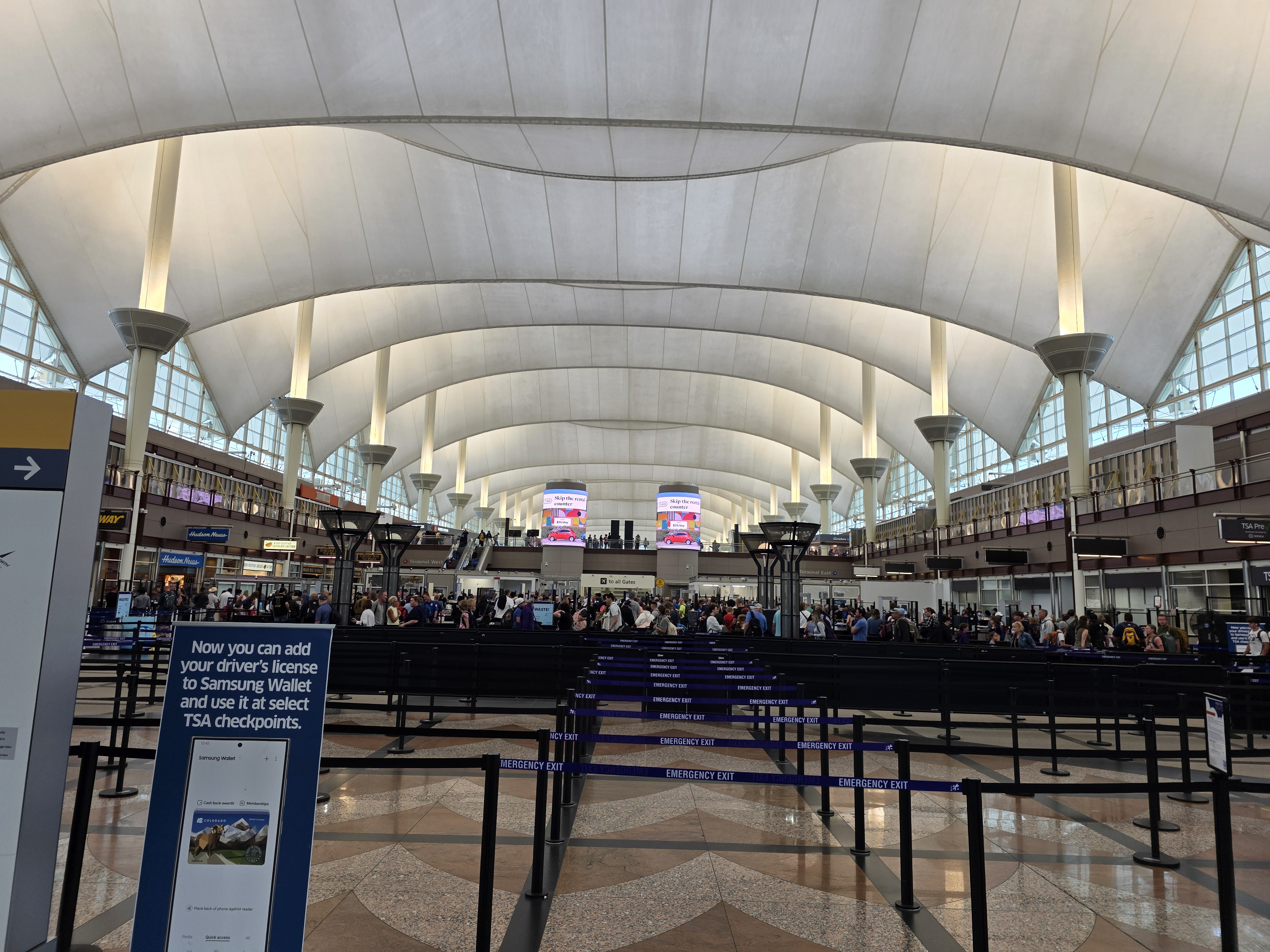
Nonetheless, Denver’s version of gift cards solicited from passengers off-site and given to screeners is almost certainly something where the government will look the other way. As far as I’m aware nothing was even done about the LaGuardia tip box at the checkpoint!



Getting past the finger-pointing of who is at fault for the shutdown (arguments can be made both ways), the TSA agents are the ones getting dumped on. That they receive voluntary, anonymous help from the public should not be prohibited. Making a deposit in a box out of sight of the screeners means they will never know who gave and who didn’t, so it should impact the screening process. The agents agreed to the rules, and the government agreed to pay them. Now one side is failing to hold up the bargain, so why should the other side be bound as well?
Give it a break Gary. You just want these people to suffer and have this perverse enjoyment watching it. What the airport is doing isn’t illegal. It’s kind of like an employee discount offered at stores at airports or a government employee rate at hotels. These aren’t individual donations or gratuities directly to an individual. If someone goes to a foodbank that is sponsoried by a large corporation, are they receiving a “bribe” from that corporation? These have things have no doubt withstood legal review. If you don’t want to give of yourself to something, then don’t. I’d imaging that these aren’t really well paying jobs and this has the potential to really put these people in a bind. You’ll say: “oh, they’ll get back pay eventually.” Sure they will but consider that you are a landlord renting to one of these folks, would you be satisfied with receiving your rent whenever they eventually get paid?
Come on man. You can do better.
Chris do you know the DOJ is hiring lawyers. From the explanation you sound incredibly qualified.
Regardless what you think, ,Federal, state, and local regulations prohibit employees from accepting gifts, tips, or gratuities from anyone seeking to do business with their agency or affected by their official actions. Following the 43-day government shutdown in late 2025, Kristi Noem announced $10,000 bonuses for select TSA officers who demonstrated “exemplary service”. These bonuses, funded by fiscal year 2025 carryover funds, were awarded to officers with perfect attendance or who went “above and beyond” during the shutdown. So their paychecks may be late, but they will be certainly rewarded with extra cash.
The real question is why passengers are still charged TSA security fee when TSA is not funded.