
You don’t need to suffer jet lag when you travel. There’s a really simple formula to solve it. To begin, there are two basic things you need to do.
- Adjust to the local time of your destination as soon as possible, generally as soon as you board your flight. That means eating on your new local time, and sleeping on your new local time.
- Stay up until bedtime at your destination the day you arrive. If you go to sleep at noon, you’re going to be off for days. You need to force yourself to power through.
Both of these can be challenging, but there are ways to make them much easier. You’ll enjoy your trip more, and it’s better for your overall health. Jet lag can make you stupid.
The Flight
Get on the plane and if it’s bed time in your destination, go to bed. If it isn’t, stay up. Plan your meals based on the new local time, too. That might mean eating before the flight rather than on it.
Short overnight flights, like flying Eastbound East Coast to Europe, can be frustrating. You leave at night (when it isn’t yet bed time at your local destination) and arrive in the morning and have a full day ahead of you, but to really take advantage of it you need to sleep.
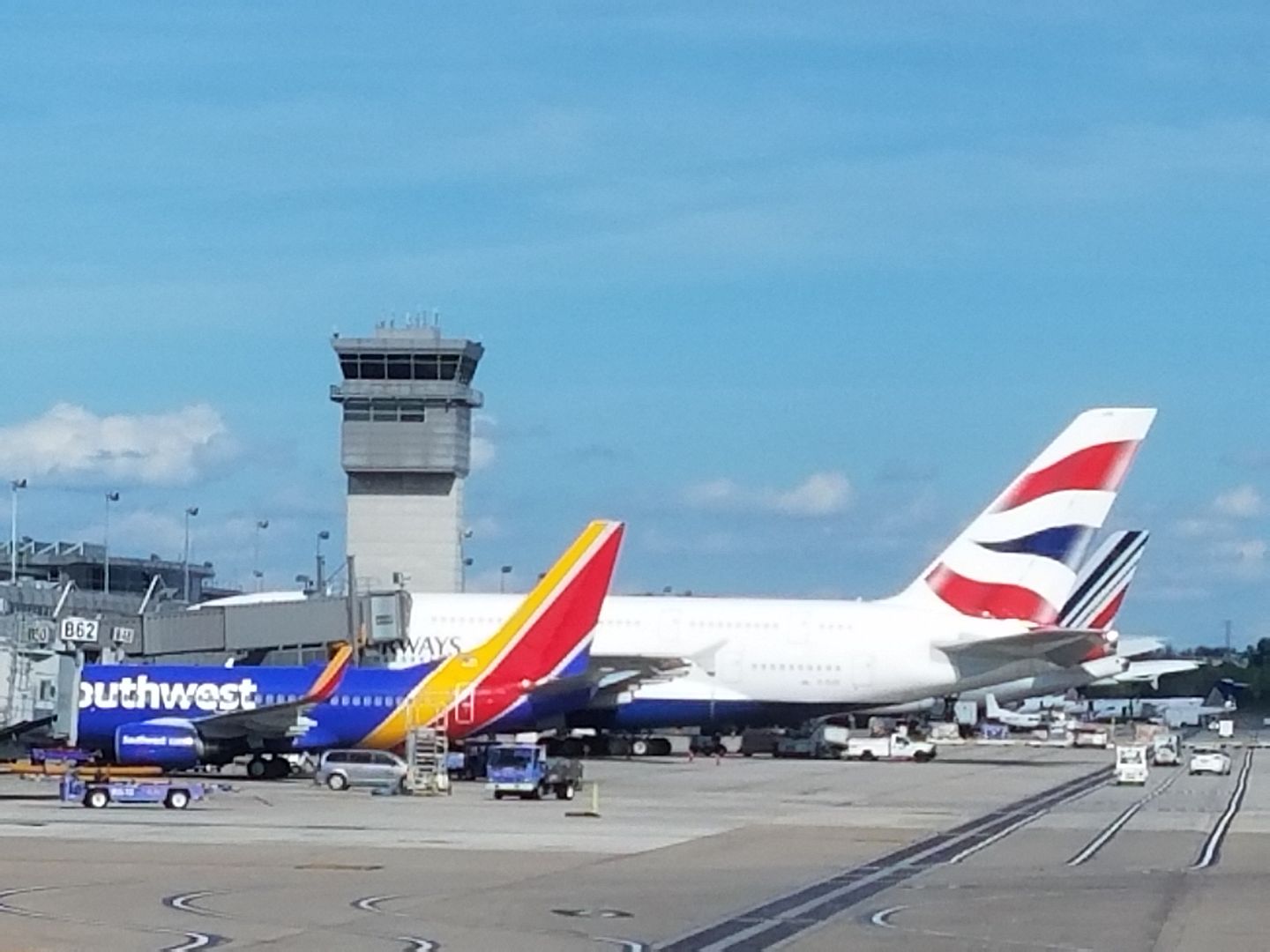
New York, DC, or Boston to London or even Paris can take less than 7 hours. You want:
- A fully flat seat in business class
- All aisle access so no one is climbing over anyone else and waking them
- Meal service to end quickly, and lights out quickly, so you can sleep.
The idea is to maximize the amount of sleep you’ll get. I don’t want to be woken for breakfast, it isn’t very good on most airlines anyway. And I bring my own noise cancelling headset. American Airlines flight attendants collect theirs way too early (except on a few test routes), often nearly an hour before landing.
Eat before boarding. Skip the main meal. Airlines can help when they certify seats for recline during taxi, takeoff, and landing and get through service quickly.
When You Arrive
Sleeping, and waking on local schedule at your destination, is the number one way to beat jet lag. Then stay up at your destination on arrival and go to bed as close to when the locals do as possible.
When I take an overnight flight to Europe or Asia that arrives in the morning, I take a shower and change clothes. If it’s sunny, take a walk. If my schedule allows I will take a nap. I will get up and make myself go out to dinner. This can be tough. I’ll be dead tired. Doesn’t matter. I want to go out, ideally a late dinner, so that I’m tired and fall right to sleep when I get back to the hotel.
If I have the time I’ll let myself sleep in the next morning, for me that means 8 a.m. Otherwise I’ll get up before 6 a.m. and will be more or less adjusted to the time right away.

But when it’s bed time, I go to bed. I have a tendency to get off of a long flight without internet and think I need to clear my mind, so I check in on e-mail and work and that just sets my mind racing with a million things. So it’s a bad idea.
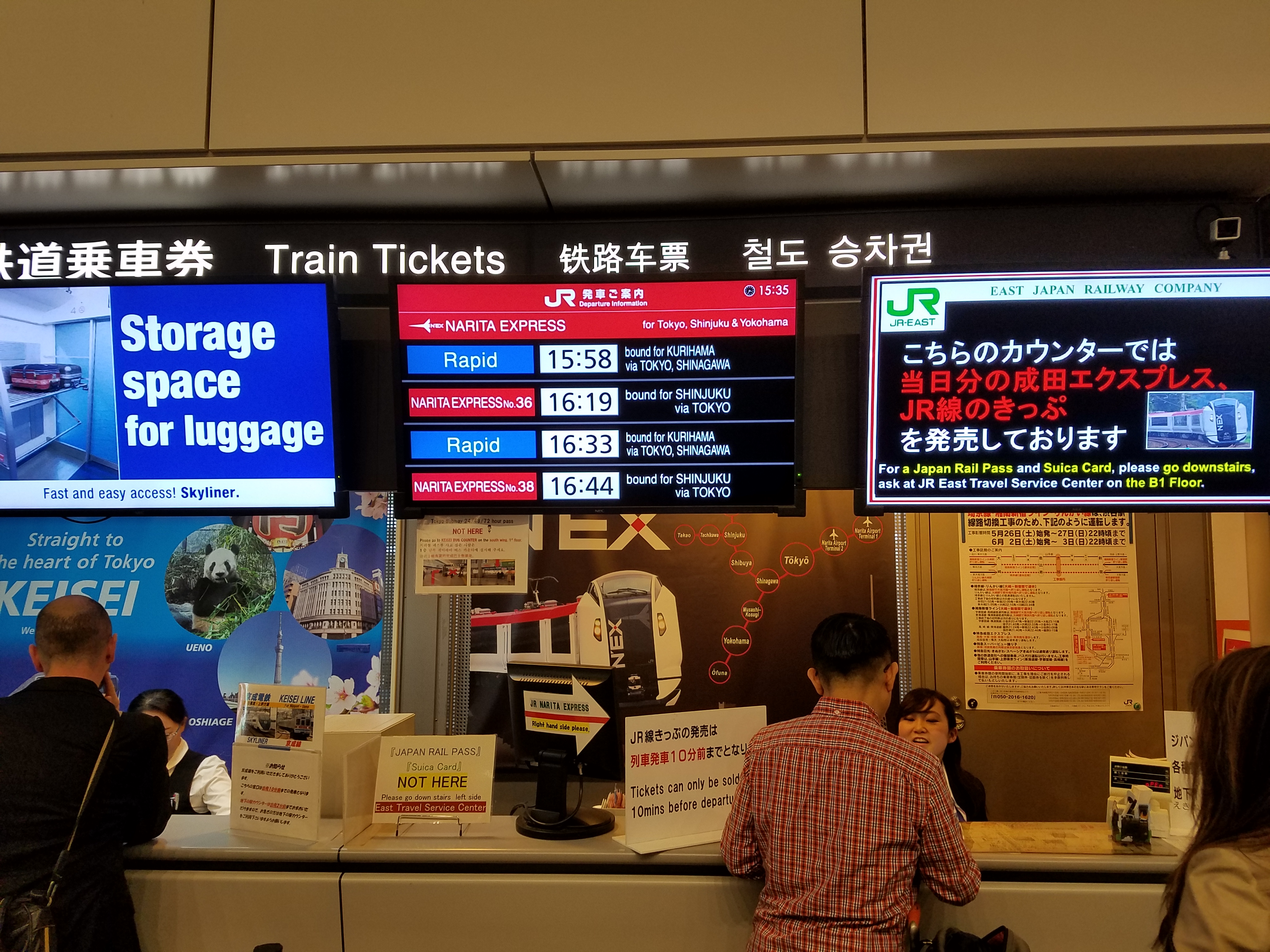
When arriving at a destination late at night, I will avoid work when I arrive at the hotel. My only concession is that while making the trip from the airport to hotel I will clean out email. That’s why in most cities I’ll avoid public transit, I want to get in the back of a car, fire up an internet connection, and work for however long it takes to get to the hotel in a straight shot without transfers. In Tokyo it works better to take the Narita Express.
Putting It Into Practice
The two hardest things about jet lag are:
- Sleeplessness. Going to sleep, you wake up a few hours later and are up throughout the middle of the night. That makes the coming day tough. And it makes staying up through the day tough, but a nap just makes the cycle even more likely to repeat.
- Flexibility. If you don’t have to push through you won’t, but the best thing to do is to push through until bedtime in your local destination.
I find adjusting to Europe is easy. I go over, stay up until bedtime, maybe sleep in a little bit and I’m fine by my second day as long as I go out to a nice dinner the day I arrive. The same applies to South America after an overnight flight even without significant time change.

Returning from Europe I get tired by 7 p.m. or so for the first couple of days back home. But it’s no big deal.
Coming back from Asia doesn’t prove much of a challenge for me unless I take a flight that gets me home early in the day. It makes staying up until bed time hard. That’s when I need to follow the practice of taking a nap and going out to dinner even when I’m home.
I find going to Asia much harder than anything else, since being 12 hours off my body thinks it’s the exact opposite of local time — wants to sleep during the day, wants to be up at night. And the older I get the harder it is.
There’s the usual advice, none of which has much mattered for me — especially to drink lots of water and to avoid alcohol and coffee.

If I’m going to Asia then I will need a full day to adjust. I might be sleepless that first night. The solution is to power through the next day (allowing myself a nap) so that I’m exhausted at local bed time on day two.
Routine matters a lot. Begin to get into the local time as soon as possible. Set your watch to the new time right away. Plan your sleep schedule based on when you want to sleep at your destination — don’t sleep the last several hours of a flight if you need to sleep on arrival for instance. And try to time your meals closer to when you’ll be eating at your destination.
And a good business or first class experience on the way over makes this all much easier.

Jet lag for anyone that wants to be strategic about it is often a choice. It gets a little bit harder as you get older, but that means following a stricter regimen matters even more.



It’s easier to force yourself to stay up than to force yourself to fall asleep, without assistance.
To me, naps are allowed if under 45 minutes.
Try to adjust to the new time zone as many days before the trip. Even one hour shift 1 day before the trip is ok. US to Europe would mean sleep early before the trip.
So, for the 12 hour Asia change from the U.S., I try to stay up a couple hours later at night till midnight. That only gets me to Noon over there. By 5pm Asia I crash for a nap and get up at 7:30pm. Get some dinner, and go to sleep at 11pm. Wake up 3am.
I commute to Asia. Gary’s solution, as for much of life, is to power through, although he acknowledges that doing so is difficient as he is getting older. Since I am almost 77 . . .
Hi Gary;
Sorry but it’s not the only way.
Unless we arrive at 4 or later,
We take a 2 hour nap. The key is only 2 hours. Then we get up and stay up till normal bedtime.
We enjoy the first day much more that way. The issue isn’t going to bed at noon, it’s sleeping for several hours. Our pattern for 20 Tatls leaving fromLAX.
As an International Captain for many years to Asia and also commuting to Korea from Florida for 8 years, I agree.
The only way to mitigate jet lag was setting you’d watch to the destination as soon as you board the flight.
I discovered that going West bound was a much easier transition than Eastbound.
Going to and coming back from Southeast Asia has been a normal thing for me for more than 35 years. For those flights I fly out of LAX. Coming back is easier since the flights are shorter due to the jet stream. When I was working, I would go back to work the very next day. The demands of work forced me back on a schedule and after a weekend for extra sleep, I was over jetlag. Since retiring, I get over jetlag slower since I am not on such a schedule. Going to Southeast Asia also works ok because I stay with family and have to adjust to their schedule of meals. It would be harder living in a hotel without a strict schedule. I have no problem using over the counter meds that make me sleepy on the airplane to make sure I get enough sleep. If there is a long layover at the transit airport, I will catch some sleep on the seats or even the floor.
The only thing that really works for me is to never close the curtains in your hotel room the first few days as you adjust. Going to the gym before dinner helps wake your body up too.
The sun helps calibrate your circadian rhythms better than anything else. If you close your shades going to Europe it will be impossible to wake up in the morning. Close them too early adjusting to Asia and you’ll go to bed at 6pm. Same goes for after you arrive home.
I’ve used the Timeshifter App and it’s been pretty helpful. At its most basic it’s doing with Gary suggests but takes it to the next level.
I’d highly recommend giving it a try.
When I am about to go abroad, I don’t eat or sleep unless I have to (use time to pack). I don’t eat or sleep abroad either unless I have to. There are ways to get rest without sleeping, and a diet is usually needed for me anyway. There is too much to see and do to get hangry. One fun memory I have is planning to go to Vatican City to walk around, but I realized it was about 6:30am on a Saturday (I arrived from SFO Friday 1pm Rome time and slept from 1am -3am and about 4:30am-5:30am in Rome). So I just walked around the surrounding area and visited a pretty church that was already open. While walking I picked up receipts off the ground to review after returning home and googled those to recreate my fun walk, when there was not a lot of traffic to dodge yet, and no need to eat or sleep in.
@Potsey Weber,
I have used the Timeshifter app for my last couple trips to Asia and had solid results. I also adjusted faster than my travel partners on both trips.
My Circadian Rhythm laughs (“Ha Ha!”) at your solution to jet lag.
I’m going to make another vote for Timeshifter. We have used it on over a dozen trips the past two years both eastbound and westbound (last week to Taipei) and it is a game changer.
Respectfully, I disagree with just about everything you say here. When going to Europe I believe in a timed nap (aka, set an alarm). Getting up will be tough but it’s a way better version than “powering thru.”
I’ve found going west, be it to Asia or LA, is always easier than coming back east. Coming back from Asia, when you generally land in afternoon/evening is much harder than coming back and landing in the morning.
I agree 100% about changing your watch. The piece you left out for very long flights and time shifts is the need for a dose of caffeine to avoid a headache. Half way to Asia (arriving in the evening) I’ll have a small cup of coffee and then stay up and read. First I’ve had a meal, a 5-6 hour sleep, then I go into daytime mode until the flight ends. When I get to the hotel I have a quick dinner and go to bed. I wake up the next day day feeling great.
Any mention of avoiding jet lag without the mention of pharmaceuticals isn’t worth the paper its not printed on. On trans-oceanic flights I always take and Ambien and get a good 6 hours of sleep. I use it for the first three nights in each direction and I am golden. Jet lag essentially doesn’t exist. Anything else is just weak tea.
I’ve found that ever since I stopped worrying about jet lag, it’s stopped being a problem.
Gary, I 100% agree. I’ve never been able to “pre-transition” at home and have given up. I tried Ambien once and still didn’t sleep on the plane. I arrived at the hotel in Auckland at 9am and had to wait until 2pm for my room. The Ambien kicked in while I waiting in the lobby. “Sir, you can’t sleep in the lobby” is something I heard many times. Never again. For some, a “power nap” seems to help. It’s not for me—gut it out. A useful strategy I find is planning the trip for adjustment. If I’m planning on visiting Perth, Melbourne, and Brisbane. I’ll schedule Perth first. I can fly to MEL or BNE from the US and arrive there early am. Or, I can fly to PER by connecting through ADL. AKL, BNE, MEL, or SYD. I opt for a longish layover for all but AKL, as I want a buffer for customs in case I get randomly flagged for Xray. Enjoy the lounge, fly to PER. By the time I’m in the hotel, I have a much shorter time to force myself to stay awake. Touring New Zealand? Don’t start in AKL, end there.
I live in Asia, but I’m originally from the US, so I feel your pain on the trips to Asia from North America. I have found the “food trick” based on evolutionary biology helpful. Essentially, you don’t eat dinner when you arrive at your destination (or on the plane beforehand if that would be dinner time where you’re going). Skipping dinner at the destination tells the most primitive parts of your brain that you’re starving. The prefrontal cortex knows this isn’t the case, but the “reptilian” part of our brain is convinced that if you haven’t eaten for more than 12 – 16 hours, you are starving and need to find food immediately. Therefore if you skip dinner and wake up as early as you can in your destination, the moment you eat breakfast, this signals to your reptilian brain that this is the time you can find food, so it should be the new morning. It’s a way to override your light (Circadian) clock with your food (metabolic) clock. You can do it several days in a row too. The key is no calories after lunch until breakfast the next day. Has really helped me get over jet lag in about a day most of the time.
Nonsense. And then like most people you can’t sleep much if at all on your flight, so now you’re even more sleep deprived when you arrive, and you suffered at home for nothing.
For transpacific, I just select flights based on arrival time. Late night/evening is best. You’ll arrive tired regardless, check in and soon go to sleep. If arriving in morning, hopefully check in early and nap no later than 2pm. I avoid midday arrivals, those suck, you just have to power through.
What I do is have a very simple meal, some tea, unpack, shower and to bed. Worked like a charm last summer when I went to Sydney. 12-13 hour sleep, wake up ready to go. Obviously, this doesn’t work if you’re flying for business and expected to go right to work after a redeye. Another reason traveling for work isn’t cracked up to be what it’s claimed to be.
What’s a watch?