Is the CEO of Delta Air Lines blaming poor people for all the fights and bad behavior on airplanes?
Enilria points to comments by Delta Air Lines CEO Ed Bastian explaining why passengers have gotten so much more aggressive on planes, and conflict seems to happen so much more.
The fares were so high that the masses couldn’t afford to fly…today…just because we are in a public space we have to remember we are all there together

What Enilria suggests is that Bastian is blaming “the loss of civility on more poor people flying.” But I think it’s far more nuanced than that. And the reason for decline in civility on board depends on the points in time you’re comparing.
- Most people talk about the spike in onboard incidents since before the pandemic. There was a huge increase in 2021 and early 2022. It’s declined since then, but reported incidents are still far about 2019 levels.
- Bastian is comparing air travel today with the era before 1978 deregulation, when airfares (in inflation-adjusted terms) were much higher.
Falling airfares aren’t the explanatory variable between 2025 and 2019. But air travel looks very different today than it did back then. Flying is far more accessible. There are fewer airlines. Planes are full. Service and food are much worse (although it’s easy to look at the past through rose-colored glasses, the old joke about airline food was “it’s awful – and the portions are so small!”).
Just having less space to spread out, because those middle seats are full, makes a huge difference. And we didn’t have TSA security before 9/11. A quarter century ago you walked throug a metal detector, and your bags were scanned, it took a matter of seconds. You didn’t need a ticket to go through, either, so you could meet family and friends at the gate.
But the difference today isn’t primarily that poor people can fly (most airline revenue comes from passengers making over $100,000 a year). It’s:
- There’s a far greater variance in who flies. That’s not just about income. Before deregulation passengers skewed heavily towards business travelers, people whose companies were buying those expensive tickets. Planes weren’t full.
- There are many more people flying today, and they come from all walks of life and all backgrounds. It’s not that ‘rich people are civil and poor people aren’t’ (again, it’s not ‘the poor’ who are largely flying).
When everyone in the sky is part of the ‘laptop class’ they share a set of norms. When there’s far greater diversity in passenger backgrounds, and everyone is thrown together in a packed metal tube, there’s much a much greater chance of misunderstanding.
Everyone brings their baggage with them. They may be having a bad day. There may have been a breakup, a lost job, a lost loved one. Travel is stressful. There’s security, and crowds, and uncertainty in air travel that is tough to handle even before boarding the plane. That stress fuels misunderstandings between people who don’t share common backgrounds. It’s not just ‘the poor people are to blame’, it could just as easily be ‘the rich’ since the issue isn’t level of income but variance in income and other elements of passenger backgrounds. Here’s a rampaging millionaire on an American Airlines flight from this past summer.
Kodak Black’s future client pic.twitter.com/WO6O9IDOS5
— John Armstrong (@msmcb02) July 16, 2025
That’s all well and good, but it’s a 50-year trend and the spike in onboard incidents is really a pandemic and post-pandemic era event.
- The pandemic spike was about masks. Those became political, they were required, and they grated on people. Flights diverted over masks. This was less of a problem on United Airlines, because after the David Dao passenger dragging incident United’s flight attendants had been through de-escalation training. They tended to just file reports after the flights rather than confronting passengers. American flight attendants were largely left to enforce the rules with less direction. Everyone used their judgment.After the mask mandate ended, conflict fell but incident reports remained elevated.
- There’s greater passenger dispersion. The number of business travelers has returned to pre-pandemic levels, but each business traveler takes fewer trips. In-office work varies by industry but often isn’t every day, and offices aren’t as full. There’s little need for consultants to fly out to be on client sites each week when the client themselves doesn’t have everyone there. So the out Monday/back Thursday trips just haven’t fully returned, and coordinating trips to see clients is tougher when the client isn’t always there!Peak travel days have smoothed across the week. It used to be Monday, Thursday, Friday and Sunday were peaks. Now travel is more even (though Wednesday is still a lull). And the proportion of leisure travelers has grown. There’s even greater passenger variance than there used to be, with more infrequent flyers.
- Incidents per million passengers is better data. Reports actually remain rare, but the spike becomes even more dramatic when you realize how few people were flying during the actual pandemic. And while reports remain elevated they actually have normalized quite a bit – more than the raw report numbers suggest.
Year FAA unruly passenger reports Passengers Reports per million 2017 544 772 million 0.705 2018 889 814 million 1.092 2019 1161 824 million 1.409 2020 1009 324 million 3.114 2021 5973 585 million 10.205 2022 2455 773 million 3.177 2023 2075 858 million 2.418 2024 2102 904 million 2.325 2025 YTD 1567 882 million 1.776 - The number of reported incidents isn’t the same as the number of incidents. With the huge spike in incidents during the pandemic came stricter enforcement and a more rigorous reporting regime. Before the pandemic incidents might have gone unreported. Now, reports are filed more often. So part of what we’re seeing is greater reports, rather than a greater number of incidents.
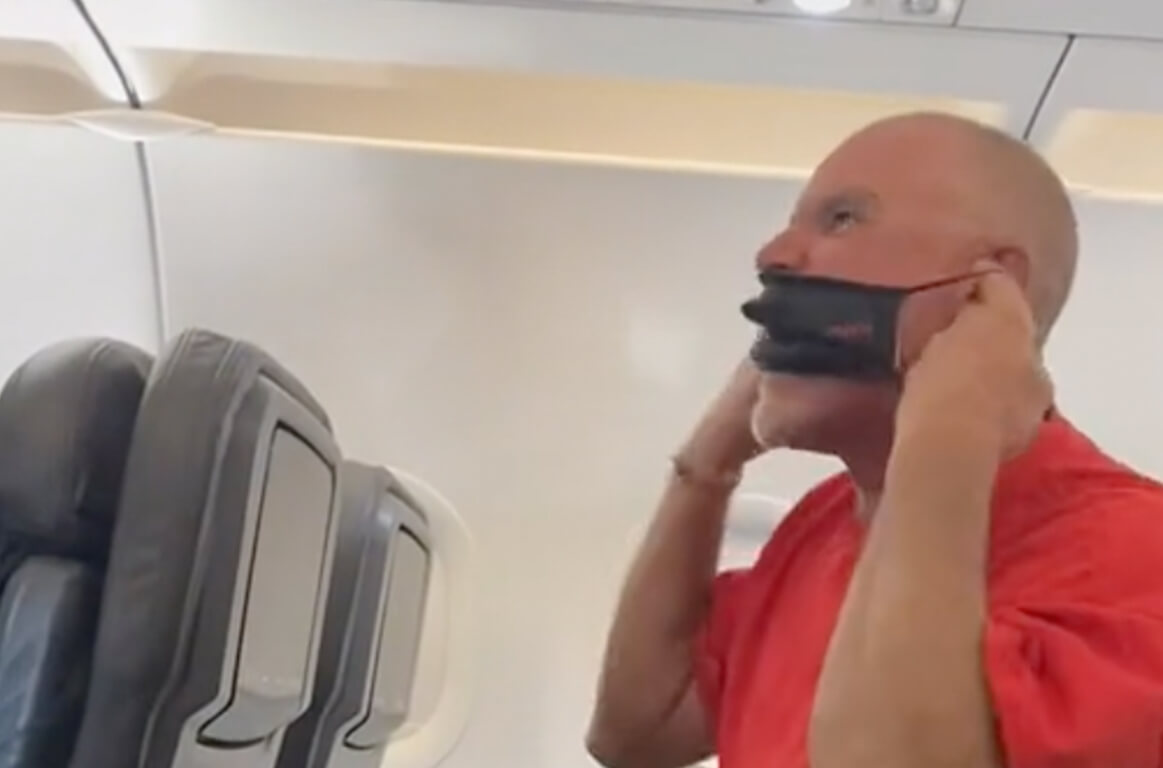
The Transportation Secretary is waging a campaign – “Golden Age of Travel Starts with You” – suggesting you don’t wear pajamas to the airport but customer attire isn’t the driver of conflict.
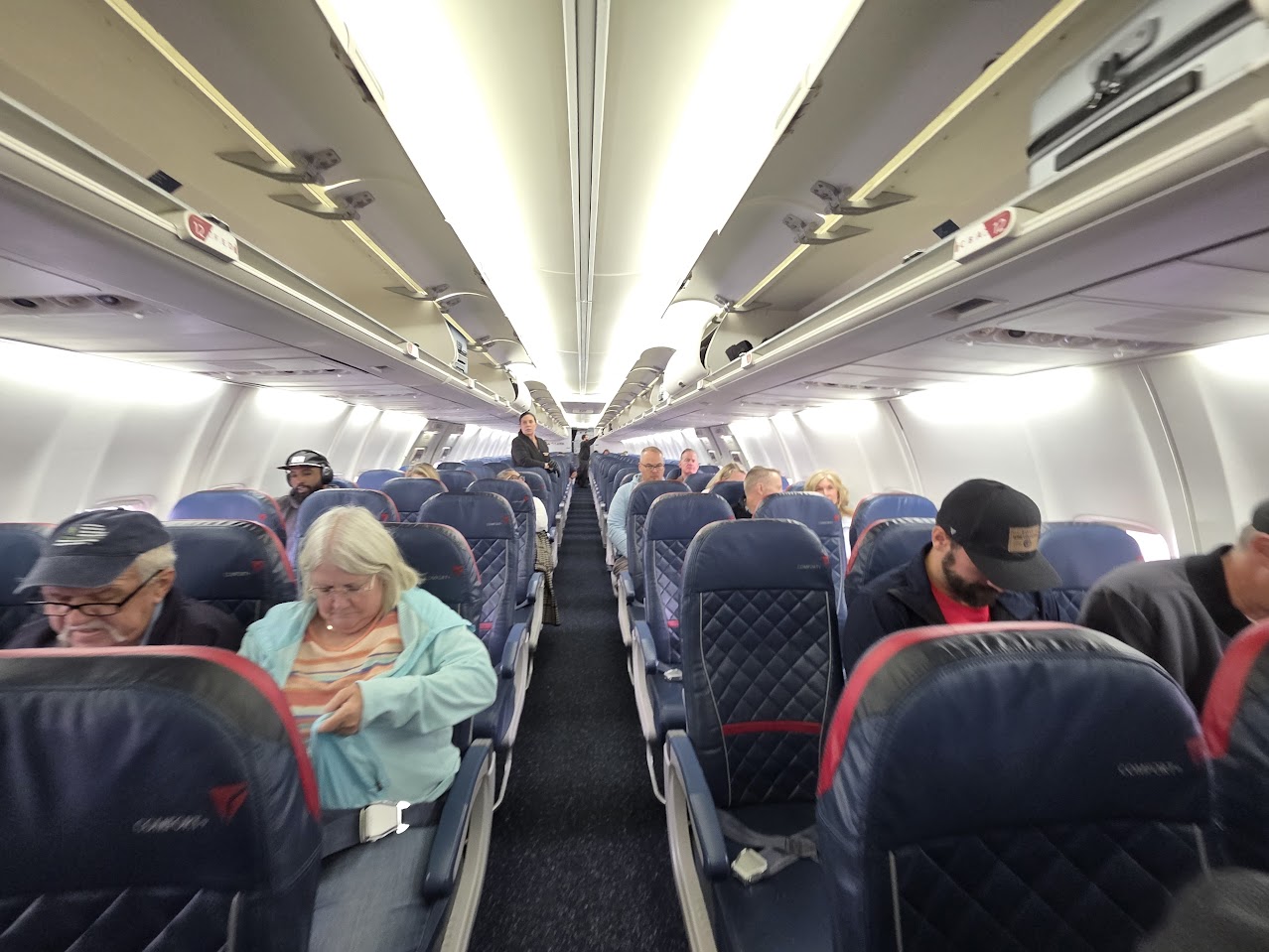
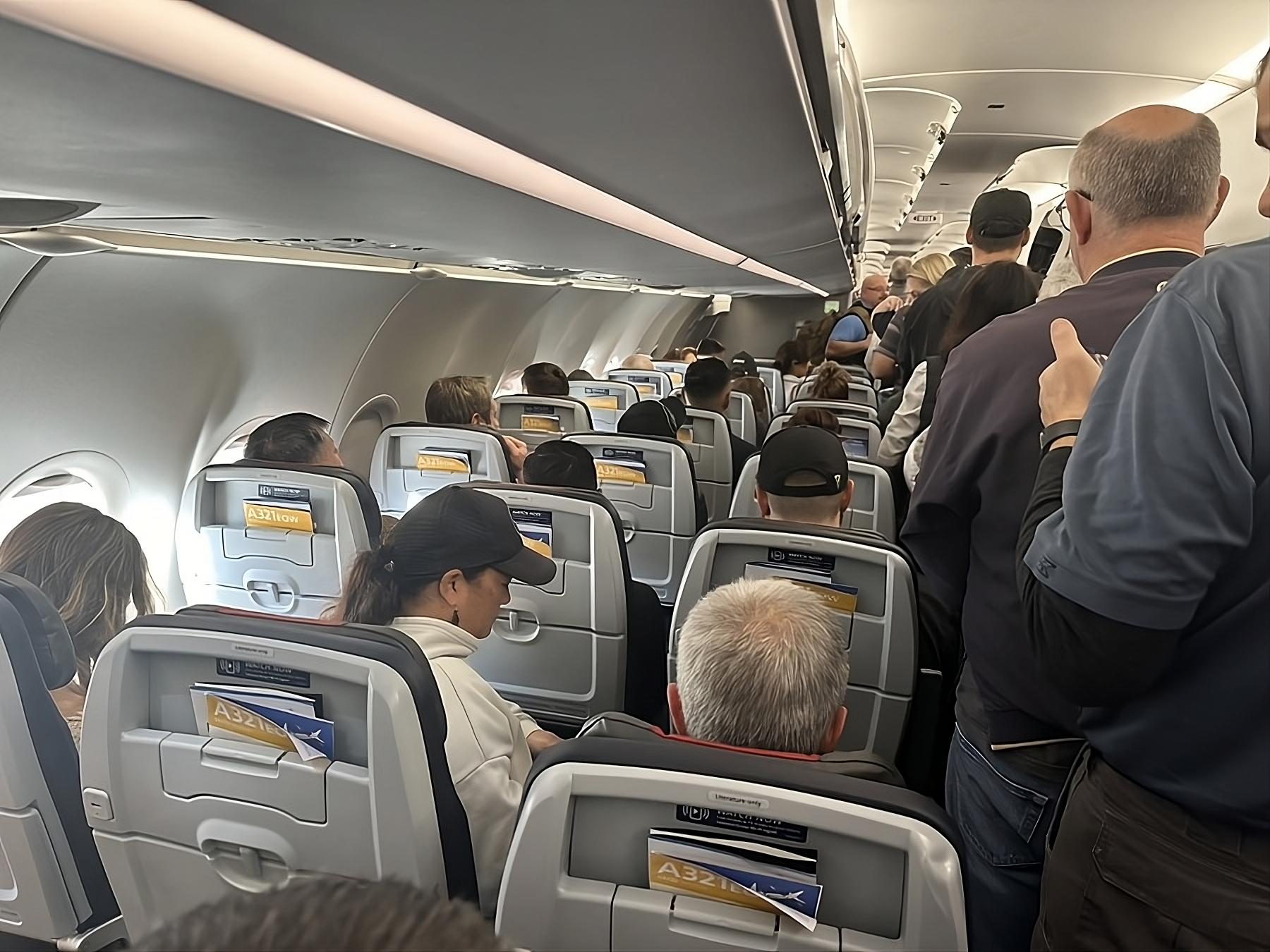
Airline passengers aren’t the homogenous group they once were. Planes are full when they didn’t used to be. And the entire travel experience has become more stressful. At the same time, the composition of travelers has continued to change – but things aren’t nearly as bad as raw incident numbers would suggest. More people are flying – and we’re collecting a lot more incidents that were likely already happening in the data.



Frankly he is right. Outside of premium cabins on international flights most airlines, especially in the US, have become buses that fly. Even first class has become a place I don’t recognize any more after 40 years and almost 8 million miles. Very sad. I guess private is the only way to avoid it
IMO, courtesy and patience go a long way. The flying experience is very stressful to some folks and their behavior is not acceptable, but treating each other like a fellow human can help.
Maybe Gary or other travel expert can explain, but I have never understood why they don’t fill the plane from the back to the front (after first and business class).
Merry Christmas and Happy Holidays
He does have a point. Just remember that ‘masses’ come in all shapes and sizes.
He is right. Flying used to be a joy even when seated in coach. Because fares are so cheap airlines need to put in more seats and pack their planes to the gills. But alas we live in a society in which people expect and demand Frontier Airline fares but PanAm Clipper service.
Know what else was better? The service.
IMO the primary reason airlines dont fill planes back to front is because of…bag fees.
Those sitting in the back are more likely to bring extra/oversized stuff on a flight in the hopes of avoiding a checked bag fee. If they are boarded before higher paying, more frequent flying customers then the customers whose bags have to be checked are those who are more likely to have a free checked bag benefit.
Additionally, you dont want to piss off/inconvenience those who are more likely to have a free checked bag benefit as they are most likely higher LTV customers than those sitting in the back of the plane.
The business travelers and the so-called “laptop class” moved to teleconferencing (often with those sessions recorded for follow-up review by legal).
In 2025, the only people insisting on in-person interaction are those trying to avoid call logs and other audit trails.
Agree with everything posted here so far, so I guess it’s unanimous! Not only was the service better, the whole experience was less stressful. Long lines, TSA, crowded airports, cramped seats and heavy traffic just getting to the airport. Not sure that it is the less economically successful folks causing the most trouble, there certainly is a rich entitled jerk aspect to it also.
Bottom line is confrontation and narcissism.is the cause, civility and kindness is the cure.
What a shock, coming from such an asshat.
There’s a correlation between frequent flyer program enhancements and bad behavior. At one time, triple miles, award charts,etc.
We eat fewer enhancements, ha ha
Seriously, F Delta. They are just a typical average Full Service Carrier in the world. And yet they said as if they are like a private jet service provider. This kind of arrogance will only make them fall in long term.
Ed Bastian “Air travel was more civilized before the poor people got onboard.” What a stupid comment.
Airplanes used to be more comfortable. Now, the seat pitch has decreased on many airlines and many airlines have narrowed widebody airplane seats in coach. Then you have airlines that unnecessarily force many people to check their carry-on luggage. Add that to airlines that have unfriendly cabin crew members. Every move by airlines has been to cheapen the experience for the coach traveler. The airlines are reaping what they have sown. They should be proud of their work instead of complaining about it.
Come on people. Air travel is just a segment of people becoming more and more oblivious to their fellow people. Look around on the street, in the supermarket, in an elevator and then compress it down to a plane. Yes, boarding from the back with the overstuffed shopping bags is correct. The difference in profiles of cabin class helps the argument BUT I have noticed that cabin class does not coincide with courtesy.
This is what we have become folks. You can’t hide the fact that things (our species) has changed. The airplane flights just shows the micro of our evolution
I guess I should blame the poors for my grocery shopping is an anxiety inducing nightmare. Target them poors for dining experiences that open with contempt vibes from the server and end with a 30% tip added in for a party of three (that included the $14 tax and $5 credit card convenience fee).
Or maybe when I was in the hospital a couple of months ago with the smashed ankle and the two CNAs got a casual conversation about experiences they had with a young lady who works at the Taco Bell by the facility as they transfered me into a hoyer lift.
And Delta makes it clear on every crowded flight (seats getting narrower and less legroom) that the masses are treated like…the masses.
“Let them eat Biscoff…” — Ed “Marie Antoinette” Bastian.
I can’t imagine why air travel has become less civilized.
1. more people packed in planes
2. poor in-flight service
3. operational unreliability
4. overcrowded airports
5. inefficient TSA screening made worse by the Anal-logic scanners
6. insufficient capacity to recover from IRROPS
7. entitled passengers
8. screaming, uncontrolled kids
9. animals everywhere
10. uninspired employees
I have NO idea why air travel is the way it is, but let’s just blame it on poor people. I sit in F most of the time and the people who are paying for that are no better than the huddle masses behind the curtain.
Bastain is a classist DB. If he thinks air travel is so bad, maybe he should reverse some of DL’s decisions that have contributed to the state we find ourselves in.
A week does not seem to go by without bigmouth Ed Bastian making some off the wall remark. Bottom line, not serving free food is in part responsible for the bad behaviour and then this is only compounded by the fact that alcohol is so freely served or made available for purchase.
Reminds me of Penny in Come Fly With Me 🙂
When you draw back the curtain, the first thing that hits you is the stench! Its the stench of the working man!
*smirk*
Personally, the closest I have ever come to anything resembling a confrontation with a flight attendant occurred during the pandemic-era mask mandate on Alaska Airlines. I was in the middle of eating a snack, and the campy flight attendant insisted that I pull my mask back up between each individual bite. He then stood in the aisle literally watching me eat. It is fair to say that as he stared me down for that minute or two, some very dark thoughts crossed my mind. I’m proud to say that I maintained my composure, but it wasn’t easy at the time.
At any rate, that example underscores that there was something deeply unsettling about the way certain airlines effectively “deputized” their flight attendants to enforce the mask mandate. Ironically, I was generally supportive of the policy at the time. Still, those years altered the passenger–flight attendant relationship in a way that I am not convinced ever fully corrected itself. In addition to the other factors identified in the article, I suspect this cultural shift is one contributing element to what we are still seeing today.
@Thomas @Michael Mainello
The primary reason airlines don’t fill planes back to front is because of weight. People are 15-20% heavier than they were 20 years ago. Boarding all those weight-challenged people in the back first could tilt the rear of the aircraft to the ground.
I’m pretty sure that Ed Bastian has far better credentials and much more credible data than the author does.
@DesertGhost – You often slam me but without offering any actual argument. Here you make an argument from authority (‘Bastian must have data’) when he’s talking out of his ass. His argument is incoherent. He’s talking about the difference between air travel today vs. in 1977 to explain the phenomenon of onboard behavior today vs. 2019. That’s literal nonsense.
I’m glad you’re impressed by his credentials.
Money doesn’t equal class. That being said, any adult wearing pajamas and house slippers on a plane (or grocery store, restaurant, etc..) makes me wonder about society as a whole. Take a listen to the late comedian Tim Wilson’s song, “Way, Way Too much bus on this plane”. It’s probably at least a decade old and it was spot on then. Things certainly haven’t gotten better.
@ Mike Hunt — Ironically, the two times I’ve had COVID, my symptoms began while flying on Alaska Airlines.
So is Bastian correct? Have you been to a (supposed) premium lounge recently? Because if you have, you realize it’s NOT a plane-only behavior. I watched greedy, frankly gross people and their kids at an AMEX lounge recently that made what happens in a plane look positively sunny. My spouse and I got into this exact conversation about how DO these people afford that Platinum Card with their six kids in tow, none of them looking like they belong to a socioeconomic sector that would make that card something they should be carrying. Then the way they behave at food and bar stations is simply appalling. So maybe Bastian is on to something people just don’t want to say: where did all these totally classless, base, people come from and why? Do people have manners anymore? CAN they really afford all this or is the debt stacking up to unsustainable levels and we should all be afraid of the eventual fall-out? Yes, flying commercial is now NOT a luxury experience in ANY class, but neither is anything attached to flying either. So that sort of blows up the whole “packing them in” theory if people can’t even behave themselves BEFORE they even get on a plane, doesn’t it? So instead of being mad at him for stating the obvious, people should be looking at themselves first.
I’ve read several comments along the lines of ‘because fares are so cheap’ etc. But realistically, they’re not. If you look at old short films about flying (e.g. youTube) you see an emphasis on delivering a reasonable, even great, experience to the masses for a decent price. It was regarded as the “American Way” or “American System” and it applied to everything, not just airlines.
What has changed is financialization, the relentless and ruthless search for profit. Every part of a business is leveraged, everything has to not just pay its way but make that RoI, and as a result the actual product gets squeezed. If its a physical product, like cookies or something, we call it ‘shrinkflation’. On planes cramming people in like rats is going to provoke some people to behave like rats. There’s no magic, just turning up the discomfort until just before the screams, giving the absolute minimum for the maximum and using a wall of NewSpeak to gaslight everyone into thinking its inevitable or their fault.
He’s correct. He’s referencing more than disruptions. He’s referencing dress code, politeness, smells, and space. I started flying in the 1970’s, before deregulation of airfares.
Prior to deregulation, fares were so high that coach was rarely full. There was always room for even the largest passenger. The only time someone sat in a middle seat was when they knew the aisle and/or window passenger. You paid for a first-class seat. No complementary upgrades. First class was a truly great experience.
Airlines were not allowed to compete on price. Airfares were fixed for every route by the USA government. So, airlines worked hard to provide excellent service. Everyone was very polite. Being in an aircraft was like being at a nice restaurant. The flight attendants were very attentive. They had complimentary playing cards and lapel pins for the kids.
Of course, the plane was full of cigarette smoke. Ha ha.
Let’s see. I have never had worse than indifferent service from a FA. I’m happy with seat width and pitch (and I don’t always fly F/J). My only problem is them putting people who didn’t pay for F/J in that cabin when I’m there because I paid for it.
Every time you get on a plane and scroll through the IFE just think “It was so much better when I had stethoscope headsets watching one movie the airline chose for my flight. Oh but I can’t watch it because someone’s head is in the way. Maybe I’ll take a nap. Oh but I can’t do that because there’s a bright screen with a movie going on.”
I flew regularly in the 1980’s and 1990’s, but I largely gave it up after 2001 because of the shifts in security and the beginning of commoditization of each aspect of your air journey (bags, food, seat selection, boarding etc.). Since then, I have flown selectively, generally opting for first or business calls to give me a level of comfort that I can deal with. I have noticed that when I travelled for business in my 30’s and 40’s, I got a lot more attention from the flight attendants than I do now in my 70’s.
When the airlines treat people like cattle, make seats smaller and hard , charge for luggage( I check mine) and do not serve free meals, behavior is very predictable and unpleasant. Flying is not close to enjoyable but still beats driving very long distances or taking a boat …All CEOs should fly coach on their airline to completly understand this.
The flight attendents jobs are more difficult too. First class may have more comfortable seats but the food looks like it was catered by a cafateria company. Oh it is… The price point difference is a joke! Rather spend it on the food and hotels during my trip.Having said that, Delta does come through with the minimum service on the plane with drinks and snacks ,responsive flight crew, clean planes, including bathrooms and rapid bag service to luggage carousel pick up.
Let’s cut the nonsense…
People these days are less civilized
Look how they talk, how they dress, how they drive…….
People are stupid. Masks work. I wear a mask. Never got Covid when wearing a mask. One time, I went shopping without a mask. Got Covid. I stayed home for several days before shopping so I know that’s where I caught it.
As far as Delta, yeah, go back to 1978. Delta was a hick airline in the South. Nothing to brag about. Ok, Delta, go back to that. Delta likes to think of it is premium. In 1978, DL was definitely ghetto.
A rich white male U.S. CEO in his 50’s bemoaning that non-rich people have become entitled? I’m shocked.
Perhaps if he would have his employees treat people a little better then passengers might in turn act better but we’re talking about the guy who ditched his airline in the middle of a gargantuan meltdown so he could go on vacation in Paris, so expecting reasonable views or choices from Bastian is a losing proposition.
Airfares have been cheap for quite some time. They were cheap in the 90s. However, Incidents of bad behavior were rare in the 90s. Yes, you can blame the airlines up to a point, but this is largely generational. Gen X may be the last generation to VALUE civility. The younger generations, not so much. And no Mr Bastian, it’s not a class thing. Legit poor people don’t fly much.
@ Chriatian — This dude is pushing 69, not 50s. He needs to go away.
I get so tired of people blaming shrinking seats. There have always been 3-seats per side configurations.
Fun fact: The average woman in 2025 weighs more than the average man did in 1960! And, of course, men have also grown similarly.
I’m 6 feet tall and weigh 165 to 170 pounds and recently retired. I don’t seem to be having the same discomforts as many posters here. I think I know one reason.
There are things you can control and things you can’t. If you can’t change the size of the seats, what are your remaining options?
I’m really surprised no one has stated the obvious.
It’s become okay to be more aggressive everywhere, not just on planes. As your numbers show, it started PRE covid – right about 2016-17.
Now what or who would have enabled or encouraged that kind of behavior, starting right around then?
DUH
As a flight attendant I get asked all the time why we don’t board the aircraft from back to front; and I see people mention it in the comments on here and other blog sites quite a bit..
The reason we don’t is because the higher level frequent flyers and higher priced seats are closest to the front (other than the exit rows.)
If you could see what we see on our seating charts on our company phones you would understand, Everything is color coded, and with one glance I can see all the “green seats” (think $$) which are the high level frequent flyers are invariably sprinkled heavy to light from front to back. And those are the people who bring in the most revenue to the airline and are the most loyal to the airline so we can’t exactly board them last at the front of the aircraft because they would be the ones who end up having to check their bags if that becomes necessary.
I will tell you that my airline has installed large overhead bins so having to check bags is becoming more rare unless you’re on an older plane that hasn’t had the bins retrofitted yet. Still, the psychology of it all is that everyone wants to rush to get onboard first to make sure there’s room for their bag in the overhead. You also have nearly all the premium economy and preferred seats toward the front too. Then you have regular main cabin customers, and finally basic economy customers, who often have their seats assigned at the airport day of unless they buy them early. So you see, if we have to disappoint someone because the overhead bins are full, we’d rather it not be our top-tier flyers or those who paid more on that particular flight to have a premium economy-type ticket or preferred seat that costed the customer more money.
Bottom line, a lot gets factored into which boarding group you’re assigned. Top tier frequent flyer status, premium economy and preferred seats, etc. All the ones who pay more and generate more revenue. It’s just good business sense. Yes, it does take a little longer than if we boarded strictly from back to front, but it’s not going to be changing anytime soon.
@Jason – here’s the explanation from then-American Airlines CEO Doug Parker on why back-to-front boarding doesn’t work: https://viewfromthewing.com/the-ceo-of-american-airlines-explains-why-back-to-front-boarding-doesnt-work/
I’m surprised it is not mentioned in the article, but I feel like alcohol is a factor as well (and I’m a drinker). With TSA and uncertain wait times most airports are encouraging people to show up hours in advance with little to do other that sit at a bar. Combine that with the fact that flying is a stressful activity for a decent segment of travelers and you have a situation where some people overindulge and later handle situations much more poorly than they might otherwise.
He’s looking at total and not per capita. Those who breathe rarefied air have a disproportionate number of douchenozzles (can’t include himself in the argument now could he). Don’t you just love statistics.
I agree with all the various reasons people give, but they tend be symptoms. People lash out because of some underlying reason and it’s not because of income level.
In a prison, respect is valued the highest. Being social creatures, were pretty good at detecting those sort of things. At the same time, we’re also not very good at controlling emotions in various particular situations.