
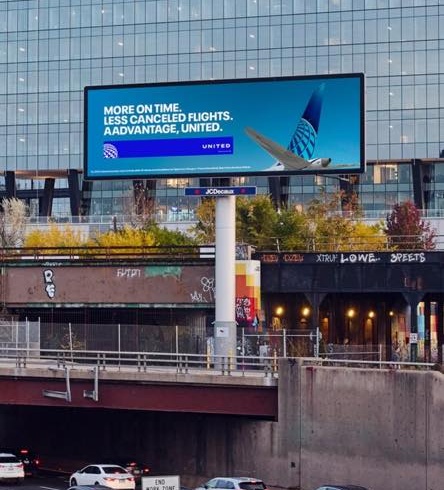
Competition is heating up in Chicago in ways we haven’t seen much of between airlines in years. The closest approximation might be Delta and Alaska in Seattle. So far we’ve seen each side adding plenty of flights, in ways that are expected to generate losses on both sides – but plenty of convenient connections, low fares, and upgrades for customers. And we’ve seen trolling billboards from United.
But there’s one thing we haven’t seen yet which is either airline engage their primary marketing vehicle in the fight. Neither one has revved up its frequent flyer program to really take aim at the Chicago market, and neither one is really doing anything in a focused way with its cobrand credit card.
It’s almost like they’ve forgotten about their loyalty programs as anything other than a revenue engine, selling miles to banks. And that’s ironic because what makes Chicago so important and worth fighting over in the first place is that it’s such an important spend market. But there are lessons from when airlines – even things airlines – still remembered.
United Brought Out The Mileage Plus Howitzer To Finish Off Independence Air
When United Airlines entered bankruptcy in 2002, it was the longest and costliest airline restructuring. It lasted 38 months, and they didn’t emerge until 2006.
During that they they worked to wring concessions out of a number of groups including regional airline partners. Atlantic Coast Airlines based at Washington Dulles didn’t go along, and decided to go independent. They were a ‘new airline’ out of Washington D.C. but also the largest carrier at Dulles airport on day one. They flew high seat cost regional jets with low fares, and they didn’t pay distribution fees – you had to book directly with them. But only local D.C. residents really knew about them. They would fly four times daily to places like Charleston, West Virginia but were largely just selling tickets – at very low fares – in the D.C. market.
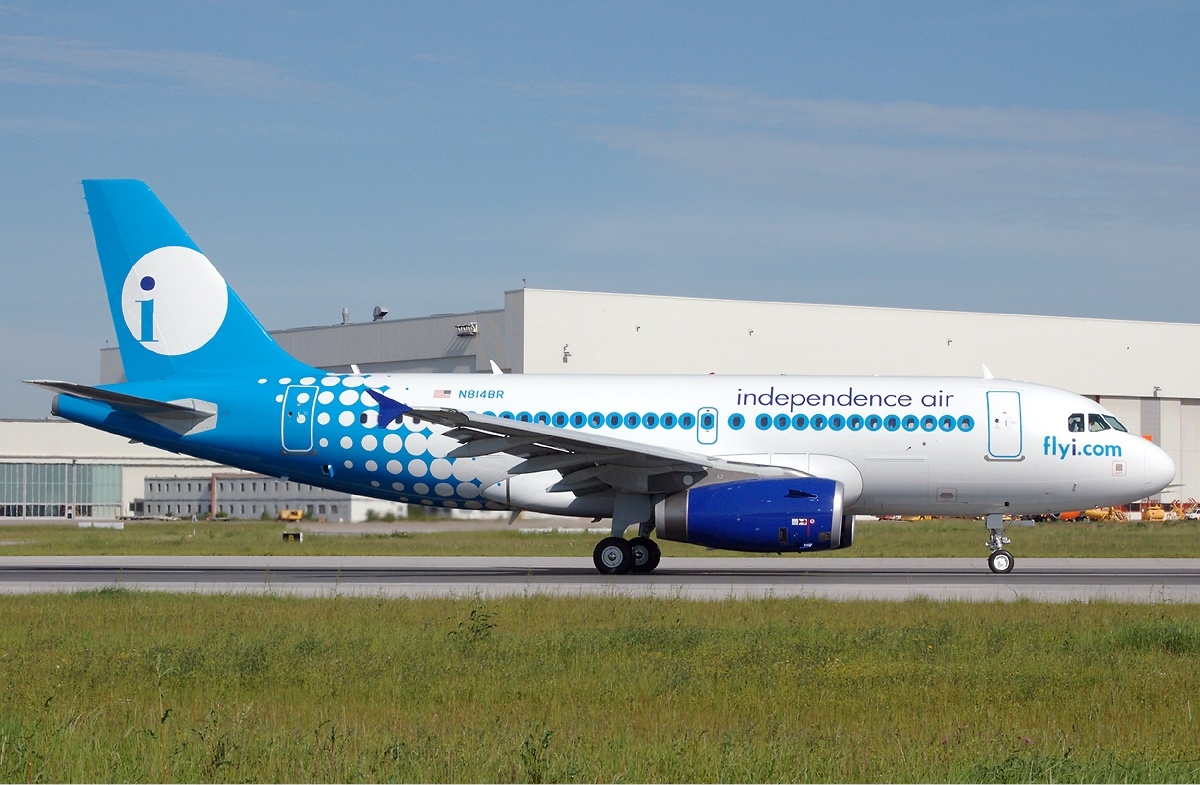
Credit: Frank Unterspann via Wikimedia Commons. Independence Air once intentionally loaded a mistake fare into their system for free publicity.
This wasn’t a very good business model. United brought in other regional airlines to provide them with connections, and fired a kill shot – they have a huge loyalty program and could reward customers for booking with them – even when they were more expensive – in ways that Independence Air never could. It was called “Go Around the World.”
- You earned separate credits in this promotion, on top of standard MileagePlus miles.
- 1 credit per flight segment originating or terminating at DC-area airports. Each ticket had to be at least $100 (while Independence Air often ran $59 fares that in many cases United would match).
- These credits could be redeemed for short haul domestic roundtrips and for round the world tickets (with tight routing constraints)
- ~12 DC roundtrips was enough for an economy round the world ticket in addition to standard miles while 24 DC roundtrips earned a business class round the world.
These round the world tickets were fun to construct. You had to travel in a continue east to west or west to east direction, stop in a given city only once, and cross both the Atlantic and the Pacific oceans. You could have a maximum of 15 stopovers, and fly Star Alliance partners only when United didn’t fly the route. No changes were permitted once travel began.
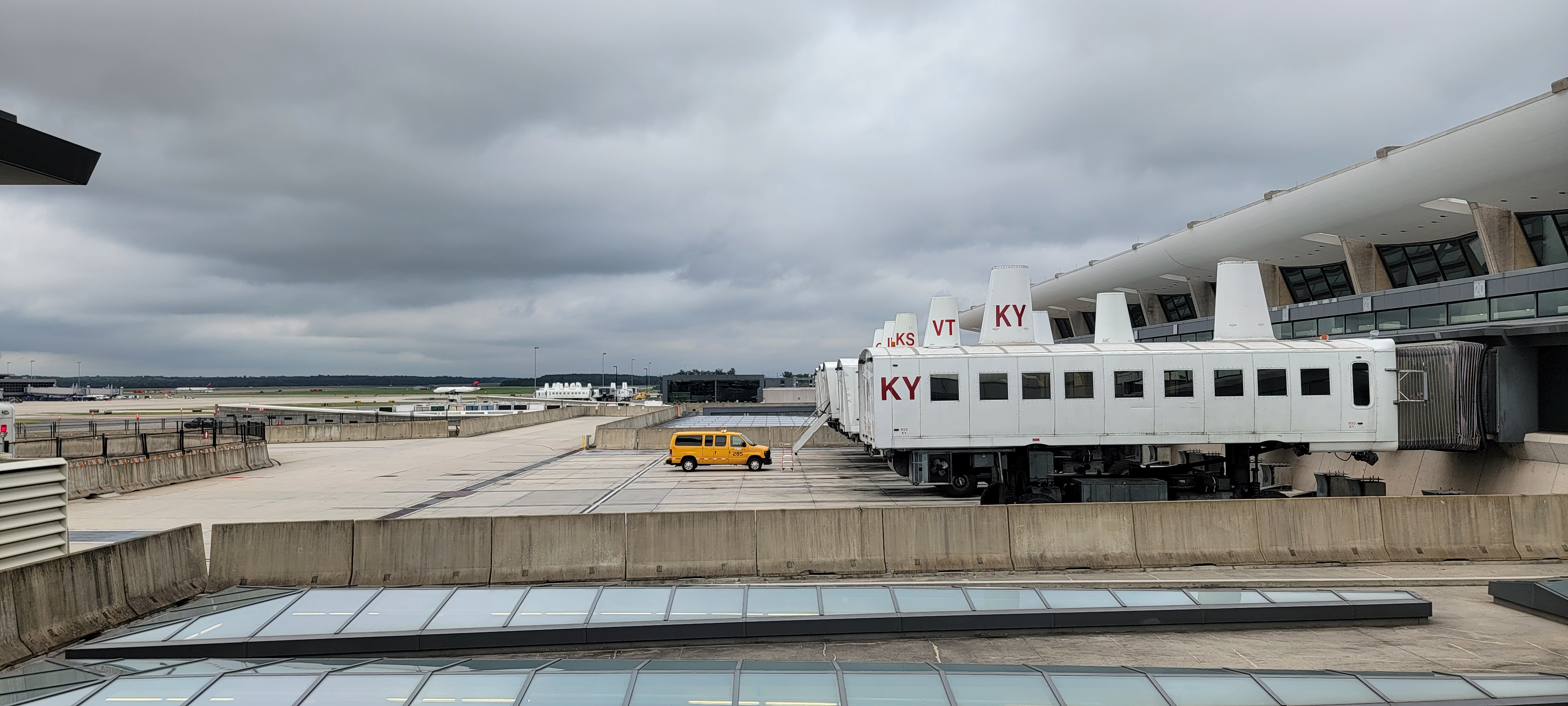
Then United Used Mileage Plus To Defend Denver
Two years later, United pulled out the Independence AIr playbook in Denver. Southwest had entered in 2006 and scaled up quickly, going after the core United routes like Las Vegas, Phoenix, and Chicago. Frontier was already pressuring fares.
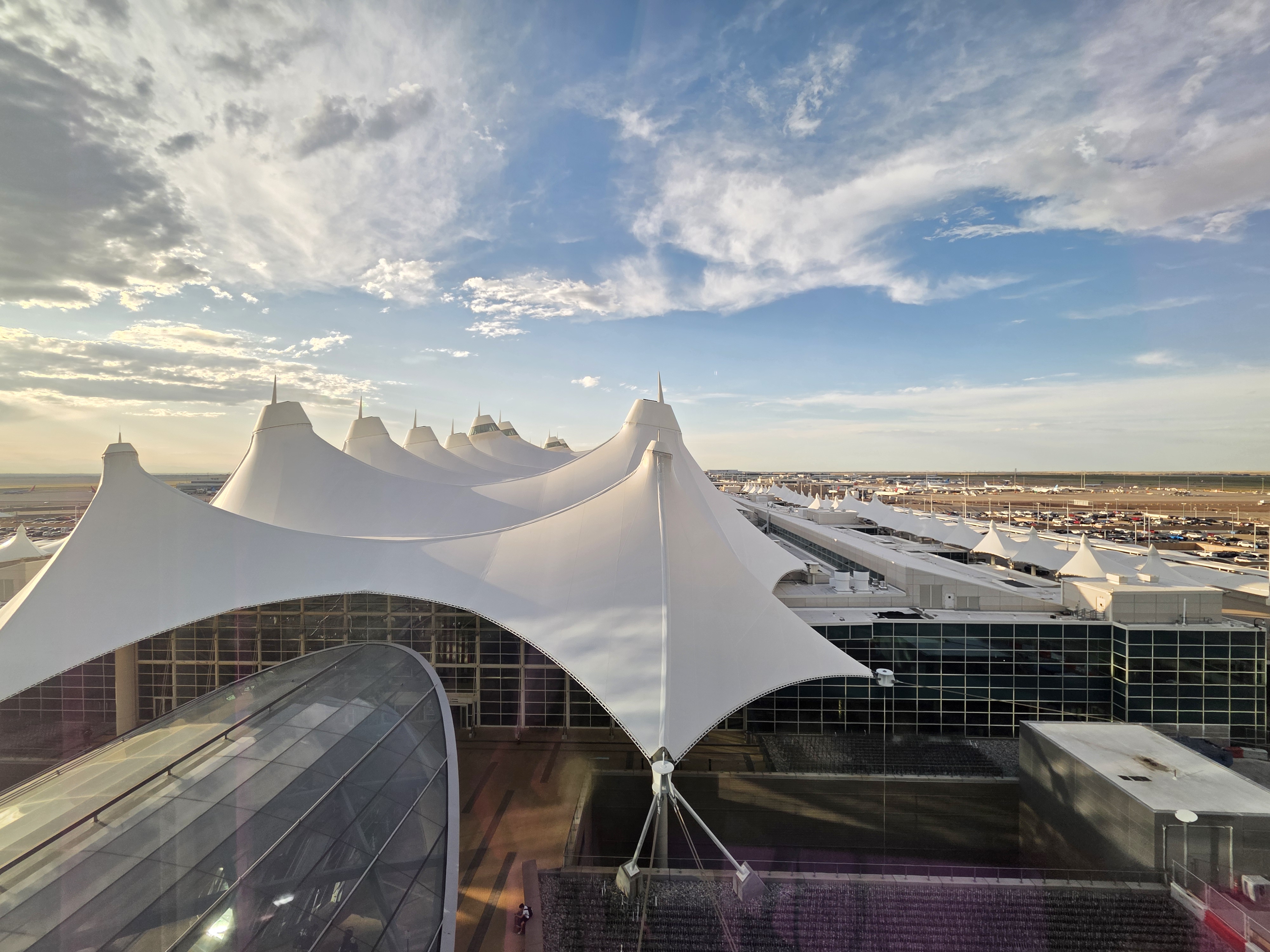
United called the 2006 offer “Denver, You Mean The World To Us.” You earned credits based on flight segments involving Denver. Qualifying tickets had to be over $150 roundtrip. Some “bonus cities” earned double. These included Baltimore, Cancun, Kansas City, Las Vegas, Los Cabos, Nashville, Oakland, Orlando, Phoenix, Portland, Puerto Vallarta, Salt Lake City, San Diego, and Seattle.
32 credits earned an international business-class award or 90,000 miles. Though you could redeem for lesser-value things along the way like a $100 off Hyatt certificate.
Market-Specific Acquisition Bonuses Are How You Build Up The Co-Brand
As Delta began building up a hub in Seattle they ran local resident bonus promotions to acquire their Amex credit card. They didn’t have an installed cardmember base there and wanted to win that business (it would become crucial to the hub’s economics) and wanted to attract away likely holders of Alaska cards.
When United Faltered, American Went After Its Elites
In 2012, when United Airlines combined with Continental, it experienced a meltdown. The computer reservation system wasn’t managed properly. Reservations were lost. Passenger miles were lost.
Policies weren’t thought through clearly – Continental was the surviving system (they owed the platform, so it was a cost-savings, but they lost far more than they saved). Continental prioritized full fare passengers over status for upgrades, and government fares were full fare. They’d never had a D.C. hub before so it hadn’t occurrede to anyone that federal government employee silvers would trump Global Services customers for upgrades. Things were just a mess all around.
American Airlines really hadn’t status matched to its top Executive Platinum tier before, but they did for United Airlines 1Ks. What’s more, they followed up to send Admirals Club passes to matched 1K members to get these customers more engaged in American’s ecosystem. And back then American had inflight wifi, while United did not yet. So American sent free wifi passes to these customers so they could get hooked on the difference flying American.
What Lessons?
It seems like American should be:
- Offering big bonuses out of Chicago (origin and destination, not connections)
- Offering double bonues – or perhaps double elite credit (loyalty points) – between Chicago and United’s hubs and other key business destinations where they both fly.
- Offering local market-specific offers to take their credit card, especially the premium lounge card.
- And promoting areas of difference between the airlines. While United is moving to Starlink, today American’s wifi is much better. They’ve kept customers connected for years, and wifi on American is now mostly free while United’s wifi is only free on Starlink-equipped planes (their system couldn’t handle free wifi on other aircraft). American’s business class food is better than United’s (United hsa better wine). More customers have access to American’s business class lounge (United’s lounge is nicer, but far more restricted).
Perhaps they don’t because they fear United would respond in-kind – Scott Kirby’s ‘line in the sand’ – and that they’d be spending on marketing for no net effect. But if that’s the case then they’ve already given up.
United is bigger in Chicago, but to the extent they are losing money failing to sell premium products they’re probably delivering more upgrades per seat on Chicago flights than United is. Turn that into a marketing win to promote to customers. United is trolling American with billboard ads, why not advertise to frustrated MileagePlus members?



Did you see that the administration is demanding NY rename Penn station after you-know-who in exchange for releasing the already appropriated federal funds for the Hudson River tunnel project? Wild. I say, fine, rename whatever, get the money, finish the project, rename it again. No biggie.
1990 for the win! First comment right out the gate, on an article about AA / UA and Chicago – and he pivots to Trump wanting to rename a railroad depot.
The man really lives in your head rent-free, doesn’t he?
@1990 WTF does that have to do with AA and UA at ORD? Really, I don’t particularly care for Trump either. He’s proven useless IME. But I don’t think everything in the world has to do with him.
As far as the topic at hand. Could we see miles promotions, a blast from the past? Maybe. Probably will see endless BE fares but since there’s no earning on those it won’t benefit FF.
The premium lounge access gap between AA and UA is notable (Flagship lounges are inferior to Polaris lounges, but are still much better than the UA Clubs that elites are relegated to on international flights. Especially since most UA Clubs don’t have showers).
Opening Polaris lounges to elites would probably overwhelm the lounges (AA’s daily nonstop long-haul business class seat count ex-ORD pales in comparison to UA’s), but a middle ground should be sought. Letting 1Ks use Polaris lounges if seated in premium economy, for example. Or giving 1Ks 2-4 passes a year for use when traveling on long-haul flights in any cabin.
Hearing rumors that the Trump Administration now wants to take over the IAD redevelopment program and turn it over to a group lead by BlackRock effectively privatizing the airport ala LHR. Would make IAD one of the most expensive airports in the world to operate out of all to line donors pockets.
Offering big bonuses on miles and double elite credit on ORD-UA hub for ORD O&D? Oh, yes, please. For that, I’d get an AA tattoo.
I’m ORD-based American EP and UA Platinum (got it through a partner who is 2mm’er). I get upgrades on my UA flights 80% of the time in/out of ORD and less than 50% of the time on AA where I have higher status. I’d be very surprised to hear AA is upgrading more people than UA in/out of ORD.
I am ORD-based and have received a targeted offer for bonus loyalty points when booking first class. However the offer isn’t specifically targeted to ORD O&D flights.
1990, Trump is doing what governors have done all along. Highway signs and highway construction signs that display the governor’s name. In Illinois, being governor practically means you will later go to prison for crimes.
I worked for Independence Air in Tech Pubs for the entire time they existed. It was a fun workplace and a great airline, but they had some very bad luck. It was a David and Goliath situation.
@Greggb57 – respectfully, i loved independence air but the business model was fundamentally flawed. it was not luck.
If AA or UA goes down this path, the other will match or one up. It’s a bad strategy.
@derek – those isn’t remotely the same thing
ORDEP: I know it’s only personal experience and anecdotal, but I’ve been upgraded more as an ExP than I did as a 1K. Maybe it’s the fact that I generally fly to smaller airports. Last week, for instance, I was upgraded on my two connecting flights through DFW, but not on the hub-to-hub ORD-DFW segments.
Gary, did you forget your own reporting of Nat Pieper’s comments?
Chicago is one of the best markets from a loyalty perspective and it’s growing like crazy. 20% [growth in] enrollments over the last 9 months, 20% credit card acquisitons over the last 9 months. We’re shifting local share also magically 20%. Fortunately it’s the same so I can remember them, but it’s a really good momentum story.
Sounds like AA is using the loyalty program to its AAdvantage.
Flying to Chicago this summer for an annual trip. We normally fly AA, but this year we might try Southwest (now that we can reserve extra legroom in advance). I hope AA offers a promo to win our business back.
Miss National Air, independence Air, Reno Air … all had great fares. If we are going further back I’d include PSA, AirCal and Western.
Dulles is already horribly mismanaged and one of the most expensive airports in the USA. Why not try BlackRock?
@Pilot93434 – on the contrary, his comments are why they should be leveraging the loyalty program. he explains that the loyalty program is the reason to do this, so why not… engage the loyalty program!
How in the world can Scott Kirby see “a line in the sand” while he’s on his four paws kissing Donald Trump’s filthy feet?