
An off-duty FAA safety inspector, who had been investigating United’s Boeing 737 MAX fleet, was flying San Francisco – Lihue on May 12, 2022. He says that he noticed his seat had a torn seatback pocket, which he says “impaired” securing and accessing the safety briefing card, which is a violation of FAA rules. He took a photo of the torn pocket and a second photo of a passenger standing in the aisle during pushback.
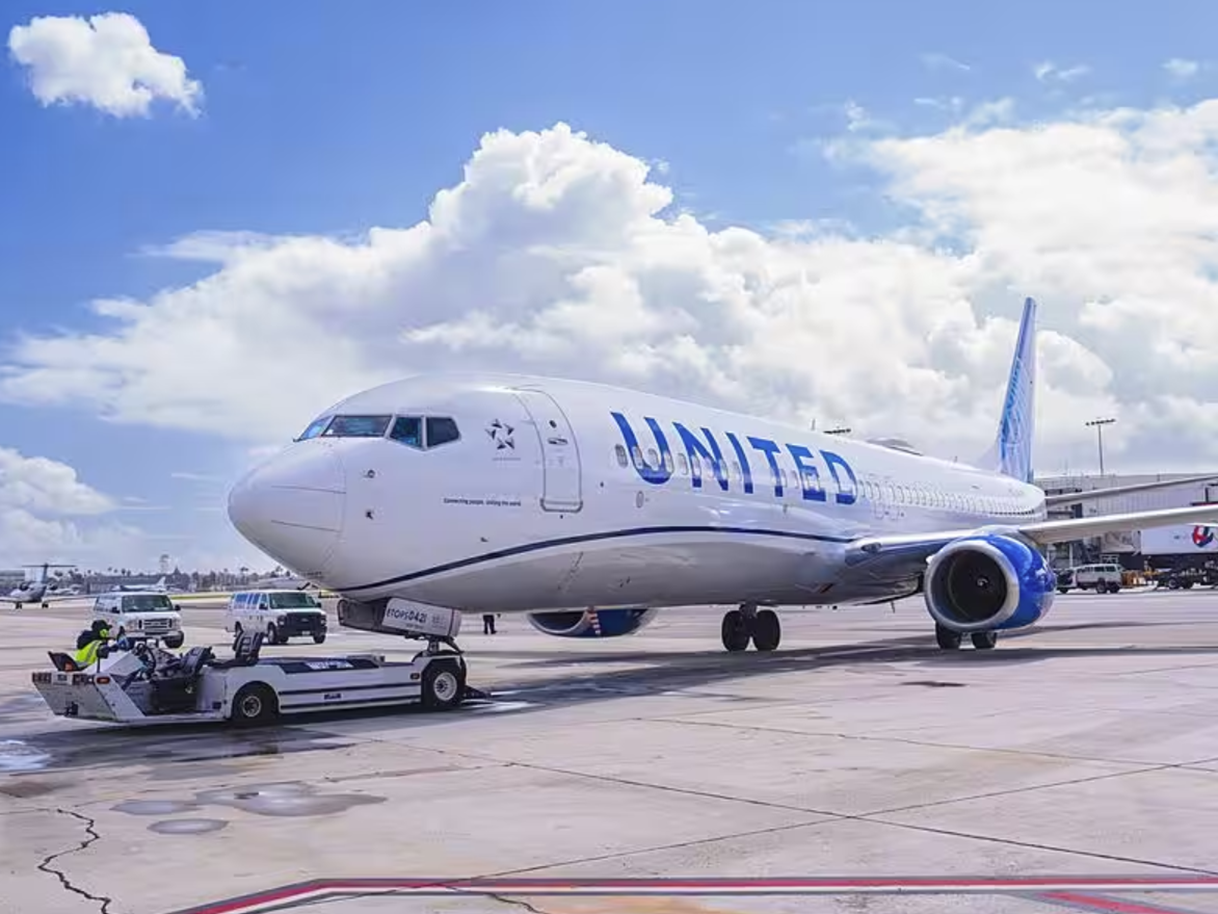
The crew thought he was photographing them and being combative (and angling to move to a better seat for free). The passenger says that the captain demanded he show the photos he’d taken – or the aircraft would return to the gate. He says he complied, but the aircraft returned anyway and he was removed from the aircraft. United then allegedly:
- Imposed a lifetime travel ban
- Demanded $3,153 in restitution for the return to the gate.
- Filed a complaint with the FAA, which then led to a civil penalty enforcement action against him.
Since he was under investigation, he was removed from safety oversight duties involving United. He alleges this was United’s objective. And I wouldn’t blame them for wanting this – he strikes me as officious, focused more on rule compliance than safety.
He says that the enforcement case against him was dropped, that United’s witnesses were deemed unreliable, and warned that punishing safety reporting would have a chilling effect – but that United refused to lift his ban. That’s when he sued for $12.75 million.
There’s really two separate things going on here:
- Removal from the aircraft and ban
- Report of his conduct to the FAA
The plaintiff crafts a strong retaliation narrative and offers motive. And if United allegedly portrayed him to the FAA as disruptive, dishonest, greedy, or threatening (factual assertions) then there’s a claim for defamation and reputational harm especially with his role as a safety inspector. However, United has very strong procedural defenses.
- Airlines have tremendous discretion in refusing to transport passengers. 49 USC § 44902 provides broad latitude, within certain bounds laid out by the FAA, for the captain of an aircraft to refuse transportation to a passenger if they feel that passenger might be “inimical to safety.”
A pilot’s decision cannot be arbitrary or capricious – but that’s not the same as saying it has to be reasonable. It’s generally presumed that the actions of the pilot are reasonable, and judged based on facts the pilot was aware of at the time and the time constraints they’re under.
- If they’re given only one side of the story, and it’s incomplete
- And they make a decision based on that information
- And they’re in a rush to get the plane out
- That’s probably going to be fine under the law
Given the removal follows a captain’s judgment, it’s going to be tough to prevail on claims related to be removed from the aircraft. And state law liability will be pre-empted by the Airline Deregulation Act as the removal was clearly “related to a…service” of an air carrier. - If they’re given only one side of the story, and it’s incomplete
- United will argue that their communication to the FAA is protected activity, and that there’s a high burden on the plaintiff for that. Statements made in an official proceeding are tough to make defamation claims over. Furthermore, the airline will argue that the FAA’s decision to investigate and reassign duties is their own government decision, not something United had any ability to ’cause’.
I’ve only ever seen one person plausibly claim they were banned by a U.S. airline for their views and commentary, but it turns out they were banned for abusive behavior towards the airline’s employees. Aeroflot, though, has been known to revoke elite status from journalists and passengers who criticize the airline.
Here, it seems like he was banned for being disruptive – maybe unfairly! And maybe his animus meant he shouldn’t be investigating the airline. There don’t appear to be any allegations that FAA safety oversight was any less aggressive. Indeed, the agency subsequently undertook special safety monitoring of the airline (Certificate Holder Evaluation Program) – which they concluded.
(HT: Paddle Your Own Kanoo)



Settle. Pay the man something reasonable. Un-ban him. Move on.
Off duty!!! Period.
Something’s wrong with this but I can’t put my finger on it. An FAA safety inspector is no different than a police officer. On official duty or not, they are still “on duty” 24/7/365. Without all of the facts, I shouldn’t judge but if I were on a jury with just these few facts… toss the case out and make the FAA agent pay for the wrongful suit. “Loser pays” might stop some of the frivolous law suits.
This sounds like a small issue that spiraled out of control, perhaps personalities colliding rather than cooperating to solve something on the spot. Telling the passenger to sit down and using a piece of tape to hold the pocket should have been fixes, but who knows what stresses everyone was under. Too bad, without being there it just seems that somebody needed to stop, take a breath, and remember how to be a calm professional.
As I said in a different thread, United has little regard for their customers. I don’t know all the facts here but United needs to wake up about its behavior towards the flying public.
Pilots kicking people off of airplanes is not due to independent analysis. The flight attendants or a group of them want those people off and the pilots are the people who makes that happen. The alternative is to turn the flight attendants against the pilot if a pilot comes to a different conclusion. All sorts of bad situations could result. Staffing issues, food safety and other issues may arise as retaliation. I suspect the United witnesses that were unreliable were flight attendants and their lying, which is part of the airline culture, can be torn apart by good lawyers. I would like to see a outcome like this: United gives the FAA agent $12 million in settlement and gets to keep the flying ban. Each side loses some. The agent gets to retire immediately and move to someplace where United doesn’t fly, maybe outside of the USA.
It’s so comforting to know we have a government agency that looks out for our safety. That torn seat back pocket could have been a real problem. He should have been fired for being so stupid. What a joke.
Just a power tripping fed. Safety over a seat back pocket? Yeah right.
I agree with what another post here, FAA inspectors are on duty all the time and if they see something they should say something.
I was a flight attendant for 10 years, I once had a captain return to the gate because all the Passenger Safety Information Cards were all Expired, we never found out how all of them were outdated but the fact is I could have been fined $10k for each one and this was a 50 seater plane so you do the math. Prior to being a flight attendant, I was a Safety and Security manager so I took safety and security very seriously. The Captain was pissed when he came out of the cockpit but once I handed him all of the outdated cards he changed his tone and understood.
As far as passengers standing up during taxi that is a serious safety problem, even if the passenger didn’t take their own safety seriously they have to think about the people around them. If the pilot has to hit the brakes for some reason (and it happens) that passenger will be thrown through the cabin and hurt himself and possibly another passenger falling on top or into of them. All the rules on airplanes were put in place for a reason, at some point someone was hurt or worse and the industry said “We better make a rule for that”, they don’t make rules to inconvenience you, it’s for your safety.
My biggest pet peeve is passengers who take their seatbelts off as soon as the wheels hit the ground…
Remember most accidents happen on taxi, takeoff and landings, keep your seatbelts on until you get to the gate!!!
This sounds like someone is looking for a payday. There is no way a torn seatback pocket could be construed to impede safety. As a former FAA inspector myself this is just too fishy.
Gary,
The tone of your article indicates that you are not familiar with most of the particulars of this case.
The judgement of the U.S. Administrative Law Judge is 45 pages and has six summary findings; all in favor of the ASI in question. The judge questioned the candidness and honesty of the United witnesses based on the testimony of both the ASI and an Off Duty Captain sitting in the seat in question. There was also the matter of a wire protruding from the pocket assembly that could potentially injure a passenger.
She also stated:
“it is every person’s regulatory duty, including aviation passengers, to report aviation safety concerns. 14 C.F.R. 13.2. It is also well established that ensuring safety and compliance with aviation safety regulations is part of the flight crew’s normal job flight responsibilities. Part of these required flight crew safety-related duties is to listen to a passenger (or other person’s) report of aircraft damage and/or safety concerns, and to relay such reports to the Captain for logbook entry and action. Second, it should not matter whether Mr. (ASI) was an FAA employee or an off-duty FAA Safety Inspector, or just an anonymous traveler. Any passenger on any regulated aircraft should be able to report any perceived potential safety violations without fear of dismissal, reprisal, public criticism, or personal vilification.”,
thereby questioning the FAA’s contradictory policies regarding ASI reporting of defects and duty status whether on or off duty.
The FAA is currently revising their guidance to ASIs as to conduct when “off duty” and display of their ASI credentials and Badge.
The judgement concludes with:
“Page 44 of 44
IT IS HEREBY ORDERED:
1. The FAA failed to prove, by a preponderance of the evidence, that on May 12, 2022, Mr.
(ASI) committed a violation of the Interference Rule (14 C.F.R. § 121.580)
either by intimidating or interfering with a crewmember in the performance of the
crewmember’s duties.
2. The Interference Rule charge (14 C.F.R. § 121.580) against Mr. (ASI) is
dismissed with prejudice.
3. Pursuant to 14 C.F.R. § 13.232(d), this Initial Decision shall be considered a final order
unless either party files a notice of appeal within 10 days of service of this Initial
Decision pursuant to 14 C.F.R. § 13.233.
No appeal was filed.
I just thought you ought to know. There’s a lot more to this story if you’re interested.
@ Pepper. You can go ahead and believe that the passengers standing during taxi is a “serious safety problem” and you will continue to be wrong. This rule came about from complaints from AA and BN about WN pushing back with passengers standing in the aisle in order to stay on time with the “10 minute turn” (112 pax off/112 pax on) not from a myriad of injuries.
Question: Is it a serious safety problem to have the “trained professionals” (flight attendants) standing in the aisle and performing duties when on the ground or below 10,000 feet?
Hi, I’m from the FAA and I’m here to help. We’re not happy until you’re not happy!
AB where can one find the full administrative law judgement
United doesn’t have to wake up. They know they rule the “ friendly skies”. Flying is an inconvenience not a pleasure.
He filed the complaint pro se (representing himself without a lawyer). This is usually a sign of a very weak case, and that the plaintiff may be a bit of a crank or difficult. (Plaintiffs’ lawyers will work stronger cases for a contingent fee where the client doesn’t pay anything up front, but the lawyer gets a cut of any settlement or money damages later.)
Is the author being paid by United? Certainly seems like it…
To lighten the room a bit, as an 18yo ramper, was pushing an A320 out when the Captain called on the headset for.me to “hit the brakes and stop.” I followed the command, albeit puzzled. He came back on the mic,. “We had someone stand and go into the overhead, he wouldn’t sit down, YOU GOT HIM.” We had a good laugh and once he belted back in, we were on our way. America West, 1996, gate B6. 30yrs later, remember those fum ramp days like it was yesterday.