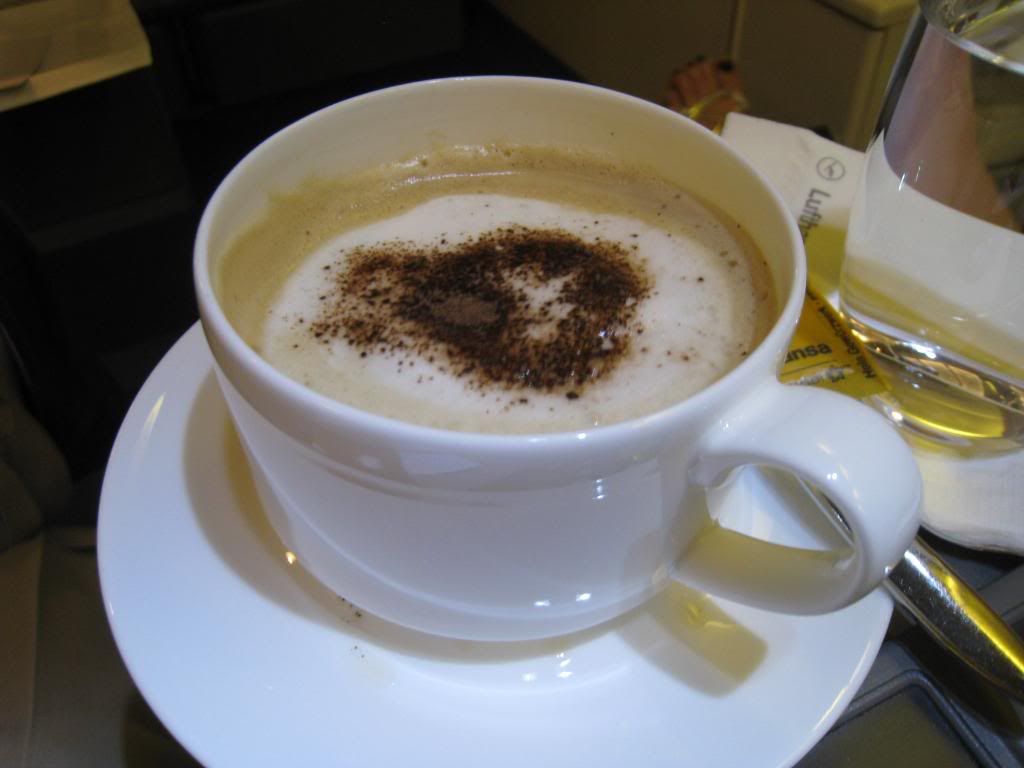
That inflight coffee and tea is made with water pulled from an aircraft tank, not a kitchen faucet. New analysis of EPA aircraft water filings graded major airlines from A to F. One carrier scored a perfect 5.00, two airlines got Ds, and the reasons are pretty specific.
A scorecard that grades 21 airlines (10 major, 11 regional) on aircraft drinking-water safety using EPA data for 3 years gave each airline a 0–5 “Water Safety Score.” It looks at:
- violations per aircraft (20%)
- E. coli level violations (35%)
- total-coliform indicator positives (20%)
- public notices (15%)
- disinfection/flush frequency (10%)

The big findings were to assign a perfect score of 5 (A grade) to Delta, and also that Frontier came close at 4.8, while American 1.75 (D) and JetBlue 1.80 (D) were at the bottom for major airlines and regional carrier Mesa, now part of Republic, failed at 1.35.
Across the dataset they count 35,674 sample locations, 2.66% total-coliform-positive, and 32 E. coli MCL violations. Regionals fare worse than major airlines with positivity rates for coliform.
This is a relative performance ranking, and not a claim about a specific plane or flight. Even on Delta I’d stick with sealed bottled beverages and be cautious about drinks made from aircraft tap water, which isn’t like the water most Americans have at home. It’s loaded into a tank, sits through temperature swings and periods of stagnation, and moves through a small plumbing network to galleys and lavatories.
There’s a dedicated regulatory regime for this: the Aircraft Drinking Water Rule. And the scorecard looked at EPA data from October 1, 2022 through September 30, 2025.
35,674 sample locations tested for total coliform, 949 (2.66%) were coliform-positive and 32 E. coli MCL violations. There were 931 total EPA rule violations.
Major airline results:
- Delta 5.00 (A)
- Frontier 4.80 (A)
- Alaska 3.85 (B)
- Allegiant 3.65 (B)
- Southwest 3.30 (C)
- Hawaiian 3.15 (C)
- United 2.70 (C)
- Spirit 2.05 (D)
- JetBlue 1.80 (D)
- American 1.75 (D)

American’s low score is attributed in part to public notice penalties plus E. coli violations.
According to an American Airlines spokesperson, though:
American’s potable water program is fully in compliance with the Environmental Protection Agency’s (EPA) Aircraft Drinking Water Rule (ADWR). A recent EPA audit showed there were no significant findings with our program, and we have not received any violations for any potable water cabinets or trucks that we use. Our team is closely reviewing the Center for Food as Medicine & Longevity’s analysis — including its methodology and whether it was peer reviewed — to determine any potential changes that would further enhance the safety and wellbeing of our customers and team.
This is grounded in a real regulatory dataset over a 3 year window with tens of thousands of sample locations. The study publishes its weights, penalty logic, grading cutoffs, and quintile thresholds so it’s reproducible.
Here’s one major limitation I think that’s spelled out in the methodology: the “Aircraft Sampling Operations” export includes an E. coli present/absent field, but does not include an explicit total-coliform result field.
- So the study derives total-coliform results by parsing the System Operations “Sample” event Details text, which contains two “Location:” blocks per row and includes “Total Coliform: Present/Absent”.
- Each “Location block” is counted as one sample location tested.
- So the results depend on consistent formatting.
Without looking at the raw data it’s not clear how good the coliform data actually is here, and how much that’s driving the results (though we know the percentage of score it feeds). The report also flags that many violation rows lack an end date and are excluded from totals. And ultimately this is a compliance evaluation, not a sign of current safe consumption.

My concern isn’t just about whether airlines meet minimum regulated standards. And this isn’t just an American Airlines (and JetBlue) thing. Disinfecting water tanks annually does not appeal to me. I choose not to drink the coffee, and that goes even for United’s Illy. I don’t brush my teeth on long haul flights with water from the lav sink! I bring a bottle of water in with me.
(HT: Ken A)



Delta 5.haha. I have worked in water testing facilities and seen tests on home wells , public water supplies etc and they never get a perfect score. So if you think you can put queens water into a delta jet at jfk and it get a 5 then. There. Is a bridge for sale in Brooklyn
I have worked in the water testing area for years and if you think a home well in public water supply if it gets a perfect great, then there is a bridge in Brooklyn for sale for you
You’re taken Queens, New York water at JFK and put it into a Delta plane and you expect it should be a five ha ha
wow… DL serves perfect water too!
Only Premium water on Delta
Another Gary loves Delta blog.
Beep flying for 39 year. Have had coffee on every major domestic US carrier and a few international carriers. Still alive. No poisoning, no cancer, no third appendage coming out of my forehead.
This is a problem looking for a solution. If people we are so concerned about clean drinking and healthy drinking water we’d stop taking things out of the water supply that have been left in based on sixty years of science (not religion).
I usually drink Diet Coca Cola or Diet Pepsi or bottled water (usually poured into a cup) on flights. Once in a while on flights to or from Asia I will drink black tea but I usually don’t because it makes me want to pee. When drinking a soft drink, I like to get the whole can. The contents are sterile but the cans have been who knows where so cleaning the top of the can before opening can be a good thing. A person concerned about germs would clean the whole can with a wipe.
GMAFB.
A perfect 5? Over a 3 year period?
What a joke!
Gross. What kind of schmuck drinks tap water or coffee or tea on a plane.
It doesn’t matter whether you drink it or not.
The EPA requires water on airplanes to meet the same standards for consumption as on the ground; many other countries allow their airlines to post that airplane water is not potable but US airlines are not allowed to do that – even though the data above shows some should.
It is about complying w/ the laws that have been established.
You don’t have to drink tap water from your own house if you don’t want to but the US requires that it be safe for you to do so if you are connected to a public water supply.
There are dozens of daily habits that are far more dangerous to your health than airline water. Try exercise and a good diet for starters.
@tim Dun Ever hear of Flint Michigan ? EPA did not do a good job there!
It is the local health dept that monitor water supply.
AZ, WA, CA, PA, NJ consistently rank poorly due to contaminants like Chromium-6, PFAS, lead, nitrates, and arsenic, often hitting rural areas,
Agree with Dillon if someone gets a 5 out of5 then that is odd.
Delta once again proves it’s more premium than the others within the basket case of US airlines, none of which has been made you know what again.
As a mechanic for a major that isnt delta, I’ve done the potable water sanitation card countless times. You hook up the ozone cart to the water system on the plane and run water through the ozone cart for 30 minutes, then you run each faucet on hot then cold for 3 min each, then the hot water for each coffee maker. If the water has been failing that badly, either the ozone carts aren’t working or the water they put on the plane is bad.
My team at American takes water samples constantly we’ve been doing this for years. My team has very intense training and are absolutely the best. I can not remember when an epa water test failed the aircraft water tanks are constantly disinfected by various methods the sinks and water nozzles are cleaned constantly I think this is a BS story or some skewed results.
JetBlue has good water and coffee on regular flights; Mint has higher quality bottled waters and espresso machines. Gary must not fly B6 much. This study is flawed and pointless.
@Alex L — At least US carriers actually provide water. Icelandair had to be brought to the Hague for humans rights abuses because they used to not provide any water to their passengers (unless they paid-up).
Is this water tested from the coffee makers which have water filters on them? Or is this from the lavatory sink which clearly displays it is not drinkable?
Now everyone here is a water quality expert. The commenters never cease to amaze.