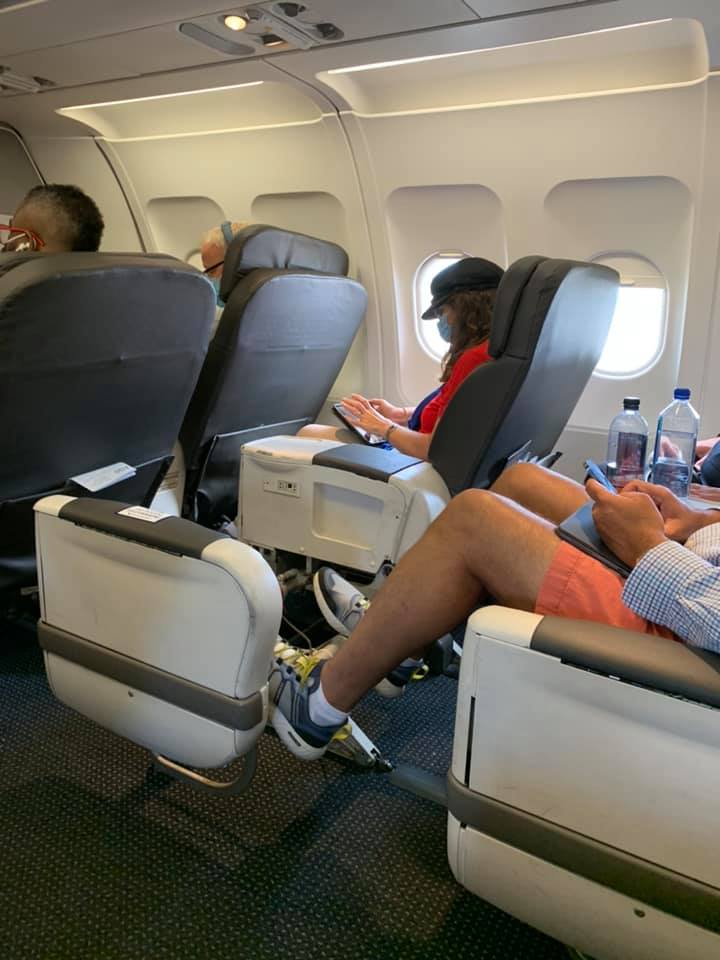
This photo of a legacy US Airways Airbus A320 first class seat still shows the old Airfone slot. The sticker says that the phone was deactivated March 31, 2002. But the slot is still there! Those old US Airways seats were never updated after the 2013 merger.
The spaces for the phones are still there, and the passenger experience on these ‘basket of deplorables’ aircraft is worse even than the rest of the domestic fleet.
US Airways had Verizon Airfone service that actually lasted several years past the date on this sticker, which matches when American deativated its AT&T service. In other words, it must have gotten a leftover sticker after the merger, perhaps when the Airbus A320s got new seat covers.
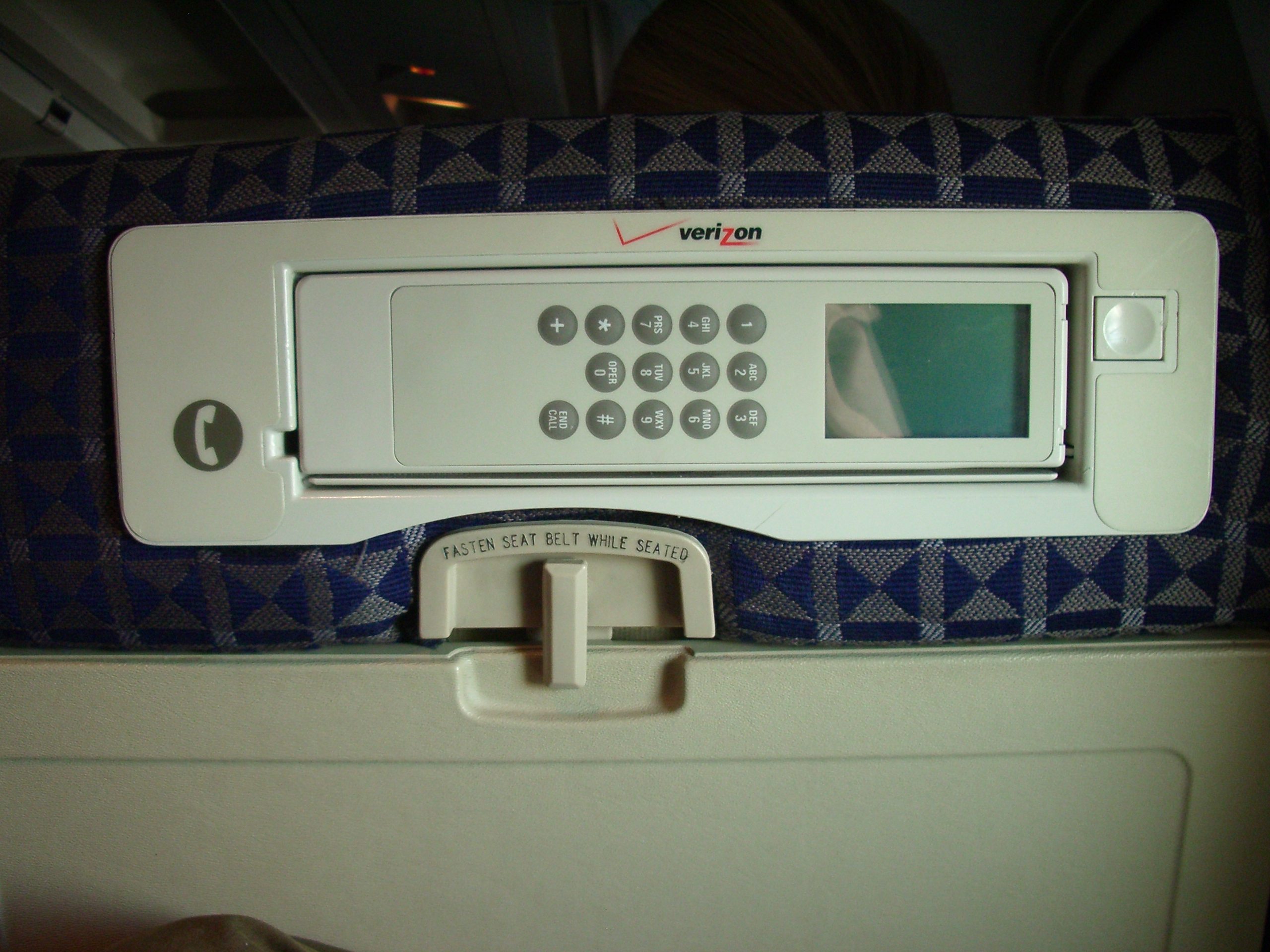
Credit: Mike Kuniavsky, via Wikimedia Commons
The Airfone was conceived mid-1970s, and received its first FCC license in 1980. Commercial launch was on Delta in 1984 and by 1987 it was on about 475 aircraft across 16 U.S. airlines. By 2001, 62% of U.S. commercial aircraft had some form of Airfone installation. However, in 2004 Airfone’s CEO said just 2–3 passengers per flight used it. The problem was it was expensive!
- In 1987 it cost $7.50 for the first 3 minutes domestic, and $1.25 per minute afterward (international rates were twice as high).
- By the mid-90s it was $2.50 per minute plus a $2.50 – $3.00 connection fee. They also trialed $15 flat rate per call pricing.
- At the end, it priced at $3.99 per call plus $4.99 per minute. However there were SkyMall promos allowing free calls to buy dreck.
Verizon announced the shutdown of Airfone on commercial flights by the end of 2006. JetBlue’s LiveTV bought the remaining Airfone network. And Aircell (Gogo) bought the Airfone business and permanently decommissioned it on December 31, 2013. The band that used to be Airfone transitioned to broaden out Gogo air air-to-ground service.
On 9/11 Airfone was a major reason the passengers knew what had happened to the ohter planes, and why they fought back. The National Park Service has a summary of calls from the flight.
- There were 37 phone calls placed between hijack and crash.
- 35 of the 37 calls were made using the seatback Airfones in the last nine rows.
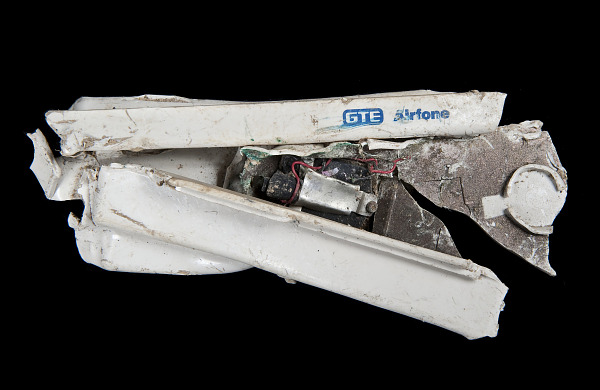
Airfone from the wreckage of flight 93
Those calls are the source for what we know about hijacker behavior onboard, the “let’s roll” discussion among passengers, and that they knew the other planes had been flown into buildings. Airfone ultimately waived all charges for domestic calls placed that day.



Didn’t Breeze have a somewhat insensitive discount code ‘LETSROLL’ recently? Great comment thread at DoC on that…
https://www.doctorofcredit.com/breeze-airways-35-off-base-fare-with-promo-code-letsroll-round-trip/
That’s nothing…in the late 90s Gen Xers could fly planes manufactured during their own year of birth on AA. What a thrill that was.