
A lawsuit against Southwest Airlines is getting a lot of play in mainstream publications, claiming that the airline first denied a woman a wheelchair and then abandaned her in an airport restroom. She says the incident triggered a severe panic episode and long-lasting distress.
The lawsuit is Ellison v. Southwest Airlines Co., U.S. District Court, Eastern District of California (Sacramento Division), Case No. 2:26-cv-00404-JAM-CSK.
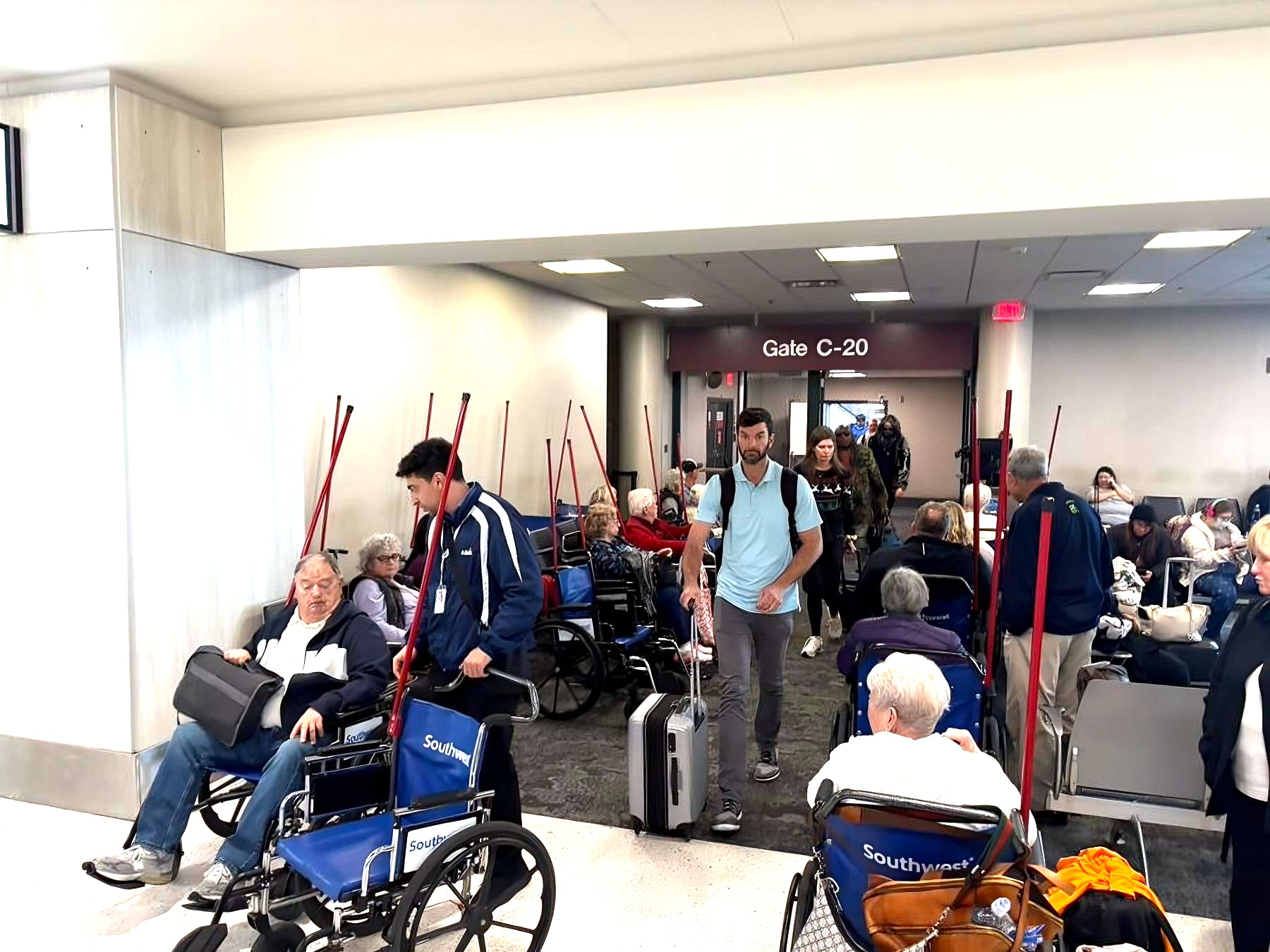
Mary Lynn Ellison says she bought a Southwest itinerary that included a connection in Atlanta for travel on February 11, 2024. She requested wheelchair assistance. When she arrived in Atlanta, though, she says an airline employee refused to provide assistance. She says she was left standing, then forced to sit on the terminal floor while waiting.
After a “prolonged delay,” she says a cart arrived and took her to a restroom. However, the cart operator (I’d guess a contract employee working for Prospect) left her there and took off. When she found someone to help her, she was told that the wheelchair that had been available “was taken.” Ultimately a wheelchair arrived about 10 minutes before boarding, and she got on the flight.
Ms. Ellison is claiming “immediate and severe” emotional distress with panic symptoms and physical manifestations: sleep disruption, hypervigilance, and worsening avoidance of air travel. Southwest offered a $150 voucher.
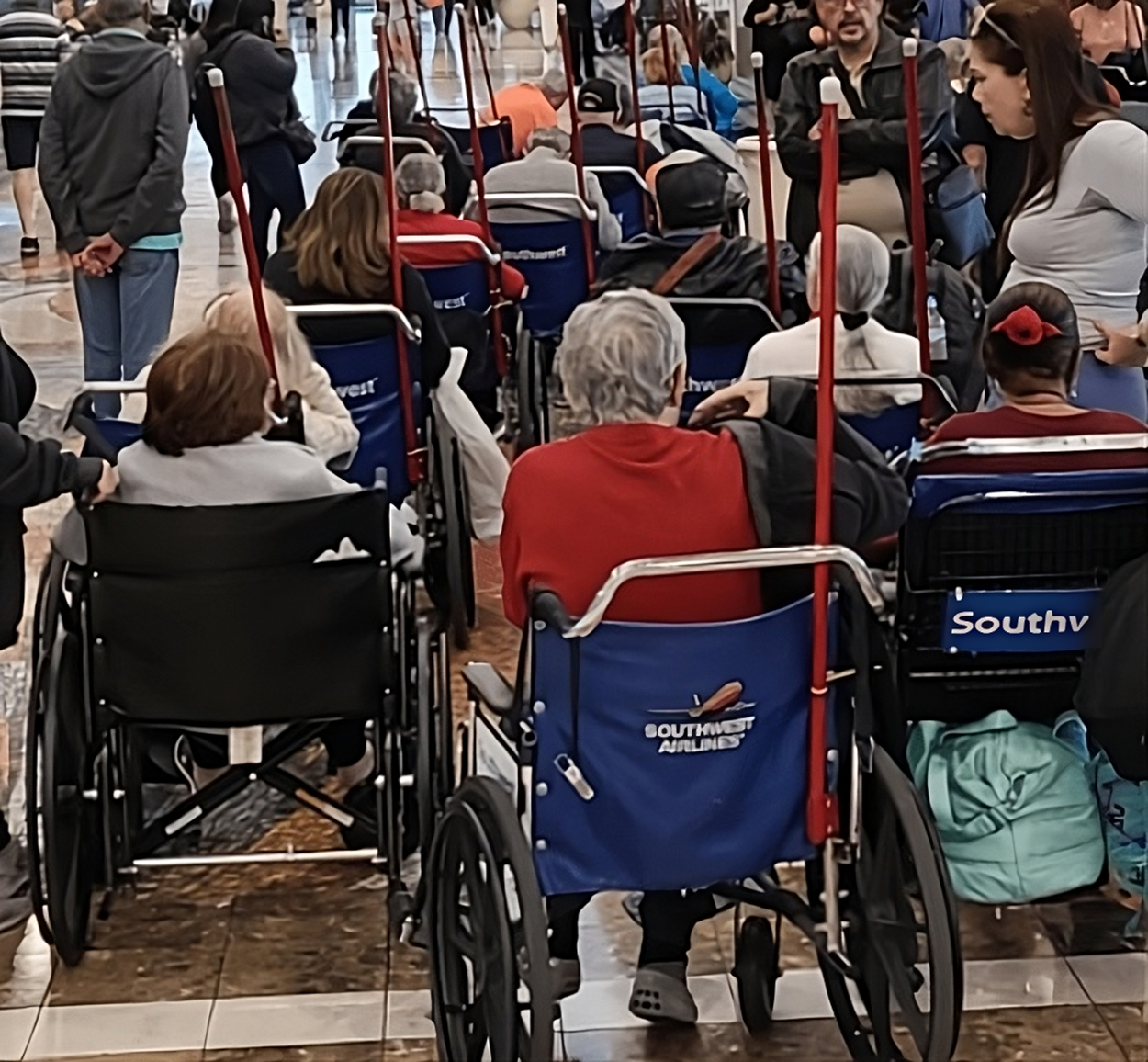
- Prior to the start of assigned seating late last month, Southwest Airlines had far more wheelchair requests than any other airline (wheelchair passengers board first, and had access to the best seats without paying).
- Southwest told her she took too long in the bathroom, and that the attendant went to help someone else in the meantime. Wheelchairs are scarce, staffing up has been a challenge for companies like Prospect who provide these services (at the wages they offer). In other words, it’s important to keep providing wheelchair services to other people rather than just waiting on one passenger.
She has initiated a state law cause of action for violating the standard of care she calims is set out by the federal Air Carrier Access Act.
The claim is that the ACAA sets out a “no unattended passenger” rule: a carrier must not leave a passenger who requested required assistance unattended in a wheelchair (or other device) for more than 30 minutes when the passenger is not independently mobile. But as far as I can tell she wasn’t in a wheelchair, and she was independently mobile in the bathroom.
She arguess that Southwest violated its duty of care in failing to provide disability assistance promptly (but it was prompt enough to make her flight!), safely, and in a coordinated manner and by forcing her to sit on the floor, abandoning her at the restroom without a handoff, and generally failing to provide safe/dignified/reliable assistance consistent with federal duties.
Of course, wheelchair passengers are made to wait all the time. Perhaps this isn’t reasonable. Perhaps airlines should be forced to pay more for the service, to support higher wages and attract more wheelchair staff. But that’s – so far – never been the requirement.
Here’s what seems squirrely to me about the case. The suit is filed in the Eastern District of California even though the incident happened in Atlanta, Southwest is based in Dallas, and the passenger lives in South Carolina. Southwest’s flights to California surely aren’t enough of a jurisdictional hook to leverage California law for the suit.
Furthermore, the Air Carrier Access Act is clearly the statute she’s relying on for the suit. That’s federal law. And it’s enforced by the Department of Transportation, through its administrative complaint process. It doesn’t establish a private right of action.
Southwest will try to preempt state claims as well, arguing that the wheelchair service failures are “related to a … service” of an air carrier and thus disallowed under the Airline Deregulation Act. (Claiming wheelchair assistance is not a ‘service’ of an airline could be tough. But getting the case out of the Ninth Circuit will help them.)
At the end of the day, Southwest provided assistance and the passenger made their flight. She claims emotional distress, but those seem attributable to pre-existing conditions and the incremental harm here is likely limited. They probably should do better, but I’m not sure they violated the law.
I’d expect this case gets moved to the Northern District of Georgia, and several counts get dismissed early. She probably keeps a negligence claim long enough to extract a settlement in the tens of thousands of dollars, because ‘Southwest abandons wheelchair passenger in the restroom’ is not a good look.



Since this is a cost the airline must absorb you can fully expect they will contract out to the lowest bidder. To be quite honest the elderly should not fly unless they really need to. The system can’t really look after them properly and if they have a medical need it will be anywhere from 30-60 minutes, longer if over ocean, before a plane can get on the ground.
So, George Romey, what is your cutoff age between ‘normal-age’ and ‘elderly’? And why shoud it be age-related at all? A 30-year old with severe disabilities / conditions coud be an equal ‘problem’, if not more so!
Usually in a case of negligence, depending upon what law is applied and whether the filing party potentially contributed in any way to the negligence and what percentage of negligence was contributed by the plaintiff, if any, regarding such negligence, that can impact the outcome and can reduce any awarded damages, Generally, in many jurisdictions, the Defendant is responsible for any injuries to a Plaintiff as a result of such negligence and takes the Plaintiff as they are found. This is generally known as the “eggshell skull rule” where defendants must take their victims as they find them. This means that if an individual has a “thin skull” or other pre-existing conditions, the Defendant cannot use this as a defense to minimize liability. The blogger’s comment that Plaintiff’s injuries are “attributable to pre-existing conditions and the incremental harm here is likely limited” shows a lack of knowledge of actual law.
Normally airlines give a 25 dollar gesture for issues maybe 50 or miles equivalent
They tend to go 150 for wheelchair issues due to potential legal ramifications
As described, it’s a scam. 1. It appears the person came to the airport counter unaccompanied and without any personal mobility device or help. That doesn’t negate the need for a wheelchair, as many airports have long distances to travel, but it does mean she wasn’t an invalid, requiring assistance on and off the toilet, and in and out of the bathroom. 2. The placement of the suit in the 9th Court (very liberal) in California is more evidence of a scam. It’s clearly court shopping. I can see where she’d panic that her wheelchair escort left with the chair – but that’s more of a communication issue (if I’m not here, don’t worry – I’ll be back and you’ll not miss your flight.) than a service failure. She simply wasn’t disabled enough to require fully attended service. While I empathize with her “panic” at being left, a look at her watch would have pacified her for having enough time to make the flight. Of course, perhaps she just wanted to be the first to board, and it’s all a con against other passengers. Did she walk off with other Jetway Jesus Cured upon conclusion of the flight? That’s critical missing information!! and yes, I flew Southwest often enough to be jaded about all those “needing” wheelchairs. Apologies for not being more empathetic, but in this case, the suit seems opportunistic and a sham.
Maybe another SWA bathroom miracle and the women was able to walk out of the stall.
Technically the fault is on the contract employee / contract company. But dont sue them, not their mistake as SWA has deeper pockets to sue.
Some people have no shame and won’t ‘do the right thing’ so, some companies (and a-holes) only listen if you sue them. Wishing the passenger the best.
“Southwest told her she took too long in the bathroom,……” Sounds like Mary needs more fiber in her diet.
This whole thing sounds phony. She should have gotten better advice to put her story together before rushing into a lawsuit. Not one word rings true. Hope we get to hear the end when this gets tossed.