
Spirit Airlines is in freefall. They are in their second bankruptcy in short succession. They had to post significant collateral just to keep processing credit cards. They are giving up planes, routes, and destinations. They sold their gates at Chicago O’Hare to American and United. Employees have been fleeing in droves. Their operational reliability has faced challenges. And now they’re losing one of their co-branded credit cards.
For most airlines, credit cards are a lifeline. American Airlines basically broke even overall last year – even though they made a profit of at least $2 billion on their credit card.
Spirit Airlines never had quite the same degree of success with its credit card. Their points couldn’t take you to Europe or Hawaii. They didn’t offer lie flat seats or lounges. But they did manage to borrow $1 billion against their frequent flyer program.
One thing Spirit has been willing to do that other airlines haven’t is to take on a second bank for ‘second look’ customers.
- Co-brand agreements are often exclusive with a single bank. For instance, American Express is the only U.S. issuer of Delta cards and Chase is the only U.S. issuer of United cards. (American used to have cards with both Citi and Barclays.)
- However, these agreements often have ‘second-look’ provisions. If the primary cobrand card issuer, like Chase or Amex, doesn’t want a customer then the airline can have a second bank for those customers. That’s not a business most airlines have pursued.
- Spirit has a cobrand agreement with Bank of America – and a lot of subprime passengers who aren’t going to qualify for Bank of America cards.
In 2021, Spirit launched a second look product with Mercury Financial, issued by First Bank and Trust. It was limited to customers with lower FICO scores, targeting the “near-prime” audience that had been “underserved.”
The Mercury-issued Spirit cards were commonly described as invite-only. There wasn’t a public application for it. It was pitched through direct marketing to customers that weren’t going to be eligible for BofA Spirit cards.
That partnership ends after March 31. Spirit is emailing those customers, giving them Silver elite status, so that they can continue to receive benefits similar to what was provided by the card.
On April 1, your current benefits associated with your Free Spirit® Points Mastercard® issued by First Bank & Trust will no longer be available.
While your Free Spirit® credit card is ending on March 31, 2026, we have good news to share.
To help support your continued travel with Spirit, we’ve extended Free Spirit® Silver status through the end of 2026. This status preserves many of the flight-related benefits you previously enjoyed with your Free Spirit credit card and may also provide additional perks when you fly.
Spirit Airlines is frequently referred to as a ‘spill’ carrier. You don’t go out of your way to choose Spirit. If they’re the cheapest, and alternatives are expensive, you might fly with them. That’s increasingly a tough business to be in. They need low costs, and part of that involves flying planes with plenty of seats – but that only works in markets where there are plenty of passengers flying (and, therefore, likely significant competition that passengers would prefer to fly on).
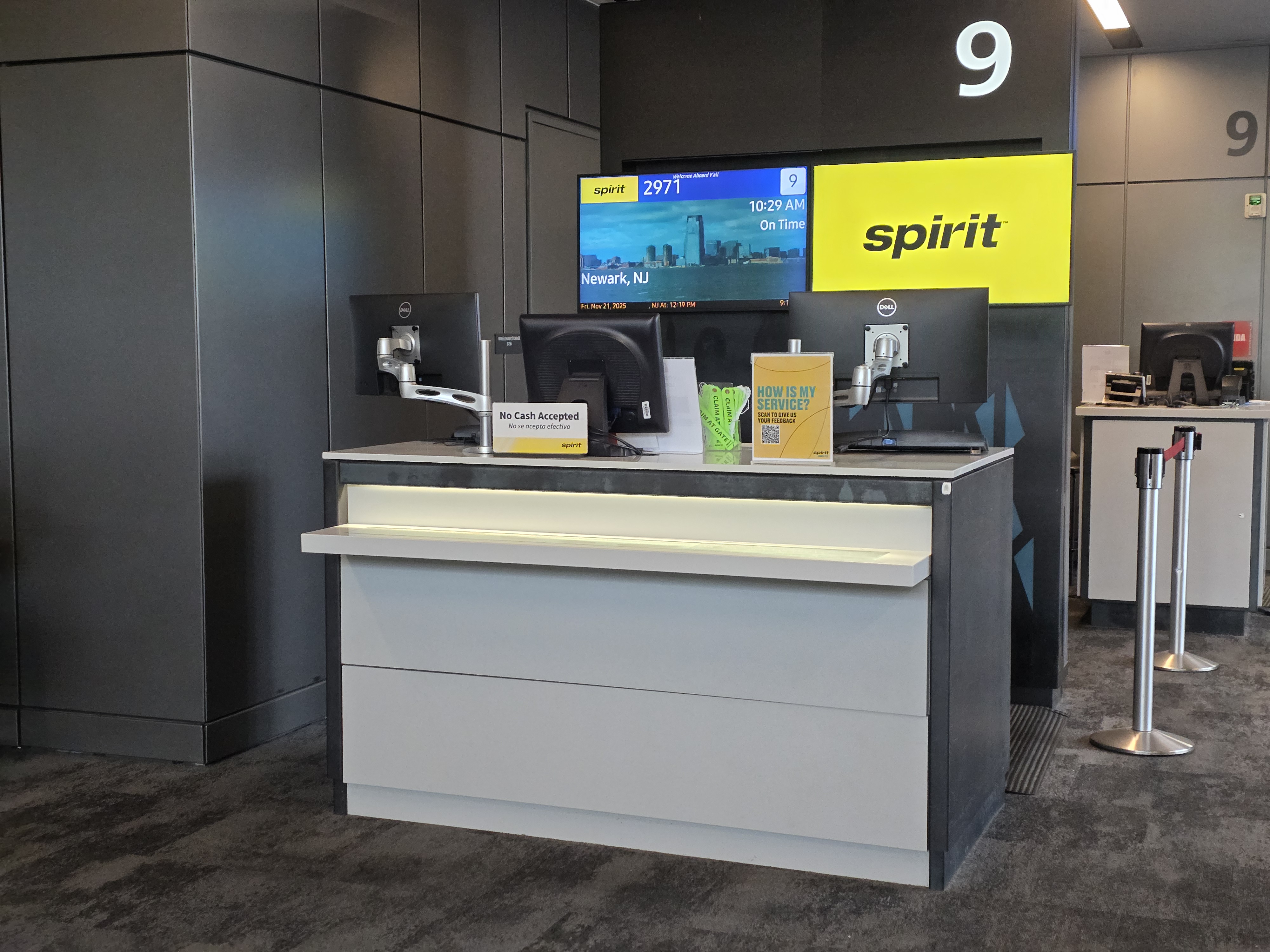
The airline’s costs have risen just as customers increasingly looked beyond just low fares in selecting an airline. And major carriers have increasingly been willing to match them on price. I still do find their Big Front Seat product to be a good value, even if priced much higher than it used to be years ago.

And I’m hoping to see the carrier’s fortunes turn around, because competition from Spirit does drive down prices. Meanwhile, their Bank of America credit card continues.



Yikes, I guess I need to burn those Spirit points asap.
That’s a very click baity title and not accurate at all. Don’t make read almost to the end to realize what is actually going on.
If there’s no credit card partner, is there even an airline anymore? /s
@Common Sense – the title is accurate and the bulk of the post is talking about second-look deals and this one in particular.
Safety is most important, Spirit is one of the safest airlines in the US market. Turning around the bad reputation and bad decisions from previous CEOs, takes time and effort. Spirit contribution to fair competition for cheap flying, will be missed if not supported by the public.
@Gary: One strength you have over other travel writers is your training in accounting. In the case of this fast-moving crash landing of Spirit it would be great to hear you dig into the income statement and balance sheet.
For example, how do cash reserves, bleded rates on liabilities, etc. compare with industry metrics. Ho are they changing monthly, etc.
@1990 did you even READ the article???
Given the rise in credit card defaults I would imagine any subprime credit card provider is being forced to tighten up approvals. The airline over the past week or so has been dealing with extensive cancellations and delays, presumably due to staff shortages as there have been no major weather events over that period. That will drive up costs and deepen losses. And seemingly no deal with Frontier. The handwriting is on the wall.
It’s possible that Spirit was unable to reach better terms with Mercury Financial as part of their bankruptcy settlement with them. That would have triggered a cancellation of their cobranding agreement and thus the end of the program.
The real losers, however, are the cardholders who would normally have difficulty getting any credit card. It’s possible that the First Bank card they had was the best one they had. My opinion is that First Bank should be required to offer those cardholders another card, even if that card does not offer rewards. A bank shouldn’t be allowed to deprive someone of credit simply because a third-party marketing deal fell through. I remember that when NWA terminated its agreement with U.S. Bank after the Delta merger, we all got regular U.S. Bank cards. That seemed very fair to me.
@Donna Giblin — “did you even READ (my comment)???” …/s
@Gary Leff — You should know by now that although he uses the handle ‘common sense’ rarely is @Common Sense actually making any ‘sense’…