
Delta’s Northeast storm problem should have ended when New York’s airports recovered—but Delta’s didn’t. While United and JetBlue stabilized, Delta kept cancelling because it still couldn’t staff flights, with internal coding on at least one cancellation pointing to “crew uncovered” during “normal ops.”
Once the weather clears, cancellations stop being about snow and start being about whether an airline can put crews in the right place fast enough.
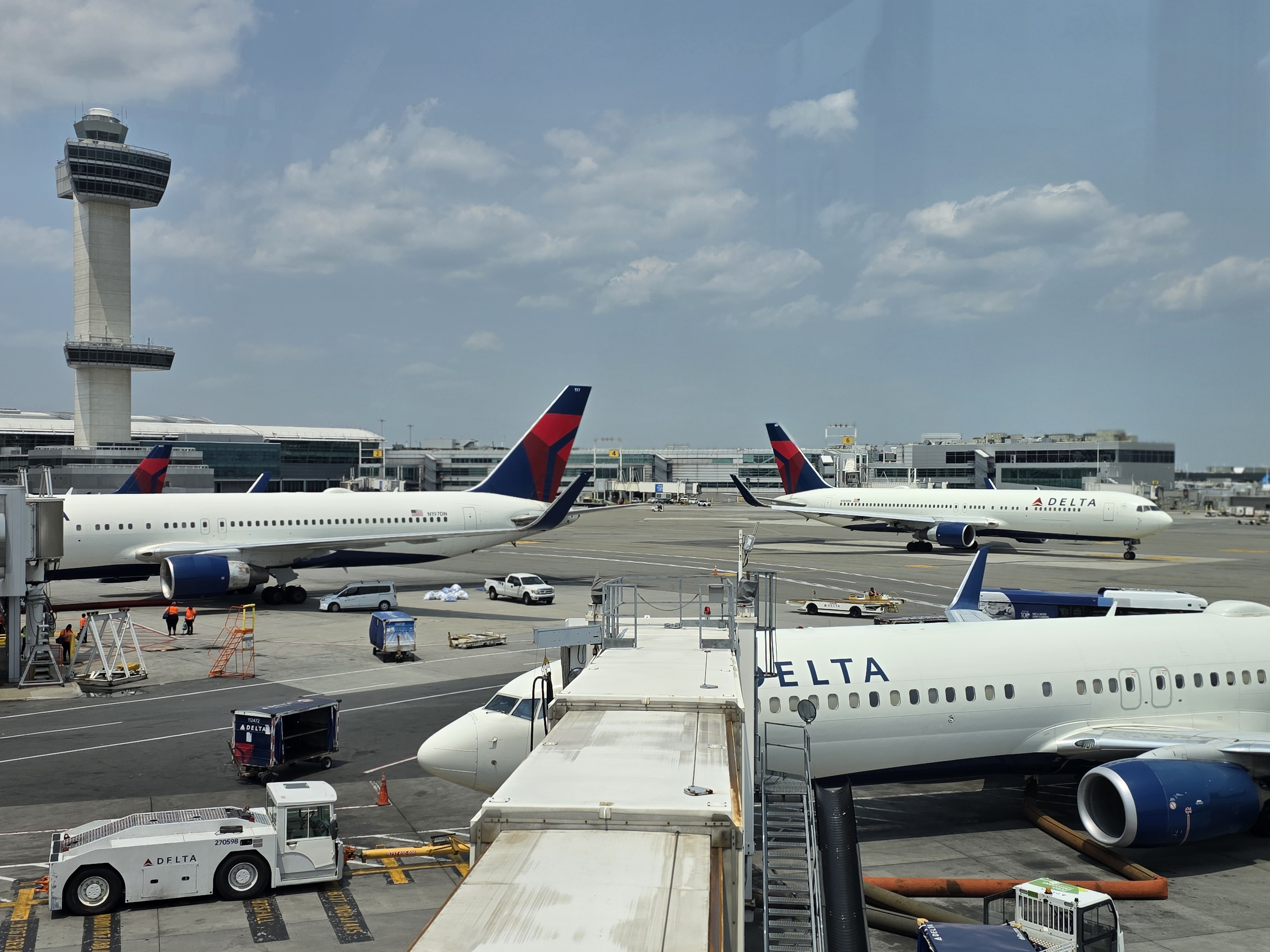
The storm hit the Northeast Friday evening and Saturday, and thousands of flights were delayed. New York-area airports were affected, and that’s a problem for Delta, JetBlue and United with significant operations there. JetBlue and United recovered. Delta did not, and the chaos for them continues.
Delta led the world in flight cancellations with 240 on Saturday. New York JFK saw a total of 20% of its flights cancelled. LaGuardia was hit with 21% cancellations. And Newark had 12% of flights cancelled. All three airports saw just over half of its flights delayed. However, everyone but Delta recovered.
- United, with its hub in New York, hasn’t cancelled a single flight yet today. Their Newark operation is usually more constrained than JFK.
- New York JFK-based JetBlue has cancelled just 2% of its flights systemwide.
- New York airports are no longer in the top 15 world airports for cancels. Yet two of the top 5 are Delta hubs, Atlanta and Minneapolis. (Minneapolis is dealing with weather.)
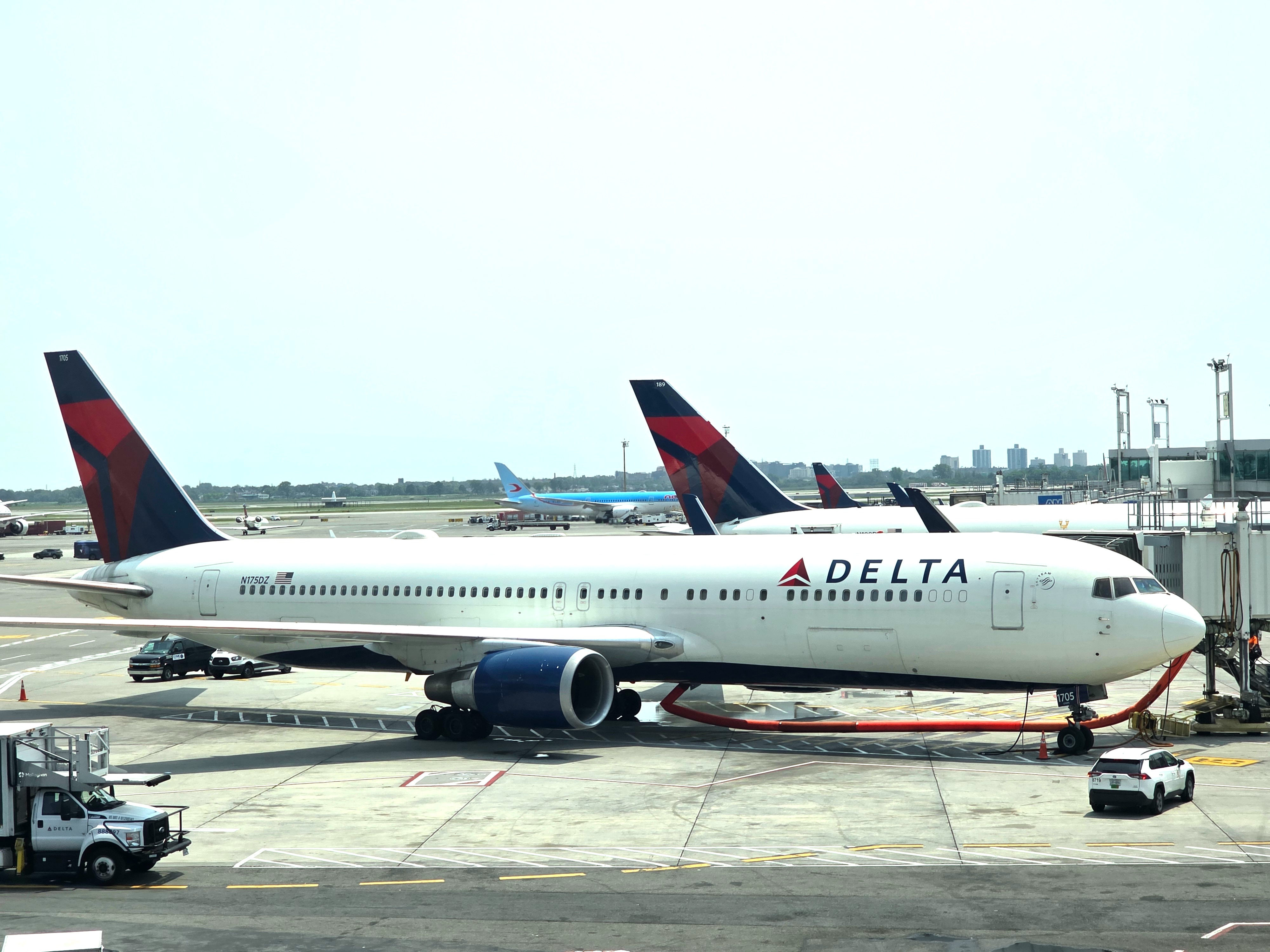
As of this writing, Newark still has an air traffic control program in place due to snow and ice. New York JFK does not. Delta is suffering from lack of crew to work flights. When flights delay, crew time out (exceeding their maximum allowable duty hours). When they cancel, crew are out of position (in the wrong city to work the next flight, even if an aircraft is available).
And at the end of a month, things are worse, because an airline can run out of available crew on reserve. They used some of those up earlier in the month. Offering premium pay can help rustle volunteers, but it’s tough over the peak holidays to get people to work.
Aviation watchdog JonNYC shares the coding from one cancelled flight,
“You have no clue how F’d Delta's pilot coverage system is… Dispatch started writing in the cancellation remarks…’FLT CXL- Flight Operations-Crew uncovered- Normal Ops’
Dispatchers are just as pissed as the pilots are”— JonNYC (@xJonNYC) December 28, 2025
Let’s take a closer look at ’FLT CXL- Flight Operations-Crew uncovered- Normal Ops’
- Flight was cancelled.
- The cancellation is being attributed to is an operational issue – lack of crew – not to maintenance, weather, air traffic control, etc. They didn’t have the crew available to operate the flight.
- But what’s key here is ‘Normal Ops’. This isn’t being handled under an ‘irregular operations’ event context like a major weather day. We’re past that. They’re labeling the flight as crew coverage failure on an otherwise normal day.
Delta is acknowledging, “nothing external is blowing up the network right now, and we still can’t cover the flight.” Even if dispatch didn’t type “normal operations” as editorial snark (it looks like a standard structured suffix), it still lands as a jab.
A crew shortage cancellation is generally considered within-carrier-control. Dispatchers (and pilots) are mad because the internal systems are effectively memorializing that the airline is canceling flights for crew coverage reasons without an external disruption to blame. This is all Delta’s fault.
Former Delta Air Lines CEO Richard Anderson recently named Gil West as one of the architects of the carrier’s strategy that put them in the premium place they are today. West was Delta’s operations chief. He took old planes and built unmatched reliability. They already knew everything that would go wrong with those aircraft, and they did the reliability work overnight at outstations rather than waiting for planes to return to hubs.
A lot of Delta’s reliability issues – they’re still at times at the top of the industry, but not like they were before the pandemic – are occasionally tied to losing West during the pandemic. He’s now the CEO of Hertz (and Hertz has gotten hold of tracking their fleet, so they no longer seem to send their customers to jail for ‘stealing’ cars that they’ve properly rented).
Ultimately, Delta lost a lot of organizational knowledge and capability when they shed 31% of employees during the pandemic. And while they’ve recovered from their poor operational performance of 2022, they no longer dominate the way they once did. So continued operational issues are not surprising.



AI might eventually be able to work out all kinds of crew combinations. That paired with union commitments for flexibility might be good for maximum use of the crew during problems and figuring out deadheading.
True, humans can figure it out but it takes too much manpower to do all the calculations and permutations.
Tim Dunn in 3,2,1….
All the majors should seriously consider setting up a stand by contract with a few corporate jet operators to fly crew to and from major bases to staff aircraft after this sort of disruption.
Most mid sized corporate jets can carry a full crew in anywhere to anywhere in the US within hours, and quickly backfill this sort of situation.
Flight ops is stuck thinking inside the box and only of their aircraft as a way to pre or post position crews.
Derek, I suspect you’re right, but only if airlines use a portion of the extra freed-up capacity as additional reserve for irregulart operations. Airlines use such a great proportion of their total flight capacity for regular ops that any irregular event that’s outside the usual range leads to a prolonged recovery. Holding back a little more will require foregoing a bit of extra profit. Are they capable of that sort of self discipline?
First, feel free to tell us how many of these “Flight Ops uncovered” flights there actually were yesterday and today. Just because you or anyone else finds one does not at all mean that is the primary reason for delays and cancellations
Second, UA cancelled a far higher percentage of flights at EWR than DL’s regional carriers did at LGA or JFK and yet those are the passengers of their respective marketing carrier. You can’t rob Peter to pay Paul in real life.
Third, B6 cancelled 17% of its operations – so are they even more short staffed than DL – or is it possible – or actually reality that field conditions at JFK and EWR are not the same.
And, no MSP is not just dealing w/ weather. It has 4 hour average delays due to ice and snow and the vast majority of DL’s delays and cancellations involve MSP.
DL might very well not have enough pilots to cover their operation in IROPS but Gary has never proved that he is capable of unbiased analysis and stories like this prove the point.
Gary and his little stepson cannot deny that DL is still far ahead of the big 4 in on-time so far this year.
There is technology available today that can guide most any operation when it’s had a disruption…if you want to make the investment. Issue is whether or not company sees an ROI on the investment. Fewer inconvenienced passengers is not enough. Has to either save or make money. My hypothesis would be that tech doesn’t do enough if either yet.
This happened to us. I thought we were safe with first flight of the day. NY to LAS. Sat on runway for de-icing, then returned to gate for “new crew”, but when we hit the gate, cancelled the flight. Delta rebooked us on Flight via Austin, with an impossible 36 min connection. Cancelled that. Spent the entire night in Centurion Lounge, they were great and called the delay a “layover” so we had more time in lounge. Chase and Capital One refused us because of 3hr rule. Finally took off 7pm for a 7am original flight. “Weather delay” so no travel protections. Delta should have compensated people for this.
George Navarini says:
December 28, 2025 at 3:52 pm
All the majors should seriously consider setting up a stand by contract with a few corporate jet operators to fly crew to and from major bases to staff aircraft after this sort of disruption.
United does that on occasion.
@Gene:
He was six minutes behind you 😉
JFK and LGA got less than 3 inches of snow. Maybe DL need# to swap management at these two airport#with MSP and ORD. They seem to be able to handle a couple inches.
Or demand that PANYNJ terminate their entire staff.
Now that am out of NYC and in Florida permanently, it will be fun to watch the next 6-10 inch event!
,
Yes, Delta had more issues during this, alright….
But that never surprises me with their NY operations, especially LGA. They don’t seem to have enough slack built into their system to manage the predictable issues that occur in that market when a little weather hits. It’s pretty clear they underinvest this market (in terms of operations )compared to their other main airports. I also get pretty miffed when cancellations and delays are clearly related to them not wishing to manage their staffing (or invest in it enough) to have a reliable operation there, and they usually have a very creative and expensive describing which issues are “weather related”.
I don’t really trust them there one whit (not that I think anyone is stellar) and always have a backup plan.
DL is a crap airline that markets itself as some sort of hybrid European airline that is simply isn’t. When it runs well, it runs well, but the CloudFlare debacle and its resumption of cost cutting, not to mention its lack of humility are at the core of its problems, and yes, ti has problems. Delta’s best days may very well be behind it. Still profitable, yes, but the landscape is changing.
The word is that DL’s problems are being caused by contractual/procedural changes that are making it difficult for pilots to pick up extra trips and it has been going on for weeks.
Looks like GH might have picked the right time to get out.
all of that may be true, JL, but how is that DL has a pilot staffing problem but B6 cancelled more than twice the percentage of flights of DL?
and MSP had 4 hour delays – which is to the point that ANY crew is going to time out.
So, yes, DL is having trouble staffing but I have yet to see anyone provide evidence that actually supports the much higher numbers of cancellations.
and for those that think that EWR and JFK and LGA all operate the same, do we not remember how badly UA’s operation melted down over at EWR while AA, B6 and DL all carried the passengers to/from NYC?
and UA, YTD has still cancelled a higher percentage of its flights than AA, DL or WN because of UA’s EWR overscheduling which brought down their operation like a house of cards – just like happened 2 years before.
A terrible airline in america….being terrible. Unless you live in Atlanta or next to DFW, fly UA. Delta has far too often straight up lied to my face while cancelling or bumping me. I love the weather delay without a cloud in the sky or the you checked in too late…65min out from a domestic flight at a second tier airport. Gotta love airline unions too…while getting paid 400k to drive a bus , they cant bother to show up and get people home from christmas.
I think if the customers dressed up and acted move civil, they would be able to staff all their flights.
TD, “UA’s operation melted down over at EWR while AA, B6 and DL all carried the passengers to/from NYC?”
One of the two main runways under construction and ATC had repetitive power outages.
This is an internal DL issue that has prevented them from quickly recovering after relatively minor weather events for several weeks. I think pointing out that this is not RA or GW’s DL is not only fair, but obvious from the data. And now GH is leaving. The bench is increasingly thin and that is a lot of great leadership that has left the building.
For the first 6 months of 2025, AA cxld 15,156 or 1.63% of its operated and US marketed flights; for UA, it was 14,138 and 2.17%, for WN it was 6918 and 0.97% and for DL 4825 and 0.65%.
DL is nowhere near close to having cxld 10K flights which is what it would take to “close the gap” with AA and UA.
DL’s on-time ranking is second, only behind HA which will no longer exist as soon as AS gets a single operating certificate with HA.
and, Todd, you may be right but if people actually had to think before they typed, they might make some rational and logical points.
JL,
the Port Authority posted months in advance regarding the construction that was going to take place at EWR. It wasn’t a surprise.
UA overscheduled EWR in the spring of 2025 which led to their massive operational meltdown which made national news every night for weeks.
The solution was to pull back schedules which UA is STILL DOING. They knew full well that EWR was overscheduled just as it has been for decades under both CO and UA.
and if you want to look at system stats, UA’s number of cancellations and percent of operations far exceeded DL’s for all of 2023 (UA’s last EWR meltdown before this spring which became a systemwide meltdown) for 2024 (which included CrowdStrike) and YTD for 2025.
UA’s on-time ratio trails DL’s and UA’s baggage handling is at the bottom of the industry – right there with American.
DL might be having a pilot staffing issue right now but the notion that UA runs a better operation is simply not supported by real data.
Not this month, not this year, not any year
As is too often the case you are arguing against points nobody made.
The story is about DL’s former operational exceptionalism heading in the wrong direction while losing a number of the leaders who built DL into strong operator. Things change.
the story is about whether DL is having operational challenges – and I am not denying it.
In full CYA fashion, however, you manage to find the speck in someone else’s eye while being unable to see the log in your own.
IOW, people who live in glass houses should not throw stones.
UA simply does not run a better operation than DL regardless of what you, Gary, or his stepson Jon think.
Picking out a few anecdotal periods for DL while ignoring UA’s years long track record of operational meltdowns that have far exceeded DL’s is the height of hypocrisy – but, again, you would be the last one capable of seeing that.
Again, NOBODY is worse in IROPS than Delta.
Crowdstrike
They are strictly structured to scrimp on systems, fail to do contingency planning, fail to provide back-up services… and of course were the ones that tore up the inter-line agreements that let them move stranded passengers onto other carriers’ inventory.
They stranded 1.3 million passengers (and almost 7000 UMs) during Crowdstrike, even as they (sound familiar?) were unable to even TRACK their own flight crews, much less move them into position.
Most quarter they lose money flying planes, even as they skate happily in their “greatness” on the AMEX deal.
TD, “the story is about whether DL is having operational challenges – and I am not denying it.”
How could you? It’s indicative of an obvious trend and it’s not good.
Again, nobody is worse in IROPS ( Crowdstrike ) than Delta.
They simply won’t invest in the back-ups, systems and redundancy required for resilience when things go pear-shaped. In class problems, such as weather, power and natural disasters, they’ll be the last to recover– all the while blaming factors their contingency planning SHOULD have accounted for.
AA may have their issues, but DFW runs a LOT better after a thunderstorm, or ice storm, than either ATL or JFK under Delta’s incompetence.
Let me stress this were, are, and always will be, premium cancellations.
You know, it’s not very Christian to trigger @Tim Dunn during this, the season of the birth of our Lord Jesus Christ, savior.
Have a little dignity.
Tim,
You mention United cancelled 14,138 or 2.17% of flights in the first half of 2025…
https://www.transportation.gov/sites/dot.gov/files/2025-09/August%202025%20ATCR%20-%20June%202025%20and%20Jan-Jun%20Data.pdf
Page 30. I’m reading the same thing. It appears you read the column for the first 6 months of 2024. In reference to 2025, it appears its 1.35% at UAL compared to DAL at 1.22% (9,578 and 9,696 respectively).
Keep Climbing.
Glad everyone’s alright, and that things should recover going into this week. This storm was over-hyped, didn’t amount to much in the city.
@Tim Dunn — I think you were onto something with “field conditions at JFK and EWR (were) not the same.”
@Rjb — “Now that am out of (Florida) and in (NYC) permanently…” Fixed that for (me). LOL.
The usual Timmyboy. Lie after lie.
Timmyboy, Newark meltdown was an airport meltdown, not a United meltdown. Kirby had been warning that this would happen for years, but the FAA wouldn’t listen. Delta’s problems today are Delta’s.
Saturday cancellations:
Delta:240 + Endeavor:31
United:51 + GoJet:19
Sunday cancellations:
Delta:301 + Endeavor:76
United:13 + GoJet:6
Ouch!!!
Well you know, of course Delta has more weather problems than United. Everybody knows the weather is much worse in Atlanta than in Chicago or Denver. You Delta haters don’t understand.
Anyone wondering why Timmyboy is so obsessed with United, just look at the financial performance the last 2 years and you’ll understand.
On December 28, 2023 Delta stock closed at 39.72 and United at 41.97
Today Delta is at 70.85 and United at 114.04.
From a 2-dollar difference to a 43-dollar difference.
Ouch!!!
Has Tim Dunn ever actually been in an airport or on a Delta flight? He seems to have this magical experience that no on else has ever had with Delta.
NY was NOT struck by a major storm, at all. The total accumulation was around 4 inches. I drove from PA to JFK Friday evening and while it took a bit longer due to slower speeds, my AA flight to LAX departed on time and arrived early.
Delta melting down had nothing to do with the storm.
What Timmy is missing is if I needed to fly yesterday – who would have had a better chance of getting me to my destination, that’s the premium I’m willing to pay for
once, again, if this was all caused by a DL staffing problem, then why did B6 cancel 17% of its flights and delay 59% of them on Saturday compared to 7% cancellations compared to 7% cancellations and 39% delays for DL while Endeavor was 38% delayed, UA was 35% delayed, AA was 36% delayed and WN was 46% delayed?
B6 and WN are much more willing to operate delayed than the big 3; delay percentages above 40% mean a hub and spoke airline doesn’t work. At that point, cancellations do a better job to reset the operation than running significant delays.
The obvious reality is that all 3 NYC airports did not experience the same levels of impact any more than DCA and IAD do – or will today – the FAA says ground stops at IAD are probable but only possible for DCA.
and to listen to Gary, Jon or any of UA’s usual arrogant fan brats lecture anyone about DL losing their operational excellence is the height of hypocrisy.
DL’s operation so far this year is still running better than UA’s.
and it did last year w/ the CrowdStrike meltdown.
Clearly, UA has its own mini-meltdowns which someone get swept under the rug in the minds of the usual UA arrogance.
and, no, Scott Kirby wanted the FAA to slot control EWR – and the only reason EWR is not slot controlled is because it was slot controlled in the past and UA chose to underutilize its slots. The FAA is not reinstating slot controls at EWR; it ordered all airlines to reduce capacity – with UA and its regional carriers operated 2/3 of the flights, UA took the biggest hit and is still operating at reduced schedules. If the reason was ATC or runway construction, then UA wouldn’t still be operating w/ reduced schedules at EWR.
CO and UA overscheduled EWR for years including during a planned and known runway construction project and that is why EWR has melted down repeatedly on a far larger scale than what happened to Delta and JetBlue on a single weekend at JFK.
UA simply does not run a better operation. UA’s on-time is consistently worse than DL’s and UA’s baggage handling is at the bottom of the industry despite a supposedly improved operation.
Picking out an anecdote about passenger behavior or operations might create a great story and yet day after day in perfectly normal operations, UA cancels dozens of flights at the beginning of the day when AA, DL and WN all start the day with single digit cancellations.
THAT is why UA’s cancellation rate never is industry leading – because they clearly cannot or choose not to fix a small percentage of operational issues which other airlines.
Every airline has operationally challenging days. It was snow and ice at MSP yesterday which will hit DTW today.
DL very well may have had back to back operationally challenging days but the sum total for DL is and very likely will still be smaller than what other airlines including UA experience over the entire year. When you live your life looking for specks in other people’s high, you can’t ever see your own faults or have the perspective to see reality as it really exists.
Wake up on a monday and what’s the first thing you do?
Well, in the weird world of Timmy Dunn, you, of course, write 13 paragraphs defending a delta staffing meltdown because god forbid any data show that DL was hit by a non-existent storm that didn’t hit AA, UA, or B6.
Of course, those are 13 new paragraphs from your prior 27 on this article.
Tim, you really need a life. This is pathetic. Are you capable of ever ignoring a negative article about Delta? It’s like everyone knows to dangle a bait in front of you and you’ll just jump at it because you have no ability to control yourself (or your numerous fake names).
Timbits, you’re so full of crap that it dribbles out of your ears and causes Ed Bastian to have incontinence issues, since your head is occupying so much space up there.
“Arrogant fan brats!” The perfect description of none other than Tim Dunn!
In reference to 2025, it appears its 1.35% at UAL compared to DAL at 1.22% (9,578 and 9,696 respectively).
I’m sure Tim was just confused.
Saturday cancellations:
Delta:240 + Endeavor:31
United:51 + GoJet:19
Sunday cancellations:
Delta:301 + Endeavor:76
United:13 + GoJet:6
Ouch!!!
Inconvenient facts.
Max,
even other people recognize you lost the argument on OMAAT so what do you HYPOCRITICALLY do but turn to VFTW to throw shade on me.
If you weren’t such a hypocrite at telling other people what not to do but then do the very same thing yourself, you might win a debate or two.
and B6 clearly WAS impacted, Max. They cancelled 17% of their flights on Saturday and had an on-time percentage that was worse than DL’s.
so, it is a pure lie to say that DL alone was impacted. Feel free to tell us about the staffing shortages that caused so much damage to B6′ operation.
and, yes, Gene, it is pure cherrypicking and speck-searching for UA brats or Gary or Jon to say that UA runs a better operation by ignoring UA’s much larger meltdowns while discussing DL’s.
and the real exposure of the lies that UA fans believe will be when DL announces its 787 order in a couple weeks; we’ve heard for years including from Scott Kirby that UA ordered so many new airplanes so there would be no other production slots for other airlines. DL is on the verge of ordering, optioning and converting options to orders for 100 A350-1000s and 787s, hitting an international growth phase which will allow DL to significantly grow its international network while UA salivates about the prospects of adding 50 A321XLRs with half the number of seats to its network.
Yes, the lies that people believe are damaging. Very damaging…
And now we know why Delta paid for part of Trump’s inaugurable. The subtle bribe to stop the European type rules on compensation from taking effect. Delta would have been hit harder than anybody this past week.
Gene, ““Arrogant fan brats!” The perfect description of none other than Tim Dunn!”
Projection seems to be his primary competency.
@Tim Dunn. Delta had a bad day! It happens to all airlines.
Flightaware stats (airline, canceled %/#). These mainline stats do not include associated express carriers (Skywest, Endeavor, Envoy, etc.), so they reflect how each airline has recovered from the weather-caused irregular ops, without being skewed by an express carrier’s poor performance:
Friday
DAL 255/7%
SWA 155/3%
AA 112/3%
UAL 101/3%
Saturday
DAL 240/7%
SWA 89/2%
AA 67/1%
UAL 55/1%
Sunday
DAL 301/9%
AA 16/<1℅
UAL 13/<1℅
SWA 7/<1℅
Monday (today, at time of posting)
DAL 110/3%
SWA 37/<1℅
AA 30/<1℅
UAL 6/<1℅
Tim: "Yeah, but EARLIER in the year…"
yes, they do, Joe.
that is the point.
picking out an event for any airline and then drawing conclusions that go far beyond that event is just plain wrong.
DL has had a bad weekend – but they also have not had a single day yet that was free of IROPS in one of their hubs.
and yet YTD DL still runs a better operation than AA or UA; and WN, as I have noted, has taken the title of least cancellations of the big 4 -but do so with a worse on-time percentage.
Monday (today, at time of posting)
DAL 110/3%
SWA 37/<1℅
AA 30/<1℅
UAL 6/<1℅
Still going. Yikes!
the only thing that is still going is JL and his UA ilk that hypocritically look for specks in other people’s eyes but can’t or won’t explain why they miss the logs in their own eye.
Help us out, JL, and explain why:
1. B6 cancelled 17% of their flights on Saturday including a similar percentage of their JFK operation if weather and field conditions weren’t the issue.
2. Why Endeavor is now cancelling a higher percentage of flights than DL today even though Endeavor had a pretty good weekend in NYC. Hint they are major operators in MSP, DTW and NYC. DTW started today w/ a ground stop.
and for the hypocrisy stuff:
Why UA’s baggage handling rate is so much worse than DL or any other big 4 airline other than AA – and yet AA realizes it has a problem and is fixing it
What melted down for UA in 2024 that they ended up w/ so many more cancellations – 6877 or 41% more – than DL even though DL was hit by CrowdStrike? and UA operates fewer flights than DL or AA or WN.
The reason why I have such a field day w/ UA’s results is because so many of you so arrogantly love to brag about how great you are – and yet you really aren’t unless you cherrypick out all of your flaws and leave in everyone else’s.
and despite all of the orders that UA has, DL has managed to take delivery of more new widebodies than AA or UA in 2024 and 2025 and DL will place orders for and take delivery of large quantities of new widebodies over the next 5 years, nearly all of which will be larger and more capable than UA’s international fleet.
good to know 2025 will end with the same mudthrowing that has characterized aviation social media for much of the past couple decades.
* (Throws mud)
* (Criticizes mud throwing)
@ Tim Dunn — No one other than you cares about whatever your are blathering on about. Give it a rest.
When you are so 1-sided and can never be objective about anything, you become a joke and no one ever will take you serious. I think it’s obvious that happens here when something about DL is ever posted!
22 new paragraphs from Tim. And apparently I lost an argument on OMAAT I didn’t know existed? I can’t even keep up with your mental issues, Tim.
Apparently this is the one where you used the name “Kathy” to respond to me yesterday and I still had no idea what you (Kathy) was talking about? I don’t even know what you’re talking about. The “argument” Where I urged you to stop writing a 100 paragraphs on Christmas eve and Christmas day to stop looking like a loser when Delta was being cheap on their contract? I didn’t even take part in that convo except to urge you to just shut up for once and not consider yourself Delta’s defender. Lol
You’re extremely deranged if you think I’m whoever the guest user is that you’re mad at.
what strange mental issues…. And what a stupid but so Tim Dunn response.
If about half a dozen comments about Crowd Strike and DL’s overall reliability were left out, then I wouldn’t have jumped in.
When people extrapolate a single event to state things that clearly are not factual, then it should be no surprise that someone chooses to set the facts straight.
Total cancellations by airport are highest in YYZ and then ORD; DL looks like it will end today w/ 4% cancellations.
At least 5 airlines cxld 5% or more of their operations.
Apparently, all of those other airlines plus B6 on Saturday have staffing problems.
People that don’t want facts should not throw mud.
Tim
It’s a VERY well-known fact that delta has padded their block hours to look better for on time numbers. It’s been a stat you use for years, and it’s accurate. But it’s also misleading since AA and UA (to a lesser extent) never wanted to just buy on time like Delta decided to do years ago to appear more on time vs their competitors. Their marketing turned out to work and customers didn’t really seem to care they arrived super early.
That said, AA has admitted that Delta getting their customers to the airport 45 minutes early seems to be a winning strategy for marketing and is going to start doing the same.
Who knows how Delta’s stats will hold up but there are some easy answers here — Delta has been paying via padded block time for years to claim an on time rating that is really just telling people their 2 hour flight takes 3 hours, particularly out of congested airports. Now that AA has publicly said they’ll start doing similarly…
God, I just hope it’ll cause you to shut up since you don’t seem to know much about what is behind Delta’s on time numbers.
For as much as you love to just shout into the wind endlessly, it is kind of amazing how little you actually now about the mechanics behind the stats you cite. Delta does run a good operation, but it’s actually rather hard to compare them accurately vs their competitors since Delta pads their block so much and has, historically, ran flights over 24 hours to avoid cancelling a flight purely for a DOT stat.
What is well-known that can’t be faked with padded block hours is how awful Delta does in IRROPS and crew scheduling, much less outdated IT with crowd strike.
When anything goes wrong — aka some light dusting of snow in NYC? Delta hits the dust. ATL goes down for days with two thunderstorms in a row (unlike DFW) and Delta is uniquely challenged by a crowd strike issue for days that hit every other carrier too.
DL’s record of fewest cancellations doesn’t take into account DL ‘delaying” a flight up to 28 hours. Didn’t cancel! The numbers lie. Every airline has crew issues, but DL has no way to recover and hasn’t invested in crew solutions that most airlines have. Additionally, the pilots are waiting for a green slip to pickup broken trips. Is DL getting cheap? I think so.
B6 is a shit show operationally on good weather days.
UAL and the blowhard CEO won’t accept reality at EWR, still works better than DL in NYC
AA has the best recovery after crowdstrike and weather events. AA invested in the operation, and offers OT when things go south.
@ Tim — OMG STFU already
I got caught up in this flying DTW to LGA on Dec 27. Requested a flight verification letter for my travel insurance claim and got “Reason for Flight Irregularity: Flight was cancelled due to crew issue.” Requested again because that’s going to get my claim denied. Second letter: “Reason for Flight Irregularity: Flight was cancelled due to crew issue/ crew uncovered-normal operations.” Submitted expenses to Delta for reimbursement and was denied within 24 hours. lulz
The only stats I recognize are those I experience, and the Delta loss of operational excellence is real, even during regular ops. On my DTW to Asia roundtrips this year, only 25% were on time, 25% delayed were over 2 hours and 50% cancelled. They are no longer the airline that you can depend on for firm travel plans, On top of that their current fare structures make it impossible to choose them for trips in corp travel platforms such as Concur due to their domestic fares being 50 -80% higher than AA, UA or B6, that a gap you cant reason away. Their C-Level arrogance is about to cost them in 2026, which is sad as their frontline staff are the best in the US
If it really were a staffing issue, that’s where air passenger rights legislation like EU261 but in the US would have really benefited affected passengers, ideally, by ensuring they have the option of a refund or rebooking, and also get compensated for the inconvenience caused by the airline, typically $250-700, depending on the route and delay. We deserve better.
Tyrone,
respectfully, data exists specifically to allow people to make informed decisions without having to get in the middle of the situation.
The DOT publishes pretty detailed on-time and cancellation data (available by query at the flight level) for domestic flights since all foreign governments do not require that info but private services have that data for international flights.
You clearly had bad luck in your choice of flights.
1990,
the real question in any IROP situation is how much time a customer loses and how well they are treated. DL’s cancellations have been early enough in the day that the chances are high that many customers got where they wanted or decided it wasn’t worth going to the airport if they were too delayed or not confirmed.
Remember that there have have been multiple mass cancellation events at just about every airline, most notably UA at EWR in the spring, and there were thousands of people camped out in airports. THAT is when the cost becomes too much.
@ Tim Dunn — Blah, blah, blah, blah
Delulu Dunn is back baby! I was getting tired of 1990 having a conversation with themselves.
DL average 8% higher cancelation rates than AA/UA/B6 this weekend, bUt StIlL rEcOvErEd BeTtEr…. Typically Timothy Edward Bastian Dunn.
@Tim Dunn My Delta flight was cancelled who can I talk to at your company for a refund?