
How Much Does The Most Expensive Champagne In The Sky Cost An Airline?
A FlyerTalk thread asked a question that is the ultimate in first world problems, and doesn’t even matter for the passenger expereince: What do you think Japan Airlines pays per bottle for Salon? And the person asking guessed $100.
It’s going to be a lot more than this!
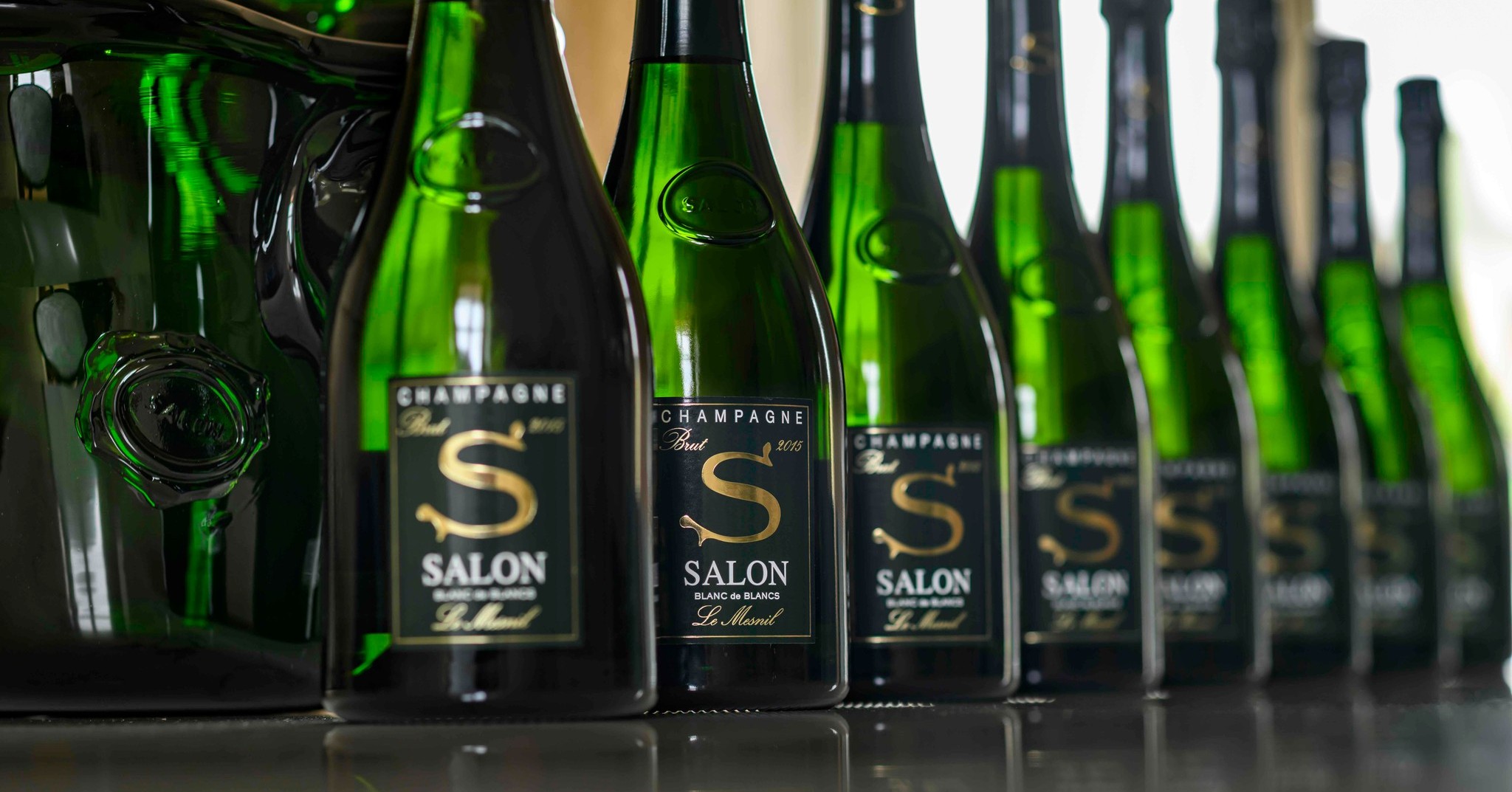
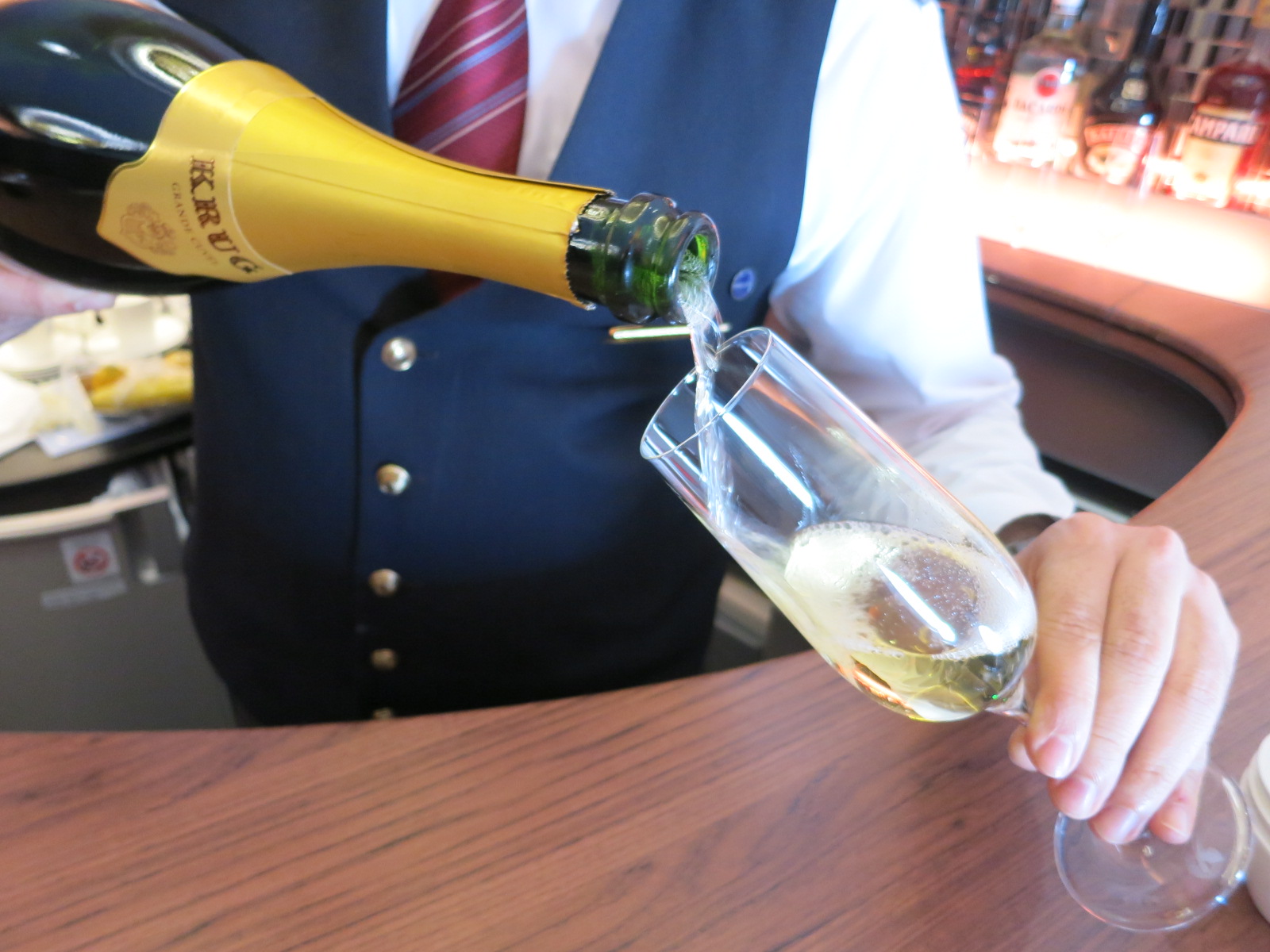
JAL serves Champagne Salon 2015 as an option in First Class. It is not the kind of Champagne you bully into a $100 price point.
Salon is tiny by Champagne standards, producing >no more than 60,000 bottles in any single vintage. And it’s not released every year. Salon is declared only in the better years, perhaps three times a decade, so output is “lumpy” and allocation-driven.
- U.S. retail pricing is around $1,200+ for the 2015 release.
- “In bond” trade pricing isn’t that much lower with listings around $1,000. (“In bond” means the bottle is held before duty and VAT are paid, so pre-retail.)
For $100 to be true, Salon would have to be treating JALlike a near-free billboard. However,
- There just aren’t enough bottles for “free placement” to make sense at scale.
- The in-bond market is already clearing around $1,000 for the 2015 vintage. If Salon can sell bottles into the trade at those levels, the airline isn’t getting liquidation pricing.
So What Does JAL Probably Pay For Salon?
The upper bound might be something near the in-bond market level (because there’s alternative demand). That’s not retail, but it’s closer to the trade baseline. I’m willing to get they’re getting a better deal because Japan is an important market for Salon, and Japan Airlines First Class is a prestige placement.
The lower bound might be a meaningful “partner” concession, both because they’re buying in bulk and it’s being poured in one of the world’s best First Class cabins is real marketing.
- A heavily subsidized marketing partnership might price as low as $250 per bottle.
- In more typical procurement, this would likely be $500 – $900.
They can sell these bottles for close to $1,000 so JAL is certainly paying ‘hundreds’ apiece. If someone at JAL catering wants to anonymously send the real number, I’d greatly appreciate it.
How Airline Wine Tendering Usually Works
Airlines don’t buy “a bottle of wine.” They buy a program, frequently through a tender, and they buy it with operational constraints that normal retail never deals with.
Here’s an older Singapore Airlines tender sheet which lays out:
- categories by cabin
- regional/style requirements (e.g., First Class White Burgundy, Business Class Red Bordeaux)
- case pack sizes (12x750ml, 6x750ml for Champagne)
- estimated pricing and annual volumes
- packaging, closure, and labeling requirements
- and even that storage costs are borne by the successful tenderer.
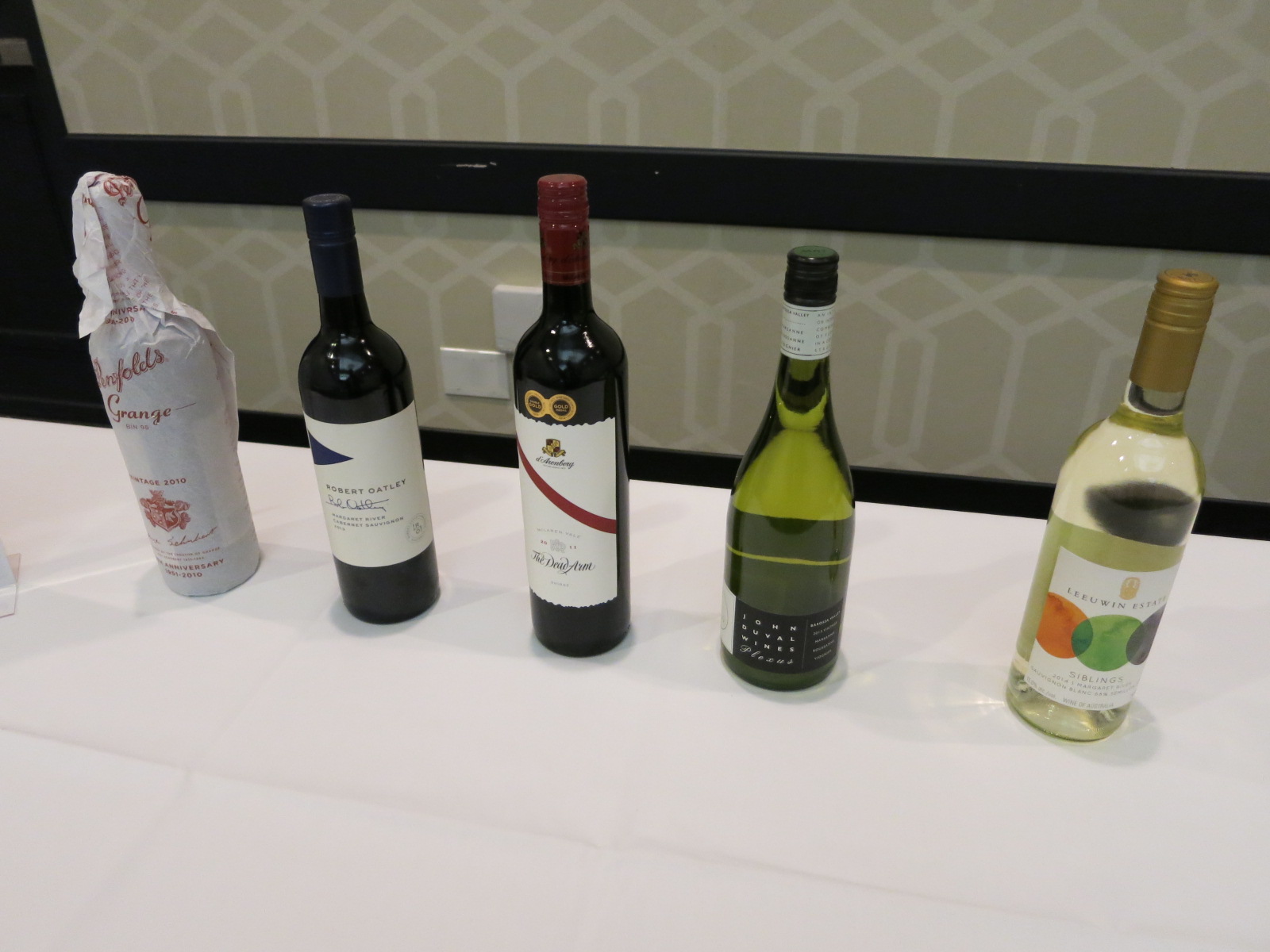
Getting a bottle to a plane is more complex than to a bottle shop. It’s going from producer to import/export to distributor to bonded warehouse to caterer to aircraft. Along the way you get:
- temperature and handling constraints
- customs and excise (often bonded supply)
- station-by-station availability problems
- substitutions when catering kitchens can’t source what was planned
- the airline’s own onboard service constraints (glassware, crew training, recorking, etc.)
And that’s before you get to forecasting and reliably provisioning specific wines.
That’s where vendors like Intervine fit. They sell wine program management, not just wine—sourcing: planning/forecasting, logistics/distribution, marketing/menu copy support, and staff training. American Airlines dropped their contracted wine expert and just outsourced the thing with a budget to Intervine.
An airline generally wants:
- wines that taste good at altitude
- consistent across stations
- managed inventory to avoid bottles turning
- premium menu copy
- at better airlins, trained crew so it isn’t served at the wrong temperature in the wrong glass
What Airlines Typically Spend On Wine
Economy cabin wines are a volume game at a brutal price point. Here’s a SriLankan Airlines tender with economy wine capped at $2.50 – $3.65 per 750ml bottle.
Vietnam Airlines has tendered for 316,200 bottles of red wine for economy across a two‑year period.
Economy wine is often airline-exclusive labels, aggressively priced bulk supply, and selected to survive indifferent storage and service.
Business class wines are usually a step up but still cost-conscious. SriLankan’s tender documents show $6 – $10 per 750ml bottle.
Singapore Airlines tender specs show business class Red Bordeaux at $140 per 12-bottle case (~$12/bottle) and similar case pricing for other business-class categories. Decent business class lists can often mean low-teens cost per bottle for carefully-selected wines.
First class on most airlines (not American) means better wine, at a higher price point, augmented by a separate trophy budget. In that same Singapore tender, we see:
- $235 to $305 per 12-bottle case ($20 – $25 per bottle)
- That doesn’t include trophy items like prestige Champagne, top Bordeaux/Burgundy allocations, or ultra-premium spirits
That’s where bottles jump to the hundreds (where Salon sits in a JAL First cabin). Many first class wine lists have both really expensive trophy bottles, supplemented by more modest selections that are still a cut above business.
If you want to think about airline pricing in terms of ‘discount from retail’ then think about retailers and distributors targeting mid-20% margins. Then airlines often buy in channels where duty/VAT are deferred (“in bond”). So for a normal wine that has real retail distribution, airlines can end up with prices meaningfully below shelf price because they’re buying closer to trade pricing, often in volume.
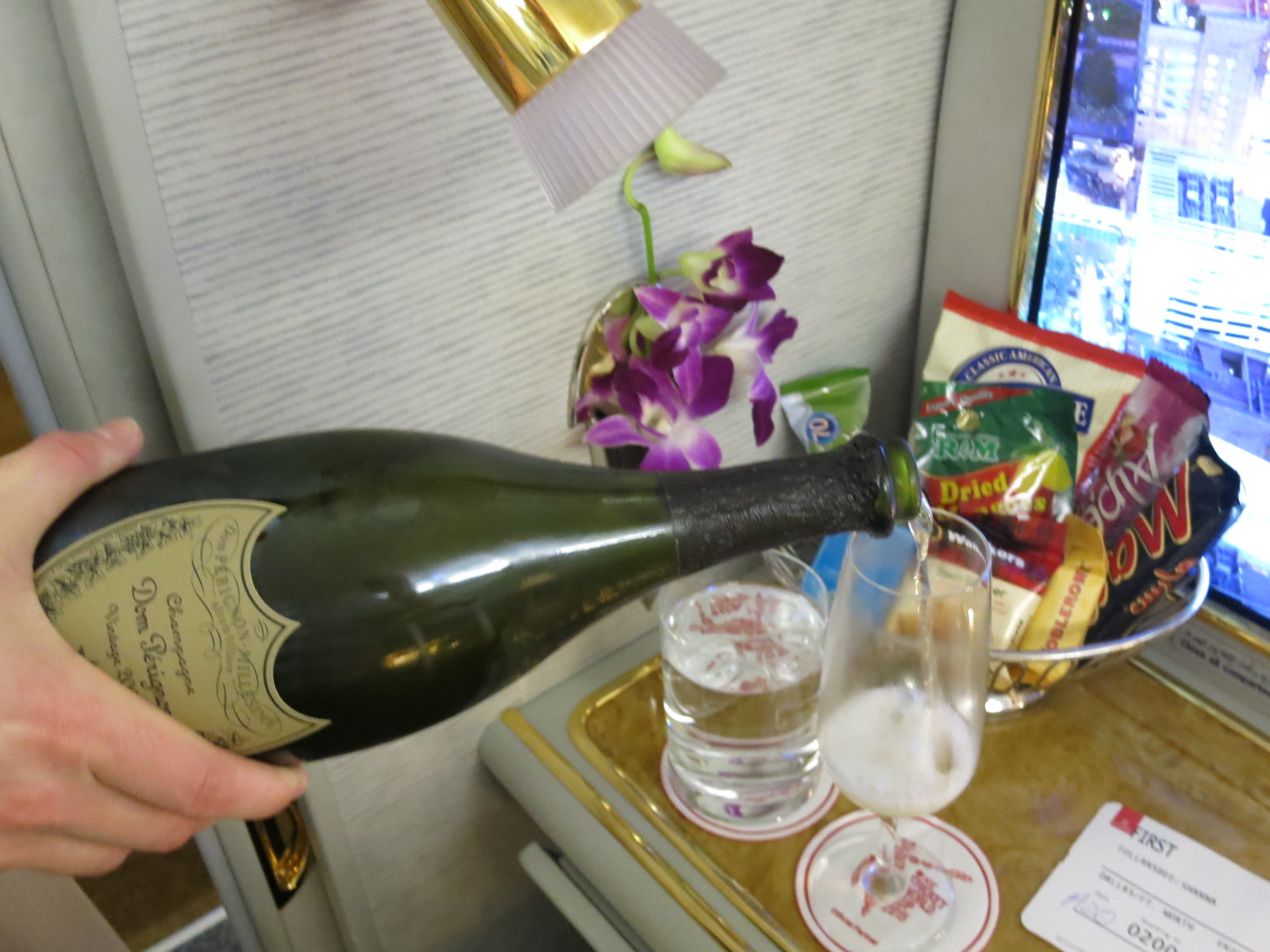
That’s not what happens with allocated prestige bottles. While you might think that Emirates got a good deal on Dom Perignon as the exclusive purveyor of their champagne in the air, remember that they’re paying for exclusivity (i.e. to actually block Singapore from serving it, so they can say they’re the only one that does). LVMH sells a lot of Dom to Emirates, but had to give up their volume with Singapore.
It’s also not what happens at the low end of the market. Retail comparison is meaningless because the product is built for the tender price point. It’s not a recognizable name.
And even if the wine itself is cheap, the system of warehousing, uplift, breakage, compliance, and multi-station distribution is expensive.
What Wines Actually Work At Altitude
Cabin conditions change perception. Reduced pressure, low humidity, and noise all interfere with taste and aroma. As a result,
- Sparkling wine wins. High acidity and bubbles cut through sensory dulling.
- Aromatic whites beat subtle whites. Riesling, Sauvignon Blanc, Gewürztraminer can hold up better than delicate styles.
- Big tannic reds can taste harsher. Tannin perception can skew unpleasant when your palate is dulled and your mouth is dry.
- Fruit-forward, medium-tannin reds do well. Rioja, Rhône blends, Malbec, some New World Merlot/Cab blends. I remember American’s contract wine expert Ken Chase, years ago, strongly favoring fruit bombs.
- Slight residual sugar can help and indeed can be more satisfying in the air than on the ground.
Singapore Airlines says their “wine experts” taste more than 1,000 wines per year. They even have a pressurized tasting room to approximate inflight conditions on the ground.
Who Has The Best Inflight Wine Programs?
Some airlines treat wine as a brand strategy. I think of Emirates and Singapore as offering two of the best here, with Emirates having quite a few prestige bottles and Singapore offering very thoughtful selections.
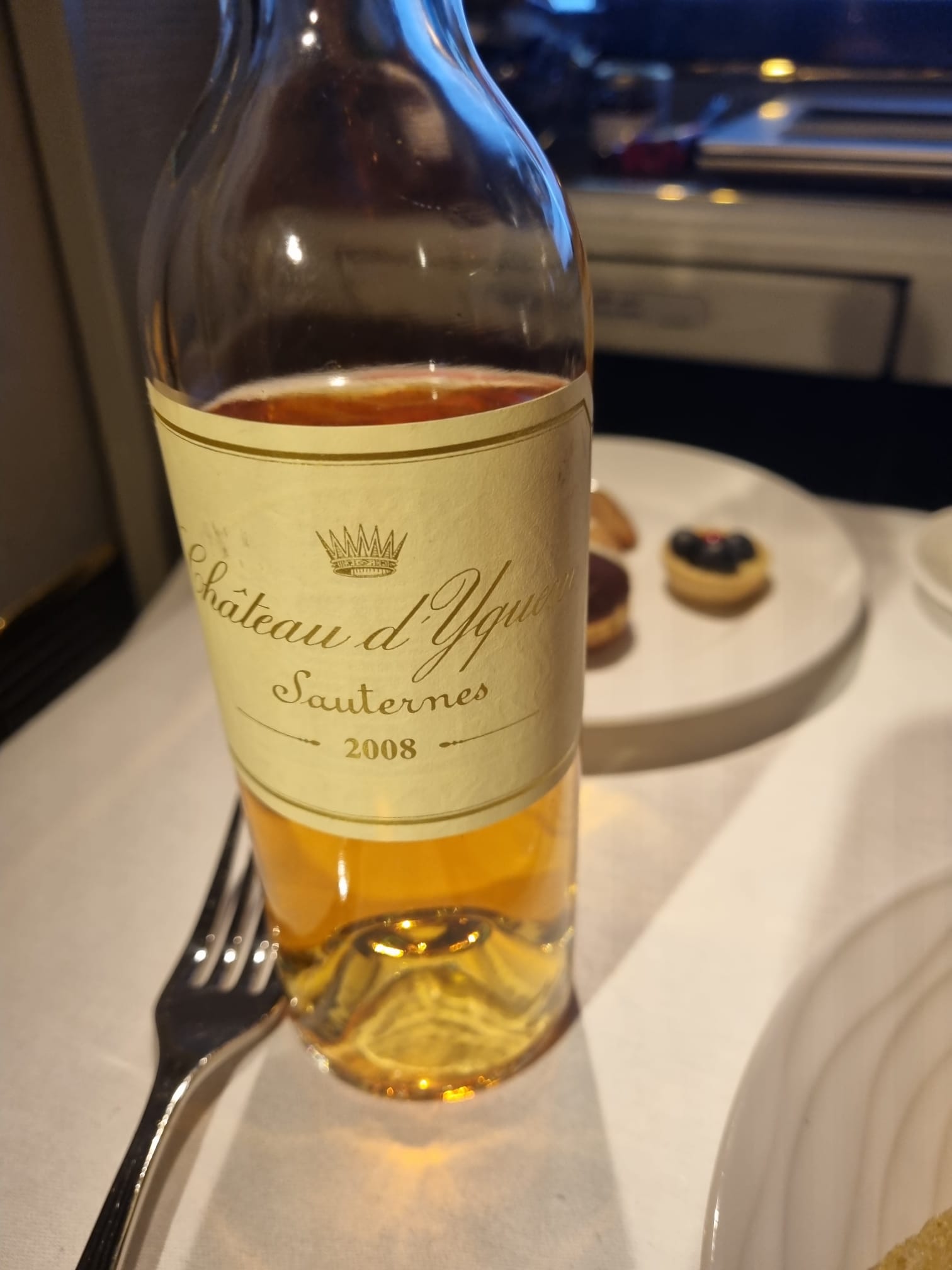
Qatar Airways usually rates well.
I tend to like Qantas wines, because I favor Australian wineries and styles. I think when you get on a flight to or from Australia there should be Australian wines on board.
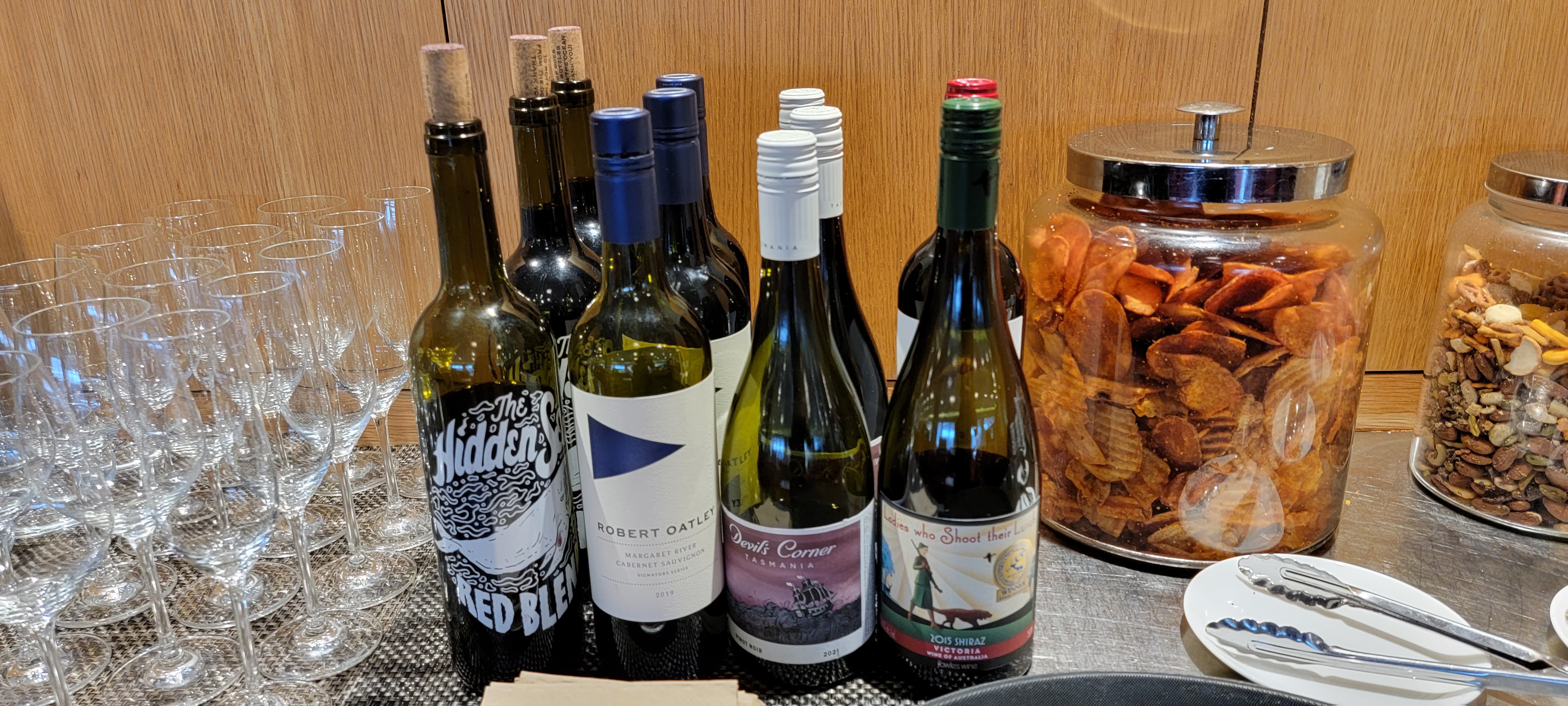
Aside from the cost, and poor selection even for the price point, I think American Airlines first class wines offending me most departing Sydney without a single Australian choice.
JAL’s serving Salon in First Class is itself a signal that they’re willing to invest in the program. Cathay Pacific has a strong cellar, and Air France has often been praised though my sense is they’ve seen cutbacks in recent years.
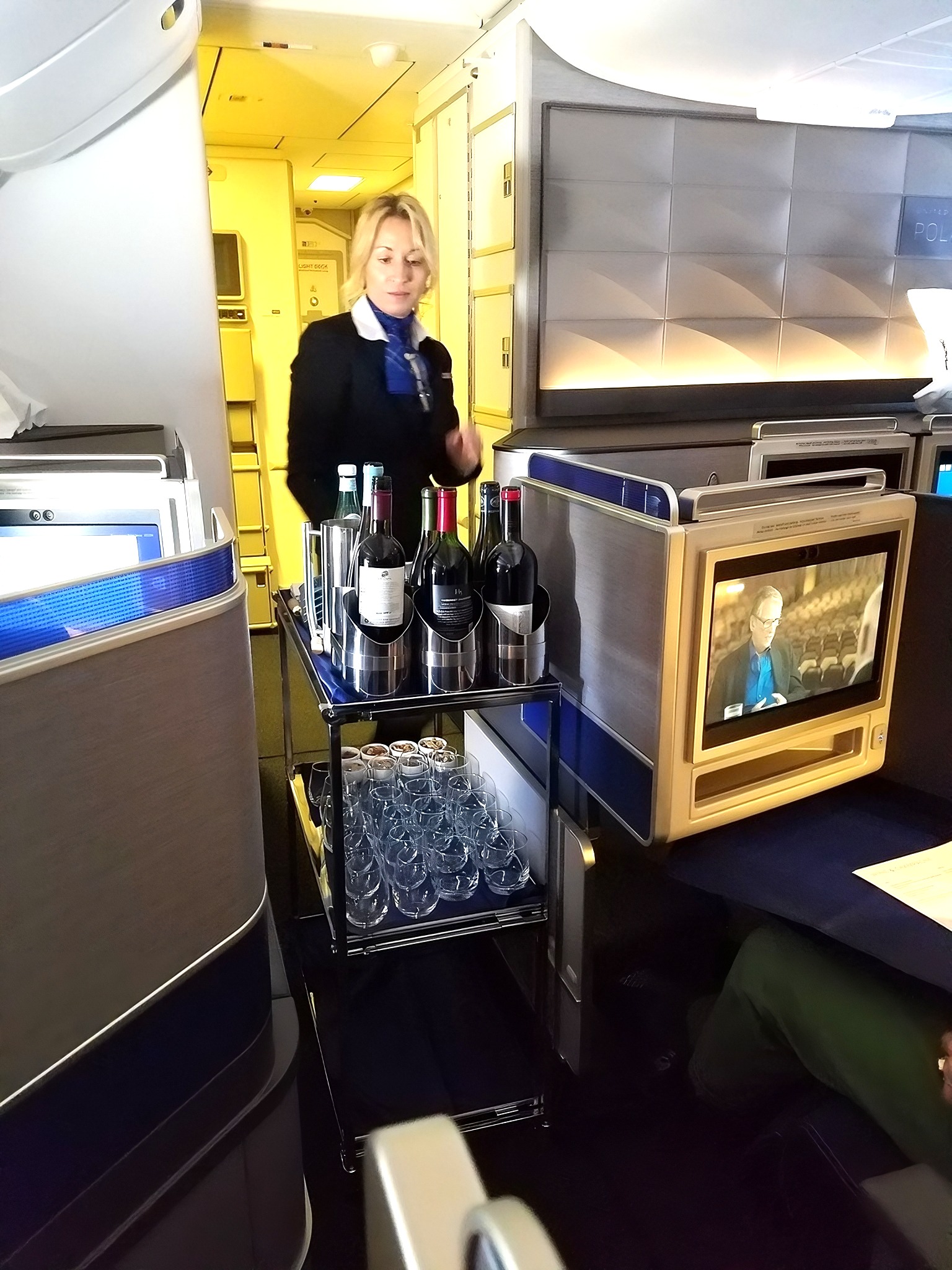
Probably the big surprise among top wine programs is how far United Airlines has come that I now think of them as being among the better carriers for wine in business class.
The “worst” programs tend to share traits:
- no coherent curation
- inconsistent bottles by station
- minimal crew training
- warm service / wrong glass / no thought to altitude
- cheap pours in premium cabins because most passengers don’t complain
If you’re an airline F&B insider, I want to hear from you. If you’ve worked airline catering, procurement, or with a wine program manager: what does a bottle of Salon actually land at for JAL (in bond / duty free / uplifted)? Are there marketing offsets, allocation agreements, or exclusivity terms? Drop it in the comments anonymously, e-mail me, or let me know and I’ll share my Signal contact with you.



AA serves Prosecco to business class passengers on boarding TATL flights. The cabin crew call it “Champagne”.
EK claim to have > $ 1 billion “laid down” in wine reserves….
UNITED is pulling off something amazing for Polaris. I have to think they’re doing some clever marketing like deals with the wineries for exposure. The heavy hitters tend to be CA wines so maybe some angle there.
At least in the US I’d rather airlines invest in customer facing technology and operational recovery (because delays will always be part of the equation) over spending a couple more bucks for a bottle of wine.
United has the best business class wine program in the world and IMO it’s not particularly close. Scale helps here. Their selection compares favorably to a number of respected first class products. I am not sure how much UA is paying, and even less sure of how long this will last, but it’s a golden era I am enjoying.
@ George Romey.. I agree…can’t think of the last airline conversation where someone was talking (complaining or praising) the wines served on a flight.
DL does Prosecco as a PDB in DeltaOne, often calling it “champagne.” They’re supposed to serve real Champagne from the Champagne region of France once up in the air, but often FAs try to continue to serve the Prosecco and only open the Champagne when someone like me calls them out on it. It’s easy to tell the difference.
I think that Air France does a good job with its Business Class wine program. The Champagne on offer is usually a step above other Business Class offerings, and they always offer a village level appellation White Burgundy and a commune appellation Red Bordeaux, with an additional white and red on offer. If anything I appreciate the consistency and reliability of their wine program as you always know what you’re going to get.
LP is a different story, sadly. I still think the wine is great and very much reflects my own personal wine preferences (and price point for what I would spend at home)…but for something like LP I want some more aspirational choices!
I have no precise idea what JL pays for their Salon, but it is surely much closer to $100 than $1000. In France retailers buy Salon for <€500/bottle, and there is every reason to believe that JL gets it at a very steeply reduced price, and not merely as a quantity discount. Wines like Salon are very strictly allocated to retailers to avoid flooding the market and maintaining high retail prices. Selling to JL is a perfect way for a winery to unload product in a manner that won't anger its retailers by undercutting them or in any way negatively impacting the retail market with increased supply. Airline wine distribution is a perfect example of price discrimination, and it's wrong to assume that price levels in one market are similar to price levels in other completely discreet markets.
On a recent UA flight from EZE to IAH, the wine offerings in Polaris were horrid. Only 2 domestic USA wines, even the Argentine Malbec on the printed menu was “not boarded.” UA has a long way to go, I’m not buying their “magnificent” selection of wines!
@L3… That’s factually incorrect. Bollinger is a French champagne, not prosecco.
I feel flatter that you opened the article with a link to my post! The main reason I threw $100 out there was to set a low bar for the ensuing discussion. But, my gut told me that was far too low to be taken remotely seriously, so I edited the post and bumped it up to $300. I still think that’s below the low end of plausible guesses, but I attach more value to the good will factor than you do. Sure, it retails for $1200, and people spend that. The thing is, many people would never know about Salon were it not for JAL. By contrast, LVMH has an enormous marketing budget to the extent that the EK exclusive probably doesn’t add that much value. That having been said, I’m sure their volume discount is substantial. Incidentally, I recall reading that, at one point in time, BA served half of the world’s Dom.
@L3 — Still slightly better than Cava…
AA first class has $5-$10 wines, with fancy text implying they’re top notch
I’ve flown Emirates 1st three times now and have yet to see Y’Quem on board. ALAS!!!
AA has awful wines in business class. Before takeoff, when the flight attendant asks ‘would you like a glass of champagne?’ Ask them is it Champagne or Cava or Prosecco? Their answer is ‘huh, what, what do you mean, etc.’. (And It’s ALWAYS the latter two!). Come on American at least try and train the flight attendants to know the difference.
PS: I have also been on AA Int’l flights where the flight attendants try to keep serving the Prosecco or Cava during the meal service.
My next door neighbor was an SQ steward, and they sent him on a 1 week sommelier training class! That’s devotion to wines and customer service.