
United Airlines will purchase the last two Spirit Airlines Chicago O’Hare gates for $30 million, significantly escalating its strategic battle to push American Airlines out of the critical hub. With both airlines locked in an intense fight and billions in loyalty revenue at stake, United’s aggressive move sharply raises the pressure on American as the two carriers are in a pitched battle at the airport.
United is larger there. United is profitable. So you’d have to bet on them. They’re better positioned to win, and to endure a war of attrition.
CEO Scott Kirby publicly drew ‘a line in the sand’ over O’Hare saying that whatever growth American in engages in there, they will match. This is pure ‘strategic flying’ intended to drive out a competitor, lowering fares in the short-term and raising them once they’re reduced competition.

On the morning of American’s earnings call, United announed a major ramp up in Chicago designed to pressure the airline through Wall Street analysts who would question the airline’s strategy of growth that would necessarily be loss-making.
But there’s a lot at stake in Chicago. While American lost 3 gates to United in the airport’s (likely illegally premature) gate reshuffle, I broke the news that American bought two O’Hare gates from Spirit for $30 million. (A media outlet that I flagged it to, who subsequently reported it, was broadly given credit – frustrating!)
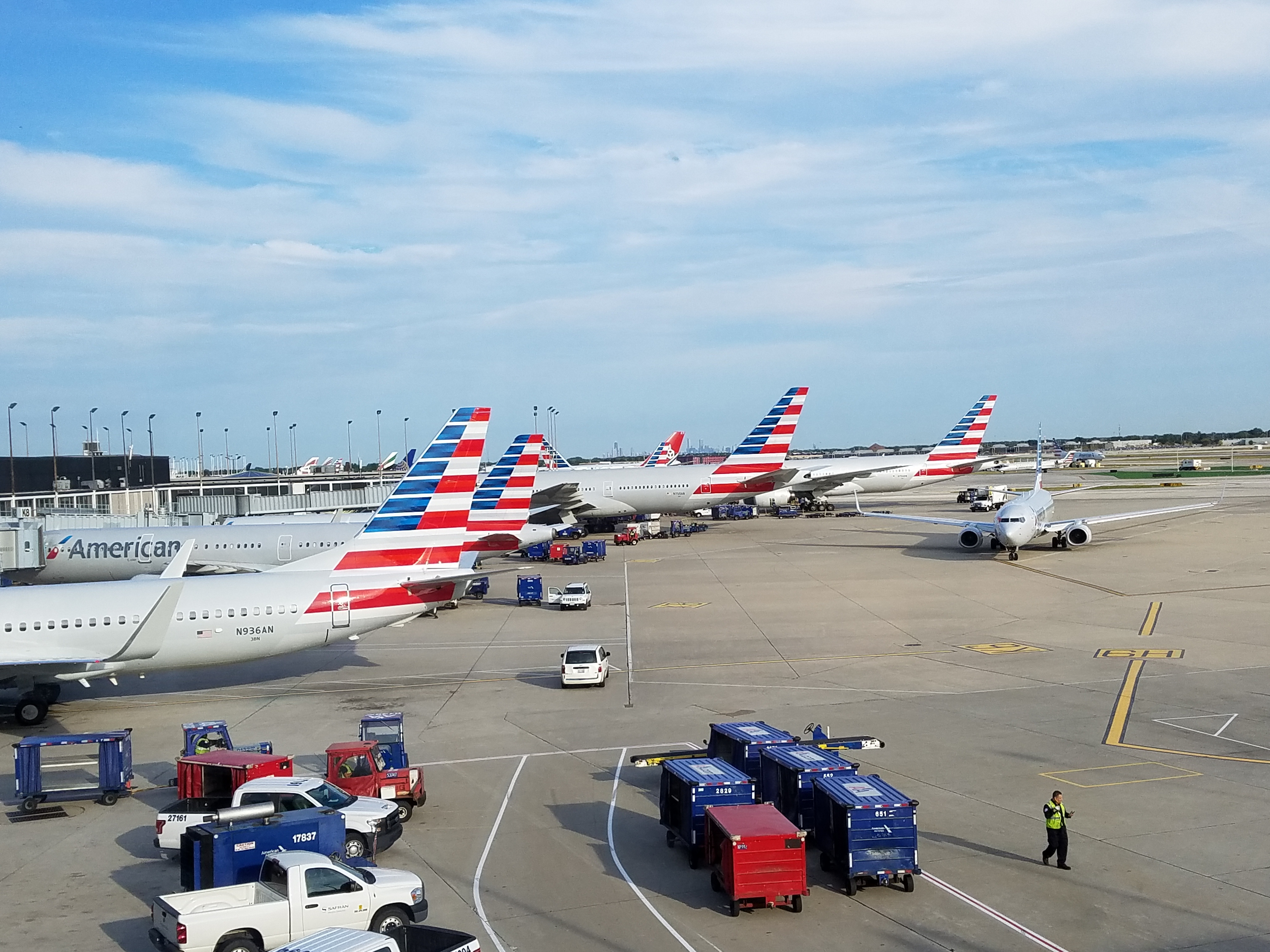
Now Spirit’s bankruptcy case reveals that United has acquired Spirit’s other two gates – G12 & G14 – for $30.2 million. A hearing is set for February 24, 2026 to approve the transfer. Spirit says they can continue operating their (scaled-down) schedule at O’Hare with common use gates.
Scott Kirby had previously said he would not big on Spirit Airlines assets, “It’s not in our wheelhouse… And so we’re not going to try to do that.”
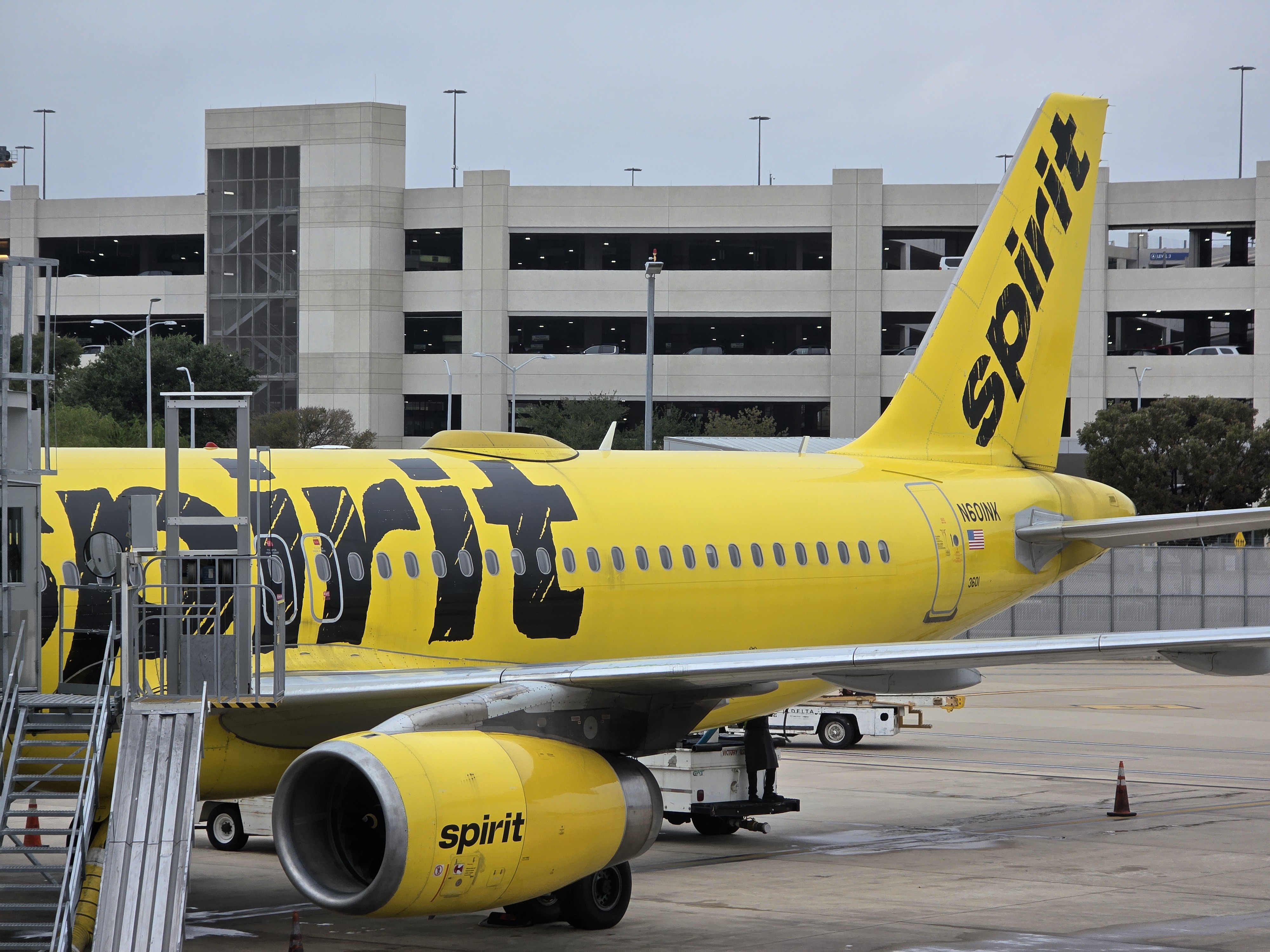
This is expensive for United, but they can absorb a nine figure decline in Chicago profits. Whether they should is another matter.
United CEO Scott Kirby has variously claimed that American is losing $800 million and $500 million in its O’Hare operations. Internal numbers at American did peg it at $70 million in one quarter.
Mike Linenberg of Deutsche Bank published a report Monday looking at federal form 91 data and concluding that American’s net margin at O’Hare is likely ~ 9%.
In some sense that’s better than what I’d have expected for those numbers that aren’t going to capture Chicago-based co-brand cardmember spend. With that it’s likely O’Hare isn’t far off of American’s system average, because Chicago is going to overperform there (and because American basically has been losing money everywhere in its flying alone).
Indeed, American thought they were losing money in New York before the pandemic and that drove a lot of the pullback there. A narrative developed that this retrenchment had stemmed the losses. But an analysis was later done attributing co-brand revenue to flights by where cardmembers were actually based, rather than simply spreading it across the system, and it turned out that:
- New York hadn’t been such a money-loser
- Cuts to New York actually harmed profitability rather than saving it
This was a key reason for the JetBlue partnership (and for the u-turn on partnering with Alaska).
When Scott Kirby laid out the plan at United to grow domestically, he explained how this would drive the cobrand economics. Wall Street hated it at first, but they were wrong! And United went from #3 in airline cobrand card spend to #2 (while American dropped from #1 to #3).
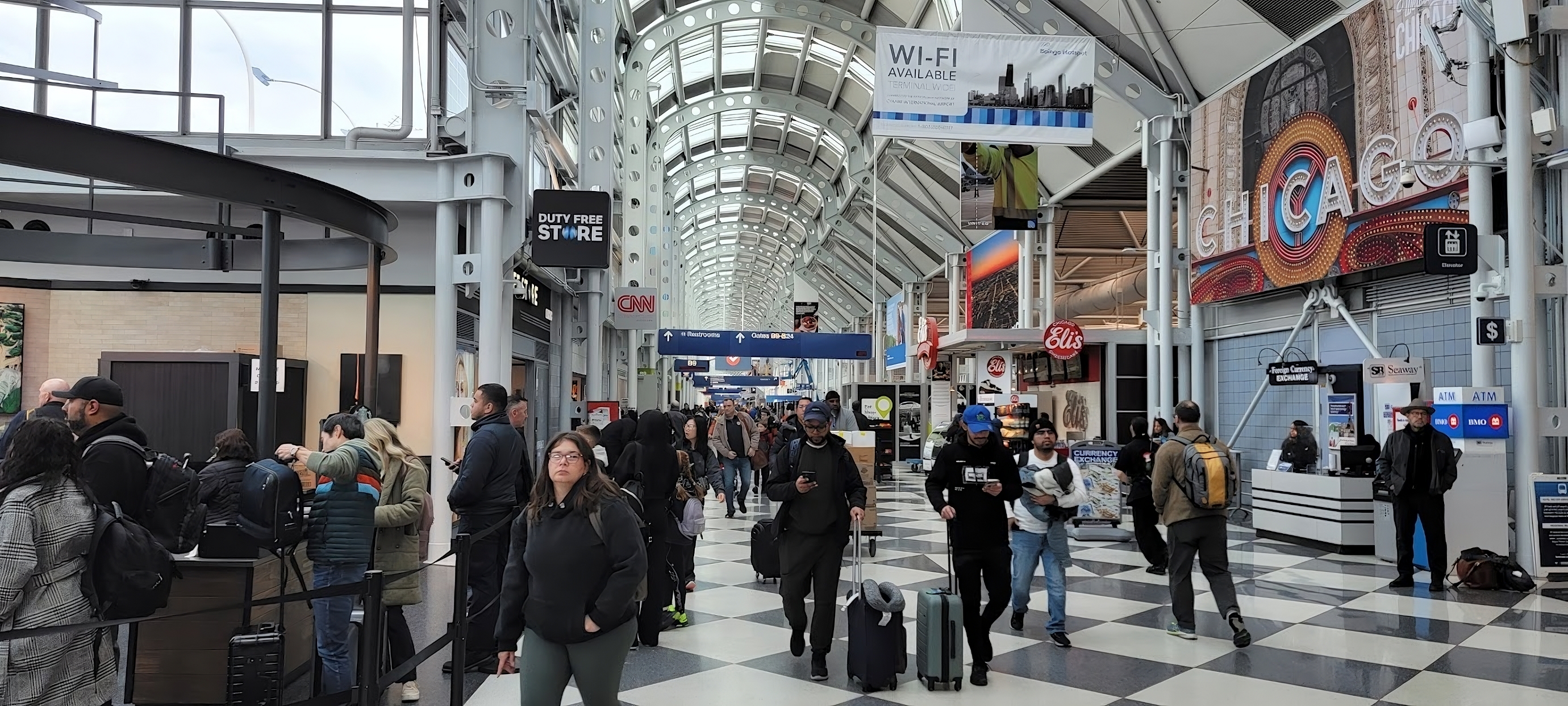

This is the strategy that American is articulating for Chicago internally. Chief Commerical Officer Nat Pieper told employees last week,
Chicago is one of the best markets from a loyalty perspective and it’s growing like crazy. 20% [growth in] enrollments over the last 9 months, 20% credit card acquisitons over the last 9 months. We’re shifting local share also magically 20%. Fortunately it’s the same so I can remember them, but it’s a really good momentum story.
American may not succeed at this. But they have to be a strong contender in Chicago. They won’t be number one, but having ceded the New York and Los Angeles markets in ways that are tough to recover from, and the concomitant credit card spend, they need to double down in Chicago because cardis generating at least $2 billion in profit at an airline that overall is just breaking even.
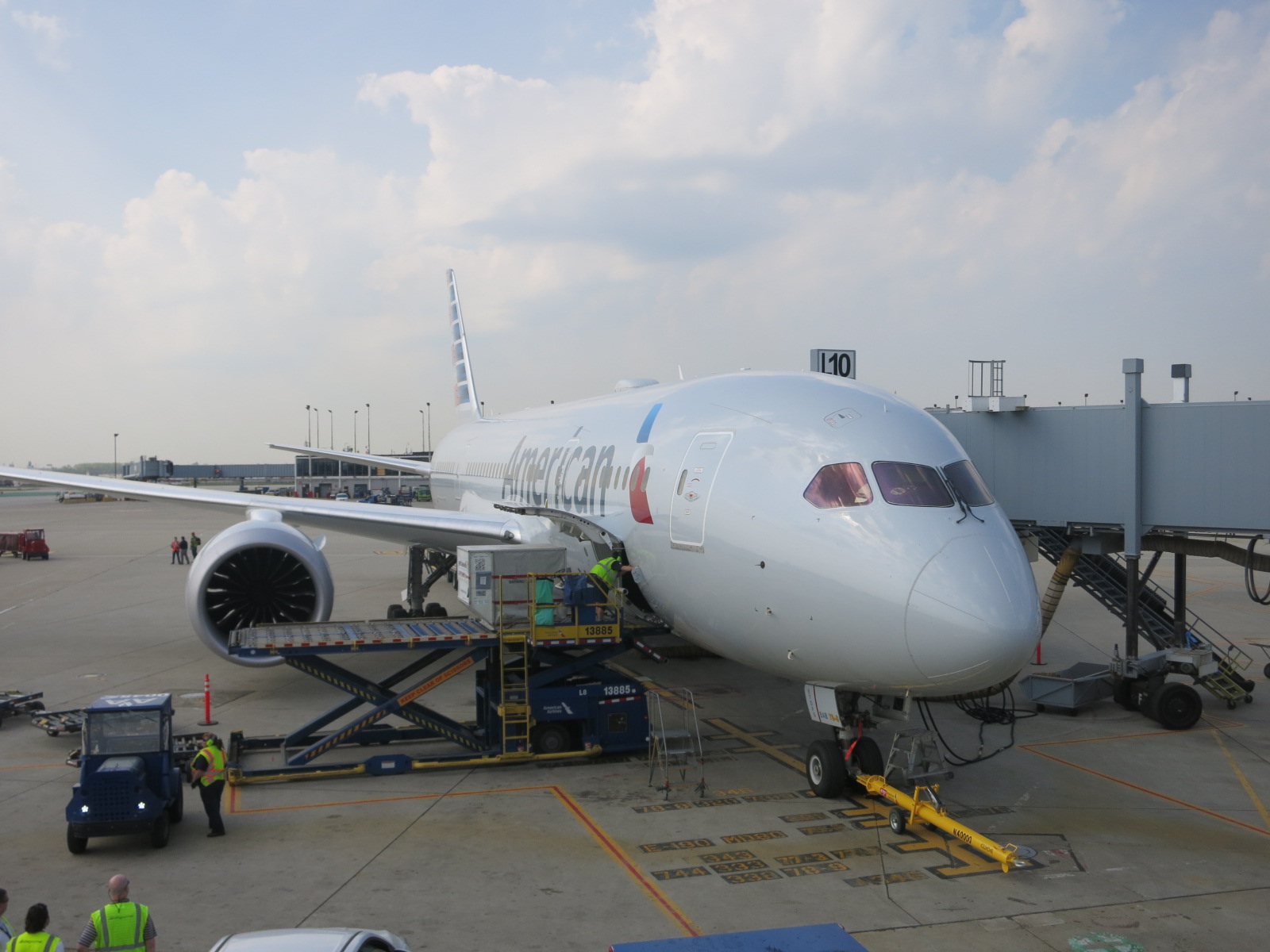
Since they lost their JetBlue partnership (to United) and have to real path to growth on their own in the other largest spend markets in the United States given slot and gate constraints, if American gives up in Chicago also there’s an even bigger hill to climb in recovery. Scott Kirby’s United wants to make sure that fighting for Chicago is too expensive – hoping they can force American to give up, likely pressuring the patience of Wall Street analysts and ultimately American’s board.



The astro-turf war continues… seriously, no one outside of our niche groups noticed or cares.
I fly AA from CHA almost weekly. They just started flights to ORD. From CHA, UA only flies to ORD. No where else. AA goes to DFW, CLT, DCA and now ORD. I travel all 50 states and Canada, so I rarely use UA.
In general, I’d say the little guys have the advantage. They should be more motivated and more nimble in a market where they underperform. However, AA really has very little experience going against competition. They are a perennial quitter, turning to run in the face of all competition. Perhaps a new leader at AA can get it done? I’m rooting for them as I don’t want to see United get larger or more powerful since they have even less regard for the customer than AA.
“Pressuring the Board”. That’s a good one. The phrase pushing string comes to mind.
Going to be a tough time for AA. Given the amount of O&D AA can’t simply decamp and move it’s hub to somewhere like STL or MCI. I wonder how entrenched the 1980s/1990s style fare war will become.
@Tom — You travel all 50 states and are based in Chattanooga… could you take the choo-choo?
Human behavior is hard to predict, but if the loyalty programs are actually driving profitability, AA has an advantage because their frequent flyer program is superior. And I say that as a UA 1K. I would never consider putting spend on a UA credit card. Otherwise, there’s very little difference between the 2 airlines, with UA obviously have some reach advantage in Chicago.
I’m curious if antitrust law is less strict for gate purchases. I think United might not have an antitrust issue since there’s technically competition from American and Southwest in Chicago, but what if, for example, Spirit sold gates to Delta in ATL? That should be blocked, but I’m not sure if bankruptcy sales are less likely to be blocked.
@ Gary — “Push them out”? Seriously? Over the top drama. American isn’t going to be pushed out of ORD.
Oh, once again claiming AA should win the legal spat about gates in Chicago. This ignores this history of the situation. AA got the first new gates built in Chicago in decades when they added their special extension. Then, they dragged out the financing and build out of the new global terminal (which Chicagoans still wonder if it will ever really arrive). Now, they claim that they are victims. Meanwhile, they also could send BA, Iberia, and JAL to the International terminal for their departures. Plenty of room down there.
UA used their own bankruptcy ages ago to delay the ORD modernization plan, but the new terminals had not been fully announced back then since the city was focused on the new runways.
Those G gates are pretty far from B and C, in a predominantly AA area. Not a connection I’d want
@Gene — The Boarding Area blogs can’t stop promoting this manufactured drama at ORD…
@1990 I’m not sure why you keep saying that no one outside this blog cares. If you’re in the midwest, more so if you’re in Chicago, this is a fairly significant battle for consumers. The scheming moves by both UA and AA alone make this an interesting story to watch and read about.
@FromTheMidwest — Have you noticed any reduced airfare due to this ‘competition’? Because, unless and until there’s a real-world impact on consumers (and workers), this is just hype, including for people “from the Midwest”… as if a random pithy billboard, a few schedule changes, and an extra gate or two are really a ‘turf war’… get real.
I think Kirby’s arrogance may end up hurting them in Chicago. Why be so public you’re trying to hurt the other guy so you can eventually raise fares. I hope passengers in Chicago vote with their wallets.
ORD is going to be a mess this summer
It just kills Kirby that he can’t have ORD all to himself. Just wait and see where prices go if he succeeds.
@1990 I think there’s more to it than a billboard, etc. When was the last time you saw two major carriers fighting it out like AA and UA are at ORD? It’s like two wrestlers fighting for toeholds. Two more gates are positioning UA for 16-20 more flights. That may make the difference when the City next reallocates gates based on activity.
Before this fight AA has 350 dailies and UA had 550 dailies out of ORD. Now they’ll be at 550 and 750. So 400 more flights a day to choose from is significant.
Just skip reading the posts as you’re clearly not interested. But many of us are interested. To me it beats reading one more tiresome article about what JetBlue may or may not do or which club they may or may not open at JFK. I scroll right past those and yawn..
@FromTheMidwest — Umm… how about United’s attempts to re-enter JFK… and DL/AA won the first round; now with the new terminal 6/7, and the B6 partnership, they’re trying a different angle. Oh, and B6 opened their new lounge; saw it in late December.
You’re welcome to read/comment as much as you’d like, or not. No gatekeepers here. And, if Gary and the other blogs wanna keep pushing this ‘story,’ I can’t stop them, either.
Either way AA is in trouble. I think DL is just waiting to increase flying at MIA. Then AA has to fight off UA in ORD and DL in MIA and probably also AUS. AA is financially the weakest and doesn’t have mostly not friendly or good service. It will be difficult…but we will see.
Let’s see if a new CEO can turn things around.
All this flying means ORD can’t build the new international terminal on its original schedule because they need the existing terminal 2 for the gate capacity. One proposal is to build both satellite terminals now, and then they can tear down terminal 2 to build the new international terminal.