
After flight attendants called for the CEO of American Airlines to be removed, and the pilots union demanded a meeting with the airline’s board over poor financial performance, Robert Isom recorded a video to all employees outlining the carrier’s plan to improve its finances and operations this year, as first reported by aviation watchdog JonNYC.
AA:
"Robert Isom just recorded a video to all team members regarding plan to improve financial and operational performance in 2026. My opinion, he sounds kind of nervous and not very confident in the audio. And the speech is kind of milquetoast in my opinion as well.
I…— JonNYC (@xJonNYC) February 12, 2026
American Airlines has made a series of major blunders over the past 14 years. They’re beginning to re-orient themselves. But this has come in the form of a laundry list of changes, without a clearly articulated vision from the CEO.
Since US Airways management took over, the airline has gotten basically everything wrong. Basically successive CEOs have misjudged the direction of the industry and consumer preferences, and the airline has fallen behind as a result
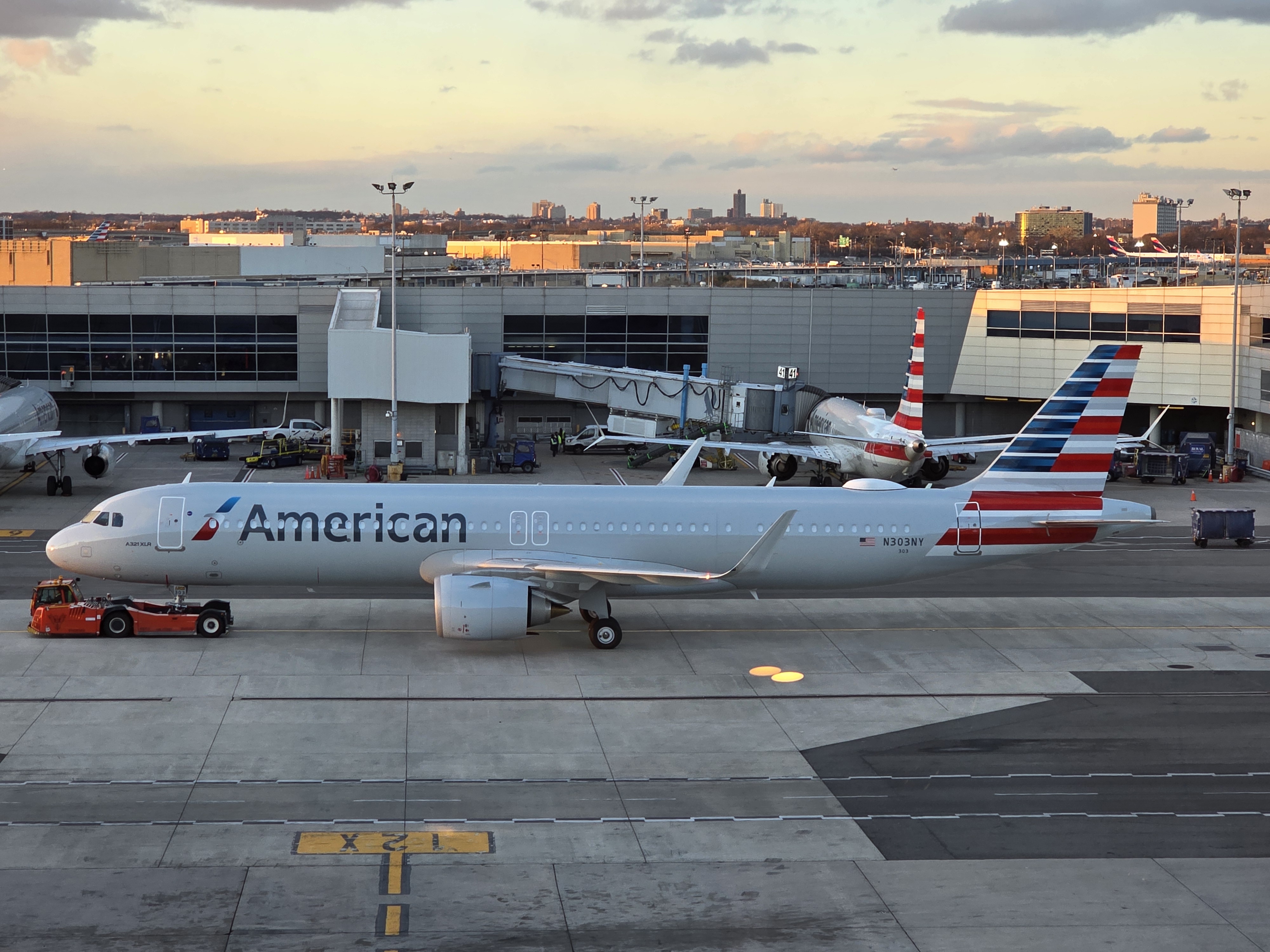
- The wrong fleet. American Airlines hasn’t had the planes to take advantage of opportunities. They ‘rationalized’ their fleet by retiring Airbus A330s, Boeing 767s, Boeing 757s, and Embraer E190s during the pandemic. But that meant they didn’t have the long haul aircraft to take advantage of a surge in travel to Europe, and they didn’t have the planes to rebuild flying in places like Chicago – losing gates there as a result, falling further behind United, and finding themselves in a costly battle of their own creation.
- The wrong aircraft layout. American doesn’t have enough premium seats. They took business class seats out of planes to squeeze in more passengers (but these seats aren’t even always full – they traded expensive lie flat business class for the marginal seat in economy). That’s something Robert Isom called a ‘real success’.

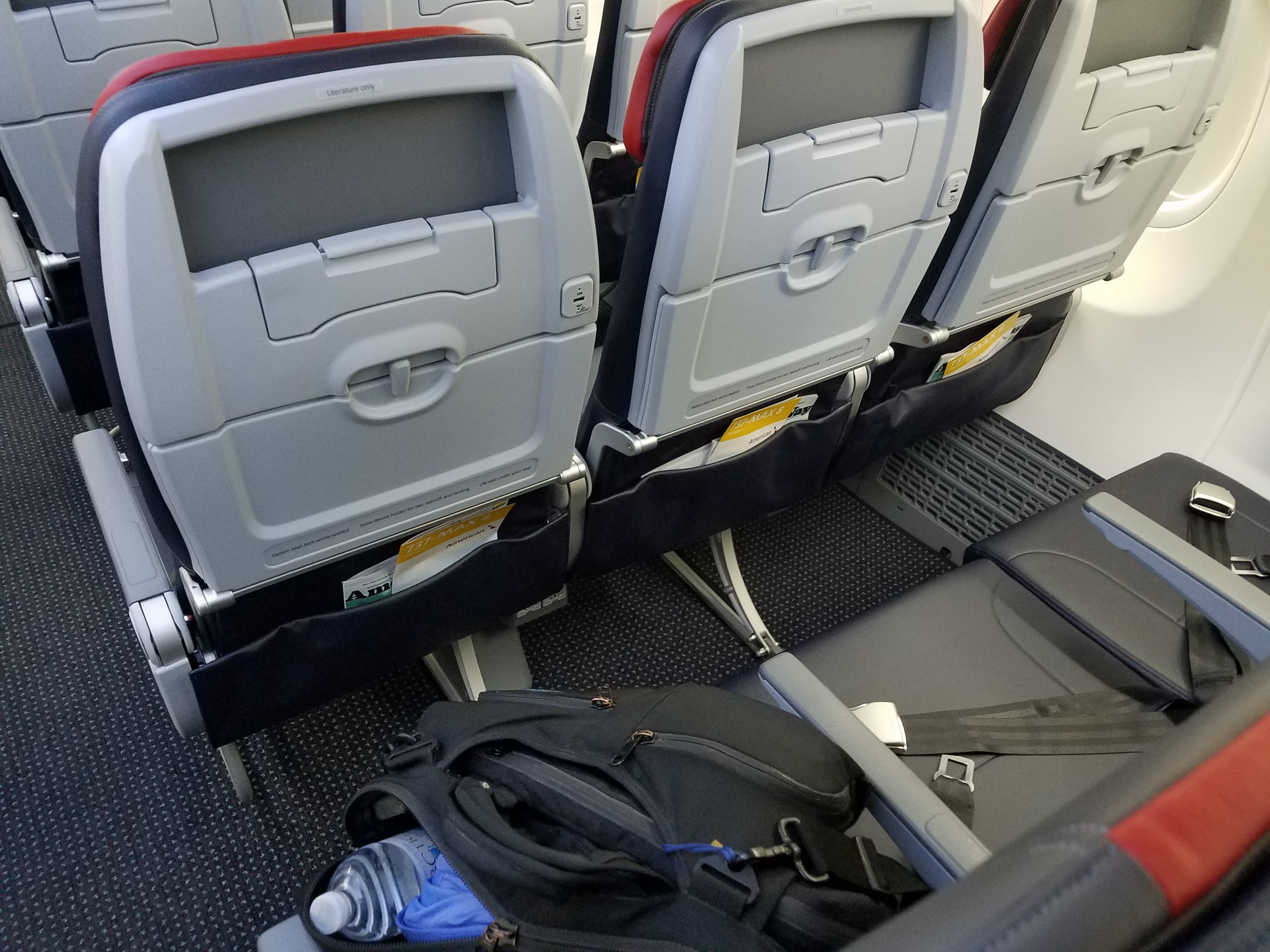
American rolled out a standard domestic coach product that offers very little extra legroom seating. That means they don’t have seats to upsell passengers and get them to spend more money. They segment customers using tools like basic economy, but don’t offer enough product to get passengers buying up the fare ladder.
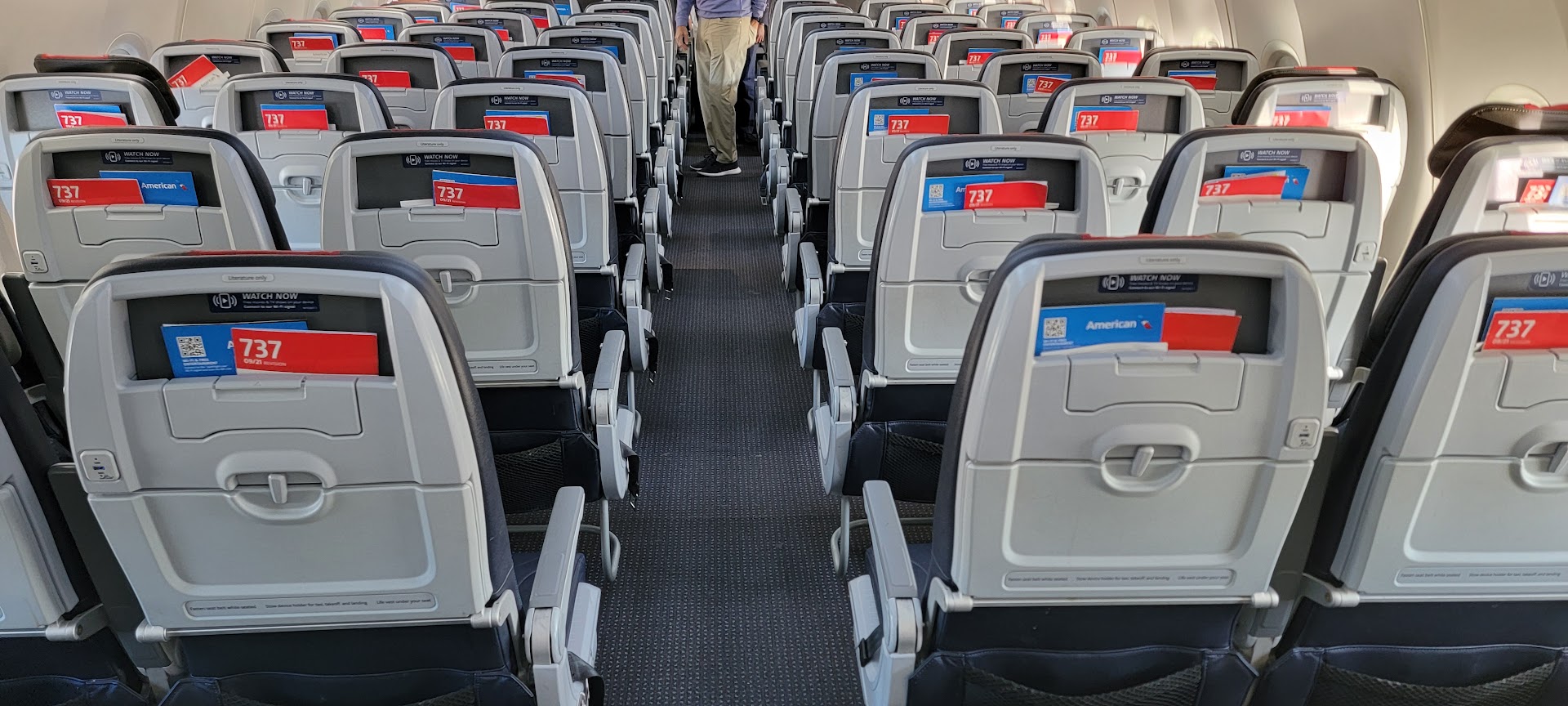
Meanwhile, the product itself that customers might pay for has been degraded. They started ripping seat back entertainment screens out of planes because they were too expensive right as the cost to deploy those was dropping dramatically (since you could stream content to each seat instead of running wiring throughout the plane). And United started adding screens, and now super fast wifi, as part of a strategy not just to deliver a more premium experience but also monetize passenger attention. (Delta has its own plans for this, too.)
- The wrong service model. American viewed its competitors as Spirit and Frontier rather than Delta and United, and they did this (1) despite high costs that meant they needed to earn a revenue premium in order to generate profits, and (2) just as customers were clearly shifting preferences to want a better experience rather than just low fares. Spirit and Frontier have struggled, Delta and United have increased margins and earned billions.
Robert Isom spoke about the need to focus their competition on Spirit and Frontier and flight attendants became confused about what kind of product they were even supposed to deliver.
[T]oday there is a real drive within the industry and with the traveling public to want to have really at the end of the day low cost seats. And we’ve got to be cognizant of what’s out there in the marketplace and what people want to pay.
The fastest growing airlines in the United States Spirit and Frontier. Most profitable airlines in the United States Spirit. We have to be cognizant of the marketplace and that real estate that’s how we make our money.
We don’t want to make decisions that ultimately put us at a disadvantage, we’d never do that.
- Giving up on coastal markets. Thinking they couldn’t compete in places like New York and Los Angeles, they’ve scaled back their positions. They were doing the math wrong on their costs and revenue, and didn’t realize that these markets were driving spend on their cobrand cards. They make money selling miles to Citibank rather than moving planes, and these are crucial markets for heavy spending. American’s cobrand credit card had the highest volume of spending in the industry but has fallen to number three.
- Too much financialization. Isom served as airline President under CEO Doug Parker who destroyed more shareholder value than any other CEO than any airline in history as he levered up the balance sheet to fund $12.4 billion in stock buybacks, whle selling more than $150 million in company shares himself. This drove up interest costs at the airline. The airline was kicked out of the S&P 500.
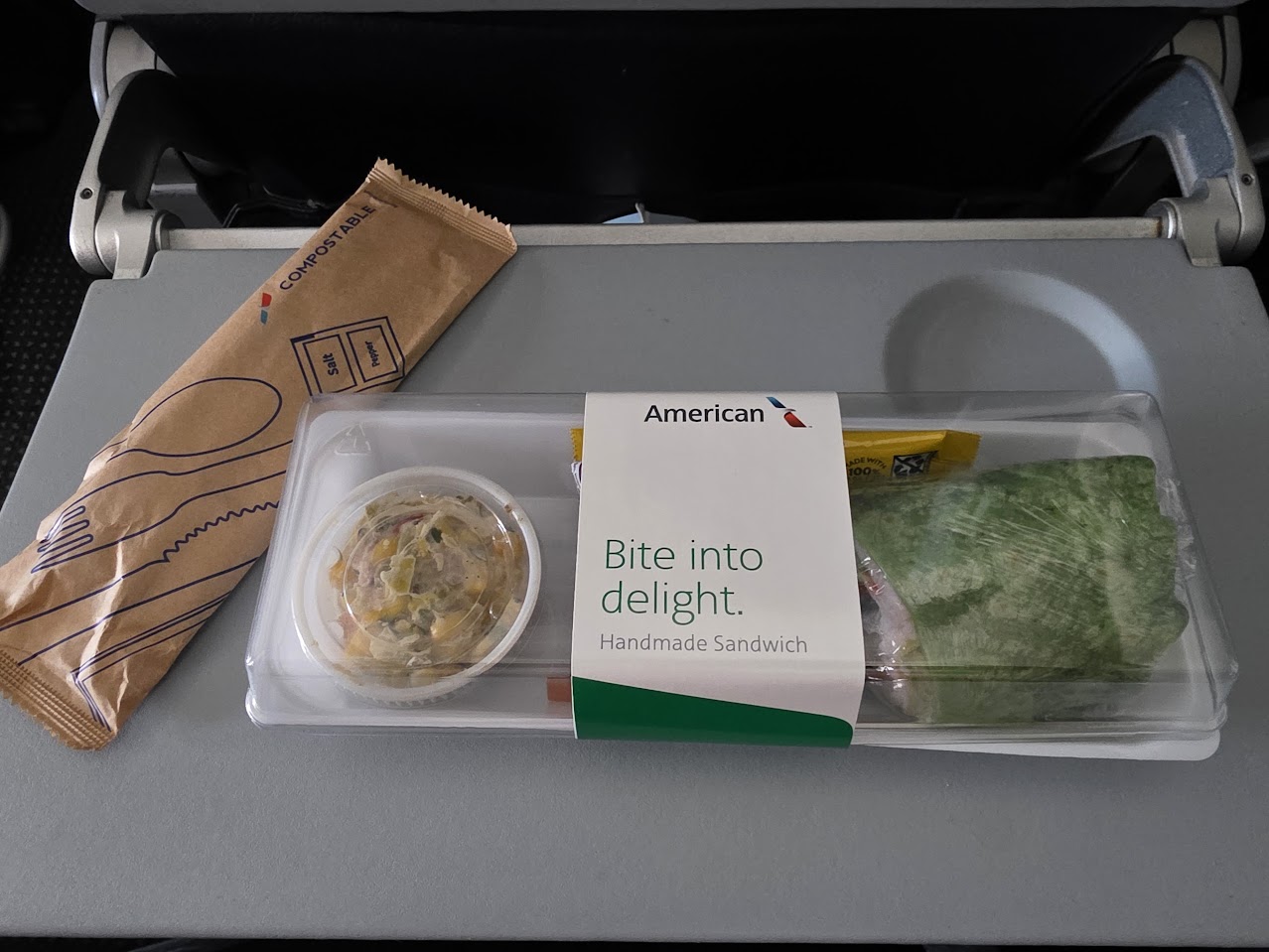
American has pivoted to offer more premium products. They’re adding first and business class seats (though still lack enough extra legroom coach), renovating and adding lounges, working on their food and beverage deficiencies and they’re even offering more and better food for sale in coach – though still not to the level of United or Alaska. And their Chief Commercial Officer is rallying the troops.
Now CEO Isom is laying out the airline’s plan, but it’s still short on vision and short on specifics while focusing more on what they are doing now than what they are going to do and why it will matter.
Good afternoon, everyone. Given all that’s going on with our airline right now, I wanted to share more about where we’re heading in 2026. Last year was a tough year, no doubt about it. And I know some of you are still recovering from the winter storms just a couple of weeks ago.
As we look forward to 2026, it’s with a lot of excitement and confidence. I know we’re going to do better financially and operationally. We have a plan to be solidly profitable this year, which will mean good things for our customers, our shareholders, and all of you, especially in regard to future profit sharing to go along with our industry-leading contracts. We will reclaim American’s reputation as the world’s premium global airline. And we shared how we’ll do that with our 6,000 frontline leaders last week at our Journey Leadership Conference.
It’s a strategy that our board is behind, and our senior leadership team is committed to and accountable for. And we look forward to working with all of you to make it happen. Thanks to your efforts, we’ve laid the foundation for all of this over the last few years. And in 2026, these efforts will produce meaningful results.
Here’s what we’re doing:
- First, we’ll continue to improve the customer experience. We’re following through on this commitment with free Wi-Fi, new lounges, better food and beverage offerings, and even more advanced technology to help our customers along their journeys, especially when it comes to recovering from disruptions.
- On top of this, we’re making significant investment in facilities at several of our hubs, including DFW, Los Angeles, and Miami. Customers are noticing, and their approval is showing up in our net promoter scores. We need to execute on these improvements every day, and we are.
- Second, in 2026, we have a plan to maximize the power of our network and our fleet. The US is the most important aviation market in the world, and no one serves it better than American. This year, we’re excited to grow the airline at its fastest rate in years. You’ll see this in Philadelphia, Miami, Phoenix, and of course Chicago, and throughout the rest of the system.
- And you’ve heard about some of the new routes that we’ve announced for the summer and beyond. We’ve added thousands of frontline team members over the past few years to support this growth, including more than 7,500 flight attendants and more than 5,000 pilots and thousands of airport and tech ops team members. All of this is great news for our team.
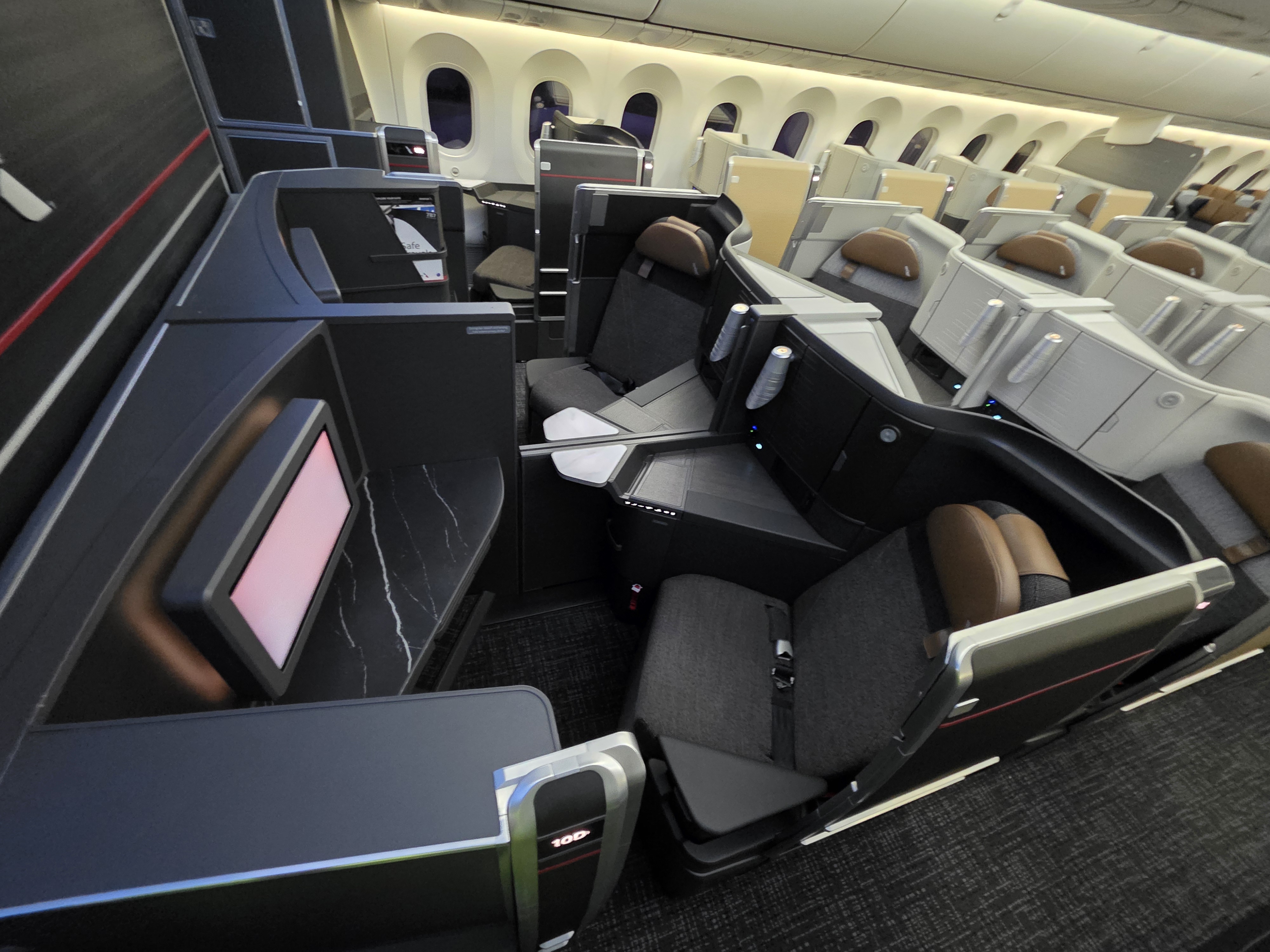
- And to further support all this, we’ve taken delivery of hundreds of new aircraft over the past few years, with another 55 expected to join our fleet this year, including the premium Boeing 787-9 and Airbus A321 XLR, both of which include our flagship suites. We’re also retrofitting hundreds of additional aircraft across our existing widebody and narrowbody fleets. And all of this is the culmination of work that began years ago.
- Third, our AAdvantage program, the first and still the largest airline loyalty program, offers tremendous opportunities to strengthen ties with our customers and our partners. We invented airline loyalty, and Advantage is the best and most valuable loyalty program in the industry. Our new card partnership with Citi, which started in January, is key to unlocking future growth and revenue, and that’s a big deal.
- Finally, we’re doing a much better job of selling our product, and we must do more. We’ve regained our share of corporate revenue, and the next step is to push it even further. We’ve brought on resources and tools to make sure our products are easier and more accessible for customers, and I know that will make all of our products, especially our premium products, more appealing to our customers and ultimately drive more revenue.
Now, we all know that to accomplish these goals and take care of our customers, we need to run a fantastic operation, much better than our customers experienced over the last year. Disruptions are going to happen, and I commit to you that we will do everything possible to make recovery go more smoothly and painlessly for you and for our customers.
You’ll notice that we’re rebanking DFW beginning in April to pull down peaks. And in addition, we’ve buffered the system with spare resources, including people and time. Just know this: we’re committed to setting up our team for success, no matter the conditions they face, to meet the needs of our customers. And that’s why we’re in this business—to care for people on life’s journey.
The better we take care of our customers and team, the better off our company will be. To accomplish all this, it’ll take all of us working as one team. And please know this: I’m always open to meeting with our union partners. And to you, as you know, I always look forward to our interactions, whether it’s at the gate, on the flight deck, in the cabin, in your break rooms, or here at the Skyview campus.
Leading American is a privilege and a great responsibility. I’m proud to work with all of you, and I’m more confident than ever in our future and what we’ll accomplish this year. It starts with leadership at the top, with me. And it’ll take all of us focused on our future. And I know we can do it together. Thank you for everything you do.
This needs to be sharpened to communicate a belief about the direction of the industry, what customers are looking for, and how American Airlines will deliver that. It needs to acknowledge past mistakes, emphasize the truly unique assets that American has, and offer how investments now will leverage those assets and go on to beat Delta and United.
What a CEO of American Airlines needs to do is lay out what the carrier’s north star is. What’s their mission, what are try working to deliver to customers, so that each of the improvements they’re making fits into a context and can be understood by employees and passengers as a step on a journey rather than a disparate effort.
That way the investments carry more impact than the sum of each one individually, employees understand what kind of service they’re supposed to be delivering, and can internalize that they’re being given the tools to succeed. They can be proud of their employer and what it’s trying to become – and this pride can shine through to customers.
Then the CEO needs to sell this vision retail to the front line by visiting the airline’s stations. A video is fine but can’t be the end of the messaging.



Excellent analysis.
Too little too late for Isom. But finding the next person for the chair is critical. So we can all expect mid speeches like this while, hopefully, the board goes and does its job.
You would think putting in more MCE would be the easiest hard product fix. But easier said than done, I suppose. Culture is what is really needed, but that starts from the top.
I’m glad Gary included the term ‘financialization,’ because I’ve noticed recently that it is both a ‘buzzword’ and also also apt. It’s money making money off of money, but really it’s all a farce. Matthew McConaughey’s character in The Wolf of Wall Street described it best: “Fugayzi, fugazi. It’s a whazy. It’s a woozie. It’s fairy dust. It doesn’t exist…”
We’re simply not making stuff anymore. We’re hardly serving most people much, either. Consider yourself lucky if your flights are relatively on-time (like, within several hours), and if not, psh, no protections, good luck to you, certainly no EU261 or APPR equivalent in the US.
It’s the workers, consumers, and actual taxpayers (most wage-workers, hardly the capital-gains folks, certainly not the mega-corporations) paying the price for this grift. And, if there is profit, we’ll play an accounting trick to deny sharing it with anyone who made it possible. Gotcha!
Management, like Isom, are the mere mercenaries for these parasitic kleptocrats, who have fleeced us all, while they pay near-no taxes and live on mega-yachts and throw stones at us all from their white houses. Anyway, enjoy a culture-war distraction instead of doing anything about all this.
Unrelated, but when’ll be the next bailout and stock-buyback scheme for these airlines? Do we need another tragedy to force that through? Probably.
As noted the blunders are many and will take years and huge investments to correct. The BOD has shown themselves not to be interested in taking on initiatives with risk involved. For example possibly de-Oasis the fleet or at least add more MCE seats. Or spend money in approving technology and operations to reduce delays and speed up operational recovery.
So, it’s total bs moves like better coffee and spending a buck more on wine in business class. And the dolts on travel sites eat it up as though most people go from Point A to Point B based on a desire to drink wine. Meanwhile passengers see their connecting flight push off a gate while their a/c sits on the tarmac with no gate to go to.
1990
to your final question, with WN beginning to make real progress to its financial turnaround, it becomes increasingly obvious that it is a small subset of the industry – AA among the big 4, B6 among the LCCs and the ULCCs that have business models and execution of them that don’t work.
There could be another black swan event at any time. UA is trying to push AA over the edge but there is no doubt that AA is incredibly exposed to risk whether it is competitive or black swan.
Hopefully there are no black swan events but even more so that market forces are allowed to sort out whatever happens. We have dealt with 5 years of domestic overcapacity because the government bailed out the airline industry instead of letting a few airlines fail.
Nothing Isom has laid out is enough to meaningfully turn the company around. They likely can continue to skim above the surface but not become long-term viable. It is far from clear that anyone can turn AA around after years of so many strategic mistakes. AA has far more assets and history than WN and yet Elliott picked WN and WN is making solid progress to becoming financially strong again.
The fact that the board is willing to support Bobby Ice likely says they don’t have a plan to really make AA long term viable and are content w/ skimming above the water.
@George Romey — You’re right on this at least. And, as a Key, you’d know it. Also, you’re gonna make @Peter’s day with that ‘more MCE’ talk. By ‘de-Oasis’-ing, are you suggesting adding IFE? A few sycophants pretend as if lack of seatback screens are ‘just fine,’ when, in reality, it’s cheap.
Isom was never the right guy. He needs to go and of course he will ride off into the sunset with millions in his pocket and first class positive space for he and his family. Coach is Coach. I don’t think there is any difference really between the big 3 and SWA. Again give me high speed WiFi. Could care less about the seat back screens as they get scratched up and fade anyway.
@Tim Dunn — For the past two-plus decades, it’s felt like more black swans than white swans… I’m not sure more private equity or hedge funds investing in any particular airline is a good sign. They’re not there for the longevity of the business, its fundamentals, its people. They’re there to make a quick buck, and leave a mess for someone else to pick up. If Elliott (mis)Management comes knocking on Delta’s door, keep it locked, sir.
@Coffee Please — That’s the thing… coach isn’t just coach. Still wildly different experiences depending on the airline, routing, etc.
Like, for on-board passenger experience in Economy, please, if they could all be jetBlue that’d be swell. Ample legroom (mostly 32″ pitch), IFE screens (220, 321, etc.), free WiFi, and better snacks (uh oh, no Coca-Cola, though). But, B6 doesn’t have any lounges (ok, fine, JFK T5 just opened, but hardly anyone gets access). And reliability is an issue (regular 3 hour delays are not reasonable.)
Meanwhile, Delta mostly has the same IFE, WiFi, and decent snacks (Coke, they are from ATL, after all), the pitch isn’t always ideal (closer to 30″ way back, and you do feel that in the knees). United is coming along with more IFE, but no free WiFi yet, though they do sometimes have stroopwaffles, so I can forgive them. American mostly gave up on IFE, and finally has free WiFi. Alaska apparently hates both IFE and free WiFi. Southwest doesn’t have WiFi or IFE, either, used to have free seating and 2 checked bags, now charges, and their fares are often more expensive than DL, UA, AA these days! (lame, lame, lame).
Finally, shall we go over NK, F9, G4, etc.? LCC seats are under 30″, no IFE, no WiFi (unless you’ve got a special T-Mobile thing going on), nickel and dime for everything, and are less reliable. But, heh, at least Frontier is joining Spirit in adding a few recliners up-front.
@1990
Thanks for breaking that out. Besides the seat back screens, and maybe more passes in the cabin by the JBLU F/A’s it all appears to be the same to me except for F9 and NK.
If the union members would just do the jobs they’re being paid to do, the AA ship could be righted in short order.
You’ve been the CEO of how many airlines?
Private equity isn’t going to come to DL because there is not any evidence that anyone can unlock more equity than DL mgmt is already doing.
NW was the target of an LBO because it was generating lots of cash but not investing in the business; the LBO forced NW to pay down huge amounts of debt. The lesson is for airlines to invest in the business.
WN rolled out the red carpet for Elliott because WN had a very strong balance sheet but underperformed operationally and financially
As much as you and others will fight acknowledging it, Elliott has probably achieved what WN could not do – which is return the company to a viably strong economic position. Giving away great products is no more of a good thing or sustainable for WN than it is for B6 or NK or F9.
AA has no savior to do for it what Elliott did for WN – and that IS the reason for real concern.
AA is, at best, doing incremental improvements that are not likely to do what AA needs to become sustainably viable
Isom and the board know that and are not likely to upset what has been the status quo even if there aren’t good, smart people that are starting to chip away at what has hurt AA for two decades.
Okay Jeff.. the roof isn’t caving in just yet. My wife and I had a very good experience on AA when we flew business class to Seoul, Korea last November. The Flagship lounge at DFW was a wonderful place to relax and spend time prior to boarding. Food and beverage were excellent. The flight itself was great with friendly FA’s and nicely prepared meals. Left on time and arrived at ICN 45 minutes early.
In contrast… we flew Air Canada business class to YVR when we departed Seoul and the FA’s weren’t nearly as friendly and the food was just kind of so-so.
Neither flight had a working internet service.
I have said before that when AA decided to retire its older widebodies, it was a smart decision. Traffic came back slowly after the tech crash of 2000 and 9/11, as well as the financial markets collapse of 2008. Wall Street analysts were completely surprised that leisure travel bounced back so quickly and so strong, and that so many people decided to go premium. Hotel companies say that their luxury brands are doing very well, while limited service brands (think Hampton and Fairfield) aren’t doing as well.
That said, I have discussed Isom’s performance with a long-time AA pilot. He believes that if Q1 of 2026 does not see outstanding numbers, the Board will fire Isom.
Too many employees are grouping that Elliott Investment should have taken a position in American rather than Southwest, because they think AA was in worse shape than Southwest.
Elliott invested in Southwest because of its balance sheet, not because they were in poor shape.
“Our new card partnership with Citi, which started in January, is key to unlocking future growth and revenue, and that’s a big deal.”
OK AA, make my Citi Exec card worth more than only an AC membership. Give me reasons to spend with it.
Gary,
yes, WN had and still has a decent balance sheet but the prospect of a big earnings turnaround is what has sent WN’s stock up 30% just since the beginning of the year and 80% over the past year.
No one can do that for AA because there just aren’t a bunch of major strategic changes that AA can make.
It says volumes that NW and WN can attract private equity trying to force change but AA has attracted no one.
Nobody including AA’s board sees a quick fix – or a bunch of quick fixes – that will fix the company
Keep in mind, there are literally thousands of Gate Agents and Ramp Agents that deal with the fallout of bad management. Both pilots and FA’s have been sabotaging operations over the last month since the last weather disruption. Pilots and cabin crews have been calling out sick, claiming fatigue, or intentionally timing out flights.
Customers are frustrated, they attack the workers that have no control over the conflict of the unions and the company management. There are no winners here.
Robert is an incompetent executive with an extremely big airline that he doesn’t have a clue how to run. He might be good for something like Cape Air I am still not sure if that still to big for him.
If they want to continue customer loyalty they need to stop taking away the perks such as mileage awards from the very people who they say they are dedicated to. The bar for awards is constantly being raised. They just recently took away mileage awards to certain seat classes. They need to give passengers a reason to stay loyal, not just even with other carriers.