
Internal slides leaked from United Airlines reveal its aggressive strategy to dominate Chicago O’Hare, as their leadership openly mocks American’s hub there as “temporary” underscoring how American’s strategic missteps have cost hundreds of millions in losses.
American Airlines and United are locked in a major battle at Chicago O’Hare. Both are growing capacity significantly, with American finally building back its schedule to pre-Covid levels and its larger rival at the airport offering a larger schedule than ever before.
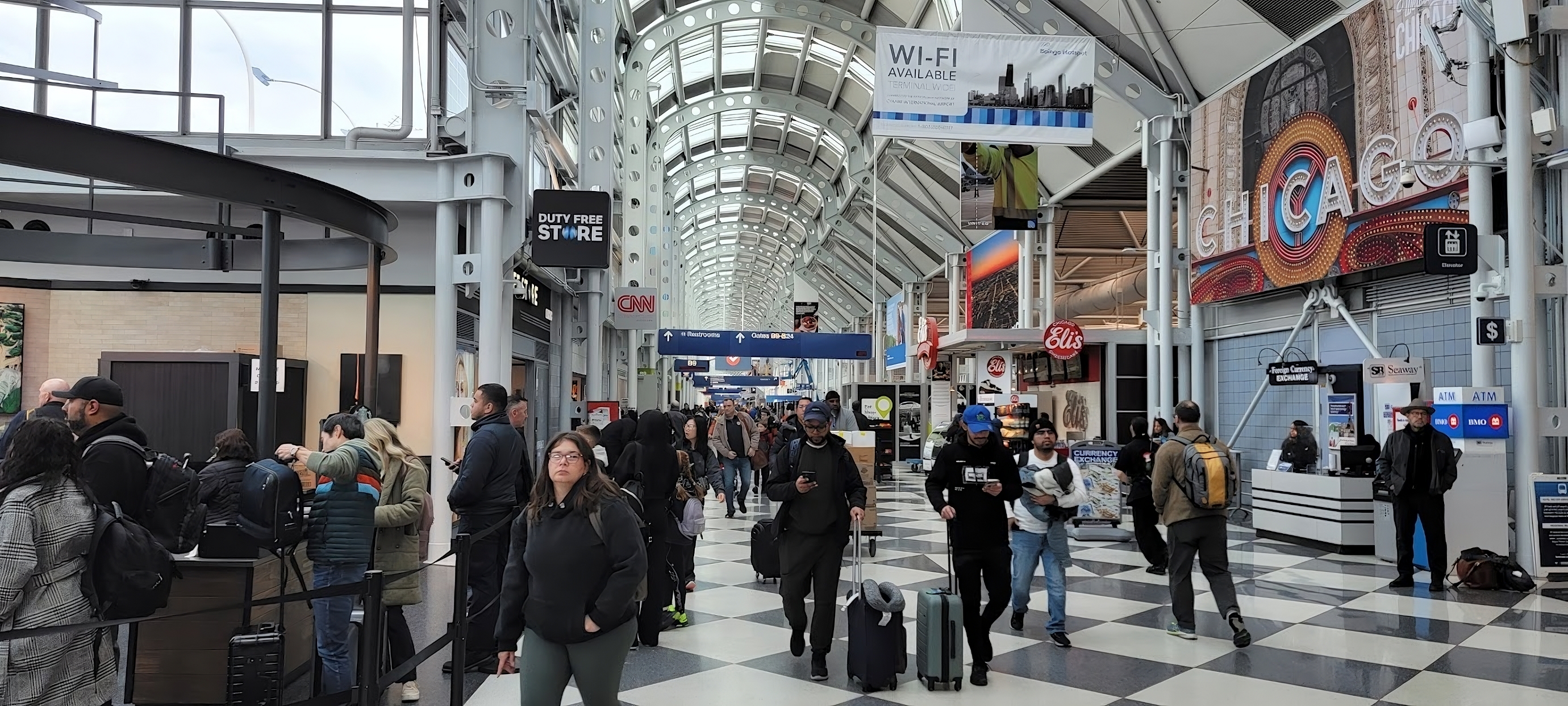
United wants to drive out American, protect the gates its gotten because of its relative growth, and consolidate its position. That’s great for flyers in the meantime, since they’ll have more options and lower fares. But it’s also a classic antitrust dumping situation, where their goal is driving out a competitor in order to raise prices later.
On Wednesday United’s CFO talked about American’s O’Hare hub as “temporary.” Meanwhile, aviation watchdog JonNYC drops a set of internal slides that United shared with employees showing how the carrier has gained at American’s expense in the city.
Ten years ago, United says, American served more Chicago customers than they did. However United has taken a big lead since the pandemic. And they claim they’re making money at O’Hare, while American is losing money.
Stop stop he’s already dead pic.twitter.com/20i9gpptkb
— JonNYC (@xJonNYC) February 19, 2026
— JonNYC (@xJonNYC) February 19, 2026
“Stop, stop! He’s already dead!” comes from The Simpsons. Krusty Burglar is being brutally and repeatedly hurt, and a little boy in the audience starts crying out: “Stop, stop! He’s already dead!”
The harm is depicted with cartoonish excess, while the kid reacts like it’s real. It’s become a meme where a person or company is clearly losing and everyone keeps piling on, so that the criticism becomes repetitive and gratuitous.
Last year United CEO Scott Kirby claimed American was losing $800 million a year at O’Hare while they now say American lost $511 million in 2025.

In truth, this has a lot to do with how costs get allocated and how revenue – especially from cobrand credit card customers – gets allocated. When you attribute Chicago-based cardmember spend to Chicago flights (rather than spreading them out evenly across the system) American’s numbers look better, though Chicago still underperforms – and it underperforms for exactlly the reasons that these charts suggest.
By ignoring Chicago, American has become less relevant to Chicago customers, and no longer earns as much of their spend (this is part of why American’s co-brand has fallen from number one in charge volume a decade ago among airlines down to number three).
Some of what United offers is a bit misleading or lacking in context, though.
- United seats per departure were quite low at the start of the timeline in the charts under then-CEO Jeff Smisek (and, ironically, partly attributable to American’s current network chief who was VP of Network at United back then). They had downguaged domestic flying across the board, and reversing this was a primary element of the strategy Kirby outlined when he went to United. That wasn’t a Chicago-specific thing.
- Meanwhile, United’s seats per departure are also much greater because they’re much more heavily international.
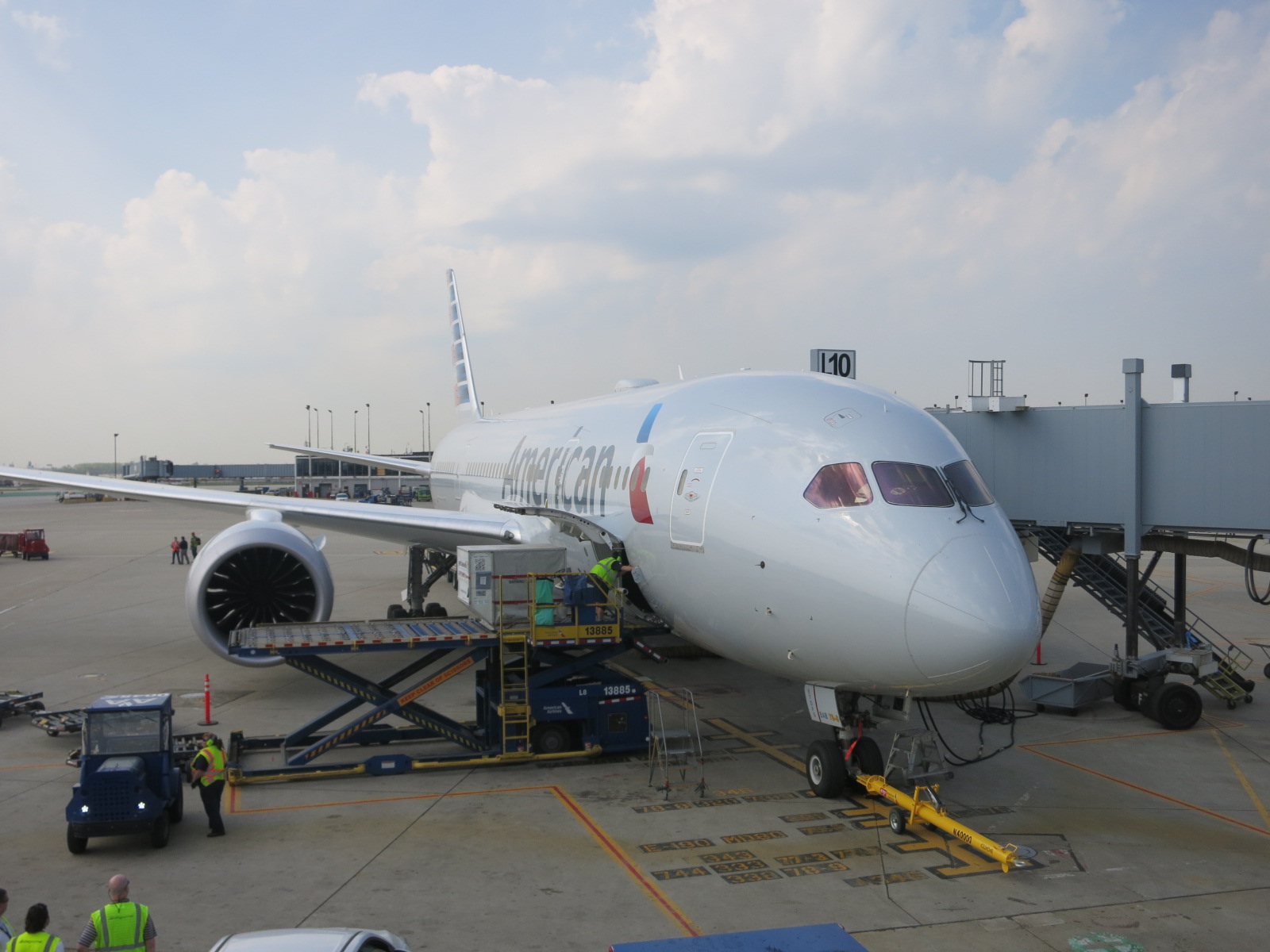
American’s failure to restore Chicago is primarily a function of retiring too many planes during the pandemic. They retired their Boeing 757s and 767s, Airbus A330s, and Embraer E190s. (They also deferred delivery of Boeing 787-9s.) This kept them from taking advantage of the boom in travel to Europe. But it also prevented rebuilding their Chicago schedules.
- They just didn’t have the metal to do it (they would have had to pull flights from Dallas and Charlotte, which in hindisght they should have done).
- They didn’t expect Chicago to re-allocate gates to United when they did because they had been told in writing that Chicago would not.
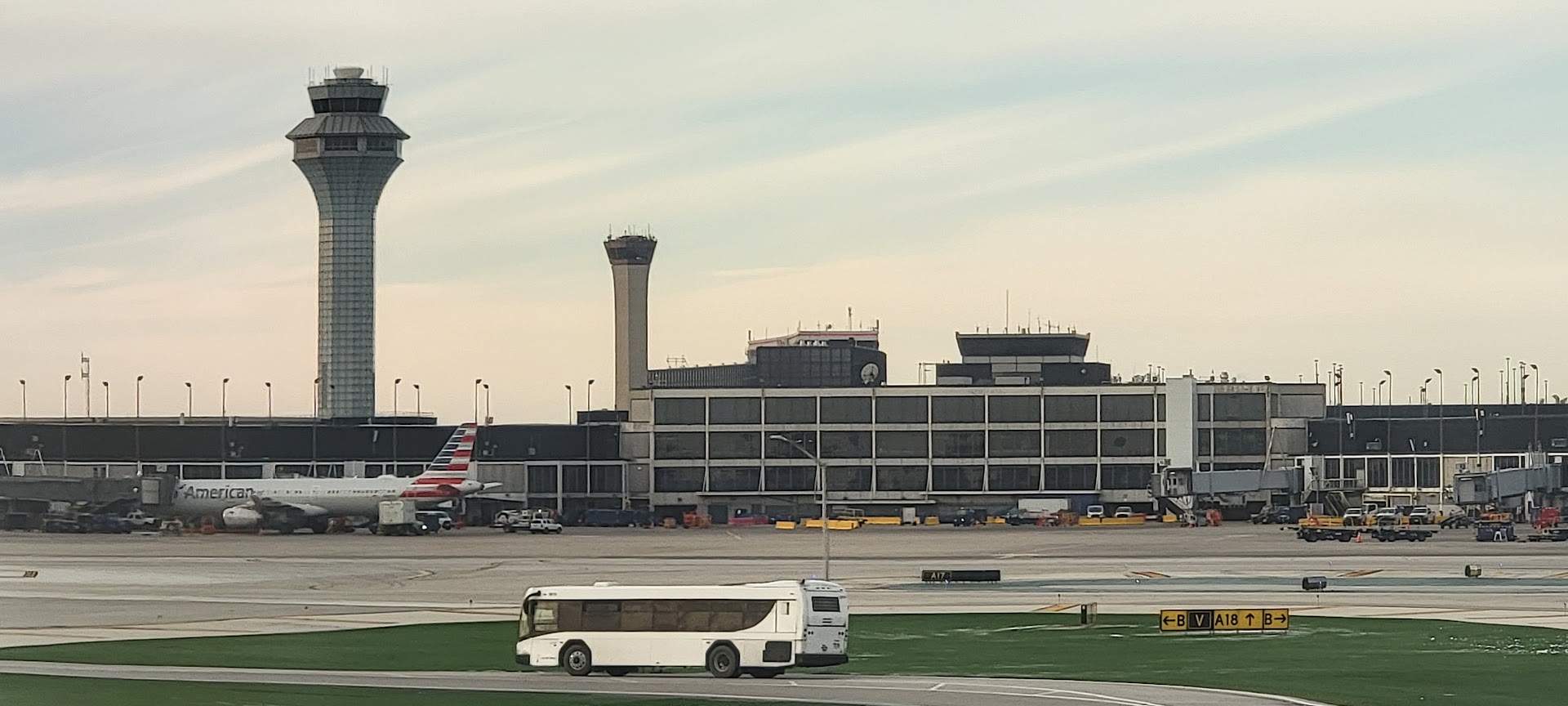
American Airlines is behind at O’Hare because United has pursued a growth strategy broadly, while American overconstrained itself and could not grow (and has shied away from flying where they’ve had to compete). That cost American profits from its co-brand credit card. They’ve been less relevant to customers in Chicago, Los Angeles and New York – incredibly important markets for card spend.
United’s strategy for Chicago is an interesting one:
- They’re far more profitable than American, because of past blunders by American
- So they’re in a much better position to add capacity at O’Hare that loses money, but also bleeds American
- Meanwhile they trash talk American’s decision to build back at O’Hare to financial analysts, creating pressure of American to walk away.
- Their bet is they can put enough pressure on American to keep them from regaining scale, even though for American this is their best path to profits with their credit card (and selling miles to Citi is the primary source of profits).

American has to get back to scale in Chicago. Their position is too valuable – based on recent gate sales by Spirit, each gate could be worth $15 million, and Chicago’s spend market is a huge driver for credit card deals. American actually understands this and laid it out for employees last month.
But if United convinces analysts that American’s growth there burns too much cash – if they can force American to burn cash – then Wall Street could pressure American to back off.
All of this is American’s fault, due to past strategic blunders. The question is whether they’ll have the space to reverse those choices.



Akshually, that Simpsons reference came from Season 6, Episode 15 “Homie the Clown.”
@C.M. Burns — DOH!
It’s the Krusty Burglar in the Homie the Clown episode
Is the quote from JonNYC as it appears on X? The $511 is for part of the year extrapolated to $800 for the entire year.
Having lived for far too many years in the Chicago area, I have absolutely no respect for United Airlines and it’s current Leader, Scott Kirby. United is now and has been for as long as I can remember, a greedy bully when it comes to Chicago Airline Service. United has always wanted to be the only game in town, which is unfair to travelers both in and out of Chicago. O’Hare Airport is not owned by United Airlines and the Mayor of Chicago needs to find a spine somewhere to tell them no, they cannot oust their competition.
UNITED rising
At what avg gauge does it flip from being an advantage to a disadvantage?
We know 100% wide bodies isn’t optimal for profit opportunity and neither is 100% RJs. But the slides only present more gauge as an advantage.
This is largely correct except for the comment that UA’s gauge is improving at ORD; UA’s gauge is going backwards because UA continues to use CRJ550s which are smaller than any aircraft AA or any other carrier uses at ORD.
The CRJ550 is perfect for flying short markets like a dozen flights/day to MKE and IND but it has very high costs and many of the markets where UA uses them have no local market because the routes are too short.
UA is shooting itself in the foot more than AA which is growing its hub but doing it rationally and with larger RJs.
it is absolutely correct that UA’s profit allocation is not the same for them vs. AA.
Kirby and the boys at UA are just bitter, Trumpish look a likes. This talk from “leaders” gets old and isn’t going to reflect well on your brand. No mater the state of AA, YOU WERE FIRED but denies it happened (hmmm sounds familiar doesn’t it).
AA is huge and at worst they will final for bankruptcy, shed debt and get even bigger. I avoid UA (I think the last time I flew them was 1993) and they were a client of my former agency but what a POS group of people to work with.
Enjoy being the play ground bully while it last UA, eventually the kid you bully grows up and punches you in the eye and knocks you on your behind. What a joke UA management is.
As usual you don’t understand the game being played. AA has been using their smallest aircraft to retain gates per the ORD agreement. UA is now using even smaller, more appropriately sized aircraft to do the same. As the data shows UA’s ORD network is far more effective/profitable, but nice try.
In hindsight, AA’s decision to retire a large number and varieties of planes during the pandemic is considered a strategic blunder.
Is there a case to be made that (at the time) this was an appropriate business decision? Way, way, way back in the day, a case could be made that the Sony Beta-Max was the superior product. We now know that the VHS format was the survivor. Making a business decision on the belief that Beta-Max was the way to go was ultimately the wrong call but seemed reasonable at that time. Is this similar with AA, or was this simply a truly horrendous strategic blunder?
I don’t know, so I’m throwing this out there.
Blame Parker (Former CEO) for the downfall of American Airlines.
If it’s a choice between an underdog and a bully, I’ll generally side with the underdog.
I have a choice of connecting airports, and in the past week I’ve booked 3 flights via ORD on AA metal (plus one using OW partners).
Long term decline in Chicago is now structural and inevitable. For AA to reverse that would require very large and sustained investment over years and fundamental changes in the operating model. They’ve already lost. The question is whether or not they have admitted it to themselves and will they ever admit it publicly.
@American, if UA wanting to be the only game in town is unfair to Chicago residents, is DL unfair to residents in ATL, MSP, DTW, and SLC? Is AA unfair to residents of CLT and DFW?
@Lucky Larry – AA retired planes aggressively, which considering the unknowns, was probably not a terrible call. In fact, UA was super aggressive about cutting costs at the outset of the pandemic! (Evidently, they just didn’t retire the planes, probably in an attempt to keep flexibility.)
Not having an actionable “Plan B” in case their bet was wrong and traffic came roaring back? Fireable offense, as far as I’m concerned.
I play with much smaller figures, but you can bet I use the same principles with my team every day. We ALWAYS have a plan B. AA management apparently doesn’t work by the same standards.
@TonyG
I’m not not anti-union per se (I definitely support the Boeing unions) however the unions had a HUGE hand in getting Parker the top spot at AA. Their disgust was so much for Horton that they were willing to sell their souls to the devil just to remove him. They got what they wanted and they are reaping what they’ve sown.
No pity from me and this is coming from a loyal AA flier.
rebel,
the CRJ 550 – which is a major part of UA’s ORD schedule – is the least cost-effective airplane. AA has a more efficient and modern fleet at ORD and, most importantly, it has a high degree of airplanes with working high speed free WiFI
Add on UA’s bone-headed move (yet another) to alienate lower tier customers and UA is just handing AA the secret to succeed in ORD.
UA has the worst small aircraft strategy in the US; they could have had many more large RJs but didn’t add a small mainline aircraft like DL did.
AA got much higher levels of large RJs in its bankruptcy deal w/ its pilots and operates all 65 or 76 seat two cabin RJs at ORD.
There is no advantage in flying 50 passenger size limited 70 seat RJs that cost 95% of the cost to operate a 76 seater which UA was too stupid to obtain.
If the goal was to get small aircraft to battle market shares in hubs like ORD, UA is by far worse off than AA or DL
@Tim Dunn I see you point, but only to a point.
I fly FLL-MDT regularly. Right now, I have about three options a day between ORD and IAH. With UA upping the number of daily flights to both MDT (using CRJ550s for some flight) and FLL I not have several options. This gives me an alternative to DL and AA who have strong connectivity through ATL and CLT.
In this instance, the benefit is in the power of the hub, not just the O+D traffic. There are not all of a sudden 150 more people a day trying to get from Harrisburg to Chicago, but there may be 150 more who need to get to somewhere they can get to via ORD. UA gets my business and I don’t have to suffer through CLT.
and yet, there is no assurance that UA will gain more business passengers by adding more connectivity through ORD – even if that is possible. not all markets are seeing the same levels of increased capacity so some markets will see higher revenue while there will be empty seats on other flights because the focus is on short haul flights that just increase the size of the ORD schedule in a gate grab.
and there is never an assurance that AA or DL won’t do other things in other hubs to regain any share that UA might gain through ORD.
UA simply does not have an ATL or DFW sized hub and desperately want one – and the only way that can happen is if they force out AA.
AA, DL and WN – where there is overlap – are not going to sit by and allow UA to take overall domestic market share just because UA has finally woken up and realized that they underinvested in the domestic market while fixating on their international size.
and there is the real possibility that UA will simply fly a bunch of empty seats and push down its own yields before realizing the price is more than they are willing to pay.
Let’s not forget that UA had the industry’s worst RASM performance in the 3rd quarter of 2025 because of overcapacity in every global region. They are setting up to the do the same thing this summer – just focus it all on ORD.
It was always beyond naive for UA to think it could aggressively grow its domestic market share without hurting itself and that is what will determine the success or failure of all of this.
@jamesb2147 – thanks for the additional background info.
Gary always mentions how retiring too many planes was a strategic blunder and, hindsight being 20/20, it’s an accurate description. But the missing piece of the puzzle (someone must have thought this was great idea), always nagged me.
For the longest time my flying needs (price and schedule) were met by Southwest. When they announced their Elliott-driven “enhancements” I switched to JetBlue – which has worked for me. As such, I never had any familiarity with AA and their business decisions.
And as you pointed out, it’s not so much that AA made a bad call, it’s that they didn’t have a back-up plan. If you’re doing a DIY remodel of your bathroom and the vanity you purchased doesn’t fit, that’s one thing, but if you’re running an airline – that’s a first-class screw-up!!
TD, “Let’s not forget that UA had the industry’s worst RASM performance in the 3rd quarter of 2025 because of overcapacity in every global region.”
Remember that was the EWR FAA mess that you predicted would leave DL with a permanent NYC market share advantage. Wrong again and you must have missed the CFO’s presentation at Barclays. EPS at high end of guidance which is well above 2025. Here are the link and the highlights.
https://www.investing.com/news/transcripts/united-airlines-at-barclays-conference-strategic-optimism-amid-challenges-93CH-4511455
Key Takeaways
United Airlines is trending towards the high end of its Q1 EPS guidance.
The company aims for double-digit pre-tax margins, despite industry headwinds.
Focus on brand loyalty and technology adoption to enhance customer experience.
Addressing Boeing 787 delivery delays and engine issues impacting international expansion.
Strategic use of AI for customer service and maintenance efficiency.
Financial Results
Q1 2026 Outlook: United is trending towards the high end of its EPS guidance, overcoming challenges like Winter Storm Fern.
Pre-Tax Margin Goals: The airline is determined to reach double-digit pre-tax margins, with a long-term goal of mid-teens margins.
Free Cash Flow: United expects approximately 50% free cash flow conversion during growth, increasing to 75% as maintenance CapEx rises.
RASM Growth: Achieved mid-single-digit RASM growth in early February at O’Hare.
Operational Updates
Performance Rankings: United achieved top rankings in A0, D0, and A14 year-to-date.
NPS Scores: There has been a continuous rise in customer satisfaction scores.
Starlink Implementation: A significant portion of the mainline fleet will have Starlink by 2024, with completion by 2027.
Fleet Management: Facing Boeing 787 delivery delays, United remains confident in resolving these issues. Older aircraft retirements are under evaluation.
Future Outlook
Brand Loyalty: United is enhancing direct bookings, club experiences, and in-flight Wi-Fi to boost loyalty.
Balance Sheet Improvement: Continues efforts to achieve an Investment Grade rating.
International Growth: Addressing challenges with Pratt & Whitney engines affecting international plans.
M&A Environment: Open to mergers and acquisitions in a unique market environment.
Q&A Highlights
AI and Technology: AI is being used to enhance customer service, predictive maintenance, and financial operations.
Capital Allocation: Focus on internal investments, debt reduction, share buybacks, and dividends.
M&A Opportunities: United is open to exploring mergers and acquisitions.
Please stop feeding links to a biased (and owned by an anti-LGBT maximalist) platform.
JonNYC is on blue sky. Here’s the link to his post about this subject. Please replace.
https://bsky.app/profile/xjonnyc.bsky.social/post/3mf6iynjpx22d
rebel,
all of that copy and paste effort and you still can’t grasp that
1. all of this new ORD capacity is not being added in the 1st quarter. UA and no other US carrier has given 2nd or 3rd quarter guidance.
2. Dec 2025 is not long term relative to the 2nd quarter.
and since you love to keep bragging about UA in NYC, how about you discuss that DL’s share is just 0.1% from UA’s – the smallest gap that has ever existed between the two. DL’s positive advantage in percentage of NYC flights is wider than it has ever been with 4.5 percentage points more flights than UA.
DL has enormous growth potential in NYC, even before factoring in that AA and B6 are both underperforming at JFK and DL is still able to use far more slots than it is allocated.
and since you also love to talk about Starlink. Tell us how many more than 12 mainline aircraft UA has Starlink operating on right now.
DL has over 900 plus hundreds of RJs. and has already operated scores of longhaul widebody flights with fast, free high speed WiFi today.
AA has 700 domestic narrowbodies, a few widebodies and a bunch of RJs.
UA is dead last in high speed WiFi rollout.
B6 offers far more seats with free high speed WiFi than UA
oh, and tell us what UA guided to last 3rd quarter when they then proceeded to trash their 3rd quarter RASM due to overcapacity.
All the best guidance means nothing if the testosterone kicks in at UA HDQ and they decide it is more important to take out a competitor at the cost of matching or exceeding DL’s industry leading financial performance
Just great. A monopoly (Chicago) inside a near monopoly (the gang of four)
UA had 2.8% more NYC passengers than DL in Dec 2025. Nice try though.
https://www.panynj.gov/airports/en/statistics-general-info.html
no surprise that you, just like your Willis Tower handlers, measure success in monthly metrics while DL measures success over decades.
The NYC statistic that you can’t stand to admit is that DL trails UA by just 0.1% in passenger boardings and DL has 20% more flights even if a large number of those are from LGA and with the perimeter restriction.
One tenth of a percentage has shrunk from a multiple percent advantage that UA once had.
You love to project into the future and yet it is clear that DL is going to overtake UA in every metric in NYC – it just won’t happen this month.
You and DL wish.
What is clear from the data is that UA had a temporary dip for a few months during the EWR runway & ATC problems. What is surprising is how quickly UA regained and extended their NYC market share lead, completely contrary to what you said would happen. I guess you forgot UA has lots of wide body aircraft. and upgauging is the name of the airline game these days especially in NYC
Bottom line is both UA and DL are doing quite well (revenues, profits, scaling, routes, etc.) meanwhile AA can’t get out of its own self-created muck. It’s a shame because 20 years ago AA was leading the majors, at least in some metrics.
There needs to be leadership change at AA and the unions need to be flexible as well.
jacobin is right about AA. It never needed to happen.
and rebel, again, you can’t grasp that not everything is a contest between DL and UA. DL’s share against LCCs and ULCCs in NYC is higher than it has ever been. DL has more slots to work with giving it 20% more flights than UA including those that DL is using that both AA and B6 underutilize. not only does DL not want to crush the competition in one fell swoop but be content with incremental, gradual gains. and it makes no sense to add a bunch of flights or capacity in the winter so DL’s yields in NYC are undoubtedly higher.
the industry is benefitting from less underperforming capacity; DL just happens to be benefitting the most due to its overlap with B6 and NK which have cut the most.
DL measures its strategies in years and decades; UA looks at the next week or month and declares victory – and then loses over decades.
DL is larger relative to UA in NYC than it has ever been. Just 0.1% in traffic share separated them while the number of DL flights is multiple percentage higher than UA.
DL is already larger than UA domestically and to deep S. America; as soon as DL adds service to E. Asia, the Middle East and S. Asia from NYC, UA will have no advantage in NYC.
Let’s see how this all plays out in Chicago but I strongly suspect that AA will play the long game and not be sucked into the destructive yield damaging racer for more flights that will end up for UA just like multiple EWR meltdowns over the past 5 years – none of which needed to happen.
and DL is still outperforming UA by a significant amount in revenues and profits while UA benefits from underpaid workers. AA will improve just as WN is now doing; UA will end up much more between AA and DL than closer to DL when all is said and done.
Jacobin, “Bottom line is both UA and DL are doing quite well (revenues, profits, scaling, routes, etc.)”
Agreed.
@Rebel,
Yup.
DL just happens to be making a whole lot more money and doing it far more efficiently than UA.
If UA thinks that it will kick AA’s butt at ORD, DL will send UA to the proctologist for emergency tissue repair it if tries to show up at JFK
@Mark, yes absolutely. A Monopoly by any Carrier in any City, especially larger Cities such as Chicago, are wrong and should not be allowed because it restricts choice and encourages higher and higher fares. When you are the only game in town, or the biggest Bully, UA, you can charge whatever you want and the public has no other option.
American has 3 in-person customer service desks at O’Hare. United has zero. When flights are delayed or cancelled, which airline has the most frustrated and upset passengers?