
American Airlines is “padding” its Dallas – Fort Worth schedule, and across the rest of its system. They are making a “bold and unprecedented investment” in block time, which is the scheduled time from pushing back at the departure gate to arriving at the destination gate.
Most people hear that and think: So the airline is admitting it cannot run on time, and it is going to fix the statistics by making the schedule slower.
And that isn’t wrong exactly, although it can also be honest. “Here’s the amount of time it actually takes to get from one city to another, so we’re going to be transparent about this.”
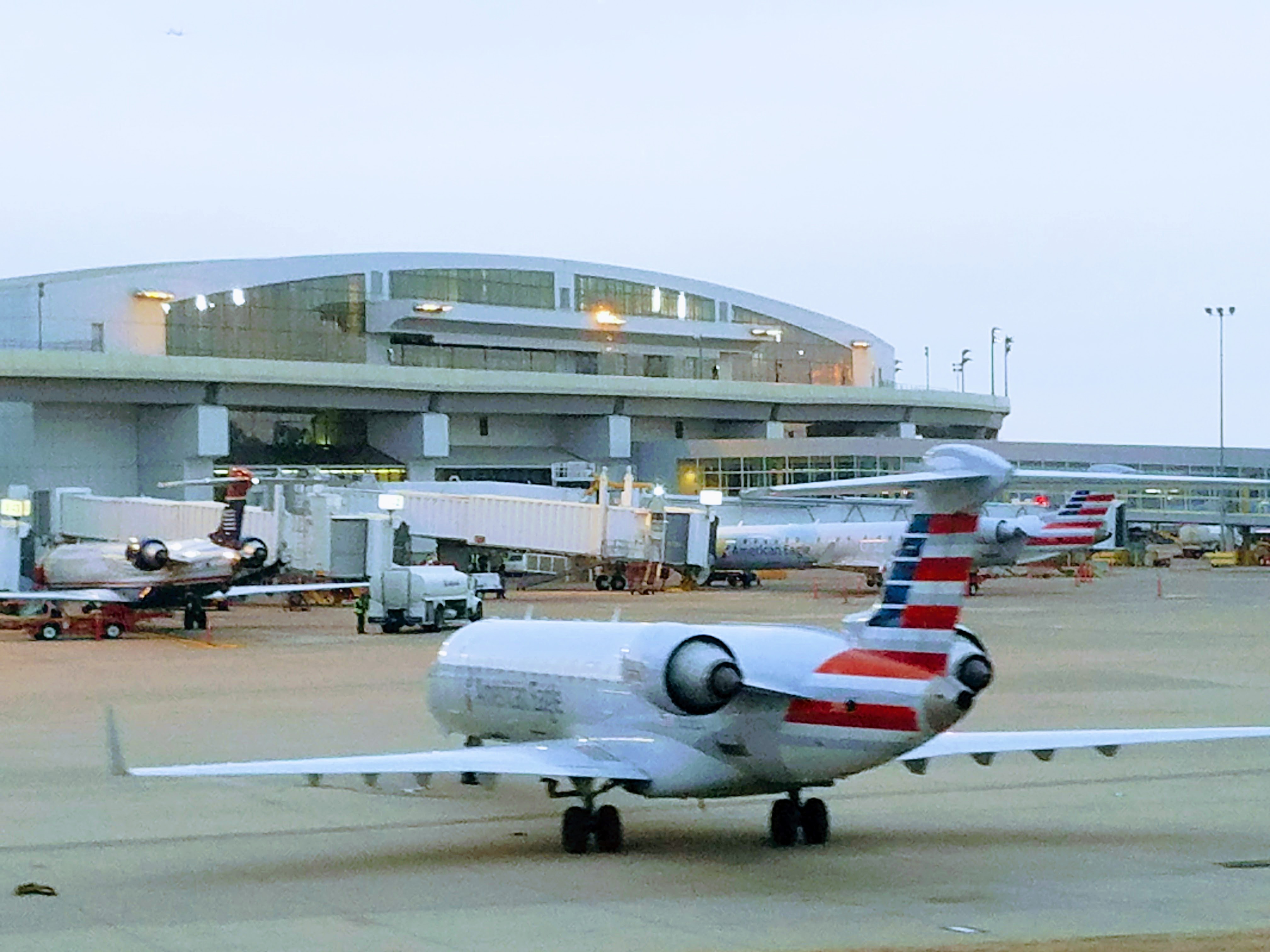
And at a mega-hub like DFW, adding slack can be one of the few levers that actually reduces disruptions customers feel: missed connections, bags that do not make it, crews and airplanes out of position, and the domino effect that turns a minor delay into a ruined day. Although there are other levers, such as keeping crews together with planes throughout the day so that delays of one flight don’t cascade across multiple flights.
Here is the economics of why this move can pay for itself. And that’s even before the benefits of reliability can drive a revenue premium, with customers more willing to steer their business towards the airline that consistently gets them where they need to go on-time (and doesn’t disappoint them, causing them to book away in the future).
“Five Minutes Late” Is Not Linear At A Connecting Hub
At an airport dominated by local passengers, a short delay is mostly just a short delay. At a connecting hub, delays have cliffs.
Dallas – Fort Worth is a connecting machine. The airport says connecting passengers are about 60% of its passenger traffic.
American says that more than 30% of its daily connecting customers and daily connecting checked bags flow through Dallas – Fort Worth.
In a banked hub, flights arrive in waves so people can connect to another wave of departures. If you miss the wave, the consequence is not “five more minutes.” It can be “two more hours,” or “the last flight is gone, see you tomorrow.”
Plus, if a flight is delayed leaving DFW, that’s a gate that doesn’t free up for an arrival. So it’s another delayed flight. And the pilot and crew of that plane may be dispersing, meaning still further delays and more passengers either running for connections (whether their bags make the next plane or not) or missing their flights entirely.

Schedule Padding Is Insurance
It’s not ‘juking the stats’ so they can say they run on-time. Some passengers investigate the on-time performance of flights when choosing what to book. Most do not. They aren’t doing this just to appear more on time.
- You pay a small, fairly predictable cost (extra minutes baked into the plan).
- You reduce the probability of high-cost events (missed connections, diversions, cancellations, bags that miss, aircraft and crew mis-positioning).
You do not need perfection for this to be worth it. You need a modest reduction in the probability of falling off the cliff.

How Much Do Delays Cost?
Airlines for America publishes an industry estimate of the direct operating cost of aircraft block time. For 2024, it puts the average at $100.76 per minute (crew, fuel, maintenance, ownership, and other direct costs).
If you add five minutes of scheduled time to a flight and that translates into real additional block minutes, you are talking roughly:
- 5 minutes × $100.76 = $504 per flight
That’s expensive for a low margin business, and a low margin airline in this low margin business – but so is the alternative.
American has more than 930 peak daily departing flights and about 100,000 peak daily passengers. If you added one minute of real block time across 930 departures, that is roughly:
-
930 × $100.76 ≈ $93,700 per day
That is the “sticker price” of one minute, if it is truly additional aircraft time. But not every extra minute is truly additional aircraft time. Some of it is absorbed as less frantic turns, fewer gate conflicts, and fewer cascading delays. The accounting cost varies with whether the added slack forces schedule changes that require more aircraft and crews, or whether it mostly converts unpredictable delay into planned breathing room.

What’s The Value Of A Minute To Customers?
There is empirical work that estimates how much consumers value on-time performance, suggesting passengers are willing to pay about $1.56 per minute to avoid arrival delay, and they estimate that a 10% reduction in arrival delay minutes increases variable profit by about 3.95% on average.
This paper is a decade old. Inflation alone increases these numbers, travelers skew more premium, and the customers who value avoiding delays more are also more valuable customers. So this is incredibly conservative. But it’s still illustrative, and a number we can anchor to.
You can do a simple scaling exercise using American’s own DFW numbers:
-
100,000 customers × $1.56 per minute = $156,000 of customer value per minute, if you can reduce realized arrival delay by one minute per customer.
That is bigger than the roughly $93,700 per day “industry cost” of one extra minute across 930 departures.
No airline captures all customer value directly. But at a fortress hub where the airline has a large share and sells a lot of connecting itineraries, it captures more than you might think through retention, pricing power, and fewer expensive service failures.
These numbers aren’t perfect, but the order of magnitude makes the strategy plausible. And another way of looking at it – American’s Chief Customer Officer Heather Garboden suggest that one point of net promoter score improvement yields $50 million to $100 million in revenue.
Mishandled Bags Are A Huge Expense
Mishandled bags are a large, recurring cost center. SITA (the company that provides the WorldTracer baggage tracing platform) says baggage mishandling costs airlines $5 billion annually, and it cites 33.4 million mishandled bags in 2024.
That implies a rough average cost of about:
-
$5,000,000,000 ÷ 33,400,000 ≈ $150 per mishandled bag
Now go back to that $504 “five minutes of padding” cost estimate. If a little slack prevents an average of four bags from missing per flight in the situations where the hub is breaking down, you are already at breakeven on a pure baggage-cost basis. And bags are highly correlated with connections. When the hub melts in weather, bags do too.
By the way this is another reason why American may have been mistaken in its unwillingness to match Delta’s investment in RFID tracking of bags. A decade ago Delta reported paying less than 10 cents per tag, compared to a traditional tag that costs around 3 cents.
However there’s capital investment, too, in the tracking that ran $50 million for the airline – amortized over 5 years that’s another 8.3 cents per bag, excluing maintenance and software. My instinct was to say it costs 25 cents per bag, but it’s probably far less than that.
Preventing Long Tail Events Drives Decision-Making
Most of the time, schedule slack just reduces the frequency of small failures. The real payoff is in preventing rare, very expensive outcomes.
Eurocontrol’s “Standard Inputs” (a set of reference values used in aviation economic analysis) gives a sense of the scale:
- A mid-haul narrow-body diversion has an average cost on the order of €55,000 ($64,750).
- A day-of-operation cancellation for a 120-seat narrow-body network carrier is around €16,640 ($19,600).
U.S. airlines aren’t going to have exactly the same unit economics as European values. Just take away that diversions and cancellations are tens of thousands of dollars per event, and they spike precisely when hubs are stressed.
If modest slack reduces the chance of a handful of these events during bad weather recovery, it can justify a lot of “wasted” minutes the rest of the time. And DFW is nicknamed ‘Doesn’t Function Wet’ for a reason. Bad weather brings down this hub.
When Does Padding Pay For Itself At DFW?
It pays when it prevents cascading misses across flight banks often enough that the avoided costs exceed the planned cost.
You can think about it in three buckets:
- Connection reliability. A small reduction in late arrivals can prevent a disproportionate number of missed connections, because missed connections cascade at a banked hub.
- Baggage integrity. Bags behave like connecting passengers, except with tighter sorting windows.
- Network stability. The value is preventing aircraft and crews from getting out of sequence, which creates more delay later.
American is pairing this with a broader de-peaking move at Dallas–Fort Worth (moving from nine banks to thirteen banks) that should reduce the size of the worst peaks. If you lower peak stress, each minute of slack buys more resilience.
A megahub with significant thunderstorm exposure like DFW needs ot be optimized for recovering on a bad day, not for a perfect day.
It’s going to mean some longer connections, and that’ll appeal less to some customers searching for flights, so there could be a revenue hit too. But a more reliable airline should generate a reliability premium in revenue as well if they’re successful.

Plus it means more need for club lounge investment, because more customers will value the club – but that, too, turns into ancillary revenue opportunity and most importantly helps feed the premium co-brand credit card.



Gary, very interesting data points. AA clearly needs to do something, because at least in my post Covid experience with them flying in and out of DFW, delays are the norm, not the exception.
The only saving grace is that it’s all award flights, not cash.
well done on the analysis, Gary.
Yes, there are quantifiable benefits to the airline but there is a potentially larger value (or cost) to the customer of running reliably. If you get burned too many times, you change your habits – and many AA customers have simply decided it is not worth flying them if you either have to intentionally book connecting flights across two banks to ensure you will make your connection or have a high rate of misconnection if you accept AA’s published schedules.
this is all about a shift to regaining and competing for high value business travelers.
DFW is the 2nd largest hub in the US and its different geography allows it to do things that DL cannot do in ATL.
It is also worth noting that ATL was built from the ground up (as it exists today) to be a massive connecting facility and it does that function more effectively than any other airport in the world. DFW was built as an O&D airport and will never work as efficient for connections as other hubs. Bags and people that are connecting between terminals at DFW add enormous cost because of the distance and the inability to use automated sort systems.
and for those that argue that DL pads its schedules so that you get to ATL early, that only works part of the time. DL has built its schedules to support the capacity that the airport and ATC can support; in the early morning when there are flights coming into ATL from every city that DL serves in the eastern US, it is common not to be able to depart from the origin spoke city early but you still arrive on-time if not a minute or two early.
Conversely, if your flight is delayed either at ATL or DFW, adding another flight to an already full slate of arriving flights just means that a late flight will delay other flights.
AA has no choice but to build realistic schedules and everyone will benefit from operational reliability.
It will be interesting to hear what AA says about this in their earnings report in less than a month
All these “expenses” and no concern for the passengers time. A poor excuse for scheduling a 37 min flight for 1 hour and 10 minutes. The padding increases every year. The problem is inefficient airports especially at hubs that handle too many transfer flights. It now takes more time to walk past all the airport businesses to get to your gate. I guess no one ever considered the passenger when the airport was redesigned as a retail mall. Our local airport in cow town(Reno) Nevada now takes twice as long to get to the far gates as it did 20 years ago.
Some hubs like DFW and LHR are overwhelmed and ground traffic is handled the same way it was 50 years ago. The problem is airport design. We need to think more like an aircraft carrier not a paddle boat business instead we spend millions putting lipstick on these pigs.
The unrealistically short connections at CLT (and that miserable terminal) and, often, at DFW for me is one of the reasons I abandoned AA when connections are involved, along with a lack of inventory to pay for MCE seats if I didn’t get an exit row. Fixing this is an important step.
@dunn ATL was not designed for the volume it handles today and does not have an underground automated xfer bag-routing system, the same as DFW
jeff fegan’s vision for skylink transformed DFW, then AA continued to refine and fine-tune to the point where the engine is running at 200% of original design capacity, just like ATL, LAX and ORD
the main problem with the AA operation at DFW is the refusal/inability to raise, lower, extend and/or retract jet bridges to dynamically assign equipment to available gates
AA’s entire DFW operation is “gate-tied”, there are 738 gates, 777 gates, torturetube gates, and AA will park you on the apron for 2 hours until “your assigned gate” opens up while you can see multiple empty gates only 200 yards away
Great analysis. I do similar things in healthcare, showing hospitals and health systems how delays impart their performance and their consumers’ lives.
Most of us on here travel a lot. Personally, I’d rather they pad the schedule. Gives me a more realistic assessment of how to plan my day and, if we arrive early, it’s only to the benefit of my schedule. Would also make me more likely to book a tight connection. I’m willing to book. 50-60 min connection window at ATL, but not at CLT.
Love the analysis, which reveals your true in depth knowledge of the airline industry and is clearly NOT just the output of ChatGPT. Keep it up.
While you’re at it could you remove the annoying pop up ads? : )
hagbard,
I didn’t say that ATL is not overcapacity for what it was designed for – but there have been concourses added and widened and one new runway.
ATL works and DL knows how to use it. You need only look at DOT data for DL’s on-time percentage at ATL vs. AA at DFW to see that DL knows how to use its hubs. Considering how much larger ATL is than DTW, MSP, and SLC and all have very good on-time performance, DL doesn’t use a one size fits all strategy.
and CLT is the epitome of an overcapacity hub and there is virtually no way to fix it w/o spending enormous amounts of money – which AA isn’t going to spend right now. This initiative might spread to CLT but it will likely cost them much more revenue because they can’t spread the operation over much more of the day and still operate at times that customers will pay for.
remember that DFW and DEN are the only large hub airports that have been built from the ground up in the past 50 years; ATL was rebuilt about 45 years ago.
Considering that AA had already made the announcement to move to Texas from NYC before DFW was completed, AA did not have a vision for DFW to be a major connecting airport.
Any of ORD, DTW, MSP, ATL and now DEN are better laid out for large-scale connections and a single airline hub than DFW.
AA is doing what they can w/ what they have; they simply cannot fix all that is structurally wrong w/ DFW.
What makes Gary’s analysis particularly valuable here is his clear-eyed unpacking of trade-offs in financial and network terms. Tim Dunn’s comment above nicely complements that by elevating the conversation to strategic behavior change by passengers. Reliability can indeed drive a revenue premium when high-value business travelers adjust their loyalty based on performance rather than price alone. Really fantastic and compelling content today!
I wonder what the most padded flight is?
I was just on AA from PIT – PHL. And it was raining and overcast in PIT, and almost as bad in PHL. Advertised flight time was 1 hour, 30 minutes.
We left the gate in PIT and landed in PHL in exactly 46 minutes.
Hmmmm….
Ensh*tification again, apparently with the full support of the user community this time. Corporate liars saying the time from A to B is 90 minutes when it’s really 40m plus a bloated add-on to cover their mismanagement, undermanning and underinvestment in infrastructure..
@dunn
at DFW, excluding the satellite terminals in B and E, the MAXIMUM time between exiting the top of a jetbridge and arriving at the connecting gate desk is 16 minutes with less than 650 feet of walking, IF one has a precise understanding of one’s orientation in relation to the closest escalator to the correct skylink station, correct direction of train travel, where to stand in which car, and what direction to turn when exiting the train, thus taking the correct escalator in the correct direction back down to concourse level, and this is true for all interline connections, assuming of course no checked luggage
at ATL, 16 minutes is the MINIMUM time between less than 20% of all gates, i.e. those within 200 feet of the escalators down to the train, and assuming one is able to board the next train, for those connections with departing gates less 200 feet from top of the escalators from the train back to the concourse, AND ONLY for connections between adjacent concourses; the eastern b30-c30 tunnel that was closed in 2008 should have been replicated in similar configuration for all other concourses and then and only then would your ‘efficiency’ argument for ATL have any science
as it stands today, at DFW, any AA domestic connection to AA or terminal D international departure, from top of the arriving jetbridge door to the concourse, to said AA or terminal D international departure, is a maximum of 16 minutes
as it stands today, at ATL, DL domestic connections to any terminal F international departure from 50% of the gates (those at least halfway to the end of their concourse) have a MINIMUM total walking time of 16 minutes before any train time between terminals which is 7 minutes from T, 6 minutes from A, 5 minutes from B, 4 minutes from C, 3 minutes from D and 2 minutes from E, and subtract 2 minutes for E departures connecting from T/A/B/C/D
the AA operation is it’s own beast
but the DFW skylink created a superior facility that re-captured the original gate-to-curb value proposition for post 9/11 insanity
AA’s ability or failure to use/abuse the opportunities and challenges afforded it at DFW remain with AA
just like DL and ATL are not one in the same, but the ease of use data will not be downed
exclusive of operational decisions made by the carriers, DFW obliterates every other large airport in the world for connections, IF one knows the lay of the land….. the map is not the territory
you can live in your own world but DFW is simply not designed near as efficiently for connections; the fact that you had to qualify “if you do this and this and this” proves that point.
ATL is a massive facility and the fact that DL is spread over the entire place shows how easy it is to keep adding concourses.
and as much as you talk about passenger connections, bags are part of the formula too.
DFW is a massive sprawling facility – I don’t think any other airline spreads its operation over as much space as AA at DFW does. connecting all of that space is costly.
DL at ATL is the most efficient operation to connect passengers from a space standpoint and that is part of why it is such a low cost operation for DL. the only thing that rivals it is CLT for AA but it is completely unworkable carrying far fewer passengers.
and, in case you missed it, AA is changing the way it uses DFW because the way they are doing it now doesn’t work.
what DL does in ATL does work with connections as short as what AA offers at DFW right now.
Costs include crew time, as the contract is scheduled or greater for pay. Underfly pays schedule time. Increasing the leg time increases crew pay. Remote boarding stands, equipment and busses = $$’s. AA is serious about getting the operational fixes and the revenue side fixes.
Apparently the Isom decree is gone. Maybe “you have to spend money to make money” should be his new slogan.
AA should stop selling itineraries with 30 – 40 minute connections at airports like DFW and CLT (or any large airport). I go out of my way to look for a more reasonable connecting flight pair and will select another airline to do so.
@Tim Dunn Atlanta is full. The baggage processing is at capacity, the train is at capacity, and the ATC capacity is at it’s limits, at least at peak times. This limits Delta’s ability to expand in ATL. DFW is adding a new terminal. ORD is building a new international terminal. Say what you will about ORD taxi times, but runway capacity is not an issue.
This is Delta’s growth challenge. Do they support a second airport so all the non-Delta partners can decamp there, or will they be growth limited, with corresponding stock valuations?
Not mentioned in any of these star)g analysis is the effect of weather, specifically the winds aloft. My primary route is between BOS and DTW, essentially directly East and West. Both Delta and JetBlue block this at about 2 hours, adding about 5 more minutes for west bound. However the real flight times over the past 5 years have been as short as 65 minutes eastbound, while westbound has stretched to 2.5 hours. So while @harry Hv thinks it’s just corporate greed, it’s simply making the best statistical prediction
“However the real flight times over the past 5 years have been as short as 65 minutes eastbound, while westbound has stretched to 2.5 hours.”
The source I looked at says the air distance is 632 miles. The jet stream can really boost the eastbound time and can also significantly slow the westbound time. Add that to the flight diverting from the great circle path due to weather. Additionally airport congestion can also slow down arrivals. Stack some slowdowns and the 2.5 hours is possible.
The ghost of Bob Crandall that still pervades much of AAnus disregard for anything but cost cutting says BS to this analysis.
You are missing the concept of opportunity cost here. When padding the schedule large scale, the same fleet will likely be able to operate only a slightly reduced number of flights, thus also sacrificing revenue, not just adding operating cost per flight.
@Mike Hunt, @Tim Dunn — You guys golfing? Nice ‘ball-washing’ above. Oof.
The thing that is missing here is the incentive of airlines compensating passengers when they mess up, like EU261, Canada’s APPR, etc. It’s a nice idea that airlines try not to cut things too close, but, the even better method of valuing everyone’s time is literal money owed when they cannot live up to their end of the contract. If you’re an aviation insider, you’ll probably side with these companies in wanting to deny this; but, if you’re a passenger, a significantly delayed flight or cancellation costs you, and receiving $250-700 may not solve everything, but it’s a good start.
John H,
you are living in fantasy land if you think ATL is full.
The 5th runway is used a fraction of the time.
WN just walked away from multiple gates which DL largely is using.
About a dozen gates on D concourse are closed for renovations right now.
and the biggest factor for the reason why DL is far from out of growth potential at ATL is because DL has proven that upgauging is how you create more capacity and efficiency; ATL is 90% mainline for DL – far higher than any other legacy carrier hub. DL carries about 20% more passengers to/from ATL than AA does at DFW because DL uses far fewer RJs.
and the 717s will be leaving the fleet in the next few years and be replaced with even larger mainline aircraft.
It is beyond silly to argue that either AA at DFW or DL at ATL are out of growth potential.
That isn’t the argument, however. The point -and it is easily verifiable – is that ATL is a far more efficient airport to use for a megahub than DFW; DL’s costs at ATL are far lower, the operation is more compact, and DL’s on-time is far better at ATL (and DTW and MSP and SLC) than AA at DFW.
and if DL decides ATL is as big as they want, they have a very large underutilized facility at DTW just 600 miles north which can and does carry many of the same traffic flows as ATL.
And the difference is that DL controls the market at DTW (and MSP) while AA battles it out for market share and gate space at ORD.
DL has more than enough middle of the country hub capacity and they have proven that they can and are growing on the coasts – and largely at AA’s expense – which is what is driving DL’s revenue growth.
AA might fix its operation at DFW and win back some of the customers that have fled because of poor operations but AA has lost so much on the coasts that it used to have that it is hard to imagine AA can ever return to its former position of domestic strength.
I commend AA mgmt for taking these first steps but the task is overwhelming and ultimately not likely to move the dial much.