
Fresh details — still unofficial — are starting to surface about what “Bilt Card 2.0” might look like when the Cardless lineup is revealed. A self-described Bilt investor is floating details of thecard portfolio that includes a revamped earning structure tied to Bilt status, and a new way of qualifying to earn points that could shift from “five transactions a month” to a required minimum monthly spend.
Bilt Rewards is replacing the current Wells Fargo-issued Bilt Mastercard with a new “Bilt Card 2.0” program issued by Cardless. They’ll reveal card details January 14, and existing cardmembers can keep their current card number and smoothly transition to new cards.
- There will be three cards ($0; $95; $495 annual fee), and existing customers can choose in the app which one they want by January 30 and receive their card by February 6 in time for the Feburary 7 cutover.
- All three will earn points on mortgage payments.
- You can choose to receive a no annual fee Wells Fargo Autograph card (cannot be product changed to the actual good Wells card, Autograph Journey) or close your Wells account.
A self-described Bilt investor shares details of the products.
Initial offerings will be competitive
The premium cards will have a [sign up bonus], and the no [annual fee] card will not
No [annual fee] card will have worse earning unless you have Bilt status, and “will be a heavily nerfed version of the current version”
Earnings on mortgage will be entire PITI (Principal, Interest, Tax, Insurance), as opposed to just Principal and Interest
Points earning (on mortgage/rent?) will drop to 0.5 points per $ for no [annual fee] card
Minimum transaction count for points earning to switch to minimum amount of non-rent spend

I don’t know if this is accurate, though it certainly sounds plausible. The current no annual fee card is too good at the no annual fee price point. It’s one of the challenges Wells faced with the product. Too much value to the consumer to be profitable! (Also, that people charged rent but then paid that off each month, and didn’t charge enough non-rent to the card.)
One way to think of the current Bilt card is like the $95 Sapphire Preferred, but better (better transfer partners, redemption value), but without the annual fee and with points-earning on rent albeit no official initial bonus offer. That made sense perhaps as a bet at the outset as Bilt built its portfolio from scratch. They needed to be overly generous to gain attention, because though they had access to customers through their apartment buildings processing rent, they didn’t have a brand people were already attached to. An annual fee helps with the card’s economics.
Bilt has raised a lot of money. This self-described insider expects Bilt to overindex on generosity as they grow their customer base. They still need to be overly generous. Eventually this report says that dries up as they “move to push the program to profitability.”
It’ll be like Amex and Chase who offer great value with every refresh, slowly pare away benefits, then refresh again to reacquire customers, and the cycle repeats
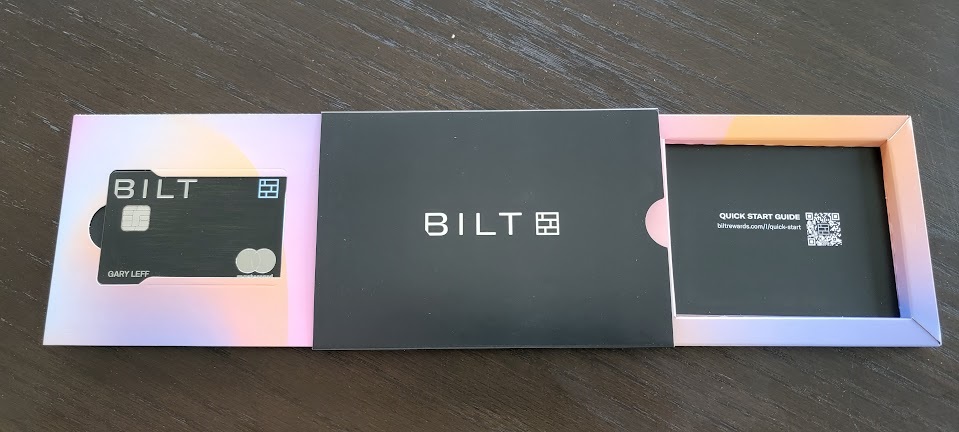
If the premium versions of the card, that’ll likely be where much of the value lies, offer initial bonuses then it might not make sense to transition! We’ll have to see if there’s a bonus offered for customers to make the Wells -> Cardless transition (there was a modest one for customers to make the Evolve -> Wells transition, for those early card adopters who got the product before the Wells agreement in March 2022).
- It’ll require weighing the ease and convenience of keeping the same card number, versus the value of a potential initial bonus.
- My guess is we may not learn what that bonus will be until after January 30th (or until February 7th).
- While there’s no hard credit pull to transition, I still expect moving to the new card to count against 5/24.
Speculation around moving from the current ‘5 minimum transactions per month’ in order to earn points on the card (this was designed to get customers used to pulling the card out of their wallet regularly and make it a top of wallet card) to ‘minimum monthly non-rent spend’ is interesting. It’s what Mesa did, and it potentially helps the overall spend mix, shifting from unprofitable spend to profitable spend (1x or 2x categories).
Overall I’d expect good cards, especially at the premium price, that deliver the most value to those who engage the most with the product and the program. I assume the $95 card will be closest to what’s available now at $0, though of course it’ll be loaded up to look like more. I assume the $0 card will be worse than what’s available today, that’s almost a certainty in order for a three-card portfolio to make sense and to push people towards the higher price points and better overall program economics.
What I’m looking forward to seeing is whether the $495 card is good enough outside of any Priority Pass card to justify the price. I worry they feel the need to include airport lounge access at $495, but that doing so takes up too much of the available investment for the rest of the card to work for those of us who do not value another Priority Pass card.
I am guessing we’ll see partner credits on Bilt premium cards to offset annual fees. Coupon book-style offerings have become the rage for a reason: they work. They shift cost onto partners, selling access to premium customers in exchange for discounts. And they keep customers inside the ecosystem. That makes even more sense for Bilt, which is effectively a coalition loyalty program (Lyft, GoPuff, Walgreens, etc). The former CEO of American Express is chairman of Bilt.
How much of the specific speculation about Bilt’s coming card value proposition is accurate remains to be seen. It’s probably directionally correct, though possible some details got lost in translation. I note that the person providing these leaks analyzed the economics of the major card issuers and is roughly right in many cases but also gets some facts wrong (e.g. “Hyatt transfers are easily the most popular transfer option for Chase points” when it’s United by a lot) and misanalyzes Bilt’s economics, mixing up who was paying for some things (Bilt vs. Wells) and likely getting wrong how the average member redeems.
Regardless, I can’t wait until mid-January to learn what the products actually look like. Bilt has delivered a tremendous amount of value so far, and I’d be surprised to see this change overall with this launch.



Richard Kerr is publicly stating in r/biltrewards that he does not believe this person is a Bilt investor.
That Redditor’s post and comment history is, uh… interesting for an alleged angel investor in fintechs.
I’m still curious how points for mortgage payments will work, and whether it will work for all major lenders or just for certain ones.
Been a BILT user for a while. Look forward to the changes. Its turned out to be one of my main cards outside of Amex.
All these travel sites are obsessed with lounge access at airports. I travel immensely for my job..work outside of the US going all over the planet (Only been in the USA for roughly 2 months 2025). As someone who visits ALOT of airports there all trash now. They are packed beyond belief. If there is a line outside forget it…mad house inside. Amex Plat holder and rarely go to any lounge of any brand. I will take a quite gate with my kindle anyway over that trash.
Arthur, that’s been the most confusing aspect of this. UWM did not spend a fortune to help all of their competitors. My feeling all along was that this would be just for UWM customers.
But I guess its possible that they copy what Mesa did for non-UWM customers.
A lot of people read way too much into one of their previous press releases (IMO). Bloggers ran with that and Bilt has done nothing to correct them which is interesting.
Guess we’ll know either way in a few weeks.
What a joke. All cardmembers are technically ‘investors’ in the sense that we’re about to become ‘creditors’ when the ‘gravy train’ stops flowing in February. It’s undeniable that Wells Fargo has been footing the bill for BILT for years now, losing a reported $10 million per month on covering our points earnings from rent without having to pay any convenience fees.
My predictions are that Cardless barely lasts a year, that everything gets hella-nerf’d, especially on the no-fee card, that the sign up bonuses (if any) are only for the $95 and $495 cards, and they won’t be that impressive (but blogs, including Gary, will inevitably hype them up like crazy), and finally, instead of minimum transactions (currently 5/mo), it’ll be minimum spend to earn points (probably $500+), which isn’t unreasonable, but also, isn’t ideal for those that’ve enjoyed the status quo. Nothing lasts forever. I remain skeptical, yet, as a user, I still hope BILT lasts, because I have benefited.
The travel card market is so saturated another card with lounge access sounds boring. Having travel multipliers might be nice too, but not really needed with so many options out there. I’m hoping the 495 is more of an Amex gold style card, with dining credits and multipliers. I’m hoping the 495 is more of an Amex gold style card, but better with dining credits and multipliers for streaming services, groceries, restaurants, online shopping, and electronics.