United Airlines CFO Michael Leskinen spoke at the Barclays 43rd Annual Industrial Select Conference on Wednesday and actually dropped some reveals and even more hints about product, and talked smack about American Airlines as part of the larger feud between the two carriers at Chicago O’Hare.
Here are (7) key takeaways from the presentation:
- He believes airline mergers are possible in this environment, and would be good: “I think it’s a unique environment that — where M&A is possible. We’ll see how that plays out. But I do think that this industry would benefit from some.” We’re already seeing Allegiant and Sun Country but there have been rumors that the United-JetBlue partnership could be more…
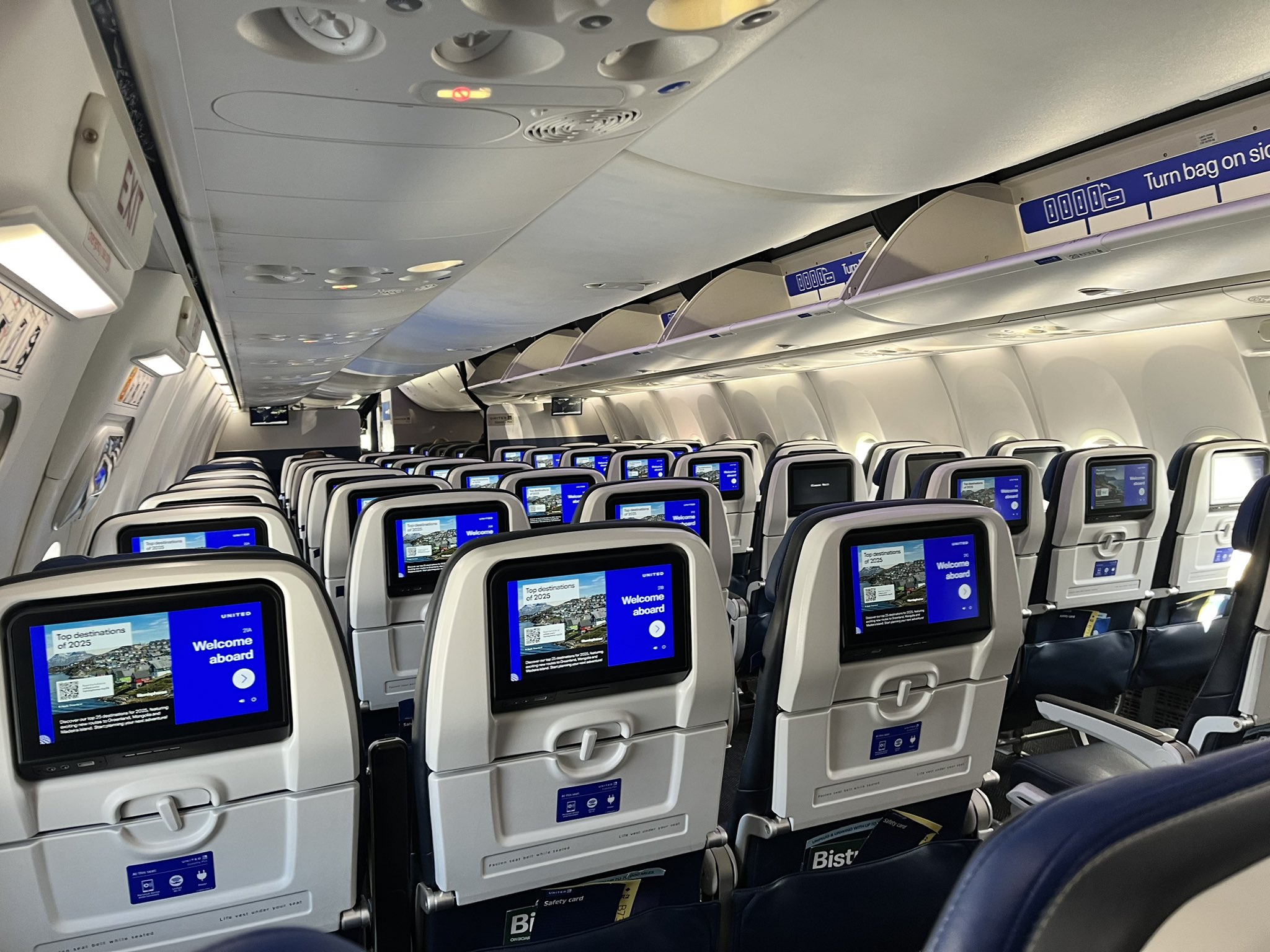
- Starlink roll-out timeline: “We’re going to have a significant amount of mainline aircraft by the end of this year. And then by the end of ’27, we should be substantially complete.”

- Website relaunch details coming in two weeks. Product announcements are coming at Media Day in March
We also have plans, as Andrew Nocella alluded to on the earnings call, to improve our loyalty ecosystem. I think that will end up driving some card acquisitions to United
If I had to guess, among other things they’ll make official something like Delta’s 15% discount on award prices for co-brand cardmembers. They already offer higher pricing to non-cardmembers, and have restricted business class saver availability to elites and card customers. So this would market what they’ve done to drive card signups.
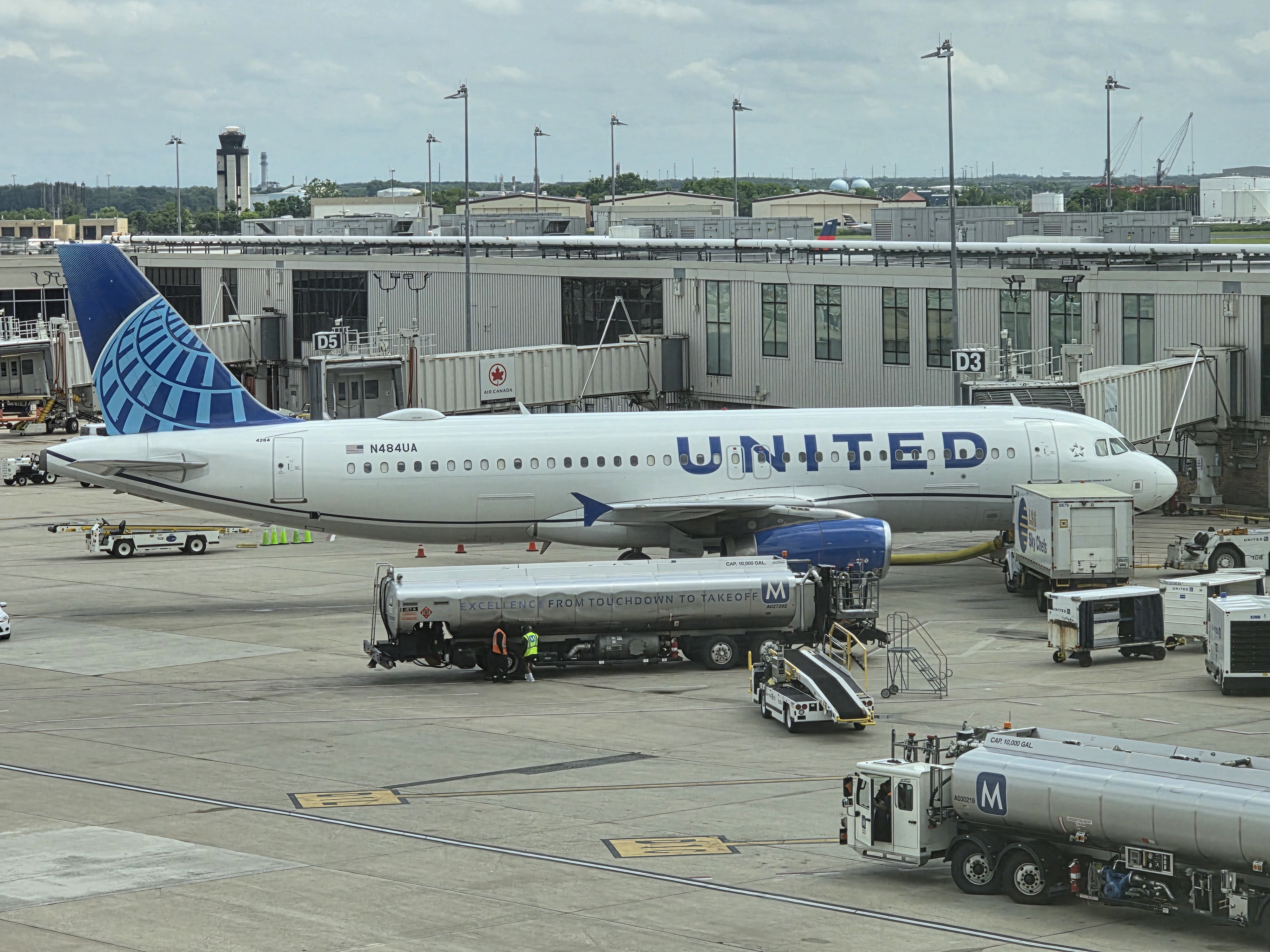
- They’re not losing money at O’Hare yet, despite the big buildup in capacity as they try to bury American: “We actually have mid-single-digit RASM in the first 2 weeks of February in O’Hare.”
He referred to American Airlines, though: “Temporarily, they have a hub.” Ouch, and more than a little unfair. Even if American didn’t grow, or scaled back, they wouldn’t retrench to the point that it was no longer a hub. The gates are too valuable (based on recent Spirit gate sales to United and American, $15 million each!) and the market too important for co-brand credit card spending.
[E]verybody is switching from American to United and they’re doing it because we have a differentiated product, we have differentiated service. And so yes, there’s a lot of capacity being added to Chicago, but not all capacity is created equal. And so not only do we have a better hard product, but we have the schedule and we have the connectivity, we have the clubs.
So they can fly around some empty airplanes, and there is some gate calculus around that. And so that puts us in a spot where for the long term, we have to protect our gate positions. It’s going to be a modest impact to our level of profitability. …We are making money in Chicago. We made a nice profit last year in Chicago.
The other guy that’s adding so much capacity is not. There’s pretty good math out there. You can create with public data to get at that. And so really, you should talk to them. It’s an irrational strategy to accelerate their losses.

- While premium is still doing the best, coach travel is picking back up. And United has been growing capacity significantly. However, it won’t grow faster than it did in 2025. They believe they’ll earn more money when other airlines pull back on capacity.
And so at some point, there’s a transformation that those lower-margin airlines become more rational. And when that happens — and maybe it happens this year. I’m not going to predict when. But when that happens, there’s a step function improvement in the profitability of the entire industry that United also benefits from. And so the combination of the idiosyncratic trends that we’ve built at United and that transformation in the industry, which must happen, it’s economic gravity, that’s what Scott describes as getting us to mid-teens [in percent margin].
- For an airline that’s cutting 8% of headquarters staff thanks to AI, he gave a fairly muddled answer on how they’re using it. There are some nuggets here, but not a top level vision.
For AI, we’re doing a lot with customer service reps to be able to access information faster, answers to their questions, to be able to answer customer questions faster. We’re doing more preemptive maintenance. We’re doing more predictive maintenance. We have iPads in the hands of our technicians that are making them more and more efficient. We have some of the operation where we can create some more automation around ground handling. I think it’s going to be helpful to overall cost trends. I don’t see transformational just yet, but I do see helpful.
I think another good example that I’m really proud of for the finance team is we’re getting better at closing the books faster and using more technology to help us do that. In fact, you may not have noticed, but we filed the 10-K a week earlier than we historically have. I’d like to even bring that a little bit closer to when we file earnings. But a lot of that is around modernization of our finance tools.
 what I reported about parking some Boeing 777s:
We do have a few 777s that are Pratt powered, where I do not have parts for those engines. And so those aircraft are going to be grounded in the summer. And so it’s putting a little bit of pressure on our international ambitions in the short term. That will be resolved in 2027.
The war of words is certainly escalating when the United Airlines CFO is openly ridiculed American as having merely a ‘temporary hub’ in Chicago, and singals tremendous hubris over the direction of their profits into the future – we’ll see if the confidence winds up warranted.
In the near-term though we’ll soon learn of product and loyalty program changes, aimed at driving up MileagePlus profits by 50% in four years, something the airline failed to accomplish the last time their CEO promised it.



“Brutally Mocks” and “Teases” … if we’re doing hyperbole, Gary, please consider adding “slams” or “blasts”… it’ll really Buzzfeed-up your posts.
1990
Gary was fairly mundane in capturing what UA said; you should read the full transcript.
UA does believe they can trash talk a competitor out of existence – and also throw out half cocked facts if it can convince analysts and passengers that AA is not long for the world in Chicago. UA’s margins aren’t more than mid single digits on a system basis and it isn’t likely that AA’s RASM any more negatively impacted than UA’s. Anecdotal reports of cheap fares and empty seats are going to increase on both carriers, esp. on the slew of flights that UA is adding that have no local traffic because they are too short.
As for consolidation and failure of other airlines, it is noteworthy that DL, which says the least about the competition, is benefitting the most from Spirit’s failures and has grown the most in JetBlue’s major markets – even though UA has said for years that it is driving failure of other airlines. F9 is UA’s biggest low cost competitor other than WN and both are still kicking.
and, yeah, having a bunch of 777s out of service reduces capacity and limits UA’s growth.
and UA still enjoys a billion dollar labor cost advantage that will end when its employees decide that sacrificing for their employer is not a good personal development strategy.
I’m not sure that United’s childish taunts are doing much to make the airline look professional.
Of course United wants to own JetBlue and all those invaluable slots at JFK. Sure, it would suck massively for the public but United couldn’t care less and this administration is the most likely to allow that singularly customer-unfriendly move.
As to the battle for ORD, United makes even less sense. If American was losing half a billion a year as United claimed then United should have left them alone to bleed out while United earned profit from the hub.
United’s extreme arrogance – along with the “United surcharge” (their fares seem to always be 20-60% higher than their competitors) have caused me to nearly abandon United, I am flying frequently on AA again these days (despite United being by far the dominant carrier at my home airport) and I think the AA service has improved at the same time UA’s has declined. From where I sit, AA is doing a better job than UA and I have been rewarding them with my business repeatedly.
Pride goeth before the fall, they say, and the arrogance that has been coming out of United’s HQ for years now is both undeserved and off-putting. For a brief moment, United was the best U.S. carrier to fly, a big accomplishment considering where they’d come from. But that moment has passed. Delta had that spot too. Not any more. I think it’s probably Alaska these days, but AA isn’t doing badly, in my view.
Breathtaking hubris. I look forward when I can write another letter of complaint to UAL and state, “my how the mighty have fallen.”
It will happen no matter how often and how shamefully Scott Kirby lies on his stomach spread-eagled for King Trump.
the hyperbole from United and Gary really does impress sometimes.
It starts to be laughable on the United side when they constantly point to a competitor about their strategies instead of focusing on their own. To be blunt, it starts to make United look strangely fearful of AA’s buildup the way they can’t seem to stop talking about it..
But then again, it was always laughable that United thought they would finally win the decades-old battle at ORD in a year or two.
Perhaps the CFO should focus on getting some labor deals and less on this childish trash talk about a competitor that is likely to gain gates at ORD at United’s expense in the coming months. I’ll agree with Tim here, United is building their network on the back of their labor groups.
At the end of the day, this talk from United starts to reek of very childish inability to execute your own strategy and lack of confidence in their own strategy.
This comment is from someone who doesn’t fly domestic much at all — mostly International. I live in hope that the Trump administration, as part of some trade deal, will allow the acquisition of a major US carrier by a foreign airline. I longed for Qatar to buy AA. I’m over that since I now basically am Flying Blue.
But the point is the same: Want real competition? Put an owner in there that will really kick the can down the road and put International standards into American aviation.
Fact is, this is a great country, but we don’t excel at everything, and running an airline is, well, one of them.
@ 1990 — I think “obliterates” would be a good choice.
The ORD United Clubs are dumps and the gate wait times are as bad as ever. Calm down UA.
Untied has much to brag about as an industry leader.
I can say that the United Clubs have the most and best infested rodent population in the world
Added to that the most health violation with closed down clubs from the Dept of health
Their Food in First Crass is simply inedible goo and their push for self service check in commendable so they can fire as many front line agents as possible
and make it living hel# for those physically challenged.
Finally their mileage point value is second worst in America for their program members
Only Delta sucks incredibly worse with their Sky Pesos.So that said I would still suck it up and fly United on rare occasion over Delta.
Otherwise I’m a One World guy all the way even with all their worts and wrinkles 25 years and ten million miles later with LT status not all fully earned by flying but more spending
I rather enjoy the new UA ORD clubs. To each their own I guess!
Too funny. Is Gary jealous someone other than him is mocking AAL?
Missed a few items. Performance Rankings: United achieved top rankings in A0, D0, A14 year-to-date and completion factor. NPS Scores: There has been a continuous rise in customer satisfaction scores and they are well above target. Starlink doubles NPS scores!
In other words, hold on to your wallets…
Hubris in the airline industry is dangerous. JetBlue thought they were the bright new shiny object until one they were not and haven’t been for a while. When a contract is finally made with the flight attendant union (and maybe others?) will UA be able to pass those costs off in the way of higher ticket prices?
As far as AI. It has a place but this idea it’s far superior to humans isn’t serious. I see that joke every day of my working life.
Can’t wait to see the look on Michael Leskinen’s face after Pam Bondi says it’s OK to merge with JetBlue to take over even more slots and flight timings at east coast airports, then Attorneys General from New York (Letitia James) Connecticut (William Tong) and Massachusetts (Andrea Joy Campbell) charge right back into court to sue. Popcorn is ready.
AA lost me with the merger with US Air; they cancelled their flight to LA that allowed me to connect internationally, to Chicago and the East Coast. I had to switch to UA for a direct flight to my office in San Francisco. The history of US Air management is not a stellar one.