
American is promoting the addition of 100 peak daily departures from Chicago O’Hare this spring, boosting service in over 75 markets and taking Chicago to 500+ daily departures.
They say this restores prepandemic spring-break flying levels. They’re also extending summer seasonal Chicago O’Hare service to Dublin and Paris and framing the whole push as part of a broader investment-and-growth rebuild of the Chicago hub.
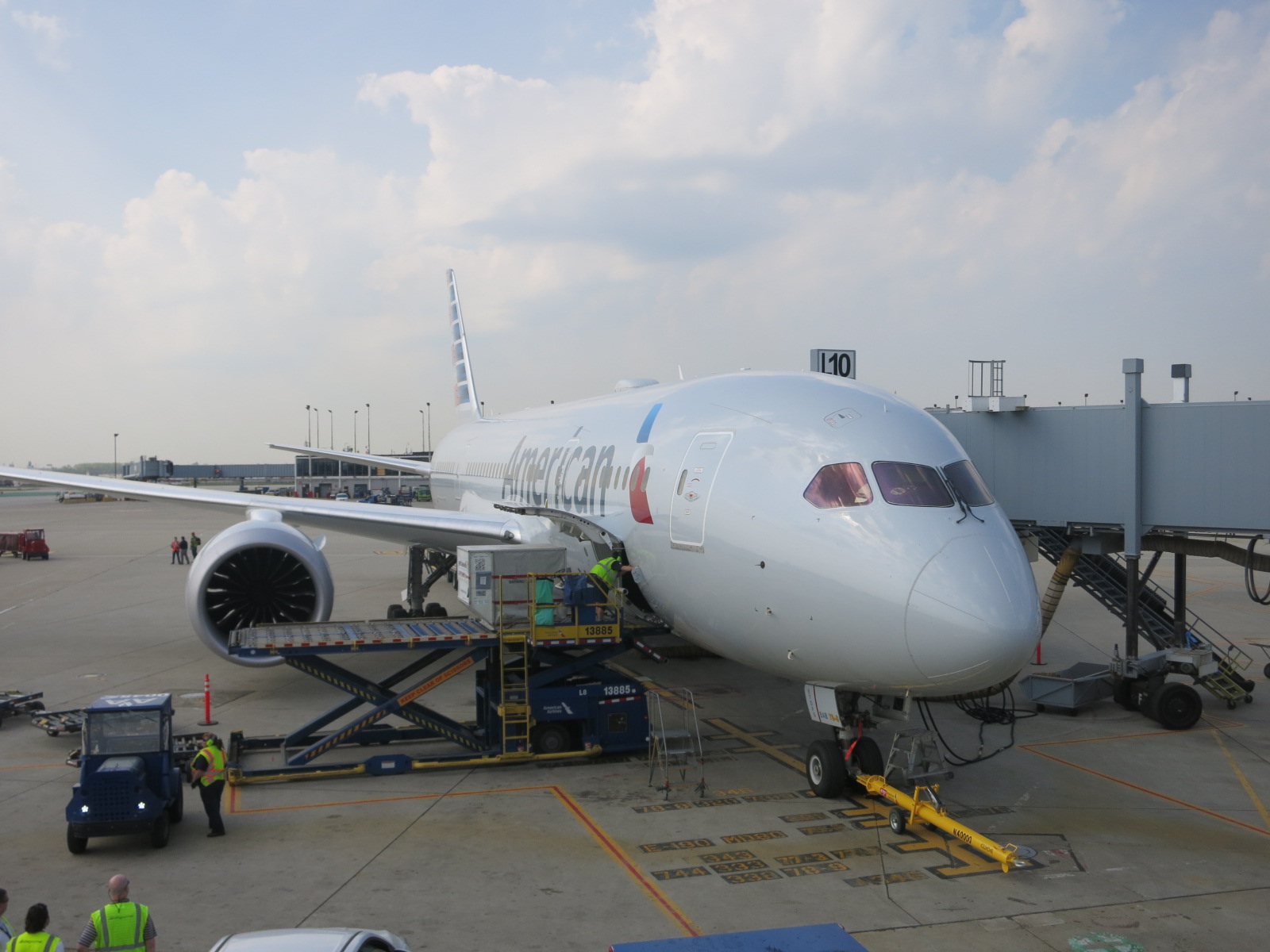
American Airlines Boeing 787-8, Chicago O’Hare
United Airlines CEO (and former American Airlines President) Scott Kirby has publicly predicted that he would push American Airlines out of Chicago O’Hare, forcing them to pull down their hub. Kirby makes bold claims, which is a lot of fun, but they’re often unsupported.
American lost four gates at Chicago O’Hare, and United gained five, as part of a re-allocation process based on flight volumes at the airport. American Airlines sued to stop the re-allocation, and has a strong argument that it was done two years earlier than permitted under the airport’s use and lease agreement based on construction timing. However, a court refused to grant an injunction suggesting – as expected – that money damages are calculable and sufficient if the airline prevails.
However, American Airlines clearly has fight left in them.
- They’re leaning into premium, to provide products for customers to buy up into. They have new, gorgeous aircraft interiors (even on regional jets), fast wifi (that’s about to be free on 90% of planes), and they’re adding premium seats to planes after having spent too long and having gone too far in removing them.
- They’re making schedule changes to improve their reliability.
- They’re dropping customer-unfriendly policies such as how hard they made it for most passengers to stand by for an earlier flight.
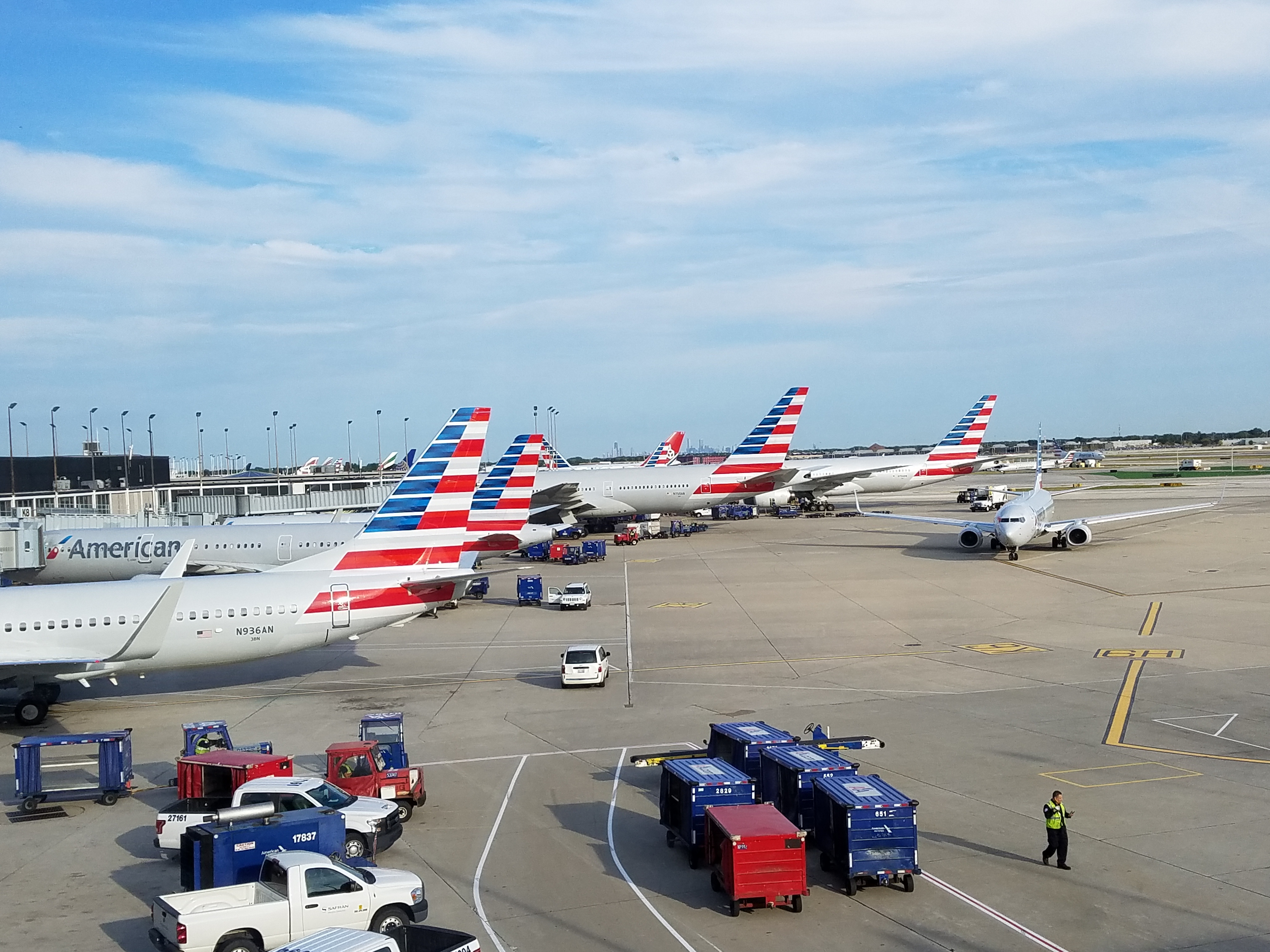
And at Chicago O’Hare specifically, earlier this month I was first to break the news that American was acquiring two Spirit gates at O’Hare for $30 million.
What’s more American is highlighting the clear fight they’re picking with United. They’re flagging this as a competitive move against the other hub carrier (United) and highlighting flights to two of United’s hubs (San Francisco, Denver) and to an ex-hub (Cleveland):
As the nation’s largest dual-hub airport, ORD has long thrived on strong competition among hub carriers, which keeps fares lower and doubles options for travelers. With three new peak daily flights to SFO and Cleveland (CLE) and two to Denver (DEN), customers now have even more ways to travel to, from and through Chicago, and, importantly, they have more choice.
American had failed to restore its capacity at Chicago O’Hare coming out of the pandemic, focusing on other airports. And it’s not clear that they would have had the aircraft to do so, in any case, having retired too many (Boeing 757s, 767s, Airbus A330s and Embraer E190s) during Covid and having grounded regional jets in part due to a pilot shortage.
United built back its schedule and gained an even greater durable advantage. American Airlines Vice Chair Steve Johnson acknowledged in the spring that American will “probably always be second place in Chicago.”
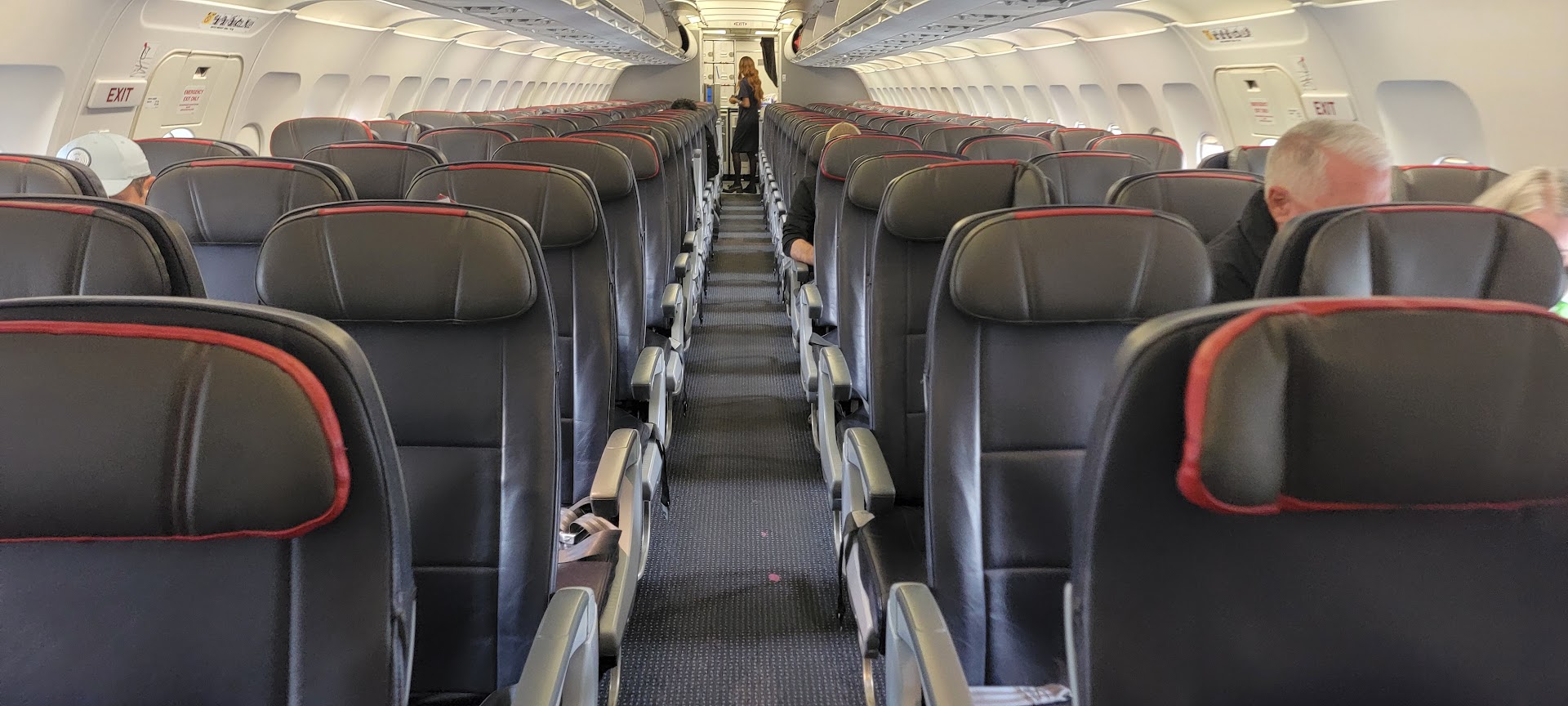
However, this has the makings of a real fight. On December 18th, American added 3 new Chicago Routes: Erie (once daily, year-round on a CR7 regional jet); Tri-Cities (once-daily, year-round on an E170 regional jet); and Lincoln (once-daily, year-round on a CR7 regional jet).
Within 24 hours, United responded in all 3 markets:
- Returning to Erie with 3 times daily summer seasonal United Express service
- Tri-Cities with 3 times daily summer seasonal United Express service
- Lincon, where they added a 5th daily frequency to existing service.

United framed this as part of growing to 650 daily departures at O’Hare for peak summer, but what they did was respond to American’s once-daily service with three-times daily (summer) which is likely to drive down fares in these markets. If they force American to pull out of some, you can expect United to respond with fewer flights as well, driving fares back up.
American, though, frames O’Hare as its third-largest hub (behind DFW and Charlotte) and says it’s growing faster than United there. That’s not surprising – they’re coming off a lower base – and growth for both carriers is capped by United is positioned with gates there to be larger. With their smaller operation, they also claim to have had better on-time performance at the airport than United this year.
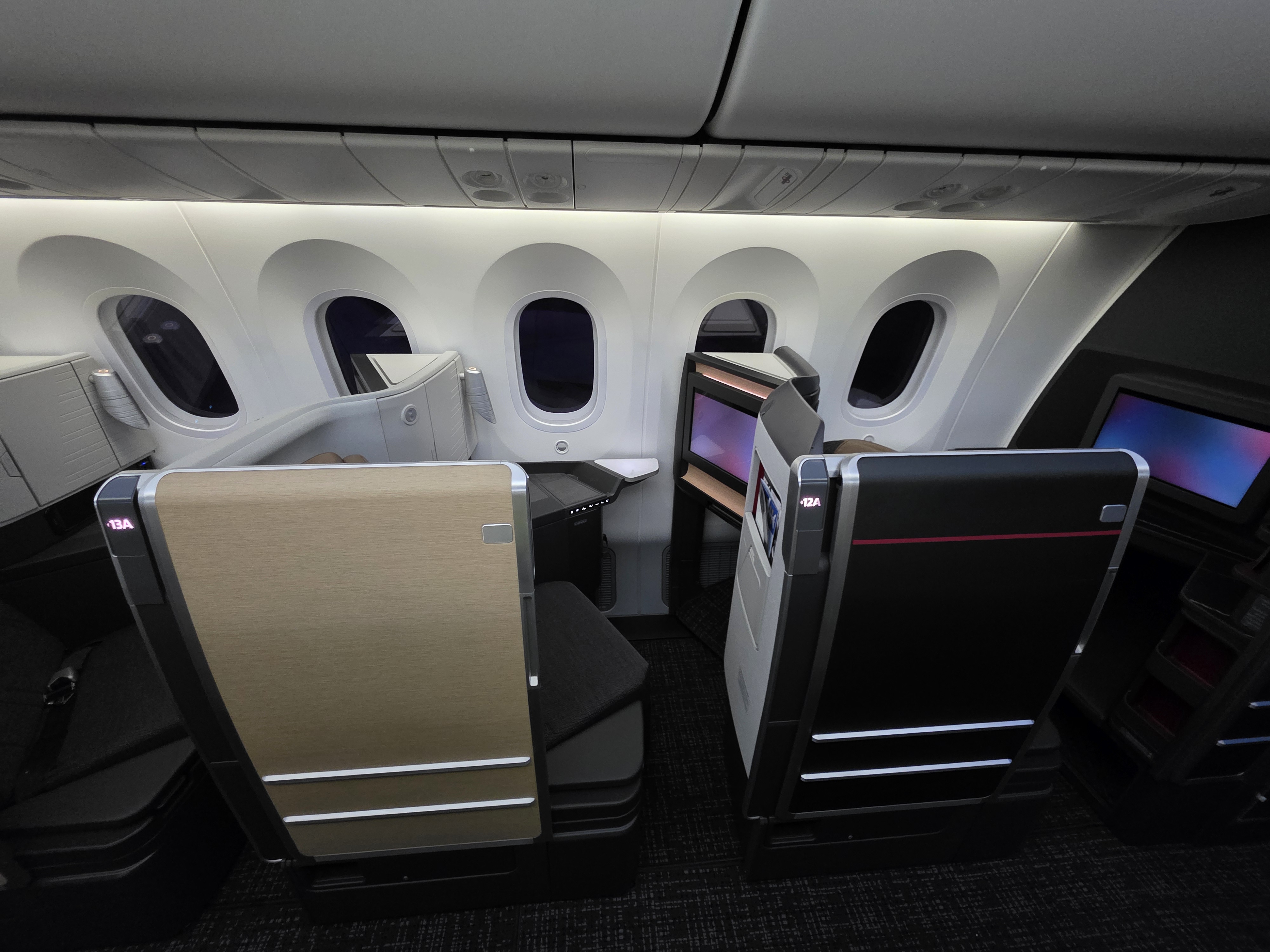
However, they also say that AAdvantage enrollments grew 20% in the Chicago market during the third quarter, versus 7% systemwide. It’s a city with a lot of money, and they need it for co-brand credit card business which is the profit engine at the airline.



With ORD doling out gates based on utilization, AA is going to gate squat. Expect them to ramp up RJ flights to build the volume to keep the gates they have and try to grab some from UA. Returning ORD-ERI service is not the same as returning daily ORD-CDG service year round. This is no different than airlines slot squatting at LGA and JFK.
AA needs to figure itself at ORD. They have focused almost solely on CLT and DFW, while dittling around at JFK and SEA. While AA can tread water in single hub cities like PHL, DCA and MIA, that dog won’t hunt in ORD, PHX or LAX where they actually have to compete.
Come this time next year, AA will juggle routes around to see what sticks, while running money-losing routes to hold the gates.
Sometimes, SK’s ego writes checks his body can’t cash.
AA took its foot off the gas and UA pounced but AA is not out of the game at ORD and can and will rebuild its operation in order to retain a position in Chicago, which it has to have.
AA will “allocate” some of its losses to defend its Chicago position but UA is engaged in battles with other airlines all over its system.
While AA and UA battle it out in Chicago, DL has DTW and MSP locked up to make it the largest carrier in the Midwest; NK is cutting back at DTW while SY is pulling down flights at MSP.
and let’s not forget that AA, like DL and WN, have raised salaries and settle contracts post covid while UA has failed to do so.
Are the Teamsters/UA billboards still up in Chicago, Denver and Newark touting UA’s maintenance outsourcing?
Parker,
Any proof to back that up? Or is this just another one of your “American can do no right”? (Sponsored by The Kirby-United Internet Task Force).
Really Citi v Chase. The service in and out of Erie is really going to prove if AA has the chops to lose money for relevance. Excess capacity is a weapon. You need to actually fly to get your natural share. Good luck to AA.
This move sounds like something Bob Crandall had done in the past. Finally American is showing some backbone and not be bullied.
@Parker … this is far more than just gate squatting with RJ’s … many of the routes are uogauging from RJ to Mainline or 738 to 321 … and with the $30 million gate acquisition and the goal of making ORD AA’s third largest hub out of 9/10 (if you sort of count BOS), it’s clear they’re down for a fight.
AA isn’t going anywhere albeit they will probably remain second fiddle. UA doesn’t have the hub strength in the SE that AA has. Flights going south can easily be flown out of MIA or CLT. UA has IAD in the mid Atlantic.
Using gates for flights is the opposite of gate squatting.
500 flights a day is impressive. Hopefully the yields will hold.
Of course tim dunn makes a post about Chicago, aa and ua about delta.
Of course.
The issue is, AA has never had longer and soli commitments like DL or UA, or even B6.
.
AS a flier with BOS/MHT as home bases, I’d love ro have a solid home/global airlines –
So far – my est option is with OW -B6 is now with UA, and DL continues to be too expensive and no partner airline in JAPAN. OW continues to be my preferred choice
Maybe AA could dump some premium award seats on these routes to fill those birds up. I’d love me some ORD-LHR daytime flights for 2026 or 2027.
Kat,
It is all the Midwest – DL just isn’t involved in the slugfest.
AA and DL’s tiny little slugfest is over BOS-MSN which AA, then DL decided to start.
DL and UA are on a whole ‘nother level – LAX-HKG and -ORD.
@Get Real my POV on AA is not that they can do no right. It’s that they have sh!t the bed.
Look at where the majority of route growth has occurred: DFW and CLT. Even though both airports are at or above capacity. Meanwhile, hubs like ORD, PHX, and PHL that have plenty of capacity sit underutilized. Sure, they threw a flagship lounge at PHL, but they done nothing else.
Meanwhile, AA ramped up and then quickly dialed back int’l flying out of SEA once AS made their move. Meanwhile, they fecklessly play with themselves at JFK.
Meanwhile, back on the prairie, UA has been defending its turf and growing disproportionately in hubs where they compete with the hub of another carrier.
Parker,
remember that UA also had the worse RASM performance of any non-ULCC US airline in the 3rd quarter.
UA is throwing alot of capacity in alot of places but they largely have bruised financials to show for it.
Other big 4 airlines – including AA – were much more measured in their capacity growth and also don’t see the need to keep adding capacity that isn’t going to work out.
I wouldn’t hold UA out as the gold standard for how to grow.
@George Romey — Second fiddle is still better than third or fourth. Also… ‘tradition!’
Having flights and making money are two different things.
AA is #1 in DFW, CLT, PHX, MIA and PHL. JFK is a class by itself.
I suspect AA will eventually do what Delta did in DFW and de-hub it. It makes no sense to be #2 in a hub, especially when those planes can be re-allocated to enhance connectivity at the places where you are #1.
Moreover, the majority of AA flying out of ORD is American Eagle, more than UA’s percentage of United Express, so AA’s overall seat/mile costs are higher, while it’s #2 status prevents it from having pricing power.
I want AA to add back the daytime departure ORD-LHR. From any city in the Midwest, we cannot make an East Coast connection to those daytime departures.
@ Goforride AA will never abandon ORD. It’s too important geographically for them. They’d have nothing in its place. And they’d have a serious hole in their network, especially in terms of east-west connections.
And as for the whole regional jet thing, that’s an outdated myth that needs to die already. Last summer they ran roughly 51% mainline and 49% RJ. I know that’s not great, but it’s better than people think. And unit was running roughly 59% mainline and 41% RJ. So sure, United flies more mainline, but the difference isn’t as stark as people like to make it out to be.
I invite you to look at the data yourself. So far I’m seeing a lot of upgauging from RJ to mainline or to larger mainline aircraft in the spring update. So I think American may be following a bit of United’s playbook now. It’ll be interesting to watch how this all shakes out, that’s for sure.
American Airlines has 31 gates under construction at DFW, coming online between 2027 and 2030. As they do, AA will wind down its leases at ORD and gradually de-hub it.
Why on earth would they want to be #2 at ORD and have zero pricing power when they can be like Delta Airlines in Atlanta?
Delta de-hubbed DFW and abandoned a large swath of the country in order to be unassailable in their primary hub. AA will do the same.
@ Goforride
A airline can walk and chew gum at the same time. Nothing precludes AA from competing in Chicago while also expanding at DFW, as long as they have the planes and pilots to do it.
Delta de-gunned DFW during a different time… pre consolidation years with where airlines lacked pricing power in their networks, blended red every year, and were fighting for survival. Credit card agreements weren’t nearly as profitable as they are today.
Had Delta know what the post consolidation world would look like they would have stayed at DFW. The south central is a gaping hole in delta’s network and that’s potential revenue they’re losing out.. hence the AUS push.
I’m not sure how AA plans to win in ORD by launching those routes…. UAL is the powerhouse there and until the demand and revenue drops on what UAL monopolizes, it’s just AA trying do stay relevent.