
Austin’s airport can be so crowded that you can barely move through the terminal. Passengers spill out of gate areas into the corridor, where everyone else is trying to get somewhere. Then you visit another airport, walk through an almost empty concourse, and wonder why we’re spending billions building more gates there.
Adam Nathan put together an interesting comparison of passengers per airport gate. Austin comes out at 637,000, Seattle at 592,000, and Washington Dulles at just 212,000. There’s a lot to learn from this, but the gates aren’t interchangeable, and neither are the conclusions you can draw from them.
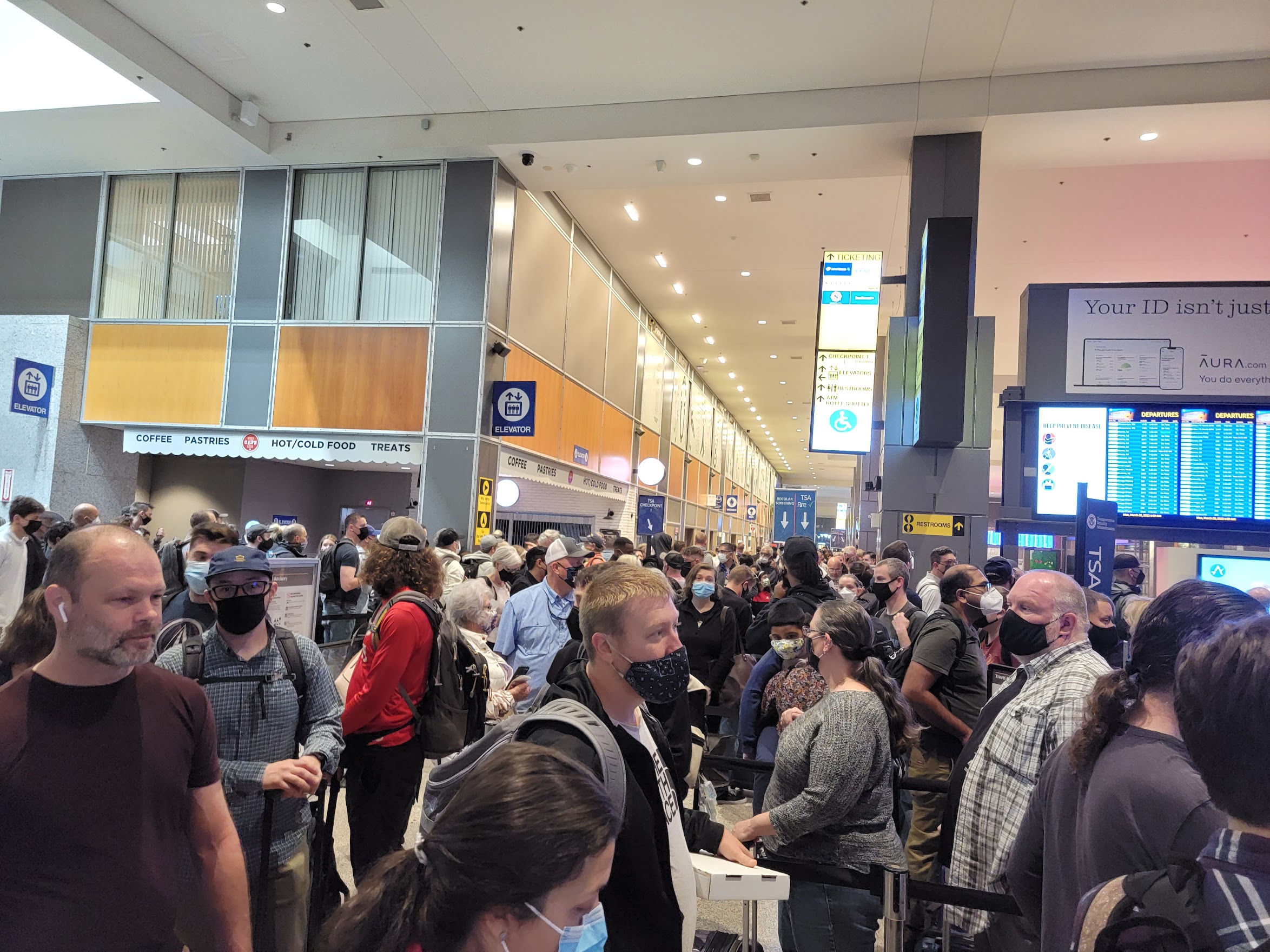
For instance, Nathan flags that Austin reduced its gates this year. That’s true – it closed its South Terminal with three gates – but those gates handled just 3.6% of the airport’s passengers last year. And Charlotte’s large number of regional jet gates makes average passengers per gate look much more reasonable – when outside of that E concourse, the place is a dense mess.
Austin Closed Gates, But They Were Largely Immaterial
Nathan’s slide specifically refers to the South Terminal closure, and that’s fair. Austin closed the separate Allegiant and Frontier facility on March 31, moving those airlines into the main terminal April 1. The site is needed for new taxiways and the airport’s construction program to grow.
However, the airport’s 2025 passenger totals show how lightly those three gates were compared with the main terminal:
| 2025 traffic | South Terminal | Main terminal | ||
|---|---|---|---|---|
| Passengers | 771,354 | 20,895,498 | ||
| Share of airport passengers | 3.6% | 96.4% | ||
| Gates | 3 gates | 34 gates | ||
| Annual passengers per gate | 257,118 | 614,573 |
Frontier carried 553,311 passengers and Allegiant 218,043. Each South Terminal gate handled about 42% as many passengers as a main terminal gate. Moving those flights into an already crowded building wasn’t ideal, but losing three of 37 nominal gates didn’t mean losing 8% of the airport’s passenger capacity. There are actually three different construction stories here:
- The South Terminal’s three boarding positions went away to make room for work on the airfield.
- The three new gates at the west end of the main terminal were built to offset gates being taken out for expansion, including the underground connection to the new concourse.
- Austin is building Concourse M, a separate six-gate facility reached by bus, in addition to the new 26-gate Concourse B. Those six gates will help maintain operations during construction.
West Gate Expansion
So commenters suggesting “reopen the closed gates” aren’t familiar with the airport. This is space being used to build out the airport.
Terminal width matters, too. Boarding lines, arriving passengers and people walking to other gates all compete for the same floor space. Austin’s master plan identified 89,600 square feet of circulation corridors after the 2019 east expansion, compared with a modeled requirement of 125,350 square feet at 16 million annual passengers and 173,650 at 22 million (almost twice the space).
Atlanta’s Concourse D project is a good contrast because it widens the building from 60 feet to 99 feet, increases the depth of gate waiting areas from 20 feet to 35 feet, and reduces the gate count from 40 to 34, with all remaining gates accommodating larger aircraft. Hold passenger traffic constant and passengers per gate rises nearly 18% simply because the denominator shrank—even as passengers get more space.
An airport can have fewer gates, higher passengers per gate, and a substantially less density for a better experience walking through the terminal.
Charlotte Shows Why A Low Passenger Count Doesn’t Mean An Idle Gate
Charlotte comes out at about 432,000 passengers per gate, well below Austin. If you’ve tried to get through its piers during a connecting bank, that doesn’t describe the experience very well.
The airport has an enormous regional operation. It has 45 gates on Concourse E and that concourse handles more aircraft operations per gate than the others. A gate turning regional jets all day can move fewer passengers than a gate with fewer departures on larger aircraft.

Charlotte’s planned expansion adds gates and improves aircraft circulation without widening the existing B and C corridors. The ends of the piers at Washington National has the same problem.
Why Bigger Planes Don’t Produce The Highest Numbers
Flights per gate is a more direct starting point for judging how hard an airline is using its gates. But passengers per gate adds size of aircraft, carrying more people without adding departures. So the surprising part of this comparison is how dense airports with relatively little widebody flying are. But narrowbody gates tend to turn over more frequently.
Long haul aircraft often need longer turns, and their schedules are constrained by overnight flying, arrival times and connections at the other end. An international gate can sit empty for hours.
And you can’t just replace every regional jet with an Airbus A321. Some routes can’t support it, some passengers value frequency, and some gates and alleyways can’t accommodate it. Upgauging also puts more people into the waiting area for each departure.
Dulles Already Has Room To Grow?
Washington Dulles is the most provocative comparison because it looks so lightly used while pursuing a roughly $20 billion reconstruction program. I’ve criticized the economics of that plan.
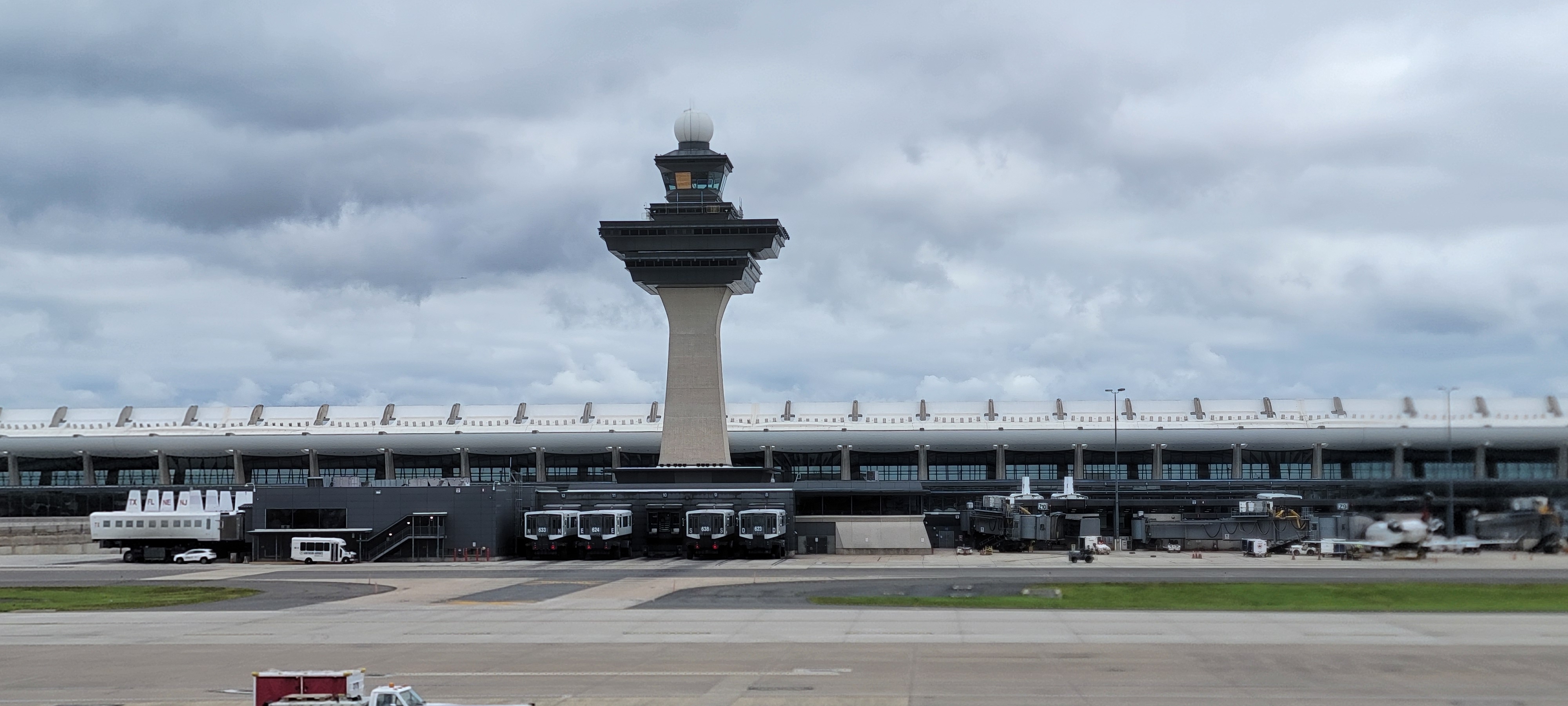
First, the slide labels Dulles as having 137 jetbridge gates, excluding 16 remote stands. The airport authority’s 2025 bond documents tell a different story: 121 aircraft parking positions, including regional hardstands without boarding bridges, and excluding 16 remote hardstands. Adding those remote positions produces 137.
Since that inventory Concourse E opening November 10 with 14 new gates. Its flexible layout can accommodate a large widebody in space used by two smaller narrowbodies. The number of usable gates actually depends on which planes park there.
The same bond documents show 7.3 scheduled departures per gate per day at National versus 3.4 at Dulles for June 2025. The question is how much of that unused time airlines can profitably use. A quiet international concourse at one hour doesn’t establish spare gates where United needs them at another. Nor does it address the 1980s temporary midfield C/D concourse.
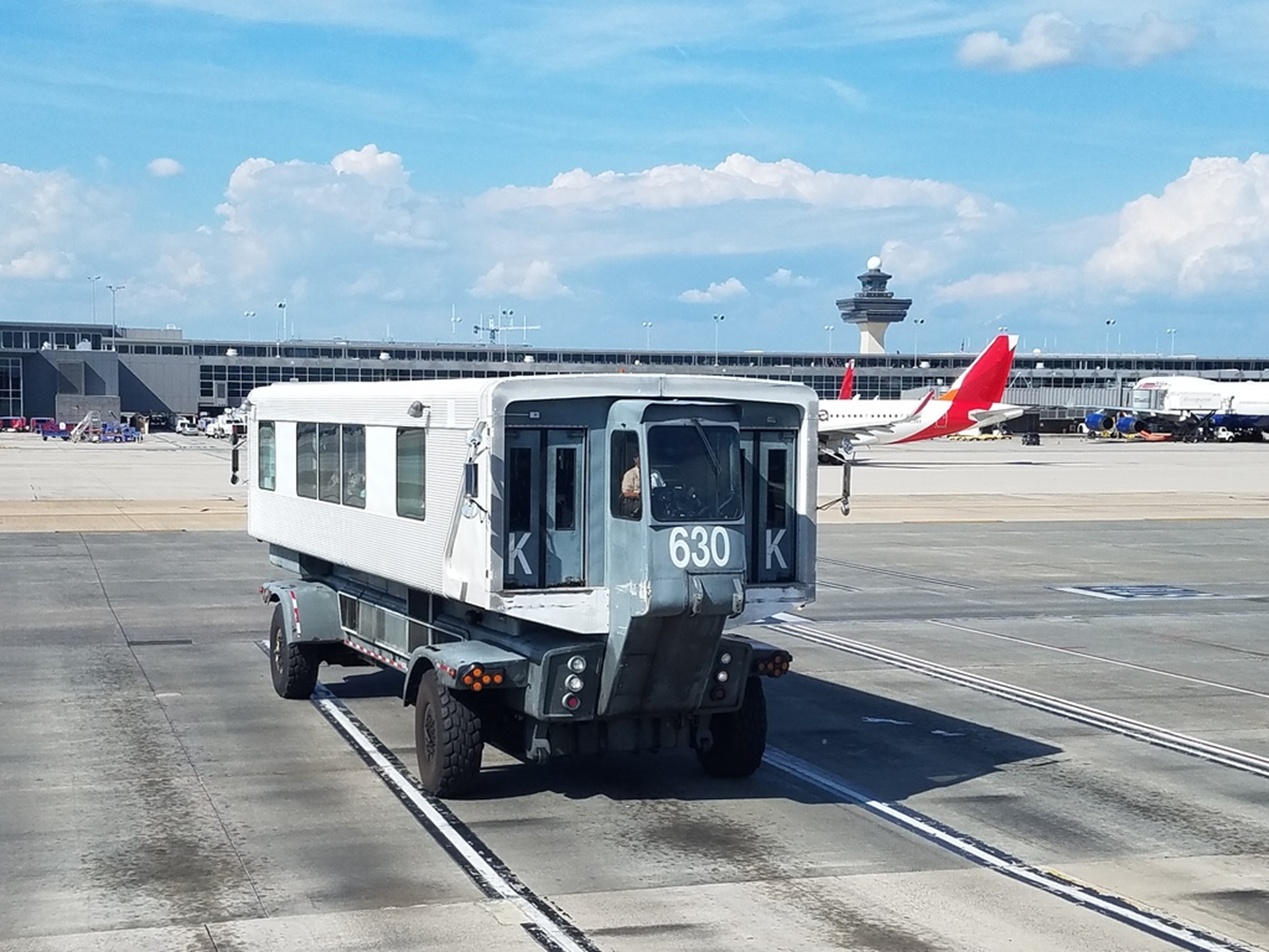
Replacing outdated buildings, improving train access and getting passengers out of mobile lounges can be worthwhile even without a shortage of gates, although the proposed cost of the project would drive up expenses so much that Dulles could never support a low cost carrier flight again.
Analyzing Additional Airports
Seattle is working its gates hard. The Port of Seattle’s master plan includes a second terminal with 19 additional gates.
Dallas Love Field Is Noticeably Absent This analysis set a threshold of airports with at least 25 gates, so a 20-gate airport serving around 17 million passengers per year gets excluded. That’s roughly 850,000 passengers per gate. Austin leads this sample, not the country. Congress agreed to remove and legally cap gates at the airport as a way of entrenching incumbent positions of American Airlines (limiting competition to their DFW operation) and Southwest (limiting the ability to compete at Love Field) – gates were actually destroyed, in fact six became a Lincoln dealership.
Former hubs naturally have leftover capacity. Cincinnati and Pittsburgh were built to handle connecting operations that shrank. Pittsburgh has a reduced 53-gate footprint, rather than its old 75-gate layout.
Detroit is lighter use than Atlanta, but that doesn’t mean flights can be re-routed to a different hub. Local demand, fares, geography and the connections already available determine whether shifting a flight makes more or less money. Similarly, San Antonio isn’t interchangeable with Austin, Ontario with Los Angeles, or San Jose with San Francisco.
It’s Time To Build—But Users Have To Pay
Gates are only one constraint. Runways, weather and available airspace determine how many planes can arrive and depart. Nearby airports may need the same airspace. Taxiway bottlenecks can keep a landed plane from reaching an empty gate. Security, baggage systems, customs and curbs can each run out of capacity too.
Austin needs more room for people. Charlotte needs people and airplanes to move through the airport better, wider concourses (and higher ceilings!). Dulles needs to… not do the thing that was announced.
And none of this explains why growing airports with millions of customers should get taxpayer money. Airports can issue revenue bonds, with debt repaid through airline rents and charges, concessions, parking and passenger fees. The recent infrastructure law’s airport money came from the Treasury’s general fund. That’s stupid.
I’ve written about using air traffic control failures to sell billions more in terminal subsidies. A new terminal doesn’t fix a failed air traffic control system. And a project justified by strong future passenger demand should be able to borrow against the revenue those passengers will generate. If the resulting airport charges would drive that traffic away, that’s a reason to reconsider the project’s cost not to ask to take moeny away from non-traveling citizens.


They are all waiting for the single lavatory .