
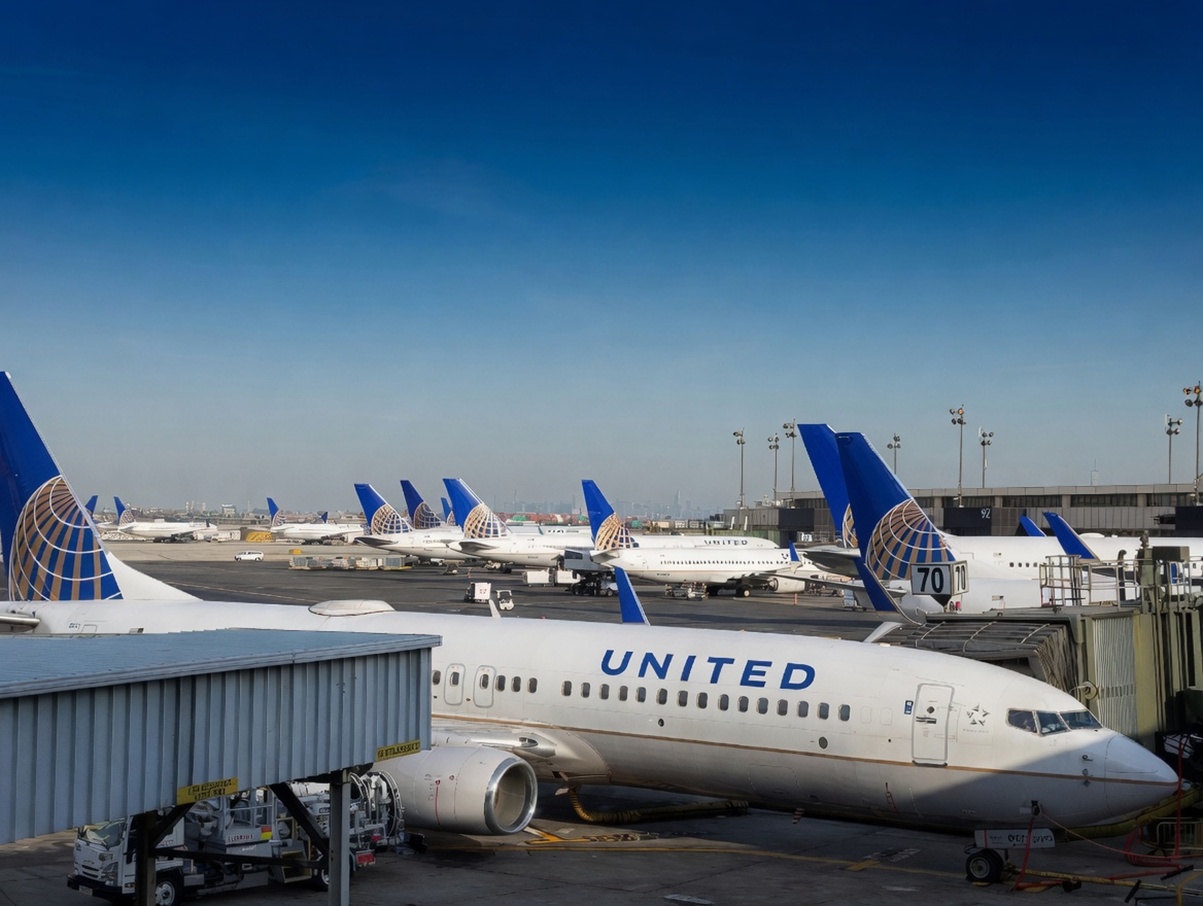
A passenger who flew on United 1340 from Newark to San Francisco on last Wednesday, May 20, shares their ordeal of sitting 7.5 hours on the tarmac. The flight was eventually scrubbed for the night and operated the next day. For their trouble, United offered a $200 voucher.
There was terrible weather in the Northeast that afternoon and evening. And this flight wasn’t the only United plane sitting for extended periods on the tarmac, likely in violation of DOT regulations.
- Flight 661 from Newark to Chicago pushed back at 6:23 p.m. and sat parked on a non-active runway, eventually cancelled returning to a gate around 12:45 a.m. A passenger reports that during their 8 hours on board, only Biscoff cookies and small cups of water were served, that passengers were crying and hyperventilating, and United provided little assistance to customers once they were finally off the plane.
- Flight 1197 from Newark to Denver was on the ground for seven hours as well.
Meanwhile, United is congratulating themselves for a job well done over Memorial Day weekend.
New from @united: Memorial Day weekend travel was the strongest in airline history, with Thursday, Friday and Monday ranking among its top 3 highest passenger volume days ever. Despite weather issues, United says nearly 70% of flights arrived within 14 minutes of their schedule. pic.twitter.com/OMDzCy2e3S
— Ayesha Ali (@ayeshaali_) May 26, 2026
United Appears To Violate Federal Tarmac Delay Rules
These were domestic flights. When doors close, a 3 hour clock starts, and only resets if passengers are given a real opportunity to deplane. Sitting on the ground longer than that likely violates the tarmac delay rule.
There are exceptions if the captain determines that safety or security prevents deplaning, or if air traffic control advises returning would significantly disrupt airport operations.
Either way, an airline has to provide adequate food and water no later than two hours into the tarmac delay, unless safety or security prevents it, as well as maintain working lavatories and comfortable cabin temperatures and give delay updates every 30 minutes.
The safety exemption doesn’t mean tarmac delays are excused by weather. United would need to specifically demonstrate with the aircraft could not return, or get passengers off by some other means, or that air traffic control actually informed them that returning would materially disrupt operations.
Penalties for long tarmac delays are somewhat unclear. They were increased by the 2024 FAA Reauthorization to $75,000. However,
- The Department of Transportation has taken the position in the past that this fine is per passenger
- Airlines contend the statutory language supports a fine per flight
- These disputes usually settle, rather than getting resolved
- And there hasn’t been a single fine for a long tarmac delay in the last two years (the Trump administration has not imposed one).
49 U.S.C. § 46301(a)(1) says the civil penalty is not more than $75,000 for covered violations, and § 46301(a)(2) says a separate violation occurs “for each day” the violation continues or “for each flight involving the violation.”
DOT generally says that “a separate violation is considered to have occurred for each passenger” forced to remain onboard beyond the permitted time without the opportunity to deplane, but this hasn’t been litigated as far as I can tell.
Passengers Aren’t Entitled To Compensation
There’s no cash compensation due under federal regulations for trapping passengers on a plane for seven hours. What passengers are entitled to is:
- A refund if the flight was canceled or significantly changed and they chose not to accept rebooking.
- Food, water, and lavatory during the tarmac delay.
Meals, hotels, and ground transportation only apply to controllable delays and cancellations. When the airline cancels a flight after a long tarmac delay caused by weather, they aren’t on the hook for putting passengers up in hotels. And there’s no cash compensation due for long delays or cancellations.
However when there’s a DOT fine for a long tarmac delay, part of that fine has usually been credited back to the airline for compensation and reimbursements already paid out to passengers. That’s been a big incentive for airlines to do right by customers after these screw ups.
This Isn’t Supposed To Happen
In 1999, Northwest Airlines flight 225 was stuck on the tarmac in Detroit for over seven hours during a snowstorm – without food or water or working toilets. A passenger on board saw the airline CEO’s name in the inflight magazine, tracked down his home phone number, and gave it to the captain – demanding he call the man. He did. And that helped get passengers off.
In 2007 JetBlue flight 751 was on the ground at New York JFK for around 11 hours. And a number of other high profile incidents sparked DOT’s “tarmac delay rule” which says that passengers have to be given the opportunity to get of the aircraft after three hours for a domestic flight, and four hours for an international one.
Airlines said it would lead to more cancellations, and more people being delayed even more. And they aren’t wrong. But it also means far fewer times that customers are trapped on board without recourse. I’ve found that when I’m on a plane sitting on the ground at a small airport for two and a half hours, air stairs magically appear.
Last year, though, a Delta flight landed at 1030 p.m. and kept passengers trapped inside the plane until 5 a.m.. In 2023, American faced a $166 million potential fine for violating the tarmac delay rule, but negotiated that down to $4 million and got credited back half for payments already made to passengers.
In 2024, an American Airlines passenger actually called 911 to be freed from a plane after a 3 hour tarmac delay.



What would be the punishment for opening an emergency exit at the 4-5 hour mark?
These are all self-inflicted wounds. Airlines and aircrews need lessons in customer relations. A short-term loss from deplaning after three hours will likely pay off if the passengers are taken care of – that means keep them informed of why there is a delay, what is being done to mitigate it, and how the crew will respond to their needs. For those carriers who can’t understand that, the FAA needs to grow a set and make airlines suffer more than pocket change when Tarmac rules are ignored. At the same time, passengers need to show some maturity – no one is going to suffer starvation by missing out on a meal in two hours. Elementary schoolchildren get by with just a lunch in an 8-hour day, and adults can as well.
@William Arrest and if you’re good, you get a great lawyer, contact the news, and make a spectacle of yourself to draw attention to the cause then you sue the airline and they settle because nobody would litigate to a jury trial — because in a jury of your peers — each jury member would have pulled the slid/exit themselves after the 4-5 hour mark. LOL.
The problem is…. who’s going to test my hypothesis? 🙂
There needs to be a common sense time limit on how long an aircraft can remain on the tarmac. This is absolutely absurd.
The should just scrap those rules, they no longer apply.
Not only does United Break Guitars,
It seems they have turned into a terrorist organization.