Delta Air Lines is using AI to price tickets now and the goal is to create ‘a fare just for you’. The idea is that a specific flight on a given flight at the moment you go to buy it is offered “to you, the individual.”
Many airlines are working towards this, with varying degrees of success. But AI is going much further in the airline industry. Some parts of the business are so heavily regulated it’s tough to see AI making quick progress improving performance and safety. But over two years, 8% of the jobs at United are being replaced.
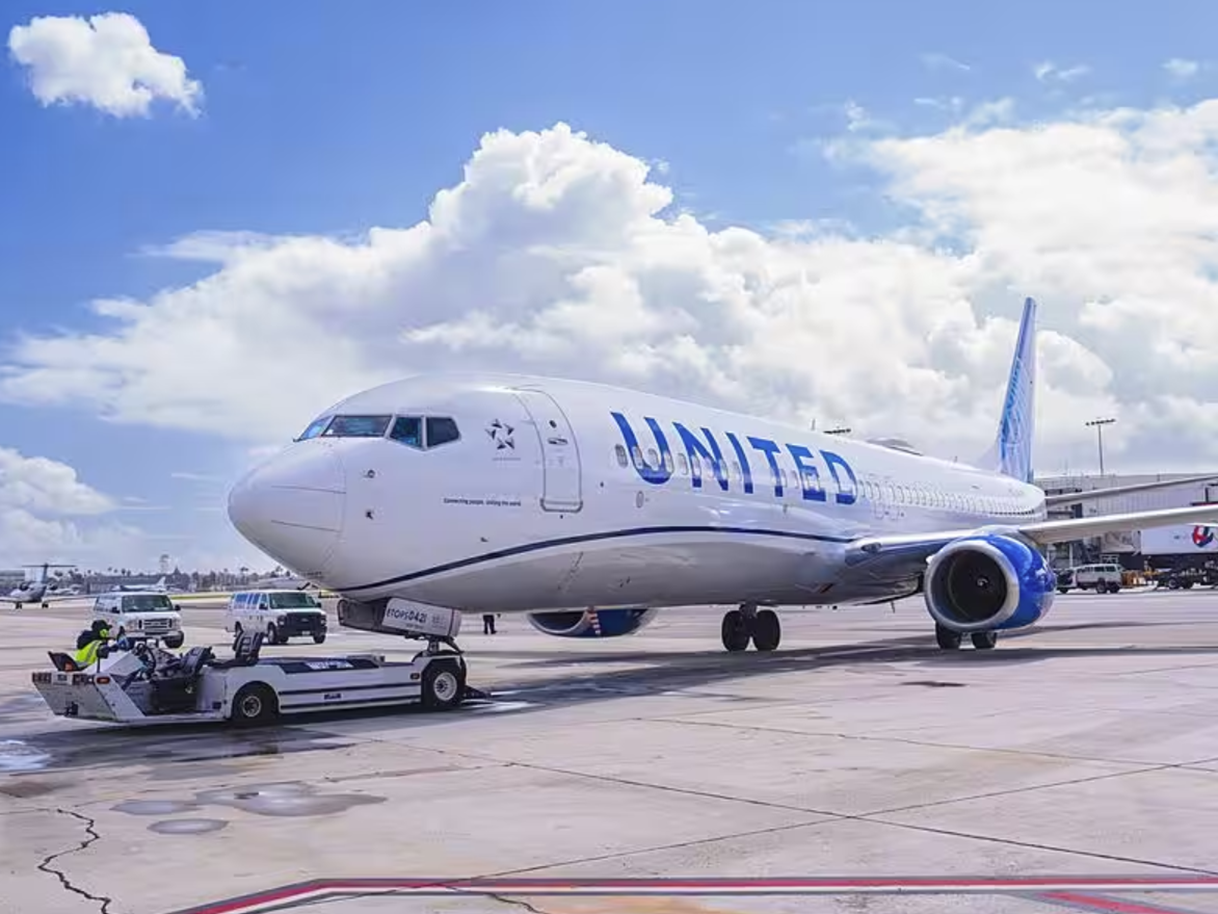
And United is using AI to do a much better job helping customers understand what’s happening when flights get delayed. CEO Scott Kirby explained in an investor presentation on Wednesday,
The goal is to get to a point where anytime there’s a flight delay, we tell customers in clear, plain English that we send them text messages.
We’re going to start to send them videos, like maintenance videos and cool stuff about exactly what’s going on with their airplane and why, and try to give them really good information. Generally, I mean, most people in here fly, and if you know, it’s the uncertainty that’s a killer.
You walk up to a gate and it says your flight’s on time, and you’re supposed to be boarding, and there’s no airplane at the gate. I don’t think that happens at United, but that does happen at some airlines. It infuriates you. Giving people good information. The goal I’ve set for the team is pretend I’m on the flight, and I’ve asked what’s going on with my flight. What would you tell me? I want to tell all of our customers that. We’ve been doing that.
…I got some phenomenal statistics when we do it and do it well, but it’s really hard to do for 6,000 flights a day, especially when there’s weather and it’s uncertain. Thunderstorms. Maybe the airport’s closing, maybe it’s not. You don’t know. It’s really hard to do. I think we’re probably two to three times better than any other airline in the world, just because we’re the only airline that’s really worked on it and tried to do it. We’ve decided that the current path that we’re on is never going to get to the nirvana that we want. We’ve started a brand new work path that’s built native AI, building the right data so that it doesn’t require any human intervention.
The AI will be able to tell you about every flight, and what’s going on with every flight with no human intervention, just from all the other data that we have and everything else that it can see about the system. I think that’ll be great for customers. It won’t only help with customers, it’ll cause more brand loyal customers to fly United. It’ll be unique. It’ll feel different than any other airline in the world when we’re able to do that. I’m convinced we’re going to find all kinds of ways to run our operation more efficiently when we’ve built that. That to me is what AI can do. When we’re building that, we’re going to be able to run the airline better, a lot better than we could before, because we’ve built that infrastructure for Every Flight Story.
United was among the first and really is the best at communicating the reason behind delays, and doing it in clear language that the average passenger can understand. American Airlines has just started on their journey doing this.
I’ve seen messages from United like,
“We want you to know your flight is departing late because we needed to finish cleaning your plane.”
“…our connecting flight to Bangor was canceled due to a lack of FAA staff.”
“…we care about our customers and are just waiting on a few more people before we can take off…”
But actually seeing maintenance videos would be next level amazing, and the kind of thing that I think would help differentiate the airline and not just among aviation geeks. Airlines are notoriously seen as black boxes. That’s the kind of transparency that would give customers confidence
The number one thing they have now is the ramp up of Starlink. Kirby says that they receive “90-plus NPS when we have Starlink on the airplane.” But airlines usually isolate net promoter scores for flights that are on-time to understand the value of their product investments. Delayed flights are miserable. But this would go a long way towards assauging some of the unhappiness around delays, even if it can’t replace getting a customer where they expect to be on schedule.


Sounds great until random passengers start giving suggestions on how to fix the problem.
Have you tried turning it off and then back on?
Clear the cache
Hit it with a hammer
What a novel concept—actually telling passengers the truth.
Airlines have spent years feeding people vague, often untrue explanations about why a flight is delayed or why an aircraft is suddenly out of service. Most frequent travelers know the script by now, and it’s incredibly frustrating. I can’t tell you how many times I’ve dealt with this—American Airlines in particular seems to struggle here—with chronic delays paired with almost no meaningful information.
Passengers are essentially treated like cattle: keep them in place, give them just enough to manage the crowd, and move on. But when something goes wrong, the explanations often don’t pass the smell test. It’s usually either a catch-all excuse or something that’s clearly not the full story. The reality is they almost always know the underlying issue—they just don’t share it.
That’s the real problem. With honest, specific information—whether it’s crew timing, maintenance, ATC restrictions, or cascading network delays—people could actually make informed decisions. Do you wait it out, rebook, or find another way to get where you’re going? Right now, that choice gets taken away because the information isn’t credible.
If United follows through on this and commits to real transparency—not just when it reflects well on them—it would be a meaningful shift. People respond well to being treated like adults. Personally, I’d take the truth every time over the vague, generic explanations we’ve all gotten used to hearing at the gate.excuses they give at the gate etc.
I can’t wait for the bloopers reel from this to hit the internet/social media/memesphere.
Is this better than their current approach? (Lying.)
We really need an EU/UK261 equivalent and to bring back Rule 240, so that when a maintenance issue under the airlines control occurs, passengers get compensated for the inconvenience and that they can get on the next available flight with any carrier (no additional cost to them). These are businesses, and when they fail to deliver, passengers shouldn’t be on the hook, the airline should.
And I will promptly invite them to stick their AI garbage straight up where the sun don’t shine.
@ Tim 1990 Dunn — Broken record!
Because AI customer service is always so good and “honest” about facts. AI customer service is trained to protect the company, not help the consumer.
Why do I care what the mechanics are doing? My concern is when will the plane be fixed. Often if it’s more complicated the maintenance crew won’t know until the begin fixing the problem. Then you spend the next 4-6 hours on a constant rolling delay.
Good leads the way and DL tries to rip people off. Inc magazine has a great article today about DL’s failure and delays with Amazon, for example. Two years behind UA and that is if 2028 target is met,while UA already has 344 planes equipped. It also discusses A.I. and United’s much better, industry leading app (even AA’s is better). Tech is not a Georgia Klan Air syrong suit as seen by meltdown after meltdown. Avante!
The strongest argument against a U.S. version of European Union / UK261 style compensation is that it fundamentally misunderstands the economics and geography of the U.S. airline system.
Europe is dense, heavily rail-connected, and built around shorter stage lengths between major population centers. The USA is a sprawling continental network with enormous weather exposure, chronic ATC constraints, and a hub-and-spoke structure that depends on operational flexibility to remain economically viable. Mandating automatic cash compensation every time a flight is delayed or canceled would not magically create more pilots, more gates, more runway capacity, or better weather. What it would do is dramatically increase operating costs, encourage defensive cancellations, reduce marginal route profitability, and ultimately raise fares for everyone, including people who rarely experience disruptions.
The most intellectually shallow argument from the dullards who advocate for it is the fantasy that airlines can simply “absorb” these costs because they are evil corporations sitting on Ducktail-style vaults of money. That betrays a complete lack of understanding of airline margins, which are notoriously volatile and often razor thin outside of peak cycles. Airlines already overbook less aggressively than they once did, invest billions in operational resilience, and compete intensely on schedule reliability because consumers punish bad performance. Adding a massive compensation regime on top merely creates another layer of regulatory friction that will inevitably be priced into tickets. In other words, passengers end up collectively funding their own compensation pool through higher fares and reduced service to smaller markets.
There is also a serious moral hazard problem. Once compensation becomes automatic and standardized, entire cottage industries emerge to exploit it, exactly as happened in Europe. Claims firms vacuum up payouts, passengers learn to strategically litigate minor delays, and operational decision making becomes distorted around legal liability instead of transportation efficiency. Airlines become more likely to preemptively cancel flights early, because a hard cancellation with controllable downstream costs may become cheaper than attempting recovery operations that risk cascading compensation exposure across the network.
Another underappreciated issue is that EU261-style systems incentivize schedule padding. If every delay carries statutory financial penalties, airlines simply publish longer block times to artificially improve on-time performance. Consumers then spend more time traveling while idiot leftist regulators congratulate themselves for “improving reliability.” It becomes a statistical illusion.
These morons further argue that “Europe has it, therefore America should too,” without understanding that the U.S. aviation market is structurally different in almost every meaningful way. A person flying from DFW to Seatac covers distances that would cross multiple sovereign states in Europe. The operational complexity is not remotely comparable. Treating airline delays as though they are equivalent to a defective retail product also ignores the reality that aviation is a dynamic system constrained by weather, FAA traffic flow programs, crew legality, maintenance requirements, and interconnected national infrastructure limits.
Of course, this doesn’t mean airlines should have zero obligations. The better USA model is targeted consumer protection: mandatory refunds, transparent rebooking obligations, hotel/meals for controllable disruptions, and aggressive DOT enforcement against deception or operational dishonesty. But copying EU261 wholesale in the U.S. would be mostly political theater masquerading as consumer advocacy. Only the most retarded people on earth argue in favor of it.
So sad to read negative comments when a company is simply trying to do better for its customers.
“Damned if you do, damned if you don’t.”
Makes me wonder how these people make it through the day?
“It must be difficult being you. “
@Mike Hunt — You’ve laid out a critique of network economics, but your geographical argument actually proves why the U.S. needs stronger protections, not weaker ones.
Europeans have structural substitutes. If a flight fails, they can take high-speed rail, rent a car, or swap carriers in a dense market. In the U.S., if a legacy carrier’s fortress hub collapses, passengers are functionally held hostage with zero alternatives (unless driving 3 days and 3,000 miles from NYC to LA, on a whim, seems reasonable to you). Because the American traveler is structurally trapped, the financial and personal stakes of operational failure are exponentially higher.
Your argument assumes passenger disruption is a fixed act of God, but airlines treat passenger time as a free externality. When a carrier runs its operation so lean that the slightest hiccup triggers a systemic meltdown, it is shifting its financial risk onto the consumer’s back because passenger misery costs $0 on a balance sheet.
A statutory penalty changes that optimization math. It forces boards to invest in operational resilience (hot-spare aircraft, redundant IT, and realistic reserve crew scheduling), rather than maximizing short-term capacity at the expense of stability.
Schedule padding is a feature, not a bug. Accurate, realistic block times are infinitely better for consumer planning than optimistic marketing fictions that cause cascading missed connections.
A U.S. model could mandate automatic digital payouts via the DOT based on flight tracking data, completely killing off the claims-farming cottage industry.
Vouchers and a stale sandwich don’t alter executive incentives. Only a direct, scalable balance-sheet penalty forces a multi-billion-dollar network to prioritize reliability over razor-thin operational margins. It’s not about political theater; it’s about establishing a real market price for their breach.