American Airlines chief operating officer David Seymour is leaving the job December 31. CEO Robert Isom calls it a retirement. The agreement American signed with Seymour gives him severance on terms normally reserved for dismissal without cause or resignation for good reason. American’s last proxy put the cash severance alone at $2,750,625 for a hypothetical departure on December 31, 2025, with total value over $7 million. The airline hasn’t disclosed the final amount for this exit.
[T]he Company will provide Mr. Seymour with the severance payments and benefits pursuant to the covered termination provisions set forth in his previously disclosed Severance Agreement with the Company dated as of September 20, 2023
JonCarlo “JC” Gulbranson takes over January 1, reporting directly to Isom. He’s the executive I flagged as Seymour’s likely successor in August, when American handed him much of the job.

Credit: American Airlines
Aviation watchdog JonNYC shared Isom’s message to employees. Isom thanks Seymour for his friendship and his work bringing US Airways and American together. Before joining America West in 1999, Seymour led a platoon in the 82nd Airborne. Just last month he went back to West Point and Fort Bragg with Medal of Honor recipients to meet the cadets and soldiers who followed him there.
AA pic.twitter.com/9919XVOKrW — JonNYC (@xJonNYC) November 20, 2026
What American Agreed To Pay
Under Seymour’s contract, cash severance is 18 months of salary plus a year and a half of target bonus. He also gets money for 18 months of health premiums, and his stock can keep vesting during those 18 months. Between cash, stock, health premiums and flight benefits he’d already earned, American’s illustration in its latest proxy came to $7.13 million.
Separately, Seymour remains eligible for his 2026 annual bonus. His advisory job pays $25,000 a month for up to three months ($75,000), plus executive benefits. His contract calculates severance using pay immediately before termination. Seymour has to sign a release and honor his existing restrictions, and American says it’ll file the full transition letter with its annual report.
Those flight benefits include lifetime confirmed personal travel in any cabin for Seymour and his immediate family, Admirals Club access and another 12 confirmed roundtrips a year for friends and other relatives.
The Handoff Started In August
When American put Heather Garboden in charge of the customer experience, they gave her two bosses. She was supposed to persuade customers to pay more to fly American while reporting both to commercial and to the executive responsible for getting flights off the gate on time. When a pilot asked Seymour in 2022 what American was doing about poor customer satisfaction, his answer was “I think we’re on a good path to get there.” He went on to talk about running the operation. What was Garboden supposed to do when the catering truck was late and the choice was a delayed departure or six hours in first class without meals?
In August Garboden began reporting solely to chief commercial officer Nat Pieper and picked up catering, reservations and service recovery. Pieper also got marketing, brand, advertising and partnerships as American broke up Global Engagement head Ron DeFeo’s group. Caroline Clayton took corporate communications. Then I reported network chief Brian Znotins was leaving as Pieper set out to rebuild flying in big cities where American had pulled back.
Seymour actually picked up American Eagle in August. But Gulbranson got the airports and operations planning on top of flight operations, flight attendants and the control center. Now he gets safety, regulatory compliance and aircraft maintenance, too. Corporate security goes to government affairs chief Steve Neuman. American will tell employees in December who gets the regionals.
If this hadn’t actually been decided already, then August was Gulbranson’s audition. Isom’s memo introduces the retirement as the next step in the August reorganization. Seymour’s contract even lists a material reduction in responsibilities as grounds that can qualify an executive for severance. We don’t know who first proposed retirement, but this looks to me like a negotiated handoff that was already well underway.
American Had To Retrofit Planes It Had Just Retrofitted
While there are numerous stories like it – such as insufficient oversight of outsourced Maintenance, Repair, and Overhaul – I always think of a few things about Seymour’s tenure. One is explaining why the airline wouldn’t invest in RFID baggage tags like Delta despite perpetually bottom of the industry performance in mishandled bags. Another is failing to fix ‘Concept D’ business class seats that rocked. And the biggest is mismanaging cabin retrofits of the domestic fleet.
Seymour was running integrated operations when the first American Airlines 737 MAX introduced the cabin that would go into its existing 737s and Airbus A321s. A flight attendant eventually asked whether anyone had built a mockup before committing to it. They hadn’t. Doug Parker said network planning had largely driven the design. Seymour called it “a mistake that should not have happened” and later explained what American had changed. For subsequent cabins they’d bring in real seats, build overhead bins and try pushing a service cart through. In his words, “We do mockups and not just you know ‘tape it out.’”

Flight attendants working in the back galley had to help passengers get out of the lavatories because the two doors opened into each other and caught. The sinks were too shallow for the water pressure. I washed my hands on the inaugural flight and got water all over my shirt and pants, as did everyone else.

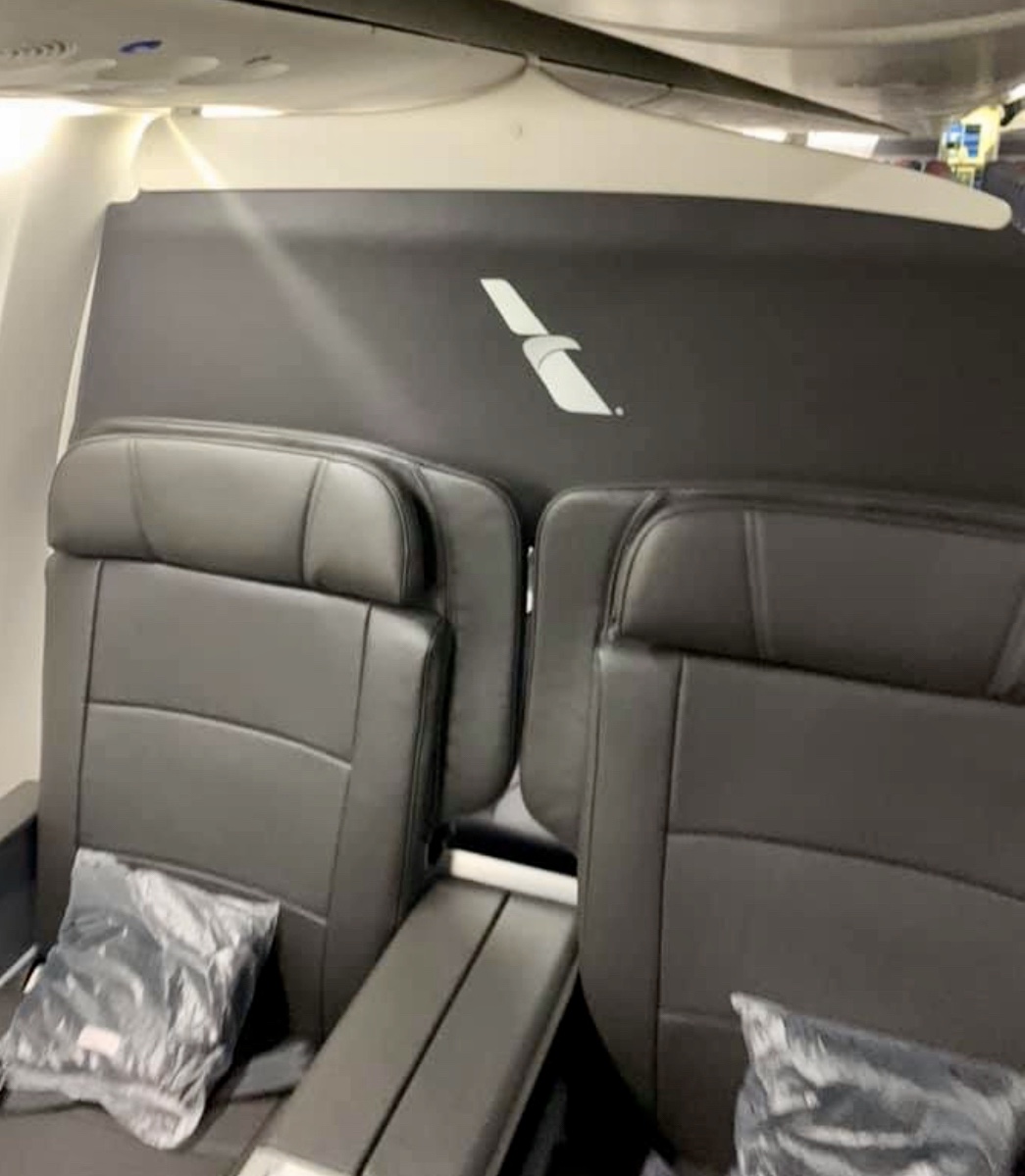
Up front, the seat supports took up the space where a first class passenger was supposed to put a bag.

American was still installing the interior after deciding to fix it. Project Oasis put the new seats into existing 737s. Then Project Kodiak went back into planes they’d already redone to fix the storage, give the first row some legroom back and add the device holders coach passengers already had.
How Well Did American Actually Run?
After the troubled summer of 2019, American gave Seymour responsibility for all operations. The following June he got the chief operating officer title and added flight service. For years my frustration was that when the operation fell short, the answer seemed to be to give the executive running it a bigger job.
In 2023 American completed its highest share of scheduled flights since the merger and edged out United on domestic on-time arrivals. And spreading the Dallas schedule from nine daily rushes to 13 smaller ones helped passengers this year. The hub chief reported half as many missed connections in the first 17 days.
But by 2025 American ranked eighth of ten network airlines for on-time arrivals. And the Transportation Department’s new figures show that Delta and United both beat American every single month from January through September 2026. Counting domestic flights including regional partners, American came in at 73.30% on time, United at 76.20% and Delta at 78.31%. American canceled 46,059 flights, or 2.99% of its schedule, against 1.75% at United and 2.25% at Delta.
Credit: American Airlines
One clue to what management valued is in that same proxy. In August 2025 the board gave Seymour a retention stock award worth about $2 million at target. The entire award turns on avoiding cancellations American counts as controllable. A flight that runs three hours late still counts as a success on that measure. The award measures performance through June 2027, so it can still pay out after he’s gone.
Gulbranson is well regarded inside American. He started at Northwest, joined US Airways in 2008 and helped integrate flight operations systems during the merger. He’s run both the control center that decides what to cancel and the customer care operation that hears from the people who get stranded.

Credit: American Airlines
Listen to the two men describe January’s Winter Storm Fern. Seymour said the technology worked as intended and that he hadn’t seen reports of flight attendants sleeping in airports even as his boss Isom acknowledged crew had slept on floors.
Gulbranson went before the pilots’ union board and told them where management had misjudged the storm and overestimated how quickly they could recover. The union’s account called his assessment “unvarnished.” That’s one reason I’m glad he’ll be running the operation the next time it snows in Dallas and up the East Coast.


Until Isom and his gang of America West misfits are gone this is nothing more than rearranging the deck chairs on the Titanic.
AA is finally addressing the chronic issues that have hurt AA and passenger reason for avoiding them.
DFW is a sprawling mess that AA cannot yet manage anywhere near as effectively as DL manages ATL while CLT is overscheduled.
The most recent DOT data, however, shows that AA is operating far closer to UA than it has in the past.
AA’s on-time is within a couple percent of UA – both of which are multiple points behind DL which leads the industry in on-time according to the most recent DOT data.
It is UA that has the industry’s worst baggage even though AA is right above them.
The real improvement is in AA’s invol DB performance which is now below industry average. in fact, it is F9 that singularly is below industry average showing how rare invol DBs are on other carriers – and non-existent on DL even though DL has almost 2X more voluntary DBs than AA.
also worth noting that, for the 3rd quarter, DL led the industry in domestic enplanements, taking the lead from AA a year ago. I suspect it is precisely AA’s poor handling of IROPS that cost it the title of being the US’ largest domestic airline.
and for those that still cling to old advertising, WN was the 4th largest US airline based on domestic enplanements in the 3rd quarter.
#GoldenParachute
Damn!