An associate editor of the Financial Times (and CNN global economic analyst) wrote on Sunday about Southwest Airlines’ operational challenges as an allegory for capitalism. And what usually happens when someone writes about the airline industry to score points, without actually knowing very much about the airline industry, is that they get their facts wrong. And as a result their attempt to spin it into a broader tale about capitalism falls flat.
In a piece entitled, “Hyper-efficiency is bad business: Southwest shows management by numbers has gone too far” they could have simply said that Southwest Airlines underinvested in technology. That’s true, as the once-small airline grew larger than its infrastructure really allowed. But the first canard – mixed with factual error – is to focus on fuel hedging and stock buybacks.
But in 2004, when Gary Kelly took the helm, employees (who were subsequently called “cost units”) took a back seat to capital management. Kelly financialised operations with a fuel-hedging programme, and focused everyone’s attention on increasing return on invested capital. Why pour money into updating technology systems, when you could do more share buybacks instead?
First of all, Southwest didn’t begin hedging fuel under Gary Kelly’s tenure as CEO. It started when Herb Kelleher was CEO, in 1994.
By the way Southwest was first to institute an e-ticket system, a technology investment advocated by CFO Kelly. And they’ve saved more from fuel hedges than they paid out in stock buybacks.
More importantly the buybacks didn’t prevent Southwest from investing in technology.
- Other airlines spent more on buybacks than Southwest. Between 2014 through 2019, American Airlines spent over $12 billion and Delta $15.3 billion in dividends and buybacks.
- Even after the buybacks Southwest could have invested more in tech. They had the strongest balance sheet of any airline heading into the pandemic.
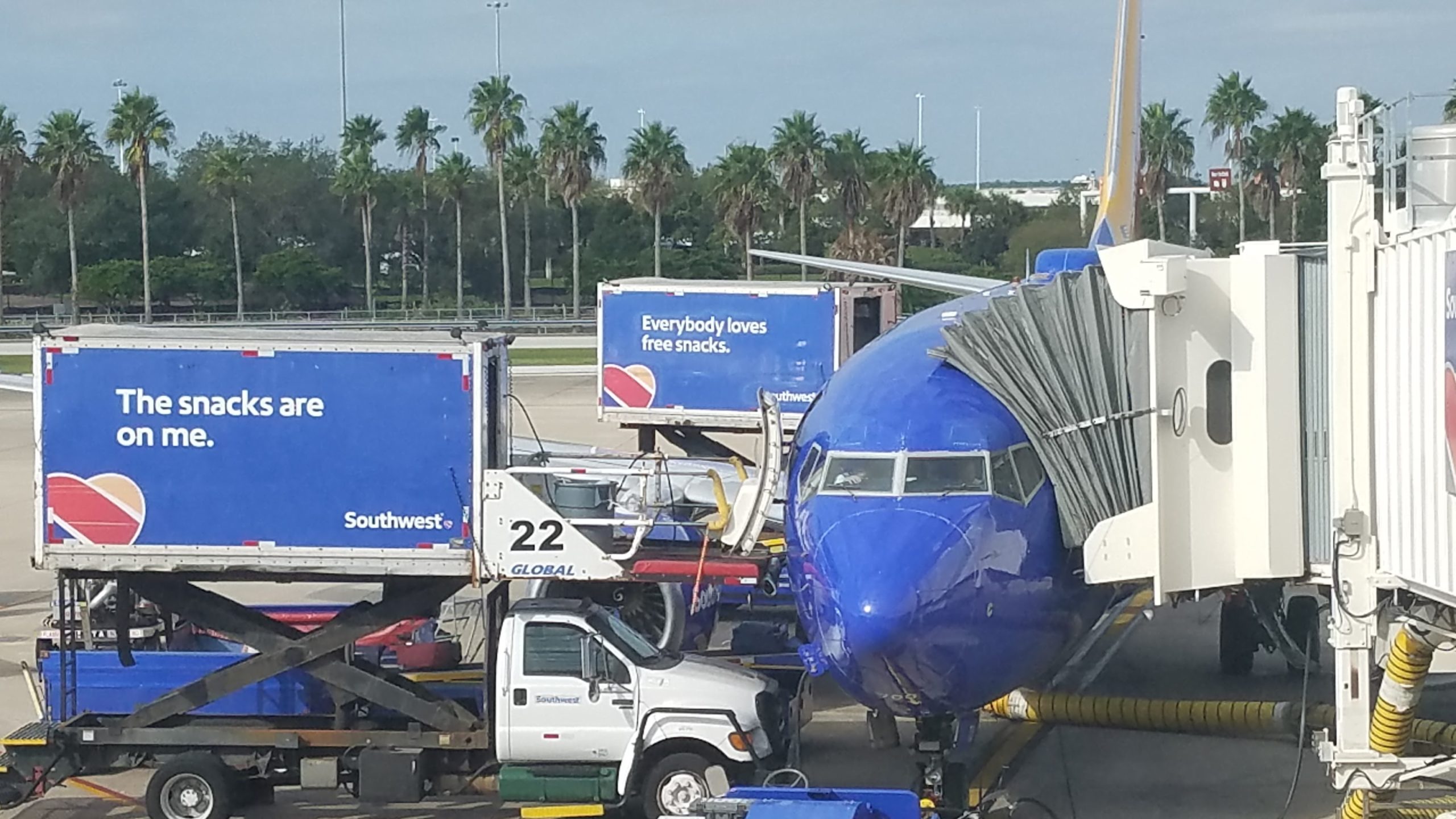
Southwest Airlines co-founder Herb Kelleher is usually a hero in these stories, contrasted with ‘bean counters’. However Kelleher was famously cheap. Southwest became known for serving peanuts as a free snack under Kelleher’s leadership, and peanuts stood for how frugal the airline was: other airlines served meals while Southwest served just peanuts. At the time some Southwest executives felt they would need to increase their investment in inflight food. However Kelleher shot that down, “Do you know what the difference in cost is between peanuts and Snickers?”
The author tries to pivot from Southwest to dumping every complaint about corporate America together,
Consider the rise and fall of Jack Welch, the former chief executive of General Electric who turned the manufacturing company into a too-big-to-fail financial institution. Or the cost-cutting that led to crises such as the Boeing 737 Max crash, Pacific Gas & Electric equipment which caused wildfires in California, and the General Motors ignition switch recall.
Jack Welch retired over 20 years ago. And far from driving shareholder value, post-Welch GE spiraled into irrelevance. It was not, in fact, ‘too-big-to-fail’ rather it largely failed. (And too big to fail is usually a complaint about corporatism, government’s kowtowing to big business, rather than to a market unfettered by government involvement.)
I don’t think you can ask a reader unfamiliar with the details of GE, or of Boeing, to ‘consider’ them without actually discussing them. Here they’re merely throwaway lines.
The crashes of two 737 MAXs was a tragedy and there were design mistakes that Boeing made in its quest for cockpit commonality with earlier versions of the aircraft in order to make it attractive to airlines. But angle of attack disagreement isn’t something that happened often. For instance, American Airlines never had a single issue with trim or angle of attack in over 7000 flights before the plane was grounded, and never had angle of attack issues in over 700,000 hours of Boeing 737-800 flying and it’s the same part.
In contrast, in the Lion Air crash a faulty aftermarket angle of attack sensor was used, maintenance issues went unreported, and pilots were poorly trained. That accident would never have happened in the U.S. though it’s U.S. business processes that’s being critiqued.
They’re not trying to make a point about Southwest. They’re trying to use the Southwest meltdown to make a point, to advance their own agenda, which is to critique ‘financial capitalism’.
Certainly, this type of management brought prices down after airlines were deregulated in the late 1970s, and introduced new, low-cost competitors. But it also increased concentration (just four airlines own 80 per cent of the US business), exported repair jobs to less well-regulated countries like El Salvador, Mexico and China, and led to lower salaries and higher workloads for airline employees.
The term they use financial capitalism generally refers to seeking profit from trading stocks and other financial products, essentially expecting a return on investment (though sometimes the implication is a ‘quick buck’).
However the analysis offered here simply doesn’t match what happened in the airline industry.
- It’s supposed to have meant fewer jobs (from outsourcing) but there are more people who were employed by airlines in the U.S. than before prices fell and flying expanded.
- There has been concentration since deregulation, but the author admits it’s led to lower prices, not higher prices, so it’s been good for consumers.
- And the reference to repair work moving to ‘less well-regulated’ is meant to be scary without citing any actual data. In fact flying has gotten safer!
- Meanwhile the implication is that workers are harmed while investors get rich, but this only works if we ignore the workers who actually benefit (who are in fact poorer, and more morally deserving under this framework).
Southwest has made big investments in technology over the last several years, but they haven’t done enough and they haven’t done it fast enough. They shed employees during the pandemic, and while they’ve rebuilt their workforce many of those people (~ 18%) are new in the last year, so context has been lost. That’s a result of the pandemic.
A confluence of events, from weather to staffing to technology, combined to drive the meltdown which will cost Southwest more than more investment would have, in other words it’s a story of management error more than greed. Management lost free cashflow rather than increasing it.
Ultimately Southwest underinvested in technology because, while they knew they needed to get better, there was little pressure to do so let alone quickly. They’ve been easily one of the best airlines for employees, shareholders, and customers which is why they’ve grown to carry more domestic airlines than competitors. The problem isn’t consolidation but lack of competition (here, not the same thing!). Prices have been going down since deregulation so consolidation isn’t the problem. But airlines are a heavily regulated sclerotic business which limits innovation. Everyone does basically the same thing with variation only at the margin. There wasn’t real pressure on Southwest.. until now.
The meltdown was a tragedy for people whose holidays were ruined, but it’s not an easy story about industry consolidation (this didn’t happen because Southwest bought AirTran) or ‘financial capitalism’ (Southwest was the story of a company that’s highly unionized with a great culture). Trying to make it an allegory for a hobby horse doesn’t work when the facts aren’t there.



It is my observation* that it seems that anytime a company starts thinking of employees as “cost units” or “fungible” rather than an investment, they soon run into trouble. Training is cut, workload is substantially increased, GSE is stretched, and the carrier suffers more frequent service failures.
Good customer service and ramp employees don’t just happen. A company has to create them and give them the tools they need. Outside contracted employees rarely care for your company’s customers as much as your employees and it shows in forward-facing performance.
*Specifically customer service, GSE, and ramp employees.
Fantastic analysis, Gary! I hope FT sees this and does a better job of balancing their stories in the future…
It is really quite simple. Southwest had a slow plan to upgrade their IT because they have been able to get by with the consequences of not having adequate IT up this point. They got burned so badly this time that it was clear they forfeited all the savings from not spending
And they will face a level of scrutiny like they have never faced before from the government
Excellent commentary, Gary, reflecting your knowledge of the Southwest Airlines and the industry. Clearly the FT author has a vendetta that he’s trying to support.
When something goes wrong, there are those who will offer their theories of why it went wrong. Each of those has their specific audience. And, as the head of one well-known news outlet said, “We give the viewers what they want to hear.”
Let’s suspend reality for a minute and say that SWA has been engaging in evil capitalism. It has been doing so over the years. Why have these critics waited until now to attack SWA? Is evil capitalism okay if everything is running smoothly? Is evil capitalism only bad when there’s a meltdown? The timing of their attack on SWA is hypocritical, opportunistic, and self-serving.
I’m not a fan of SWA. But, let’s give a fair characterization of SWA’s situation.
While this is nice enough commentary and I generally agree with it, you should really spend 2 minutes or so to proofread before you send out.
You write this: They’ve been easily one of the best airlines for employees, shareholders, and customers which is why they’ve grown to carry more domestic airlines than competitors.
What does it mean when you say “They’ve…grown to carry more domestic airlines than competitors”? Do you mean passengers? It’s stupid slip ups like this throughout that detract from the quality of your generally interesting analysis.
Great analysis
One thing I would add is that Southwest is running a point-to-point network not a hub network. Point to point works great when everything is running smoothly. However, when there are serious network disruption events, the technology solutions required to analyze and get everything back to normal needs less sophistication when running a hub network than in running a point-to-point network. Strong IT systems in a point to point network can both help rapidly minimize the disruption by optimizing how to get the most planes in places where demand is needed over the coming x days, as well as being a long-term advantage in identifying opportunities to optimize the point to point routing to gain even greater efficiencies. Here, Southwest had IT systems that could not do what was needed; whether or not they knew of such deficiencies and the problem/costs they’d incur if there was a major disruption is the key question.
Gary,
Nice article. Many so called journalists are trying to continue this narrative and it works. You can’t fix stupid.
Posts like this are why I tolerate the MAGA morons and come back to the site, even though I sympathize with their beliefs. Great job, Gary.
Tragedy? ??
Given the definitive definition of the word,what happened with Southwest hardly qualifies…misfortunate ,major inconvenience etc…apt synonyms…
@khatl: That’s the most cogent and accurate description I’ve read of the fiasco.
@Darkstar – for some passengers it was
Excellent article as always, thanks, Gary ! I’m also agreed with the commenters about the IT investment angle (which you also covered) as well as the Hub-&-Spoke Network being better equipped to handle this situation. Many of us truly appreciate your blog and your insights !
Capitalism isn’t perfect, but it’s the best economic system there is.
I would also note that our US airline industry is currently doing an excellent job getting Americans where they need to go at affordable prices. The Southwest Christmas Meltdown is truly an outlier. On any day with halfway decent weather, US airline cancellations are typically near zero. And once you get away from the ultra low cost carriers, comfort on US airlines is reasonable — especially considering what the average fares are. US airline customer service is better than almost any other industry, with a lot of innovative “self help” features that make things easy and fast. I would also note that most US airlines did away with a lot of the annoying non-refundability rules that were plaguing the industry before the pandemic.. Air travel in America is certainly our best travel value: it’s often shockingly cheap now compared to, say, hotels and rental cars.
So I’m pretty sure the best thing government could do to further regulate competition in the airline industry is absolutely nothing.
@ Gary,
While your analysis is thorough, one of your statements, re: Jack Welch was off the mark. Yes, G.E. fell into irrelevance, but his many disciples managed to thoroughly hose up American companies.
Boeing was a marvel of engineering brilliance, oft times betting their future on revolutionary products. Then the bean Counters took over. The 787 is a marvel of revolutionary design, thoroughly screwed up by outsourcing mfg. The 737 was a great plane. But they went cheap by adding on “Max” instead of building a new airframe. And they kept putting off the building a new airframe to beat back Airbus to the thin routes. And now, perhaps too late,
And finally, the bean counters lost touch with reality by moving HQ to Chicago. And to be in closer contact with its primary customer, Congress, they moved to Virginia. And to cut pension payments to their engineers, they it almost mandatory fir engineers, who design planes, to retire years earlier.
This is all on the bean counter shoulders of Welch’s disciples.
@Alan – Boeing declined as a company in many ways, they decided to move headquarters to DC when the Chicago tax incentives expired and their future because government appropriations and regulatory work, that’s sad but it happens. Companies decline, and others rise!
Any company that used my tax dollars for stock buybacks should have to repay it. That was not what it was meant for. Pandemic funds were meant to save the industry during the shutdown of Covid. Not to increase bonuses of upper management due to supposed stock value.
Wow, [vulgarity redacted – gl]? Apologists abound, the airline dropped the ball, period.
I stopped reading Financial Times because I wanted to read about finances and business instead.
I dropped my subscription to the FT back in ‘07 or so when it seemed to becoming a socialist propaganda tool. I’ll add in that Forbes has taken that path too.
So no surprise from me about their diatribe.
The oft-repeated notion that point to point airlines are more subject to operational problems and that is why WN had more problems is patently false.
Southwest has often simply skipped a station that has operational problems. A flight like MSY-DAL-ABQ-LAX just overflies DAL if there are problems there. That doesn’t work every time but neither does simply cancelling an out and back flight for network airlines. not all network airlines route crews or planes HUB to spoke city and back.
Airlines that have had major operational problems in hubs have the crew and aircraft tracking systems to reset their operations at the end of the day. WN does not have those systems. WN crews reported having to phone crew scheduling to tell them where they were while other airlines track crews automatically as they scan their badge onto a flight at a gate.
For the willingly ignorant and angry here, and we all know who you are (the shrieking gives it away), capitalism is the greatest economic system in the history of mankind.
While any system executed by humans will have its villians, no system has created more wealth, nor lifted more people out of poverty, from all races, religions, and ethnicities, than has capitalism. No other system comes close. That FT would publish this kind of mindless prattle is no surprise, it became a socialist mouthpiece decades ago.
Preaching shrill commie fantasies is a great business plan for FT and may sait the rabidly turgid dreams of the emotionally fragile and morally bereft, but it will have precisely zero impact on Southwest’s long, expensive climb back into a place of trust with the flying public…
In the end it’s the stingy man (SWA) who pays the most.
“Hyper-efficiency” comes with increased risks of massive failure and potentially more problematic recovery following a massive failure.
It’s not an indictment of “capitalism”. It’s a recognition that our financial system incentivizes get rich quick(er) behavior by company management and share”holders” even when it comes with longer term systemic risk and inability to recover as easily from massive failure.
Next time airlines seek a bailout, remember that the industry bailouts are bailing out company management and share”holders” at the expense of consumers (and even the average employees) in various ways.
I’m sure that the “inability to recover as easily from massive failure” would be greatly enhanced by a few more European-style puntative regulations lol.
You may now return to your regularly scheduled shrieking…
I believe media could invest in AI journalism and they could give their readers exactly what they want to hear minus employee benefits. The truth is out there. Meanwhile I cherish reality like this article. Bad grammer and all.
We live in strange times. A paper called the Financial Times attacks financial capitalism.
This seems to be a common theme in aviation reporting recently. I’m finishing up reading _Flying Blind_ about the MAX and its thesis is the same: Jack Welch, Ronald Reagan, Donald Trump, and stock buybacks all directly led to the MAX disasters. I’m no fan of stock buybacks and there is no doubt that Boeing took a lot of missteps in the development of the MAX (in particular on the man-machine interface of the aircraft). I’ve learned that when I read reporting on aviation like this, I need to try to glean the few nuggets of truth from the pile of you-know-what that fills most of the works. It’s also the reason I see few people trusting the media anymore. When I read articles about aviation filled with what I know to be factual errors (I have >25 years experience in aviation, mostly in development test – both ground and flight), then how many factual errors are there in articles where I don’t have the experience to judge? I just can’t trust what I read.
“ European-style puntative regulations”? ROTFLOL (even if ignoring the made-up “covfefe”-“word” and replacing it with punitive).
EU countries go cheap when it comes to ordering damages be paid by airlines and punt on awarding big damages. Punitive damages are generally negligible in the EU in comparison to the US. The US, on the other hand, is the goldmine for trying to claim and collect on damages — both compensatory and punitive damages — as a consumer.
Contrary to the beliefs of the Lord Trump worshippers around these parts and elsewhere: the FT is no bastion of anti-capitalist sentiment; and much of Europe — even much of “socialist” Scandinavia — is more of a big capitalist paradise than they realize. I’m in a European country today where people with $500 million+ in assets can easily have their entire estate passed to their descendants/relatives without any inheritance/gift/estate tax applicable — as long as they aren’t US persons — and no convoluted games with lawyers and financial advisors required to do that. And this is in one of the most “socialist” places in the EU.
Oh well… writing while laughing at you can be hazardous. Shriek harder GUwonder… i like it.