United Airlines has Brooks Brothers amenity kits in business class. The Brooks Brothers branding is prominent, the United branding is not.
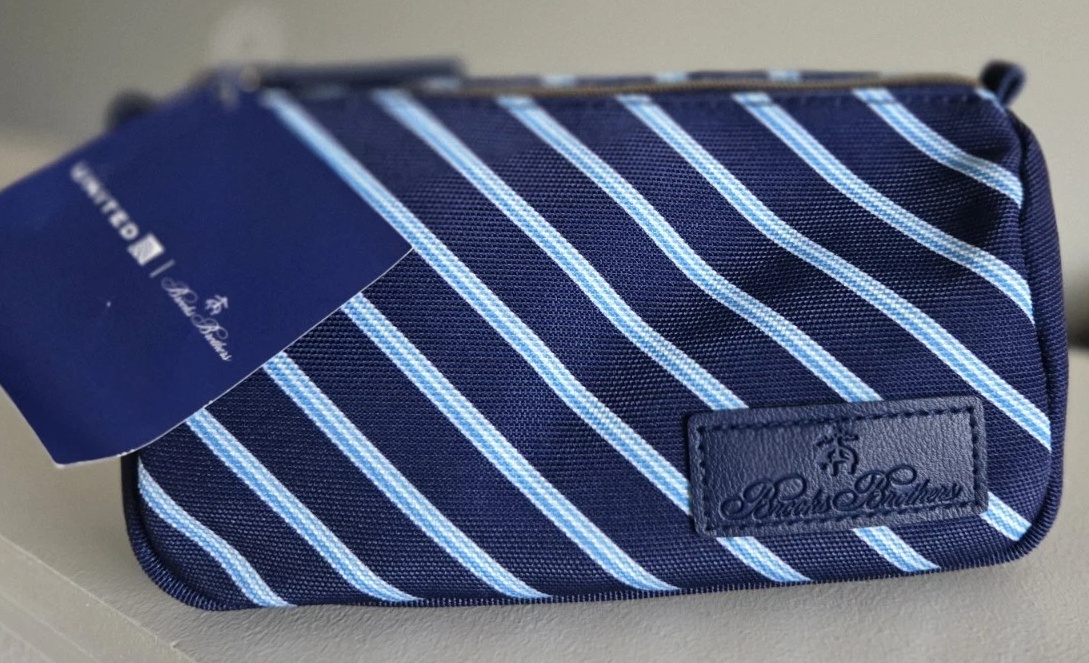
The story of why that is tells us a lot about the economics of amenity kits, and marketing to business class passengers. But flyers thing it’s strange.
@garyleff I find it amazing (as in amazingly dumb) that United would hand out Polaris amenity kits that are missing either of the words "United" or "Polaris" or any kind of logo or identification other than "Brooks Brothers". The only United logo is on a tag you have to remove.
— InsideCableNews (@InsideCableNews) March 3, 2026
Brooks Brothers was an incredible brand, peaking in the mid- to late-20th century. Some people still remember the name, but it’s a shell of its former self. Founded in 1818, they sold conservative business attire rather than chasing trends. They outfitted Presidents (ever since Madison!) and were known for Lincoln’s frock coat. They were a default uniform for conservative professions.
But they spent years expanding into outlets and value channels, discounting, and offering entry-level products. They milked the brand, and no longer offered exclusivity. The product quality was seen to suffer as well, and they lost their domestic plants in 2020 bankruptcy. The brand was acquired by Authentic Brands Group + SPARC, which licenses the name.
And they need to burnish the brand and widen awareness with premium customers. So they’re welling to invest in putting it in front of United Airlines long haul business class passengers. An amenity kit is perfect for this:
- An amenity kit is both about delivering useful items to the passenger for use inflight
- It’s also a nice branded takeaway.
- Business class is focused attention from premium customers
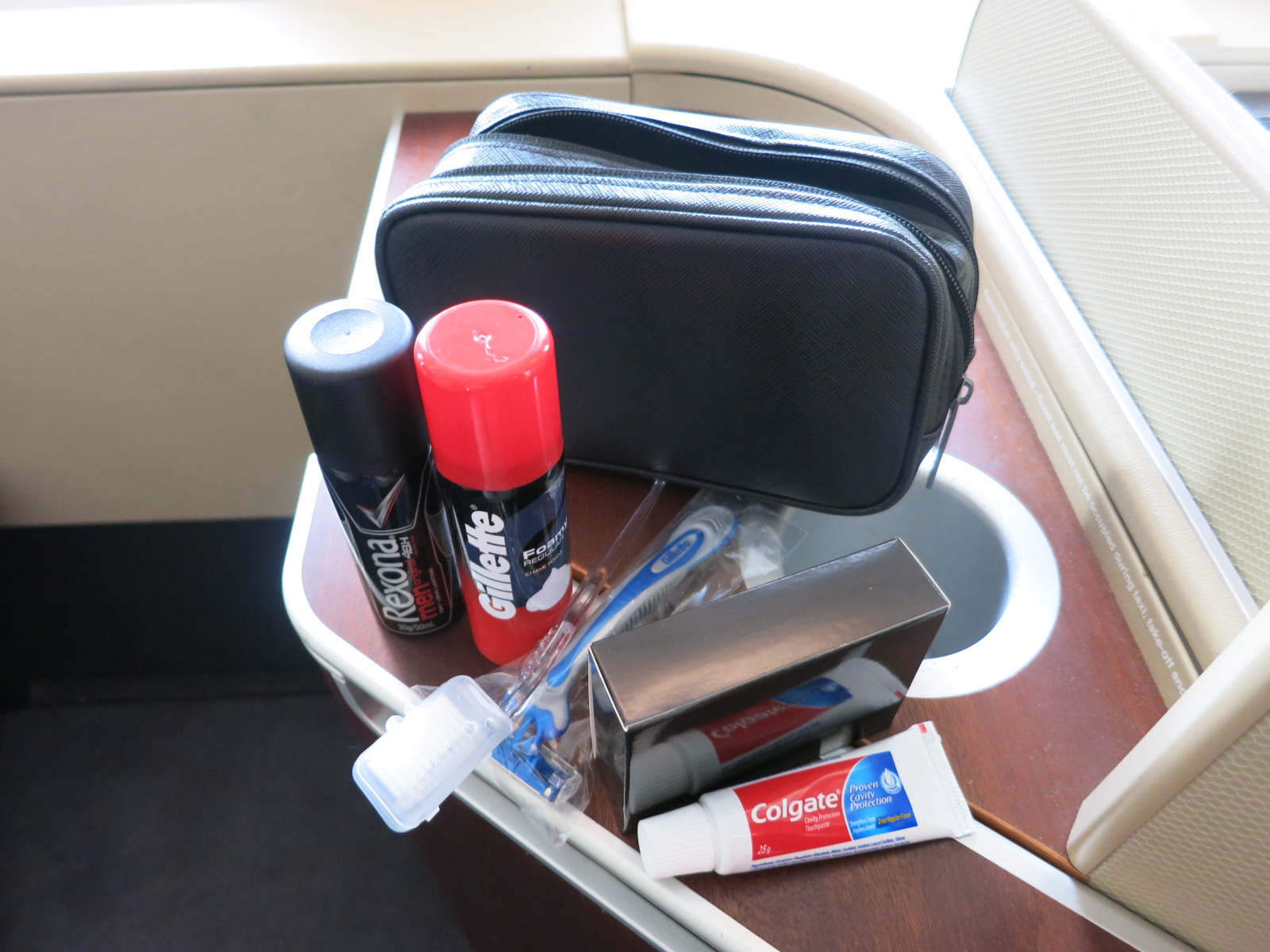
Key elements of an amenity kit are:
- Useful inflight items. A good kit ought to include toothpaste and toothbrush; comb; tissues; hand sanitizer; perhaps cologne; a pen (for those countries that still require paper forms); mouth wash; moisturizer; chap stick; body lotion.
- Premium brand partnership. Singapore Airlines always stood out to me for large-sized amenities, not just small sample sizes. For years they offered Ferragamo, hard to pick a more premium name. I particularly liked Ferragamo Tuscan Soul. Full-sized premium items are great for my home guestroom bath. It introduces the premium passenger to the premium brand, and associates the premium airline product with high quality.
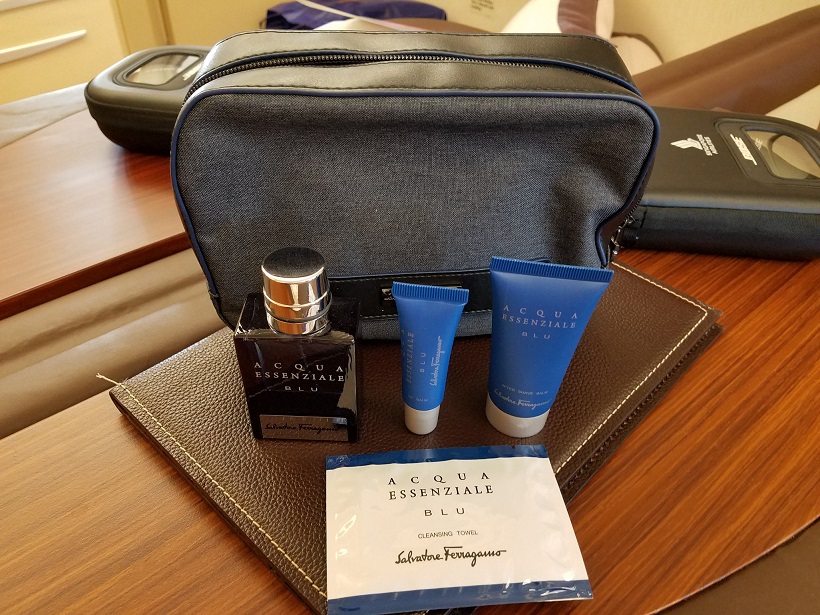
- A useful premium bag as a takeaway. Not only is it a reminder of the flight, but it’s a cool giveaway that leads to telling stories about the flight and airline to loved ones at all, both spreading the word about the product and reinforcing positive emotions about the airline. For many years I used an ANA first class amenity kit as my shaving bag. For the past three years I’ve used an old Cathay Pacific one.
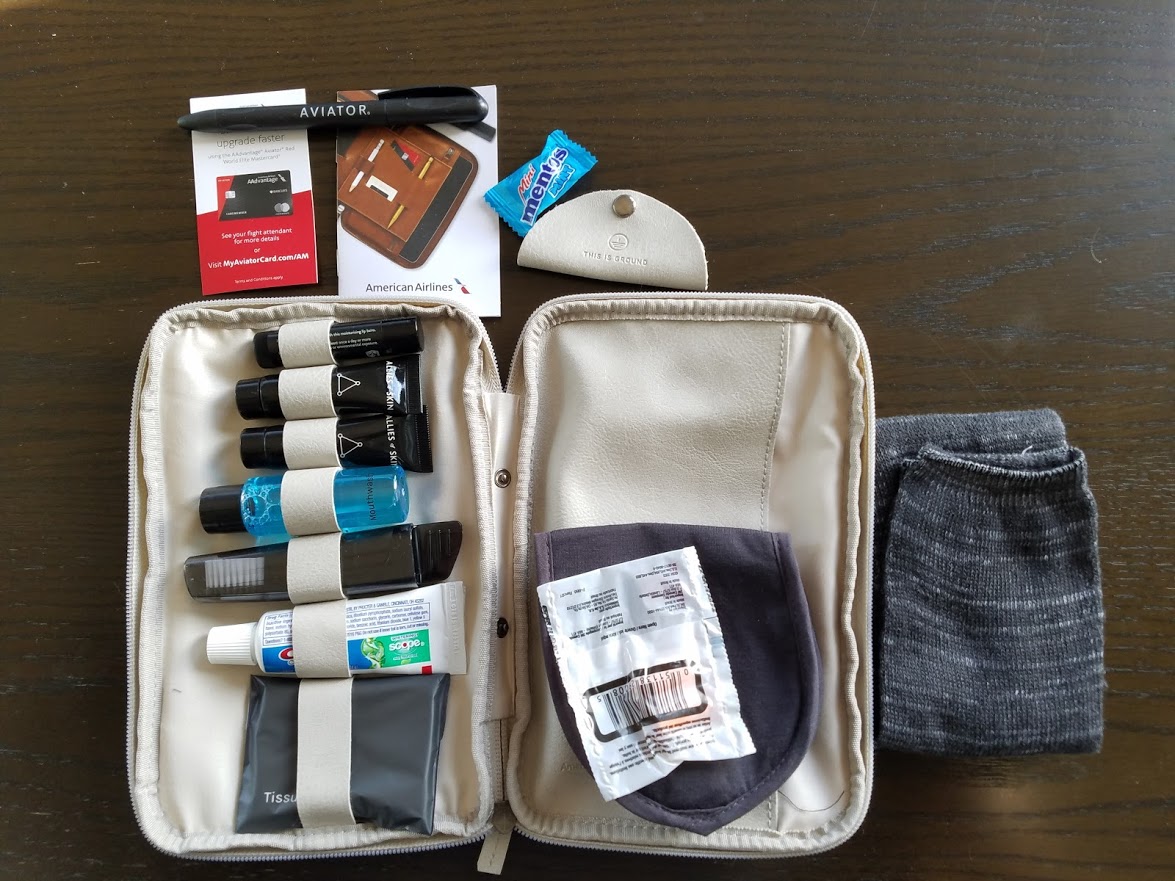
The way amenity kit partnerships often work is that the brand is subsidizing the kit, rather than the airline paying a licensing fee for the brand. That’s certainly how it’s working with the United-Brooks Brothers partnership.
Here are the main structures airlines use in these sorts of deals.
- Brand pays the airline. This is most common. The cosmetic or lifestyle brand buys exposure to a high-value potential customers. A brand supplies products at low cost or for free. Sometimes the brand also contributes marketing dollars or pays a placement fee. In exchange, the airline features the brand name on the pouch, includes product samples, and may even cross-promote retail products.
This is a great marketing channel when high income travelers are bored. The trial-sized sample conversion rate can be strong. I know I’ve used shampoo and body wash brands at home that I first tried in hotels for decades.
- Cost-sharing partnership. The airline pays for the pouch, brand supplies products at deep discount, but there’s no licensing fee. Co-branding benefits both. This arrangement is more likely with an already-strong brand, so it’s mutual marketing rather than sponsorship.
- Airline pays licensing fees. This is rarer, but happens where the partner is a luxury fashion brand, the airline wants the prestige association and the brand isn’t looking to place trial products. You might see this with Bvlgari or Ferragamo. While the airline would pay a fee, the products would still likely be discounted. This was common around 2005 – 2015.
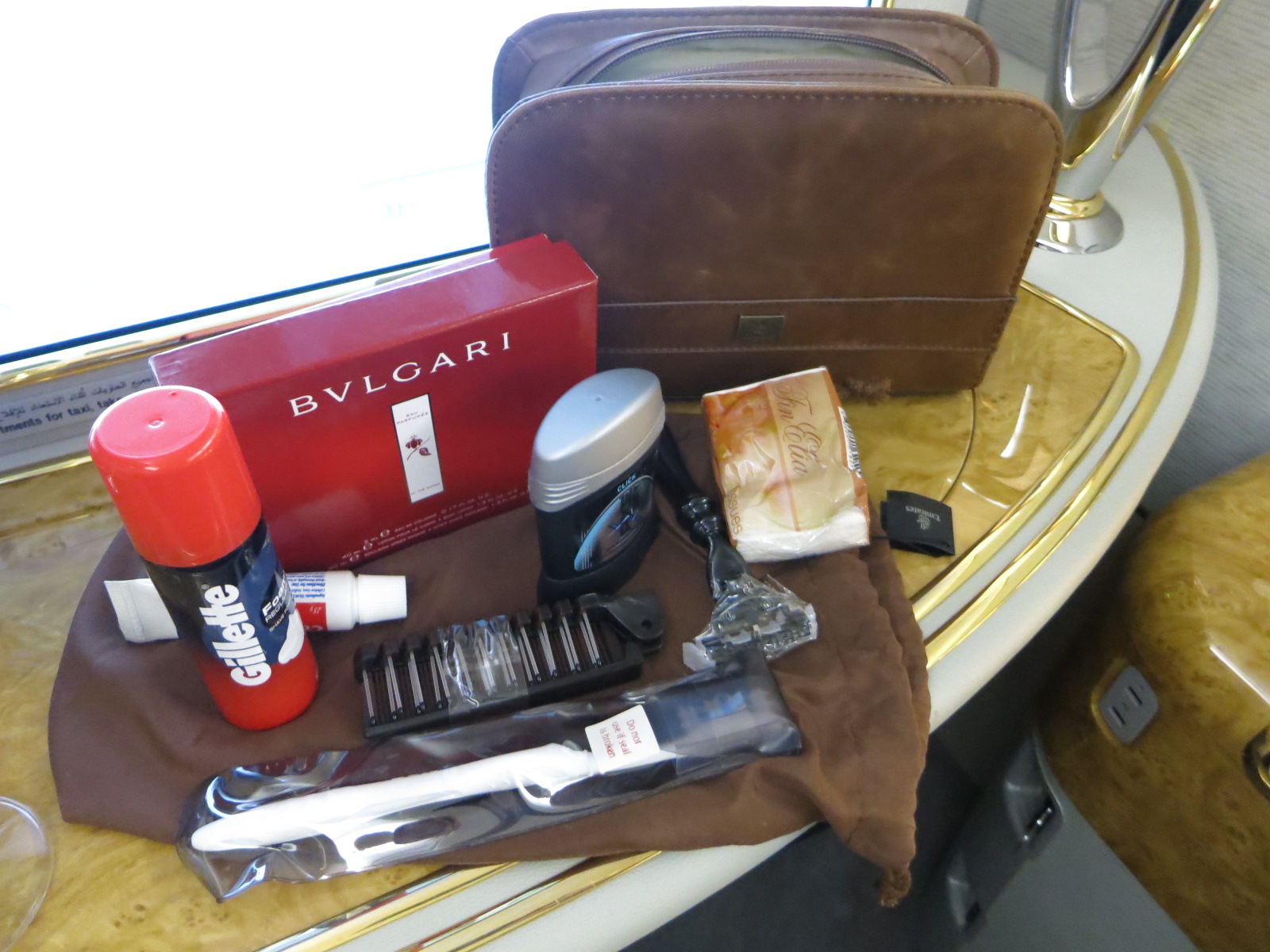
- Multi-brand advertising The airline sells space to multiple brands. You get a bag brand, a skincare brand, a dental brand, even an eye mask brand. Each one contributes product or cash, reducing airline cost to almost zero.
It’s useful to think of the items in the amenity kit as motly free samples. If they aren’t premium brand sponsored, many airlines use very cheap contents. In fact, contents can be purchased at scale for less than a dollar.
A commodity business class kit with a basic pouch and generic contents might cost $5 – $10 landed. A more premium co-branded kit with a better pouch and curated skincare is more in the $10 – $25 range before a brand subsidy. Branding, therefore, brings the airline cost down for a premium product to the cost of a non-premium product – or even less.
However some airlines are going to lean more heavily into the branded kits as part of their own premium cabin marketing, and they’re willing to spend more on Bvlgari or Ferragamo. Not Brooks Brothers.
Incidentally, airline pajamas are cheap too in most cases, low single digits for basic sets. The sort of pajamas you’ll get on American Airlines aren’t going to have custom fabrics, or a lot of embroidery. The packaging is cheap, and they don’t stock a lot of sizes. I flew long haul first class last year where they had only a single size.
You can tell what sort of an arrangement the airline has based on:
- how it’s described (“exclusive partnership” – and even more so when there’s further brand integration into lounges or inflight content, which described United’s Therabody partnership)
- whether the brand gets a clear market entry boost (The White Company’s partnership with British Airways was timed to their U.S. market push).
- quality of the product (the more premium the product itself is, the more the airline likely had to pay)
When American was giving out cardboard boxes as business class amenity kits they still had pens and lip balm.
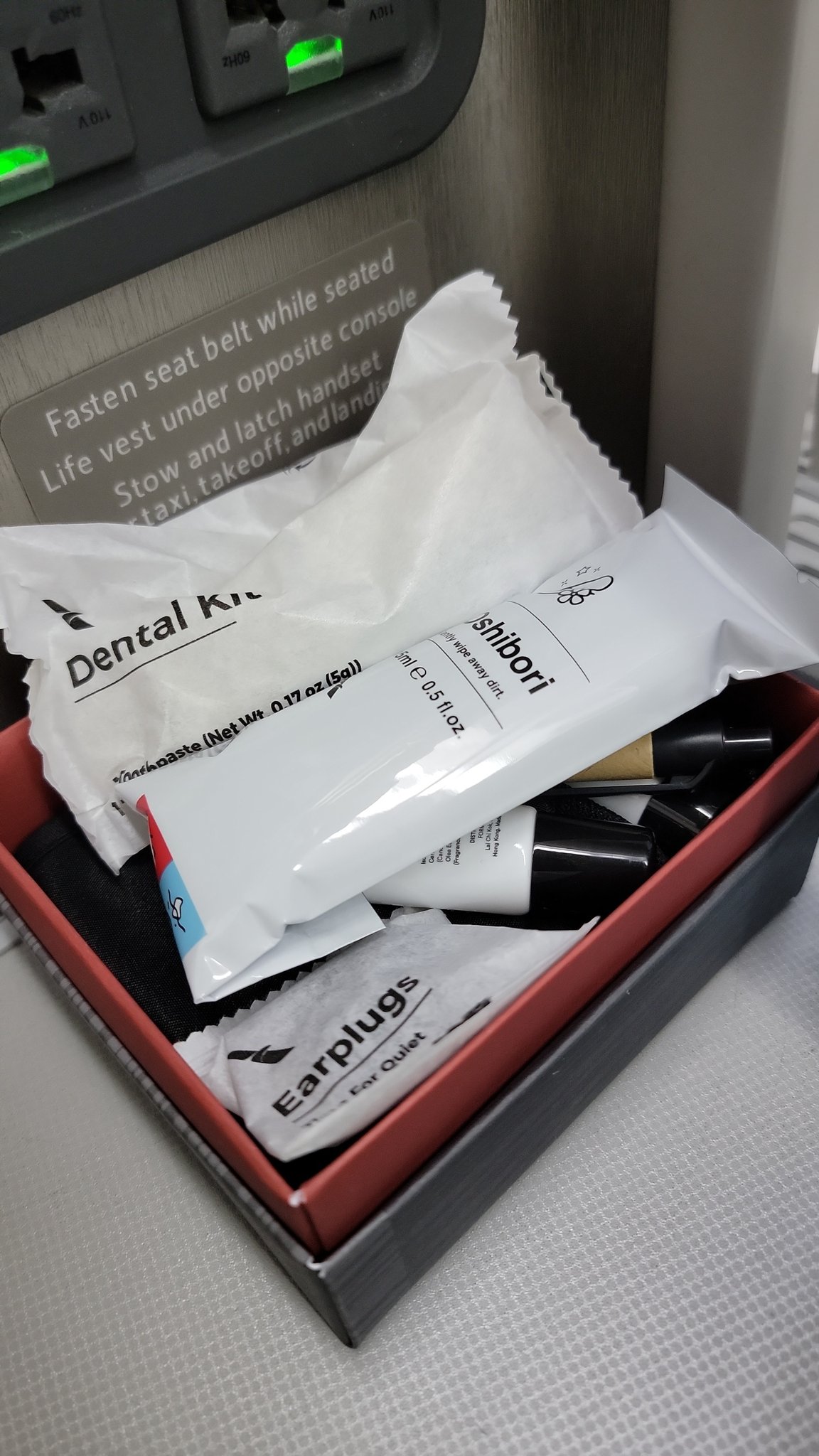
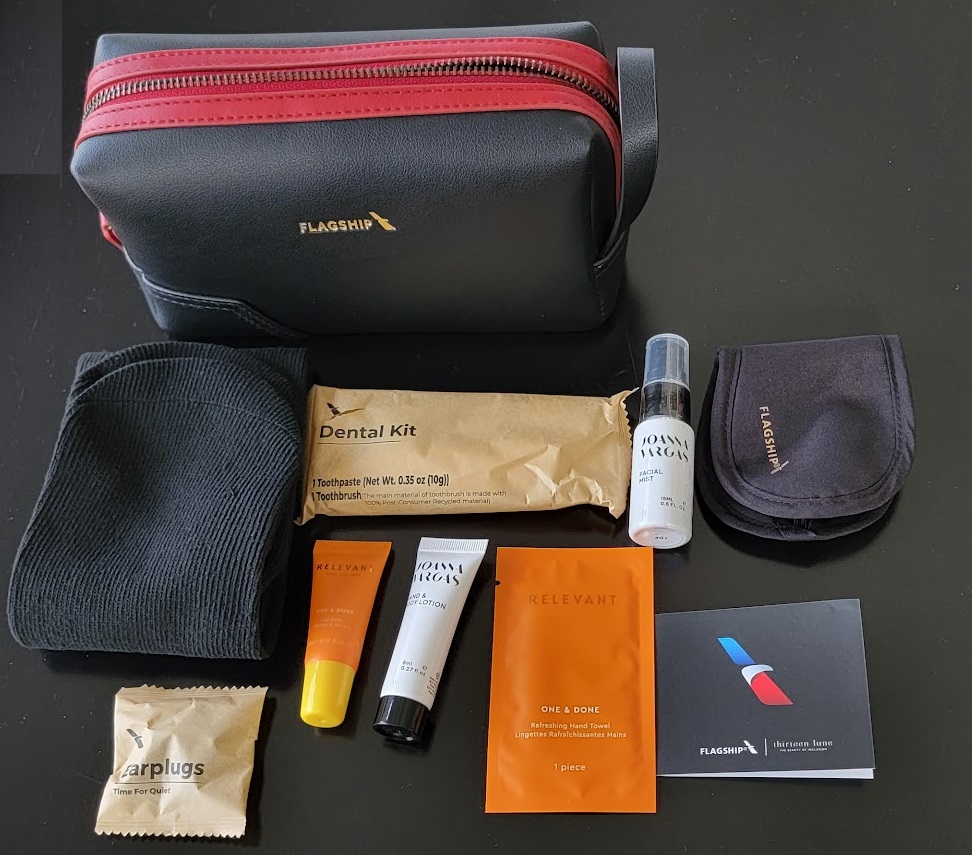
I guess they had to fund actual bags somehow and Joanna Vargas wasn’t paying for those. But they’ve gone back to marketing partnerships in amenity kits, as well as champagne (Bollinger) and wifi (‘sponsored by AT&T’). Sadly they skimp on the business class bag contents to save pennies.
There was a time, incidentally, when delta actually gave out amenity kits in long haul economy, just before the pandemic.
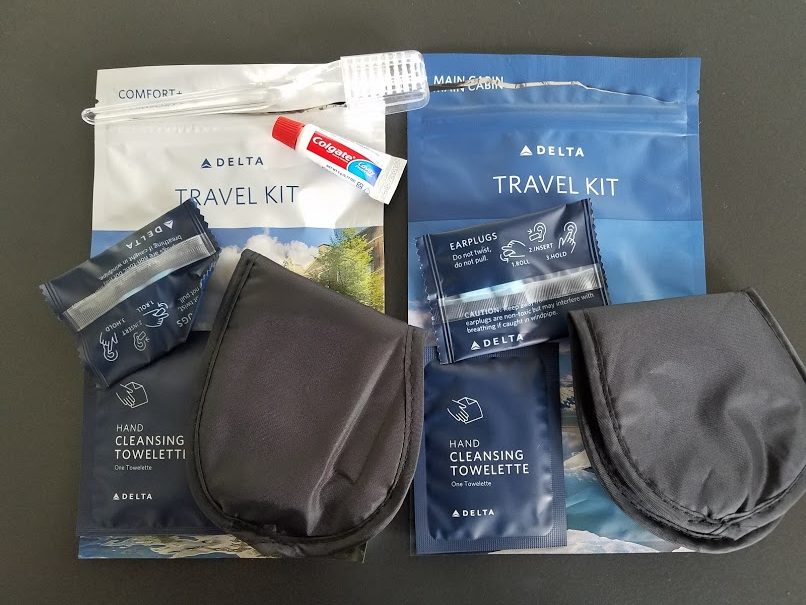



Delta gives those disposable plastic bag kits to Comfort + (economy with an extra inch or two of legroom)