Warren Buffett once famously laid out just how bad a business the airline industry is for investors,
If a capitalist had been present at Kitty Hawk back in the early 1900s, he should have shot Orville Wright. He would have saved his progeny money.
But seriously, the airline business has been extraordinary. It has eaten up capital over the past century like almost no other business because people seem to keep coming back to it and putting fresh money in.
You’ve got huge fixed costs, you’ve got strong labor unions and you’ve got commodity pricing. That is not a great recipe for success.
Copyright: rido / 123RF Stock Photo
However Buffett got back into airline investing two years ago, not quite convinced that major carriers had become ‘high quality industrials’ as Delta likes to argue just that the business is better than it used to be. Berkshire Hathaway promptly lost over a billion dollars on these investments.
Nonetheless a month ago there were rumors he was going to buy Southwest Airlines in its entirety and that drove up the airline’s share price. Yet Southwest isn’t the carrier in which Berkshire Hathaway holds the largest stake.
According to CNBC’s Berkshire Hathaway portfolio tracker here are the company’s holdings “as of December 31, 2018 as reported in Berkshire Hathaway’s 13-F filing on February 14, 2019, except for Delta Air Lines, which is as of March 11, 2019” compared to publicly available date for shares outstanding.
| Airline | Shares Owned | Outstanding | % Owned |
| Delta | 70,910,456 | 676.55 million | 10.5% |
| Southwest | 54,847,399 | 552.69 million | 9.9% |
| American | 43,700,000 | 449.06 million | 9.7% |
| United | 21,938,642 | 266.73 million | 8.2% |
Buffett had previously said that he prefers to stay under 10% with each airline but explained that he wound up owning over 10% of Delta by accident. They were making share purchases (increasing the numerator) while Delta was buying back shares (decreasing the denominator).
Warren Buffett said Berkshire Hathaway Inc.’s investment in Delta Air Lines Inc. rose above his comfort threshold by mistake.
The stake climbed when Delta bought back its own stock and Berkshire increased its holdings, according to regulatory filings this month.
“What I didn’t realize was that that purchase had taken us over 10 percent,” Buffett said Thursday in a wide-ranging interview with CNBC from a benefit luncheon in Grapevine, Texas. “I was already in territory I didn’t plan to get, so I just decided to buy a whole lot more stock.”
He suggests that airlines aren’t “a suicidal business anymore.” For the past several years they’ve been earning billions of dollars. And for the most part they haven’t had to pay income tax on their profits, either, because of net operating loss carry forwards.
The IRS limits ‘NOL’ deductions in the event of change of control so that profitable companies can’t just go buy offsetting losses. To avoid hitting those limits American Airlines requires board approval before a single investor can take a stake of 4.75% of greater. That’s the tool that American used to prevent Qatar Airways from buying in though of course they expressed no such similar concerns with Buffett’s stake.



Maybe Buffet could tell the airlines to stop acting like idiots towards the ME3.
Very funny. I would not touch a USA airline stock with a 10 foot pole.
Seriously??? This is news worthy?.
I fear AA won’t be long in sending him back to his previous opinion on airline investments
the good news about Warren Buffett purchasing too much Delta Airlines stock is eventually, he’ll find someone to take it off his hands even if it results in him taking a small loss, which I doubt he’ll experience.
@Jim… yes, this is news for several reasons. Reminds me that SWA may be grabbed. I didn’t know that BRK owns the main 4 airlines, like a mutual fund. What about AlaskaAir. Buffet doesn’t want the busy work of airline mgmt but does like the current profits.
Yep, I would call this news.
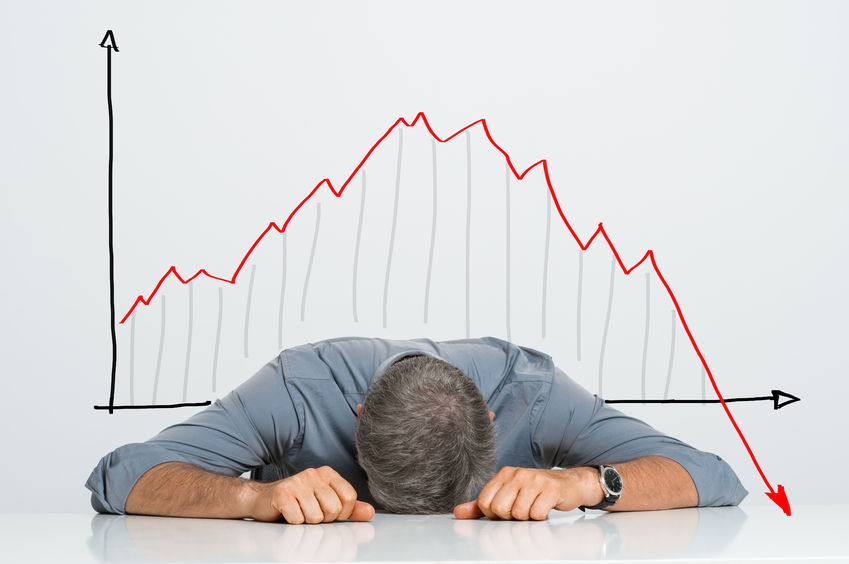
I like the subtle play in your graphic, the usual negative shot at Delta with the graph indicating a losing investment. If Warren had read your column consistently and bought a healthy percentage of AA 5 years ago, that would be the appropriate graph.
Interesting. Buying more than 10% of a company triggers a mandatory pre-acquisition Hart-Scott-Rodino Act filing and mandatory 30 day ( or longer) pre-acquisition waiting period with the FTC and the Department of Justice, by both the acquirer and the acquired company. This is true even if, like Buffett and Berkshire-Hathaway usually contend, it is only for investment purposes. (The “investment only” exception to HSR covers only acquisitions of less than 10%.).
Wonder how Buffett and Delta handled this one?
This story may be missing a few details. I believe that when a stock buyback is started, the company sends letters to stockholders offering to repurchase their shares. Given the nature of laws involving large investors, those letters would be more important to large investors than small investors. Someone at BRK dropped the ball and either did not accept or acknowledge Deltas offer to repurchase their shares, or didn’t decline the offer and sell the shares on the open market to reduce ownership. This action would have reduced the numerator. It may have also triggered some income tax on gains?? It would be highly irresponsible for an actively managed ‘fund’ like BRK to not be aware of news involving a large company in which they own more than 4%, even more so at 10%.
Perhaps BRK is too big to manage?