
The Trump administration is considering an executive order or other regulatory action that would require banks to collect “proof of citizenship” from customers.
This wouldn’t just apply to customers opening new accounts. Banks would have to go back and collect this information from existing customers, a process described as ‘retroactive’ and that could create huge administrative nightmares for banks and could force closure of existing accounts where paperwork isn’t submitted by customers in a timely manner or where paperwork doesn’t match the procedures that banks are pressued to adopt.

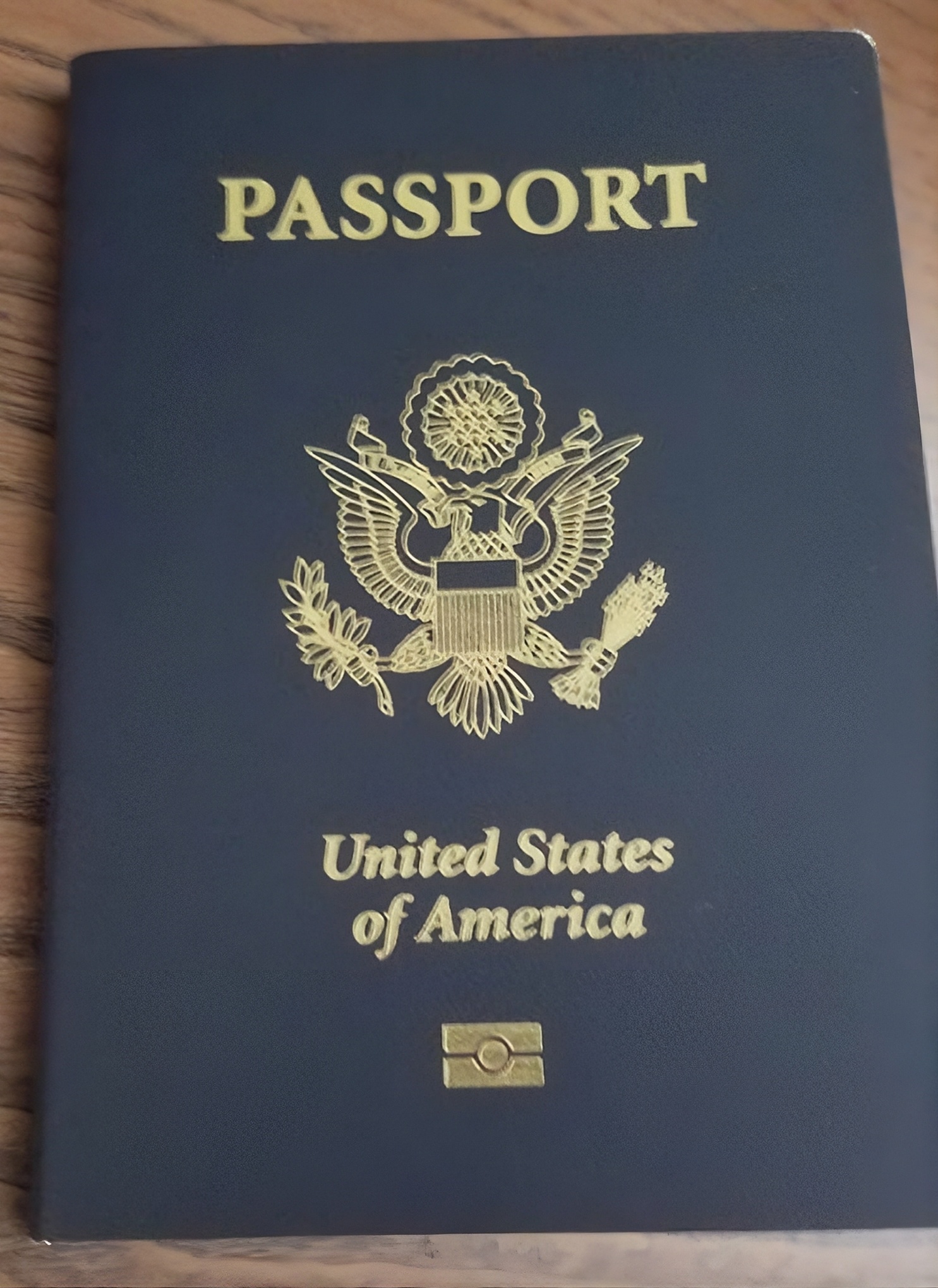
The administration is looking to require passports – even REAL ID drivers licenses would not be sufficient because they do not prove citizenship (just identity). The Trump administration is not denying these reports, and refuses comment.
- It is not clear whether banks would merely collect additional information
- or whether the policy would require closing accounts or bar opening accounts for non-citizens, or those who can’t produce documentation
- Although in practice bank compliance often requires ‘de-banking’ to ensure they remain in good graces with regulators – the inability to produce compliant documentation is often seen as a regulatory risk that makes dealing with customers in the category not worthwhile.
It’s unclear what treatment lawful non-citizens would receive under such a regime. And no more than half of U.S. citizens even have passports.
My best read is this is an attempt to use the Financial Crimes Enforcement Network and Anti-Money Laundering rules for immigration enforcement, debanking, and national identity registration.
What Possible Legal Authority Is There For This?
The President can’t just order banks to collect a new category of personal data without statutory authority. So it seems like they try to leverage existing Bank Secrecy Act and USA PATRIOT Act authorities.
- Issue a new regulation, such as under Section 326 of the USA PATRIOT Act (31 U.S.C. § 5318(l)) which sets “minimum standards” for verifying customer identity. This is usaully for opening accounts.
- Citizenship becomes a required attribute to establish identity and manage anti-money laundering risk. So it’s a Know Your Customer component.
- FinCEN can impose additional recordkeeping and reporting requirements, but that’s limited to 180 days (renewable).
Requiring Citizenship For Bank Accounts Is Blatantly Illegal, Right?
Yes. PATRIOT Act Know Your Customer authority is about establishing identity, not about excluding non-citizens from banking or immigration restriction. Anti-immigration Senator Tom Cotton (R-AR) issued a letter asking the Treasury Department to explore if these rules “could appropriately be utilized” to prevent “illegal immigrants” from opening accounts. Even he didn’t think there was clear legal authority.
- It would be arbitrary and capricious. There’s no clear linkage between citizenship and banking access, or why less burdensome alternatives couldn’t be used to accomplish similar (legitimate and statutorily-authorized) goals.
- Guidance instead of notice and comment followed by promulgating a rule will be even more open to challenge.
- This is described as retroactive for existing accounts, and imposing new consequences on existing, lawful activity without clear legislative authorization will be open to challenge.
- Regularized transmission of citizenship data to government likely runs afoul of the Right to Financial Privacy Act, which says that no government authority may access customer financial records unless statutory procedures are satisfied (consent, subpoena, warrant).
If the rule is effectively only citizens can have bank accounts that includes a ban on accounts for lawful permanent residents, foreign students, legal workers, and refugees. That would mean any order or rule would likely be in conflict with immigration statutes.
So What Could The Administration Plausibly Do?
It seems like the administration could seek a requirement of providing citizenship information as part of identity verification in establishing ank accounts. They could issue a draft rule amending existing Know Your Customer regulations under 31 U.S.C. § 5318(l).
They’d publish a Notice of Proposed Rulemaking, outlining the legal authority relied upon, offer a proposal and questions, and take public comments. Then they’d issue a final rule responding to and considering comments. It would almost certainly be phased in, especially given the burden of adding this information for existing customers with accounts.
Banks would need to update their internal policies, customer onboarding procedures, and outline processes for existing customers.
But This Will Be A Mess
If passports are demanded then it’s a problem for half the country, so that seems unworkable. REAL ID is expressly discussed as not being sufficient, since that proves identity but not citizenship.
Millions of citizens would have to start coming up with documents, and banks would have to start chasing this and monitoring status – and closing accounts for citizens that don’t provide the information in a timely manner.
Passport alternatives like birth certificates and naturalization certificates aren’t as uniform and will need to be judged for validity – which means there will be mistakes.
Then the question becomes citizenship for non-individual accounts (such as corporate or trust accounts), joint accounts, minors, estates, and foreign-owned US businesses.
When my grandmother passed away, her son – not a U.S. citizen – was the executor of her estate. Not all banks would allow him to act as signer on the relevant accounts, or to set things up without appearing in-person (he lives in Australia). But he needed to manage her affairs.
Foreign businesses need U.S. accounts all the time, for their subsidiaries and for transacting business in the United States.
The U.S. wants more financial accounts based here – not just for the economy, but also because it’s a strong lever for exerting U.S. influence over the rest of the world through the financial system. Making it harder for non-citizens to transact business through the U.S. financial system gives up power and leverage!
De-Banking Becomes A Problem
The rule – or, more to the point, a bank’s defensive de-risking policy developed in response to it, will mean closures of accounts and denials of new accounts. That pushes people into more costly and less-regulated forms of banking. It also means financial resources moving out of banks, which isn’t good for their stability.
Pushing activity out of the banking system increases cash and informal transactions, making illicit finance transaction detection harder, so this moves in the opposite of the purpose of the underlying rules.
It’s also inconsistent with the administration’s stance against “debanking.” The President himself is literally suing J.P. Morgan Chase for debanking him!



Looks like Gary gave up Travel for Left Wing Political Commentary. Maybe he should move this blog to BlueSky ?
Trump is a joke and a deranged criminal I thought Republicans were all about small government and no overreach?
@texastj – banking access has been a central topic here for about 18 years. What here do you think is inaccurate? Worrying about debunking is historically a more market-oriented, conservative position as well!
Probably illegal? And a mess? That tracks for de fuhrer and his decisions.
This could be solved if the EMPLOYERS who hire illegals like hotels, agriculture, meat processing, were fined or arrested. But those fat cats are campaign donors, so instead they pass stupid things like this that make everyone’s life more complicated.
Oh, now the leftists care about what’s legal. You know what’s also illegal? Crossing the border illegally. Impeding federal officers. Assaulting federal officers. Defrauding the government. Assassination. But thanks for pretending to suddenly care about law and order.
Excellent, harassment just so they can show power and have more control over the populace. I imagine “underground” banks, run by loan sharks and other criminals, will have a field day picking up the slack. Fortunately the banks are major economic players and likely won’t go along with this nonsense by fiat. And it sure won’t win him any friends among the public.
Gary, you obviously spent some time and “ink” on this post, and while you were doing that you probably weren’t focused on other tasks. Now, zoom out and take in a much larger perspective. All of these outrageous statements and proposals are clearly illegal, but they succeed in their primary objective. MISDIRECTION The more time all of us spend chasing shadows means less time (and attention) paid to the one issue that’s a millstone around the neck of our Glorious Leader – The Epstein Files. An added bonus is also not focusing on the fact that a large chunk of our Navy is parked in the Middle East.
I’m OK with agreeing to disagree, @Gary. For starters, “banking access” has NOT been “a central topic here for about 18 years”, Credit Card access has (radically different). In addition, “Worrying about debunking is historically a more market-oriented, conservative position as well” is NOT accurate, the conservative position regarding debanking relates to Legal United States Citizens, and not Illegal Aliens. My statement stands, this is a non-travel related editorial pushing a Left Wing position, just a continued tilt of your Blog to Left Wing political opinion. You do so at your peril, at a minimum it reduces your influence regarding travel-related issues.
What does this have to do with flying and or airlines? Gary there’s always multiple angles to a story. Prob won’t even happen. Dems still think they won the election and use any platform to knock POTUS just like Dems wouldn’t stand for a mother whose daughter was murdered by an illegal. Let’s be fair and balanced and truthful
I ask what the EU does in terms of banking. They certainly ask for lawful presence information as a requirement to open bank accounts.
Would that be just replicated here?
As a visitor I can’t even open up a Swedish bank account to help with travel….so is this requirement from the USA just trying to match what’s around the world?
I have seen bank accounts opened in EU countries for non-EU citizens who aren’t resident in the EU.
Not sure why you would want a bank account in Sweden as a traveler since it’s increasingly difficult to deal with cash in Sweden and more and more airport forex places outside of Europe no longer even accept Swedish cash for conversion into local cash.
Not only would this create friction, but I have no idea how it would help make any type of banking determination. Banks do business with non-citizens all the time. The Switzerland and the Cayman Islands have a whole industry around this. KYC laws….sure. But using banks as an enforcement arm of immigration law is just a way to guarantee that anyone with means does not bank with an American institution. International accounts will be all the rage, and cell phones make it so we can all open accounts anywhere in the world without much trouble.
Its harder to shovel snow on NYC thrn it is to open a bank account
It is not easy to open an account in most countries without showing such data (unless you are wealthy and have lawyers – true of most things in life). It really all started (including the expansive application of FINCEN, which was a pre-existing law) with FATCA, and that was an Obama initiative. In fact, he campaigned on it. He phrased it as making tax evasion tougher, which it did, but it also snared the little people. The EU originally complained about FATCA, then decided they would copy it and adopt their own measure, the CRS. So here we are.
Also, am skeptical this will happen, or will happen as described, and do not recall any prior articles on this blog about the difficulties of opening accounts in the US or anywhere in the world. Someone (like me) can travel internationally a lot for work and otherwise and never have to worry about FATCA, CRS, FINCEN , GDPR, or any of this bank account nonsense. This subject is irrelevant to travel.
@Arthur – “do not recall any prior articles on this blog about the difficulties of opening accounts in the US or anywhere in the world” just search “durbin amendment” and “know your customer”
Basically anything Trump does is illegal. Thank goodness SCOTUS has had enough. 2027 and 2028 will be fun with Dems in charge of both houses.
@Gary – This post reads less like neutral analysis and more like a left-leaning editorial framed as pseudo-legal commentary. Rather than carefully examining statutory authority or regulatory process, you jump quickly to phrases like “probably illegal” and paint worst-case scenarios about millions of frozen bank accounts. That is clearly designed to alarm your readers. You treat potential regulatory changes as if they are imminent constitutional violations, without acknowledging how federal rule making actually works or how banking compliance is implemented in practice.
Your core premise also ignores how banking functions in most developed countries. In Europe, Canada, Australia, Japan, and elsewhere, opening a bank account requires rigorous identity verification, typically including a passport or national identification card. In many jurisdictions, proof of residency and tax identification are also required. Even in the US, banks already operate under strict KYC rules that require government-issued ID and taxpayer information. The idea that documentation requirements are somehow radical or unprecedented is simply false.
Your post further conflates citizenship verification with identity verification, suggesting that any effort to clarify legal status would immediately result in mass account closures. That is speculative and ignores both legal constraints and regulatory process. If such a policy were ever seriously pursued, it would go through formal rulemaking, notice and comment, and almost certainly face judicial review. Banks do not randomly freeze millions of compliant accounts overnight. Compliance changes are phased, documented, and supervised. Your apocalyptic tone is not grounded in the reality of how financial regulation actually functions.
You also cite the fact that many Americans do not hold passports as if that alone makes any documentation requirement inherently unworkable. Yet passports are not the only form of citizenship proof. Birth certificates, naturalization documents, and other federal records exist. Other countries with lower passport ownership rates still manage to maintain functioning banking systems with documentation standards. The suggestion that documentation equals disenfranchisement reflects a political bias rather than an objective assessment of feasibility.
Ultimately, you assume the worst possible motives and outcomes while ignoring international norms and domestic regulatory structure. You’ve presented speculation as inevitability and framed routine compliance concepts as authoritarian overreach.
A more balanced analysis would have acknowledged that identity verification is already central to modern banking, that developed countries routinely require such documents, and that any significant policy shift would be subject to legal scrutiny. Instead, you have elected for partisan alarmism over sober evaluation.
Please stick to what you know and do best — airlines and hotels. I’m sure you’d rather be known as Gary Leff, the savvy travel guru than Gary Lefftist, the insipid partisan hack.
Gary, why are you going all Rachel Maddow? I need proof of citizenship to fly, to buy a house (usually required for loan documents), and a host of other activities. Actually, the number of Americans who possess a passport or passport card is well over 50% – some have let it them lapse, but they’re easily renewable. During Covid, oodles of people got them in anticipation of travel post-lockdown. Many Real IDs can be had that require proof of citizenship. As with anything, there would be a grade period with plenty of time to get proper ID. Crazies like Judge Boasberg would make sure of that.
Gary, this is just scaremongering. Oh, and the liberals didn’t have any issues asking, “papers please,” like good little fascists during the Covid lockdown times. No vaccination papers? No work, no travel, no entrance… Now, the libbies are flipping the script? Nope, you don’t get to have it both ways.
@Mike Hunt – the move from citizenship to identity isn’t conflating anything, I’m trying to work through ‘what could Trump actually do’ – translating the notional reported desire into something with a statutory hook. But there are real legal problems.
And what other countries do has no bearing on that (and the U.S. financial system is an economic driver and difference-maker, you wouldn’t want to copy Europe here or the European economy).
I think it’s a bit funny to characterize me as left-leaning for worrying about freedom to transact and debanking, those are traditional conservative concerns. Trump has flipped them!
I am not making up the passport requirement either – that’s specific reporting on what the administration is considering, so I note that it’s problematic. I do not ‘assume the worst possible motives and outcomes’ in fact I work through ‘what is the closest to legal’ and assume that’s what we end up with.
“A more balanced analysis would have acknowledged that identity verification is already central to modern banking,” I literally discuss this!
@Bob Moran – “I need proof of citizenship to fly,” no, you do not.
“the number of Americans who possess a passport or passport card is well over 50% – some have let it them lapse, but they’re easily renewable. ” not easily, it’s costly, and do we really want to impose that cost to access the banking system? that pushes people into check cashing stores.
More Pedo Bootlicking in the comments than usual today. I guess they all watched the SOTU yesterday and knew that they would be needed on the front lines.
I’m glad someone with a lot of money is suing Chase for debanking him. I was debanked by Chase for no stated reason. It cost me money and quite a bit of time. Screw Chase.
Something that’s not immediately obvious after reading this article and other reporting is how this would affect the tens of millions of non-citizens who live in the US 100% legally, via a visa or permanent resident card. Given the huge volumes of paperwork required to obtain those statuses, I would guess near 100% have US bank accounts while not having US citizenship (yet).
Why does anyone think this is remotely appropriate??
Citizenship is not required for banking. Lawful presence isn’t even required as many financial dealings do not require presence. Lots of foreign money is invested in the US. I have a foreign account (properly reported) in a country I hold only a tourist visa for–we are there enough that it’s convenient. (Her country of birth.) They cared only about identity, not about status.
Why is it that so many blindly accept anything that’s anti-immigrant??
I thought the point of all this immigration stuff was to weed out violent criminals. Didn’t realize participating in the US economy through baking constituted a violent crime.
Using “debanking” to achieve political goals. Wonder where Trump got that idea. Inquiring minds want to know. Currently, debanking seems to be standard operating procedure. I agree, debanking is wrong, but what goes around comes around.
Moving away from my sharky comment above, Know-Your-Customer (KYC) and Anti-Money Laundering (AML) regulations as they currently are constructed are very broad. I used to have to do KYC and AML reviews. The requirements are nuts. Financial institutions are supposed to monitor both the sources and uses of money. They are required to model each customer and report any “unusual” transaction for that customer. Funds are frozen with any suspicious transaction. It is dystopian and wrong. People should be free to spend their own money without having to get approval from anyone.
They put these regulations in place to achieve well sounding goals like “fighting terrorism” and “fighting criminals”. The result is a mechanism to monitor and control everyone that uses that banking system. It is easy to be partisan about this. I did not like the Obama administration actions on international banking accounts mentioned by other commentators above. They made it difficult to open a bank account for American citizens. So instead, I have to carry cash. It is my opinion that the main blame goes to Bush 2 in his war against terror. He put the mechanisms in place.
Relatedly, as Gary has commented elsewhere, civil forfeiture at airports is wrong. I add it is wrong everywhere. Further, digital currency, which some argue for is even worse. Digital currency means any official person could turn off your money, because they had a bad hair day. Famous Harvard economist Ken Rogoff’s war against $100 bills is scary. I purchased a pair of shoes recently in Argentina with a $100 bill. It is not even that much money any more. The dystopian could get worse.
Shoot. I really should not have commented on this. Life is happier without doing politics.
My comment is waiting moderation. On second thought, please do not post it. I want to avoid anything remotely political.
Debanking is per se wrong. It should be illegal. However, what comes around goes around.
Oh no… @Other Just Saying got political… *gasp* His or her reputation is ruined! (Friends, no one cares; it’s a website comments section, and you’re using an alias).
On the topic, verification of identity isn’t new. It’s already part of Know Your Customer/Client (KYC). How they do this depends on the account type/holder (personal/business).
If the administration wants to regulate this further, it shouldn’t be on a whim. Seems like more of the anti-immigrant scapegoating boogeyman stuff. Shameful.
If it inconveniences people and businesses, that seems like a net loss. 250 days until midterms. Probably should try to actually make things more affordable and convenient, not this.
And to those attacking Gary, you must be kidding. His commentary is often center-right. The red-hat ‘cultists’ claiming VFTW is now View from the (Left) Wing are being disingenuous, like usual.
@ Mike Hunt — Please stick to what you do best. Be careful not to pull off your upper lip when you change the duct tape.
The selection of this non-travel topic exposes Gary’s left wing mindset. It’s okay for I still appreciate Gary for running this blog for us.
I”m an American citizen and recently opened European bank accounts with great difficulty. In addition to me be required to provide my driver license and passport I also had to provide paystubs, utility bills, an IRS Form W-9, and a recent tax return. Bank appointments had to be scheduled weeks/months in advance.
In contrast, American institutions make it much too easy for illegal aliens to bank and conduct business. We should change this to encourage more self-deportations.
I consider myself to be ULTRA MAGA. I never said I just want criminal illegal aliens removed. What I want is for EVERY SINGLE illegal alien to be deported, even if this takes YEARS. America is for citizens and those legally authorized to be here ONLY.
This is the part where libtards reading this feel triggered and want to call me names ending in ist or phobe. PLEASE DO for it makes me feel good when I trigger left wing radicals. I smile knowing the American flag I proudly display in front of my house has the same effect.
Some commentators are correct, banking has not been a central theme, credit cards have been. The TDS is advanced to the stage that Gary goes out of his way to bash the administration.
@Bob Clemens — Ah, yes, calling out the ‘TDS’… that’ll help the economy. /s
As much as I oppose illegal aliens crossing the border, I support allowing these people to have bank accounts.
Think about this.
* If I am a “good” illegal alien, you want me have a bank account so I am not walking around with tons of cash in my wallet or have the cash stored at home.
* And if I am a bad illegal alien, you want me to have a bank account so law enforcement can spy on my activities.
@Gary. I had some time to think about it.
To summarize: You should have said that the Trump administration is considering using the banking system to debank illegals and indicate that you do not agree with using the banking system to accomplish immigration goals. And then left it at that. That would have been fine and made your point.
However, then you went on. It does not sound like you know much about KYC (Know Your Customer) and AML (Anti-Money Laundering). Or the massive legal and regulatory structure on the government side. Nor do you seem to understand how those regulations feed into large compliance staffs at the financial institution. You threw cited some laws to sound intelligent but your analysis was facile to be polite. I mean to be more snarky, are you like in 8th grade.
The selection of this non-travel topic exposes Gary’s left-wing mindset. It’s okay for I still appreciate Gary for running this blog for us.
I’’m an American citizen and recently opened European bank accounts with great difficulty. In addition to me being required to provide my driver license and passport I also had to provide paystubs, utility bills, an IRS Form W-9, and a recent tax return. Bank appointments had to be scheduled weeks/months in advance.
In contrast, American institutions make it much too easy for illegal aliens to bank and conduct business. We should change this to encourage more self-deportations.
I consider myself to be ULTRA MAGA. I never said I just want criminal illegal aliens removed. What I want is for EVERY SINGLE illegal alien to be deported, even if this takes YEARS. America is for CITIZENS and those legally authorized to be here ONLY.
This is the part where Dems reading this feel triggered and want to call me names ending in ist, zi, or phobe. PLEASE DO for it makes me feel good when I trigger left wing radicals. I smile knowing the American flag I proudly display in front of my house has the same effect.
@OnePatriot77
If as you say you’re ULTRA MAGA, why the need to open European bank accounts? I can only assume this is because you spend time in Europe but why. Isn’t America good enough for you. Curious as to the reasoning behind your need to even travel out of the country.
I appreciated this post very much. I didn’t know they were considering it and it would affect me directly in my points and miles activity. If any of you thought the post didn’t belong in VFTW you are wrong.
I live mostly in Canada but also in the US, which is perfectly lawful under the treaty between the countries. I do not require a visa to enter the US for tourism/pleasure and upon each entry I may stay in the US for up to 180 days for pleasure/tourism purposes. I obey the law and I pay my taxes correctly in both countries. I have bank accounts in Canada and in the USA. I am a citizen ONLY of Canada and I hold no status of any kind in the US. I do NOT have TDS.
Someone please explain (for discussion let’s assume I’m truthtelling in all above):
1. what public purpose is achieved by debanking me in the US
2. how I could possibly live the life I’ve described above without US bank accounts and US credit cards
I understand that “conservatives” have entirely different wishes and hopes for public policy from “liberals”. I am not an American so I do not offer opinions that would offend Americans in their political convictions. But I am a law-abiding bill-paying contirutor to the economy in your country and I wonder if it makes a lot of sense to dismiss my situation as an edge-case or “collateral damage” in the pursuit of new friction on foreigners. Being this mean to people like me is not a good look.
Next, you’ll be saying they should withdraw my Global Entry membership.
@Mr G
Some people like to perpetuate the false notion that MAGA are isolationists and have no interest in travelling to other countries. This is completely false.
In general, the food is definitely better in Europe. I will also say I always appreciate the USA MORE when I return from a trip abroad.
In response to your question, I have disclosed European bank accounts to make it easier for my European tenants to deposit their monthly rent. While I also have American tenants, I always try to make it as easy as possible for people to pay me.
@DenB.
I am against debanking to achieve political or in this case immigration goals.
(1) I am sure that the rule, which is not yet in the books would not prevent someone like you (not illegal) from having a bank account.
(2) Wait, are you a professional poker player? If so, you might have been debanked anyway.
(3) Wait, are you a Russian? I guess not, you are a Canadian. In that case you have already been debanked. Sorry.
(4) Finally, could you please explain to me why it was “ok” for Canada to debank all the truckers that were protesting the Covid restrictions. It was my understanding that they were debanked and their rigs were seized.
Debanking is an international slippery slope. I don’t like it.
I wish I could edit. I meant above
“(3) Wait, are you a Russian? In that case you have already been debanked. Sorry. I guess not, you are Canadian.
@other Just Saying:
I didn’t get #3 until I read #4. Good one.
The Government of Canada overreach in debanking those wretched people was a massive own goal for the government. Not a good look. Don’t worry, the Court ruled the government crossed the line and the invocation of the Emergencies Act was unconsitutional.
@ Other Just Saying:
I note with interest that you have responded only to half of my question #2. I’m much more concerned with credit cards than with bank accounts. You might have noticed that card issuers are already asking residency status in online forms, requiring a choice from a drop-down. None of the options is truthful and correct for me to choose, and there’s no “other”. The chill has begun.
“Then they came for the Canadians”.
DenB said “2. How I could possibly live the life I’ve described above without US bank accounts and US credit cards.”
I am surprised you could get US Credit Card. My sister, a Canadian citizen, living in British Columbia, claims that she cannot get a USA Chase Aeroplan Credit Card. And she complains that the Canadian Aeroplan options are not good.
Sorry, I have spent a lot of time in Canada. Canadians seem to like to confront USA citizens on the issue du jour. Like the Iraq war under Bush 1 (before TDS was a thing).
@Other Just Saying “You should have said that the Trump administration is considering using the banking system to debank illegals ” But that’s not what folks leaking from the Administration say they are considering. They would have U.S. citizens be forced to prove their citizenship. And the way the enforcement mechanisms work, many citizens would get debanked in the process.
OnePatriot77
“I”m an American citizen and recently opened European bank accounts with great difficulty. In addition to me be required to provide my driver license and passport I also had to provide paystubs, utility bills, an IRS Form W-9, and a recent tax return. Bank appointments had to be scheduled weeks/months in advance.”
Let me get this straight. You said if European banks make it very hard for Americans to get bank accounts in Europe, we have every right to make it hard on foreigners and Americans to get and keep accounts in America.
There is one and only one reason why European banks do not want Americans having accounts in their banks. It is all about the FAT CAT law which requires all foreign banks to annually report on their American accounts, including all transactions. This is even worse than what Trump just said.
Just too much paperwork for the return on Americans having foreign accounts.
So, I would suggest you get your facts in order, Mr. Super Maggot. BTW, where did you get all this hate? Probably wind up giving you a heart attack and die.
@Gary.
(1) My point remains, you could have just said you disagreed with leaked policy because you thought it would disrupted normal citizens. I agree, I don’t want to have to bring my passport card to the bank and prove I exist.
(2) How do you know the Wall Street Journal (WSJ) article isn’t a hit piece by a political operative. WSJ hates the Trump administration as much as the Washington Post or the New York Times.
(3) Americans who have bank accounts are supposed to have a social security card.
(4) From AI, “To get a Social Security card, you need to apply online or visit a local Social Security office. You must provide documents that prove your identity, age, and U.S. citizenship or immigration status, and if you’re applying for a replacement card, you may need to show proof of your identity.”
(5) There are many stories in the internet about people who found out that someone else was using there social security and it ruined their credit/tax situation. Does seem like a clean-up is in order. Even though this point contradicts the fact that I don’t want to prove my citizen shop at every financial institution I have dealings with.
(6) Bank of America has been accepting Mexican drivers licenses and such. It is like the exception to the KYC requirements.
As I have stated all along, I do not believe in debanking. The last couple of years, they have debanked Russians, poker players, crypto businesses, conservative influencers, gun businesses, anyone associated with Trump, Canadian truckers, Nigel Farage, and that is all I can remember off the top of my head. Moreover, other businesses like thc distributers, never could get into the banking system. Again, people should be able to obtains bank account. Ditto, with me overseas.
@DenB. You did not say anything when they came for the Russians citizens whether Putin supporters or not, poker players, gun businesses in the USA, every associate with Trump including his family, conservative USA influencers, Canadian truckers, Nigel Farage and Brexit supporters, and who knows who else.
“Then they came for the Canadians”. I apologize, but somehow, your comment seems empty.
The irony of Trump issuing yet another E.O. to give his base like @OnePatriot77 wood is rich. Just another distraction..
Trump is the self described chief promoter of cryptocurrency, a favorite of criminals and money launderers from around the globe. I’d like to see him apply the same E.O. regulations to crypto!
It would be interesting to note what liberal wacky blogger was quoted regarding legality. The only valid assumption is that if implemented the left wing dimwits will run to some liberal tree minor judge and a nationwide will be issued freezing it.. If not done by then it’s high time for SCOTS to disallow these injunctions and shu tthem down forever!!
@mantis That’s probably how you got here.
A lot of crazy talk for an anonymous-sourced article in the WaPo. If I were a travel blogger, I’d post about the significant increases (about 25% generally) showing up on regular awards on one of the US3 starting later this summer, but I’m not one, and there seems to be a decreasing interest in travel news on travel blogs these days anyway. Oh well, Gresham’s law of blogs is bad comments drive out good.
Other countries have strict rules about who can have a bank account. I, a dual citizen of the UK living in the USA, am restricted in what British accounts I can have now I no longer live in the UK. That’s just one example.
@starlessbBB Criminals use cash too just as they use cryptocurrency. Does that mean cash is also problematic?
Fascinating discussion. Its good to see the conservatives shedding all this “free market” B.S and support increased governmental regulation of industries. The solution to inflation and unaffordable housing is increased government scrutiny of individuals. That way only good citizens can buy houses etc and prices will be driven down. Once criminal pedo dems from other countries realize the party is over they will go back and the country can breathe again. It will be even better if everyone has to pass a lie detector test to test your true alligance and support for “True American” values (they can familiarize themselves by checking what this means on fair balanced media) before one are allowed to have a bank account. That will smoke out all them Dems.
For those who support instead making it criminal to hire illegals that infringes on rights of True Americans (those who can hire). If u dont have a passport, you are probably a pedo dem libtard and should not be a us citizen anyways.
Just one more time for the road.. Pedo. Dem.
Please, please please,, OtherJust Saying, OnePatriot, Mike Hunt- stick to your principals! Abandon this obviously left wing blog and go find somewhere you are welcome… If I don’t have to read another of your comments, my life would be better off.
Over the years, Gary has repeatedly written blogs on banking regulation, requirements, etc. He’s been a CFO almost as long as he’s been a blogger…
OnePatriot77- the requirements you raise to open an international bank account are primarily to comply with US banking regulation, like FATCA.
As someone who lived overseas most of their life, the idea of limiting bank accounts to citizens only is just loony. It puts us in the company of extreme closed societies such as North Korea, Iran, Sudan, Syria, Cuba, Myanmar, but that’s certainly the company this administration has sought with other initiatives such as exiting the Paris Agreement, etc.
more illegal actions and possible theft by the biggest criminal of all, the felon president.
@George. He is not going “limiting bank accounts to citizens only….” You are a closed minded idiot to think he would.
Try to open a bank account in Canada as a non-citizen or one who is not legally present. You can’t. In fact, in MANY countries this is the case.
@Gene – I’m good, thanks. If the argument is wrong, feel free to explain how. Personal insults are usually what leftist idiots reach for when they can’t.
@Other Just Saying
I think you are spot on your analysis of KYC and AML.
Just wait until the Central Bank Digital Currency is rolled out and eventually becomes the only legal tender in the USA and the rest of the world. Then whatever small remnant of financial privacy will be totally gone and the government will rule supreme. Foreshadowing of the Mark of the Beast as prophesied in Revelation 13:16-18 which will be required of all in order to buy and sell.
@DenB
I am aware of the court ruling against the “Liberal” government invoking the Emergencies Act. I am also aware that there has not been any real accountability yet; that is, no one involved in what has now been determined to be illegal has gone to jail or lost their job or suffered any other penalty and I don’t believe that any effort has been made to make whole those who have been harmed by the illegal invocation of the Emergencies Act.
I applied for a new credit card at a bank where I am an existing customer with an existing credit card. They asked me to verify my identity (what, but okay) and fax in my social security card. I ask if I can come into the branch, answer is no.
Didn’t have to go through all these hoops to get my account opened the first time.
LOL, this might just be a citizenship verification because I’m not white.