There’s one photo that may be more consequential than anything else American Airlines has done to turn around its finances, at least if more photos like this start to come out. The airline’s CEO Robert Isom appears to be getting out into the operation and talking to employees. Here is, via aviation watchdog JonNYC, seen at a gate. This is unusual.
— JonNYC (@xJonNYC) August 20, 2026
The American Airlines CEO Must Sell A Premium Vision To Employees In Order To Deliver It To Customers
Robert Isom is often highly scripted. He prepares for sessions with employees, dock sessions and prepping answers to expected questions. He speaks to employees less than his predecessor – the airline ended its monthly ‘Crew News’ sessions where executives met with employees, usually at hubs, with question and answer periods posted to their internet Jetnet.
Those were an artifact of Elise Eberwein’s tenure, something she believed in, and commentary passed along to me at the time these were axed was that ‘Gary gets more out of those than employees do’ since recordings were always leaked. Meanwhile, even quarterly State of the Airline presentations to employees following earnings calls stopped including live question and answer.
Getting out into the operation – with the new vision for the company – is crucial. The airline wants to be a premium global carrier. That means employees need to deliver a premium global service. To get there they need to:
- understand the vision
- believe that it’s real
- and that it will lead to a better future
- their getting on board is a crucial part of it
- that they are fighting for something bigger than themselves
- and they’ll have the tools to win.
That’s accomplished when the CEO articulates the message, meets employees where they are, and genuinely sells it. It’s exactly what Oscar Munoz did that began the turnaround at United a decade ago.

American Is Making Real Premium Investments Finally
American Airlines is finally doing most of the things I’ve been wanting (and yelling) for years that they should do. It’s adding first class seats and more extra legroom coach. It’s bringing seat back entertainment screens back to much of its domestic fleet. It has new business class suites, better premium economy seats and major lounge investments underway. Coffee, wine, bedding, and catering are improving. And it’s shopping for a major new widebody aircraft order.
The airline has made better product decisions over the past 18 months than it did over the previous decade. But buying seats and screens isn’t enough. The remaining challenge is getting 130,000 employees to understand what American is trying to become, why their own work is essential to getting it there, and motivated to deliver for customers.
That requires more than a recorded video or quarterly employee meeting after the earnings call. The CEO needs to get out into the operation, visit stations, crew rooms and break rooms, and personally sell employees on a mission to rebuild American Airlines. That’s what Oscar Munoz did at United, and it laid the foundation for the turnaround that Scott Kirby gets credit for today.
American Has A Revenue Problem, Not A Cost Problem
I first made the basic point during American’s bankruptcy in 2012: the airline had “just as much of a revenue problem as a (labor) cost problem,” and needed to generate enough of a revenue premium to cover its costs.
The argument became even more important after American merged with US Airways. The combined airline wasn’t going to be the lowest-cost producer of seats. It had global airline infrastructure, union contracts, hubs in expensive airports and a sprawling operation. It was always going to be a high cost airline, and the merger cut short the bankruptcy process.
A high-cost airline has to earn a revenue premium. It needs a product customers prefer and will pay more to buy.
American instead spent years trying to lower costs while competing for customers with Spirit and Frontier. That was never going to work. American couldn’t get its costs down to Spirit’s level, but it could certainly bring its product down toward Spirit’s.
That’s how the airline wound up essentially breaking even last year while Delta and United earned billions. American has been staring at a stage-length adjusted eight-to-ten-point margin gap with its two largest competitors. That isn’t primarily because Delta’s seats cost less to produce. Delta and United have generated more revenue from each unit of capacity: more premium seats, stronger positions in high-spending markets and brands that customers are more likely to choose when schedules and prices are similar.
Reliability matters, but it took American a long time to learn that it’s table stakes – a line I’ve been using for years but that they no repeat as well.
For A Decade, American Gave Employees The Wrong Mission
US Airways leaders who took over American said they’d “never lose money again.” They’d avoid spending any dollar they didn’t absolutely need to spend. They would “passionately pursue efficiencies.” And their religion was D0 exact on-time departures, even if they left all the passengers behind.
Then-American President Robert Isom explicitly pointed to Spirit and Frontier as the fastest-growing and most profitable airlines, arguing that American had to compete for customers looking for the lowest-cost seats.
American removed business class seats from widebody aircraft. It reduced the number of extra legroom seats in its domestic fleet. It squeezed more seats onto planes, removed seat back entertainment screens and shrank lavatories. Management’s philosophy was that passengers bought primarily on schedule and price, at exactly the moment when passengers stopped buying on schedule and price alone. Employees took the message that American was a low cost carrier, not a high touch one.
I wrote in 2018 that American didn’t have a mission statement and its employees didn’t understand what they were supposed to accomplish. Were they delivering a premium global airline or an ultra-low-cost experience?
American eventually landed on “caring for people on life’s journey,” which sounded more like the slogan for a private equity-managed community for active seniors than an airline in a fight to customers.
Employees need to believe they’re doing something larger than punching a clock. They need to understand what winning looks like, how their work contributes to it and why winning matters to them. And American hasn’t had that for more than a decade.
The Product Investment Piece Is Starting To Be Real
I was highly skeptical about American’s premium pivot when I was the first to report it in January 2025. They talked about a new dedication to premium when the investments they were touting had been planned years ealier. A new business class seat, a project that dates to before the pandemic, wasn’t a reversal of course.
Now premium seating (including extra legroom coach) will grow from 25% to 40% of its narrowbody seats. That’s more seats with more legroom in economy. Economy gets seat back TVs, better buy on board food, improved coffee and Starlink wifi. It’s no longer even just premium lounges and premium cabins getting an investment.

They’re adding a row of first class to Airbus A319s and A320s, and plan more first class on Airbus A321neos and new delivery Boeing 737 MAX 10s. Along with extra legroom seats that finally gives customers something meaningful to buy between standard coach and first class, while making elite status and credit card engagement more valuable.
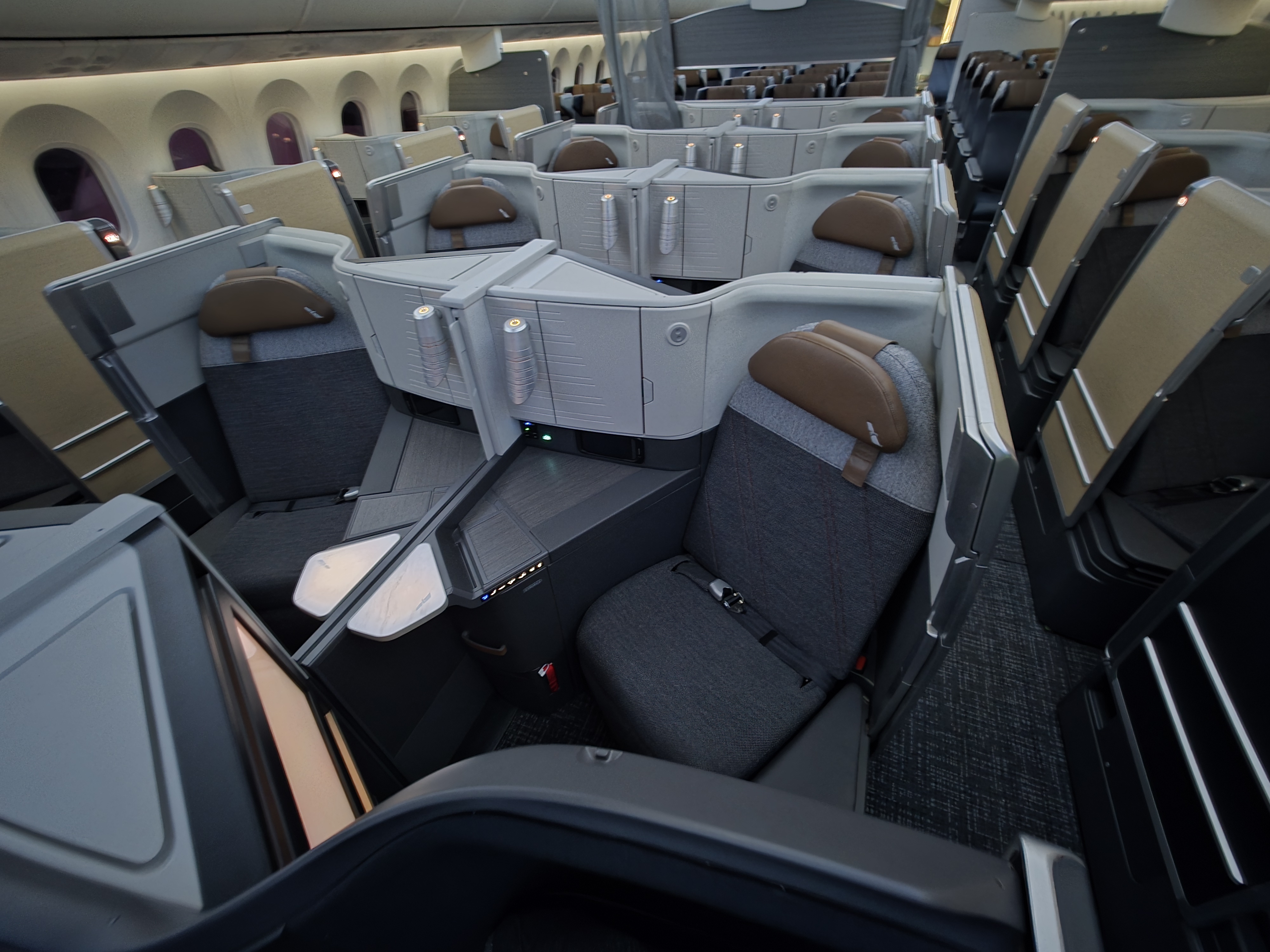
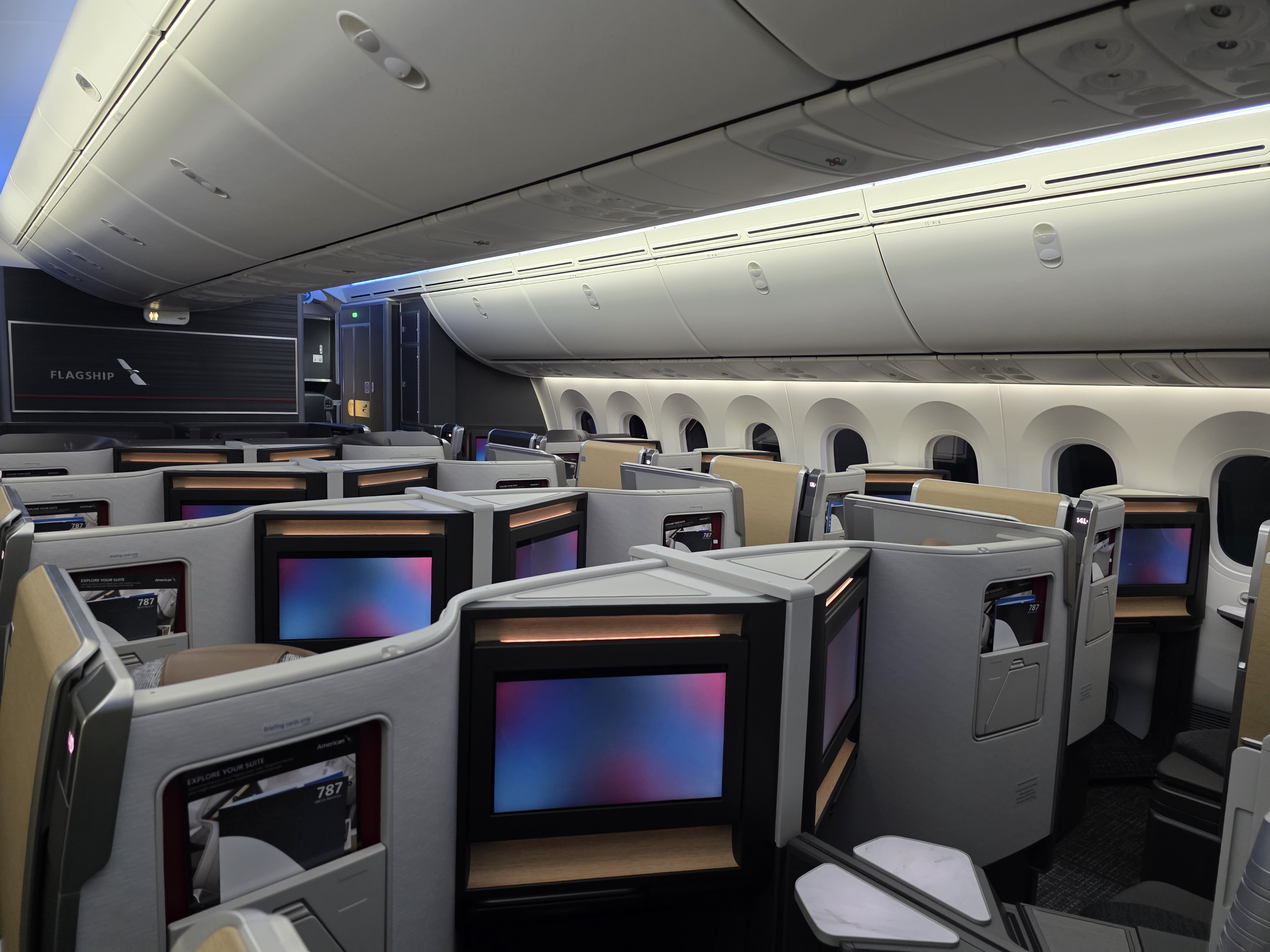
American has introduced its new premium-heavy Boeing 787-9, with 51 business class suites and 32 premium economy seats. Its Airbus A321XLR has business class suites with doors and a genuinely strong premium economy product. Boeing 777-300ERs are being retrofitted, with 777-200ERs and 787-8s to follow.
It is soliciting proposals from Airbus and Boeing for another widebody order, potentially reversing the long retreat from international flying that followed its decision to retire 40% of the long-haul fleet during the pandemic.
The new TVs are an enormous symbolic reversal of the airline’s race to the bottom era. American ripped screens out of planes because it them only as a cost. It now understands that an attractive cabin can drive preference, revenue and even advertising opportunities.
There are new and renovated lounges. There’s wine selection that’s no longer just a lowest-cost procurement exercise. Mattress pads are expanding in long-haul business class. American is experimenting with recognizable local catering such as Pecan Lodge barbecue.
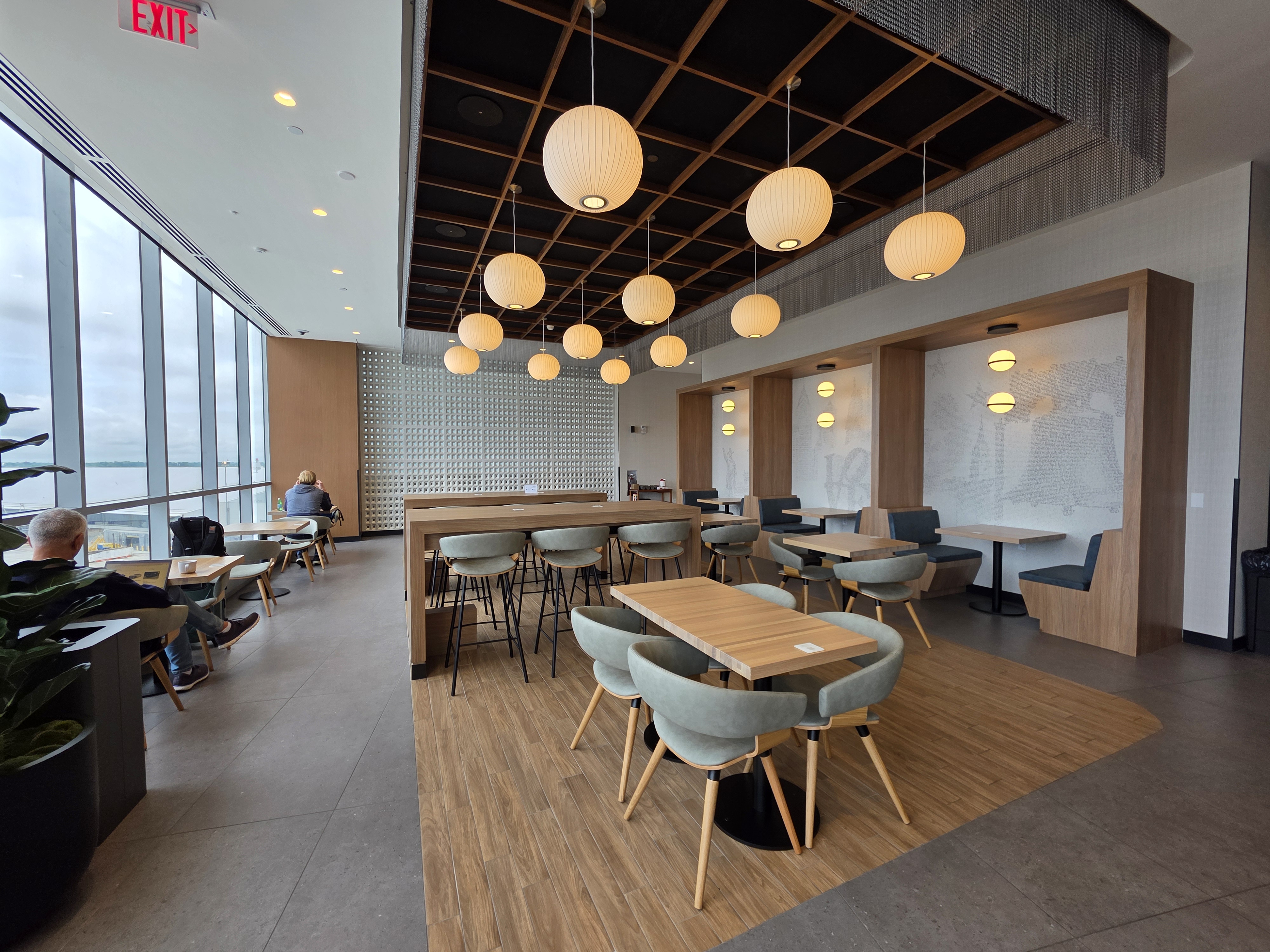
Not every change is perfect and implementation will take years. But the sheer breadth of what American has done makes the direction unmistakable. They are finally building the airline customers might choose rather than merely tolerate when its schedule or fare is best.
Robert Isom Still Has To Sell The Turnaround
The airline’s problem now is that these investments still look like a laundry list. And they could just as easily wind up spending that fails to yield a revenue premium, or motivate customers to take and use their cobrand credit card (especially if they underperform in markets like New York, Los Angeles and Chicago).
Philoospher Robert Nozick criticized John Locke’s approach to justifying private property. The ‘Lockean Proviso’ was that you could take property out of the commons if you left as good and as much for others, and you did this by mixing your labor with those resources. But Nozick wondered why the labor mattered, and didn’t simply dissipate? Dumping a glass of tomato juice in the ocean doesn’t turn the ocean red. And investing in more first class doesn’t, on its own, make American Airlines more premium.
There needs to be a clear, overarching message about what this means for the airline, who it is, and where it’s going. That message has to come from the CEO.
American’s CEO Needs To Model United’s Ex-CEO Oscar Munoz
Oscar Munoz wasn’t the long-term strategic leader United ultimately needed. But when he took over from disgraced Jeff Smisek, lost to the airline in a corruption scandal, Munoz traveled throughout the system meeting employees. He listened to them, gave them hope and convinced them that United had a future they could help deliver.
He also created visible breaks from the old cost-cutting regime. United replaced its awful coffee with Illy (the same ‘Fresh Poo’ American Airlines just replaced!) and introduced the Stroopwafel in coach. Neither item transformed the airline by itself. Together they signaled that details mattered again and gave employees something to could feel good about offering.
The CEO of American Airlines needs to do this too. He needs to meet gate agents, flight attendants, mechanics, reservations agents and baggage handlers where they’re at and explain:
- American is no longer trying to become Frontier.
- It is building a premium global airline that customers actively choose.
- Every employee interaction determines whether the investments in seats, lounges and technology produce a revenue premium.
- Better financial performance means greater job security, more investment and more profit sharing for employees.

That would be a huge turnaround from the leadership of the last era, where CEO Doug Parker spent time with staff, but literally told front-line employees that their efforts do not affect profit (and this was why he didn’t believe profit sharing should be part of their compensation).
American needs to make it contract. Profit sharing is in the contracts of some work groups, at generous levels (matching Delta and above United). They should also use smaller and more frequent bonuses and recognition to make priorities visible.



Spot on. Isom needs to get out of his expense office cocoon and act like a CEO. This is a start, though I’m not convinced he’s got what it takes. Happy to be proven wrong. (As we know — though not sure that Isom grasps — an unfixed revenue problem soon enough becomes a cost problem… )
I have always felt that AA, like WN, would come to the realization it needed to change.
It actually says more about AA that they figured this out internally – with a lot of internal and external pressure – but w/o the ivestor pressure that forced WN’s turnaround.
AA did have a mission – it just was to chase low quality revenue in large volumes. Like UA on its international network, AA will still carry lots of volume domestically which makes it much harder to get higher yields.
Let’s see what AA can do as a result of its product improvements and if they can embrace employee engagement w/ someone who isn’t charismatic as a leader but AA has to claw back a whole lot revenue in markets where other carriers are much larger than they were a few years ago.
AA does have a better credit card contract than UA – which is due to AA’s large domestic network like DL’s – but AA still has a lot of structural inefficiency that employees alone cannot fix.
AA’s target should be to close the margin gap w/ UA; DL’s much higher margins are a little lofty – but UA is right now performing financiall midway between DL and UA so it is certainly doable for AA to target UA’s level of financial performance as well as its revenue generating capability.