
A Vermont schools superintendent is challenging policies that allow warrantless search and seizure of electronic devices such as phones and laptops at the border. A new lawsuit seeks to curtail these after rampant abuse.
CBP reportedly told the U.S. citizen he had “no fourth amendment rights” when returning to the country at Houston Intercontinental airport. He was detained for four hours, and pressured to hand over passwords and devices.
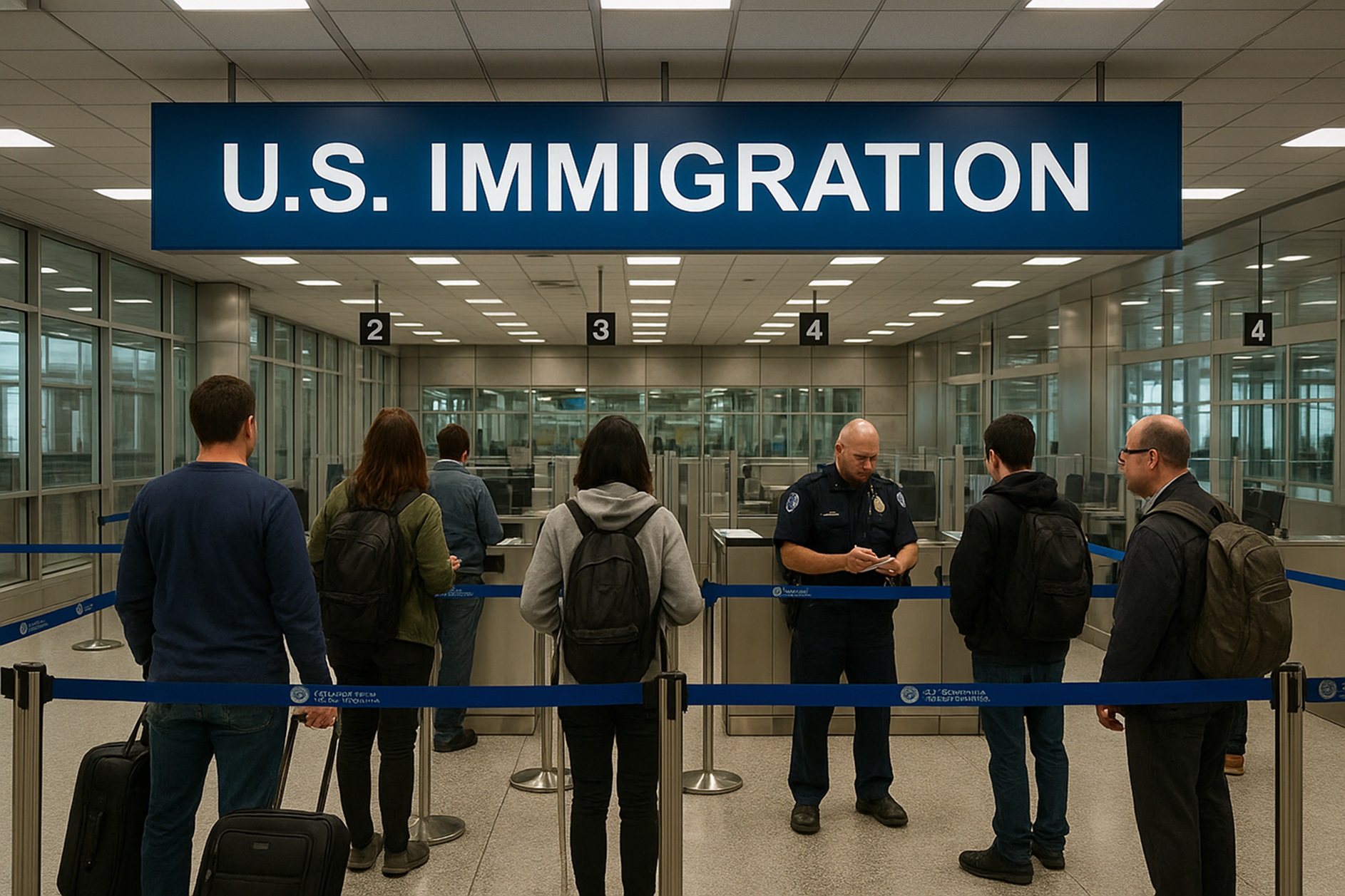
Wilmer Chavarria is a U.S. citizen who regularly visits family in Nicaragua.
On July 21, 2025, he says Customs and Border Protection detained him “for no given reason,” separated him from his husband, and took him into secondary.
- Agents repeatedly pressured him to surrender a laptop, smartphone, and tablet plus passwords.
- When he objected, he says agents told him he had “no Fourth Amendment rights at the border” and treated asserting rights as “suspicious.”
- He says requests to contact family and a lawyer were denied.
- He held out because he didn’t want the government poking through confidential student data on work devices. After “hours” of isolation and pressure, he says he gave in and turned over devices and passwords.
He says he expects it to happen again, so he’s been traveling without his laptop (and so unable to work).
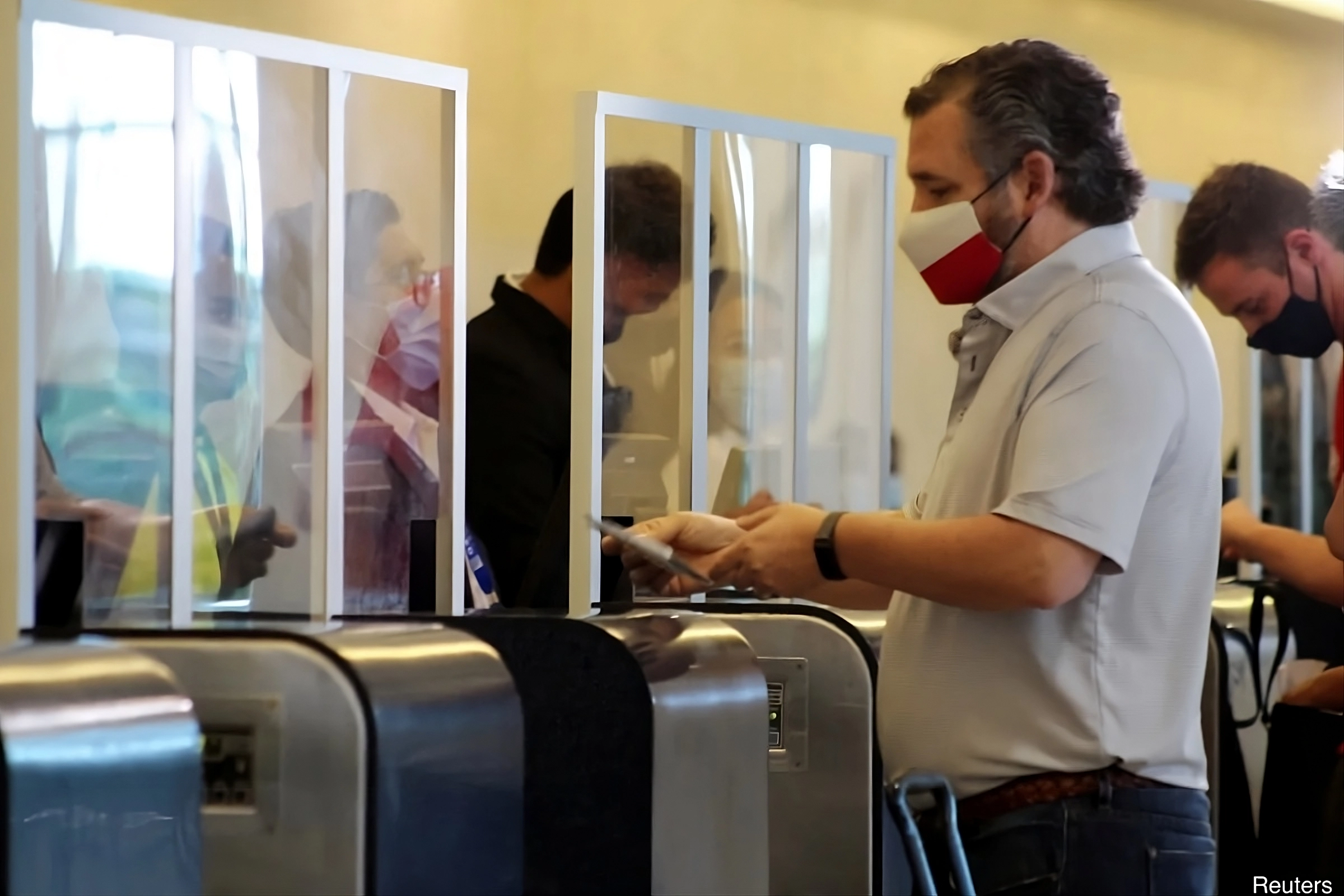
CBP’s 2018 Directive: Suspicionless Searches Permitted
The complaint attacks CBP Directive 3340-049A (2018) which authorizes these searches:
- A “Basic Search” (manual review on the device) can be conducted “with or without suspicion” at the border.
- An “Advanced Search” (connecting external equipment to review/copy/analyze contents) is allowed with reasonable suspicion or a national security concern, plus supervisory approval.
- CBP can seize and retain devices (or copy all information) for a “brief, reasonable” period with supervisory approval, such as 5 – 15 days or longer in some cases.
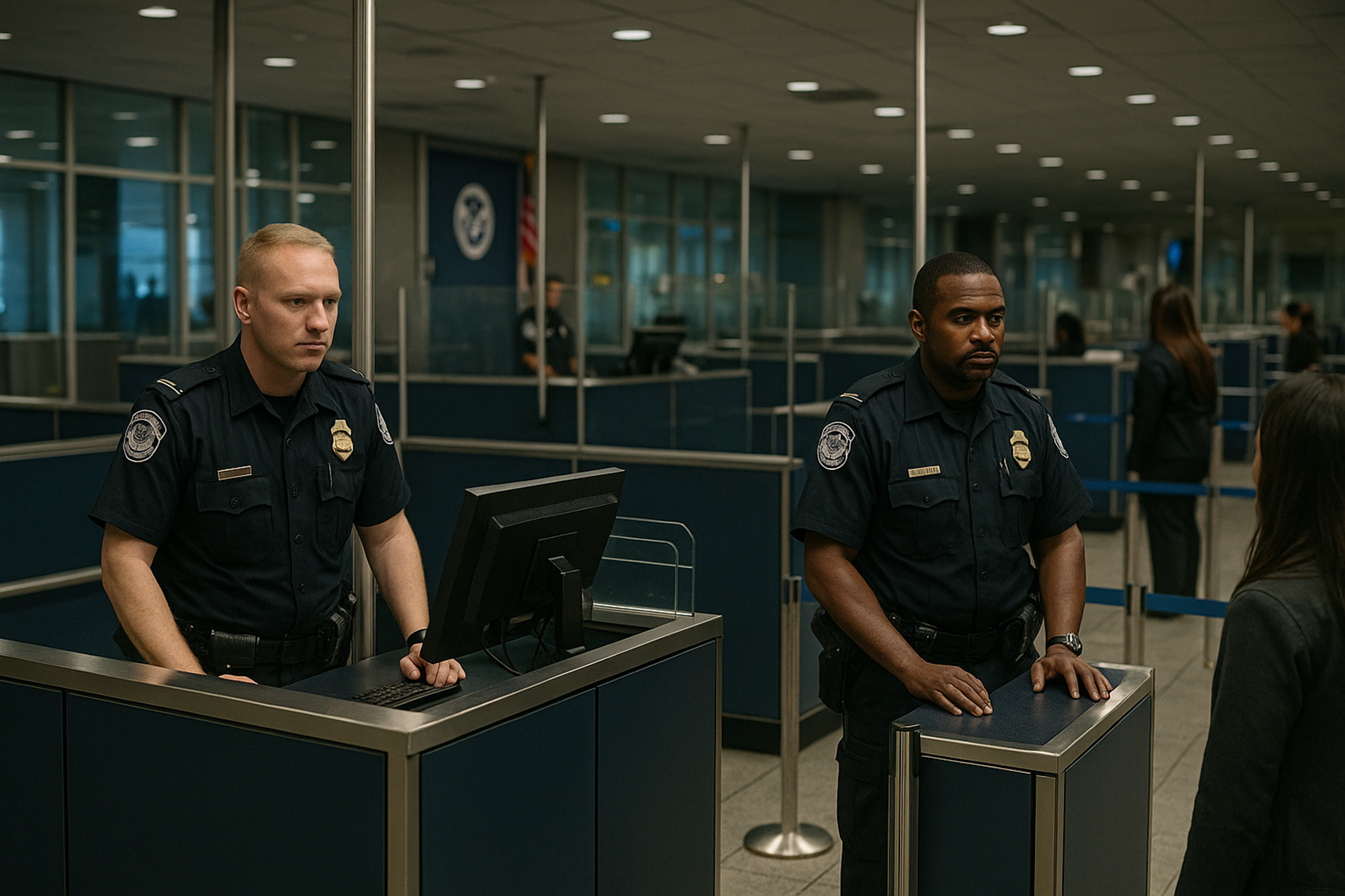
ICE’s 2009 Directive: Even Broader
The complaint also targets Immigration and Customs Enforcement’s 2009 device-search directive. It does not divide searches into “basic” and “advanced. It authorizes device searches “with or without suspicion” if conducted by “ICE Special Agents,” and that category can include CBP Officers or Border Patrol Agents, so the policies interlock.
Your phone Is Your “Papers” And The Border Isn’t A Constitutional Black Hole
The filing argues that these directives violate the Fourth Amendment.
- The data and devices are “papers” and “effects” protected by the Fourth Amendment.
- The policies are unconstitutional because they authorize searches and seizures absent a warrant, probable cause, and particularity describing what’s being searched or seized.
- The usual border-search rationales don’t map onto modern device contents, so the “border exception” shouldn’t extend to digital data. Devices don’t contain tariffable “goods,” don’t hide unlawful entrants, and “digital contraband” can live in email or the cloud. Those are allowable search exceptions. The government seizing phones goes beyond border control.
By the way, did you know that most people live within 100 miles of the border (the ‘border exception’ where rights are said not to apply) and that two women were arrested by a border officer for speaking Spanish at a convenience store in Montana? They were U.S. citizens.
The Case Is Strong, But Won’t End Warrantless Snooping
The case has good facts: a U.S. citizen, sensitive employer data, refusal to hand over passwords, extended detention, and no explanation.
The policy that’s being attacked is very open to constitutional challenge. “Basic searches” with no suspicion is an easy hook.
And phones and laptops are ubiqutous, so device searches have ballooned from ~ 8,500 ten years ago to 46,000 last year.
However, and this isn’t binding precedent for the case, the First Circuit’s decision in Alasaad v. Wolf upheld suspicionless basic device searches and allowed advanced searches with reasonable suspicion, rejecting a warrant with probable cause requirement.
The government will argue this is border security, and courts are generally deferential at the boder. They need to articulate a managable rule for what counts as border-related data on a phone. Of course, citizens can’t be refused entry so it’s not clear why these searches are even needed to administer the border.
The Department of Justice will certainly move to dismiss the case. Assuming it survives summary judgment, the case is headed for appeals. It’s hard to envision a court saying that all citizen device searches at the border require a warrant – even though they should.
What a win looks like here is tightening the rules around searches, requiring articulable suspicion to search device contents along with stricter limits on copying, data retention, and sharing with other agencies.
I tend to be overly pessimistic about civil liberties, so my guess is the outcome here is that the government gets to keep its current framework with the judge writing a worried opinion about how invasive these seaches have become.



Welcome to the Soviet States of America. Worse than Russia, Iran, and Afghanistan combined.
Sounds like a worthwhile lawsuit. Then again, this Supreme Court will probably decide 6-3 that we have no rights. This Constitution thing was nice while it lasted.
Consider the kind of people who do this work. Patriots, perhaps. But a little power is a dangerous thing. And I doubt if they take the Constitution very seriously, or perhaps really know the Bill of Rights. In a related issue (I now CBP is a different branch), ICE is basically hiring teenagers without experience, giving them nearly unlimited power, masks and weapons, and encouraging them to collect bounties on who they pick up. What could go wrong?
And actually there are precedents for fighting back. During Prohibition some jurisdictions, including New York State, refused to enforce the Volstead Act. Even earlier, numerous towns would not give help to the federally authorized bounty hunters working under the Fugitive Slave Act. They were collecting people off the streets if they “seemed” to have been escaped enslaved folks. Sound familiar?
Let’s call a spade a spade – the poor dude was harassed/targeted because he looks Hispanic and has a Hispanic name. End of story.
Trumpf appears not to be content with alienating the whole planet overseas and seems intent on also persecuting USA’s own citizens
The electronic frontier foundation (eff.org) has a great whitepaper on your rights at the border with electronic devices.
When traveling, always travel light. This includes the amount of data you take with you.
This is true regardless of what country you are entering.
As a retired person with unlimited time, I can’t wait for CBP to try this on me.
To anyone who suspects you might be profiled and illegally searched like this, make sure to run a backup to the cloud of your device before you cross the border. Then just activate wipe with multiple wrong passwords. As a US Citizen they cannot deny you entrance to the country, but as Gary says they can seize your phone, which is now wiped and useless. They must return it to you.
Kimmies – because illegals are overwhelmingly Hispanic. Funny how that works.
United States v. Ramsey, 431 U.S. 606, 616 (1977) (“That searches made at the border, pursuant to the longstanding right of the sovereign to protect itself by stopping and examining persons and property crossing into this country, are reasonable simply by virtue of the fact that they occur at the border, should, by now, require no extended demonstration.”).
Though it predated laptops, Ramsey’s wording is quite broad. The current lawsuit is needed for clarity around digital information searches, but it looks like an uphill fight. Digital data, in the form of a program, for example (e.g. stuxnet delivered – reportedly by thumb drive – directly into the Iranian nuclear computer network which was not connected to the internet).
Sorry; hit submit too quickly.
Digital data, in the form of a program, for example (e.g. stuxnet delivered – reportedly by thumb drive – directly into the Iranian nuclear computer network which was not connected to the internet) can be a substantial threat.
“his husband”. Enough said. Throw him in prison although he may enjoy it
I’m glad I lived most of my life in a free country. Gary, you have some bigots in your commenting space. Is that OK?
Sounds like they got information that Wilmer has certain images of certain things on his electronic devices
“ Welcome to the Soviet States of America. Worse than Russia, Iran, and Afghanistan combined.”
@Ray, hyperbole much? What a ridiculously overblown comment. I don’t like what happened to this citizen any more than anybody else, but the fact that this story shows up in Leff’s blog and can be litigated (even though some of us think that shouldn’t be necessary) proves what an ignorant joke this comment is. We may have a lot of crap going on, but this country is not the USSR, Iran, and/or Afghanistan. If you really think this place is worse than those three countries combined, there are plenty to which you could move. And if you truly think so, you should.
@Fred, except he’s not illegal. He’s a citizen. Is this how you want fellow citizens, and potentially yourself, treated?
@Retired Gambler: seriously? You want to jail gay people? Tell me your joking.
There should be a need for evidence of criminal activity to perform a warrantless search at the border and visiting Nicaragua is not enough of a reason.
Also becomes a race thing as a non white in USA who travels abroad for my job. Did they also search the white travelers or do they as usual target the black or brown? I would like to see the stats on that as well.
@ray, feel free to leave and renounce your citizenship / green card. Dont let the door hit you where the sun dont shine!!
Wow Retired Gambler. This a Christian point of view you think you’re articulating?
@daves ‘I’m glad I lived most of my life in a free country. Gary, you have some bigots in your commenting space. Is that OK?’
What sort of censorship would you suggest? topic? individual? What was the intent of your post? Or just venting?
For all of those that want to blame the current administration, this has happened consistently under the rule of both parties.
@cr
Censor comments? Everybody is entitled to his/her opinions, regardless of whether you like them or not. You think you are the tolerant one and wants to censor others?
@DaveS, @cr, @Jd — Gary does not micromanage comments, so, if someone says something you don’t like, the answer is apparently, ‘more speech.’ Call them out. Engage. Or simply ignore. Those are the options. Calls to ‘ban’ others are just silly. I get them occasionally because I comment more than once on a post. (Yeah, I guess I’m ‘the baddie.’)
Any nation is legally entitled to protect it’s borders. Customary rights are inapposite at the border. Boiler plate law. ALL US administrations employ strict border controls – except for Basement Boy who allowed wholesale illegal immigration.
The Supreme Court already ruled on this issue a few years ago. Suing is a waste of time and money until the make up of the court changes radically.
@fred – 68 million US citizens identify as Hispanic (per the Pew Research Center). So I guess they’re all under suspicion when crossing the border?
@Omar — And if we know anything about this particular Supreme Court… it’s that they respect precedent… /s
@1990 they don’t respect precedent, but they do want to give more power to Trump so they’re not about to restrict what ICE can do.
Show your US passport…
That’s it
CBP doesn’t pull people randomly. CBP data shows over 1 million people are crossing US border every day! They work with databases. They cross airline passengers list with databases. Which databases? they don’t say but they do. This guy from Nicaragua was showing on some lists and that’s why he got pulled aside.
46,000 searches out of hundreds of millions of passengers shows how narowly targeted it is.
It is actually 0.012%, yes it is that low!
If you are an activist with anti government groups or have violated immigration laws before then you can be pretty sure you might be pulled aside next time you cross the border for secondary screening.
Also, if you think passwords & the “erase after 10 try” protection will actually protect you from Government, think again… It may protect you from a dumb pickpocket but there are governement technologies (from Israel) that allow governments to copy the content of phones (iPhones and Android) to a server. The US government is a known client of this Isreali firm.
@omar — ‘Able,’ or ‘willing’? I think it’s worthy of a suit, if only to challenge what appears to be abuse of power. If not for actual ‘progress,’ here and now, then for posterity, so future generations know that at least some tried to fight back. All we can do is ‘try’ sometimes. Don’t give up, folks.
@Tom jones — I’ve heard this administration wants us all (citizens included) to have documents proving citizenship on our person at all times (not just at border crossings). Where’ve I heard that before… anyway… “PAPERS!”
@Mike — Easy, bud. That’s some silly-talk about Israel. Yes, they are a US ally, but, no, we are not their servants, nor are they ours. Feels like you’re going down a dark path there…
Returning from an almost 4 week Asia vacation in 2017, we were stopped by CBP at Ohare. For 2 hours they combed thru our belongings. The reason for the search? We had the small stuffed animals that Conrad hotels give their guests, from 4 different Conrad hotels. CBP thought we were kiddie porn trafficking. It was insulting and demeaning. Of course they found nothing! Meanwhile, Epstein was still alive….