
At the beginning of the month both United Airlines and its flight attendants union said a deal was close. It’s been five and a half years since the airline’s cabin crew have had a raise. They rejected the deal their union negotiated last year, so this is a second attempt at it. And both sides suggest this could get done by March 27, the last scheduled day of bargaining this month.
The union needs ‘more’ than was in the first contract. They want sit pay (time spent in airports, not just boarding flights) and they need better language on layover hotels. And in a revolutionary first, United has said they can have sit pay, and that their flight attendants at every level of seniority would be the best paid in the industry – for the duration of the agreement.
At the same time, the airline has also said that each additional cost added into the contract has to be ‘paid for’ somewhere. That’s consistent with the union’s previous statements about the earlier contract – that all the money available for the contract had been achieved, and there was nothing left to gain.
United had floated ‘PBS’ or algorithm-scheduling, which is common in the industry but that United’s flight attendants are generally skeptical of because it feels like giving up significant control. So what are they going to give up instead?

Aviation watchdog JonNYC says that the union agreed to give up something I never expected: the prohibition on United Airlines owning a regional airline. ‘Scope’ is normally sacrosanct – and he suggests they’re willing to compromise on the principe that AFA-represented United Airlines flight attendants must be the ones working flights on airlines owned by United.
“Re: UA-AFA negotiations that are supposed to be finalized at the end of the month, I’m hearing they are removing LOA 24, which is the provision that has prevented UAL from having a wholly owned regional airline. No idea what the cost is in return to the union but one imagines it…
— JonNYC (@xJonNYC) March 13, 2026
In the current flight attendant contract, LOA 24 is ‘satellite bases’ and LOA 25 is Scope, and JonNYC clarified he was referring to 25. (In the rejected agreement, scope was renumbered to 16.)
United Airlines declined to comment. AFA-CWA referred back to their March 9 negotiations update.
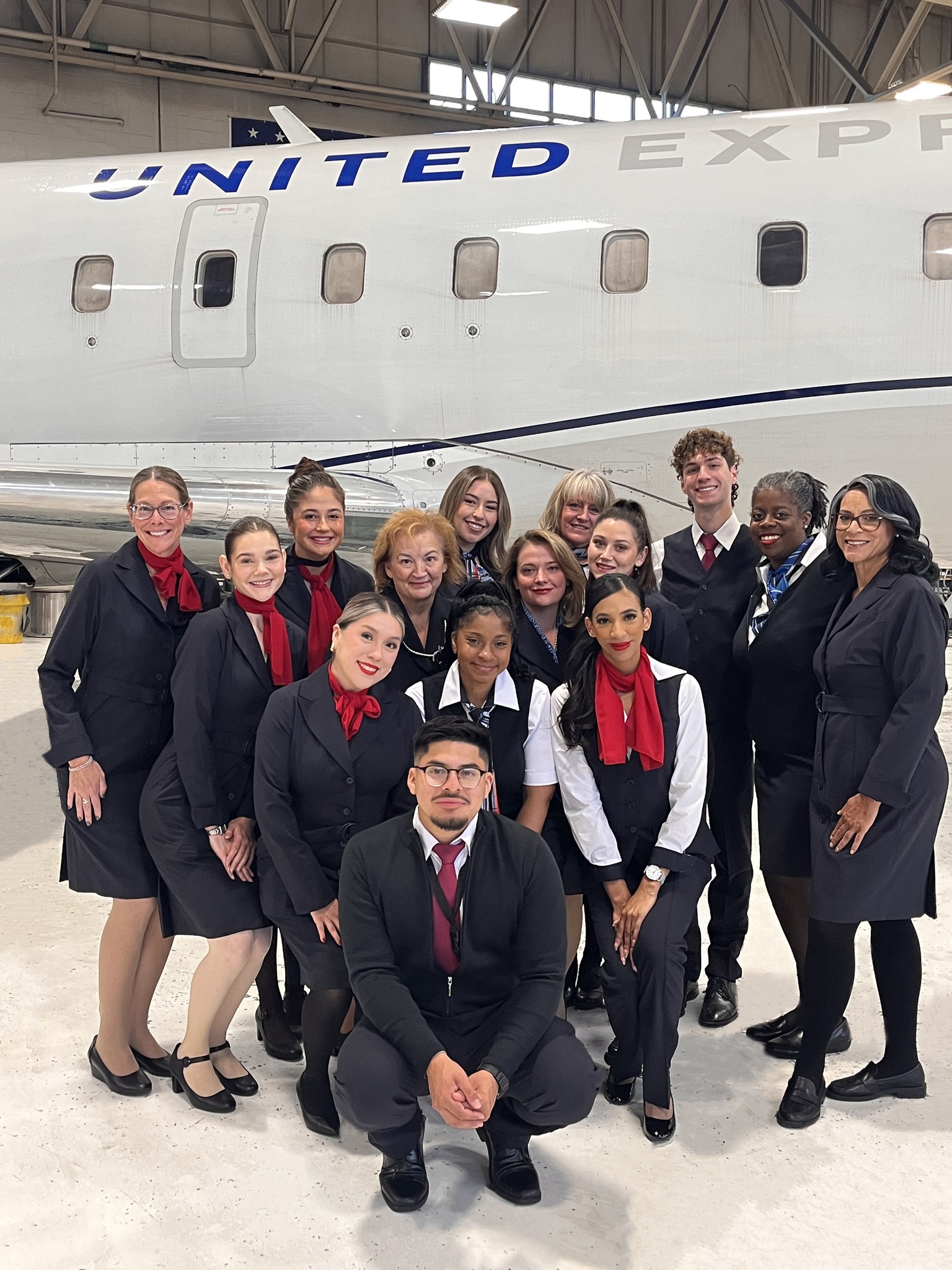
SkyWest-operated United Express
It’s surprising to many the flight attendant contract is the obstacle to a wholly-owned, separately staffed regional carrier at United – not the pilot contract. However if this restriction were relaxed, it’s the pilot contract that would effectively serve as the limit on what United could do.
- Currently, the agreement says that United cannot conduct commercial flight operations using a carrier in which it has a controlling interest without using flight attendants on the United system seniority list under a union agreement.
- It also says United will not establish or purchase an “alter-ego airline” in whole or in part.
- The only thing it can do with majority control in an airline is establish or buy a Part 135 commuter airline, and if it does it has to recognize AFA and bargain an agreement there.
- Another scope limitation is Foreign Nationals: specific Asian routes can be operated by flight attendants outside the agreement, but this is capped at 1.5% of the flight attendant seniority list, and union members can’t be furloughed until all foreign nationals are furloughed or terminated.
In other words, United cannot own or control a carrier a not use United flight attendants on the United seniority list, except for a commuter carrier where flight attendants are represented by the same union. But United cannot have a wholly-owned regional carrier with a separate, cheaper flight attendant group.
There’s no limit on minority stakes, though. Currently United owns a stake in Republic (which acquired Mesa). That stake is now 22.3%. United previously held a 49.9% stake in ManaAir, the parent of ExpressJet. They own 40% of CommuteAir.
On the pilot side, United Express flying is generally limited to planes with 76 seats or less.
- 50-seat aircraft are capped at 90% of the mainline single aisle fleet
- 70- and 76-seat planes are limited to 255 aircraft, with no more than 153 76-seat planes.
- Those 76/70 limits can expand if United adds qualifying new small narrowbodies: up to 325 total 70/76-seat aircraft and 223 76-seaters, with a formula that also forces removal of 50-seaters once 76-seaters exceed 153.
- At least 80% of all United Express flights have to be under 900 miles.
- United Express flights between hubs can’t exceed 5% of all United Express flying hours.
- At least 90% of United Express flights have to go in and out of hubs and specific large stations.
- Pilot furloughs force 76-seat planes to be converted to 70 seats.
Those are the restrictions United would still be forced to live with, if they could get the ownership and control prohibitions removed from the flight attendant agreement. The question is, how much is that worth to United? How much additional sit pay does that buy?
While it’s religious faith for many unions never to bargain on scope, I actually think it makes sense here for the flight attendants to be willing to live under the restrictions negotiated by the pilots. That’s how it works at most airlines. Pilots are in the stronger bargaining position. And if they’re comfortable with ownership with flying limits, there’s really not much risk to cabin crew.



The countless restrictions and inefficiencies imposed by these contracts are a huge reason why airlines struggle to make money. I can’t imagine running a business that way.
“The countless restrictions and inefficiencies imposed by these contracts are a huge reason why airlines struggle to make money. I can’t imagine running a business that way.”
You call tens of billions of dollars in profits over the last several years, struggling? lol ok.
Airlines struggle because of poor leadership and management. Not labor contracts. Delta and UAL vs AA and the ULCCs – prove that point. Again – tens of billions in profits.
If you “cant imagine” how to run an airline, it’s probably a good thing that you don’t.
If the UA FAs give back this contract language, they are fools.
They have no idea how much this is valued at and only UA does.
They cannot see the big picture , they are just looking at short term dollars. Only UA knows what the real monetary value is and if they are dangling this in front of the UA FAs, it must be worth a lot..
That language is as important today as it was when it was originally agreed to.
Especially when Mainline airlines are salivating with the idea of using regional airlines as much as possible. Look at A^A, the scope clause is so watered down now and seems difficult to monitor their overuse of their wholly owned and partially owned regionals.
No pension for UA FA, only for CO, Change the policy!!!!
Didn’t UAL Corp once own Air Wisconsin at one point? Odd to think that AWAC was flying 100 seat jets for United, which was close to the capacity of their own Boeing 737-200s at the time. I sure do miss those BAe 146s though!
I couldn’t agree more with JR and Scott!
My own input: Take PBS. It’s not bad. Don’t touch Scope!
Numerous regionals already provide lift for UA. Today UA has stake in CommutAir.
They would most likely keep the same job protections the pilots have in place.
Yes it has value to UA but represents no loss of jobs to mainline.
Remember DL owns 1, AA owns 3 and AS 1.
After almost 6 years why do flight attendants have to pay for their own improvements? The pilots certainly don’t.
Alrighty then… how bout that United half marathon in NYC this Sunday… was a much better safety video than the ‘blue balls’ one they got now…
@SegmentKing: When Stephen Wolf was CEO at United during the late ’80’s-early ’90’s, he acquired Air Wisconsin. AFA filed a lawsuit because the acquisition violated their scope agreement. The presiding judge ruled in favor of AFA and the company was subsequently forced to sell Air Wisconsin. The wholly owned venture was short-lived, though Air Wisconsin remained a United Express carrier for many more years.
Honestly, that would be fantastic if it means we get some other requests without other concessions. I don’t care that much about scope. The union-crazy FAs that think scope is so important that they won’t even let a ground agent in Europe help close overhead bins on a delayed quick-turn, or let a caterer in Rome help set out water bottles in Polars before a flight when they’re just trying to be nice, are the bane of my existence. It’s called working together! I say let’s default to the pilot’s scope rules and get this contract signed, and get the money in our pockets! I’m all for this.
Giving up scope so that they can continue to reject PBS is an insane position they’ve created for themselves. PBS has been a god send at AA, and while there are ways to improve it, it is infinitely superior to 1960’s style line bidding. I’ve reasoned this out with countless friends at UA and so far none of them can defend their anti-PBS position beyond gut feelings.
Accept PBS, tie it to a higher wage, and leave your scope clause untouched for next time you have no other bargaining chips.
“You call tens of billions of dollars in profits over the last several years, struggling? lol ok.” You clearly have no idea how things work. Airlines lose money flying. Oh, and, by the way, profitability isn’t measured by the smart people by dollar earnings, but dollar earnings on invested capital. Good thing you don’t run a business.
Oops, Thi is my typo.
What percentage of the pay raises for management have to be “off set” somewhere else?
I’m an united express FA, would UA stop using “united express” FA’s and form their own regional?
Gary why are you such a union buster??
I’m an FA at United and I have no problem giving up that scope clause as long as we get all the other things we want/need. Other airlines own a regional carrier, so I’m not worried about it. If United decides to own a regional, they would still have their own FAs. It’s not going to directly impact us. Bring on TA2 and let’s get it done!
American and Delta own regionals. I have no problem at all giving up this particular scope clause, especially if it’ll get us a great contract out of it. Bring it on next week !!!