
American Airlines Chief Commercial Officer Nat Pieper told employees that rivals backfilled hub traffic in Philadelphia, Phoenix and Miami that “should be ours” — and that American is going back to take it. The strategy is not just more seats: it is more premium revenue, better customer experience, faster AAdvantage growth, and a renewed fight in markets where Delta, United and Southwest moved in while American pulled back.
At the quarterly internal ‘State of the Airline’ employee meeting held right after their earnings call last Thursday (a recording of which was reviewed by View From The Wing), Pieper said that after 11% first quarter growth, they expect 15% second quarter growth “and we feel good about that because 65% of it is already booked.”
While “it is an amazing industry backdrop” – the macro conditions for them are good – “we are seeing American-specific, American-unique strategies take hold and drive the revenue performance we are seeing.”
He describes American’s strategy as:
- Grow back Philadelphia, Phoenix and Miami to win back market share from Delta, United and Southwest – win more credit card business.
- Better customer experience
- More premium revenue
- Lean on AAdvantage, which is enrolling customers at a fast clip especially in New York, Chicago and Los Angeles.
They are growing “5% for the rest of the year,” subject to future changes in fuel prices. They’re setting up growth because that makes them relevant to high yield customers who spend a lot on credit cards, so they’re going to fight to take back market share they’ve lost.
Customers in our hubs are our highest-yielding customers. They are the most loyal. They are the ones who want to fly American Airlines and have our credit cards. We are going to generate the most premium revenue from those customers, so of course that is where we should grow.
Philadelphia, Phoenix, and Miami are the places we will grow. We will grow other hubs too, but those are the three hubs where we lost market share over the past six or seven years, and we are going to march right back in and take it. By the way, who backfilled us in those markets? Delta, United, and Southwest. That traffic should be ours, and we are going back to take it.
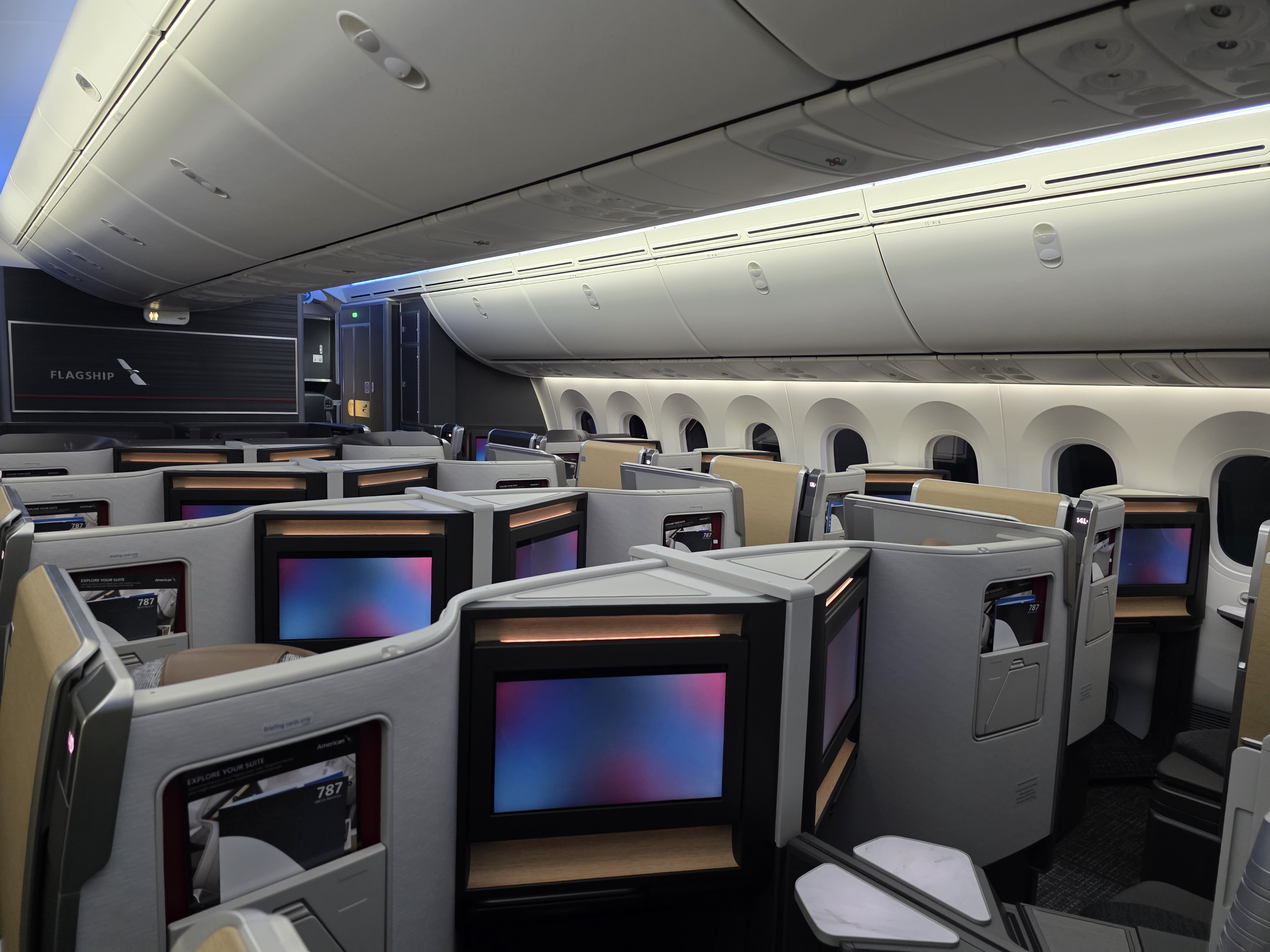
That’s going to be done not just by flying more seats, but by offering a better customer experience.
Customer experience is the second area. That is all [Chief Customer Officer] Heather [Garboden], and I will not take her time, but it is clearly a core part of what we are trying to do.
They’re driving on premium revenue because “Half of our revenue is premium…Our premium revenue grew 12% year over year in the first quarter. Non-premium grew 5%.” He also reports that “London unit revenue was up 25% in the first quarter, and that should continue.”
I am not a rocket scientist, but if premium revenue is growing faster, that is probably where we should be spending and investing. That is what we are doing. Unit revenue on the premium side is equally encouraging.
And AAdvantage is an important engine for them. Enrollments “are up 25%.” And the top 3 cities for enrollment growth “are New York, Chicago, and Los Angeles.”
We are growing in our hubs too, but these are competitive markets where our big rivals also have a presence. Our program is resonating and driving results.
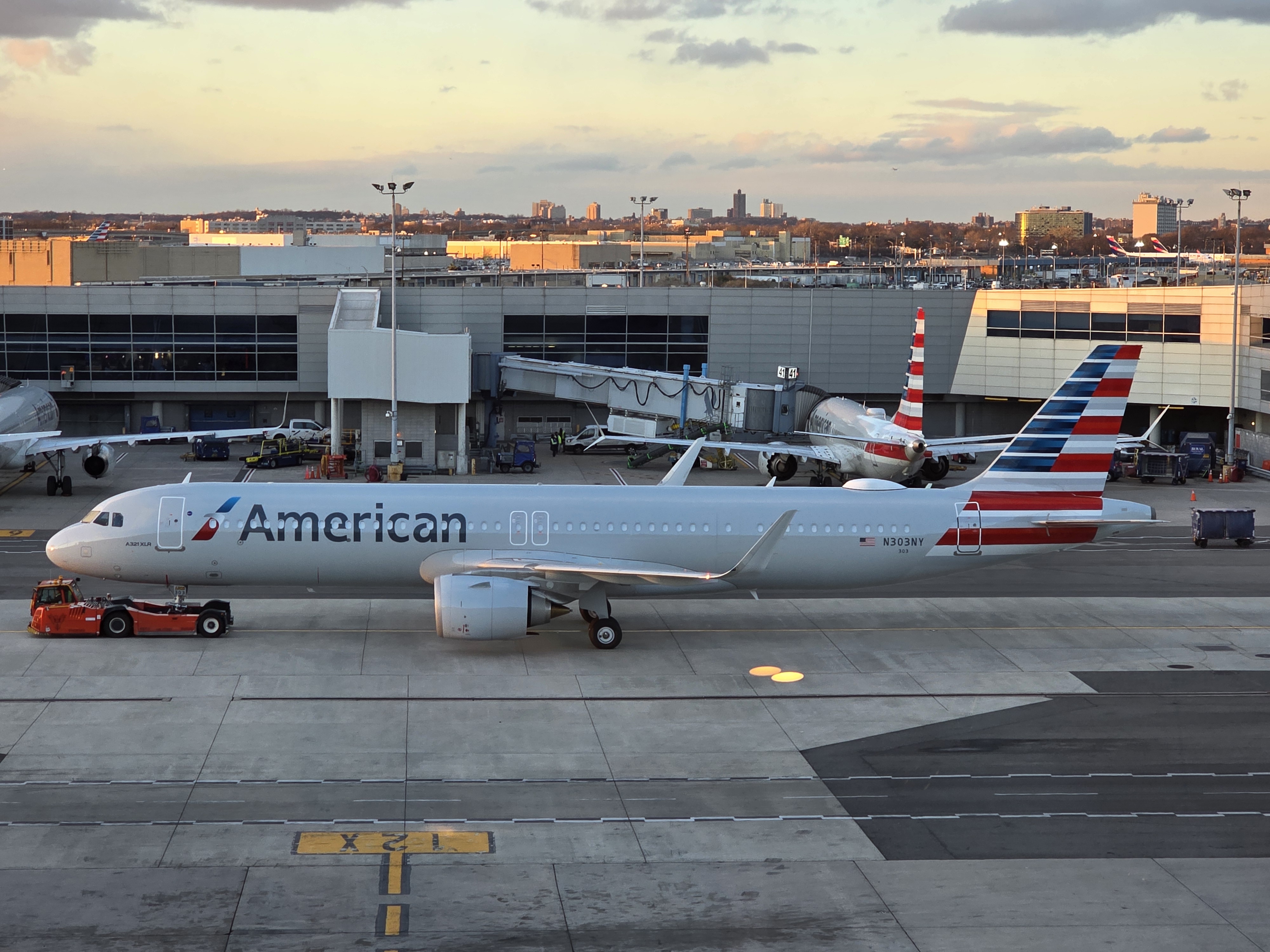
Pieper also addressed Chicago. At the January employee State of the Airline Pieper declared United ‘the common enemy and Chicago O’Hare an existential fight.
The last thing I will say is about O’Hare, which Robert referenced as well. As I was driving in this morning thinking about SOTA, I realized this is my second career SOTA. My first was after our first earnings call. You likely remember it: our big rival in Chicago announced an additional 130 departures on the morning of our earnings call and the day of that SOTA meeting. I remember talking about it here and saying it was an incredibly aggressive move by them. Fine. Game on. Let’s compete and see how it happens.
It is amazing, in 90 days, what the cross-team effort has achieved. We have a schedule in Chicago that we can win with. We are going to fly 500 departures. The airport is going to operate efficiently this summer. Most importantly, we can now use that to figure out the profit-maximizing schedule for American: where we should fly, how to leverage our loyalty program, our corporate contracts, our presence, and the amount of history American has in Chicago. We can compete with United very, very well there. It is a core part of our strategy.
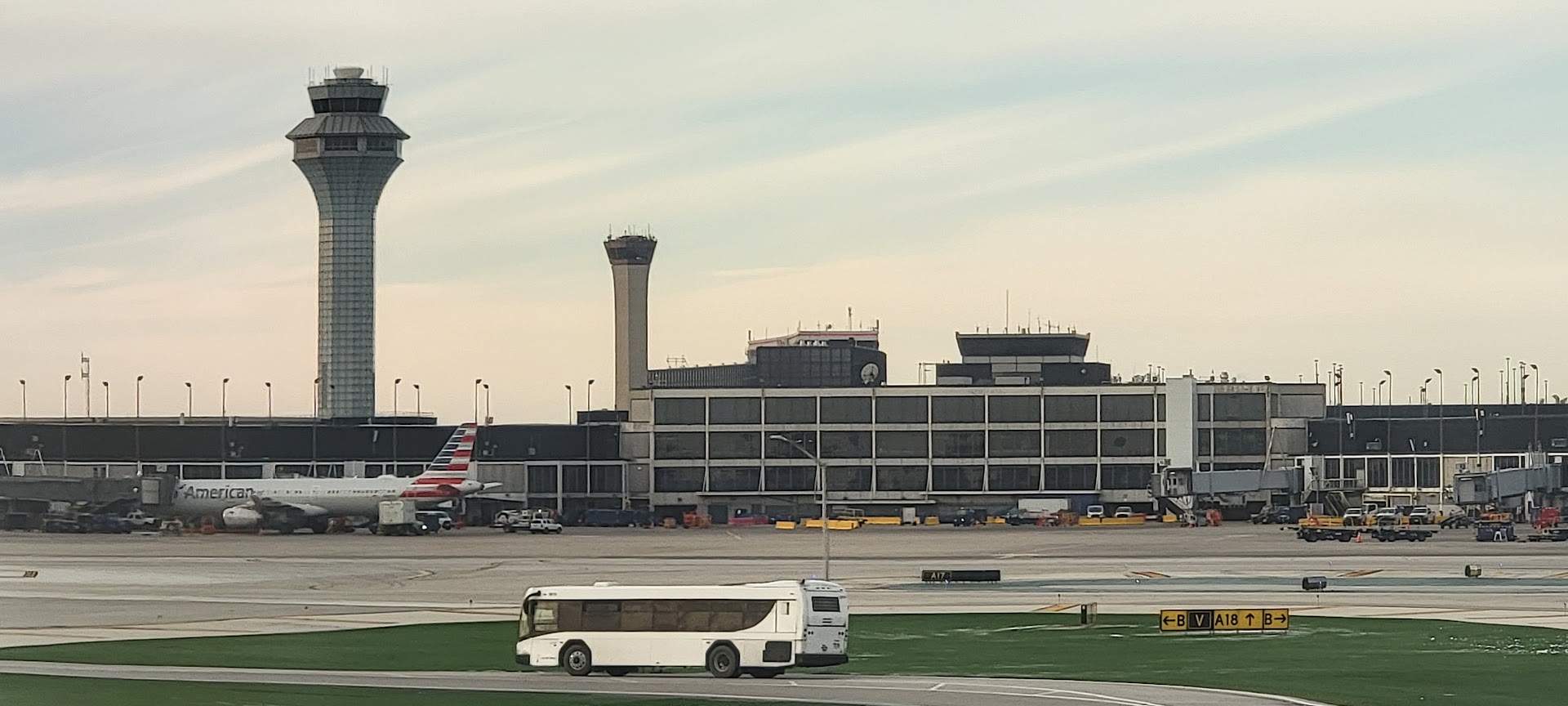
Rober Isom added about Chicago that the DOT capping United’s growth there because of airport capacity puts them in a strong position as well.
I also have to thank Secretary Duffy and Administrator Bedford. When we talk about Chicago, we do not make the rules, but in Secretary Duffy and Administrator Bedford, we have people who want to make sure the industry runs well and Chicago runs well. Hats off to them and to our team for making sure we fared well.
American is finally admitting it pulled back in markets where its best customers live, let rivals move in, and now has to fight to win that traffic back. The description of the strategy is right at a high level. It still remains to be seen whether they can truly commit to it (with real spending), convince employees to go along with it and deliver a premium product consistently, and resist the urge for cost-cutting (including with AAdvantage) that’s still in their DNA.



There it is again: “(a recording of which was reviewed by View From The Wing)”… a Gary exclusive!
And the ‘buzzword’ of our times… “premium”… which makes no sense when worrying about losing competition to Southwest, which is, inherently, NOT a premium airline. (Maybe it wants to be, someday, but it sure isn’t today.)
Vasu Raja was fired in 2024, what the heck has AA been waiting for!!! The traffic that shoudl have been theirs was ignored by AA by under investment and outright destroying relationships with key partners. This whole debacle of ignoring dollars to chase a penny is their own fault.
DL has a partnership now with LATAM which AA lost at MIA. Not sure about PHX. The lounge situation is truly dreadful. Nothing screams America West more than PHX.
@flyingcat
part of the problem was the new commercial officer, Heather, has made her career making fun of product, NPS, and everything else she now advocates for and saying they never mattered. Vasu leaving had little to do with product and everything to do with the actual cost cutters taking charge but it seems… after more than a decade, even they may have seen the light. I suppose we’ll see if she’s really changed
@George Romey — Aww, you don’t like those tiny, upstairs Admirals Clubs? Garsh…
This is the right approach, especially in regards to telling Kirby and United that, “if you want a fight, we’ll give you a fight.” That kind of attitude has really been missing from AA. Now to see if their actions match their words.
every airline loves to talk about premium but there are and will be limits to how much the big 4 can divide the market without lowering fares to compete for it.
It is also pretty rare in the US airline industry for a carrier to regain what it has lost.
the next couple years will be very interesting to watch
@Tim Dunn — You meant to say: “every airline loves to talk about premium but there…” will only be one that is actually PREMIUM… DELTA AIR LINES.
FTFY.
no, what I mean is that there will be a fight for the premium traffic just as there is currently a fight for low fare economy seats which the low cost carriers are losing.
DL is diversifying its revenue away from actual ticket sales better than any other airline which means that they can outlast and subsidize its quest to remain the premium market carrier.
that is not what I planned to say originally but that is very likely the reality
@Tim Dunn:
You stated: “It is also pretty rare in the US airline industry for a carrier to regain what it has lost.”-
How about a carrier gaining market share in market(s) where it newly entered against “entrenched” carriers?