
A family’s Alaska cruise was effectively over before it began after a delayed Delta flight out of Detroit caused them to miss the only Minneapolis–Vancouver connection that could reach the ship on time.
Delta rebooked them to try to save the trip, but the replacement flight didn’t pan out, and once the cruise sailed there was no “meet it at the next stop” option, because a 19th-century U.S. maritime law prevents cruise ships from carrying passengers between U.S. ports.
What followed was a scramble to chase eight checked bags in Vancouver, a drive to Seattle, out-of-pocket flights to Alaska, and a months-long fight over what (if anything) Delta will reimburse.
- A passenger bought an Alaska cruise and land tour as a big family trip, including for their elderly parents. They were flying Detroit – Minneapolis – Vancouver on Delta to get there.
- That first flight out of Detroit was delayed, and they missed the only flight option to Vancouver that would have gotten them to the ship in time.
- Delta rebooked them onto a WestJet flight to get them to Vancouver in time, but when they ran to the gate it was already closed. They report WestJet told them they didn’t have the rebooking in their system, and would have held the gate open if they’d known.
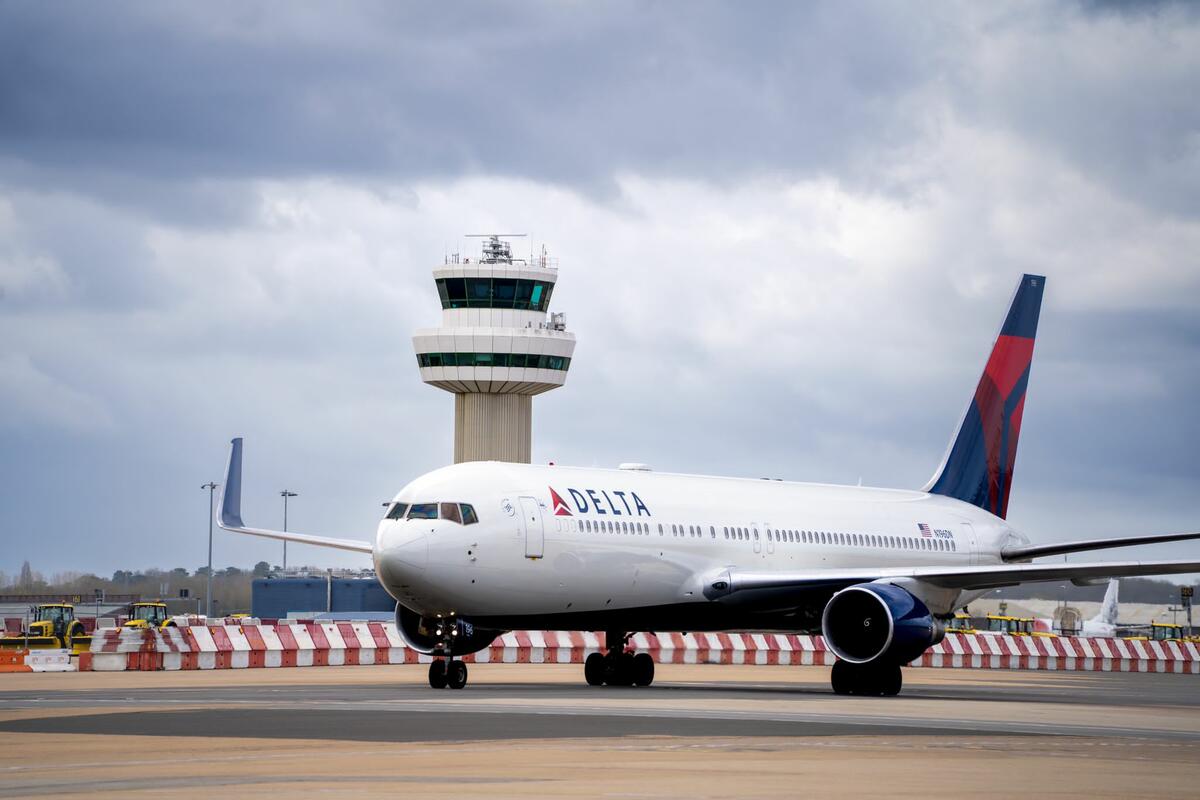
Many cruise passengers give them a lot of buffer traveling to meet their ship, but Delta has promoted itself as ‘the on-time machine’ so I can understand someone thinking they’d make it on the travel day they’d purchased.
Our Detroit→Minneapolis flight was delayed, causing us to miss the ONLY Minneapolis→Vancouver flight that would get us to the ship on time. This delay set off a chain reaction that we had no control over. pic.twitter.com/VpNwa0wamI
— Kelli Young (@KelliYoung1778) January 21, 2026
The passengers were told their eight checked bags were already en route to Vancouver, so they felt forced to go to Vancouver to chase bags and salvage at least the land portion of the trip.
Meanwhile, we were told our 8 checked bags were already on their way to Vancouver. We had no choice but to follow them — and try to salvage the $5,000 land portion of our trip.
— Kelli Young (@KelliYoung1778) January 21, 2026
They wanted to catch up to the ship, Royal Caribbean told them they couldn’t board the cruise at a later U.S. port because of U.S. maritime cabotage rules
The Jones Act! (Or, more likely in this case, the related Passenger Vessel Services Act of 1886.)
Customs and Border Protection groups them together in public guidance, and cruise lines structure itineraries around PVSA constraints.
It’s generally illegal for a ship to transport passengers between two “U.S. points.” Cruise ships are foreign-flagged and they’d have to be U.S.-built, U.S.-owned, and U.S.-crewed. That’s nearly impossible with current U.S. infrastructure. So big cruise ships can’t take passengers from one U.S. city to another. They needed to start in Canada.
Royal Caribbean confirmed we could NOT legally board at any later U.S. port due to maritime law. At that moment, our 7‑day Alaska cruise — the centerpiece of this trip for my parents — was gone. pic.twitter.com/dEEoRxlJRg
— Kelli Young (@KelliYoung1778) January 21, 2026
Delta would cover getting them to Vancouver (their ticketed destination) but not onward flights to Alaska, leaving them out-of-pocket with the cruise effectively blown.
We arrived in Vancouver exhausted after traveling since 4am. Only 1 of our 8 bags was there. The rest didn’t show up until around 11pm. A Delta employee instructed us to stay at the airport hotel and assured us we’d be reimbursed. pic.twitter.com/8ahqhA6Mv8
— Kelli Young (@KelliYoung1778) January 21, 2026
To reach Alaska affordably, we had to rent a car, drive from Vancouver to Seattle, and buy our own flights to Anchorage. It was the only way not to lose even more money. pic.twitter.com/hr41z3AmJ8
— Kelli Young (@KelliYoung1778) January 21, 2026
The customers say Delta committed to reimburse their costs, but they got nothing. Delta’s Contract of Carriage is explicit that it disclaims responsibility for “making connections” and for schedule failures and re-routes. That said:
- Since the itinerary includes an international segment to Canada, there’s a plausible Montreal Convention path for provable delay damages (incremental expenses you can document), subject to defenses and a liability cap. The passenger delay cap is 6,303 SDR (US$9,030.72).
- Canada’s Air Passenger Protection Regulation “inconvenience” compensation could apply to the arrival delay into Vancouver if the disruption was within airline control and not “required for safety.” For a 9-hour delay that would be C$1,000.
Bottom line legally: Delta is very unlikely to be on the hook for missing a cruise, but there may be claims for documented delay expenses under the Montreal Convention and cash compensation under Canadian law, depending on the cause of the delay.
But when we got home and submitted everything — the hotel we were told to book, the lost cruise, one car rental, and luggage-related costs — every claim was denied.After six months, we’re still fighting to be made whole. pic.twitter.com/9nNygetofn
— Kelli Young (@KelliYoung1778) January 21, 2026
We don’t know the reason for the delay of that first flight. And the claim is Delta rebooked the family but it didn’t make it into their partner WestJet’s systems. If that’s a Delta error, rather than just the passengers not making it to the WestJet gate in time, that’s a separate matter.
If they’ve exhausted their claims avenue with Delta, I’d go back to them with a Montreal Convention claim, and a claim for Canada APPR cash compensation (something often overlooked by Americans) if that initial delay was within Delta’s control. I’d also file a DOT complaint, which would just get them a real person’s attention in the response.
Trip delay or trip interruption coverage via a premium rewards card or standalone travel insurance is another path to recovering prepaid nonrefundable cruise and tour losses, provided the passengers have it and subject to policy triggers and exclusions. Finally, if nothing else works, a small claims filing could make sense.
But can I point out how terrible the Jones Act (and related Passenger Vessel Services Act) is?
The U.S. doesn’t even have the capacity to build the ships that compliance with these laws reqiures (which shows that the laws have failed even at their protectionist aims).
Cruise mega-ship construction needs enormous dry docks, a mature vendor pipeline, and a stable skilled workforce. For some ship types, the U.S. hasn’t built any in decades. And the Congressional Research Service estimates that on top of higher costs to build the ships (if you could even build them) there’s a $6 million per year per ship increase in operating costs to be U.S.-flagged. And once you create a small captive market with laws like this, you get high prices and low output, which prevents the scale needed to ever become globally competitive in the space.
The Jones Act is a tax on domestic trade dressed up as national security. It forces U.S.-to-U.S. waterborne shipping onto a tiny, high-cost fleet, raising transportation prices, and hasn’t even given us the fleet of U.S. ships. The high capital costs have given us tiny fleets, not a vibrant domestic industry. But a small number of players benefit and lobby hard for it.
Since there are literally no Jones-Act-compliant Liquefied Natural Gas tankers, New England can’t receive U.S.-produced liquefied natural gas by water, because a compliant fleet for that commodity doesn’t exist so it’s all imported there instead. It can even be cheaper to ship U.S. energy overseas than to U.S. consumers. And it pushes freight off ships and onto trucks and rail whiich mean greater emissions.
Disaster response gets harder because the compliant fleet is scarce. When Puerto Rico gets hit by a hurricane, the world’s shipping capacity can’t bring in the needde goods. Everything in Hawaii is more expensive, because a ship can’t travel from Asia to Hawaii and then onto the West Coast (so everyting goes to the West Coast and then gets shipped to Hawaii). There are similar problems for Alaska and Guam.
And the companion Passenger Vessel Services Act means travelers can’t catch up to their cruise ships when their flights misconnect, so everyone has to waste a day flying in earlier just in case.



First rule of a cruise arrive the day before you depart
Jones act needs to be repealed.
Shipments to Puerto Rico have to come directly from the US state which is why everything cost so much more there
Having made the Airlines my career, I told many a cruise ship passenger to never, not ever, travel to the Port city on the day the ship is to set sail. Cruises are not inexpensive, and when you put out money for a cruise, you want to be sure you are there and ready to board. Mother nature and mechanical issues have no regard for your timetable. Go the day before, enjoy a relaxing evening and board the ship ready to enjoy your cruise.
As a veteran cruiser you never leave on the same day always the day before. To avoid situation like this
Answer: Weddings and Cruises
Question: For what two events do you ALWAYS build in a buffer when booking flights.
If one has a hard time to meet like a cruise, wedding, funeral, business meeting, interview common sense would say fly out the day before because there is always possibility of weather or maintenance issues.
RE: Jones Act – That’s because our “by the people, for the people” Government is no longer either. But if you give someone a 747 or a few million, you get your choice of a pardon for any crime or the enactment of any law that benefits you.
I always fly in the day before, as should everyone, sorry but no sympathy for this situation
I don’t think repealing the Jones Act is the right answer. It could be that we need to subsidize the establishment of new shipyards and maybe subsidize insurance to bring some of the costs down. Having US-crewed ships is a strategic advantage in a national emergency, so something should be done to make it less appealing for the liners to not pay US wages. Of course, there’s never going to be a perfect solution, but we can clearly do better.
The Jones Act is a beast of its own and, again, is not necessarily the reason that Royal Caribbean could not board this family.
I give them serious high fives for driving! wow. They really wanted that trip.
every airline has limits on consequential damages as a result of delays and, as noted, cruises are just too expensive to not arrive at least the day before.
let’s see how this weekend plays out but there will be lots of inconvenienced passengers because of the massive winter storm and some of them will certainly be cruise passengers.
Truly a shame that these folks missed their cruise. However, NEVER..EVER book transportation that will “get you there in time”. Yeah, it might cost you a hotel room at the embarkation point the night before but arriving at the pier after the ship has sailed…
To “Lucky Larry”…leave it to some jackass like you to throw politics into a conversation where politics has nothing to do with the problem.
Always get there the day before. You have time to exhale and this is from a former airline person.
I also agree with abolishing the Jones Act. Wish I could sign a petition.
A frequent cruiser, I’ve never been as affected by it as this travel family was. But it has caused weird diversions of cruise itineraries all which were unnecessary.
As a final note, there is no full-fledged American ship-building industry that these rules are meant to prop up for national security purposes.
@Tomri says:
“First rule of a cruise arrive the day before you depart”
Thing 1 says:
“Answer: Weddings and Cruises”
“Question: For what two events do you ALWAYS build in a buffer when booking flights.”
And the second rule is, including to catch an international positioning flight:
Always book a throwaway backup flight.
And the third rule is:
If ya can’t fly direct and must connect, choose a major hub, in this case, ORD or YYZ and avoid the little fortress hubs.
Oh please. While I feel badly for the family, it’s only common sense that you book flights to arrive at least a day before a cruise departure, because stuff happens. Delta is only responsible for getting the family to their destination, which they did (albeit late.). It’s their own fault that they scheduled things so that they’d only work if things went perfectly.
Expensive lesson presumably learned.
Yet another faluree by Congress that lingers for decades.
I have been on MANY cruises – and when the cruises are not leaving near where I live – such as Alaska, Iceland, Asia – ALWAYS fly in the day before – NEVER the same day! That is the Golden Rule for cruising or anything that is important or where you have spent a lot of money on. The option is to also make sure you have TRAVEL Insurance that you can get your money back – but that is MUCH more expensive that getting a hotel room for an extra night before a cruise
Ugh! Definitely feel for them and admire their efforts to ultimately try and catch the cruise. Maybe they were in a situation where they couldn’t fly out earlier, but in general I agree with others that if it’s something major, giving yourself buffer time (in this case, days) is very worth it.
Gary correct me if I am wrong but the problem is that the cruise originated in vancouver
Cruises to alaska from seattle do exactly that, carry passengers between 2 us ports (forced to stop for 6 hours in victoria canada)
Thoughts?
@Lucky Larry, the Jones Act was passed in 1920.
Either you’re stupid or Trump is living in your head. Your choice.
@Kevin Michael Leary, yes sign a petition, then we need to get forward supplies to troops in a conflict, we can contract to China Ocean Shipping Company.
But hey, as long as you can frequently cruise, I guess that is all that matters.
As a former employee of both the cruise industry and the airline industry, I would reiterate prior suggestions, notably…1) Arrive a day prior to the start of the cruise, and 2) Purchase travel insurance. I would NOT count on the repeal of either the Jones Act or the Passenger Vessel Services Act (PVSA). Exceptions are sometimes granted in rare cases, but I wouldn’t count on it!
On Christmas Day at 10:45pm we received and E-MAIL that our flight schedule for 6:45AM the next morning from our local airport was cancelled. (without reason or comment)
We attempted to call Delta only to be told there would be at leat 240 minutes before we could expect a response.
Nothing was open as it was Christmas Day at 11:00PM
So we drove to our next leg of the trip.
We arrived at the check in at 4:00AM 12/26.
The check-in was mobbed.
We did get a very responsive check-in agent who let us know that when our previous flight was cancelled “due to weather”. our next leg flight had also been cancelled, without notifying us.
She was able to get us our cancelled seats back on our flight to Jacksonville, Fl.
What she failed to tell us was that our return flights from Charleston, SC 7 days later, were also cancelled when the first flight was cancelled.
But that is another story.
Dn’t ask me to rate Delta service at this time.
Face it, the Jones Act is not going to change and if it does, it will be a long time down the road. Therefore spending anytime talking about it is wasted time. The real key to trips like this is to travel earlier to minimize the chance of misconnections. If not traveling earlier, at least have paid for plan B flights that will get you to the right destination to leave on the cruise. I would have looked into flying from DTW to SEA nonstop as part of getting to the cruise. Nonstop flights take one connecting airport out of the equation and taking MSP out of the equation in the winter is worth it because I have had to stay overnight there before when the crew for my connecting flight couldn’t get there in time for the flight. At SEA, driving to YVR is always an option and may be quicker than flying. SEA does have weather delays so maybe another option would be to fly from Detroit to Toronto first and then to Vancouver. All in all, spending money on hotel rooms because of going one day earlier may be a better bet.
Actually it’s The Passenger Vessel Services Act of 1886 that is behind all this. Like many other bills enacted, this one was designed to enrich the pockets of a few select businessmen of the era.
However, the PVSA does exactly what it was written to not do: instead of enriching US businesses by keeping money within the US, the PVSA’s stipulation that a US shipust stop at a foreign port before reentering US territory brings money to the foreign port.
@Win Whitmire – From Gary’s article: “The Jones Act is a tax on domestic trade dressed up as national security. But a small number of players benefit and lobby hard for it.” Legislation crafted by lobbyists to benefit a few deep-pocketed individuals and corporations. How is that NOT political? It may be tangential to the heart of Gary’s article, but he did raise that aspect within his post. I agree that it truly sucks for the family that went through this, but as many others have pointed out, for such an intricate milestone vacation experience, spend a few extra dollars and get there the day before the cruise departs.
Terrible planning for a cruise or anything important. Especially with a route that only has one flight per day..
Flights get delayed, cancelled, overbooked, weather issues, mechanical issues, fog, crews over hours, and things like that all the time. Hello?
Expecting on time – every time- is not reasonable.
First rule of cruising is unless you can drive to the cruise port that morning you should ALWAYS arrive the day before a cruise even if you have NEVER had and issue. Three rules: 1) arrive the day before, 2) buy the travel insurance and the medical coverage, and 3) spring for the late cancellation cabin. The more expensive the cruise the more you have to arrive a day early. If it is $15K cruise who cares if arriving the night before costs an extra $500 for a hotel? Spending $500 to not lose $15K, it not even hard to decide.
This is not about the Jones Act, this is about penny pinching and not arriving a day ahead of time for a group going on an expensive cruise. There are dozens of safety nets for consumers, but when travelers AVAILE themselves of *none* of them – they end up in such situations.
All this ‘sure, stupid laws, just leave a day early’ makes my point about how wasteful and costly the laws are
I will abstain from telling those who are going on a cruise when to arrive.
But I must say, and I knew that before this article – Jones Act is not “U.S. maritime cabotage rules”, it’s US maritime SABOTAGE rules. It makes US river cruises crazy expensive, for no reason.
Contact Christopher Elliot with Elliot Advocacy. He specializes in cases like this and gets positive results almost all the time. He will fight for you
Your explanation of the Jones act is incomplete; maybe you cut and pasted it from another article. What does construction of ships in the US have to do with shipping routes or where ships can dock? I’m particularly interested in how this applies to Hawaii shipping.
And, it’s ridiculous for people to spend this much on a trip with moving parts and not get travel insurance.
I feel for them, but I live on the West Coast and I don’t even fly into Vancouver or Seattle on the day of for a cruise.
Also, insurance-insurance-insurance for anything this expensive. Saved our bacon after my hubs caught C-19 on a flight to Hawaii for our family Christmas in 2023. He gave it to everyone, including his 88-ish year old parents. We had to move from a rental house to an expensive hotel because they couldn’t fly until four days after we were supposed to head home.
Buy it separate from the cruise line and airlines.
Surprise!
Of course they missed the next flight.
Starts out, “family and my elderly parents”
Travel with elderly people ALWAYS requires more time, regardless of mode of transportation.
Has she ever been to a grocery store?
The first mistake was packing “8” suitcases!
Even if the flight was on time, 12:45 PM departure means that they would have landed in SEA at 2:45 PM. With all those bags that were checked in, doubt if they made it to the cruise port by 4PM. There are probably at least 2 earlier Delta flights on the same day, but this flight was chosen probably because it was least miles. The ticket was obviously booked on miles. The person is Platinum Elite, so hard to believe that they never experienced delay in flights….
Correct me if I’m wrong, but I have definitely taken a cruise out of Baltimore and stopped in Port Lauderdale for a couple of days before heading on to Nassau.
The real question is how would anyone be dumb enough to book a same-day arrival for a cruise. Personally I would look to arrive 2 days before departure as cancellations are always possible even when the weather is good.
This isn’t a business meeting that can be rescheduled or perhaps a day lost off a resort vacation. This is thousands of dollars flushed because they did not take even the most basic precautions that you will find on any cruise website.
Oh and FYI travel insurance will not help with onward travel or replacement flights. Travel insurance might cover the cost of hotel rooms due to the delay, but otherwise most policies do not cover replacement flights or car service (as I learned when my Aspen connection was cancelled).
Add graduations to weddings and cruises. Graduation season is coming up in May, so let this be a cautionary tale.
Unfortunate for the family, but they made poor choices in planning such a big vacation. NEVER fly on the same day of a cruise, which they did not do. And they chose to take a risk on losing all of their money by not getting insurance. Neither of these are mistakes of the airlines involved.
Delta is pretty good, but delays are common. This article is click bait, and it got me. 🙁
Even if you leave a day early, airlines can still have issues, so the real answer is air passenger rights legislation, like EU261, Canada’s APPR, where passengers get compensated, often hundreds of dollars, when it’s under the airlines’ control. Of course, additionally, everyone should have a baseline travel insurance policy, which can cover any prepaid fixed costs, such as accommodations, or in this case, the cruise, if missed, as well as medical. It’s usually anywhere from $50-200 per policy, and for a cruise, it’s worth it.
Liberals and democrats are to blame. Biden and his mindless drones
So, an airline is on the hook if you plan poorly and miss an expensive cruise? What if Alex is late for a business meeting and misses a multimillion dollar contract? What if Pat misses a child’s wedding or a parent’s last moments? The agents need to stop overpromising, IF they did. Fix the maritime law. But, come on, the thought DL should pay is crazy.
@This comes to mind — There must be a better way than to broadly excuse airlines for any and all excessive delays and cancellations; why else would anyone pay a premium for a specific schedule if a common carrier can just ‘throw its hands up,’ and say ‘oh, well, we didn’t sell enough tickets’ or ‘meh, we just don’t feel like it today,’ like, none of that is good for business, society, etc. I get it, this is View from the (right) Wing, but, sheesh, some of you shill for big business waaay too much on here. Consumers deserve better than nothing.
I’m not excusing Delta here, but who travels to the cruise the day of the cruise unless you’re nearby. People on my last cruise were asking “Who’s going to be at LAX the morning of and can share an Uber?” That’s wild! One of them was only flying from SFO, and then I *might* take the risk, but I would also understand that I might be buying a flight on a different airline at the airport if there’s a problem.
@Gary
“All this ‘sure, stupid laws, just leave a day early’ makes my point about how wasteful and costly the laws are.”
Yes, the law is stupid and should be repealed. But the true bottom line was that a large family was going on a cruise, but took no precautions against flight delay or cancellation.
Wife and I went on our first cruise(Hurtigruten Norwegian Coastal Express two years ago.) Since we were going from Helsinki to Bergen, the company booked us on a flight that would get in five hours before departure. No sweat! Our plane was originating in Bergen. The flight was cancelled before even leaving Bergen. But it wasn’t announced to us in Helsinki until half an hour before scheduled Helsinki departure.
Long story short. Cruise company booked us on new routing the next morning, meaning we met the ship on its first stop the next day. Only missed one day out of 12. And for the benefit of 1990, we stuck an EU261 on Finnair, for €600, plus hotel, dinner and breakfast.
As I said it was our first cruise. There was a backup flight, until Finnair screwed it up. Bu t we have been on four cruises subsequent to it. Always arrived the day early. One coming up in May from Iceland. A day early.
The bottom line is that family screwed up.
Definitely a tragic story, but also 1000% preventable. As many people have said, this is why you fly in a day early. Had this cruise been during the winter (and obviously to a different destination) I’d have flown in two days early. What’s the worst that can happen… an extra day to spend on vacation? Tough sell. The second thing is that you always, ALWAYS, buy insurance for trips like this, and make sure that said insurance covers everything under the sun, including repatriating your group. Most of the cruise vloggers say that, and the ones that don’t should. Lessons learned.
The Jones Act and Passenger Vessel Services Act are ridiculous – it would be like saying that US-based airlines can’t use any foreign-built aircraft on domestic routes.
Apparently for US politicians, protectionism (even when it’s downright harmful to the public) takes priority over deregulation.
That’s why it’s better to arrive at the cruise departure city a day before your cruise leaves, if you can.