
Delta shared unusal date about its SkyMiles partnerships at an investor conference on Wednesday.
- 4 million linked Starbucks accounts
- 2 million linked Uber accounts
- 9 million Delta American Express cards
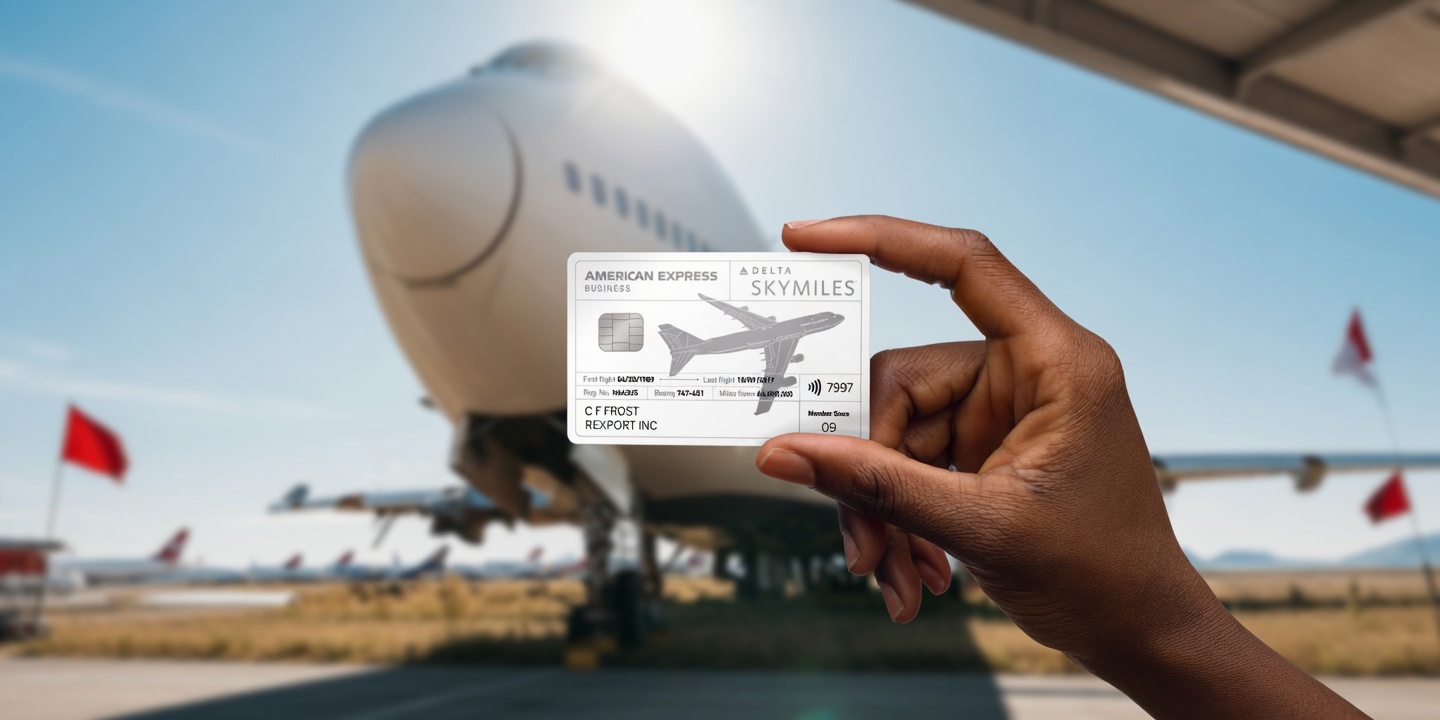
Programs almost never reveal the actual number of members with a credit card. At the end of 2023 Allegiant did reveal 485,000 cardmembers. That kind of detail is rarely ever made public.
American Express says the Delta co-brand portfolio represented ~13% of their worldwide billed business and ~21% of worldwide cardmember loans at Dec. 31, 2025. All Amex co-brand portfolios combined were ~26% of billed business and ~36% of loans.
- That implies Delta is about half of Amex’s global co-brand billed business
- And that the Delta portfolio is especially lending-heavy, with 21% of loans against 13% of billed business.

Remember that the real ‘cross-subsidy’ in rewards cards isn’t between rich and poor, it’s from those who don’t pay off their card every month to those that do. The richer rewards cards can rebate the full value of interchange (merchant swipe fees) to the cardmember. They make their money on fees and APR. So they’re spending on rewards to acquire lending, and in the case of ultra-premium cards, to earn the annual fee.
At the investor conference we again heard that Delta Amex spending is “approaching 1% of U.S. GDP.” They’ve been making this claim for three years, and it’s still only ‘approaching’. In fact it doesn’t appear to have gotten closer.
- Three years ago I wrote that it was probably 0.67% of GDP and they were rounding up to 1%.
- Amex data gives us another window into this, suggesting that’s still about right. Amex 2025 worldwide billed business was $1.67 trilling, and Delta was ~13% of that, suggesting ~ $217 billion spend on Delta co-brand cards. U.S. GDP is an annualized $31.8 trillion, so spend on the Delta Amex is about 0.68% of GDP.

So what do we know about competitors? Well, Amex broadly has 86.6 proprietary cards open.
Chase has 59 million active accounts, and has been opening about 10 million new accounts per year. Important point: banks and loyalty programs generally only disclose how many new accounts they’ve opened, not how many accounts get closed. It’s the net that’s important, and there’s churn.
Citi ThankYou Rewards has over 15 million members.
Overall, though, for as important as these cards and programs are financially, we get very little disclosure about them. And then we continue hearing executives complain their stocks are undervalued, that this business is a huge driver of value, and that they’ll be ‘working’ on greater disclosure going forward. I’ve been hearing that for a decade and so far it’s never really come true – except that we now know how many Delta Amex cardmembers there are.



Ever since they got rid of the MQD waiver, I’ve no longed spent the $25K/year that P2 and I used to on these cards for the better part of a decade to earn at least Platinum Medallion. Two free checked bags won’t bring me back. Good riddance!
Headline says the card holders are “carrying a lot of debt”, but the article doesn’t provide any detail about that debt or even how much it is.
How common is it for American Express card holders to carry a balance on their cards? I know it’s doable, but traditionally that’s not how American Express cards are used.
@LAX Tom – you are thinking of traditional Amex charge cards like Gold and Platinum that are paid off monthly (unless you use their layover time option). The co-branded cards are regular credit cards just like Visa or MC with minimum payments and interest usually over 20% on the unpaid balance. All Amex Delta cards are such credit cards.
If the airlines want the financial markets to better appreciate the affinity card business that is part of the airline operations, then an airline needs to disclose the details that make the valuations more accurate and comparable over time for that affinity card business.