
Delta Air Lines is taking steps to stablize its operations after several significant meltdowns that executives acknowledge could repeat through the summer.
When bad weather or other problems hit, Delta has problems with the recovery and issues spiral. They still run a good operation when everything goes according to plan, but when storms create open pilot trips, its current duty assignment system is too slow and too fragile.
Seniority rules, automated callout limits, penalty provisions, overtime dependence, thin spare staffing, and scheduler turnover mean flights can remain uncovered even when pilots exist and are ready to fly. This causes cancellations to snowball.
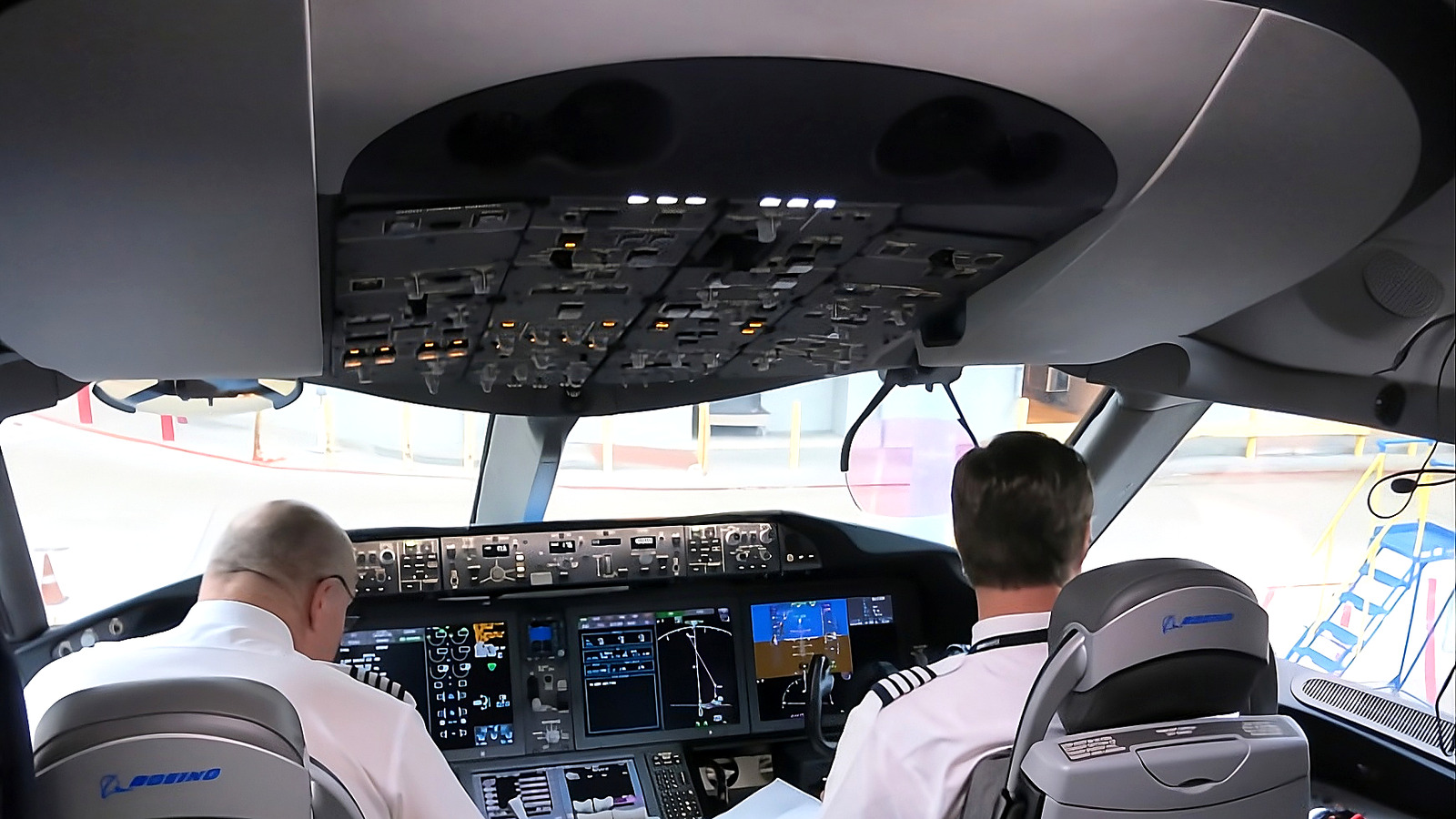
Aviation watchdog JonNYC shares Delta’s internal plan to fix the problem.
delta summer plan
While we continue to lead the industry in on-time performance and set new records in baggage performance, we know we need to improve controllable cancels and IROP recovery. Two areas that are within our control—and most critical to operational reliability—are…
— JonNYC (@xJonNYC) May 13, 2026
In pilot language, while still dancing around the issue (because Delta can never admit they’re anything but the best for brand reasons), they’re admitting that their operational problem is pilot availability and recovery resilience.
Weather may start the disruption, but Delta is canceling too many flights because it lacks enough pilot buffer, crew scheduling capacity, maintenance slack, and aircraft readiness to bring things back online.

The airline is responding by adding reserves, hiring pilots and technicians, staffing up Crew Scheduling, improving tools, trimming flights, and giving maintenance more overnight time. That is Delta rebuilding operational slack after letting the system run too tight – realizing they’ve cut costs too far.
- Pilot availability is the largest constraint. Delta admits cancellations tied to pilot availability are up year over year. Its response is to hire pilots faster, increase pilot reserve levels, add crew trackers and schedulers, improve pilot scheduling tools, and borrow call volume expertise from reservations and customer care teams to reduce hold times when pilots and flight attendants call Crew Scheduling.
- Fleet readiness is also a problem. They say they need more maintenance staffing, more overnight “touch time,” better parts availability, and tailored maintenance programs for both narrowbody and widebody fleets. It also says TechOps is working with Airbus on specific widebody reliability issues and that they hired more than 300 technicians ahead of summer.
- Trimming the schedule to create operational slack. The note says Network Planning, Flight Operations, and TechOps are removing some flights because of higher fuel costs, and this will create buffer during the day and more overnight time for maintenance.
- Make disruption decisions earlier. They hope that watching weather, air traffic control programs, crew availability, and other constraints sooner will let them act before problems cascade.
- Better customer handling during disruptions. They’ll invest in better app rebooking, self-service tools, Delta Concierge, and staffing in reservations during irregular operations.
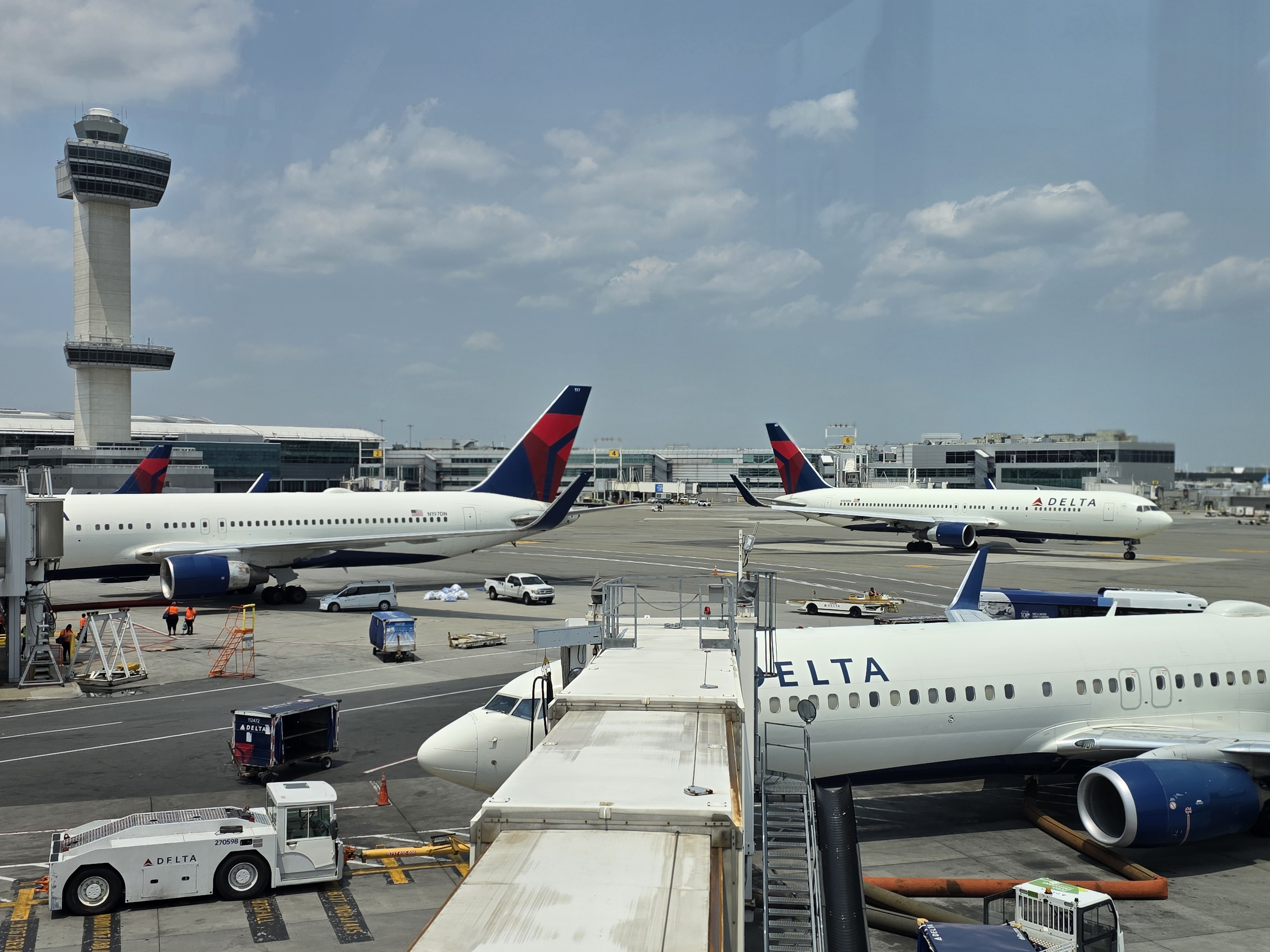
Delta made mistakes, they’re acknowledging those (in their own Delta way) and they say they’re investing to address them. Operational reliability is at the core of their customer value proposition and brand. They have been testing it, so they absolutely have to get this right to maintain their financial edge in the industry.
Unhappy passengers hurt the willingness of credit card customers to spend on their credit card, too. American Airlines invests in more valuable miles to get customers to use their card and stick with the airline. Delta doesn’t want to have to take the drastic step of making SkyMiles better if they can actually get pilots into the cockpit to fly their planes.



“Hire more pilots” – too late for this summer. Even if a class started tomorrow, it takes about 3 months minimum from the initial class thru training (including simulator work and initial online experience) before being released to the line, where you can help cover trips as a reserve pilot.
And Delta needs not just new pilots (i.e. new First Officers). They need existing pilots to upgrade to Captain. Even if a vacancy was announced today, it must be available for bidding for a few weeks before pilots get the Captain award (or not). Then it still takes about 4-5 weeks of simulator training, followed by the same online experience under the watch of a designated supervisory Captain (which takes also takes at least two weeks). So IF Delta offered 100 new Captain positions today, they wouldn’t “hit the line” until about the end of summer anyhow.
This problem was the result of poor planning on the part of Delta’s HR / Crew hiring. They tried to hire the fewest pilots possible, and it’s coming back to bite them. On top of it – increasing the number of highest-paid employees (pilots) is going to hurt their profit margins. Oops.
Huh… staffing issue… if this were UK, EU, or Canada, that’d be on the airline, not the passengers… Someday, maybe we could actually hold greedy corporations accountable instead of leaving money on the table… or not. *sigh*
The ‘D’ in DL stands for dumpsterfire.
But I look forward to Spectrum Boy’s off colour and non-sequitur comments about other airlines without actually noting the actual buffoonery in ATL. Popcorn!
Those “greedy” corporations – how DARE they try to maximize profits to stay in business! The NERVE!
@Tony G. — Nothing wrong with healthy business and competition; shareholders, workers, and consumers can all ‘win’… usually requires good management to balance all the stakeholders. Or, ignore that noise, and just ensure short-term profits for shareholders… *rolls dice*
Let’s be clear that DL’s on-time and cancellation rate slipped in the first quarter of 2026 but they are still in the upper tier of US airlines…. 1% lower than UA and WN but still well above AA and B6.
Let’s keep in mind that DL’s operation was hurt far more by CrowdStrike and they still ended up w/ a better operation that year.
and let’s also be clear that UA’s baggage handling is still at the bottom of the industry which is dumpster fire territory.
Those who live in glass houses really shouldn’t live in glass houses.
and if those levels of operational reliability really matter to consumers, then it is AA and UA that are at significant risk of losing customers to WN because of their significant overlap.
DL will fix this and it is precisely the capacity cuts that have to be made because of high fuel prices that will allow them to run a better operation.
and it is the fuel savings because of the refinery that will allow DL to fund better pilot availability
Let’s be clear folks, Tim Dunn doesn’t know what he’s talking about, and 1990 talks in comments to themselves.
let’s be clear, Roberto.
You can’t stand to admit that, although DL hasn’t been at the head of the industry in terms of reliability, the difference is 1% in on-time and cancellation rate – which is a pretty small difference.
and UA’s baggage handling is far worse than the difference in on-time and cancellation.
facts are not the friend of those who have an axe to grind
@Tim Dunn “Let’s keep in mind that DL’s operation was hurt far more by CrowdStrike and they still ended up w/ a better operation that year.”
It wasn’t hurt more ‘by CrowdStrike’ it was hurt more by its inability to recover from CrowdStrike.
Gary ,
you never told us the percentage of DL’s systems that ran CrowdStrike compared to other airlines.
WN didn’t run any computers on CRWD so wasn’t impacted at all. AA had very low percentages of CRWD and were up and running in days.
UA had 2 days worth of cancellations that were as severe as DL in percentage of flights/day.
DL, in fact, made the mistake of exclusively using CRWD and THAT Is why DL took so long to recover (2 more days than UA).
None of which changes the fact that DL agreed to a much more complex pilot bidding and reserve system than any other airline; DL agreed to more than it could deliver but it allowed DL pilots to be paid more than pilots at any other airline when they really needed extra coverage.
DL will hire more pilots and will be better positioned to grow with its lower fuel costs.
and DL will not lose its position of reliability to the big 4.
and UA will still be at the bottom of the pack in baggage handling even though UA’s fans love to think it is ok for them to beat DL by one month in on time and cancellation but completely bust baggage handling for years in a row.
Real customers know better and that is why DL has and will have a reliability advantage, all things considered.
@Gary Leff is right. “The July 2024 CrowdStrike IT outage caused widespread global disruptions, with Delta Air Lines, United Airlines, and American Airlines among the hardest hit. Over 16,000 flights were canceled globally over 72 hours, with Delta experiencing the worst disruption, cancelling roughly 7,000 flights over five days.“
@Roberto — I responded to @Tony G. See above.
Spectrum Boy did not disappoint with the non sequitur even pulling out baggage whi h is no where to be found in the prior discussion. That is some grade A sycophancy. As I predicted, and it did not disappoint. Spectrum Boy must have a really big sad with regards to all the negative news about Georgia Klan Air these last few weeks; how do you cope kid?
@Tim Dunn – it’s not the outage it was Delta’s failed recovery when the systems came back, the issue – and there’s a throughline to present – is Delta’s lack of resilience. DELTA ITSELF acknowledges it, and with this plan and in statements during its earnings call, even if you are unwilling to do so.
IOW, Gary, you have no data and simply repeat the same nonsense that your boarding area colleagues peddle because it generates page clicks.
Factuality is not your strong suit.
Surely you have some bad employee or bad customer story to run. You’ve been a little sparse on them over the past few days.
Delta said it has not been operationally resilient because of pilot staffing.
They never said that they were negligent about CRWD recovery.
DL received more A330NEOs and A350s than AA, HA and UA received in 787s for years post covid because DL had a separate supplier – but you aren’t capable of putting those two facts together – along w/ the amount of computers running on CRWD at each airline?
DL’s mistake was relying exclusively on CRWD. They don’t do that anymore. With any vendor
Tim, saying “we are worse, but only 1% worse than everyone else” as an airline that markets themselves as the best in the industry and wants to charge people a premium for their operational reliability is a problem.
Isn’t Delta the airline that said many years ago they’ll only have weather driven delays and cancellations in the future – or something to that effect…?
You seem to also think that Delta should be excused for only relying on one vendor for a critical part of its supply chain when literally no other US airline solely relied on one vendor, realising that what happened with CRWD was a risk. You admit it was a mistake but then think that Delta should be let off for it? No they had an unreliable operation then and an unreliable operation now and they will continue to bleed customers because of their poor management.
and tell us, Dear Andy, where UA ever said that bags don’t matter as long as on-time is ok.
You are free to blame DL for having just one IT vendor for CRWD related products as soon as you admit that UA and AA screwed up for not ordering Airbus widebodies.
You LOVE to find the speck in someone else’s eye but can’t see the log in your own.
DL was over CRWD in a week; UA was delayed in its growth plan for years because of its reliance on Boeing – and they still want to pick a fight w/ Rolls Royce over 10 year old engine pricing.
Speck meet log.