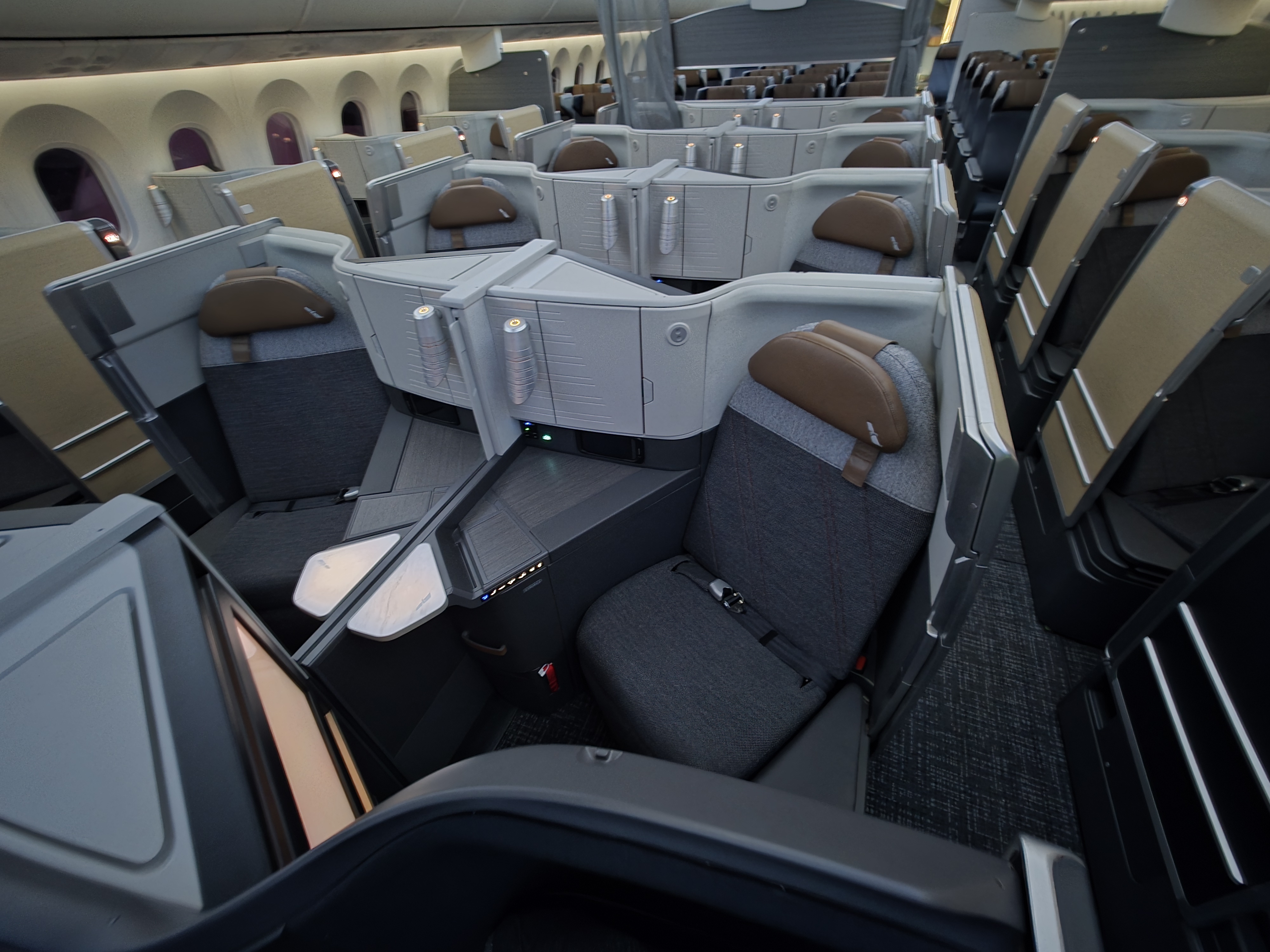
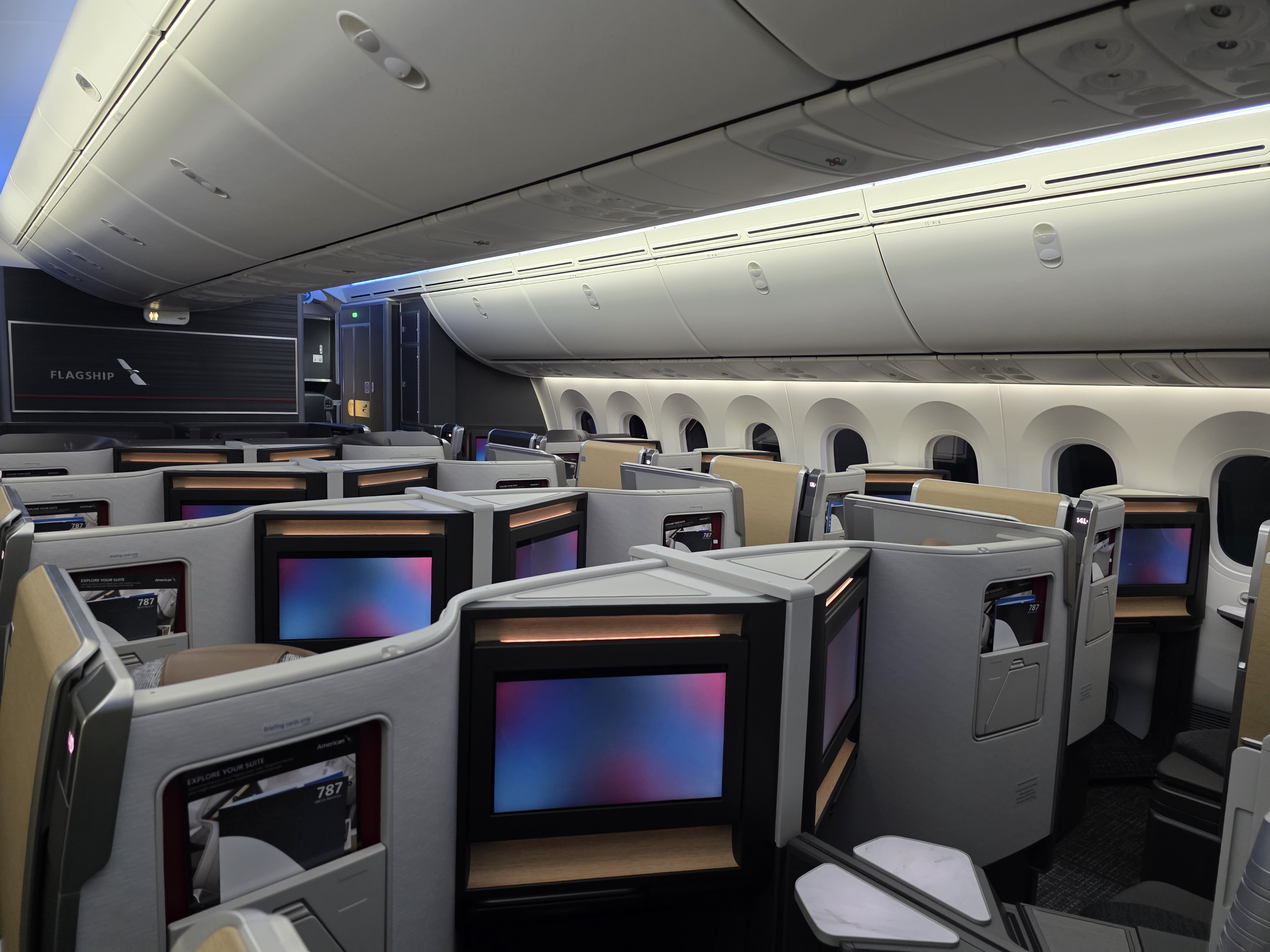
American Airlines has a beautiful new cabin design on its widebody aircraft. It’s new narrowbody cabins are beautiful as well, even before their new plans to add seat back screens into their planes. Business class is suites with doors, the premium economy seat is truly fixed, and coach while dense is at least aesthetically attractive.
The widebody cabins debuted last year on new delivery Boeing 787-9 “P” aircraft. They’re being retrofitted now into 777-300ERs. Boeing 777-200s and 788s will eventually get them. But there remains a problem that holds back the airline’s ability to capitalize on this significant investment, and that’s service.
Business class suites with better bedding and thoughtful details are great. Close the door, though, and passengers say they become invisible to the flight attendants, even when they are sitting upright, awake and watching a movie.
Close The Door, Lose Meal Service
Several flyers report flying long haul and missing meals with cabin crew telling them that they had their doors closed so they don’t get food.
One passenger says the crew actually announced on a Dallas – Brisbane flight that a closed door meant no service. Another missed the pre-arrival meal on London – Chicago while awake and watching a movie, only realizing it when the crew announced that service was over. Another says a flight attendant admonished them for closing the door shortly after takeoff.
Some passengers close a door precisely because they want to sleep and do not want anyone waking them. One commenter had previously told a flight attendant to serve dinner only if they were awake, was awakened anyway, and wished they had had a door.
But this is exactly why there’s a privacy indicator! And cabin crew have long asked passengers at the beginning of a flight, when taking the first meal order, whether they’d like to be woken for the second meal or not? Closing the door is supposed to be a benefit, not requiring forfeiting meal service.
This Has Been Happening Ever Since The Doors Were Introduced
There are absolutely excellent American Airlines crews – flight attendants who truly go above and beyond. That’s usually because of their own internal drive, rather than because of efforts at the company to create a culture of service. However, doors closed no service has been a recurring (but hardly universal) issue over the past year.
Live and Let’s Fly reported last summer that flight attendants were instructed not to bother passengers whose doors were closed. RGV Jetsetter asked to be awakened for breakfast, closed the door and was skipped anyway.
On a later Dallas – Brisbane review, Andy’s Travel Blog says a flight attendant went through the cabin explaining that a closed door meant no service. He opened his door when he woke up before breakfast and then sat for an hour listening to galley noise while waiting for service to start.
The Seat Already Has A ‘Do Not Disturb’ Button
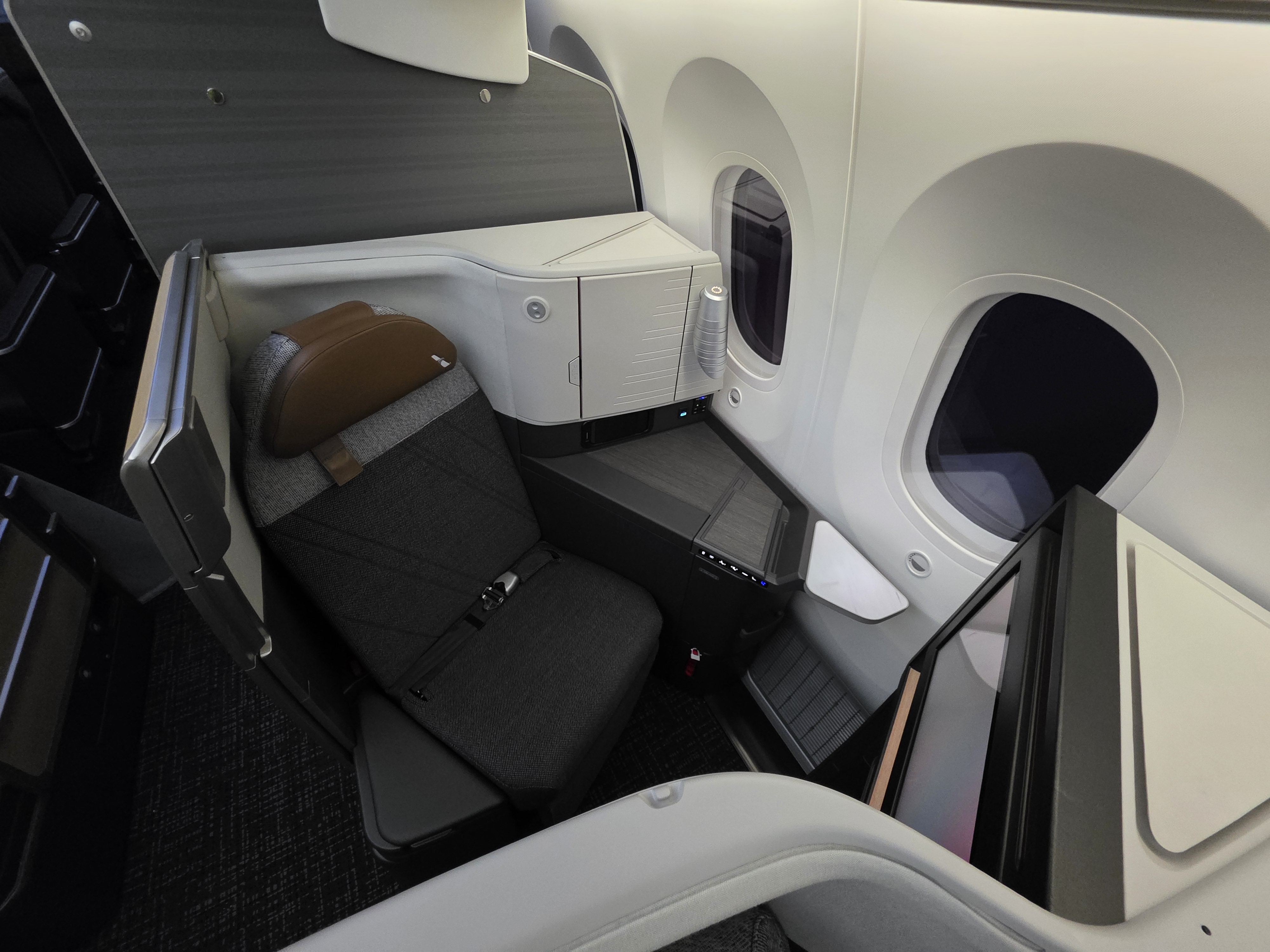
American’s Flagship Suite has an actual do not disturb button. Activating it changes the color of the seat number of hte suite red so the crew knows not to intrude. That’s how this is supposed to work!
- Door closed, do not disturb off: the passenger wants privacy but is still part of the service
- Door closed, do not disturb on: let the passenger sleep
- Door open: interact normally
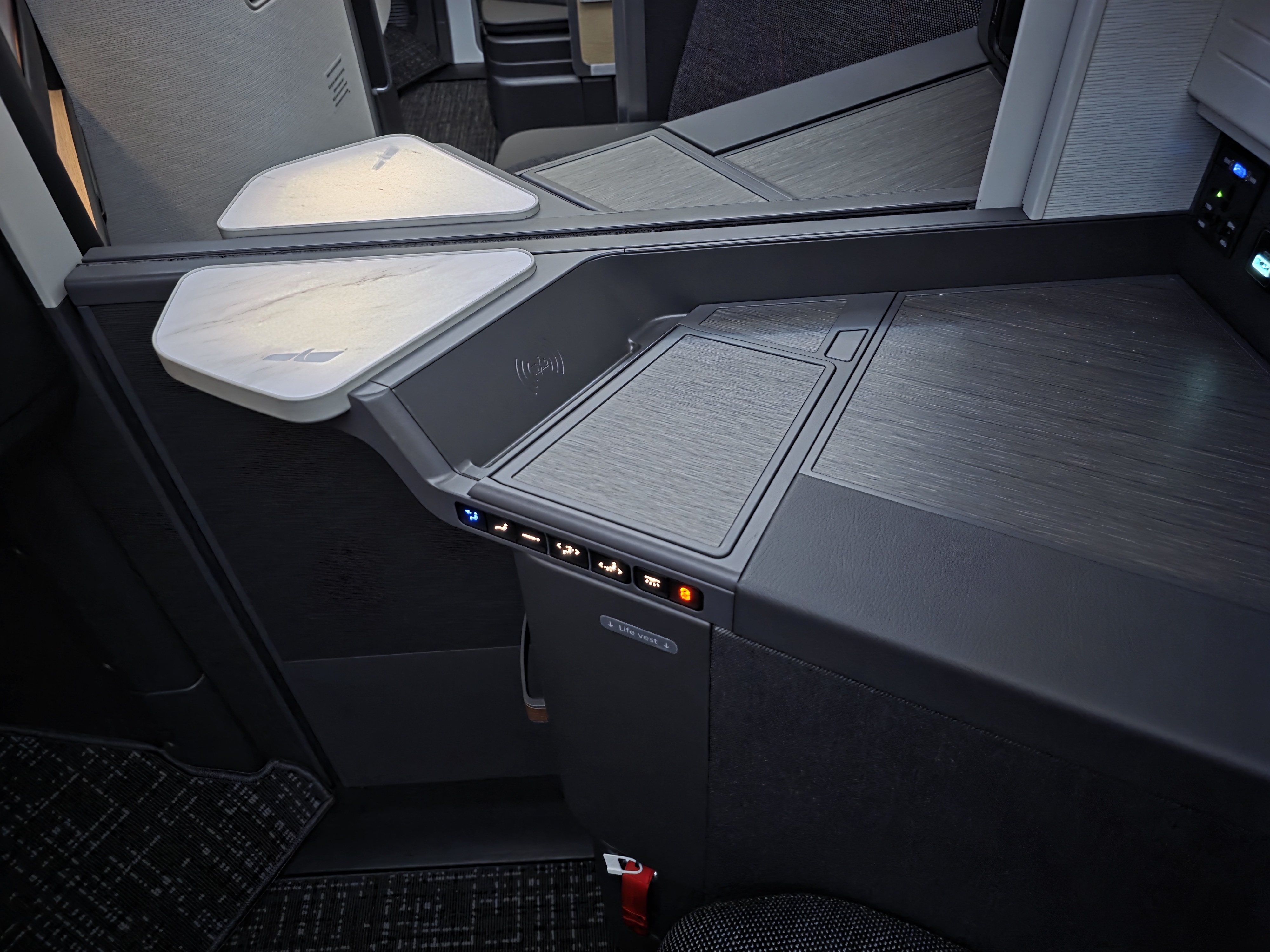
American’s suites are not floor-to-ceiling rooms. They’re not Air France La Premiere-style curtains. A standing flight attendant can see whether a passenger is upright and awake. A glance and eye contact is enough. If someone is asleep, the crew should follow the preference recorded when meal orders were taken.
I have often been asked at the start of a long flight on American (and other airlines) if I wish to be woken for meals. That’s true whether the seat had a door or not. This doesn’t appear to be a problem for the rest of the industry.
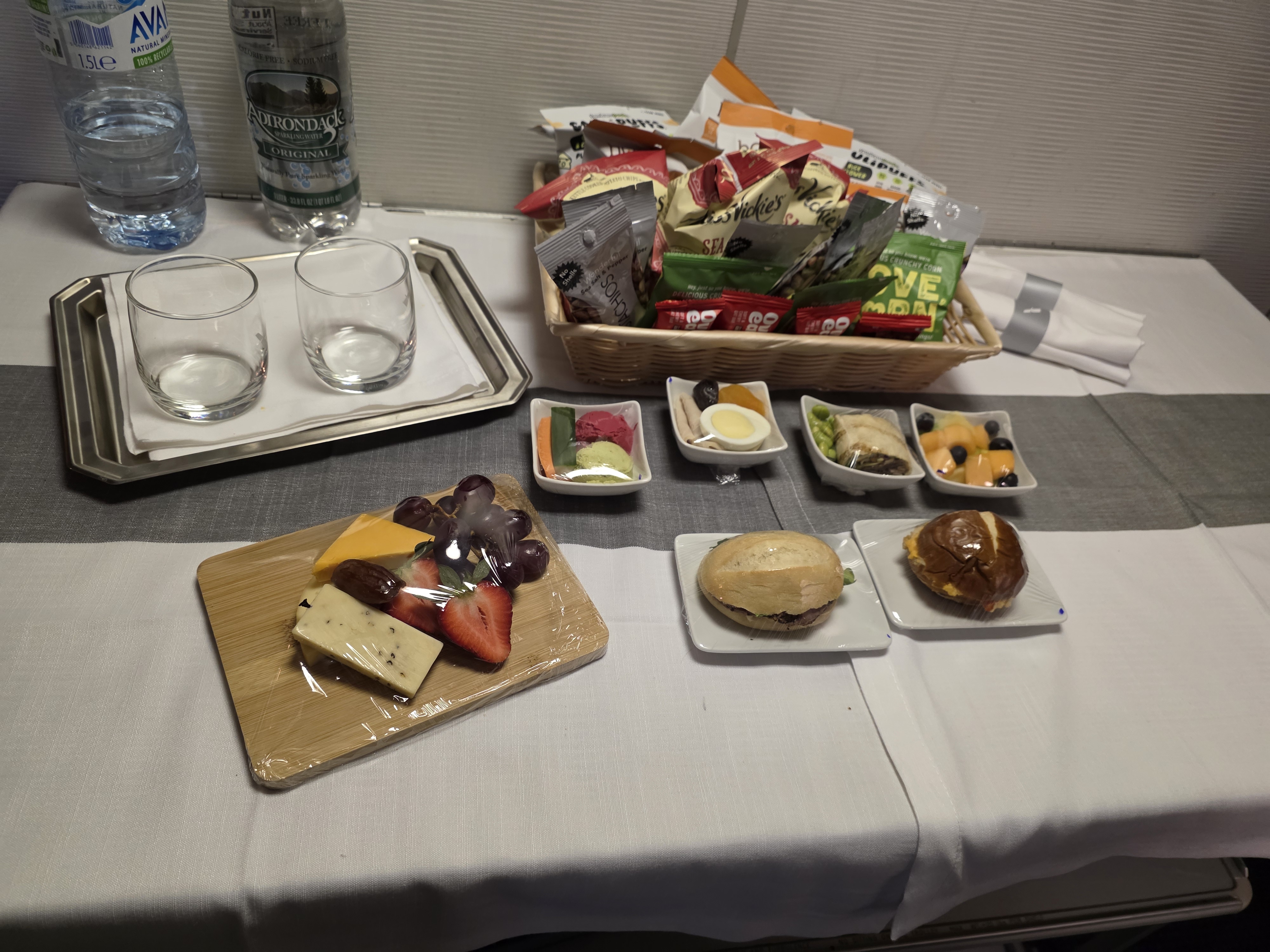
If You Get Denied A Meal, Horde Some Snacks
When I first toured the 787-9P, I described the snack area as more or less a shelf rather than a social space. It is modest, and the exact selection depends on route and catering.
The large walk-up bar on American’s current Boeing 777-300ER is disappearing in the retrofit, but apparently not every place to set out snacks. The preliminary cabin layout shows a much smaller snack station on the left side around Door 2, similar to the 787-9P shelf. A reader familiar with the project described the same arrangement.
American’s Hard Product Is Getting Better, But Last Mile Service Determines Whether That Matters
American deserves more credit than it gets for its recent investments. It has opened gorgeous lounges, improved coffee and wine, upgraded bedding, introduced a very good 787-9P and begun retrofitting other planes. But those investments can be squandered by failures in last mile service delivery.
Some people will look at the reports and conclude that flight attendants are using the doors as an excuse to do less work. But when multiple crews give essentially the same explanation, this is really a management failure at service design, staffing, training, and accountability.
The 787-9P has 51 business class seats. American sought certification allowing the aircraft to operate with seven flight attendants for flexibility when a crewmember is unavailable, while its union warned that service was already suffering. The 70-seat business class cabin on the retrofitted 777 will make the service challenge larger. Staffing an aircraft to evacuate safely is not the same as staffing it to deliver the premium product being sold. And number of staff isn’t the biggest problem.
American has started giving flight attendants performance scores. Those scores can be be affected primarily by catering, delays or broken Wi-Fi that crews don’t. Whether an awake passenger is offered the meal they ordered is exactly the kind of controllable standard that management can actually require. American needs ghost riders.



And who could blame them? With four FAs (and a galley cook) attempting to serve a whopping 70 passengers on the revamped 777-300ER, I can’t for the life of me understand how on earth the boys in Fort Worth think this is going to amount to anything remotely resembling a premium experience.
Ever notice when a flight attendant briefs the exit row passengers with the “I need a verbal ‘yes'” speech, there is almost always one or two who are zoned out in their headphones, oblivious to the human being who is an arm’s reach away and attempting to communicate something important.
There are often one or two who are sharp and aware of their surroundings, although most folks are in the middle but it’s easy to get their attention, but there are almost always the ones on the other end of the spectrum who are oblivious, inside their virtual bubble.
Sooooo, while I’m not trying to victim-shame some of the well-heeled folks who missed out on the inflight meals they paid for as part of the ticket, I can’t help but wonder- in some of those instances, perhaps there was some sort of preflight announcement with easy-to-follow instructions for customer expectations of service vs privacy/do not disturb?
sounds like a “passenger wants it both ways” problem..I want to sleep, and if I change my mind AFTER the service, I still want the service as we are landing , I don’t care if it endangers the staff. And it wouldn’t hurt if the could read my mind to figure it out…