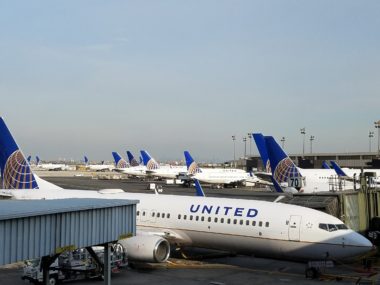
Scott Kirby argues that Newark needs slot controls to manage congestion, but slots are the wrong solution everywhere they’ve been imposed. They lock in incumbents, block competition, and do nothing to encourage airlines to spread demand or upgauge. Congestion pricing would solve the problem without giving away scarce access as a subsidy.

slot controls
Tag Archives for slot controls.
NYC Travelers Hit Hard: DOT’s Slot Waiver Scandal Keeps Fares High, Competition Low
The Biden administration broke up the JetBlue-American Airlines partnership because they were concerned with competition in New York, and didn’t want competitors colluding. Or maybe they just wanted to make sure there wasn’t a third viable competitor to take on Delta?
Because it sure seems that the administration is more interested in keeping competition out of New York than ensuring it.
Spirit Airlines Shakes Up The Race For New Slots At Washington’s National Airport
The recent FAA Reauthorization Bill contains 5 new roundtrips that DOT can assign ‘beyond the perimeter’ and airlines are jockeying for those. What’s odd, though is that Spirit Airlines is asking for National Airport to San Jose, the new slots are limited to incumbent airlines at the airport, and Spirit doesn’t serve National airport.
FAA Endorses Airlines Raising Prices, Limiting Flights In New York
After breaking up the American Airlines – JetBlue partnership which competed against Delta Air Lines, Delta sees a clear path to dominating in the Northeast. That’s bad for airfares and consumer choice. Now the government has taken another step to limit choices and raise fares.
Delta Scales Back Its Attempt To Gain New “Beyond Perimeter” Slots At Washington National Airport
Delta wanted 28 new roundtrips a day authorized, and of course they’d gain many of those for themselves. This faced significant pushback.
FAA Will Continue To Protect Incumbent Airline Slots At The Most Congested Airports
At many congested airports a ‘slot’, or limited number of permissions, is required to take off and land. Generally airlines have slots granted in perpetuity by government and these become properties rights that they can buy, sell, and trade.
However if they don’t use the slots they have at least 80% of the time, they can lose them. These rules have been waived during the pandemic, and the FAA plans to continue extending them.
Europe Will Protect Incumbent Airlines From Competiton At Its Airports Through Winter
Europe has reversed course and announced an intention to protect incumbent airlines from competition at its airports at least through winter. Immediately after the company that coordinates takeoff and landing slots for 46 airports warned airlines that they were going to have to use their slots in the U.K. and Europe or lose them this winter, the European Commission introduced a proposed regulation to extend the waivers. I take it then that Airport Coordination Limited’s warning was more political pressure than prediction.
Airlines Are Going To Have To Fly Full Europe Schedules This Winter To Keep Their Slots
Airport Coordination Limited, which coordinates takeoff and landing slots and slot trades for 46 airports, has issued guidance around U.K. and Europe and not extending ‘use or or lose it’ waivers for airline slots.
Under current rules if airlines don’t operate 80% of the flights they have the rights to they can lose their slots, and have them given to other airlines. This is a good thing.
Slot Controls Don’t Reduce Flight Delays
Interesting research from Alexander Luttmann at UC Irvine suggests that slot controls don’t actually reduce delays at congested airports because large airlines at major airports “already internalize congestion” when planning their schedules.
That makes sense. Heavily congested airports take longer to get planes in and out. Flight times are longer. That means flights are more expensive — they take up more aircraft time and airlines have to pay their crews more, too.
While the busiest airports see plenty of flights, their largest airlines don’t just keep adding flights because that’s expensive, both for the new flights and for all of their existing flights which suffer greater delays and ultimately get longer flight times.