Last year I broke the news that United Airlines was moving its Seattle operation from Concourse A to Concourse B and that the Port of Seattle would have to replace the airline’s United Club near gate A9.
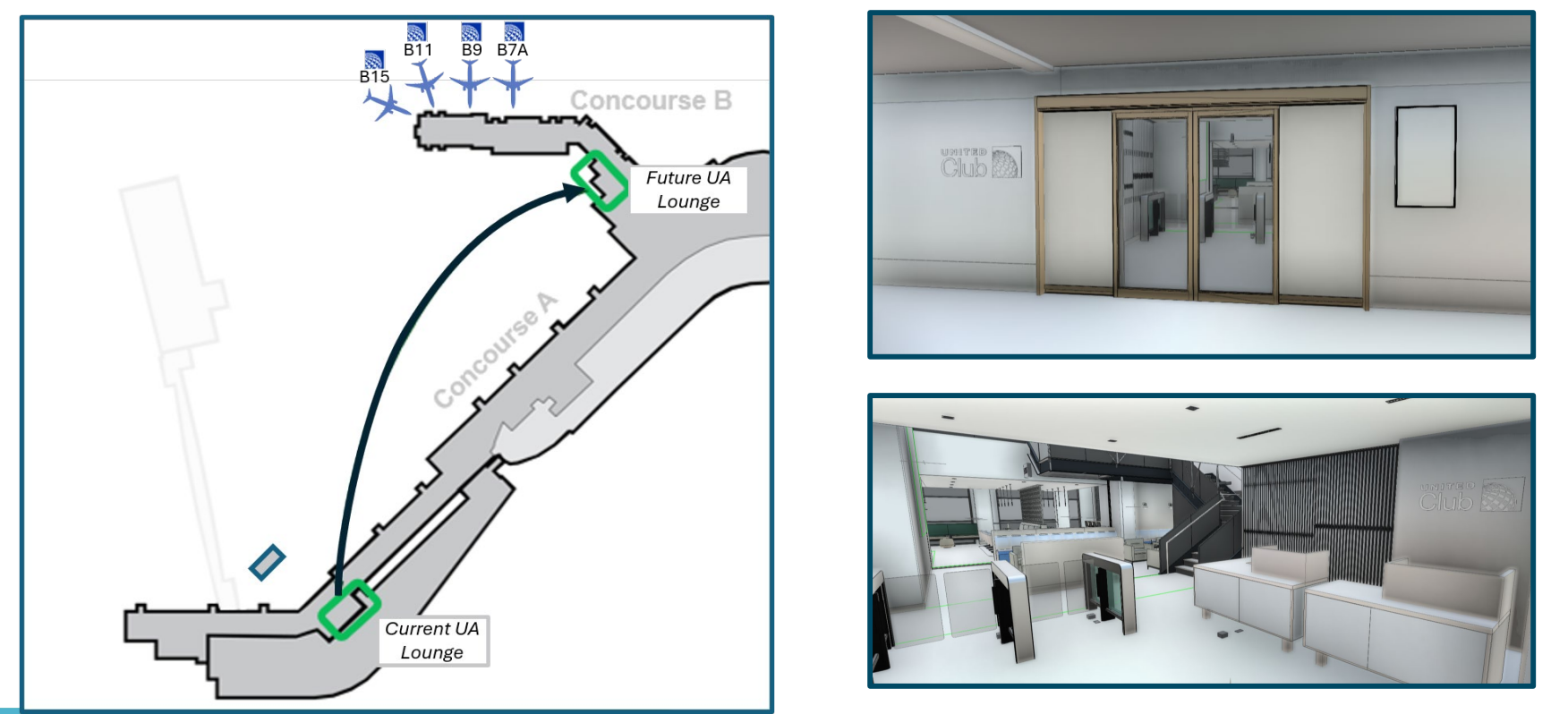
Since then, United itself has been promoting the move with renderings of its new club in the current one.
Seattle is getting a new United Club in late 2027. It’ll have the modern @united branding seen at newer lounges, and I have to admit it looks great. Here’s a rendering of what it will look like: pic.twitter.com/UuvHs5iTPq
— Benjamin Din (@benjamindin) December 15, 2025
That project is finally moving. The Port Commission voted to authorize a $15.5 million reimbursement agreement with United, which has completed design and can now begin construction.
Work is scheduled to start during the third quarter of 2026. The Port’s written schedule calls for the Club to enter service during the fourth quarter of 2027, while staff told commissioners that substantial completion is expected in December. (So we can actually expect a 2028 opening.)
United Is Building Up, Rather Than Just Reusing The Old Amex Lounge
The new United Club will occupy the former American Express Centurion Lounge space across from gate B3, close to United’s new gates B7A, B9, B11 and B15.
That original club opened in 2015 at just 3,100 square feet. In 2017 they added an additional 1,400 square feet (creating a full bar, shower, and 42 more seats). They opened their current club in 2023.
United isn’t just repurposing the sapce. The project is a “brand new two story buildout,” and the renderings show the building being expanded vertically. The completed Club will be 7,181 square feet and include:
- A full-size kitchen
- Family rooms
- Views from both the concourse and mezzanine levels
- Terrazzo flooring
- Decorative wall paneling
- Ceiling artwork
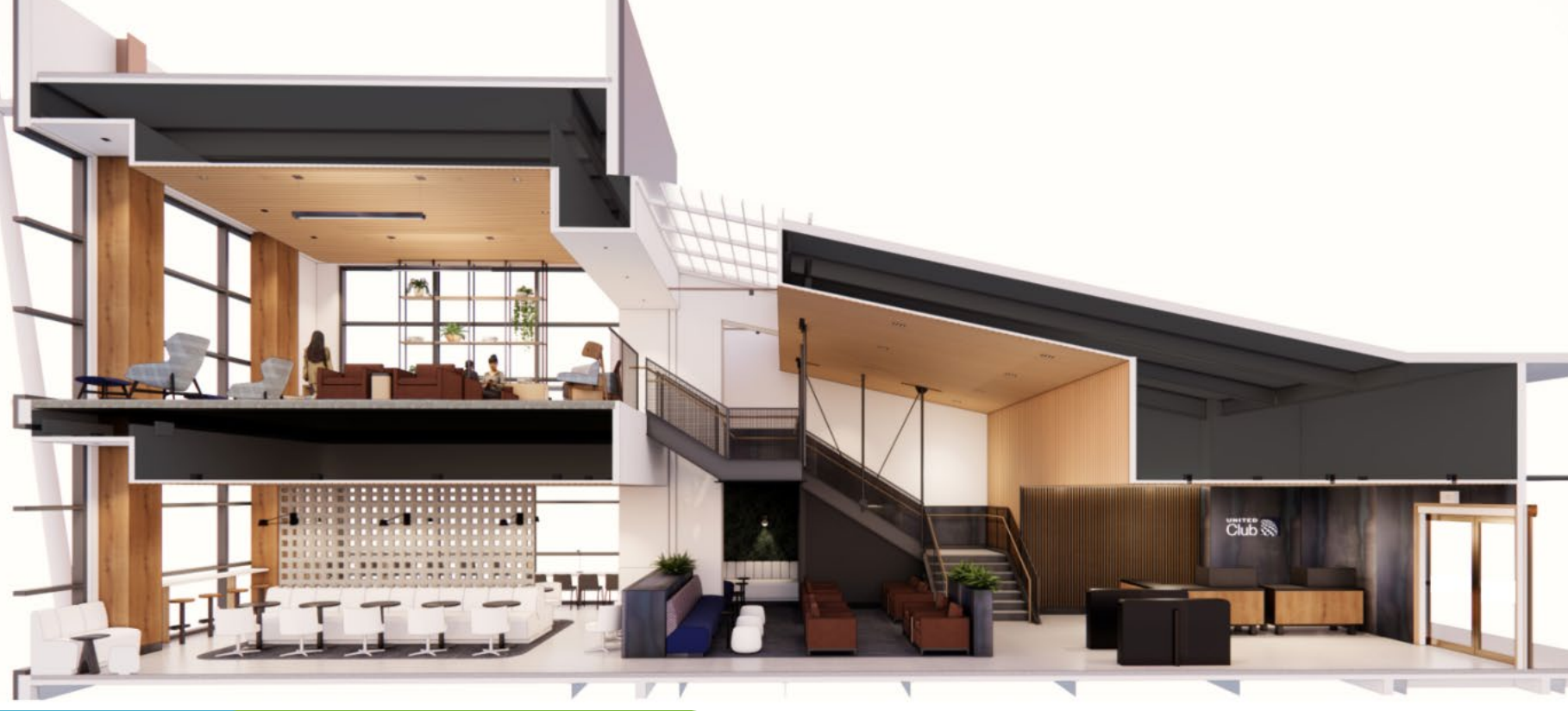
Port staff said United’s lounge standards have “changed significantly” since the current Concourse A Club was built. The terrazzo, wall treatments and ceiling art are described as betterments beyond the Port’s contractual obligation to provide a like-for-like replacement in moving them out of their current club.
United’s newest Clubs offer substantially more hot food than the airline served when the A9 facility opened in 2013, and the replacement is being built to support the current product rather than the lounge standard from that time. As a result, United is topping off the cost of the buildout.
The new club will also be larger than United’s current A9 Club which is 6,096 square feet. United completed its gate and operational move to Concourse B in November 2025. For now, the A9 Club remains open. The replacement puts the lounge immediately beside the airline’s operation again.
This Costs Over $2,900 Per Square Foot
How on earth can a 7,181 square foot club cost more than $21 million?
- $15.5 million will be reimbursed to United for construction, since they have to give up their current club.
- $5.752 million covers design, Port-controlled contingency, project and construction management, and other supplemental costs.
That works out to nearly $3,000 per square foot all-in. The project includes a two-story structural buildout inside an operating airport, along with years of design and project management costs because things take a long time dealing with bureaucracies.
The lounge had been estimated at $18 million in 2021. The latest Port memo attributes the $3.252 million increase to cost increases in construction and to changes in the final design.
The Airport Wants 19% Of The Project Done By Minority And Women-Owned Businesses
The United Club project carries a 19% “aspirational goal” for participation by women- and minority-owned businesses. The Department of Transportation suspended these goals after determining that race- and sex-based preferences were unconstitutional. However, the Port of Seattle operates two separate programs.
- For federally funded transportation projects and airport concessions, the Port has suspended its disadvantaged-business goals. New contracts receive a zero-percent goal, and participation on existing contracts cannot be counted while Washington reevaluates every certified business. Under current federal guidelines, business owners must now demonstrate individual social and economic disadvantage without relying on their race or sex.
- The United Club’s 19% figure comes from a different program covering women- and minority-owned businesses on locally-funded Port contracts. Since this is being paid out of airport funds derived from airline charges, The Port says the program is “squarely within the authority of the Port, independent of other government requirements.”
- Washington state law prohibits preferential treatment based on race or sex in public contracting. The Port’s argument is that an aspirational goal isn’t a preference. It encourages outreach and documented efforts but doesn’t reserve work or require the Port to select one bidder over another. The Port’s governing resolution says that no utilization percentage can be a condition of receiving a contract. The Washington state attorney general’s position is that aspirational goals, outreach and training are permissible as long as they don’t result in a less-qualified contractor being selected over a more-qualified one.
- In truth, inclusion plans are considered when the Port evaluates bids. After selecting a prime contractor, the Port negotiates a final participation commitment and once the contractor accepts that percentage, it becomes contractually binding.
So the 19% figure isn’t a federally suspended disadvantaged business quota. It is part of a separate local program, although since contract selection is judged in part on the contractor’s inclusion plans and those plans become contractually-enforceable, it may not pass state constitutional muster if challenges. The airport’s position is that the winning contractor is merely required to honor whatever participation commitment it ‘voluntarily’ accepts. Fascinating stuff, really.
This Club Has Been Years Late
The lounge has been under development since at least 2021. Airport materials in 2022 projected finishing it in the fourth quarter of 2023. In September 2023, staff expected to seek construction authorization during the second quarter of 2024.
Approval has now happened. And a 7,000 square foot lounge is appropriately sized to United’s modest operation in Seattle. This club will surely be a meaningful upgrade – a new, beautiful space with proper kitchen located beside the airline’s gates. It’ll just be about a year and a half before customers get to use it.
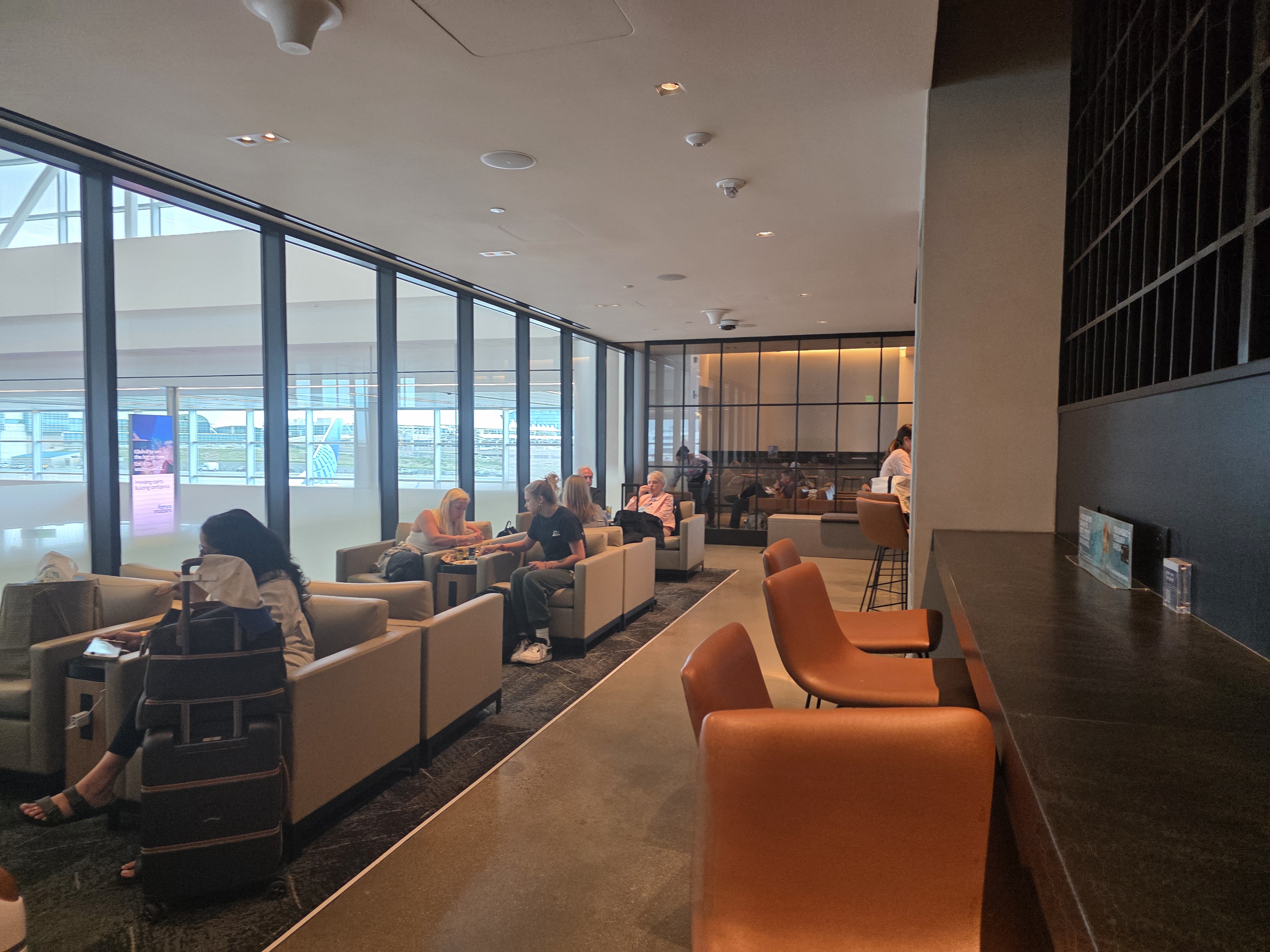
United Club Denver
What Happens To The Old United Club?
Delta operates now on the A concourse. Their Delta Sky Club and Delta One lounge are at A11 totaling 24,000 square feet, while this United Club is at A9.
As far as I can tell, the United Club doesn’t share a wall with the Delta lounge complex, so Delta’s space couldn’t just expand into United’s. If Delta took control of this space it would have to be a separate lounge, or they might use it for operational space.
In fact, if Delta wanted to expand its lounge complex footprint it would be easier to do it into the since-cancelled expansion of The Club at SEA. A 6,000 square foot expansion of The Club was cancelled at the end of 2025. So it seems plausible to me that the United Club space sits for awhile. Delta could use it for a different purpose, or it could become a contract lounge (like Plaza Premium) or a small bank lounge (like Chase or Capital One).
Of course, I’ve been expecting a Chase lounge in the cancelled The Club expansion space because the airport said that Airport Dimensions – which partners with Chase on Sapphire lounges – declining to proceed with its own lounge expansion would provide an opportunity to negotiate an “alternate non-aeronautical tenant use.” That is, a bank tenant use.
Wouldn’t it be interesting to see Chase go in right next to the Delta lounge, and Capital One go in a gate over into the old United space?



Hey as long as there are tampons in the men’s bathroom at the UC like the other bathrooms at SeaTac I’m happy.
Was looking at the layout and thinking to myself, huh, that looks kinda familiar… then read: “The new United Club will occupy the former American Express Centurion Lounge space.” Ahh. (Don’t worry, Tim, I doubt UA is really ‘competing’ here all that hard.) Still, good to see more upgrades, anywhere.
I can hardly wait for the bailout request to Congress hits as the great economy crumbles.
Having solid ground experiences at competitor hubs is important. Whether you’re sniping consistent O/D passengers to your own hubs who want a more streamlined experience (i.e. those who choose to fly UA out of ATL Concourse T to ORD), or you’re wanting to make sure you’re not leaking customers at your own hubs by only offering a good experience at one end.