
In this week’s Airlines Confidential, former American Airlines CEO Doug Parker walked through how airlines, in his experience, try to figure out whether a route is profitable (or how profitable). It’s complicated because you have to figure out how much the portion of a plane that’s flying the route costs, even as it flies other routes too (and consumes maintenance). And you have to figure out how much revenue to attribute to a flight, when passengers are connecting. There’s a lot more that goes into this.
And it’s a good discussion of how hands tied an airline can be in reducing costs in a downturn, how it isn’t really possible to just return planes on lease or sell them easily in a downturn, so airlines keep flying rather than grounding aircraft.
As part of the exercise he ventured into figuring out, how do you allocate credit card revenue to a flight and the explanation he gives of how to think about Citibank’s revenue at American Airlines actually does a lot to explain the huge mistake that American made under his leadership in walking away from New York and giving up the number one market position in Los Angeles and in Chicago.

He’s saying you take the money from the credit card, and allocate it to the flights where the miles get redeemed. And that leads you to make all kinds of mistakes.
I’m talking about the $6 billion that comes into American Airlines every year from Citibank. Okay. A direct payment from Citibank to American Airlines because buying points so that they can distribute them to their customers so their customers can then use them to buy fares. That’s what’s happening. Okay. Pure and simple.
It’s a distribution system that doesn’t end up in passenger revenues, and it should. So we’ve got to put that in, in this example, because it’s big enough we should talk about it. And the way you do it is where I think you were getting. The way the airlines will do this is they’ll go look at which routes get the most redemptions of miles. So we’re going to allocate that $6 billion. We’re going to allocate it based upon which routes people use their miles on. Because that’s where they’re taking up the seats.
And if we didn’t give that route that money… they’d be unfairly penalized so routes like Hawaii would look much worse than they really are because we’re getting paid to put those people on flights to Hawaii and we’ve got to give that money to Hawaii not to Des Moines. So anyway, so that’s what, so it again, for our example, we’re just going to assume Panama City’s, it’s a leisure market. They probably have some reasonable amount of redemption of people wanting to go there. So we’re just going to assume it’s kind of the average. The average is a little more than 10% of revenues. If American, if I’m right about America being at 6 billion, they’re a $50 billion airline, a little more than 10%. We’re going to add 10% in our example.
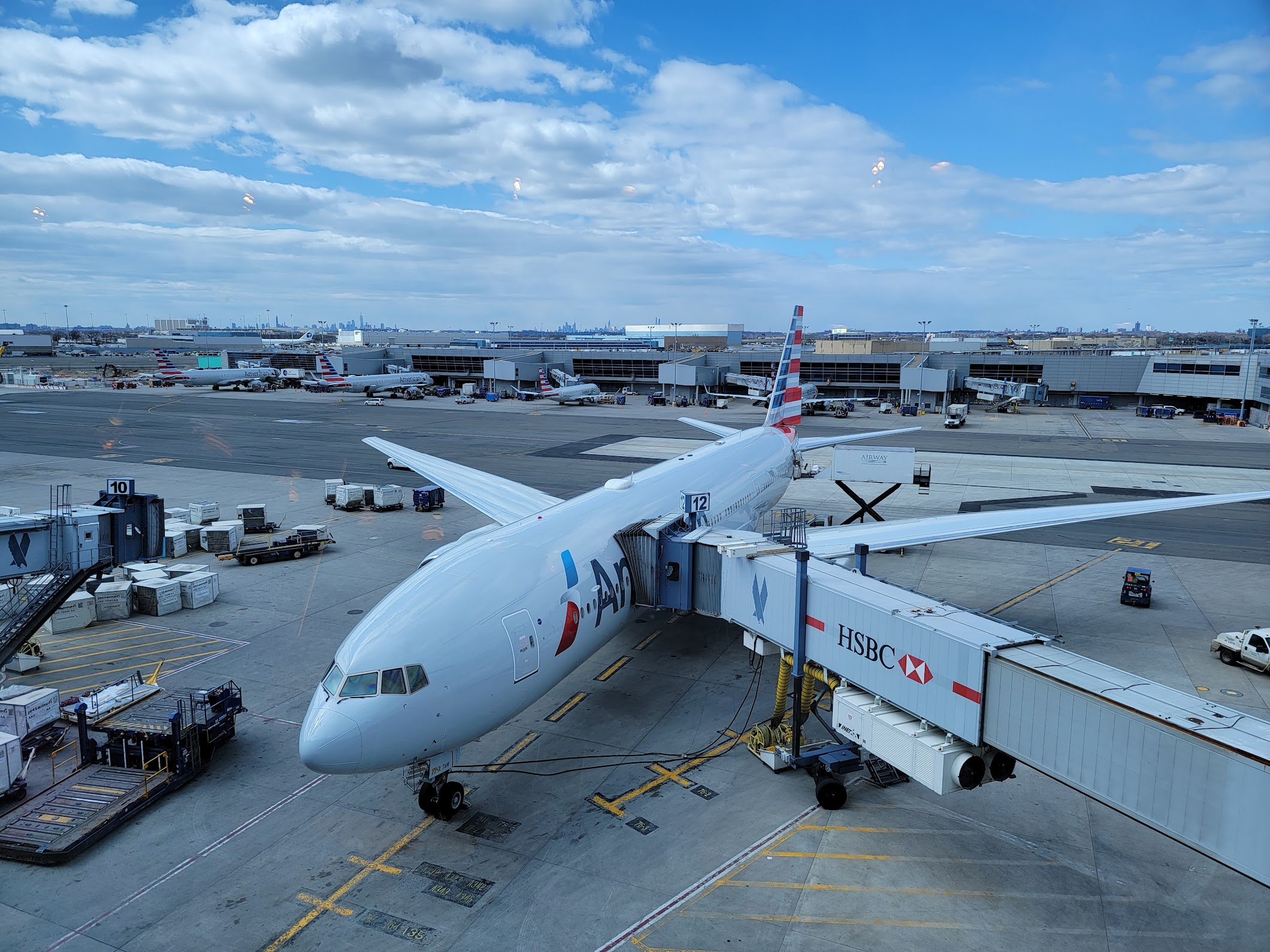
What you want to do is allocate the revenue to the flights that cause you to earn that revenue. If New York customers are driving credit card spend, you want the credit card revenue from those customers to be attributed to the flights that matter to those customers. It’s not where they spend the miles. Spread New York card revenue across all the flights that New Yorkers take.
The entire point of the exercise Parker lays out is that you want to understand the economics of the flight itself, and that’s different than how you’d do the accounting. But what he’s describing is more akin to the accounting (when a passenger earns miles for a flight, that’s a cost of the flight and then there’s a liability on the balance sheet that becomes revenue for the flight the passenger redeems for).
United CEO Scott Kirby actually explained this back in 2017 when he laid out that he needed to grow United’s domestic presence to be relevant in more markets and earn the credit card business of customers in those markets.
Sure, passengers may want to go to Hawaii with their miles but they’re going to choose to fly an airline and get its credit card when the airline has a real presence in the market and offers flights that get those passengers where they want to go.
You want to attribute New York credit card spending to New York customers, and to the flights that serve New Yorkers – not just to their Hawaii redemptions.
- Offering attractive redemptions matters to motivate customers to pursue activity in a frequent flyer program. It’s a big part of why Southwest Airlines went to Hawaii.
- But New Yorkers don’t pick AAdvantage over MileagePlus or SkyMiles because of American’s Hawaii flights. They need American to be relevant to their market. That gives them the opportunity to earn miles flying, to earn status, and to use that status on their flights.
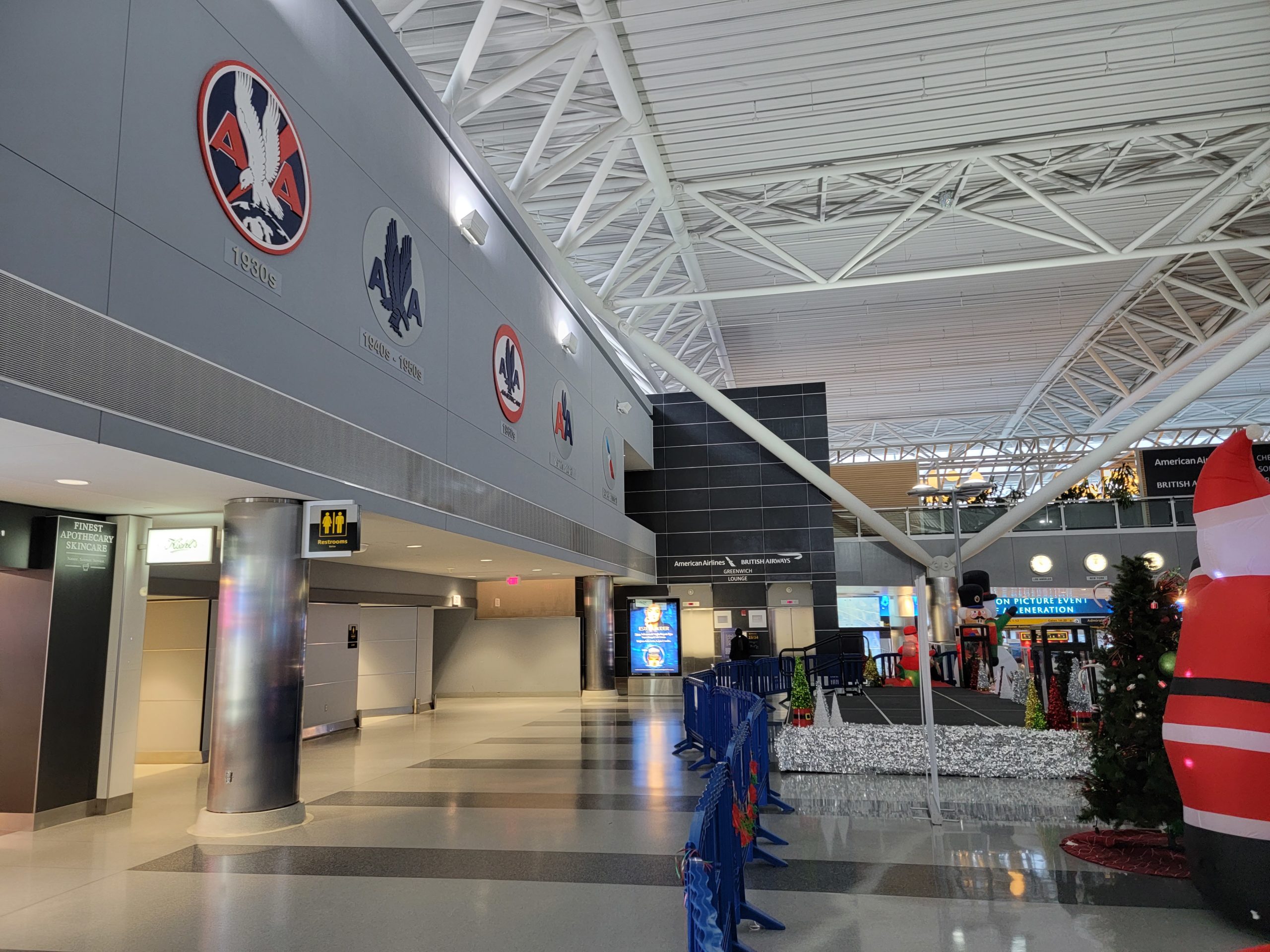
American Airlines used to say that they were losing money in New York, but that’s because they were doing the math wrong. They weren’t including New York credit card revenue in their New York flights (outside of just assuming some system average). So they cut ‘money-losing’ New York flights, until New York no longer lost money. But they lost New York credit card spend as a result because they no longer had a route network that made them relevant to New Yorkers. (N.B. when they partnered with JetBlue they regained relevance and their New York AAdvantage and credit card signups shot up.)
The credit card is what makes American Airlines money, not so much the moving of aircraft from one place to another. It’s high margin revenue. Where you allocate this money matters, and it’s not to ‘the flights customers redeem for’ it’s ‘the flights that allows you to generate that revenue.’

Los Angeles looked like a money-loser. It was too competitive a market, and while American had the number one share they thought they weren’t making money. But pulling back in Los Angeles means less relevance to Angelenos and less credit card spend.
The pullback in New York and Los Angeles and Chicago – important card spend cities all! – helps explain whey American Airlines went from having the number one airline credit card for spending volume a decade ago down to number three today.
So the exercise Parker is explaining matters a lot – understanding the profitability of decisions in the business. It’s just that he was taking the highest margin revenue American Airlines had, treating it just like any other revenue, and assigning it on an average basis across flight redemptions instead of assigning it to the business of the customers generating that revenue. And that led to bad decisions in the business.
Now, though, they’re fighting for Chicago – and they’re explaining precisely that it’s because of the credit card business.



It is beyond mind-numbing that AA and Parker didn’t think through where all of its revenue came from and how NYC and LAX are part of a system.
And, as much as it might tick off some people to hear it, DL understood precisely the connection of NYC and LAX to its global network – that is why they diversified away from DL and NW’s strong interior US hubs.
and while DL’s growth in NYC started before Amex revenue really started taking off, the dumb southerners clearly had a grasp of how its revenue all had to fit together and that its product had to be able to compete in the biggest, most competitive markets just as much as it did in hubs and regions which DL dominated.
and then you get to the legitimate question of whether AA or UA can ever fully match DL’s credit card revenue – simply because Amex has a higher interchange fee.
and let’s also not forget that alot of AA NYC routes still would not have been profitable; AA’s costs were far too high from 2003 to 2012 because of the failed out of court restructuring.
I’m sure as Parker looks back at his career in the US airline industry, he sees what he did wrong. It is just stunning that he didn’t have people around him – including Scott Kirby – who didn’t see it either.
The Amex interchange is a big difference – or at least was before more stratification of V/MC products – what’s sad for flyers is the higher interchange from Amex isn’t being passed through as value for SkyMiles members
Why would anyone listen to Parker? He was one of the worst airline CEO’s. American was once a great airline before Parker’s arrival.
Tim, JFK was never much of a connecting hub for American to begin with. Its peak at JFK mostly consisted of Caribbean routes that it monopolized with like 4-6 flights a day, west coast routes, some Europe, Brazil, Argentina, Tokyo. I grew up flying jfk-Sdq on AA all the time American had little regard of service on those flights knowing people would pack them regardless. Those flights were operated with old A300s that often broke down, had to switch planes a bunch of times one of the times it happened I was moved onto a plane that had seatback TVs (this was well before 2007 as far as I remember). Once competitors like JetBlue started those Caribbean routes and able to operate them at lower costs American was cooked on those routes.
Oh the irony after all the pontificating on AAL’s ORD profitability yesterday. Comical.
Always good to hear from the America West guy.
Lots of whining about AA on here, like usual. However, as an actual NYC resident, they’ve saved me when DL and UA (and B6) have failed. JFK T8 Chelsea, Soho, even Greenwich lounges are excellent; the new Admirals Clubs at LGA B and EWR A are actually pretty nice. Transcon and TATL are decent, too. Using Alaska points for F/J on AA has been especially lucrative. 789 and new XLR are upgrades in my book. (Shout-out to @Peter in-advance on AA Hotels and the push for more MCE!)
NYC, LA, Chicago offer big money spenders and flyers but all are very competitive. AA thought if they went to CLT and DFW they’d have far less competition but then didn’t get the revenue upside.
Alex,
AA was a NYC headquartered airline for decades and was the largest airline at JFK at the time B6 was created w/ a gifted slot portfolio roughly equal to AA. DL was slightly smaller than AA.
During the post covid period, after DL closed its DFW hub and transferred assets to NYC, AA was crying for the FAA to eliminate slots at both LGA and JFK. The FAA eliminated slot controls at both LGA and JFK for different periods of time with JFK being without slot controls longer.
DL was the only major NYC airline that went full throttle forward in adding flights while slot controls were not in effect and the size they are at JFK is heavily because they jumped when the opportunity arose.
And let’s also not forget that this all took place before the AA- US merger which also was before Doug Parker. AA already had been in decline in NYC for a decade – even before Scott Kirby at US gave away 1/4 of LGA’s slots for $60 million.
NYC is not an easy place to compete. CO made the right call in building EWR; DL recognized the value in building its presence at LGA and JFK to be the largest carrier at both airports.
AA just missed the plot in NYC a quarter century ago, long before credit cards were much of a factor for airlines.
You’ve been the CEO of how many airlines?