
A Delta Air Lines passenger says that crew turned his desperate plea to use the lavatory during a diarrhea attack into a security incident — handcuffing him, injuring him, exposing him naked to passengers, denying him the bathroom until he soiled himself, and having him hauled off the plane.
He sued over the incident and won a $7.2 million verdict. Delta didn’t just get a new trial, they got the verdict tossed completely, arguing that they are immune from consequences because it was a security incident and they involved law enforcement.

Now, after eleven years, the passenger is fighting to at least get another shot in court. On Thursday, the U.S. Court of Appeals for the Ninth Circuit heard oral arguments in the case.
In May 2015, the passenger flew from Buenos Aires to Atlanta, connecting to Salt Lake City. This all happened on the domestic flight, but it was part of an international itinerary, so Delta gets to defend itself with the Montreal Convention.
- He asked for food and water on the flight so he could take his precription medication. The original lawsuit says flight attendants refused, he took the medication on an empty stomach, causing diarrhea. Subsequent filings say he was refused by one flight attendant, but another actually gave him crackers, water, and wine.
- He got up several times to use the lavatory. During one of these trips he complained to flight attendants about service, said he planned to file a complaint with Delta, and took a photo of two flight attendants in the rear galley to help with his report.
- About 45 minutes before landing, he was waiting to use the rear lavatory when a crewmember approached him, asked whether he was unhappy with the service, and told him to return to his seat even though the seatbelt sign was not on. He says they were trying to punish him for complaining.
- He explained he had diarrhea and HIV and couldn’t return to his seat until he used the lavatory. They called the cockpit to report a disturbance, enlisted an armed law enforcement passenger, and flight attendants restrained him with flexcuffs – he says too tightly, injuring his arms, hands, and wrists.
- His left shoulder was temporarily dislocated. They applied a second set of cuffs, cut off the too-tight first set, and shoved him, causing his pants to fall to the floor. He was not wearing underwear.
- He pleaded for help pulling his pants up, but he says flight attendants refused “because he has HIV.”
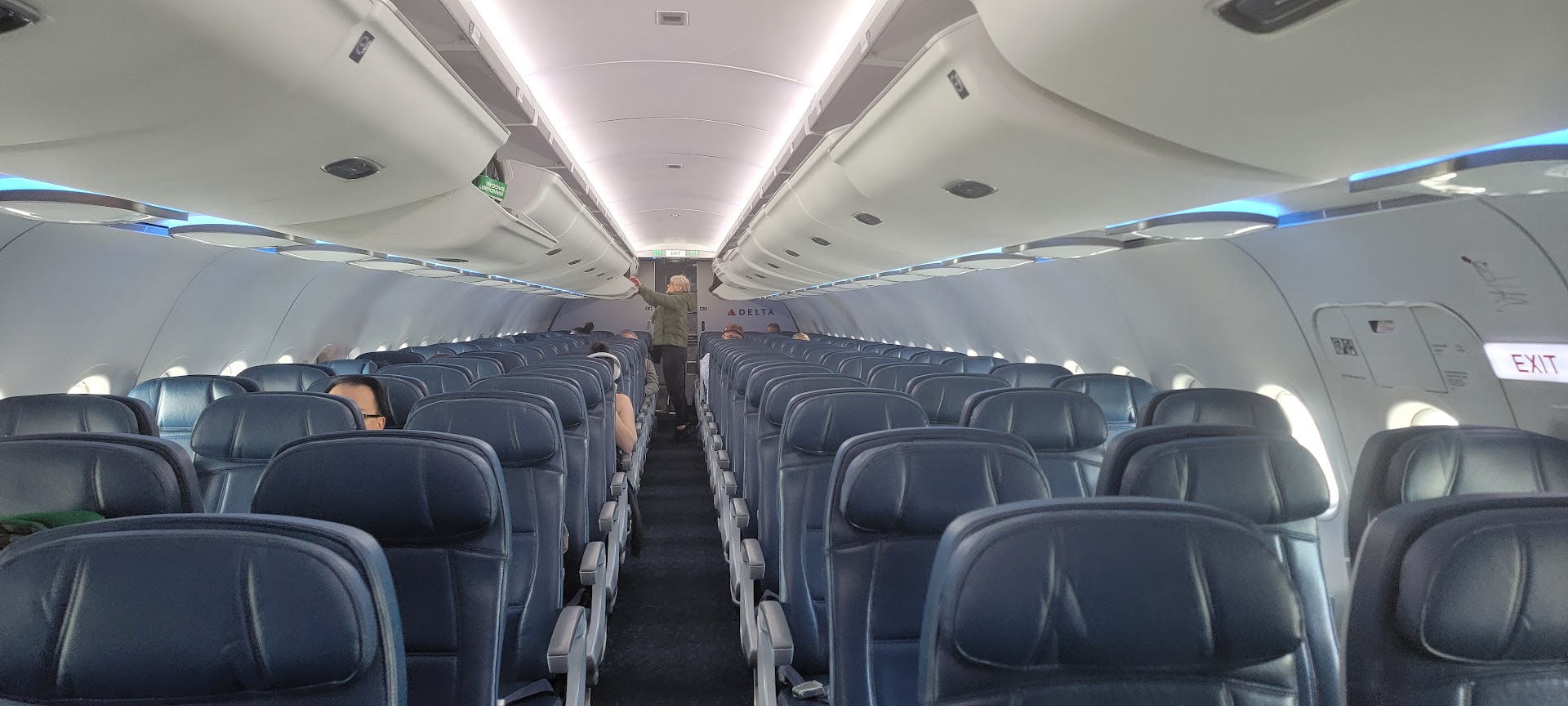
The man had a diarrhea accident in his pants (and, it seems, with his pants off). On arrival, law enforcement took him off the aircraft by force.
He was taken to a hospital for a psychological evaluation and released. When he returned to the airport, he was told he was banned from flying Delta, could not get his money back for his return ticket, and his lugage was marked with a large black “X.”
Eventually, he was indicted for allegedly assaulting a flight attendant and interfering with crew duties. A federal jury acquitted him of all charges.
He sued, claiming he was targeted because he was gay, HIV positive, and dark-skinned. According to the complaint, Delta employees testified at his criminal trial that “HIV is a deadly disease” and that he could look like a terrorist because of darker skin and dark hair.
The case went to a jury trial in October 2021. The jury found Delta was not entitled to ATSA immunity, found Delta caused the bodily injury, found he suffered emotional distress caused by that bodily injury, and awarded $2.5 million bodily injury and $6 million emotional injury, reduced by 15% due to the passenger’s partial responsibility. That produced the $7.2 million judgment.
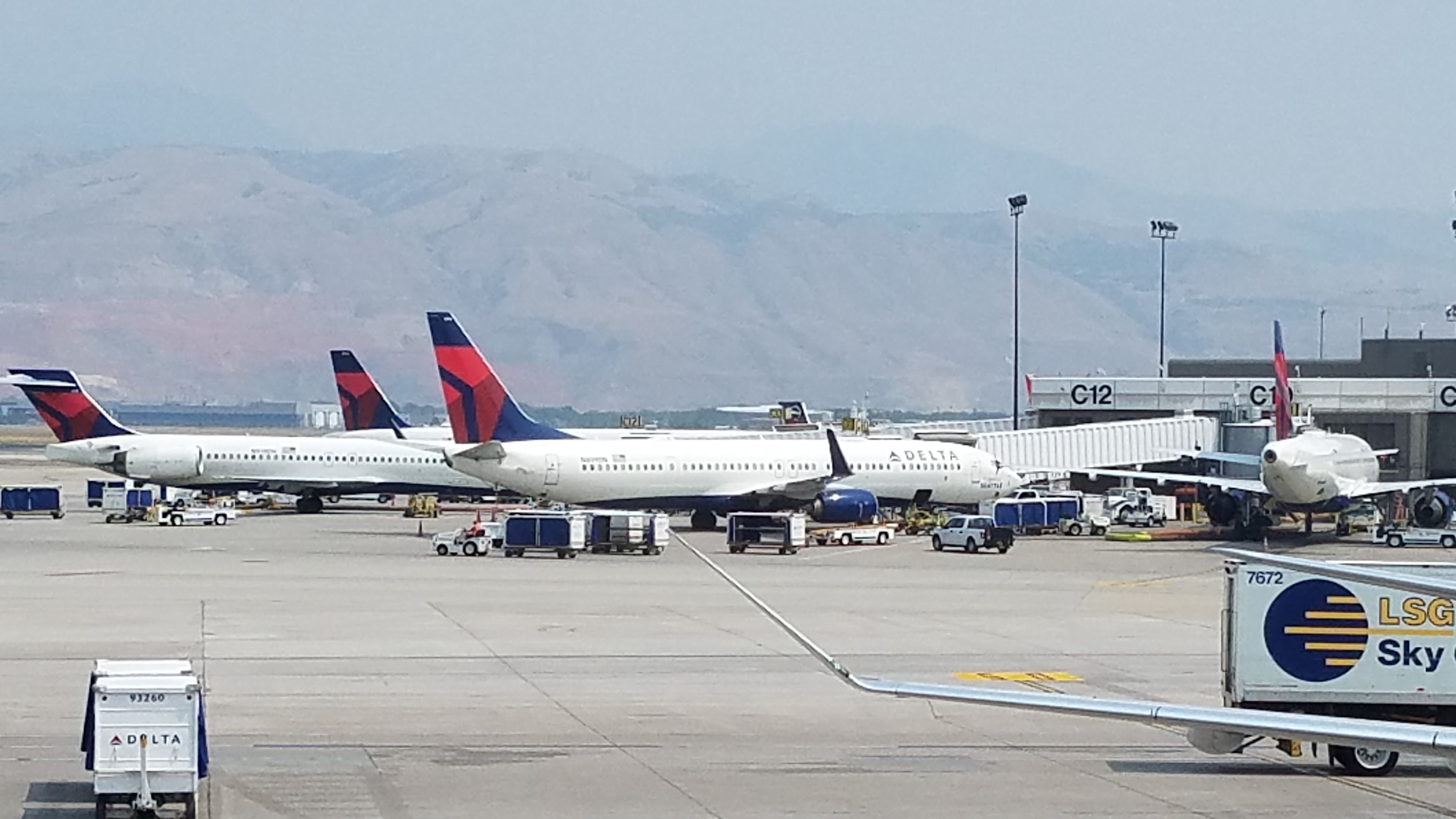
Delta’s defense was that the passenger repeatedly left his seat, was told to return, screamed, was “physically aggressive,” and was in a flight attendant’s face. So it was a security issue. And they argued they’re immune from suit under the Aviation and Transportation Security Act.
An airline or employee who makes a voluntary disclosure to law enforcement of suspicious behavior possibly involving air piracy, aircraft or passenger safety, or terrorism is not liable for that disclosure (unless it’s knowingly or recklessly false or misleading).
Crew enlisted help from a passenger who was an off-duty Special Agent who worked for the U.S. Treasury Inspector General for Tax Administration. Delta argued that was a protected safety disclosure, so they’re immune from suit for injuries after law enforcement became involved. The lawsuit was dismissed by the district court holding Delta was immune from suit over injuries after law enforcement “took command.”
Under the Montreal Convention, Delta argued that a passenger can only recover for bodily injury caused by an “accident” onboard or during boarding and deplaining, and not for pure emotional harm. Emotional distress is only recoverable if directly caused by bodily injury. Bodily injuries here were minor – cuts on the wrists and shoulder and neck pain. Therefore a $6 million emotional-distress award was moored to bodily injury.
Initially a new trial was ordered because damages were intertwined with liability and comparative fault, so it wasn’t workable just to do a damages re-trial. Then Delta won summary judgment on immunity grounds, because injuries occurred after the Special Agent became involved.
- The passenger’s position is that the Aviation and Transportation Security Act immunizes disclosure not conduct (“for such disclosure” not ‘all conduct after law enforcement is contacted’), that there was no ‘suspicious transaction’ triggering the disclosure – he just walked down the aisle to use the lavatory and compalined about service – at it was Delta employees, not the officer, who made the injury-causing decisions.
- Delta argues that immunity exists so airline employees don’t hesitate to report what they perceive to be onboard safety threats. In their view, since the passenger was repeatedly out of his seat, refused instructions, screamed, became physically aggressive, and made physical contact while resisting restraint, the crew’s perception was reasonable.
Delta was probably right in getting the original $7 million verdict tossed, but the passenger probably gets a new trial. However I always rate a chance that a court defers to anyone wrapping themselves in ‘security’. On the other hand, it’s a company and not the government doing it so the passegner has a chance. I don’t love immunity for consequences just by claiming security, and the facts here seem bad for Delta.
It remainds me a bit of the Spirit Airlines passenger who was denied lavatory access and forced to go on the floor. Crew denied access to the bathroom and then filmed the desparate woman. Here’s a passenger who was removed for “excessive” lavatory use.
You can generally use the lavatory even when a flight attendant points out that the seat belt sign is on (which it wasn’t in this Delta case). Flight attendants often can’t give permission, but saying the seatbelt sign is on is not the same as ordering someone not to use the lavatory. Generally if you state it is an emergency, crew are happy to let you proceed at your own risk.
In this case, the crew turned a basic need into a law enforcement problem. The airline defends itself saying they’re immune because it was a security situation. So the case matters because if the Ninth Circuit broadly affirms the lower court dismissal, then once crew turn a situation over to law enforcement, it doesn’t matter how badly a passenger gets injured or what triggered it. It’s a free pass.



Two wild lawsuit posts in a row! Gary is on a roll! At least the lawyers get paid…
Not gonna ‘yuck’ anyone’s ‘yum,’ but, wowza that is some kinky stuff.
Wow, this is better than a telenovela.
1990 – can I have steal some of your popcorn?!
That stinks. When you have to go, sometimes it’s super urgent. TMI, but I shit my pants at work last week and it was rough.
The whole this was handled was just crappy.
So did Delta give him AIDS? No? OK, bye
@haolenate — I’mm’a make another batch. With or without butter?
“Was Handcuffed, Exposed Naked, And Denied The Bathroom” that costs about $500 at a local establishment.
after reading the whole story, I’m on Delta side
“he could look like a terrorist because of darker skin and dark hair.” No one and everyone looks like a terrori$t. Terrori$t$ don’t carry cards saying they’re of that ilk, they look like the average person in the street.
@Keith If an investigation clears everybody except an 80 year old woman and a young man who have no alibi, you wouldn’t think “Well, it could be any of them”. When was the last time you’ve seen a grandma being a terrorist?
@ Mantis
Nowhere does anyone mention AIDS. Please educate yourself about the difference.
If your medication requires you before hand, its your responsibility to ensure you have something to eat, protein bars, nut bag, anything.. this was all a self induced issue by the man.