
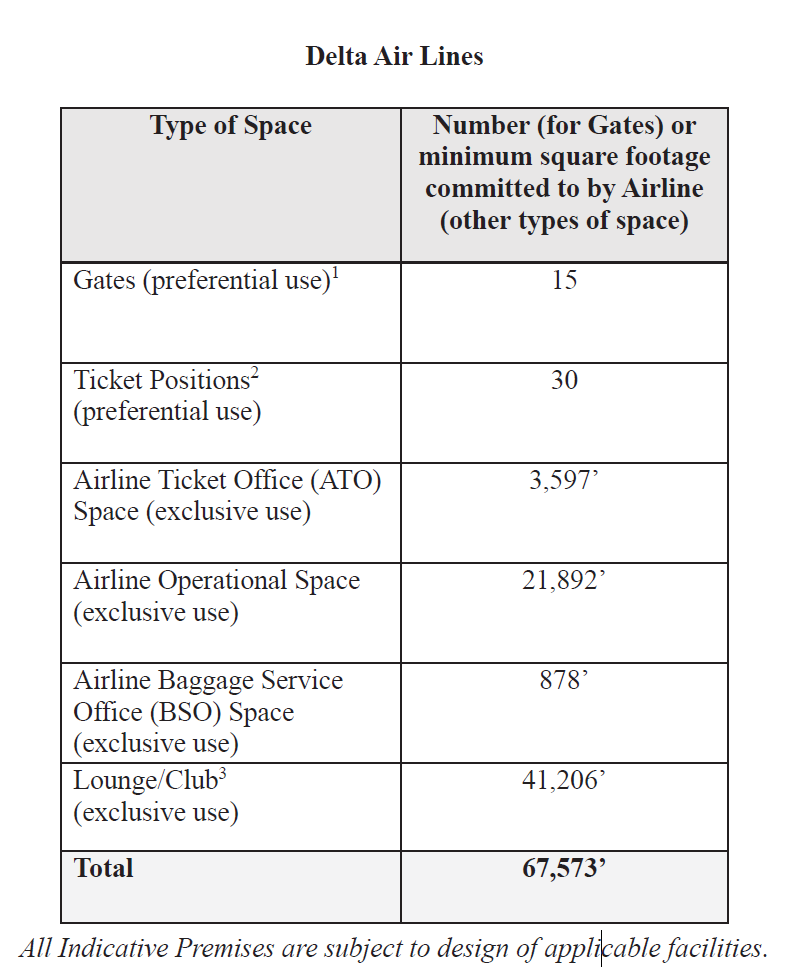
Delta Air Lines has spent years turning Austin into its next major operation, securing 15 gates, planning more than 40,000 square feet of lounge space and even announcing a new Paris flight starting next summer. On an earnings call last fall, they even admitted the reason – attract customers to their American Express credit card.
Now CEO Ed Bastian has said where he is looking next: San Antonio. Asked about the airline’s growth opportunities on Scott McCartney’s Airlines Confidential podcast, Bastian explained the long-range Texas strategy:
I think the long-term opportunities for us are more on the international side than the domestic. And, as you know, our domestic business is our bread and butter, and we’re always going to be investing and looking to grow that. So whether it’s the buildout in Austin or looking even further down the road for me in San Antonio, looking for places to continue to grow and expand into Texas—we’re not as big in Texas as we’d like. And so those are two markets that we have found some really good reception.

Fifteen Years From Start To Finish In Austin
Strategies like this have long lead times. They need the gates, lounges, employees, and aircraft. Austin took eight years to get to the Paris route announcement.
I broke the news in June 2018 that Delta planned to make Austin a focus city based on a sales job posting that said the person would build local relationships to support the carrier’s “Focus City initiative.”
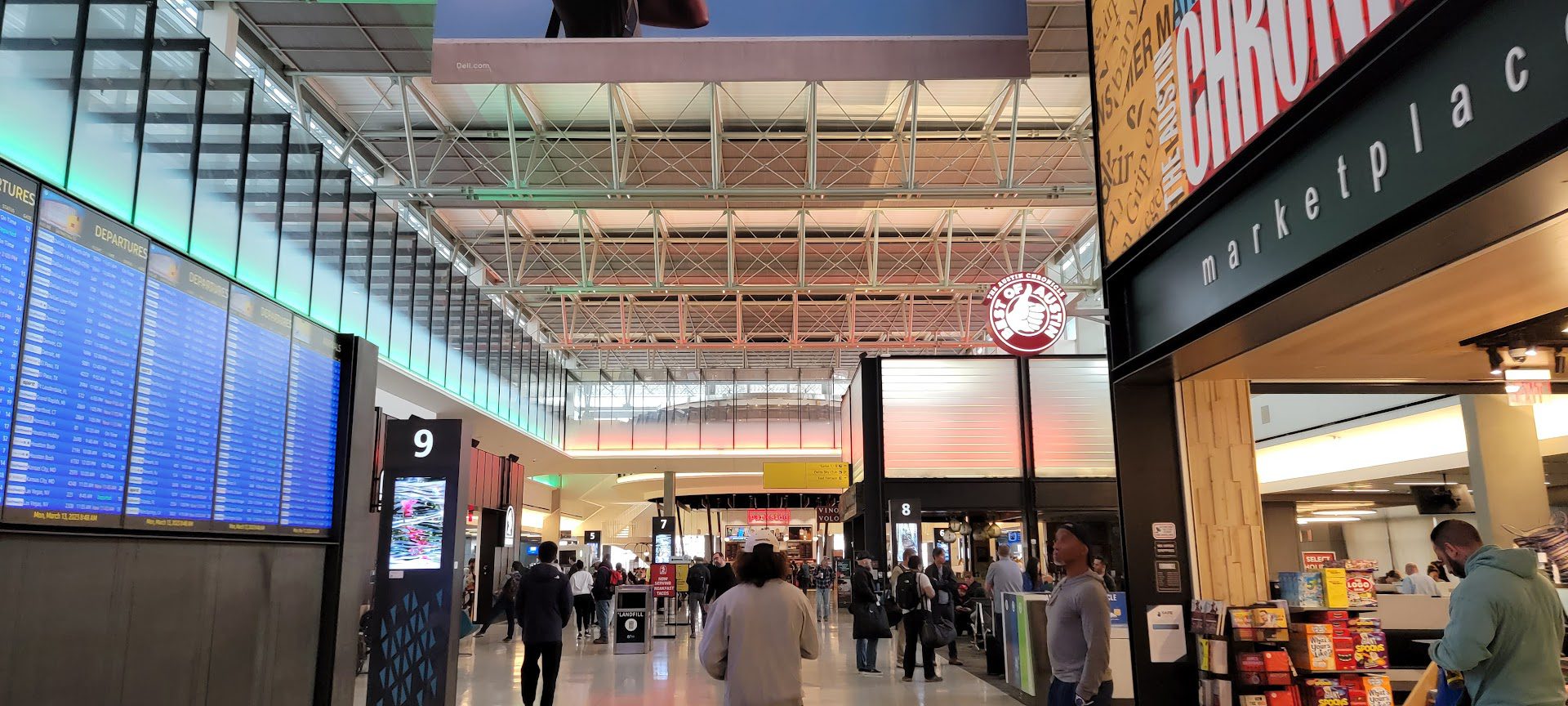
The pandemic interrupted that build, American Airlines tried its own Austin growth experiment and when it retreated, Delta squatted the gates they’d been using until it was ready. They flew short intra-Texas flights subsidized by full fare migrants being transported from the border during the Biden administration to keep costs low and losses to a minimum.
By 2025 Delta was approaching 30 Austin destinations. Its internal town hall described an 800% increase in connecting activity in four months and hundreds of bags transferring between flights even on a slow day. The carrier talked about roughly 150 daily flights as a longer-term ambition, bigger aircraft, a flight attendant base and a much larger local workforce. It has continued adding domestic breadth, seasonal leisure flying and international.
Delta is slated to control 15 preferential gates on the existing main concourse. Southwest gets 18 gates in the new concourse, while American and United receive smaller footprints.
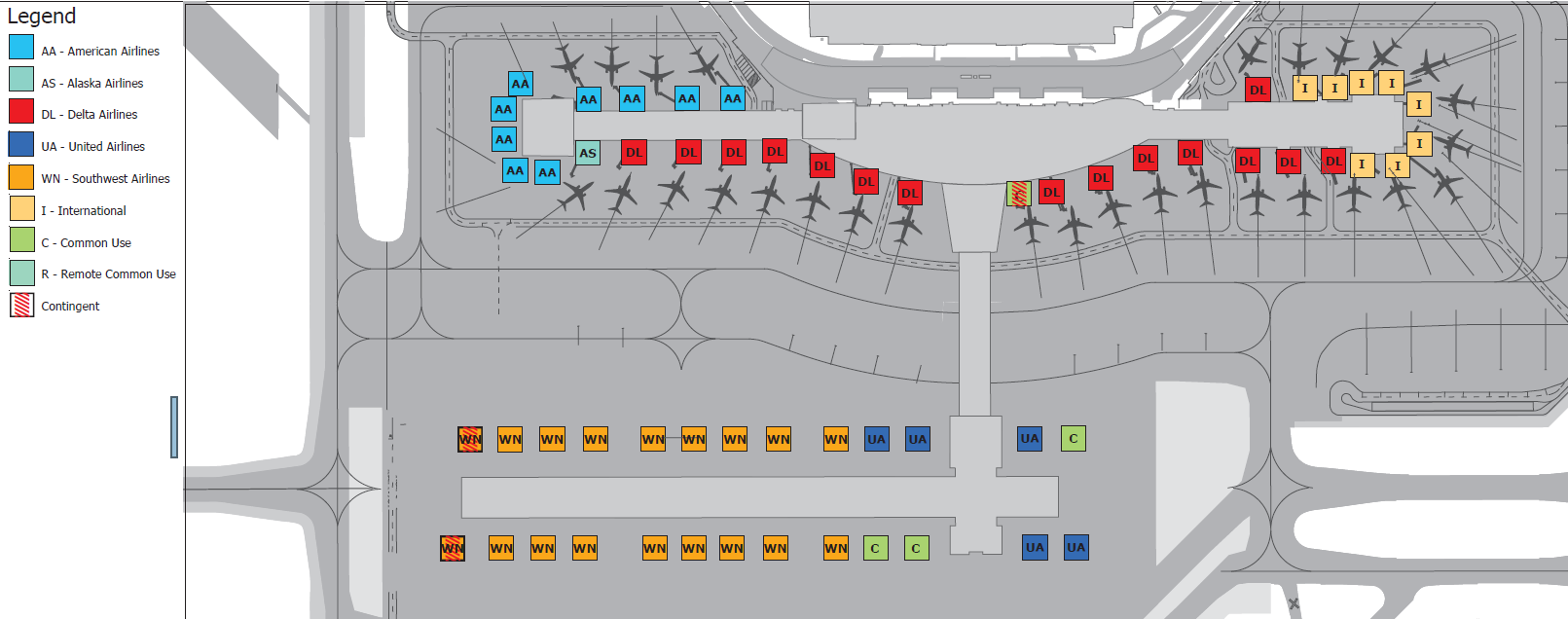
Delta also took 41,206 square feet designated for club space – a 30,000 square foot Sky Club at the future tunnel interface to the new concourse (potentially with direct boarding to aircraft) while preserving the current 9,000 square foot Sky Club by the international gates which presumably becomes a Delta One lounge. This all may not arrive until the early 2030s.
Austin Is An American Express Strategy
Delta is looking at route planning beyond just ticket revenue and operational costs. In October 2025 Bastian acknowledged that Austin and Raleigh-Durham are places where Delta acquires a lot of American Express cards.
A route can make SkyMiles more relevant to affluent local consumers who put groceries, restaurants, business expenses and everything else on a co-brand card. The network sells the card, and American Express is the largest and highest margin customer Delta has. Austin has a large professional and technology workforce, fast population growth and high household income.
San Antonio is not as rich a card spend market as Austin. The cities are 75 miles apart but the economics are wildly different.
San Antonio is large and growing, with military, health care, tourism, government and corporate demand. It also gives Delta a way to build in Texas without attacking American at DFW or United in Houston. Austin and San Antonio together create more relevance across Central Texas broadly.
Delta Has Already Real Estate Coming In San Antonio
San Antonio approved a long-term airline-use agreement while developing its new Terminal C with up to 18 gates, a new federal inspection facility and more than 29,000 square feet of club lounge space, with opening targeted for the second half of 2028.
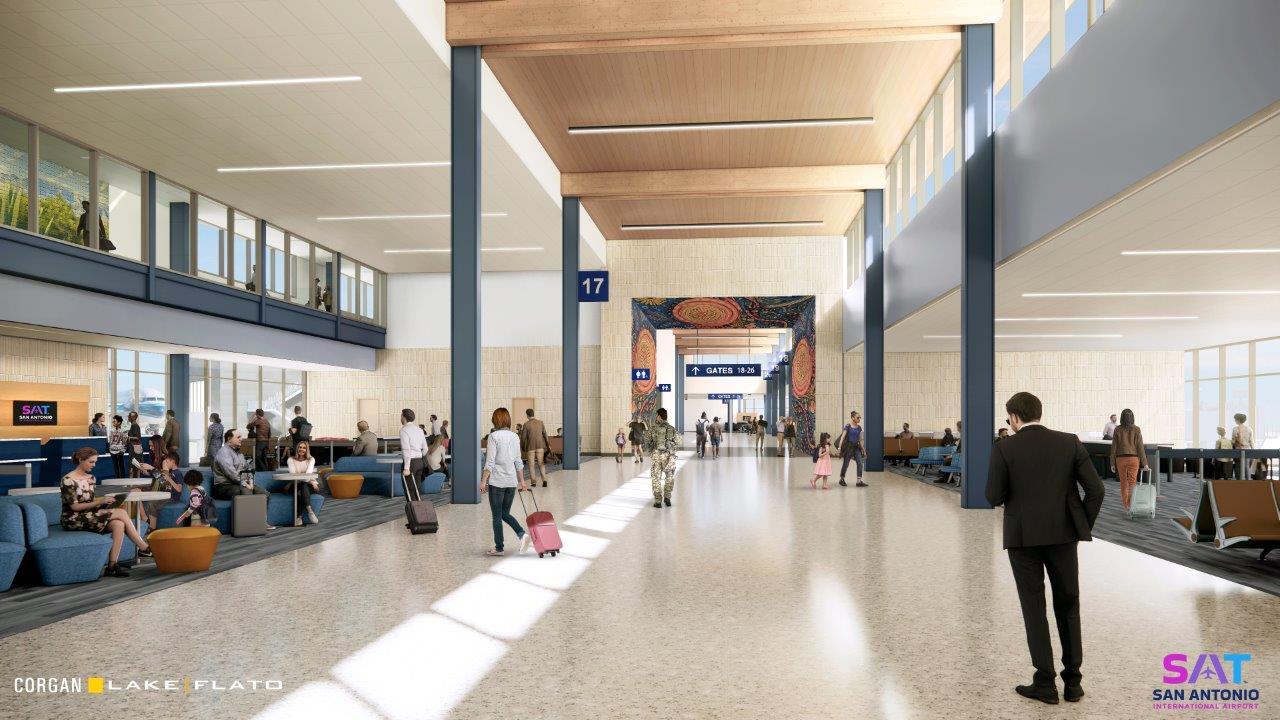
The original gate allocation contemplated four Delta gates in Terminal C, and the airline committed to a new Sky Club. It subsequently sought roughly 10,000 additional square feet for its club.
Southwest fought the original plan, then settled with the city in May 2026 and signed the agreement, receiving three gates in Terminal C and three in renovated Terminal B once construction is complete.
This Is Delta’s Second Run At Texas
Delta’s airline’s first passenger service began from Dallas in 1929, and it operated a Dallas – Fort Worth hub for three decades. By the time Delta dismantled that hub in early 2005, it was cutting an operation that had roughly 250 daily departures to 66 cities. Meanwhile, Southwest built an enormous intra-Texas franchise. Delta became very strong nationally while remaining structurally weak in one of the country’s largest and fastest-growing states.
Now Delta’s CEO says “We’re not as big in Texas as we’d like.” Henry Harteveldt, speaking after Bastian’s interview, remembered the old hub and framed the strategic opening well:
American is headquartered in Fort Worth and United has a major presence at Houston’s George Bush Intercontinental. And, of course, Southwest is practically the unofficial state airline of Texas with an extensive intra-Texas network. I remember when Delta had a hub at DFW, and I keep thinking that they never should have walked away from that—that they should have made Dallas more of a focus city. I think it’s going to be really interesting to see what they do in Austin, potentially San Antonio, and who knows where else the airline looks.
What “Coming For San Antonio” Probably Means
Delta is unlikely to copy the Austin schedule. San Antonio has different corporate demand, less premium card spend and a strong Southwest presence. The first steps are more likely to be schedule depth to Delta hubs and a lounge that gives local premium customers a reason to choose the airline. A handful of non-hub business and leisure routes may follow as Delta learns which markets perform and as Terminal C opens. “Next” though may not be “soon.”



interesting.
AUS and SAT are both major feeder markets for AA and UA’s TX hubs so DL is not only working around what AA and UA are doing but also weakening them.
DL needs to add a lot more of the smaller TX markets to its existing hubs.
Giddy-up, partnah! (Or, is Delta… all-hat, no-cattle?) Yee…haw…
Two focus cities that close together with two MEGA hub close by, another money losing strategy by DL (of course you can’t tell due to their earnings. . .yet). BOS – loser, SEA – loser, LAX – loser and now add AUS and maybe SAT.
sunviking,
what did DL do for the past 48 years that other airlines have figured out so that DL can support all those money-losing hubs and hubettes and still post the US industry’s highest profits?
Honestly Delta need to start focusing on Boise Airport as Micron is being built and additional data centers in nearby cities surrounding Boise. Idaho has seen a huge influx of new residents. With a new terminal being built Delta can become a relief point for Seattle and Salt Lake City.
Southwest is missing out at San Santonio, given their Texas network: There is a terrible club situation at SAT, and terrible European service, given the size and growth of the city. Southwest would be wise to add the city to their clubbing strategy and consider London flights for their expanded international operations.
@Wayne Z — (I-da-ho? No, you-da… jk). Did not expect to see Boise-fanboys on here. Well, the Snake River is lovely. More folks should visit, I guess.
How about using the A220 at McKinney/DTX for 2-3x LGA/LAX/ATL and maybe even ORD/SFO/MIA? Weekend flights to CUN/SJD and maybe even some ski service in the winter.
Agreed that Delta is misreading the market in San Antonio. There are many, many military personnel here who hold the Amex Plat for free. They would gladly move over to Delta after all the Southwest changes. Both active duty and retired are also well traveled and want to revisit some of the places that they have been stationed at and have the disposal income to do that. The lounge situation is abysmal. United Club is all we have at SAT. There are loyalists to UA for just that reason. A lounge will put Delta over the top.
How does author know that there are so many Amex Card holders in Raleigh-Durham as apposed to many other places that would be fitting as well. I’m sure they have the statistics that prove it but where is all this information?
I think DL’s timing could be superb. The disruption in the long-standing WN/SAT relationship may have created a very unusual opening for Delta to plant a flag in San Antonio at exactly the right moment.
SAT is, in my opinion, grossly underserved for a metropolitan area of its size and economic importance. And I do not think Delta is looking at SAT and AUS as an either/or proposition. Quite the opposite. If Delta continues building Austin while making a meaningful expansion in San Antonio, it could position itself as the network airline of the entire Austin–San Antonio mega-region.
That could be a very powerful strategy.
A larger SAT operation would allow Delta to connect San Antonio more aggressively to its major hubs and selected focus markets, while potentially adding international service where the economics support it. Austin would obviously remain the larger Delta operation, but the two airports could complement one another and give Delta a much broader presence across Central and South Texas.
In some ways, the concept reminds me a little bit of what Delta has accomplished in New York with JFK and LGA. Obviously AUS and SAT are very different airports serving different cities, but strategically the idea is similar: establish meaningful positions at two airports within one very large economic region rather than trying to force all of the traffic through a single airport.
And the timing may be particularly interesting because of what has happened between Southwest and San Antonio. Southwest had planned a considerably larger expansion at SAT, but after its dispute with the airport, SWA scaled those plans back to 6 gates from the original 10 that it wanted. If that leaves gates or future gate capacity available that Southwest otherwise would have occupied, why should Delta not take advantage of it?
Imagine Delta becoming substantially stronger in AUS and establishing a serious operation at SAT at the same time. Instead of viewing San Antonio merely as another spoke, Delta could make a deliberate play for the whole corridor before another network carrier does.
It would be wild. It would be bold. And I actually think it could be one of Delta’s smartest strategic moves in Texas.
Sue,
DL has a pretty strong history of growing where WN is the larger carrier (they have about 2X the share of DL and DL is a few percent smaller than AA at SAT).
SAT is already fairly well connected to DL’s hubs except for SEA; DL doesn’t have IAH-SEA service either. Many of DL’s flights at SAT are smaller gauge than at AUS; DL uses the A220 heavily at SAT.
SAT is just outside of the LGA perimeter so DL only serves it to JFK and UA serves SAT-EWR.
I suspect that Gary is right that we won’t see an AUS style hub operation and perhaps not even longhaul international but there are domestic markets which DL could add, some of which are to cities like RDU and CVG where DL is strong but where there is little to no service.
DL continues to look for places to grow its network and is doing things outside of its hubs that other airlines just are not doing.
@Tim Dunn — This ‘announcement’ feels almost Scott Kirby-level hype-machine. Hopefully, Ed is not out-over-his-skis (or in this case, out over his… ‘skies.’) Like, watch out, Ed’s gonna start sounding like Howard Dean’s ‘scream’ in 2004… ‘we’re going to Austin, and San Antonio, and… beyah!!’
I presume that he is giving clues publicly based on gate leases which other airlines have already seen.
I don’t think this will be earth shattering growth; AUS isn’t even growing by large amounts. It may well be that SAT will have enough gate space for DL growth before DL’s new gates at AUS become available.
DL is probably in the best position of the big 3 to build out non-hub cities and they undoubtedly have a list of growth markets and SAT just happens to be bubbling up on the list.
I love San Antonio, but they will have to make it more attractive to fly to that airport than driving to Austin where there are lots more flights.
I can see DL continuing to grow its presence at AUS, even making it a full-fledged hub. However, I just don’t see that happening at SAT. For one thing, the teo airports are less than 100 miles apart. While the major reason that DL dehubbed DFW was likely financial pressure (DL declared bankruptcy the same year,), another reason was route overlap and proximity to other hubs at ATL and SLC, both of which are much farther from DFW than AUS is from SAT.
That said, I can envision DL breaking from a strict hub and spoke model eventually and maybe offering international nonstops from SAT. There is some precedent for that at RDU and such flights could also be offered by DL’s JV partners, which has happened at PDX. OTOH, if you are an airline exec trying to build up a hub at AUS, why compete with yourself on international long haul at an airport just 75 miles away?
@ Tim — Filed bankruptcy twice? Did I get it right?
As a resident of San Antonio, I recently talked about our DL service with a DL pilot. He asked me what I thought it and I said I was living in a Delta-desert. My hope (a sincere one) is for CRJ or 220 service between SAT and AUS (note the level of despiration!). I know 75 miles apart may seem drive-able. but I-35 is a mess. and the connections from 1604 to I-35 in San Antonio are under endless construction. That 75 miles can take anywhere from 2 or more hours to drive, and is very unpredictable. DL has signed up for 7 gates in the new SAT terminal (and had to add the SkyClub in order to receive priority for those gates). DL has only 19 out-bound flights per day during the winter, several at very iffy times (e.g., pre-5:30 am). It currently has 4 dedicated and a cou0leo f shared gates in the old terminal. I can’t imagine what they will do with 7 gates other that squat on them.
Hopefully, that means a catering company because the current San Antonio flights get a cold snack box even though flights are supposed to have a hot meal. And of course, this isn’t advertised.
Corpus Christi and Lubbock seem like logical places for Delta flights. I imagine intra-Texas flights from Austin to Lubbock and El Paso on regional jets could be attractive for those people who need to be in the Texas state capital.
gene
what happened in the past doesn’t influence what is happening now.
but DL filed chapter 11 once.
and Sat Ed
DL typically first fills the top 20 markets from a city
as Gary noted, DL can partially fill out those gates just by adding frequency to its existing hubs.
@Tim Dunn — “what happened in the past doesn’t influence what is happening now.” Wuttt?
a 15 year old chapter 11 doesn’t influence a thing right now.
none of AS, B6 or WN have been in chapter 11 but DL is handedly outperforming them… same for UA.
AA, DL and UA have all been through chapter 11 and there are marked differences between the performance of those 3.
none of which has anything to do with DL’s ability to succeed in building its network, something on other carrier has demonstrated they can do as well as DL.
@Tim Dunn — “what happened in the past doesn’t influence what is happening now.” Wuttt?
There goes the 48 year BS. Constant contradictions.
Tim Dunn: “what did DL do for the past 48 years that other airlines have figured out so that DL can support all those money-losing hubs and hubettes and still post the US industry’s highest profits?”
Also Tim Dunn, apparently unironically: “what happened in the past doesn’t influence what is happening now.”
If they want more share in Texas, they’d be wise to put in a handful of flights at FTW. There’s plenty of AA pax who’d use the service to avoid DFW.
@rebel — Got’em!
@ Tim — Um, you seem to be forgetting about Northwest? They weren’t some little company Delta acquired. In reality, Northwest took over Delta.
Even though I’ve not, nor have never been, the CEO of an airline, it seems to me that Delta’s expansion in Texas makes sense geographically. It’s not unlike American partnering with Alaska or United partnering with JetBlue. All of these initiatives fill holes in the respective airline’s route networks. Just my two cents worth.
@DesertGhost — I see what you did there. *wink*
SAT is a growing market that is currently leaking significantly to AUS as it offers better schedules and cheaper prices. Even though it’s gotten a bit better, AUS has been a dumpster fire with yields for airlines. Addition of targeted routes from Delta in SAT would actually work better for them as opposed to AUS based on present numbers. Addition of atleast one daily flight to JFK, BOS, LAX, & SLC plus new daily flights to SAT-SEA and RDU would be great! DL’s partner Aeromexico could do so much more in SAT than what they are currently doing.