This week’s Airlines Confidential features former American Airlines CEO Doug Parker offering a deep dive course in airline pricing. You should listen to the whole thing, because in summarizing it I will collapse some nuance, but I’ll outline the basic argument Parker makes.
Parker describes revenue management is the airline’s profit engine – not cost cuts.
- Airlines are low-margin. In “really good years” they make ~10% pre-tax margin.
- If a $50B airline can get its existing customers to pay just 1% more, that’s a full percentage point of profit margin. Improving revenue is far more leveraged than cutting costs.
- Cost cuts are mostly capacity-driven (salaries, fuel, aircraft rents). You can’t realistically strip out $500 million of cost without shrinking (or without cutting product in a way that chases high yield customers who get replaced with lower revenue ones).
Try to go find $500 million of cost savings at an airline without reducing capacity… You can’t do it… [cost] just has far less leverage than even tweaks in revenue management.
Airlines Charge Each Customer As Much As Possible – While Matching The Lowest Fares
Heterogeneous willingness to pay is everything. There’s a huge gap between price-inelastic business travelers (or people in a rush) and hyper price-sensitive leisure travelers. Doug Parker laid this out nicely to employees several years ago.
Airline economics are about exploiting that disparity: getting high-willingess to pay customers on your planes and making them pay as close as possible to their reservation price, while still filling the plane with cheap traffic where needed.
The starting point is an airline’s “natural share” of the market based on its schedule (routes, frequency, connectivity) as well as frequent flyer program share, co-branded cards, etc.
Revenue management doesn’t create demand or structurally shift share (most of the time). It takes whatever natural share scheduling gives you and maximizes revenue on that traffic.
The airline schedule drives something we call natural share… how much share an airline should expect to generate on any given route… given the customer demand and the competitive options. …That’s what revenue management can’t do much about. That’s what scheduling goes and builds… Revenue management is looking to say, okay, this is my natural share. What can I do to maximize the revenue on the airplane, given that I know that’s what I should be getting in terms of revenue share?
You can’t just “raise fares.” If a legacy carrier fails to match the lowest fare in a market, they estimate 20–25% of revenue evaporates. So: you must have a fare that matches the low-cost carrier, or you lose a quarter of your revenue.
How Airlines Used To Do This
I’ve written extensively over the years about how basic economy fares are the new Saturday night stay and advance purchase requirements.
Before deregulation there wasn’t really revenue management. Government set fares and airlines had to ask permission to change them (rate cases). That was time-consuming, and infrequently granted.
Post-deregulation, a whole set of startups with lower costs were competing with low fares. But legacy airlines competed by offering different prices for seats on the same plane. They had low fare airlines on the same aircraft. As Parker explains, they did this with fare fences like Saturday night stay requirements, 14-day advance purchase rules, and change fees to separate the cheap fares from the expensive ones.
I’d note that in 1977, American Airlines introduced the Super Saver fare. Initially on New York – California routes, it was expanded across their domestic route network in 1978 and the airline introduced ‘Ultimate Super Saver’ in 1985, discounting up to 70% to compete against new lower cost carriers that launched after deregulation.
The American Airlines insight was that they could beat low cost carriers at their own game through revenue management. They could be a high fare business airline and a low fare airline by offering different prices to different customers. This gave American a competitive advantage because they had no marginal cost to run their low fare airline, since they were already running the airline and they had empty seats. Other carriers quickly copied, of course.
Leisure customers looking to travel for the weekend planned in advance and got cheap tickets, while business customers looking to fly home on Thursday or Friday – and who bought tickets at the last minute – paid far more.
- Yield management means creating buckets of seats at different prices. Airlines match the lowest fare, but only sell a limited number of those seats before “closing the bucket” and forcing later buyers into higher fares.
- By late the 1990s, business fares were 7x leisure fares for the same coach seat. Customers sitting in the same row paying $1,500 vs $200 – and talking to each other about it – made the pricing feel illegitimate and pushed people to “game” the system.
- The 2000s shocks (9/11, recessions, fuel, emergence of ultra-low cost carriers) blow up the model. Many legacy fences vanish (Saturday night, rigid advance purchase rules).
- Airlines respond with unbundling and fees. Ultra-low cost carriers go further – base fare plus a charge for everything (bags, carry-ons, seat assignments, etc.).
Ultra-low cost carriers would post a $49 base fare. Legacy airlines, which didn’t have the same fees and included more in the price, had to compete just on that fare. It’s all the distributions systems showed. There was a schedule and a price shown to customers.
How come the people that were smart enough to build and develop these complex discrimination tools didn’t ever decide to add… a fee for a window seat…? …The problem was they couldn’t do it with technology. They were working off old mainframe systems… controlled by people outside their firm at the GDS.
So legacy airlines had to match, or lose 20–25% of their most price-sensitive customers. That left them selling the product too cheap.
If we don’t match the lowest fare in the market, 20 to 25% of our revenues are going to go away… So… if you just raise our fares and they don’t match, you… just cost me 25%, not 1%, 25% of my revenue.
When airlines aren’t able to get their customers to pay close to what they’re willing to pay… that’s what revenue management execs call dilution… the difference between what was possible to collect versus what you actually collected, which is, in this case, consumer surplus.
Degrading the Product is the Legacy Airline Answer
In Parker’s telling, Basic Economy is, the second most transformative event since deregulation.
- Delta initially rolled Basic only in Spirit markets as a defensive tool, then rolled it out network-wide when they saw what it did.
- Basic is the bare-bones product: no advance seat assignment, last to board, limited miles/benefits, – roughly equivalent to the ultra-low cost carrier base fare.
- Airlines could match price, avoid losing sales, without undercutting the higher fares they charged to their regular customers who willingly paid more.
Basic economy becomes the bottom tier, and then you have regular coach, extra-legroom, premium economy or domestic first, which is a product ladder customers could self-select themselves into paying more for. In Parker’s telling, this solves the basic economy problem.
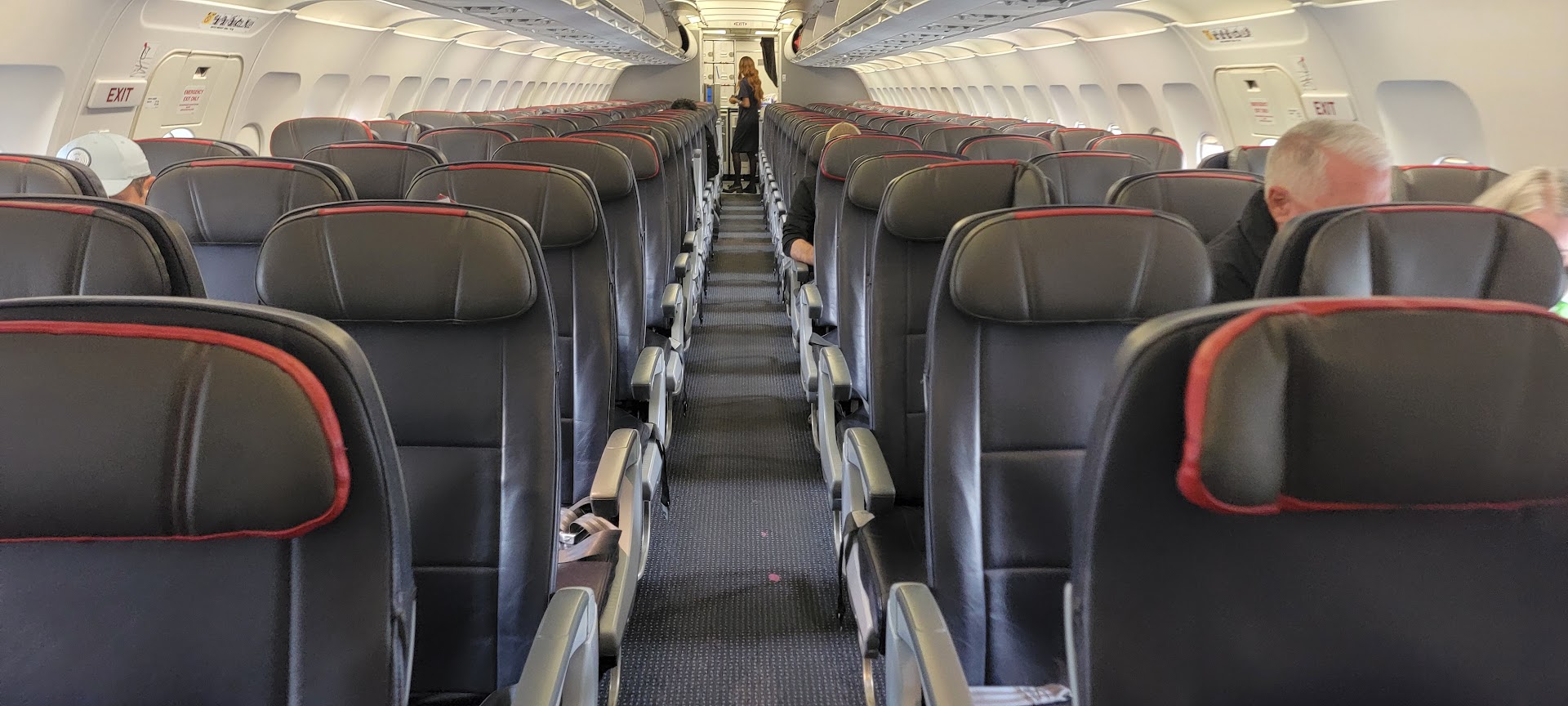
And once you offer extra legroom, better seats, better boarding, etc. as paid options, you discover many people will happily pay premiums that far exceed incremental cost.
And ultra-low cost carriers are “seriously harmed.” They lose their display advantage in fare search since their fares get matched, and at the same price people choose the full service (legacy) airlines. So to succeed, an ultra-low cost carrier needs a true cost advantage. (Of course, airport costs have been going up and pandemic wage inflation has squeezed the cost advantage.)
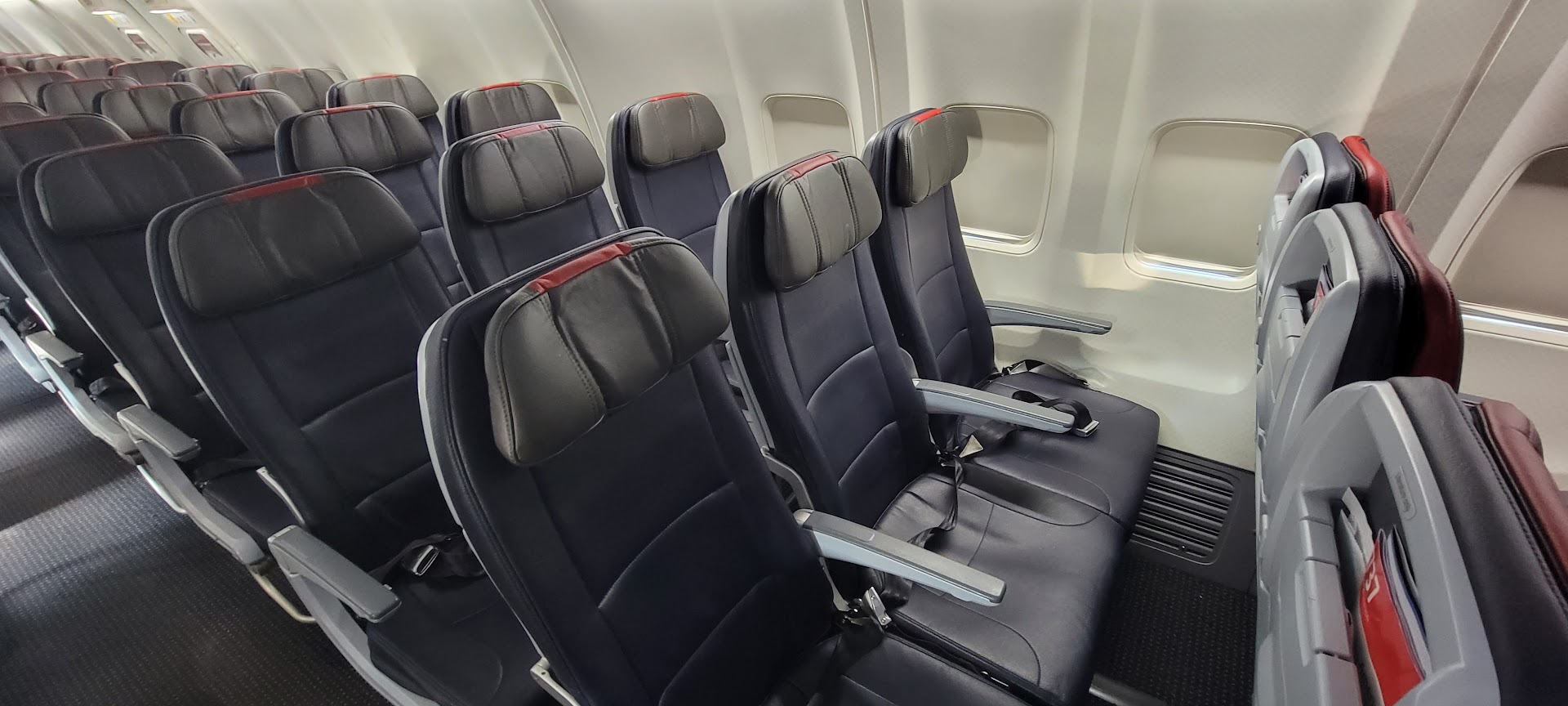
Legacy Airlines Are Forced To Converge On Premium
Parker believes that Delta, United and American will all converge on the same multi-tier premiumized model because losing premium share is too expensive and product differences are quickly matched.
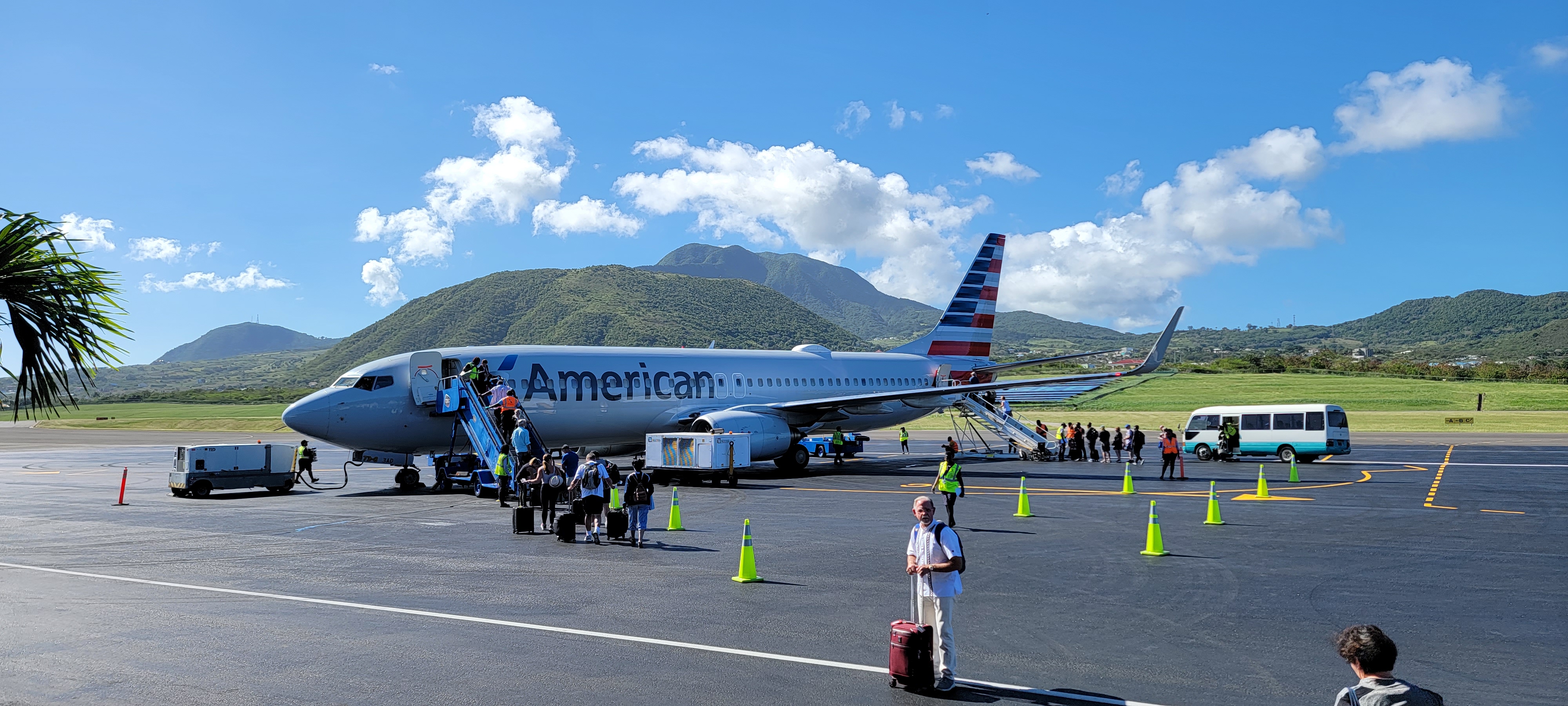
And any product that genuinely moves premium share will be copied, pushing everyone back to their “natural share” but at higher costs.
Sustainable share shift in the airline business is really difficult… If you do this caviar in coach idea and it works, everyone’s going to put caviar in coach. Because they have to… So the result is we now all have caviar in coach. We’ve raised our cost structure, but we’re back to our natural share.
How will the product models of the big three compare…? My answer… they’re going to be really similar because that model is the way to maximize the revenue of natural share… allowing any loss of natural share to the product is a lot more expensive than matching that product enhancement.
Parker laid out this same theory that product differentiation didn’t matter and wasn’t sustainable at the American Airlines September 2017 Investor Day, where he oddly enough argued that customer service would be the difference-maker for American Airlines.
Parker calls Scott Kirby’s line about “only two global premium carriers…complete and total BS.” He insists there will be three (American, Delta, United) “for the foreseeable future,” and that American’s current problems are self-inflicted distribution mistakes, not structural. Here he’s wrong with that last piece because the turnaround in distribution at American has not improved revenue. It’s just driven up their costs.
The End Of Upgrades
Free upgrades are disappearing. Delta is proudly reporting almost no free first-class upgrades. Cabins are effectively fully monetized. 15 years ago 81% of their first class seats went to upgrades. Now it’s just 12%. And that doesn’t mean people buy ‘first class fares’.
- Delta will sell an upgrade for as little as $26.
- American will sell for $40.
- And United has even pitched non-elite flyers on $59 upgrades noting how many elites are waiting for ‘free’ that they can jump in front of.
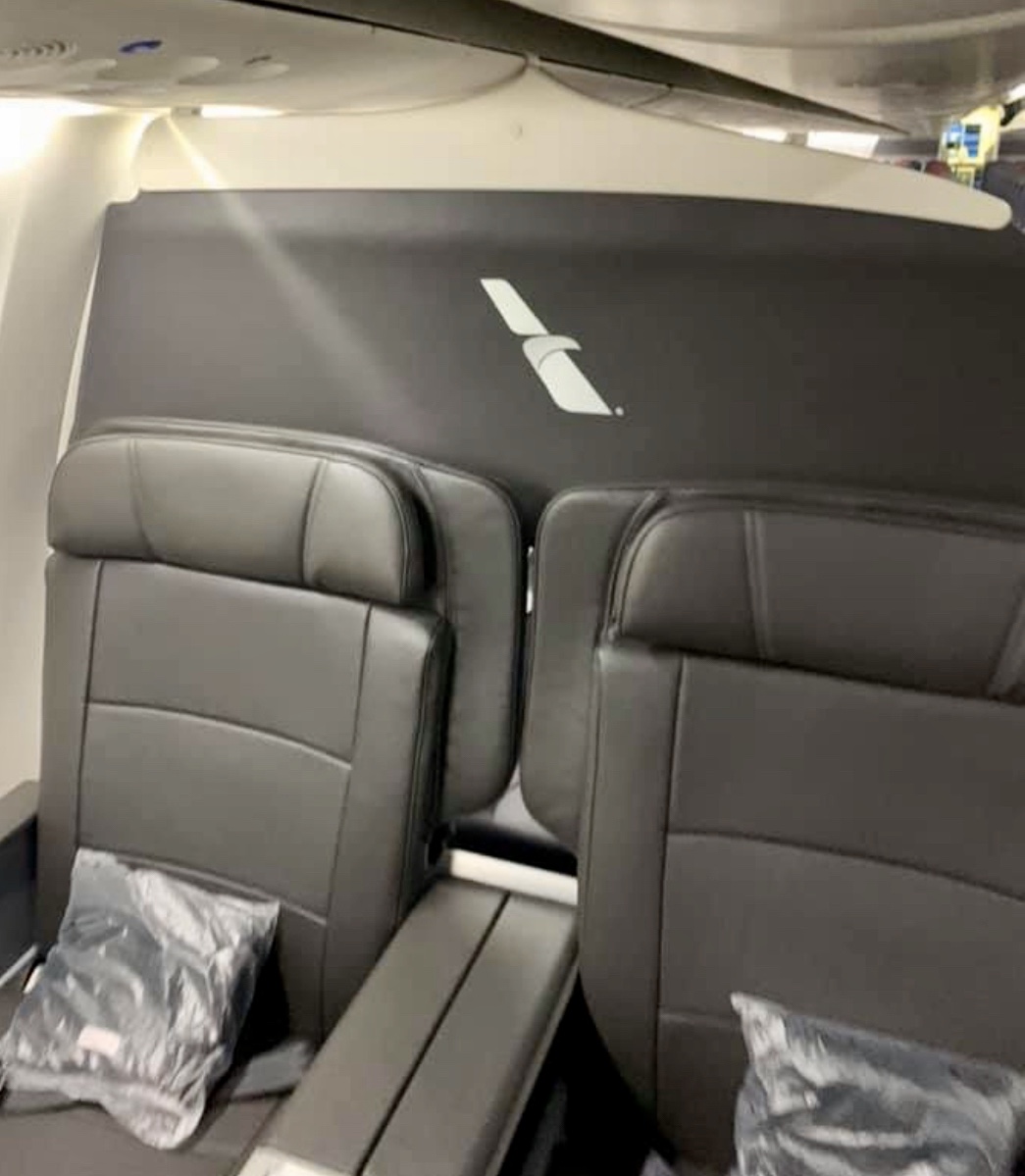
If you want a better seat, pay cash or miles, or buy a higher fare class that includes it. Elite benefits increasingly center on early boarding, extra-legroom seats, service during irregular operations, and “status” itself, not automatic first class.
That works – as long as the airlines don’t see a crash in co-brand card economics. As long as card portfolios and spend keep growing, airlines can sell upgrades out from under their best customers.

Not noted here, though, is that we could be seeing a shift away from the airlines.
- These deals got so expensive for banks, that the banks built their own programs. They could even layer in points transfers to the airlines, buying miles without a full co-brand deal.
- Banks learned they didn’t need the airlines to reach customers, and the products could be more rewarding since they didn’t have to pay airlines for marketing.
- Airline co-brands may be topping out. Delta is actually far behind its own targets with American Express. When they renewed their co-brand deal in 2019, they expected to hit $7 billion in revenue in 2023. They didn’t quite hit it – despite the benefit of 20% pandemic inflation.
In real terms, Delta was more than 20% behind goal. That’s an important why of ‘join SkyMiles for free wifi’ and the Starbucks and Uber deals – access to customers to pitch the card to.
The Reality Is More Complicated
Basic economy and sell-up pricing doesn’t actually seem like the number two event since deregulation. It’s important, but it seems like there are other real competitors at the top like:
- Frequent flyer programs
- Hub and spoke networks
- Consolidation
- Online distribution
- Global alliances and joint ventures
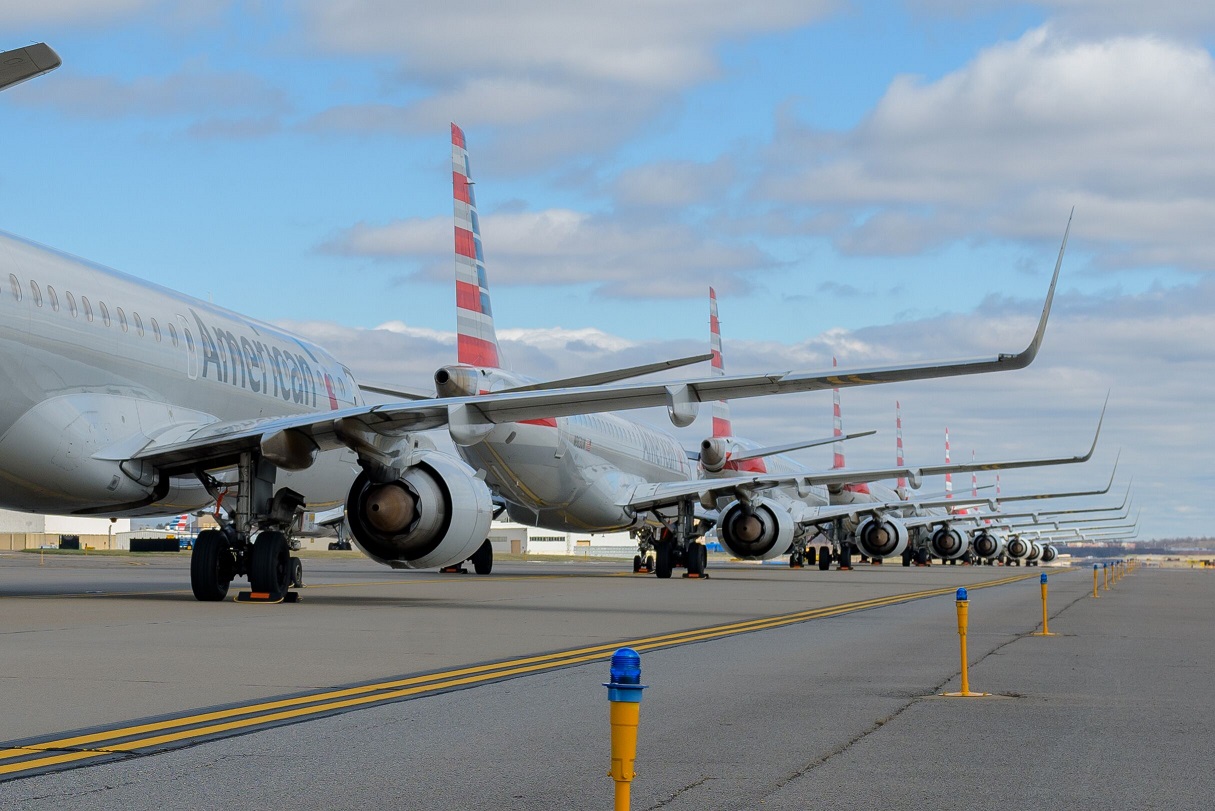
As far as ultra-low cost carriers being vanquished by basic economy, major airlines actually competing is obviously not ideal for them, but they still have lower costs – and they can still differentiate product. The low cost carrier problem is cost inflation and shifting consumer preferences, as well as competition from other low cost carriers (i.e. there may not be room for both Spirit and Frontier, as well as Breeze and Avelo in the same markets).
Parker’s story also underplays the role of concentration and market power in the industry, which is odd for someone who arguably did more to drive airline consolidation than anyone else. It’s far easier to run the sell-up ladder from basic economy with limited competition and little variance in competitor business models, which is a function of heavy regulation, slot controls and gate squatting at major airports.
In 2018, American Airlines paid $45 million to settle an antitrust action which said that it colluded with other airlines to limit capacity and raise fares. Parker himself famously emailed Delta’s CEO in 2010 to try to get him to raise fares. The email said that Delta discounts were “hurting [Delta’s] profitability – and unfortunately everyone else’s.”
I also don’t think “natural share” is as fixed as Parker treats it. Delta’s operational reliabiltiy, maginally friendlier service, and slightly better product materially shifted share especially in New York and Los Angeles. That, in turn, drove the airline’s relative co-brand credit card success. He acknowledges reliability as a share shifter but downplays its magnitude.
This Whole Model Undermines Everything Parker Did At American Airlines
I think Parker would acknowledge that he shrunk seat pitch and cut food even in first class. Even those willing to pay got a worse domestic hard product and a worse soft product. In so doing, he gave up American Airlines natural share.
Parker says that American was actually becoming more premium and performing well before the pandemic, but they were alienating employees, customers and shareholders (and partners). Frequent flyers were moving away from American, by their own data.
Customers were looking to buy a differentiated product, but in 2015 – 2019 Parker was still running a US Airways-era, cost-and-density playbook and genuinely believed (or chose to tell himself) that American couldn’t get paid for better product, while ultra-low cost carriers were the real competitive threat.
Basic Economy existed, but they used it mostly as a defensive tool against Spirit and Frontier rather than as the full premium ladder he’s now promoting, because they weren’t offering a premium product. He’s articulating the theory, but everything he did before the pandemic was inconsistent with the playbook he now says is right.
- US Airways catering and service standards replaced legacy AA standards in a lot of places. Parker said at the time he “never knew people cared so much about food” when downgrading meals a decade ago.
- Ripped out seat back entertainment screens, installed smaller lavatories, and gave each seat less space.
- Parker has said they ‘thought we could get away with’ not putting seat power on the old US Airways fleet and were late to invest.
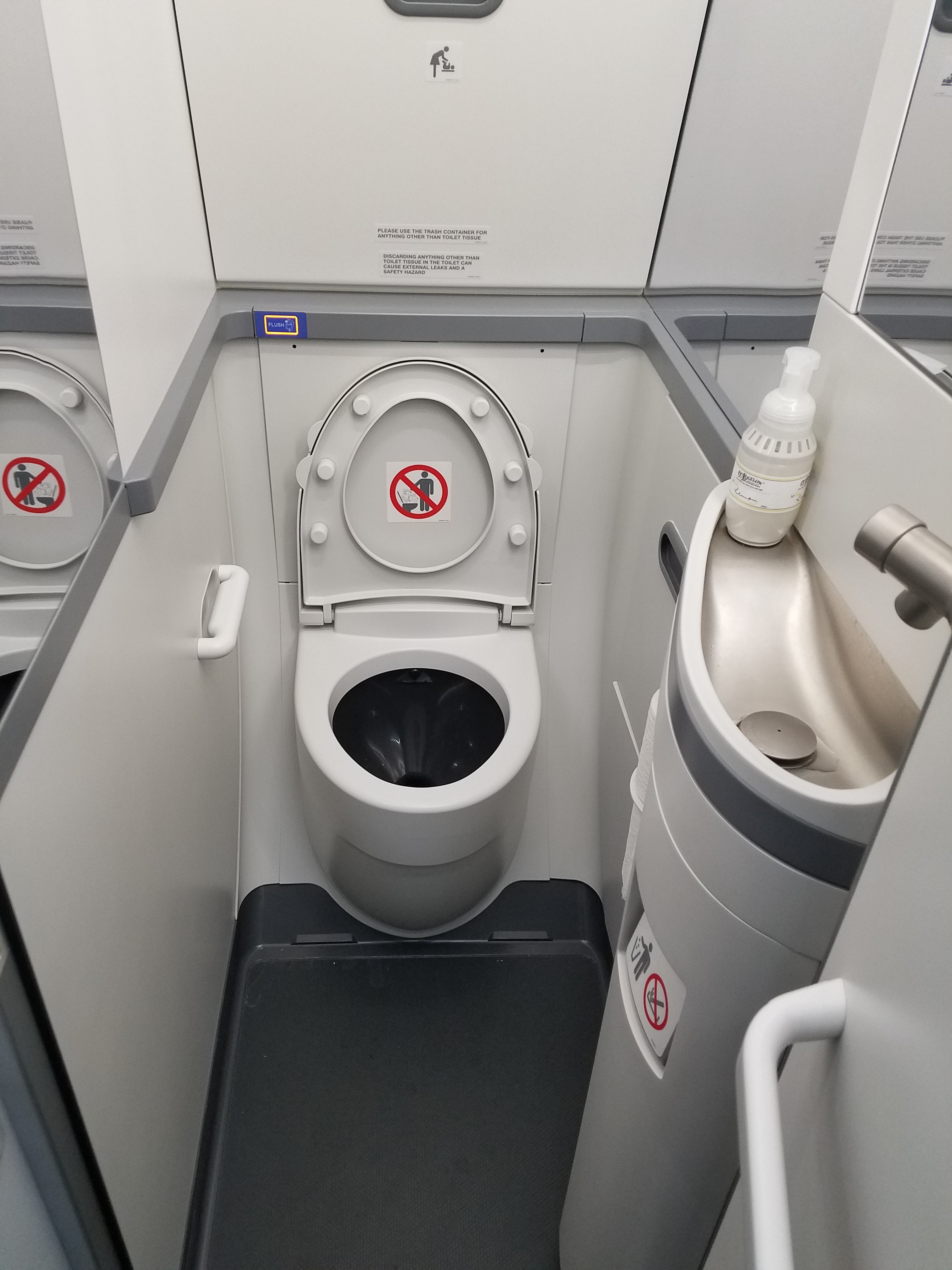
The revealed preference was to degrade or at best stagnate the base product, keep capital expenses and unit costs low, and assume customers either won’t notice or won’t defect in meaningful numbers.
Then-airline President and now CEO Robert Isom’s explained in 2018 that they were chasing Spirit and Frontier.
[T]oday there is a real drive within the industry and with the traveling public to want to have really at the end of the day low cost seats. And we’ve got to be cognizant of what’s out there in the marketplace and what people want to pay.
The fastest growing airlines in the United States Spirit and Frontier. Most profitable airlines in the United States Spirit. We have to be cognizant of the marketplace and that real estate that’s how we make our money.
We don’t want to make decisions that ultimately put us at a disadvantage, we’d never do that.
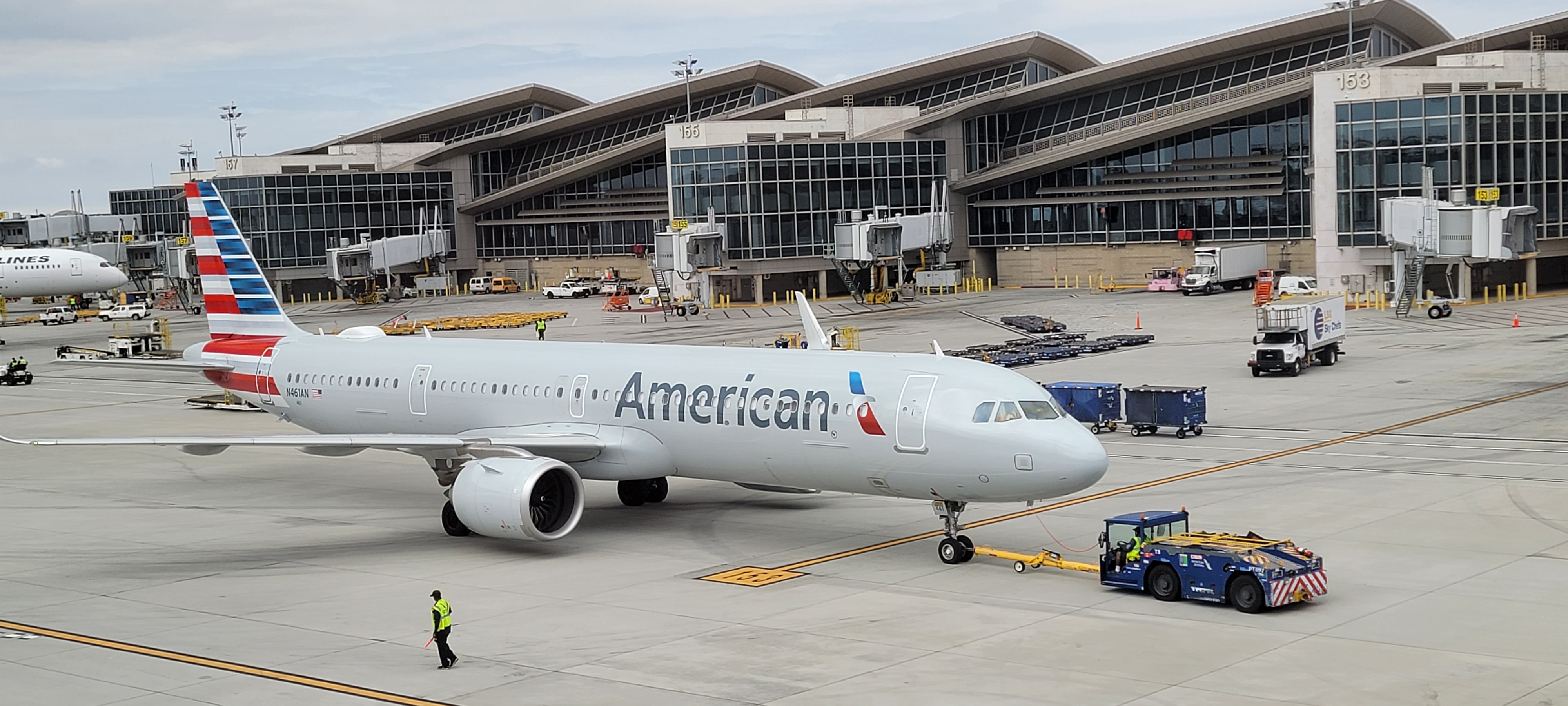
Spirit and Frontier were the threat, not on the verge of being vanquished by basic economy which was already in use. Customers wanted cheap fares, not a differentiated product. Since Parker’s whole career came out of surviving crisis after crisis with cost-cutting, density, and balance sheet management he wasn’t well-positioned to see the changing trends among consumers and in the industry.
If your formative experience is America West and US Airways, you don’t go to war with Delta on product you survive by keeping costs low and matching fares.
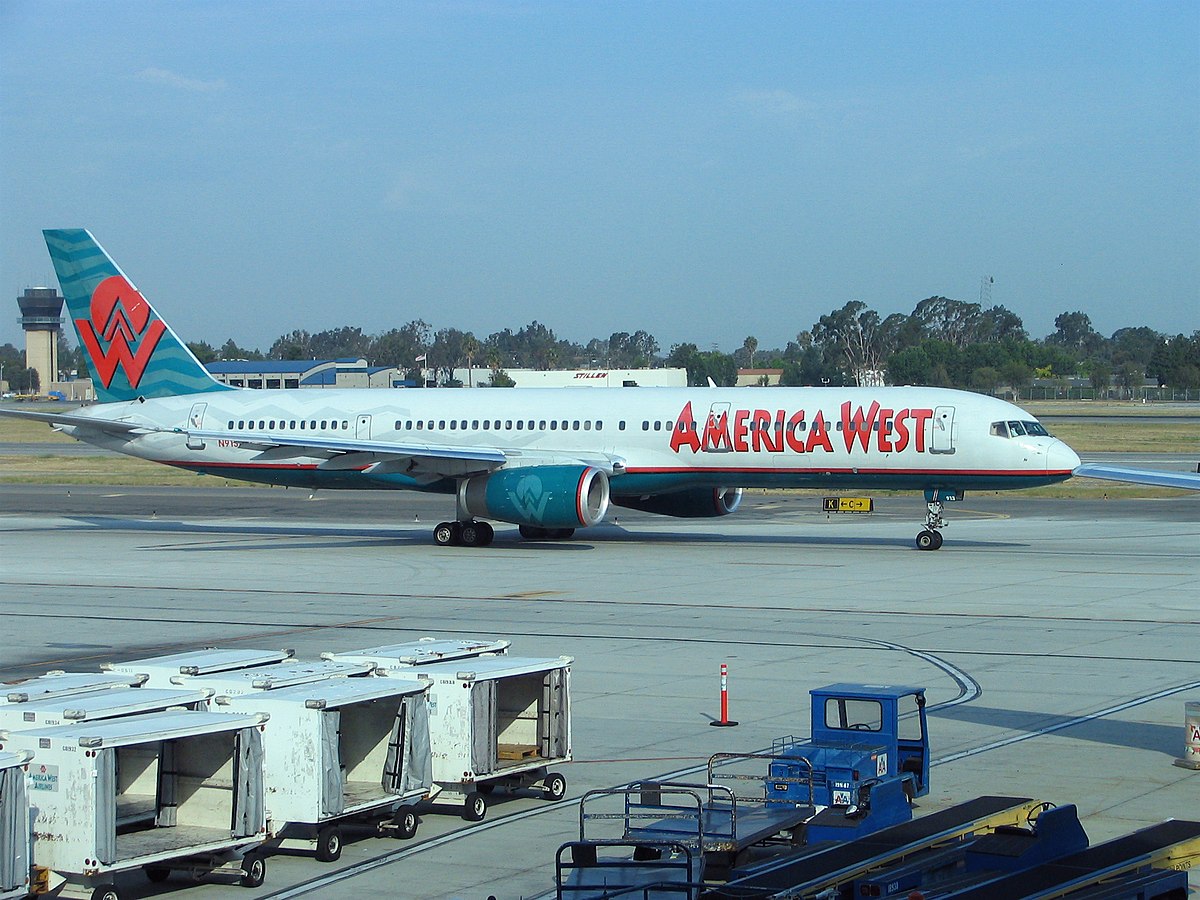
Credit: randomduck via Wikimedia Commons
When ultra-low cost carriers were succeeding, he was their margins and his fare fences broken down, and the play was to copy their density (remember that the original American Airlines domestic fleet plan was to move to 29 inch pitch and they relented to pressure, dropping some extra legroom seats not to go below 30 inches). The view at the time was that seatback screens and better food aren’t costs you can monetize.
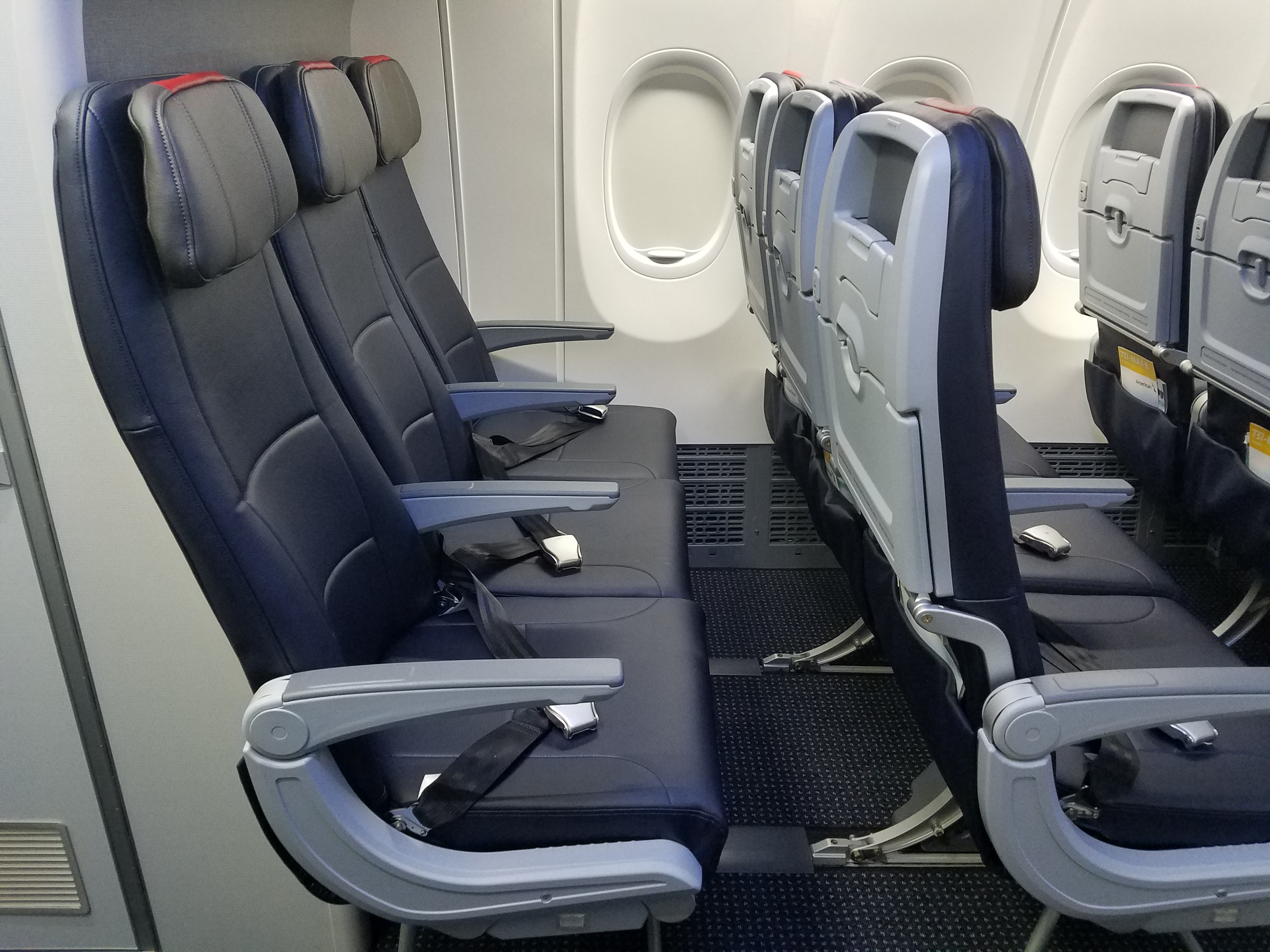
Delta began rolling out basic economy, but also leaned hard into reliability and inflight entertainment, and then monetizing improvements from there. They used operational reliability as a share shift lever, and creadted an upsell ladder, while American copied basic economy and densification but not the rest of the philosophy.
American Airlines still mishandles more bags and wheelchairs than any other airline, and involuntarily bumps more passengers than anyone else. They won’t invest in RFID tracking of bags like Delta does. And instead of investing in the baseline product, they were hollowing it out. It wasn’t being used as an enabler of premiumization like Parker explains airlines need to do.
At the time, though, American was abusing its balance sheet, loading up on debt to fund over $12 billion in stock buybacks. There’s nothing wrong with buying back stock when you don’t have productive places to invest profits. They’re just a tax-efficient form of dividends, and a company’s total outstanding shares should not only ever increase. But this put American at a further structural cost disadvantage relative to competitors.
Parker had also cut short American’s chapter 11 to swoop them up in a merger, leaving them without full cost alignment. And he did labor deals that left them with more employees than competitors, too.
American Airlines Has To Pivot Away From The Parker-Isom Era To Survive
Delta is the most financially successful U.S. airline, and they point to 2015 as the time when customers really started paying for better experience. That’s when Delta laid out its goal to upgrade less and sell premium more.
But that’s precisely when American Airlines was moving away from premium, cutting product, and copying only the cuts without investing in product or reliability.
- US Airways mindset: Parker’s default was cost and density and skepticism that product paid. The priority was avoiding another bankruptcy, and buying back stock, not competing with Delta on product.
- ULCC fear: They saw a 20–25% revenue risk if you didn’t display a comparable low fare to the ultra-low cost carriers. That pulled management toward density and unbundling, not investment.
- Basic as a tool to show low fares, without the premium ladder: Early, one-sided use of Basic – They adopted Basic as a defensive tool to show low fares and reduce dilution, but didn’t yet build (or believe in) a rich, monetizable premium ladder above it.
- Wall Street promises to “never lose money again”: buybacks and cyclicality rewarded near-term cost cuts and punished capital expense-heavy product bets whose revenue payoffs were uncertain.
- Misjudged competitors and customers: They were wrong about their competitive set. American never had Spirit’s cost structure. It did have the network structure to be a premium revenue carrier. Chasing Spirit and Frontier was always strategically incoherent for a high-cost network airline. Delta proved the opposite model works.
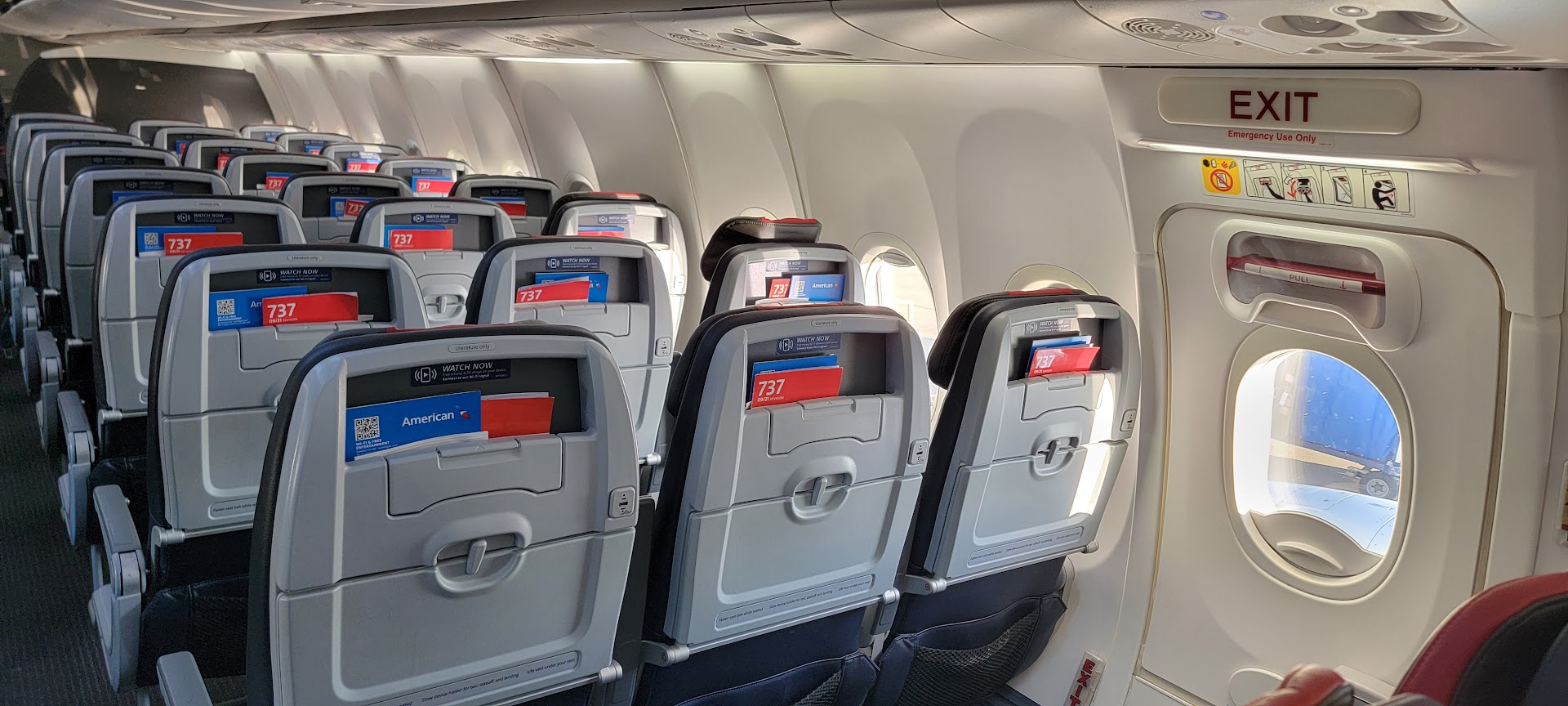
Doug Parker lays out the model of the current airline industry very well. It’s not just the playbook that American Airlines followed. And he tapped a replacement who entered in 2022 whose first instruction to employees was never to spend a dollar they don’t have to.
Now American Airlines is behind the curve. It isn’t as simple as matching product-for-product as Parker suggests. Airlines move slowly. Operational reliability is a baseline, but a necessary one, and it takes time. Fleet changes and retrofits take time. Building and renovating airport lounges take time. And it’s very difficult to do everything at once.
Delta has a head start on United, but seems to be resting on laurels for the most part and United is catching up. American has talked up a premium pivot, and has made some moves, but hasn’t articulated a clear direction or bold vision – or yet made the capital investments since that shift that underscores the change is a real and enduring one and will guide their decision-making.



Well, well, well, @Tim Dunn, there’s a nice pick-me-up for you, after all. Gary (and Parker’s) analysis basically acknowledges that the US Airways playbook was flawed and that Delta was right to embrace ‘premiumization’ and revenue maximization. And, so, Wall St. punished AA, and, passengers sorta did, too (Project Oasis… NDC failures…) Yet, it is kinda wild for Mr. Parker to now be like, ‘huh, never knew people cared so much about food…’ That said, it’s really the billions of dollars in stock buybacks that get me worked up, every time. Instead, AAL (and all airlines) should’ve invested more in the product, employees, and operational reliability; that’s the key to long-term revenue and stability (and a better airline.) At least they avoided bankruptcy, kept some fares low, and the pilots and flight attendants got better deals during these years following the merger. Can’t have it all, huh.
“Parker laid out this same theory that… customer service would be the difference-maker for American Airlines.”
OMG, I nearly choked laughing so hard at that one.
AA has created deep, cultural, internal impediments that only regime change can start to address.
Until then they will continue to oscillate from premium airline aspirations to D0 fixation like a bad case of dog zoomies.
Has this premium trend jumped the shark now that Delta is somewhat complacent, United has almost caught up and American has decided to chase it finally?
Doug Parker is 100% scum. And in my opinion only above politicians and used car salesmen. His only interest to this day is lining his wallet. What he did to destroy the AA brand and shareholder equity is beyond criminal. Met him on a flight once and he sat in business. His wife in premium economy. That says it all. Classless and stupid man.
The really awkward part of Parker’s “masterclass” if you have actually sat inside a network carrier pricing shop is that the world he describes, a clean revenue engine that just needed better fare fences, never really existed at American. The carrier spent the last few years simultaneously hobbling its demand capture through a messy NDC rollout that alienated TMCs and corporates, and running on a legacy tech stack that was late to true continuous pricing and offer management. In other words, the commercial plumbing was not set up to do the kind of fine grained willingness to pay extraction he is now celebrating.
At the same time, AA’s competitive problem in the 2010s was not just seat pitch or sandwiches, it was that the whole commercial system was misaligned. Corporate sales were trying to hold on to high yield contracts while distribution strategy pushed content into channels many large buyers could not or would not use. Network planning was retreating from some of the very coastal and international flows that make a premium revenue story work, just as DL and UA were building those out. By the time AA finally starts rolling out a credible transcon and XLR based premium ladder, the leaders are already on the next curve with AI-driven pricing and much tighter integration between loyalty, schedule, and product. Parker is not just glossing over a bad product call, he is describing an elegant revenue management paradigm that his own organization never actually put in place at scale.
I’d also just point out that the first comment on this thread manages to miss every structural point in the industry. The US Airways playbook was not “flawed.” It was perfectly suited to a low cost network and became a disaster only when Parker tried to paste it onto a global carrier with a completely different revenue geometry. Calling DL’s success “premiumization” is equally shallow. Delta built a modern revenue engine while AA was still duct taping NDC onto a reservations system that belongs in the Smithsonian. The buyback outrage is another tired trope. Capital scarcity was never the issue. American spent billions on fleet while starving the commercial systems that actually generate pricing power. Saying they “avoided bankruptcy” is laughable because the merged airline literally came out of bankruptcy. Saying they “kept fares low” only proves how weak their revenue capture was. Nothing in that vapid comment touches the real failure, which was the total misalignment of product, network, distribution, and revenue tech. The clichés are loud. The insight is zero. The person behind it is a moron.
Not only are the hard and soft products generally mediocre at best, AA flights are chronically late. The combination of a less than premium experience and operational ineptitude makes avoiding them for anything other than award flights, a top priority
@Mike Hunt — You practically repeated and affirmed what Gary and I and others have said (like, nearly everyone agrees NDC was bad), and just wanted to call me names. So much for ‘not engaging.’ You couldn’t resist!
The reality is that AAL needed to cost-cut enough to stay afloat, which they did, and now they’re doing a decent job of pivoting to premium, like with the new Flagship Suites, new lounges, and free WiFi. Sure, I’d’ve liked to have seen IFE screens, like DL, B6, etc. have on nearly all mainline aircraft, but you can’t have it all, I guess.
1990
to add, DL has been intensely competitive as evidenced by Gary ACCURATELY noting that DL led the industry in introducing basic economy to limit ULCC growth.
As much as Kirby loves to act like he is the smartest person in the room, it is and will be DL that does the heavy thinking in the US industry and Kirby is left to copy.
ONe point he does not make. Why is cost advantage not a share-shifting advantage? Sure, AA may not be able to achieve that but others (startups, new entrants) could.
You have been the CEO of HOW many airlines? Obviously, you have every right to your opinions on how to run an airline, but I have to seriously question your qualifications to do so. It is really easy to be a critic.. It’s much harder to make real life decisions.
@Johnmcsymthe
He’s also a massive drunk and has multiple DUIs to show for it.
@DesertGhost – (1) what have I written here that is incorrect? (2) I am not just critiquing after the fact, I was writing this at the time, and AA is now realizing that what I was writing at the time was accurate (and even adopting some of the same language around it I was using).
The problem as I see is that operationally AA took a back seat not wanting to spend money on investments that ran the airline more efficiently and did a better job of handling irregular operations, a daily chore of any airline. Parker assumed that as long as the fare was cheap passengers did not care about arriving on time, making a connection or even being told what’s going on. But the person paying $10K to fly PIT/PHL/LHR in business class arrives the same time as the person that booked a BE fare based off a google flight search. If the flight attendant up front is lazy and indifferent to their job what did the $10K passenger really get?
Sure the $10K passenger may be a savvy flyer (or not) that knows the system and can easily determine alternatives in the case of a missed connection. There may be (or may not be) dedicated people towards assisting that $10K passenger. Meanwhile the BE passenger stands in a line 200 people deep to be told “nothing until Wednesday.”
Fine wine in business class is nice but arriving on time is usually more important.
@George Romey — The $10K passenger gets a lie-flat seat on the long-haul redeye, that’s what.
As to IROPS, I wish we had regulations that guaranteed baseline compensation for significant delays and cancellations under the airlines’ control, because then, not only would we get paid for their failures, but it would create incentives for them to prioritize adequate maintenance, staffing, etc. so as to avoid the penalty of those payments. As-is, they get a pass, and have no real reason to operate on-time, because, who cares, passengers can’t do much about it (eastbound, at least.)
1990, “As-is, they get a pass, and have no real reason to operate on-time, because, who cares, passengers can’t do much about it (eastbound, at least.)”
All evidence to the contrary. It seems airlines are more aware than ever that they need to up their games including WRT DOT metrics as a matter of survival. At some point passengers need to remember that flying on airliners across oceans is a complex enterprise in which safety is paramount.
@JL — I wish, but, my goodness, when things go wrong, they’re each helpless, and there’s no real accountability from the US-side. EU/UK/Canada, etc. actually does something for passengers. I realize in the era of ‘credit cards with wings’ and Wall Street, that the ‘customers’ aren’t really even the passengers anymore, but, still, that’s when and where regulations can be the greater incentive. Hardly anyone is looking at the ‘percentage on-time’ or ’30+ minutes delayed on-average’ notice; they see routes, dates, times, duration, nonstop vs. connections, class of service, maybe they care about aircraft type, alliances, loyalty programs, lounges, seat-types, status, etc. (but that’s more us, the real av-freaks, than the average passenger).
Interesting article. Appreciate the summary of Parker’s remarks, Gary.
I am struck by how the “natural share” argument applies to ORD (where American’s share, especially for local travelers, has shrunk, post-pandemic, vs. United’s). Admittedly my comment here has a strong dose of personal experience, but my sense is that American’s post-pandemic scheduling decisions at ORD contributed greatly to loss of share. I mean, when I have to shift business to UA to get from ORD-DFW because AA cut its late flight and UA still had one — which I had to do more than once — it seems like the ultimate (bone-headed) loss of natural share. And there are so many more examples. It’s gotten better with AA’s recent schedule build-up at ORD. However, they’re now facing what several customers like me discovered: when we had to fly UA for schedule, it turns out the UA experience (clubs, planes, service culture, ease and functionality of self-service tools, etc.) is better. Which makes me less willing to shift flying back to AA as their schedule becomes more competitive.
When the Board kept Parker and Isom and let Kirby go to UA, they were asleep at the wheel.
This was a great interview
I wished McCarthy called out Doug when he said “people just say things and hope it magically comes through” and replied… “didn’t you say a few years ago American would never not be profitable ever again”
I’m not sure which is more fascinating, Gary’s post or the comments — including the one about serial DUI convictions. All I know from my own experience is that big-time stock buy-backs are risky — a kind of LBO on the cheap — and depend on having things go really, really right for a while. And that rarely happens in the airline business. AA IS clearly capital starved, and I’m not sure why the opposite was said in the article above.