
Etihad is growing its U.S. flights in two markets they already serve. They are going double daily in Chicago, and they are upgrading their brand new Charlotte flight to daily service. On face this is surprising, especially right now, when demand in the Mideast is depressed due to the Iran conflict. But it’s also not as crazy as it sounds.
- The press release focuses on the U.S. – India and South Asia connecting market. This isn’t about a bet on U.S. – Abu Dhabi traffic being strong (especially now, with the current situation in the Mideast). They’re pitching connections to 11 India destinations plus Bangkok, Kuala Lumpur and Manila.
- Etihad has been operating Chicago service since 2009. Two flights gives them two connection banks. They’ll have a U.S. afternoon and night departure. That’s more attractive than just more seats. Chicago also has significant South Asian demand, corporate traffic, and cargo.
- Charlotte is surprising. But – and this helps Chicago too – they do have an American Airlines partnership that’ll help with some customers. There’s no Middle East nonstop today. The flight was originally announced purely because of President Trump’s Middle East visit. But it’s a potentialy big underserved market.
- And what makes daily Charlotte service less crazy is that though they are going from 4 to 7 flights per week, they aren’t growing capacity by 75%. And Charlotte only goes daily June 15 – September 8.

Charlotte has been operated by an Airbus A350-1000. So the real capacity increase is 27% in business class and 43% overall (U.S. connecting traffic to South Asia is going to heavily skew to the back of the plane, where a 45% increase may make sense):
| Weekly business seats | Weekly economy seats | Weekly total seats | |
| 4x weekly A350-1000 | 176 | 1,308 | 1,484 |
| 7x weekly 787-9 | 224 | 1,897 | 2,121 |
| Increase | 27% | 45% | 43% |

Charlotte is probably doing better than expected. If daily service lasts past summer, or returns next summer, then the experiment paid off. But it’s a limited experiment on route they gambled with now for political reasons.
It’s interesting to see them double down on American Airlines markets, given how frayed the relationship got when U.S. carriers were pushing the Obama and then first Trump administration to block U.S. flying by large Gulf carriers. American severed its codeshare with Etihad in 2017 but oddly kept its frequent flyer partnership (though Etihad flights earn AAdvantage miles but not Loyalty Points). American ultimately developed a close relationship with Qatar Airways.
The thawing of relations with Gulf carriers has also meant:
- United partnered with Emirates
- Delta has partnered with Riyadh Air and is taking subsidies for its own Saudi flight, when they led the entire fight against subsidies.
Etihad is looking to carry more visiting friends and relatives business between the Midwest and Carolinas and Ahmedabad, Bengaluru, Chennai, Delhi, Hyderabad and Mumbai. That’s a core business for Gulf airlines. But it’s also a brutal, highly-competitive and price-sensitive business that involves Emirates via Dubai; Qatar via Doha; Turkish via Istanbul; Air India; and Europe routings as well.
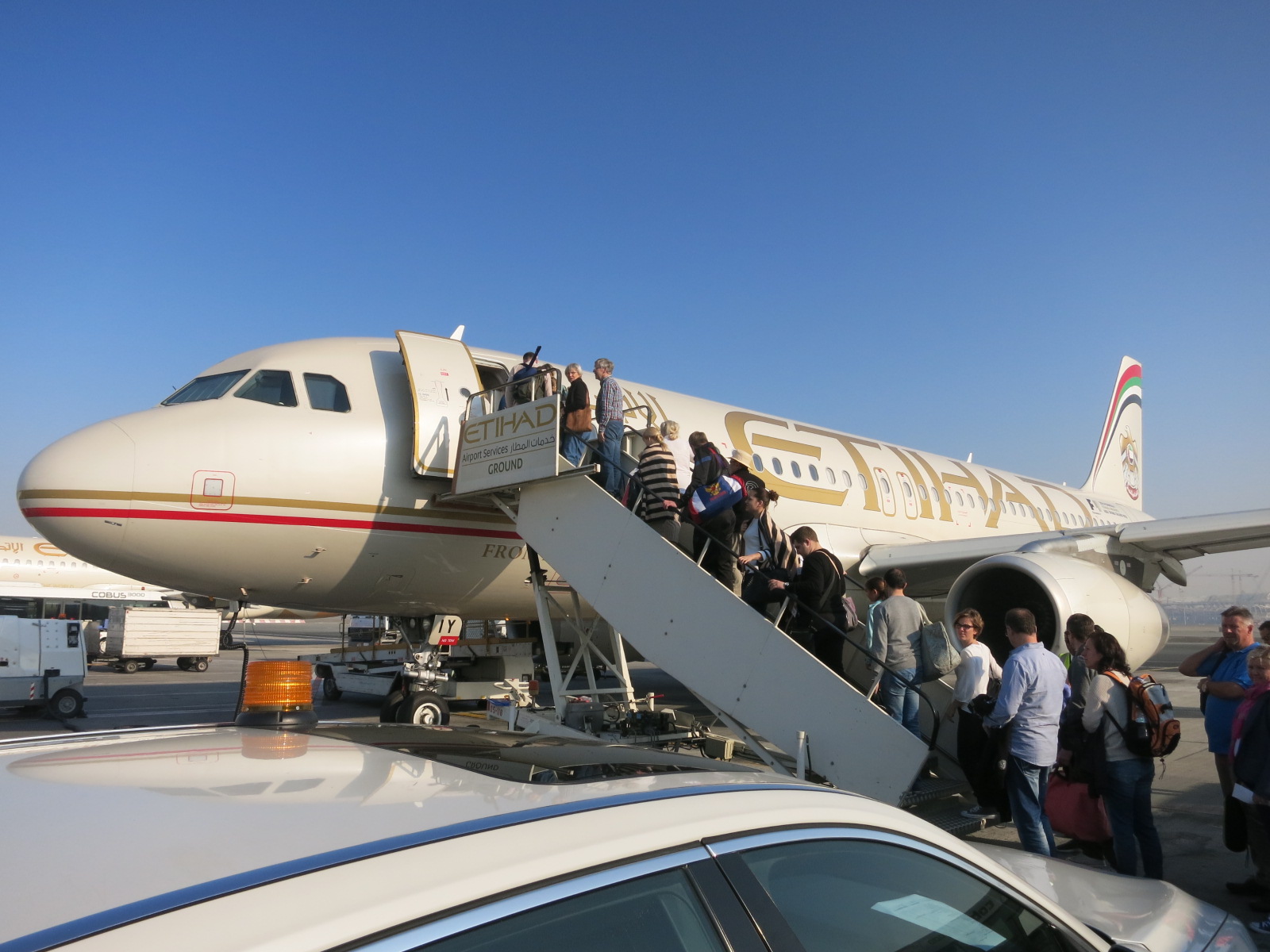
Given regional disruption, the U.S. is a stable market to deploy aircraft even with passengers potentially avoiding Mideast connections. They likely have the planes, given their recently-reduced schedules. At that point experiments can make sense.
And this shows growth not retrenchments, a reminder about Charlotte for political reasons, and aggressiveness in the U.S. – India connecting market. We’ll see whether daily Charlotte is a step too far!



Interesting. Thanks for the analysis.
Finally, someone rubs CLT the right way!
…still, not gonna route via ME anytime soon.
Charlotte is the headquarters for BofA, Truist, future second hq for SMBC, and regional hub for Chase and Wells Fargo (with a big pre-merger Wachovia presence). Lots of reasons to have good connectivity to India for corporate customers. Large south indian population in CLT probably driving good O&D too (in addition to the AA connectivity across the SE).
US-India VFR traffic skews far more heavily to the premium cabins than it used to 10, 20, 30, 40+ years ago.
Of the Indian-Americans who are 70+ year olds in my social circle; a large proportion of them are flying in premium cabin to and from India nowadays. Keep in mind these people came into the US with little to no student debt and have seen massive increases in income and capital returns over the c. 35-60 years of living/working in the US.
Why is Qatar ok with JetBlue and American partnering with Etihad? We know that they subleased an LHR slot to JetBlue in exchange for JetBlue ending their partnership with Emirates and partnering with Qatar instead, but it seems like they should be equally mad at their OneWorld partner with another Gulf airline.
@GUWonder — Can’t blame them, either. Most of those routings, nonstop or 1-stop still take like 20+ hours of travel time. For anyone who can afford it, premium is certainly the way to go. Better meals, chance of getting rest, etc.
The Carolinas are the fifth largest population in the US and will soon pass New York. Nearly 18 million people and Charlotte is at the center. Why anyone is “surprised” doesn’t kniw much about economics or demographics.