
On this week’s Airlines Confidential, United Airlines CEO laid out the incredible extent that fixing air traffic control would mean for improving air service in the United States, reducing delays and cancellations. I don’t think the FAA as service provider can ever actually do it – you need the regulator to be different than the actual air traffic organization. The FAA regulating itself has meant zero accountability for decades.
However, Kirby goes on to argue that there still need to be limits at Newark airport, where United has a hub. His point about ‘simple math’ doesn’t imply the solution that he thinks it does.
Newark, for what it’s worth, always should have been capped. I mean it was the only airport left in the world that was a large airport that was over scheduled that doesn’t have slots.
It’s the only one and it used to have slots and the reality is at Newark the FAA says in the best of times with full staffing on perfect weather day they can handle 77 operations per hour and they were letting it be scheduled at 86 operations per hour for hours in a row. And that is simple math.
It meant, you know, if you did that for 10 hours, that’s 90 flights that have to get delayed until past 10, 10 p.m. at night or have to get canceled every single day. It was just unconscionable and it was awful and a basic misunderstanding of very simple math. We’re not caring about very simple math. I think they understood it. So I’m incredibly relieved that this administration has done that.
We should improve throughput at Newark, because there’s a lot of demand for air travel out of Newark. We can’t do that both because of air traffic control and because we don’t build things in the United States well any more, in some part because the National Environmental Policy Act creates too many veto points (it’s even used to block environmental projects by the way).
However if Newark is overscheduled the answer isn’t to hand the exclusive right to operate most of the flights to United, blocking competitors and future new entrants, as a free gift (subsidy) from taxpayers. That’s what slots are – the right to takeoff and land at an airport, generally given free, wit huge economic value. Slot controls allow incumbents exclusivity and block anyone else from competing with that. The fact that airlines have succeeeded in regulatory capture to make this a standard practice doesn’t make it any less bad policy.
Here’s the better approach: congeston pricing.
Slots are a blunt rationing instrument (and a subsidy to the incumbent airlines you give the slots to). Since they’re ‘use it or lose it’ we get unnecessary flying on small planes no one wants to fly, just to squat on flight times. Prices encourage airlines to allocate flights on the right aircraft to the right routes that match passenger demand.
The Case For Congestion Pricing
Think of a runway like a heavily used road approaching its capacity. As use approaches 100% of capacity, planes have to queue. Each additional flight imposes delay costs on everyone else, but the airline only internalizes its own delay cost. So airlines are incentivized to overschedule.
Slots try to deal with this by capping the number of flights in a period. Congestion pricing says: “You can operate whenever you like, but you must pay the actual total cost of the delay you impose on others.”
Slots are a crude cap: “X movements per hour.” They’re allocated via grandfather rights and use it or lose it. They’re adjusted infrequently and administratively. Once you have the slot, the flight becomes ‘free’ regardless of the delay it causes.
Charging per flight movement that approximates the marginal delay cost to others works better. When the system is uncongested, the price is low or zero. As demand approaches or exceeds capacity, prices rise sharply.
Airlines operate a flight in that time slice if they are willing to pay – if the value of the flight to passengers and the airline is greater than the congestion charge.
That way, you get the flights that generate the highest value relative to the delay they cause. You also get natural spreading of flights to shoulders or off-peak times, reducing congestion, to lower costs. It can encourage use of larger aircraft to spread the cost out across more passengers, and also de-banking of hubs.
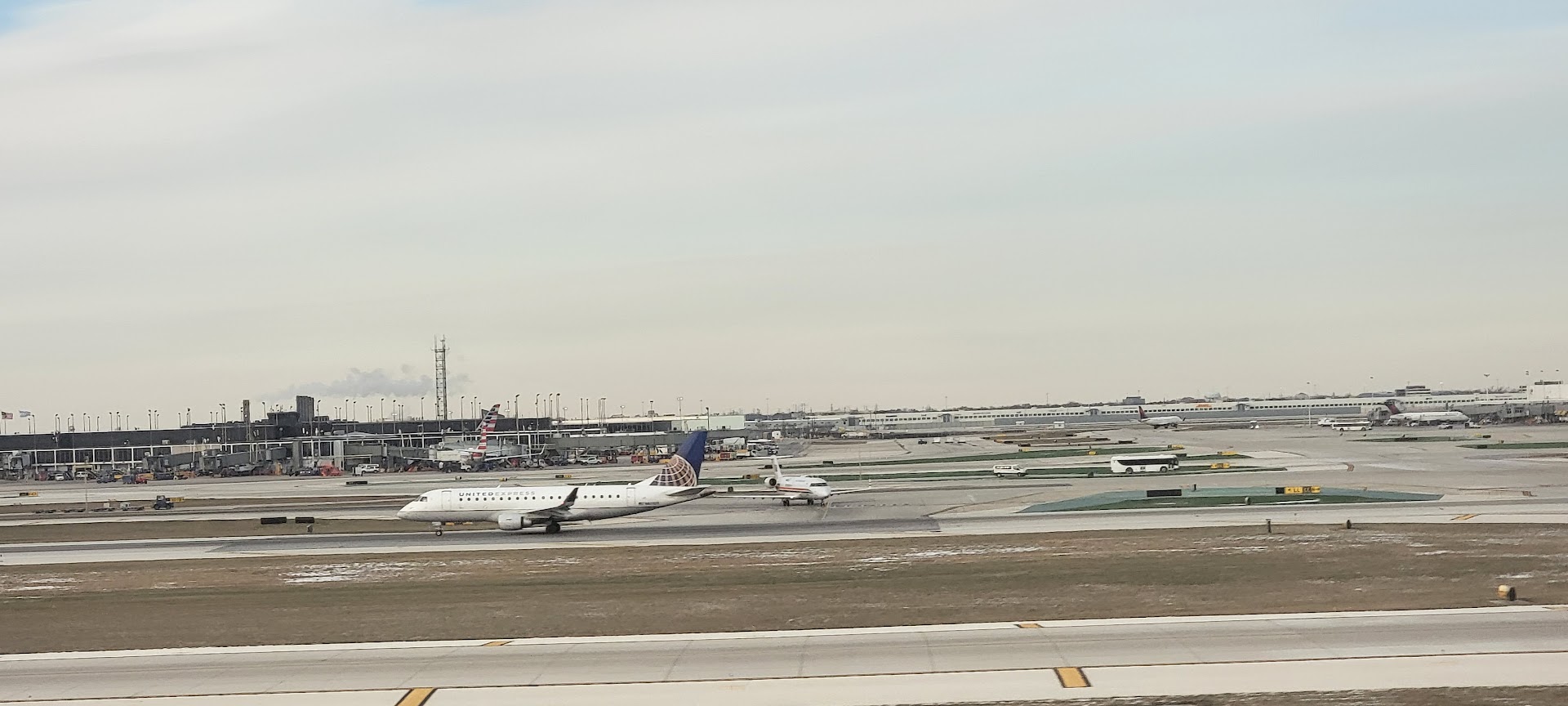
A slot freezes peak delay – a “19 slots per hour” rule means you get 19 flights per hour, regardless of delay and irrespective of whether those are 19 regional jets or widebodies. There’s no incentive to move those any of those flights 20 minutes to spread out peak loads.
Slots are also bad at handling weather events and air traffic control issues. Those might reduce an airport’s capacity from (say) 60 to 35 flights per hour. That’s when we get ground delay programs and ad hoc rationing. Congestion pricing can do the work for you, and prioritize the most valuable flights. Instead of stressing the system, airlines contribute towards paying for a better one. (If you want to make it revenue-neutral, cut landing fees or passenger charges to offset and just use congestion pricing for the incentives.)
Ultimately, the same price applies to everyone – incumbent airline or new entrant in the market.
Airlines Would Hate This!
Yes, of course they would. They’re getting a valuable property right now for free, and instead they’d be charged (though it could be done as revenue-neutral).
You’ll likely hear that ‘congestion fees will just cement incumbent dominance’ which is silly, because that’s what the current slot system does. The claim, though, is that incumbents have deep pockets to pay peak charges, while others get pushed out worsening competition.
- Under slots, incumbents own peak access for free (or were often cheaply acquired in the past). They can sit on grandfathered rights indefinitely. New entrants are often shut out completely.
- If a new entrant sees high value in a particular peak flight, they can buy in. Under a fixed slot regime, there may literally be no access at any price.
- If policymakers still want to support entry (they will, usually for their own constituents rather than the public good), they can offer rebates for new carriers on specific routes and use competition policy to scrutinize predatory practices rather than locking in those practices with slots.
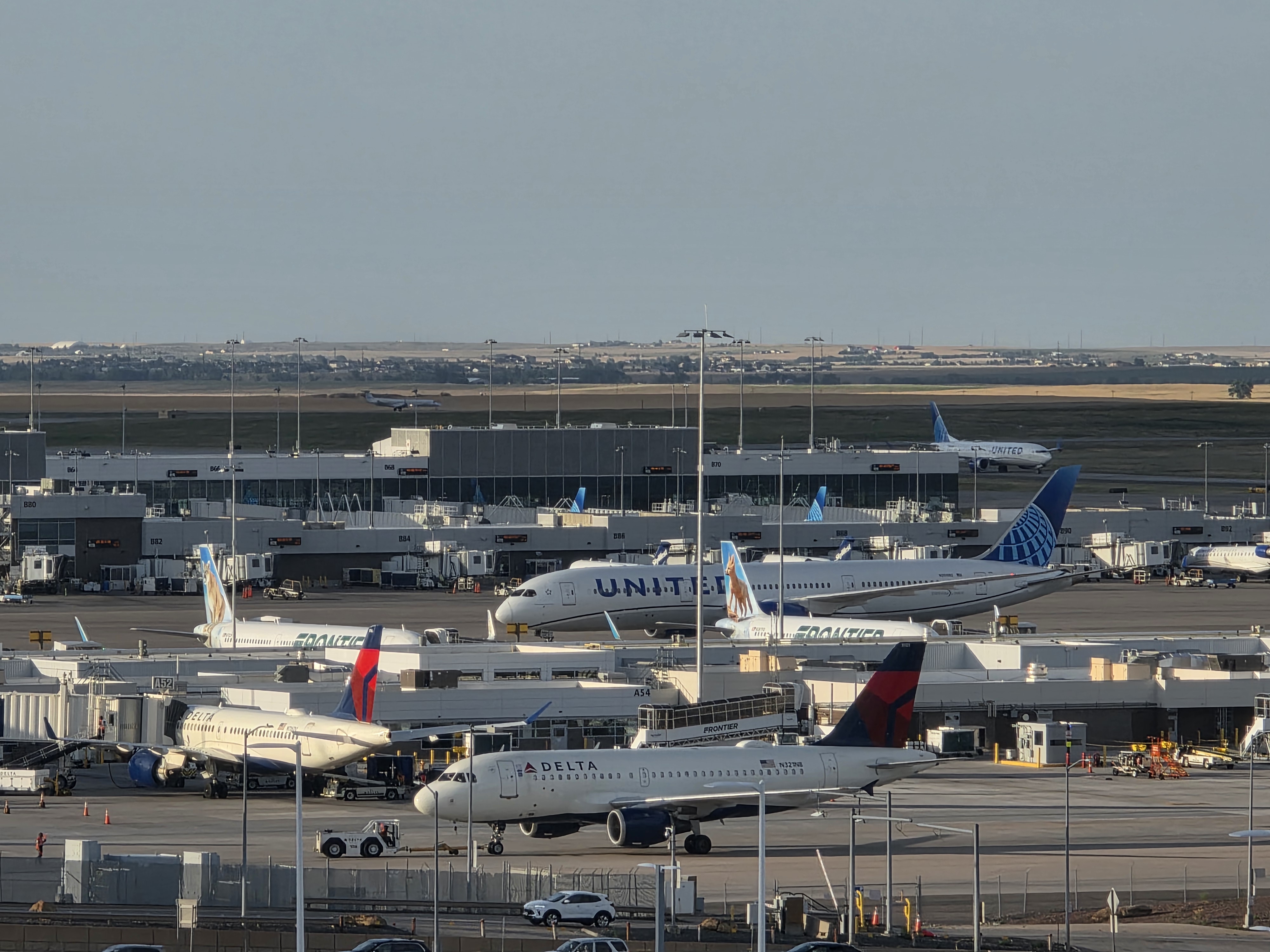
There will also be a class argument that peak times will become ‘rich people’s time slots’ with lower-income travelers getting pushed into inconvenient off-peak times or other airports. That’s often what happens now, getting pushed to Spirit and Frontier for lower fares. And lower-income travelers would face fewer delays! In any case, especially if congestion pricing encourages upgauging, we’ll likely see more major carriers with excess capacity to discount – at peak times. But if you want redistribution, then do it explicitly, not via hidden cross-subsidies embedded in slot allocation.
What is a fair concern is that low value flights that few passengers value – often on smaller regional jets to low volume airports – will lose peak time service. That’s because these flights are less valuable! But if we’re really going to design policy around these flights, don’t do it in a way that also inefficiently allocates flights causing delays for the entire air system. Make the subsidy cost of these flights explicit rather than burying it.
A system that sets prices by day and time seasonally, by 15 or 30 minute increments and published in advance is easy for airlines to plan around. Then major weather or air traffic control outages can have surge pricing with a capped multiper (e.g. 2x). This is easy for airlines to deal with – they manage variable fuel pricing and demand risk constantly. And this will lower costs from ground delays.
Time To Abolish Slot Controls
Newark shouldn’t get slot controls. We should abolish them at New York’s JFK and LaGuardia and Washington National as well. They’re a rationing mechanism that locks in incumbents and treats all flights in the same time window as equivalent, regardless of the systematic delays they create. And they provide no real incentive to move a flight time, upgauge, or de-bank a hub.
And they turn scarcity value into privately-owned assets of the airline, rather than revenue streams to improve system capacity. Capacity pricing does the opposite! Anyone can access takeoffs and landings if the value of their flight is high enough to warrant paying peak prices.



EWR, like most major airports, is over-scheduled; and there’s no room for more runways, or airspace, generally, unless they start flying in the middle of the night (which they could do, but, you’d need to hire more FAA/ATC/airport staff, generally). DOT already charges peak-hour landing fee surcharges at many ‘congested’ airports.
Gary’s congestion pricing idea is likely to face the hurdles of ‘regulatory capture’ by the incumbents; that said, I do like the idea of encouraging the use of larger aircraft (think more 787 for domestic, less 737). But, how exactly would that actually lead to fair access for new entrants, because, won’t the ‘little guys’ have to pay more, too, lest they be in ‘bad’ time slots?
And, @Tim Dunn, before you get excited about this harming United, won’t this harm Delta elsewhere if implemented more widely?
@Gary: Agree with the priciples here. Is there also a gate issue? I.e. a landing slot is actually a few minutes of time. An owned gate is occupied for an hour or more. A queue should develop for gates at peak time.
If so. Gates should not be “owned” by one carrier. They are all the same except for advertising verbiage. That can all be carried around by the carrier personnel as their gate assignments change.
All you will do with congestion pricing is have higher fares and service that only includes the largest airports. While many economists like this plan –Milton Friedman and his ideas never work because they favor the rich and it is a public airport
another well developed, article. you get some things very right and miss others.
First, EWR is and has been overcapacity since CO built it as a hub. The airport is essentially a 2 runway operation; no other major hub has so few runways other than LGA and DCA both of which are perimeter restricted.
UA wants to codify the FAA coordinated flight restrictions so there is no chance competition can ever grow. From an operational standpoint, the FAA has accomplished all it will ever do at EWR in terms of managing congestion and overcapacity.
Second, if you implement congestion pricing, you need to eliminate the perimeter restrictions at LGA and DCA. you can’t expect airlines to pay the same for slots that can’t be used for all of the country.
third, 1990, I don’t get excited about it because slots, have been ruled as something airlines can keep long-term and that is in line with how the rest of the world treats them. Gary’s miss is that he thinks the US can do something that does not conform w/ international slot rules which US airlines benefit from as much or more than any country in the world.
It might sound nice to reform slot rules but it isn’t a US project.
and the real reason why Kirby wants slot controls at EWR is because he wants to get back into JFK w/o facing the consequences of AA and DL adding EWR transcon service.
Even if B6 is stupid enough to lease slots to UA so that UA can start service in B6′ most profitable markets, AA and DL are not going to sit by and let UA take a piece out of their NYC hubs without them doing the same at EWR
You know what’s even better than congestion pricing? Auctions. Congestion pricing is subject to politics pushing the price around, an auction guaranteed that each slot gets its maximum value.
Gate auctions have also been a proposal I’ve been playing around with in my head, it prevents the kind of squatting we see because it’ll be a massive money pit to squat too much.
@Gary Leff, @Tim Dunn — How about more robust, actual anti-trust enforcement; say, no more than 60% market share at any given airport… (or whatever the ‘reasonable’ economists can come up with) or is that too ‘socialist’ for you fellas…
@Trkq — Yeah, Gary and the conservatives on here promoting Chicago-school theories isn’t surprising; a bit better than the wackos promoting the Austrian-school anarcho-libertarian nonsense… *cough* @Mike P *cough*…laissez faire is not a practical method for an airport.
actually, 1990, the DOJ applies a 50% share as a “red flag” when airline mergers are concerned which is why UA at EWR is problematic; it is the only hub in the NYC area that exceeds that threshold.
The DOJ could not get by with limiting share to 50% if market share was achieved organically. Remember that DL and Eastern used to split ATL; EA failed and all DL did was pick up gates that no one else was willing to take.
ATL and every other federally funded airport except for Dallas Love Field still makes gates available for new entrants.
and, as we have seen at ORD, games can be played to gain what other airlines have regardless of market share.
@Tim Dunn — Well, one thing’s for sure, ‘games (are being) played.’
The perimeter rules at DCA and LGA absolutely need to be eliminated while we are talking airline economics. DCA loses so much utility by effectively operating as a protected AAL regional hub. Want to fly DC to the middle of nowhere PA or something? Take it out to IAD or BWI. DCA should be only be for major NE corridor shuttle flights and 737s or bigger coming from major cities and Canada.
When UA allows for non-United lounges to be built at EWR Terminal C, happy to talk. Until then, not even considering the idea of slots, and whomever would like to travel to NJ to enjoy the joys of Newark Airport (including the OK I guess this is new and exists and has lounges but is kind of sub-par Terminal A), have fun.
In general, yes. However, peak times are when business travel is heavy, and to a lesser extent high end leisure travel, so for the most part the costs can be absorbed into higher fares. You end up with too much capacity at peak times and it’s a 75-90 minute taxi to takeoff.
@Tim Dunn: You wrote: “if you implement congestion pricing, you need to eliminate the perimeter restrictions at LGA and DCA. you can’t expect airlines to pay the same for slots that can’t be used for all of the country.”
I don’t see the problem with having both congestion pricing and perimeter restrictions. The fact that the LGA flights have perimeter restrictions means that the price airlines would pay for flight times out of LGA would probably be lower than what they would pay for flight times out of JFK or EWR. But that would all be considered in the pricing.
Joshua,
I think we agree that perimeter restricted slots should not be worth the same as those at JFK or EWR. THAT is the point.
The real point which others agree with is that there is no reason for perimeter restrictions at LGA or DCA to remain.
If you want to talk about free markets – as Gary repeatedly and rightfully does – then you have to get rid of all of the limitations on where people and airlines can fly.
the result will be to push more traffic through LGA and DCA on larger jets to cities outside of their perimeters and to push regional jets to smaller destinations to more larger and more distant airports from center cities including JFK, IAD and BWI
nothing will change but it is nice to have a good civil conversation about what we wish would happen…just as Gary can do
I love Airlines Confidential. Who needs to watch the soaps with this content?
@Joseph — LOL.
Gary, as you know, extremely smart economists have considered this. And, sorry leftists, free markets make sense. Unfortunately, the alternative to the central-power leftists is from crony capitalists on the right.
Here’s an alternative to congestion pricing that won’t raise costs for everybody (including passengers): the goal should be to move the maximum number of people within the airport’s physical limitations. That means big, full planes going to destinations with high demand (ideally with cheap fares to fill them up). Periodically (maybe quarterly?) take the 5% of slots each hour that are moving the fewest people and put them up for proposals. If an airline is willing to put a bigger plane on that time slot (to whatever destination they want), they get it, and they can keep it as long as they are moving enough people on that plane (fill it up with cheap fares) to not fall back into the bottom 5% of flights during that hour (the per hour measure is important otherwise the only flights that turnover will be at bad times super early or super late). By constantly upgrading the weakest slots, this process keeps fares down while moving the maximum number of people the airport can handle.
There are certain things the government must regulate, e.g., broadcast bandwidth. What have we done? Maximize government inflow? Nope. We often give it away (or almost so).
brilliant, Tory, just brilliant
lol.
Are you sure, Tim?
You’re with Tory’s plan?
Delta survives on regional jets for their LGA and JFK slots.
By far! lol
Delta relies on regional to be any kind of player in NYC whatsoever
UA rules NYC on widebodies and narrow bodies.
Delta is only ahead in NYC on flights due to their HEAVY reliance on regionals…
@This comes to mind — Tell us more about this ‘crony capitalism’… never mind, we’re already living it.
@Tory — “big, full planes going to destinations with high demand…” never should’ve ended the 747 or a380 production lines…
max,
as usual, you turn everything into a piy8ong contest totally ignorant of reality.
DCA and LGA have the highest percentage of regional jets but they are also perimeter restricted which multiple people said needs to be eliminated if you really want to inject market economics.
we know full well that the Port Authority and Congress will fight tooth and nail to open up LGA and DCA to full national usage of slots so there is no evidence that any other airline could do any better with larger mainline aircraft
and DL runs the highest LFs of the big 4; it is actually WN that is at risk of losing slots because of its low load factors.
and DL systemwide has a far smaller percentage of its network operated by RJs than AA, AS or UA.
as usual, your shoot first and have someone else do the thinking strategy has backfired once again.
and even as much as Tory’s proposal makes sense, it won’t happen because global procedures still respect slots as being controlled by airlines in perpetuity as I noted in my first reply. putting even 5% up for “auction” is a violation of international slot usage norms which the US subscribes to and US carriers benefit the most from
@Tim Dunn, @MaxPower — If you’re based in NYC and still taking those ‘shuttle’ flights with either DL or UA to DCA or BOS, you’re gonna be disappointed; too many times to count, those flights are so significantly delayed and cancelled, I don’t even bother anymore. Just Acela, because ‘you fool me once…’ (even if just once a year, worth having that FNBO Amtrak card, which I prefer to call the ‘ChooChooPlus’).
@1990 – I always thought the secret was take the first flight out on the shuttle, but do the return on Amtrak. At least with DC. Boston… that extra hour on the Acela makes the flight the better option on the return sometimes, at least when it’s not windy….
There are hundreds of different ideas and regulatory comments filed on this subject over the last quarter century (https://www.transportation.gov/tags/dockets)–just type in slots, auctions or congestion pricing. Congested airports require different solutions depending on airline market share (e.g., high market share means the leading carrier absorbs most delay costs–think EWR), weather (think SFO, how do you set the operational and delay targets when you have vast differences in predictable available capacity), and airports where you have multiple airlines and terminals and you must allocate capacity first among them (think JFK, where terminals are in competition with each other). The https://www.iata.org/en/programs/ops-infra/slots/slot-guidelines/ has the principles that are applied, which while not optimal are better than they used to be. Ultimately, however, the issue is the one Gary started with–you need a separation of the regulatory and operational responsibilities of ATO/FAA.