There’s a war waging over what the Spirit Airlines failure means politically, with each side trying to claim significant turf. Some of the claims are fair, and others are not.
Here’s DOT Secretary Sean Duffy blaming Biden DOT Secretary Pete Buttigieg (a potential future Presidential candidate) and Senator Elizabeth Warren (who championed blocking JetBlue buying Spirit – and seemingly most mergers).
A long time ago, a merger was proposed…
One that may have saved a struggling airline…
But the Empire had other plans@PeteButtigieg @SenWarren pic.twitter.com/4jEt3akPyO
— Secretary Sean Duffy (@SecDuffy) May 4, 2026
The Biden administration’s antitrust guru was FTC chair Lina Khan, and the intellectual home of her work is the American Economic Liberties Project. Their Director of Research has been on a tear with tweets that are misleading and disingenuous. And their Executive Director is pushing the idea that the real problem is an industry rife with “consolidation, bankruptcies, and hedge funds” – so Biden’s antitrust work was not to blame. Spirit could have merged with Frontier, but greed!
The end of Spirit Airlines is a tragedy for workers and consumers. But let’s be clear: this isn’t just about one airline. Post deregulation, the entire industry has been structured to serve Wall St financiers, not passengers or workers. 🧵 pic.twitter.com/pEEVv6je43
— Nidhi Hegde (@nhegde) May 2, 2026
“More Perfect Union” run by Bernie Sanders’ former campaign manager and funded by the Soros foundation and Pierre Omidyar is pushing the idea that ‘obviously’ the Spirit bankruptcy means that all airlines should be nationalized and run by the government.
It's time to nationalize the airlines.
Air travel is a public good, and taking the profit out of the system would mean cheaper flights and cheaper shipping.
Nationalization would also mean the public air service would be bound to serve the whole country, like the post office.… pic.twitter.com/JsvF859Eh7
— More Perfect Union (@MorePerfectUS) May 4, 2026
The video features former policy director and senior counsel to Elizabeth Warren, Ganesh Sitaraman, doesn’t favor competition. He wants to eliminate competition – have just a single airline, run by the government.
If you had a single airline in the whole country, it would be very efficient. You could fly anywhere you wanted on a single airline.
He gets a lot of his facts wrong, throwing his kitchen sink of complaints about airlines at the wall – anything he thinks make them look bad and advance the cause of regulation or nationalization. (For instance, he both complains about devaluation of frequent flyer programs, and doesn’t think there should be frequent flyer programs.)
Deregulation Has Grown Air Service And Employment While Lowering Prices
Airlines are already among the most heavily regulated industries. Governments own airports in the U.S. They perform security screening. They control the movement of all the planes from pushback to arrival. Staffing levels are mandated by the government, along with maintenance practices, and even enforcement of carry-on bag policies – not to mention every element of an aircraft’s interior is approved by the federal government.
Before deregulation, the federal government told airlines where to fly and how much they had to charge. This wasn’t to protect consumers. Fares were high to ensure profits, and the Civil Aeronautics Board set out to prevent ‘ruinous competition’.
Since deregulation we’ve gone from fewer than 250 million passengers per year to over a billion. There are far more flights and flight options for nearly everyone. (There were only about 12,000 commercial flights per day nationally in 1977.) And there’s a quarter million more people employed in the airline industry.

The Case For Nationalization Is Wrong And Misleading
The ‘More Perfect Union’ video shows that the goal of regulation isn’t competition, it’s state ownership. Here are all of its claims, which are misleading:
- That airlines would be better – because they’d be like the post office. My head wants to explode, because they see that as.. a good thing.
- Pricing would be “fair and transparent” based on costs with “no dynamic pricing.” Although there’s no reason to expect that cost-based pricing for a monopoly government enterprise would be lower, and Amtrak has moved to dynamic pricing so there’s no reason to expect that claim to be true either.
- Airfares wouldn’t “necessarily” go up They argue that “ticket prices before deregulation…were actually already falling more rapidly than after” and “regulation would have offered lower fares than the free market.”
The claim comes from Borenstein & Rose (2005) so 20-years old, and they made fare projections for the regulated era that were already beaten by airlines by 2011. The peice was cherry picking data (comparing only 1968-78 for the regulated era). This included the period when the Civil Aeronautics Board started its own deregulation efforts in advance of legislation and allowed ‘experiments’ in price competition. That drove fare decline.
It also misses the more important change in pricing which is fare dispersion – average fares mask that many business travelers paid more and the lowest fares became much lower. The piece actually found that premium fares went up and discount fares went down, which isn’t an argument they want to make. (And premium fares have since fallen.)
- Quality goes up under nationalization because of political accountability. But voters do not vote route-by-route, fare-by-fare, or irrops-by-irrops. Regulators get captured, politicians are responsive to the loudest interests, and most passengers have little incentive to learn the issues or spend time and money lobbying them.
A national airline would answer to Congress, unions, DOT, airport lobbies, and other interest groups. By contrast, competition is also accountability. A passenger can defect from United to Delta, or from Southwest to Alaska. With a national monopoly, there’s no exit option. They do not lose customers from poor service.
Most importantly, a nationalized airline would be accountable to us. we can set quality of service standards like minimum seat sizes, baggage allowances, and refund and rebooking policies.

- Government airline subsidies get the people nothing. That’s fair, we shouldn’t be subsidizing airlines, but then they throw in the non-sequitur of stock buybacks.
Remember, we’ve already been subsidizing our private airlines with billions of dollars in bailouts, and we have no control over how they operate or what they do with that money. Over the past 10 years, the biggest US airlines spent 96% of free cash flow on buying back their own shares.
There’s nothing wrong with using profits that can’t be invested at an above-market rate of return to buy back shares. Returning such funds to shareholders is great for the economy (it lets the money be invested in more beneficial ways instead of trapping it inside the airline) and is responsible stewardship of resources (share counts shouldn’t only go up!). Borrowing money to fund buybacks is risky, and American placed itself in a worse position under former CEO Doug Parker doing this. That’s unfortunate.
But the 96% claim is also pre-pandemic and misleading because free cash flow is after operating costs and capital expenses so it completely coexists with heavy investment in product. In 2019, Delta buybacks represented 58% of free cash flow, but just 24% of operating cash flow because much of the operating cash had already gone back into the business.
- Profit is waste. Are government airlines really more efficient? Ask India, Pakistan, and Sri Lanka. It’s as if Boris Yeltsin never visited a Houston grocery store, marveled at the access and choice that the average American had to food, and accelerated the collapse of the Soviet Union.
Boris Yeltsin visits a grocery store in Houston, Texas with an official Soviet delegation (1990)[1024×639]
byu/Breab1 inHistoryPornA nationalized airline wouldn’t need profit or concern itself with shareholders, so it can use revenue for technological innovation and a rainy day fund so they don’t go bankrupt during lean years.
- Regulated airlines compete over quality not price but now we’re no longer talking about just one airline. We’re talking about a return to the regulated era where it was illegal for airlines to lower prices. Since tickets were profitable for airlines to sell, they competed to attract customers with better service and better food. Flying was only for the wealthy, but the wealthy enjoyed what was in some ways a better product. That’s what they’re selling.
When you have a system where the prices are regulated, the airlines still compete, but now they’re competing for quality of service.
- Many airlines are fighting bankruptcy. This just means they’re giving customers too good a deal, with shareholders (and debtholders) subsidizing flyers. So it’s a weird complaint to make here. They go on to complain that airlines “are chasing premium passengers” but that’s also the system they’re advocating with no price competition and better food.
Then there’s airlines “moving away from their direct route flights towards a hub-and-spoke system” which of course creates more options, many of the ‘direct’ flights of the 70s were not non-stop (milk runs) and there’s a quadrupling of flights since deregulation.
The usual claim about loss of ‘direct routes’ is that small communities are losing service. But the reason for this is government regulation that limits entry into the pilot profession and drives up the cost of becoming a pilot; there aren’t enough gates at many airports; there’s not enough air traffic control capacity because the FAA ATO has bungled technology upgrades for decades. Airlines need to make choices about where to serve and which aircraft, they choose routes with more passengers that will pay higher fares. If you want more abundant air travel, including for these small cities, you’d address these constraints.
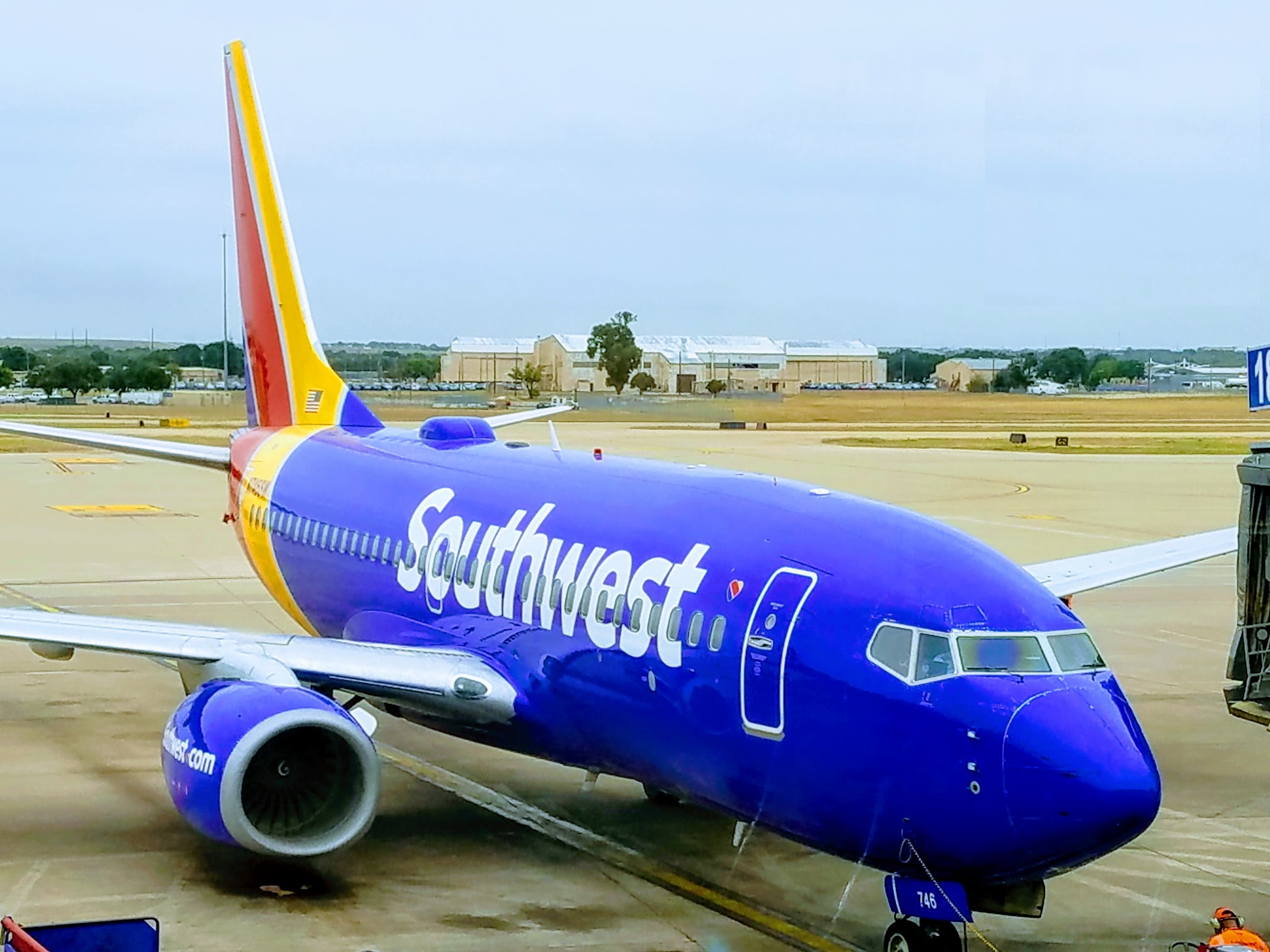
They also claimed that Southwest’s old business model “just doesn’t work in an unregulated airline industry.” But this gets it historically backwards. Southwest’s model began only inside the state of Texas because once they crossed the state border they were illegal under regulation. With deregulation, Southwest grew and became a low-cost disciplining force that legacy airlines had to respond to.
Spirit Airlines Killed Spirit, Makes Other Weak Airlines Stonger
Spirit Airlines lost money for six straight years. Their product isn’t actually what customers wanted, and their costs were up 43% since the pandemic. That’s because of pandemic wage inflation mixed with government barriers to entry into the pilot profession, because of higher airport costs, and because Spirit simply lost cost discipline – Frontier’s costs did not rise nearly as much.
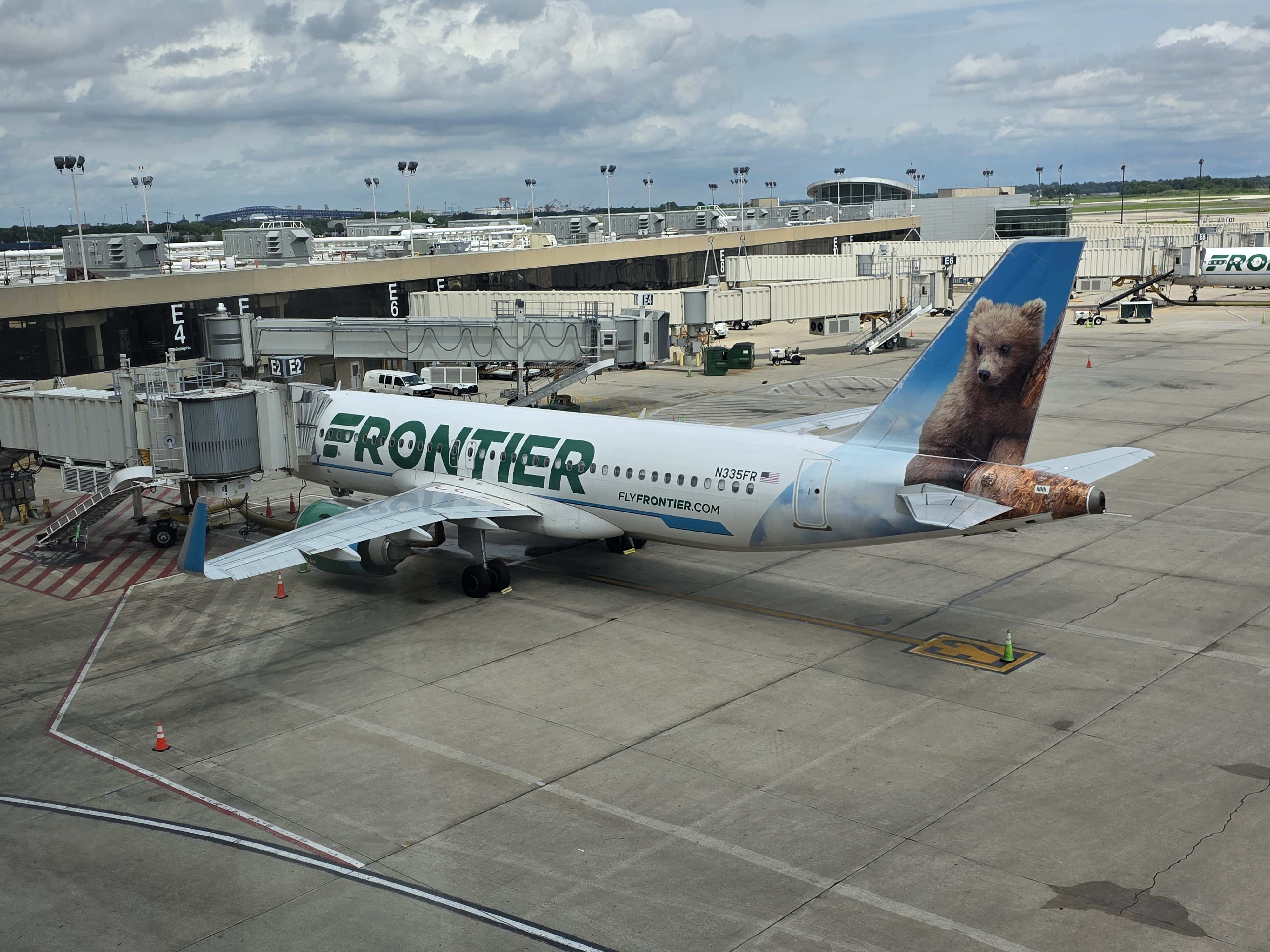
Frontier has lost money in all of those years but one (an accounting artifact from sale/leaseback of aircraft). Frontier offered to buy Spirit again even in bankruptcy. Spirit’s board declined the offer – they felt it wasn’t enough money. Spirit’s demise makes Frontier healthier.
JetBlue’s primary competitor in Ft. Lauderdale was Spirit. JetBlue is already growing there! Breeze is growing into ex-Spirit routes, too.
Spirit was only going to be 1.7% of domestic capacity in summer 2026. Their loss is not a tragedy for the air travel market though it’s sad for the people involved, especially crew who now are forced to the bottom of union seniority lists if they go to work for other airlines.
We can debate the causes of Spirit’s demise. The airline made mistakes. It lost cost discipline. It couldn’t figure out how to compete against larger carriers with bigger route networks and more varied products. Their hubris made them turn down even a recent buy out offer from Frontier. And the government didn’t let JetBlue buy them. A lot goes into how we got here, but there are lessons we should be learning.
We Can Get More Competition
Those who point fingers at Biden, Elizabeth Warren and the antitrust ideas of Lina Khan should learn humility – the lesson isn’t that ‘the wrong people were in charge’ but rather ‘you can’t simply construct an industry the way you want it to be’. Antitrust enforcers wanted 200 Spirit planes still operating in an ultra-low cost model. They did not get this.
If we want more competition, we should legalize competition. Takeoff and landing fees could replace slots, which are subsidies to incumbent carriers which ban new entrants.
We should allow foreign ownership of U.S. carriers to attract new capital and competition. Air traffic control should be spun off and better managed (so, too, TSA) because an agency regulating itself is a recipe for unaccountability. The focus on Spirit misses this bigger picture.



“That which is long divided, must unite; long united, must divide. Thus it has ever been.”
Romance of the Three Kingdoms
So many people immediately blame the Biden administration for Spirit failing, but completely miss the reality that was Spirit.
They lost money for years back-back. Their costs significantly outweighed their revenue. They did not diversify their product offerings to generate revenue (mail, cargo etc..) and flew routes to places people didn’t want to go. And, with teh routes they did have, did not offer convenient schedules minus a few select pairings.
Their recovery model did not allow for quick action or flexibilty to recover from an IROP and the CEO and his idiots made far too much money and cared so little about how to find money.
Blame the DOT or whoever you want for spirit’s failures. But, they (spirit) never made any money in the last few years when others were profitable. There is also zero proof that a merger would have saved the company overall. Who’s to say that JB merger would have worked?
The failure of NK is completely on Spirit.
Gary, let’s be clear: Spirit actually failed under #47, not #46. Regardless, the eventual collapse is likely the combination of the long-term effects of the pandemic and recent rising fuel costs due to the war of choice, started by #47. It’s not anti-trust that killed the airline; if the prior merger had proceeded, Spirit likely wouldn’t have existed beyond 2024 (as it would have become part of the newly merged airline). The reality is that these days Spirit’s primary market of customers is really struggling right now, like, they aren’t traveling as much, and no one is coming to help them under this administration, either. Spirit could have re-emerged from bankruptcy, as some airlines have; but, it didn’t, as others have. This episode is less a rethinking of the concepts of ‘capitalism’ and more a sad reality of business; it usually doesn’t last forever, for various reasons.
Well said, Gary. It is absolutely amazing that this (or most anything you see daily) causes some to think we’d be better off with more highly regulated businesses. Anticipating the numbskulls: yes, we regulate businesses in the sense we don’t leave things like the maximum level of polution to them. We still regulate airliner and airline safety. I’m talking of the craziness of central determination of price, product mix, etc. From now on, everytime I hear some looney suggest re-regulating the airlines, I will now hear: “Make airlines more like the post office and Amtrack.”
The issue with these “nationalize everything” arguments is that they assume the government will always operate in good faith. But the truth is, especially now, it often doesn’t. Every year it will be at risk of having funding cut, management will be at the mercy of political interests, etc. I laughed so hard when they said a government-run airline would be “efficient.” Is this satire? When has a government run operation ever been known for efficiency? Also, as someone who follows railroads, Amtrak for decades faced political scrutiny for selling food on its trains as it sold at a loss, which came out of taxpayer funds. Any inflight service in a nationalized airline would face government criticism, so I don’t see how nationalizing airlines would make a better experience.
For what its worth, a ticket on “nationalized” Amtrak from NY to DC regularly costs over $150 when a bus costs $30. Not exactly an equitable pricing scheme. Its funny, the people calling for this are the same people most vocal about how destructive 47 is being to the government and the people, yet at the same time they’re calling for giving… more power and influence to the government. Gimme a break! This is just a classic example of “current system has flaws, so we need to scrap it all together and go back to the old system.”
well said, Gary.
the notion of allowing foreign airlines to fly domestic flights in the US is dead and will remain dead.
Airline labor is too strong for anyone to cross and even economists recognize that there is no fair trade for allowing foreign airlines into the US market; there is no market that is comparable to what US airlines have in the US.
and the notion that foreign airlines will have service within the US as good as what those airlines offer in their own countries or on international routes is a fantasy. US airlines pay their employees well above average labor rates compared to other Americans and foreign carriers would have to do the same.
Americans simply settle for lower quality because the cost of higher quality on top of high labor expenses is not worth it; but that is true for much of the US experience compared to other parts of the world – quantity over quality.
“It’s time to nationalize the airlines.
Air travel is a public good, and taking the profit out of the system would mean cheaper flights and cheaper shipping.
Nationalization would also mean the public air service would be bound to serve the whole country…”
People like this are too stupid to dress themselves. Everything the government touches is wasteful and increases costs and quality generally goes to crap. Public education, college tuition subsidies/loans, the medical market, welfare, paying Somalians to open “Learing Centers,” military spending, mandatory EVs, and on and on and on.
I resent that my tax dollars go to support complete meatheads like this.
@tim dunn – ‘economists realize’ is a silly claim, economists generally oppose trade barriers. And the European market would be comparable enough, not that this is relevant- it was the foreign policy of the United States for decades to pursue Open Skies agreements with countries U.S. carriers had no interest in flying to. This was not a mercantilist exercise.
And where do I suggest foreign carriers would offer similar services? We’d be just as likely to get more Ryanairs and Singapores.
@This comes to mind — What are you even talking about? The industry has been officially de-regulated in the US since 1978 (under Carter of all people…) Any existing ‘regulation’ or ‘rules’ are sensible and primarily for safety standards, though there absolutely should be better protections for workers and consumers. Otherwise, you’re making hyperbolic arguments suggesting anyone is pushing to ‘nationalize’ this or any industry in the US these days. Even activist anti-trust advocates aren’t pushing for that. Besides, the current President has taken on a more ‘socialist’ stance as it is by demanding ‘golden shares’ of Intel, recently (so long as it benefits him and his family, personally). So, you could say, #47 is a nationalist and a socialist… *sigh*
@toomanybooks — Ok, so, just thinly-veiled racism (gotta go after the Somalians, huh)? C’mon. No one wants corruption; yet, we continue to subsidize major already profitable industries, like oil and gas. So, why is it? Is all government bad? Is government only good if it pays out to the wealthy and corporations? I see a lot of hypocrisy here… not that it matters anymore.