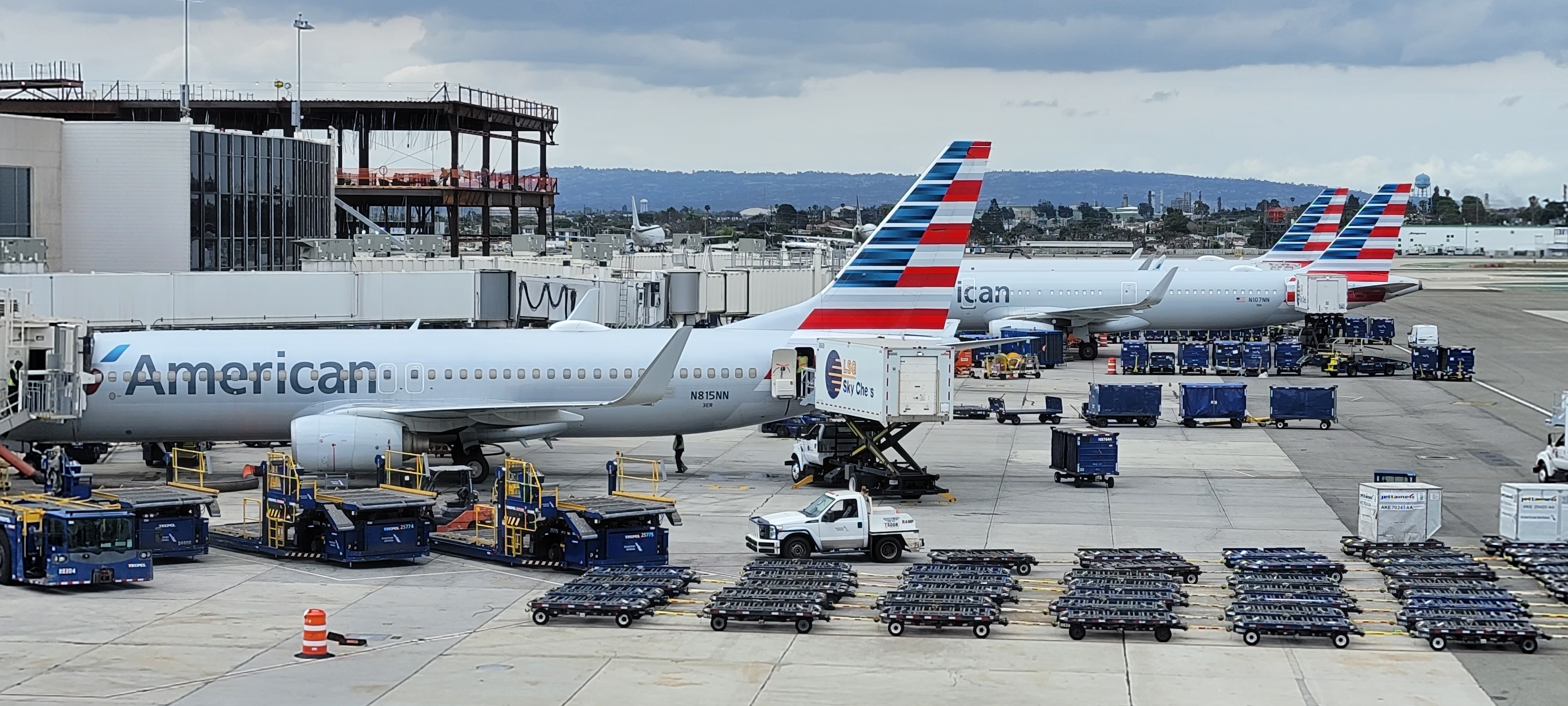
American Airlines passengers in Miami missed a wedding, even though their flight was on time and they showed up on time for the flight to Boston. That’s because American Airlines turned them away, with the gate agent telling them “the flight was closed” even though other customers were still bording.
One of these women told me she’s going to miss a wedding. Another hasn’t seen her kids in a week. What’s up with that?
— (((Jacob Bogage))) (@jacobbogage) May 3, 2026
The story is attracting widespread attention (several hundred thousand views on Twitter) and hundreds of comments. It is framed as a mystery, but I don’t think that it’s so mysterious. Naturally, the passengers received exactly the kind of customer service that American is known for in Miami:
I did! I tried to console these women who were beside themselves and asked the gate agent what happened. She said the flight was closed, refused to provide the women any documentation or support, and walked away.
— (((Jacob Bogage))) (@jacobbogage) May 4, 2026
Assuming that the situation is as described – and I have no reason to suspect the report from this Reuters White House correspondent is inaccurate – the most likely explanation for a passenger at the gate for a domestic flight at least 15 minutes prior to departure had come off of a connecting flight and that inbound flight was delayed. They probably ran to the gate, and American’s systems expected them to miss the flight.

Three years ago American Airlines rolled out a system for automatically rebooking passengers when their flights are delayed or cancelled. It’s more powerful than what they’ve used before, but there’s also the potential to cause problems for passengers who would have made their flights – passengers who may come in off of a delayed flight, run through the airport hoping to make their connection, and find that even though the door is still open for their next flight their seat has been given away.
It’s part of an overall automation effort which is supposed to reduce costs of customer service and front line staff, like clearing standbys and upgrades earlier, to make the boarding gate less chaotic – so they can staff it with just one agent rather than two.
The automated re-accommodation tool tool to rebook passengers when their flights are cancelled or delayed is part of this. It’s called AURA (“AUtomated ReAccommodation”). By processing more rebookings automatically, there are fewer passengers calling and fewer itineraries being reconstructed manually.

According to an internal memo,
AURA utilizes a concept called discovered inventory, in which it identifies passengers that are certain to misconnect and utilizes that available inventory for protecting other passengers who may
need that space.Because of this, occasionally the flight may temporarily appear to be slightly overbooked. Please remember to check the BX list to identify misconnects if you encounter a flight that appears over booked.
The notice that Auto Reaccom has run for a flight will no longer appear in FLIFO. You can identify if a PNR was processed by AURA as it will show the term “PRNG Update” in the received from field as shown in the example below:

This means taking people off of flights before they actually misconnect in order to give their seats to someone else. But people do – occasionally, but all the time – have flights where it’s ‘obvious’ they cannot make their connection and then something happens at the last minute so that they do. Now they might find themselves without the connection, even though circumstances lined up so that they could have made it… if American hadn’t given their seat to someone else instead.

Most of the time this worsk out well, and more people get where they’re going more smoothly. Occasionally some people will have something taken from them that shouldn’t have been, in order to accomplish that. American suggests this will not happen but it does. In fact, I’ve covered many instances of this since rollout. It has seemed to happen less frequently over the past year, but readers emailed me about two instances of the weekend as well.
It seems to me that these passengers are owed involuntary denied boarding compensation.
- They held confirmed reserved space on Miami – Boston
- Were checked in on time
- Had assigned seats and boarding passes
- Were physically at the gate and ready to board 15 minutes prior to departure
- American refused boarding because the seats had been released to others, and did not get them to BOS within one hour of the original arrival time.
Assuming they didn’t reach their destination until at least 2 hours and 1 minute after their originally scheduled arrival, they would each be entitled to 400% of the one-way fare, up to $2,150. American should have offered this to the passengers “at the airport on the same day” and would have violated DOT regulations by not doing so (if they were providing alternative transportation too quickly to offer the compensation on the spot, they have just 24 hours to do so).
American’s only real response to this could be that the passengers actually did not have a confirmed reservation when they presented themselves at the gate because American itself had cancelled it.
However, 14 CFR Part 250 has has exceptions for failure to comply with ticketing and check-in rules, aircraft substitution, weight and balance cases, downgrades and alternate transportation within one hour. It does not have an exception for ‘our algorithm predicted a misconnect and canceled the segment.’
In my experience, American will initially ignore such compensation requests. The best way to escalate this so that the matter is dealt with by someone experienced, rather than just receiving replies from a script, is to file a DOT consumer complaint.



“It seems to me that these passengers are owed involuntary denied boarding compensation.”
Yes, Gary, and you know what would make that possible: Actual, meaningful air passenger rights legislation, like EU/UK 261, Canada’s APPR, which in addition to compensation for involuntary denied boarding also include hundreds of dollars in compensation plus refunds or rebookings for significant delays and cancellations under the control of the airlines.
We deserve better than this. When the airlines screw up, they should pay up. A US-261 would create incentives for airlines to operate more reliably. It does not raise costs (see Ryanair, dirt cheap, profitable, compliant with such rules), private insurance isn’t enough, and even existing regs can be improved, streamlined.
The algo will bump passengers at some point based upon the connection time. MIA is an airport where you can go right into the gate within five minutes after landing depending upon the runway and the location of the gate. Other times it’s a 15-20 minute jaunt if there’s an alley way involved.
It’s one really bad airport to connect in. But algos are the future because it’s far less expensive than a human being.
@George Romey — As I also used to frequent MIA, I’m sure you’ve had the ‘pleasure’ of venturing down to D60 (and then the walk outside to the RJs), or the ‘Bataan Death March’ arriving international at E, only to find that immigration is only open in D (at least we get to enjoy the circular descending walk around that ‘globe’ artwork in the floor afterwards). Yes, MIA could/should be improved. Didn’t Gary share that planned $1 billion renovation (announced February 2026)?
If your theory is correct they rebooked on a later flight by the system so they got there fine. As for “missing a wedding” if they booked a flight that arrived same day right before the wedding that is on the passenger. Otherwise rebooking got her there in time. Also can’t slow advance of technology. Sure some don’t make a flight they could have but overall system works better and that is more important than a few individuals
@Retired Gambler — “that is on the passenger”… should it be? Why do we enforce contracts for everything else (down to the dollar), but give ‘contracts for carriage’ such flexibility… (Meh, it’s an airline, who cares if they’re on-time… /s) I’m with you in that I always fly-in the day before if it’s important (like a wedding, cruise, essential business meeting, etc.) But still, airlines should be more reliable and not offer airfare on routes that they cannot reasonably operate (like, cheapest fares at minimum connection times, etc., when they should know they can’t keep that schedule.)