
The FAA is phasing out fixers. For decades, the agency depended on an informal network of highly experienced engineers — people who don’t work for the agency, but whom they allowed to navigate their bureaucracy on behalf of aircraft manufacturers, modification shops, and repair facilities that needed approvals faster than the FAA could manage itself. They were the ones who got things done when the system on its own was just too slow.
This seems like a seismic shift that hasn’t gotten much attention, because it’s technical and bureaucratic in nature. But it seems like it’s focused more on the FAA’s needs than industry’s or the public’s, and it’s not obvious that it’s better for safety.
What Is This Thing The FAA Wants To Phase Out?
A Designated Engineering Representative or DER is a private-sector engineer authorized by the FAA to make specific official approvals. They’re trusted enough to sign off that a design, repair, or modification complies with FAA regulations. A company that wants to certify a new fuel tank, seat design, or avionics change can hire a DER to handle that work rather than wait for FAA engineers buried under thousands of open projects. There are two types.
- Consultant DERs are independent — essentially freelance FAA representatives.
- Company DERs work in-house at manufacturers or suppliers, empowered only for their employer’s projects.
Many DERs are retired FAA engineers or long-time aerospace specialists who know both the regulations and the personalities at key FAA offices. Their value isn’t just their technical expertise; it’s that they know how to get an answer out of the FAA — which office is quick, which one is hopeless, and how to phrase a compliance justification so it passes review. They translate engineering work into language that fits the FAA’s rulebook and culture.
Why the FAA Needed Fixers
The FAA is bureaucratic and perpetually short-staffed. Certification work — confirming that every nut, rivet, and software line on an airplane meets the regulations — is immense.
The DER system was a pragmatic solution: the FAA could extend limited authority to thousands of trusted outsiders rather than bottleneck all approvals internally. A DER could do in weeks what might otherwise take the agency months. A DER might have spent years working with the same FAA engineers, building mutual trust.
FAA Will Phase Out This Program
On October 1, 2025, the FAA issued Order 8100.15C, a sweeping rewrite of how it manages delegation.
Applicants are expected to significantly reduce the number of individual designees performing the functions for which the applicant sought ODA.
The agency now favors Organization Designation Authorizations (ODAs) — companies entrusted to manage their own internal certification staff, called Unit Members (UMs). Instead of overseeing thousands of individual DERs, the FAA would oversee a smaller number of ODAs that, in turn, oversee their own people.
There’s still delegation, but they delegate to a structure rather than a person. In the FAA’s words, “Managing organizations is more efficient than managing the activity of many individual designees.” In practice, that means fewer independent DERs and a gradual transfer of authority to corporate systems.

Benefits To Killing Off Fixers
For the FAA, it’s easier to manage 50 organizations than 2,000 individuals. Organzations have internal quality systems, documented procedures, and peer review — less variability than freelance engineers. And when something goes wrong, it’s clearer who’s responsible: the organization, not a single person with a side business.
It’s the same logic driving “risk-based oversight” across government — regulate systems, not individuals.
Downside To This Change
The change brings order, but it also kills the informal ecosystem that made the system work. DERs were the grease in the gears — the people who knew how to interpret gray areas, who could persuade an FAA engineer that a test was sufficient, or who could route a stalled approval to a more competent office across the country.
Without them:
- Small innovators lose access. Independent DERs were how startups and modification shops navigated the regulatory maze without corporate backing.
- The pipeline of expertise shrinks. Becoming a DER was once a capstone for experienced engineers and a training path for new ones. If only big ODAs can grow new “Unit Members,” the barrier to entry becomes steep and slow.
- Agility disappears. Bureaucracy replaces relationships. Everything becomes a process.
The FAA gains oversight consistency, but the industry loses the informal network that kept projects moving when the system bogged down.
The FAA’s Ideal Model Here Is… Boeing?
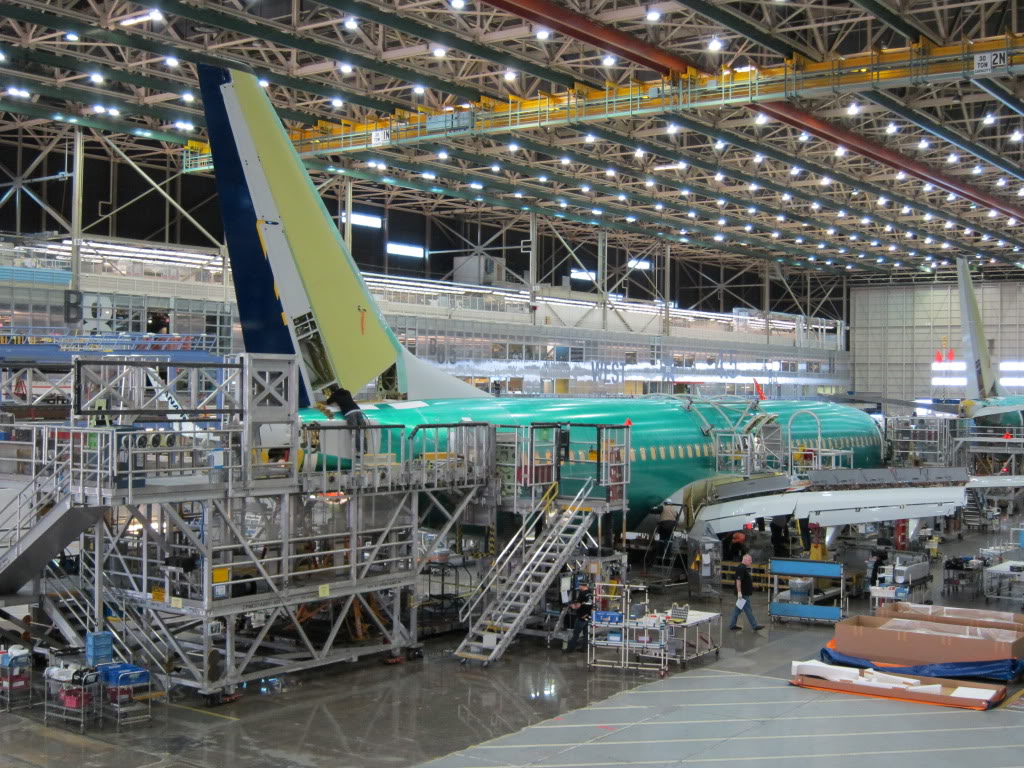
Boeing Ii the ultimate ODA — and the poster child for its risks. They’re the largest, most mature, and most powerful delegation the FAA has ever issued. Its internal unit approves major portions of aircraft design, compliance testing, and airworthiness documentation on the FAA’s behalf.
That’s precisely the system that came under scrutiny after the 737 MAX crashes, where investigations found that:
- Boeing ODA engineers faced pressure from management to approve work quickly.
- Some safety-critical systems (like MCAS) were poorly communicated to the FAA.
- FAA oversight was thin and deferential — often relying on Boeing’s own self-certifications.
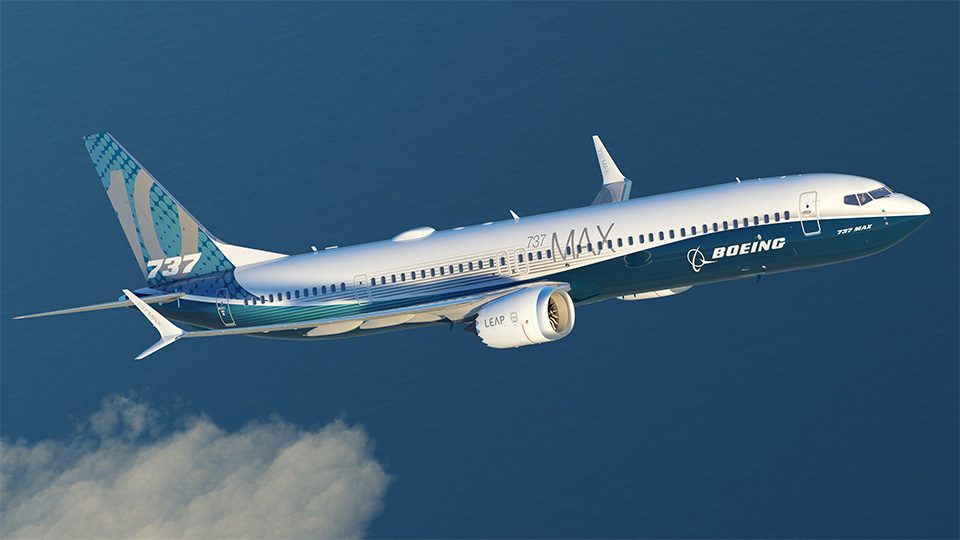
In short: the ODA model failed spectacularly when internal company priorities overrode independent engineering judgment. Consolidating authority under ODAs and away from individual DERs — doubles down on that same model.
The FAA is saying here, ‘we can’t manage all these individuals, so we’ll rely on the companies to regulate themselves’ instead of having more competing independent consultants. It’s resource-rational, given that the reason for delegation in the first place is that companies will always have far more engineering and technical staff than the FAA will. But it’s also paradoxical, because the largest ODA is…Boeing.
The concern here is that an ODA Unit Member gets their paycheck, performance review, and promotions from the company whose projects they’re approving. Consultants are incentivized to help their clients, but they also need to maintain their relationships with FAA and often aren’t reliant on a single employer.
How DERs Will Disappear
This won’t happen overnight. Many DERs will transition into ODA roles or keep their designations as long as the FAA allows renewals. But over time, authority will belong to organizations, not people.
The FAA’s fixers — the certified independents who could translate between engineers and bureaucrats — will become relics of an older, looser, more personal aviation culture. The system that replaces them will be more uniform, more traceable, and perhaps safer on paper. But it will also be slower and less flexible.



Horrible idea. People will die because of this. You can’t self-regulate. Never works. Wrong incentives.
Once upon a time, I had a client named Lee Iacocca. Lee would often fly to New York – commercial because the terms of the 1979 government loan guarantees prohibited Chrysler from owning private jets.
When Lee flew into LGA, he always asked Nick, a technical advisor from the New York Zone office in Tappan to meet him and drive him into Manhattan (Chrysler maintained executive offices at that time in the PanAm building on Park Avenue. Lee and Nick had been friends for a number of years.
While driving into Manhattan, Lee would ask Nick about everything Nick knew about Chrysler vehicles — problems, changes needed – the good, the bad and the ugly about product, customer and dealer problems. Since Nick was a tech advisor, he was the point person for coming up with solutions that the engineering staff could not. The good news was that Lee trusted Nick to give it to him straight.
In short, Lee Iacocca knew that the layers of bureaucracy at Chrysler would often minimize problems or cause them to be ignored. Managers are often overworked, incompetent, or bureaucratic game players (I once had an administrative assistant foisted on me by Human Resources because her previous manager gave her an exceptional rating to get rid of her. The AA could not write a coherent English sentence.)
So, I despair about loss of DERs. Iacocca knew better. But the learning has been lost.
“Boeing Model”. Yeah, what could possibly go wrong…..
Clutch your pearls elsewhere. The issue isn’t Boeing, the FAA gave oversight back to them a while ago. Where this WILL impact is experimental (home built) aircraft certs, airline training, and small aerospace companies.
I went to the source document. Your “article” is a stretch at best.
@Pilot93434 — If so, that’s actually reassuring. Thank you for mentioning. I hope Gary provides additional updates as more is clear about the effects of these policy changes.
The concept of ‘shopping offices’ for quick responses is largely a myth for Boeing or any aerospace manufacturer – except for Supplemental Type Certificates, which is typically for a company that modifies another companies’ products.
For instance, Boeing can’t choose to use the Atlanta ACO, or the Long Beach ACO, but the NW Mountain ACO might sub out certain specialties, such as Noise. But Gulfstream does primarily use Atlanta ACO, and what is clear from that is that different ACOs can have drastically different opinions on what constitutes an airworthy design.
When I was in that business, some of the ‘STC shops’ were concerning – they can potentially cut corners because they don’t have access to OEM data. And it would be a huge liability for a manufacturer to hand over data and thus share liability if misused. And I have seen DERs with a very narrow area of expertise (such as Noise) that are granted DER authority in a wide range of disciplines, ones with only a sliver of tie to their true specialty. So in that respect, it will be interesting to see how STCs are handled.gpong forward.
Someday someone from the FAA will set the record straight about what really happened in the last 10-15 years. It is easy to be lazy and recite the media narratives, especially when it comes to Boeing.
As for self regulation, the driving of automobiles by people, is mostly self regulation. It works until it doesn’t but almost no one suggests going to only professional drivers, let alone to only government employed professional drivers. I doubt the way forward for the FAA is to employ a massive number of new employees to do all of this inspection work, especially with the current work rules that don’t let them hire the best and brightest for the same pay that companies are willing to pay. The MAX situation is interesting because the failure modes were not fully documented and the work arounds fully discussed along with necessary adjustments to the equipment to eliminate or diminish the worst mechanical responses. That was on Boeing. What made the tragic accidents were pilots and co-pilots not fully knowledgeable of how to correct for specific failure modes. We have seen how excellent pilots can make the difference such as ditching on the Hudson and the Gimli Glider.
So I have to assume these DERs have always been a pure as the driven snow and no bribes, kickbacks, or cash under the table ever happened…
@jns — Within this context, no, driving is not the correct analogy.
In most jurisdictions, drivers do have to earn and maintain their licenses, like, be experienced enough to pass a skills test, and, continually pay for their registrations. Drivers do face penalties for breaking traffic laws. That’s very much all regulated by authorities, not self-regulated. Have you ever experienced a traffic stop? Self-regulation, I think not.
Yes, your choices behind the wheel are your own, just as a licensed repair could individually (and wrongly) decide to deviate from approved procedures (maybe, for cost saving), but that doesn’t mean this is like driving.
Of course you *could* drive your car, or repair aircraft, without anyone ‘approving’ you to do so, but the risks outweigh the benefits of that in a modern society where we need speed limits to prevent harms to self and others.
However, if Pilot93434 is correct, and this is more limited in scope, then maybe these changes are akin to not needing registration for a kit car on a closed track. I still think we need more details and hope Gary follows up.
@Gary Leff — It’s still deeply unsettling to many of us that #47 and his administration basically let Boeing off the hook for the 737 Max crashes, even after Boeing plead guilty (and agreed to pay $2.5 billion to airlines, families of victims, etc., and 3 years of monitoring by an independent safety consultant) in July 2024, after DOJ charged the company in 2021 with conspiracy to defraud the government about MCAS, which killed 346 people in Lion Air 610 in 2018 and in Ethiopian 302 in 2019.
The throughline here, yet again, is ‘profits-over-people’ and cronyism (that’s this administration, in a nutshell). There’s no doubt that ODA engineers at Boeing were pressured by management to expedite approvals of MCAS in the past, and likely would do so with other safety-critical things in the future. Think, if your livelihood (pay, promotions, healthcare, retirement, etc.) all depends on the company you are certifying… you’re gonna be a ‘yes’-man.
I was a FAA Designee for the last 20 years of my 40+ year aviation career, all Part 25. I was a DER (both Company & Consultant at different times), a DAS AR (those in the know will understand), and a large OEM ODA UM. Without the designee system (ODA / DER) aviation would come to a standstill in short order as ANY Major Design Change requires FAA-level approval. And such changes really are almost routine, not just the big projects most people think of. I suppose I must have done over 1,000 approvals in my career. Yes, it’s true that people will always be fallible, and there will always be some questions of integrity. But the truth is strict regulatory compliance (which is, IMO, a good thing) requires an army far larger than the FAA can ever be.
The concept of reducing the DER population and moving more to organizational delegation (ODA) is nothing new. Apparently seeing it now in Order 8100-15C gives it a little more attention.
And, by the way, the term “fixer” seems quite condescending.
The DERs aren’t going anywhere; the order just directs ODAs to use it’s UM’s rather than rely on DERs. Bureaucracy isn’t unique to the FAA; any large organization requires multiple disciplines, layers, and policies to function (Boeing (cough)).
As the industry leaves the problems with LEAN Manufacturing and Six Sigma behind, the FAA jumps on the failing program 20 years later calling it the answer to all their problems. Read the article, the issues are somewhat understated but they are there.
I guess we’ll just have to suffer through this mess just like we suffered through TQM, Self Inspection, and all the other “more efficient” management systems.
Look up the “Lieutenants’ Syndrome”. Until the FAA learns to go out and recruit the experienced industry professionals, they’ll have to suffer the foibles of lieutenants.
Just one old engineer’s opinion, mind you.
Nothing new to see here. The reduction in individual designees, not just DERs, is a natural and healthy objective of ODA and has been for decades. The true concern is the erosion of technical expertise held by individuals that are available to the public for certification assistance and to the FAA as regulatory employees. None of there are “going away”. Just less available as individuals with certification experience.
Ive been a DER since 1995, company and consultant. Ive worked with ODAs and been and EASA DOA member. My generation of aircraft engineers has watched the degradation of the aircraft safety system. Not because of DERs or ODAs, but because FAA engineers have lost understanding of regulatory compliance. They dont know what good engineering looks like because most haven’t done it. Ive had FAA engineers direct me to violate regulations too many times to count in the last 15 years. Ive been directed to generate nonsense analysis several times. Ive worked with corrupt ODAs that approved non compliant data. There’s no QA system to alert inside the FAA and if you told them, who would investigate. The 737max disaster was foreseeable by those of us intimate with the previous 737 system so how did the Boeing ODA, and FAA specialist miss it? When a company i was with before tried to start an ODA the FAA said they couldn’t oversee anymore. The big problem is the expense of an ODA. They already dont take small jobs. $1000 to $2000 dollars wont support an ODA. People will crash and die if the ODA system isnt fixed.as the audits focus on paperwork, not technical compliance of the data. Since the FAA never asks for input we’ll just stay on this path.
Thank you for putting this issue under the microscope.