
American Airlines is buying two Spirit Airlines gates at Chicago O’Hare for $30 million, in the first sale transaction to another airline of Spirit’s second bankruptcy.
- Spirit currently operates out of four preferential use gates at O’Hare: G8, G10, G12, and G14.
- They are selling G8 and G10 to American.
- One of American’s 3 Chicago O’Hare Admirals Clubs is at G8.
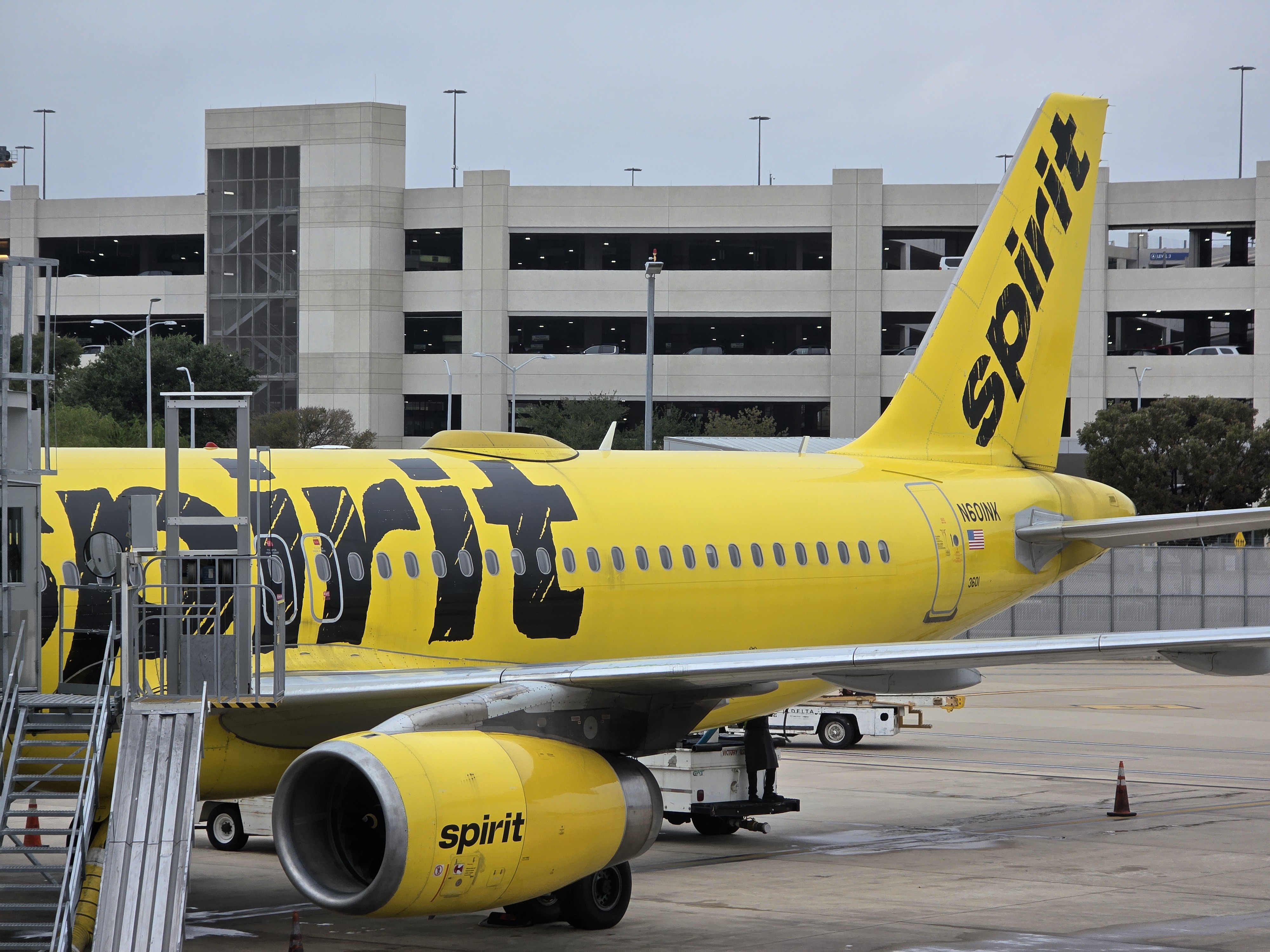
Spirit has cut its 32 peak daily departures at O’Hare in half. So they don’t need all four gates, and this raises cash. However they do not intend for the deal to improve their liquidity. Instead, they’re prepaying debtor-in-possession loans.
Reuters had reported on Sunday that American filed a notice of appearance in Spirit’s Chapter 11 bankruptcy case and “requested to receive all notices including operating reports, plans of reorganization and liquidation statements.” An American spokesperson said that their interest “is tied to an airport-specific agreement.”
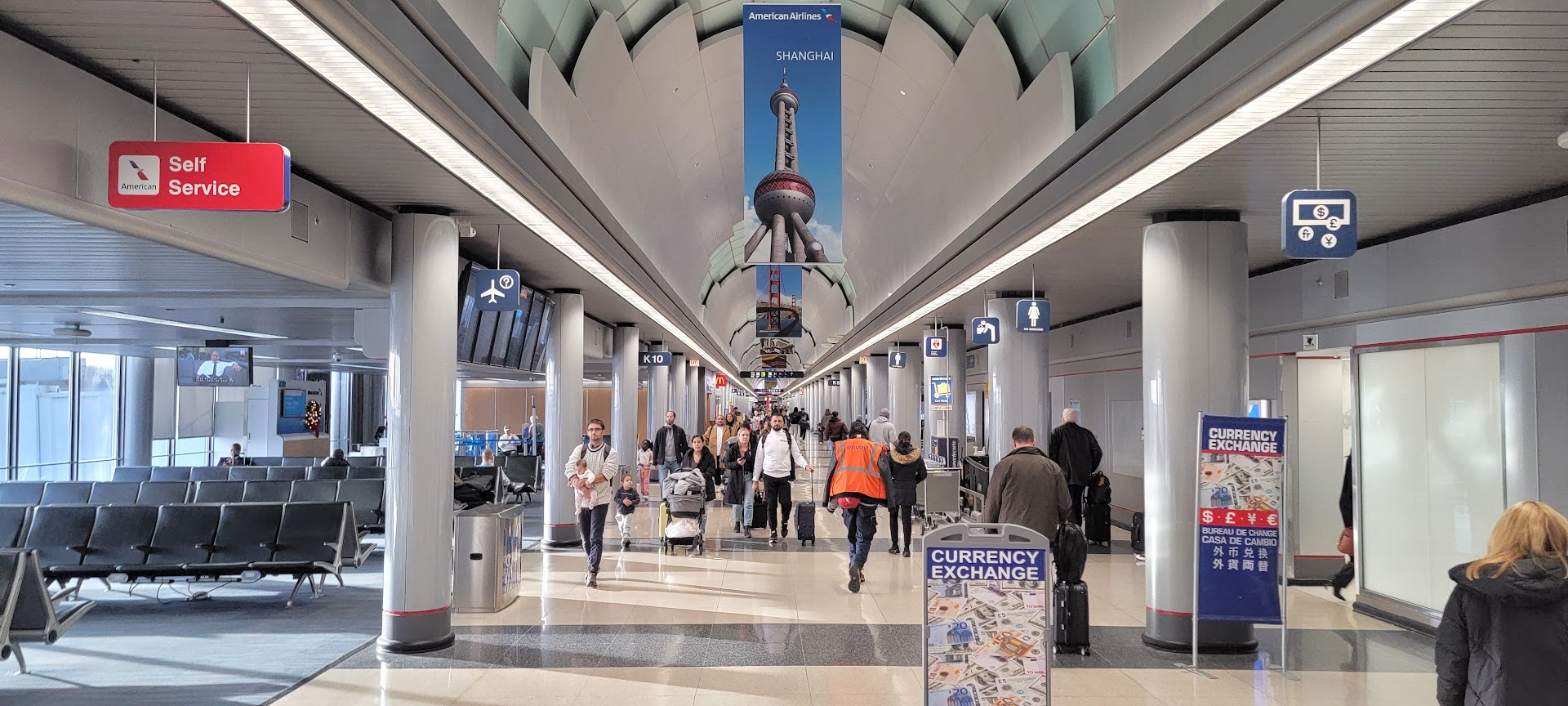
American Airlines Concourse, Chicago O’Hare
So I went looking for the agreement. American Airlines is now a contract counterparty in the Spirit bankruptcy (making them a “party in interest” to be on the service list).
Spirit has told the market that “the value maximizing outcome [of its bankruptcy] may be a merger or sale of the company” and that it is engaged with “a number of interested counterparties.”
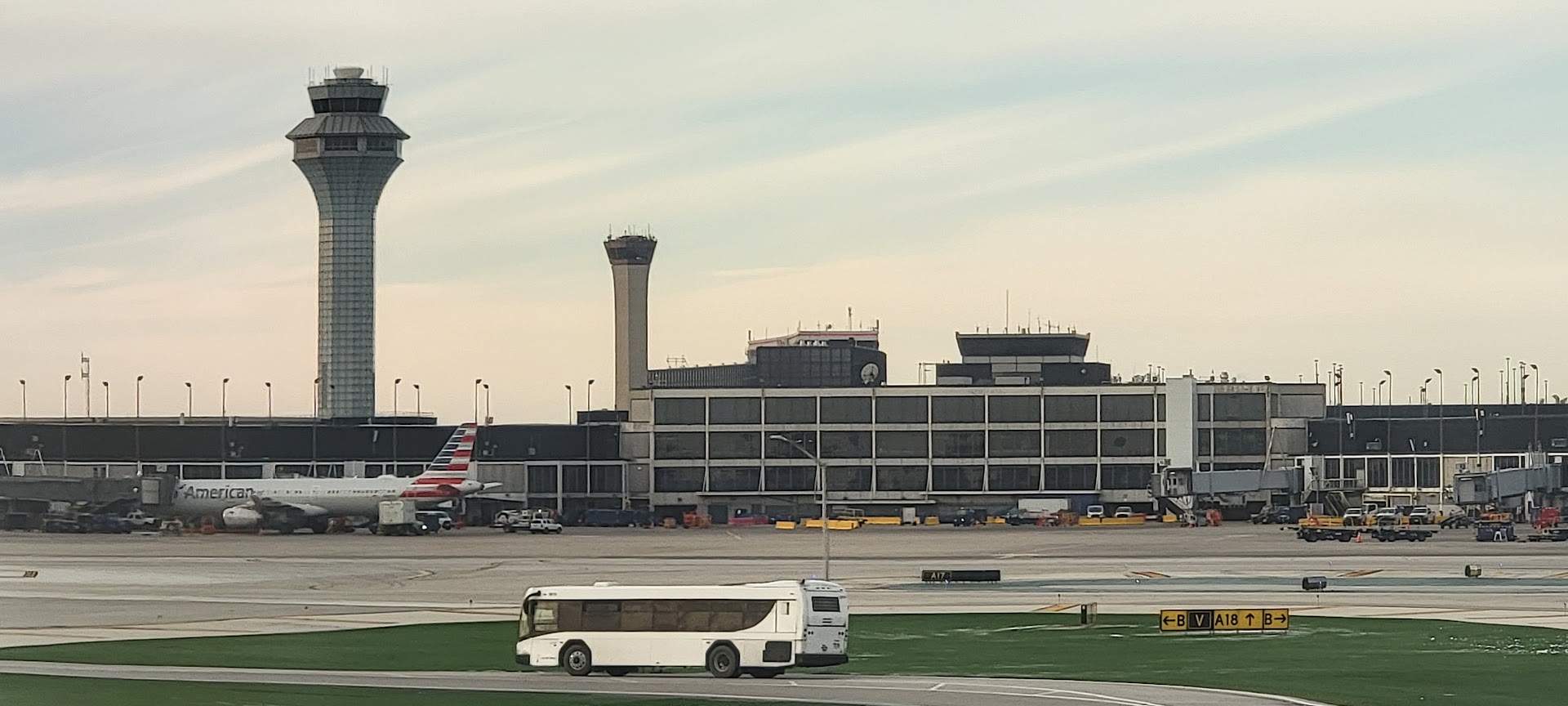
Chicago O’Hare
American lost four gates at Chicago O’Hare, and United gained five, as part of a re-allocation process based on flight volumes at the airport. American Airlines sued to stop the re-allocation, and has a strong argument that it was done two years earlier than permitted under the airport’s use and lease agreement based on construction timing.
However, a court refused to grant an injunction (suggesting – as I wrote I expected – money damages to be calculable and sufficient if the airline prevails). The gate reallocation went ahead October 1, appearing to permanently disadvantage American’s growth at the airport.
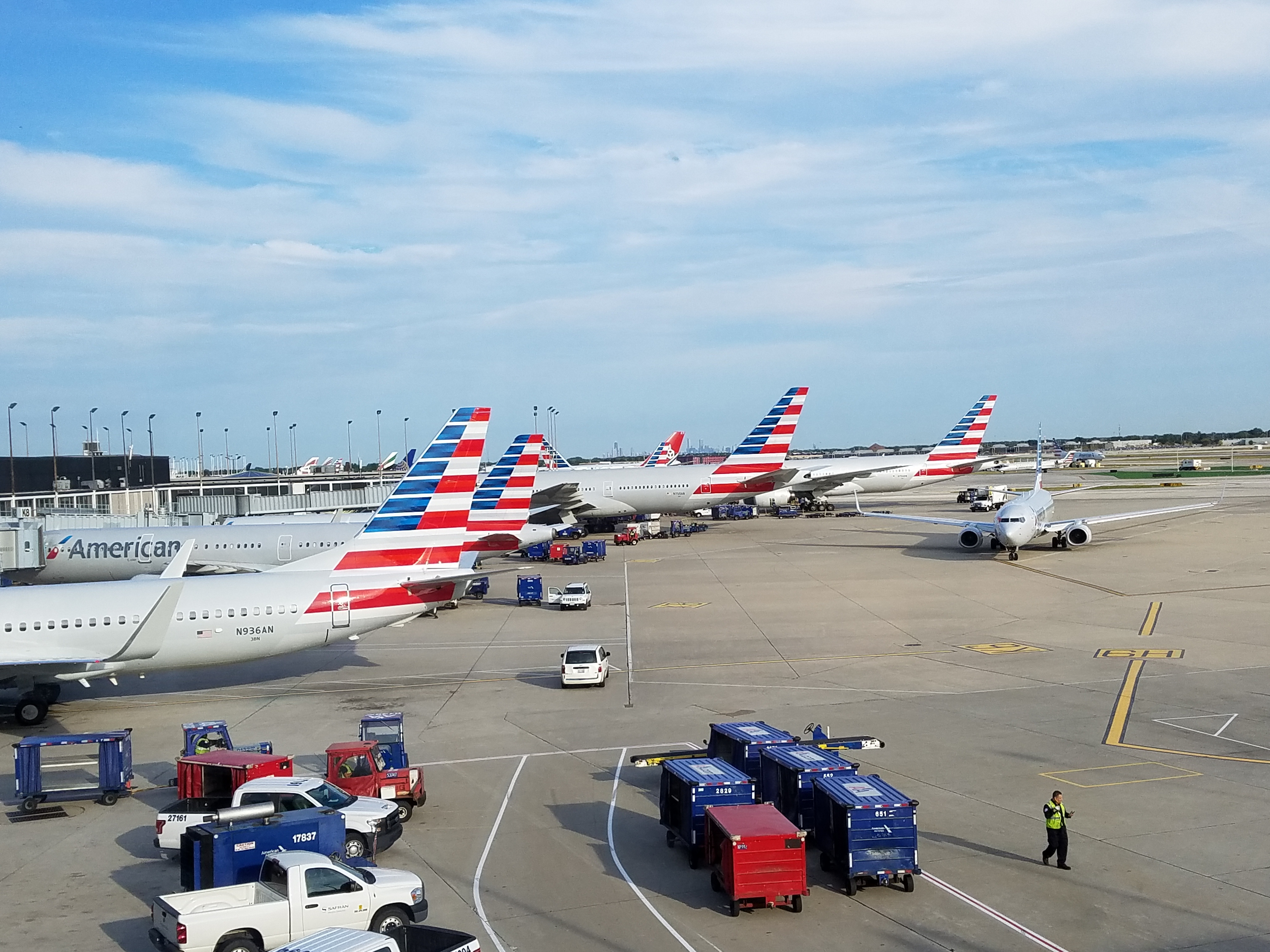
American Airlines, Chicago O’Hare
The carrier simply failed to restore its capacity at Chicago O’Hare coming out of the pandemic, focusing on other airports. And it’s no clear that they would have had the aircraft to do so, in any case, having retired too many (Boeing 757s, 767s, Airbus A330s and Embraer E190s) during Covid and having grounded regional jets in part due to a pilot shortage. United built back its schedule and gained an even greater durable advantage.
American Airlines Vice Chair Steve Johnson acknowledged in the spring that American will “probably always be second place in Chicago.”
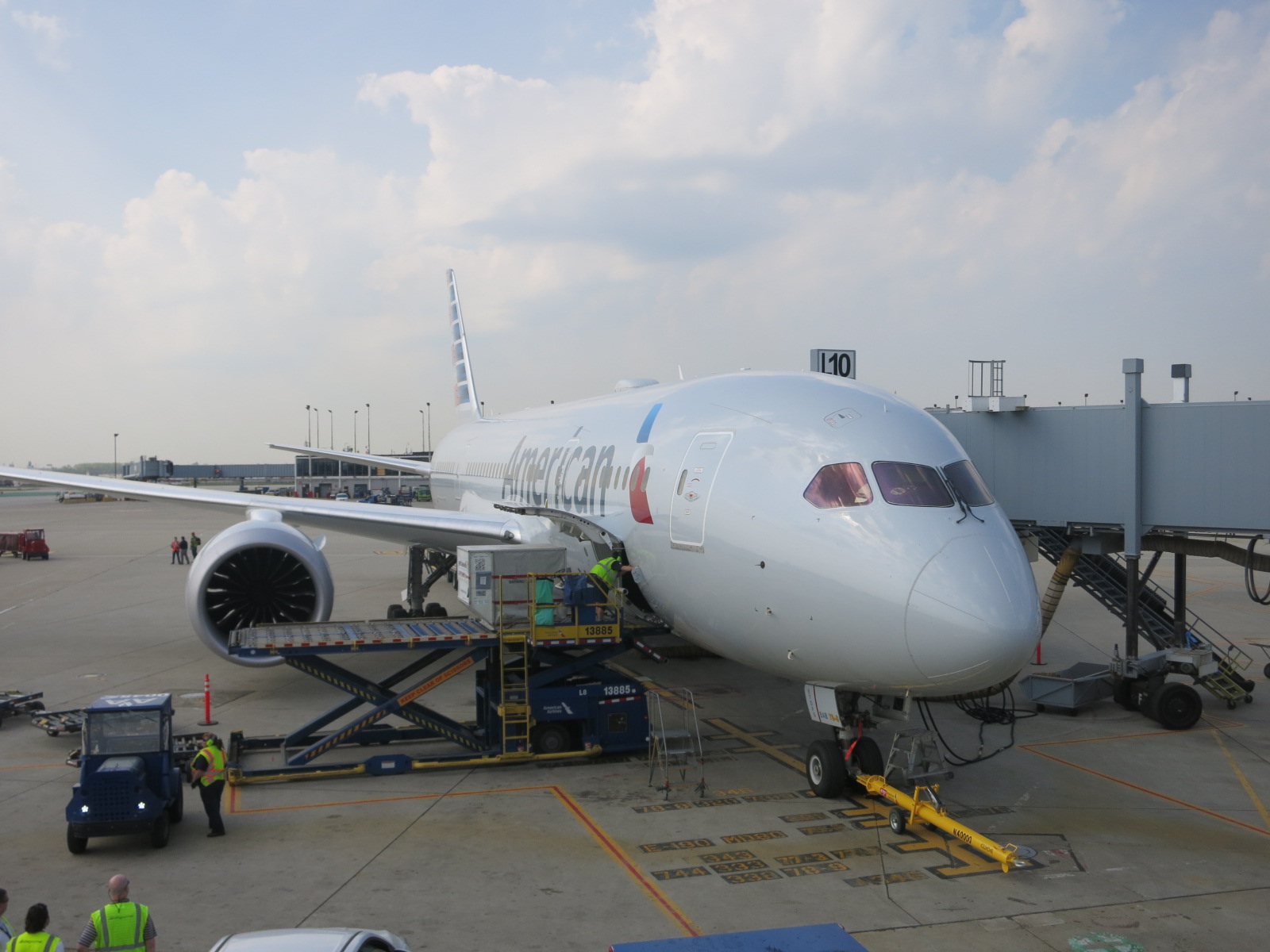
American Airlines Boeing 787-8, Chicago O’Hare
This move, though, helps to mitigate the airline’s losses there. And though United Airlines CEO (and former American Airlines President) Scott Kirby has publicly predicted American’s de-hubbing at the airport, this move underscores a continued commitment.



Smart move, although of course in the lawsuit for monetary damages, AA just provided contemporary evidence of what the fair market value of a gate is at O’Hare.
It makes sense; ORD T3 is already mostly American, and that G concourse has an Admirals Club literally across from G8. If (when) Spirit liquidates, it’s gonna be interesting to see who gets what and where. Depending on the airport, I can see more of this happening soon. Keeps Spirit alive a little longer (cash injection). Like, at FLL, Spirit is at T3/4, and so is B6, AA; however, AA is so weak at FLL, it’d probably be a better opening for B6 than AA.
good for AA.
I suspect they will make sure they fully schedule these gates.
It is also worth noting that UA uses a high percentage of 50 seat aircraft – even if CRJ550s – so it is hard for them to keep gaining gates until they get rid of those planes since the Chicago formula uses passenger boardings and number of flights.
All AA has to do is have a lower percentage of small RJs than UA and fill the planes they do schedule at ORD and they will slow UA’s growth. AA had a seatback because they took their feet off the gas pedal for even a nanosecond. which UA seized on.
Wow, $15M a gate. Was under the impression they might be worth more. However, this is a fire sale.
Reminds me of when TWA sold its slots at Heathrow to American. Don’t remember the amount paid. A very sad day.
@Exit Row Seats — Sad day? Yeah, you bet. Our Dear Leader’s peace plan has failed. Someone tell Thailand and Cambodia that he already solved it. Oh, wait, you’re lamenting Spirit Airlines entering airline-hospice… yeah, super sad, bud. *sniff sniff*
@ Tim Dunn: A few problems with your analysis. First, ORD only uses the number of flights in calculating gate allocations, not the number of seats offered (much less the number of seats sold which = number of passenger boardings). The formula is meant to reward efficient use of airport resources i.e. the number of flights operated out of each gate. Second, United has no intent to retire the 50 seat jets – especially the CRJ550s – and recently announced their intent to keep flying them past 2030. Finally, United has a lot of new order slots locked up, and American (who has a significantly higher percentage of system-wide flights on CRJs than United does) cannot get larger planes delivered faster than United already will – so if “number of seats” WAS part of the calculation in ORD, American couldn’t rely on deliveries to increase seats available.
@Tim Dunn: Remember that at ORD, it is feet of linear terminal frontage, not gates. Spirit has 556 feet of frontage which translates into roughly 4 narrowbody class gates. An Airbus narrowbody is about 115-120 feet wingspan. Add 10 feet of clearance for vehicles between wing tips/safety envelopes, and that equates to 4 A320-family parking spots. They are giving up half, which is 276 feet or roughly what constitutes the space into which Spirit can fit 2 of the aircraft it operates.
To the extend United (or AA) can shove in more jetways, break those into more “gates”, then more flights contribute to the pax volume per allocation. With the 276 feet AA is getting, they could park two B737/A320, or if they add a jetway (much as they used to on G), they could park three CRJ-700s or E-170s (with a little bit of fiddling with the lead-ins so they aren’t 100% perpendicular to the terminal)
West Side
G2, G4, G6 & G20 – UA
G8 & G10 – AA (former – NK)
G12 & G14 – NK
G14A, G16 & G18 – City Gates
East Side
G1A, G1B, G5, G21 – AA
G3, G9, G11, G15 – City Gates
G7 – AS
G13 – B6 (City Gate)
G17, G19, G19A – AA/LF/KG (City Gates)
AA -American
US -United
AS -Alaska
NK -Spirit
B6 -JetBlue
LF -Contour
KG -Denver Air Connection
Information based on flight schedules, contacts at ORD and other sources
Corrections welcome.
There are supposed to be City Owned Gates now on G-Concourse which any Air Carrier can use per CDOA Lease per use terms.
Subject to Change
Is it really that hard to share? There are so many airports around the world that use common-use gates. Perhaps the folks in Washington (or Springfield, IL) should step in and require common-use gates to avoid situations like this.
@Samus Aran — Sorry, that’d be ‘communism’ or whatever.
@Samus Aran – that works well with lower utilization…. for a huge hub operation, having to worry about allocating a bunch of gates across hundreds of flights a day between airlines that then will file competing schedules to try and knock the other off (and having to then mediate such things) turns into a mess. The airports are required to allow competition by mandating airlines allow for the airport to slot in new entrants even on leased gates. ORD has numerous common use gates. Alaska finds out almost every morning when a redeye arrival sits for almost an hour waiting for one how well that works with multiple airlines sharing.
With common use gates, the object of the carriers who want to grow a lot is to throw as many flights on the schedule as possible to try and take up as many time slots as possible. Someone will lose out, and you end up with flights getting removed from the schedule (and tickets sold getting told “well, your flight in 3 months just moved by 9 hours, or no longer exists so you’re connecting instead of a nonstop”). Letting airlines control gates in certain situations, as long as they utilize them enough to disallow simply anti-competitive squatting, gives better schedule certainty and flexibility.
I like this new AA slogan: “We’re Number Two!”
NedsKid,
yes, ORD has a formula that is based on passengers boarded rather than flights but the practical reality is that wingspan does not increase proportionately w/ the number of passengers an aircraft carries nor does it decrease proportionately w/ smaller aircraft.
The CRJ550 is actually a 70 seat CRJ airframe and wing that UA has put only 50 seats on because they didn’t have the foresight to buy a 100 seat mainline aircraft – like DL has with the 717 and A220-100; UA has the lowest allowance of large RJs of the big 3 in its pilot contract which is almost identical to DL’s.
AA has a much more generous RJ allowance than either DL or UA so has much less need of a small mainline jet.
for ORD, AA has a high percentage of large RJs which hold about 50% more passengers than UA’s CRJ550s and the large RJs have much better economics. in fact, the CRJ 550 has the worst per seat economics of any aircraft in the US carrier fleet.
and UA, of course, has no intention of getting rid of its small RJs – even in the guise of multiple cabins – because the competitive nature of ORD doesn’t allow either AA or UA to add a whole lot of seats to the market without depressing yields.
ORD will be a hub w/ a very high percentage of RJs; UA will simply fly more CRJ550s while AA will use more E175s with better economics, more seats and a better passenger experience.
@Mysterious Jay — Was that fecal humor?
@Tim Dunn — Promoting the 717 (or CRJ9) in 2025 is just sad; sure, more a220s and E190-E2s, please, for Delta, United, American, all of ’em.
1990
the only thing that is sad is that you spend so much time throwing shade at other people but get so many things wrong about the airline industry.
1. The E2 jets will likely never fly w/ US airlines. It is too heavy under RJ scope requirements. AA and UA have not expressed any interest in a 100 seat aircraft.
2. B6 was the best bet to have bought the E2 since they flew the E190s which were equipped w/ WiFi and seatback AVOD but they went for the A220.
3. DL made the conscious decision to get rid of 50 seat jets after the NW; they acquired the 717 fleet at very low cost from WN. The 717 is a mainline version of the same regional jet cabins that are offered by most other US airlines. No E170s/175s or CRJs will have AVOD in the US; the only product differentiation is that high speed WiFi is being installed on large RJs – including at DL – while DL has not moved forward w/ high speed WiFi installations on the 717, likely indicating that the 717 fleet will be retired sooner rather than later.
The 717 is why DL has the highest percentage of mainline-operated flights among the 4 US airlines that use RJs. DTW is 55% mainline for DL while AA is at 43% mainline at ORD and UA is only 10% higher.
the 717 is a much more efficient aircraft than 50 seat RJs but not as efficient as the A220. The A220 or any other new generation powered aircraft is not suitable for high frequency operations. DL will likely use A319s or 320s/738s to upgrade flights when the 717 is retired.
the 717 has worked well for DL for more than a decade and does what AA and UA have to do through outsourced RJ flying.
For someone that rambles incessantly about labor, it is notable that you don’t realize that the 717 has benefitted DL employees by allowing DL to fly flights on DL metal that AA and UA outsource
@Tim Dunn — Wild how these wholly owned subsidiaries like Endeavor both are their parent company when it suits you yet aren’t when anything bad happens.
Naw, 717 is not great for anyone. Has nothing to do with labor. It does however make a difference for the passenger experience; much prefer a220; Boeing could have redeveloped a mid-size regional aircraft, but basically abdicated, doubling-down on the Max. Their loss.
You don’t get it.
The 717 is not a replacement or competitor to the A220.
The 717 is a replacement and competitor for DL to regional jets.
Of course the A220 is a far better plane. DL has it – along with a few other airlines.
And DL will have a leg up when Airbus eventually adds the A220-500.
as for regional operators, none of their employees are paid as well as their mainline counterparts whether they are wholly owned or not.
Isn’t the a220 Pratt and Whitney geared turbofan? What’s the fleet utilization for these 65% (like the a3201neo)?
We should all just admit that AA made a large strategic mistake deprioritizing Ohare. ORD is the sleeping beast. It has been the busiest airport in the world and it likely will be again. The money is in transpacific and transatlantic and national transfers. DFW and ATL are far inferior for trans pac and trans atl. If UA drives out AA from ORD, it is game set match for DL and AA. DL relies on DTW for northern connection. Detroit is Chicago. UA could probably push a fortress hub at ORD 50% past ATL and DFW in passenger count. ORD is in the process of adding 60-80 gates.
@Tim Dunn — So, you really believe the 717 ‘replaces and competes’ with the likes of a CRJ9? More, like, they compliment each other, yet, a220 and E2s are far superior to both.
An 80-seat, 1,500nm range ‘little-thang,’ mostly operated by wholly-owned subsidiaries in the same league as a mainline, 110-seat, 2,000nm ‘bigger-boy.’ Huh. So, yeah, sure, depending on the demand, why not, each can provide that flexibility.
But, the a220 and E2s are better all-around, and could replace both CRJs and 717s. A220 range 3,500 nm, 20-25% more fuel-efficient, similar capacities 100-130, depending on configuration for more or less premium. The a220-300 could technically operate some shorter TATL, too. E2, both 175 and 190 variants, are also far more fuel efficient and double range (3000nm) of CRJ.
Now, you don’t even have to use all that extra power, range, savings to get those benefits. One more time, Tim, ditch the CRJs and 717s… them’s the last decades’ aircrafts.