
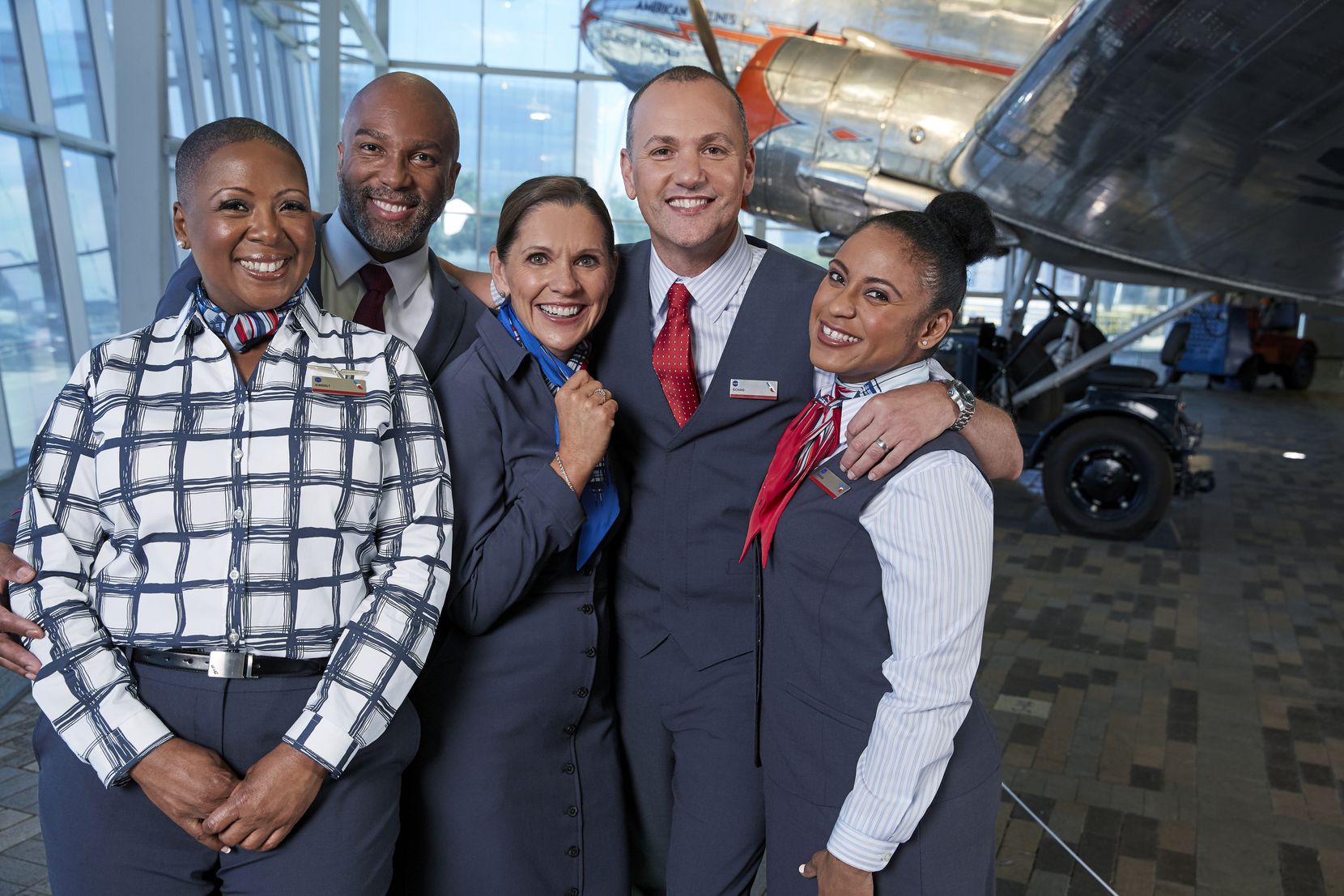
American Airlines flight attendants are worried about the carrier entering bankruptcy. That has the potential to tear up their contract and reverse historic wage gains they achieved in 2014.
In previously unreported comments, Association of Professional Flight Attendants President spoke about these concerns at the union’s executive board meeting in February. According to minutes from that meeting which were shared with View From The Wing,
National President Hedrick emphasized the importance of doing this now to avoid a future bankruptcy. Protests will continue, increasing the pressure. It is felt that this is a dire financial situation for this Company.
Things Are Worsening For The Airline Industry – And For American
American Airlines basically broke even last year, even though it was a good time for the large legacy airline industry. United generated $4.3 billion in pre-tax earnings while Delta made $6.2 billion.
And Julie Hedrick’s comments came before the global uncertainty created by the Iran war and the concomitant spike in oil prices.
A week ago, American updated its Q1 2026 guidance. They had been guiding revenue up 7% – 10% year-over-year against a 3% – 5% increase in costs. They actually suggested they’ll hit a 10% increase in revenue. Fares are rising along with fuel. But costs are rising, too – higher fuel means more than $400 million additional fuel expense this quarter. They’re expecting to lose 10 to 50 cents a share for the quarter. American itself says they are now losing money.
Is There Real Bankruptcy Risk?
There is no imminent risk of bankruptcy. American is operating just fine. They’ve gotten their debt down significantly since peak pandemic levels (though still higher than desirable, a legacy the current CEO inherited from Doug Parker’s past strategy of loading up on debt while funding stock buybacks).
However, employees remember Chapter 11 from 2011 – 2013. Section 1113 of the bankruptcy code can be used to reject or impose concessionary labor terms if a judge approves it.
The flight attendants union issued a no confidence vote in CEO Robert Isom. Pilots demanded a meeting with the board over financial underperformance – they fought for pay and profit sharing in their contracts, but there’s little profit to share.
Julie Hedrick is also halfway through her second term. Officers will face re-election. She is often seen as too close to management, so union politics can play a role. Both the flight attendant and pilot unions also face internal divisions over whether to remain independent or join larger unions (ALPA for the pilots, AFA-CWA for flight attendants).
Leadership Uncertainty Has Become A Distraction – Perhaps Only Below Board Level
After American Airlines melted down in the face of winter storm Fern, cancelling nearly 10,000 flights, and the pilots and flight attendants called for the CEO’s ouster headquarters staff were doing little besides speculating on whom the next CEO would be.
However, the American Airlines board has never held management accountable for alienating employees, shareholders, and customers. That was true under Doug Parker and remains the case today.
American Is In A Tough Hole To Dig Out From
American’s strategic mistake was not one bad quarter or year. They spent a dozen years solving the wrong problem. They focused on cost and providing commodity transportation to the detriment of revenue.
This management spent too many years focused on competing with low-cost carriers, de-emphasizing premium, densifying aircraft, and assuming product did not matter much, while Delta and United were leaning harder into premium revenue and brand-loyal customers.
American was never going to beat Spirit and Frontier on costs. With American’s high costs they have to earn a revenue premium to generate profit, but the focus has been on cramming more seats onto planes by removing the very business class seats and extra legroom seats that Delta and United say are generating most of their money.
- The wrong fleet. American Airlines hasn’t had the planes to take advantage of opportunities. They ‘rationalized’ their fleet by retiring Airbus A330s, Boeing 767s, Boeing 757s, and Embraer E190s during the pandemic. But that meant they didn’t have the long haul aircraft to take advantage of a surge in travel to Europe, and they didn’t have the planes to rebuild flying in places like Chicago – losing gates there as a result, falling further behind United, and finding themselves in a costly battle of their own creation.
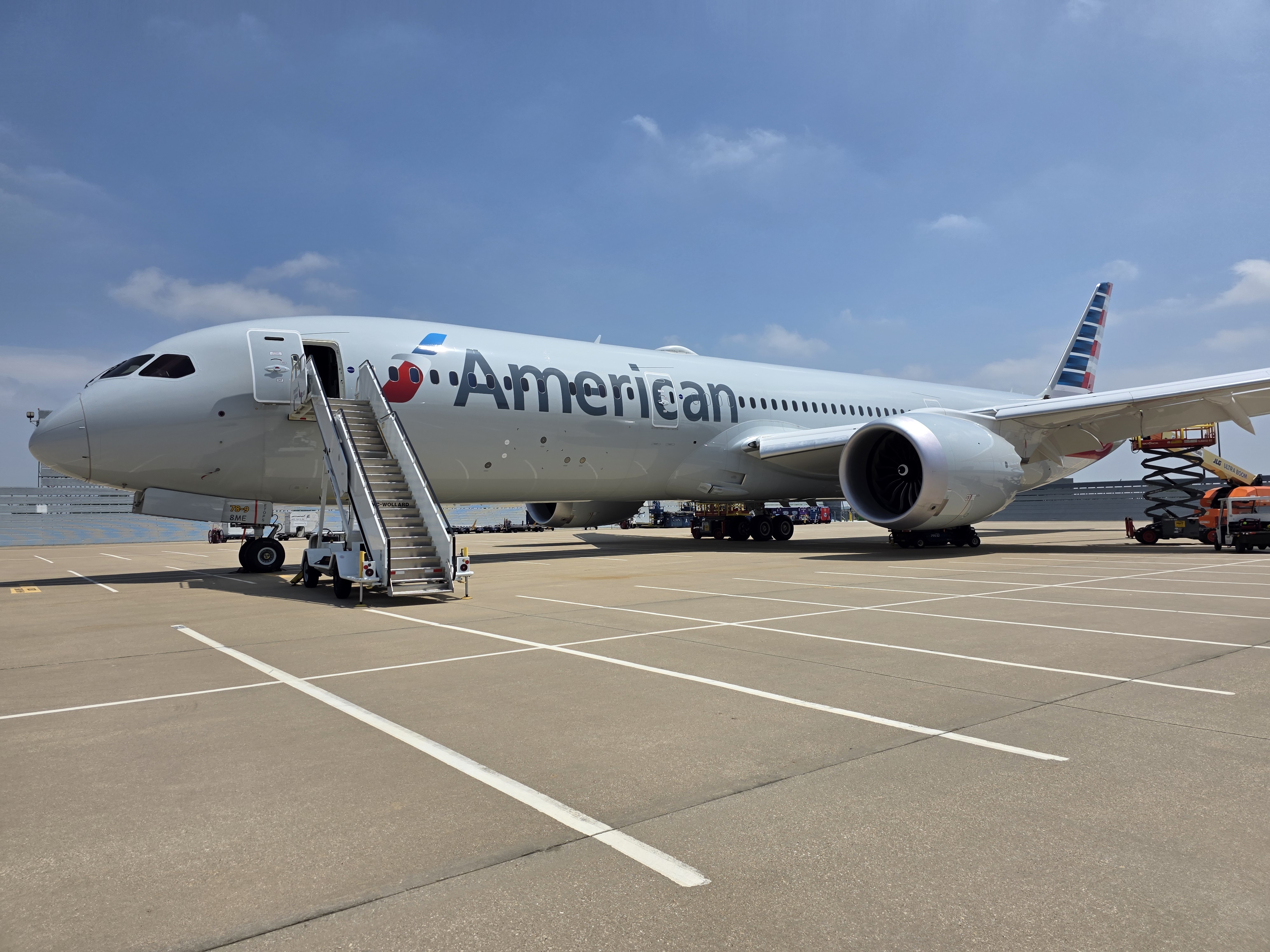
They also chose not to order more widebodies as United Airlines ate up delivery positions and now Delta has secured some as well in a tight market. A long haul aircraft order is now expected, and the Airbus A330-900 seems plausible (for delivery slots) even though American eliminated Airbus widebodies for simplicity.
- The wrong aircraft layout. American doesn’t have enough premium seats. They took business class seats out of planes to squeeze in more passengers (but these seats aren’t even always full – they traded expensive lie flat business class for the marginal seat in economy). That’s something Robert Isom called a ‘real success’.

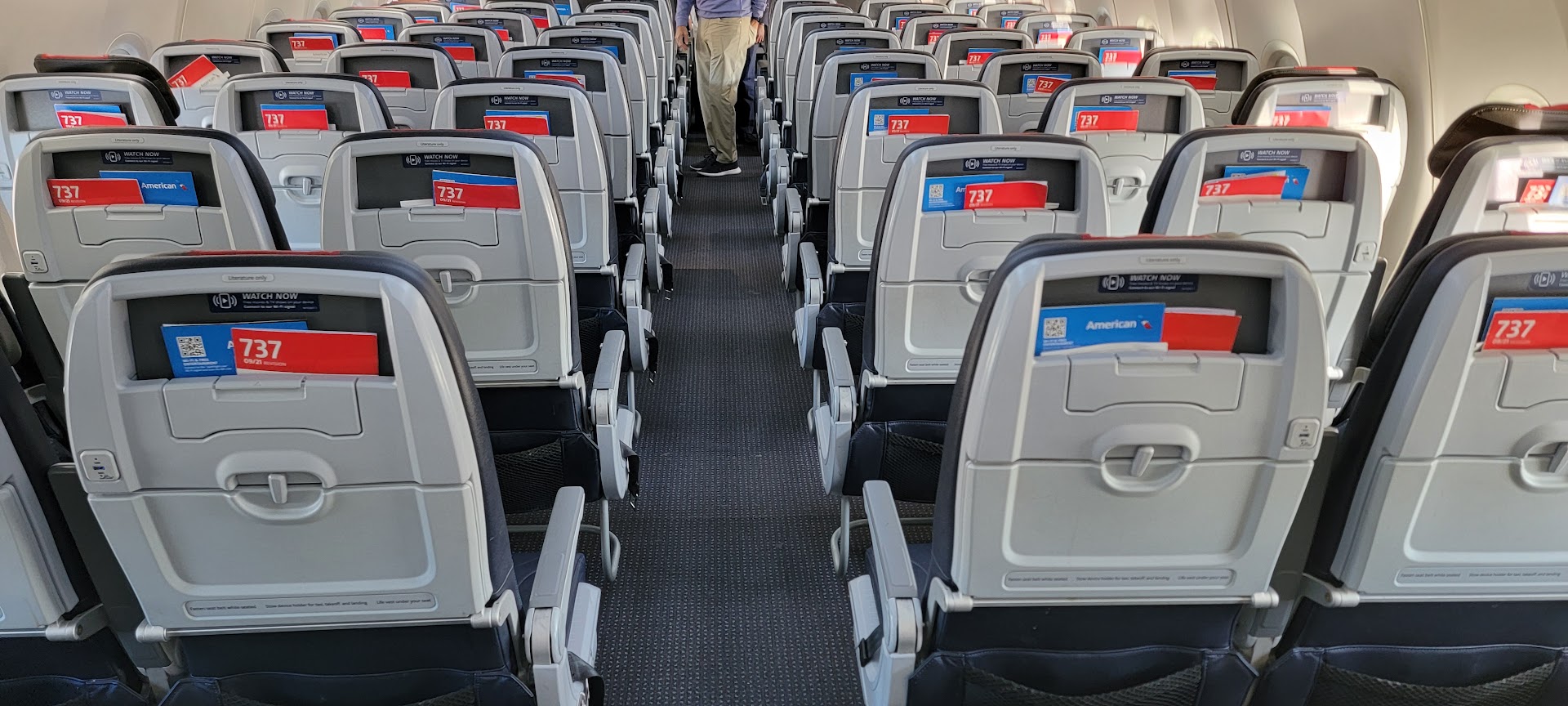
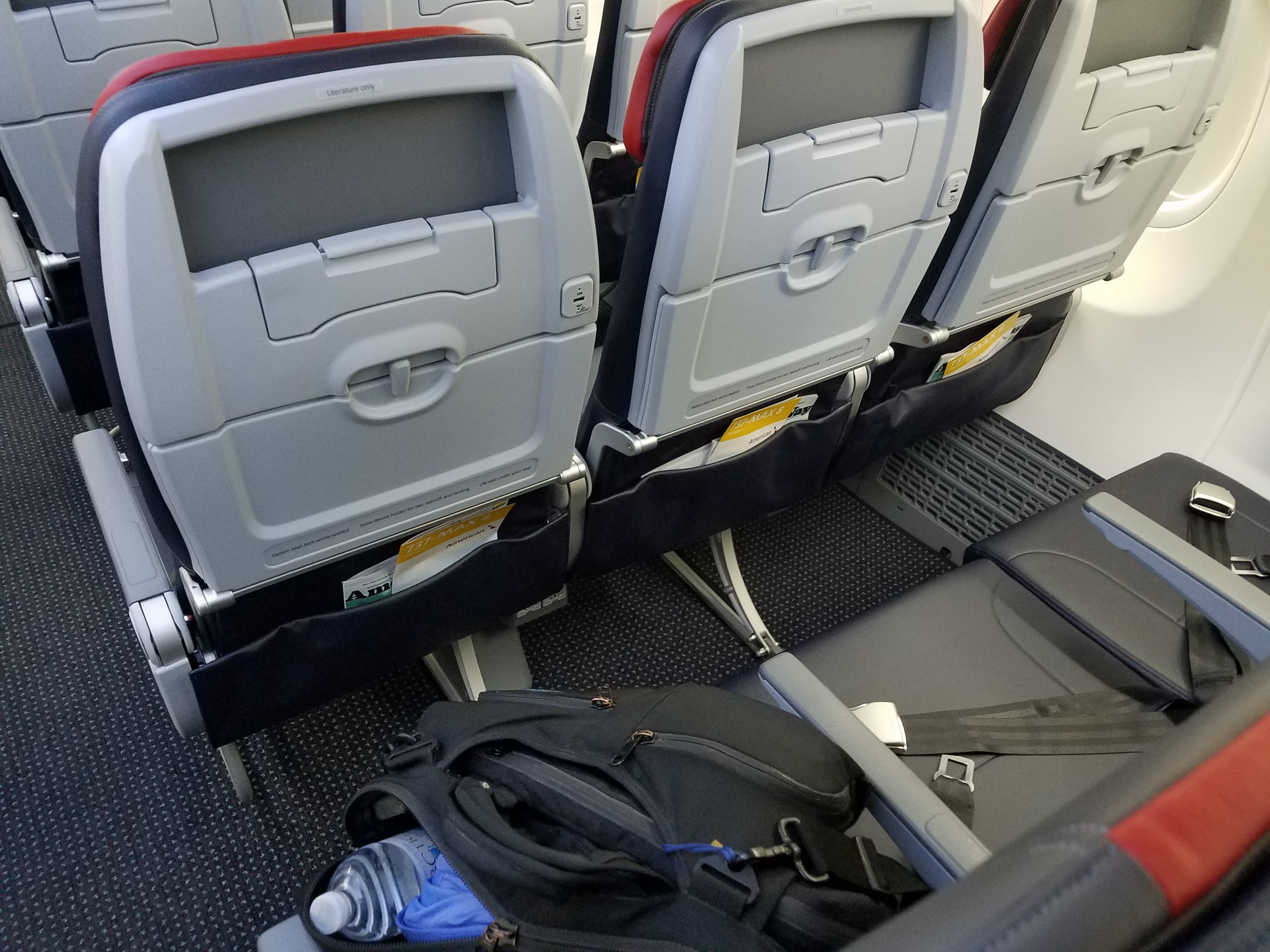
American rolled out a standard domestic coach product that offers very little extra legroom seating. That means they don’t have seats to upsell passengers and get them to spend more money. They segment customers using tools like basic economy, but don’t offer enough product to get passengers buying up the fare ladder.
Meanwhile, the product itself that customers might pay for has been degraded. They started ripping seat back entertainment screens out of planes because they were too expensive right as the cost to deploy those was dropping dramatically (since you could stream content to each seat instead of running wiring throughout the plane). And United started adding screens, and now super fast wifi, as part of a strategy not just to deliver a more premium experience but also monetize passenger attention. (Delta has its own plans for this, too.)
- The wrong service model. American viewed its competitors as Spirit and Frontier rather than Delta and United, and they did this (1) despite high costs that meant they needed to earn a revenue premium in order to generate profits, and (2) just as customers were clearly shifting preferences to want a better experience rather than just low fares. Spirit and Frontier have struggled, Delta and United have increased margins and earned billions.
Robert Isom spoke about the need to focus their competition on Spirit and Frontier and flight attendants became confused about what kind of product they were even supposed to deliver.
[T]oday there is a real drive within the industry and with the traveling public to want to have really at the end of the day low cost seats. And we’ve got to be cognizant of what’s out there in the marketplace and what people want to pay.
The fastest growing airlines in the United States Spirit and Frontier. Most profitable airlines in the United States Spirit. We have to be cognizant of the marketplace and that real estate that’s how we make our money.
We don’t want to make decisions that ultimately put us at a disadvantage, we’d never do that.
And the very first message Robert Isom gave to employees upon becoming CEO was to “never spend a dollar” they do not have to. That was a relentness focus on cost, to the detriment of revenue.
- Giving up on coastal markets. Thinking they couldn’t compete in places like New York and Los Angeles, they’ve scaled back their positions. They were doing the math wrong on their costs and revenue, and didn’t realize that these markets were driving spend on their cobrand cards. They make money selling miles to Citibank rather than moving planes, and these are crucial markets for heavy spending. American’s cobrand credit card had the highest volume of spending in the industry but has fallen to number three.
- Too much financialization. Isom served as airline President under CEO Doug Parker who destroyed more shareholder value than any other CEO than any airline in history as he levered up the balance sheet to fund $12.4 billion in stock buybacks, whle selling more than $150 million in company shares himself. This drove up interest costs at the airline. The airline was kicked out of the S&P 500.
They’ve failed to sell employees on a premium, service-oriented vision. They much higher labor costs than competitors. But American didn’t try to get anything for those higher costs that came with new contracts, like greater accountability in service.
Most importantly, Isom isn’t out on the front lines explaining to front line employees that the airline is in a battle for its soul and survival, that everyone is in this together now too because profit sharing means the airline’s success will automatically pay them more – explaining that American is no longer trying to be Spirit and Frontier, that they need to deliver on premium experiences and it’s front line employees who do that – give them a mission that’s bigger than themselves, and one that rewards them financially as well.
American Is Actually Limping Along, But What Can They Do About It?
The irony of calling for Robert Isom to go now is that American is finally making some of the smart investments that the airline has neglected for too long. They’re just not all-in about it and the CEO is not out on the front lines selling it. All of the investments that are needed take time, and vision, and for those things they require trust.
The airline isn’t headed to bankruptcy right now. They could lose $2 billion this year and still be fine. They can’t do that year-in and year-out. They still have the financial position to make the kind of investments that turn the airline around, but that needs to be paired with cultural change.
And if high oil prices are accompanied by economic contraction, it can be tough to avoid a return to cost cuts that will set the airline up poorly for the future. So the timing of the shift could wind up being problematic.
Does it make sense to change CEOs? A CEO change would matter for capital allocation, management credibility, labor relations, and board signaling. But it would not fix LOPA, fleet, customer distrust, or product deficits. It’s fair for employees to worry about the future, and to ask for accountability, but a leadership change alone is not a turnaround plan. And a real turnaround plan would ask more of the employees!
American Airlines has an aircraft problem (not enough planes, especially widebodies). They have an aircraft layout problem (not enough premium seats). They have a service problem. They’ve been ticking off policy and product changes one by one, like better coffee and lounges and slightly better buy on board food in coach and eliminating hassles like refusing to add most customers to the standby list at gates.
But they haven’t committed to the capital expenditures necessary to fix their macro problems, they haven’t sold employees on a vision to deliver committed service, and they haven’t explained to customers a vision of where they’re going either.



This is a very accurate and well presented arcticle. As someone who shorted the stock at 18.41 because of these issues I am not ready to cover my short. But also I wouldn’t run it all the way to zero. I do think AA will have a BK in 2027 and. Will then be bought by Alaska out of BK
“American rolled out a standard domestic coach product that offers very little extra legroom seating.”
I have an idea. AA could remove some seats and increase legroom. You could give it a catchy name like “More Legroom Throughout Coach”.
Sure feels like Nat Pieper is currently auditioning for the big chair, no?
As for AA… they may not need to do much more than limp along and pay down debt (FAs will not like the lack of profits, but that doesn’t mean the company is filing for bankruptcy). They just struck a good new deal with Citi. Let’s actually see what happens with United and JetBlue and how AA plays it.
Yes, the airline is limping along and not sure how that could change in the short term. Of course, sustained rising jet fuel prices could change the picture drastically. Right now there isn’t a case for bankruptcy and I think AA could not and would not use the Chapter 11 process solely to reduce costs by throwing out contracts.
The FA’s should be scared. The APFA is a POS sorority. They are too tightly aligned with management and will not do a thing to protect their contract. Per usual, the APFA leadership will roll over for the company and say it’s the we could do. Let the chips fall where they may
2026 airline slogans: United is “Uniting the world”. Delta is “Keep Climbing”. Jet Blue is “You Above All”. Alaska/Hawaiian is “We care a lot”. Southwest is “The same heart!” Spirit Airlines is “More Fly” (with a ??), Allegiant is “Together we fly!” (sorta). Frontier is “Low fares done right!” and “Ya’ll quit fighting, ya hear” American Airlines is “What do you mean, bankruptcy? Again?”
@Peter — Yeah, we’re all gonna be limping around for a bit, it seems…
@Win Whitmire — Bahaha!! You sure George-based Delta isn’t: “Y’awl doncha come back’nao ya’wsr!”
Sheesh… Georgia. (Pretty sure @George Romey is still an AA-guy.)
How did the board of directors allow Parker (Former CEO) screwup a once great airline? I wish Robert Isom all the best in turning things around.
@JoeT – Isom is cut from the same cloth as Parker. Did you see the earlier story about $1 shelf stable pasta in domestic first class? The man has no clue how to run a premium airline because he’s spent his entire career in a LCC mindset. And the board is awful for so many different reasons.
UA said fuel costs could rise $11 billlion for 2026 based on $175/bbl crude. Crude isn’t that high but jet fuel is over $4/gallon – up from mid $2 for 2025 and guidance for early 2026.
AA and alot of airlines have every reason to be afraid. and so does labor.
AA’s labor costs have not been in line w/ their revenues for years. Revenue needs to rise but the company doesn’t have the bandwidth to sustain current fuel and labor prices.
DL and WN are likely the only 2 airlines that do not have to worry about chapter 11 if this level of fuel cost persists into 2027 – which it very well could.
Oil industry analysts said the world has about a 2 month buffer at best of reserve fuel which means that even if the Strait is opened tomorrow, fuel prices won’t come back down for a good long time.
WN still has a very strong balance sheet which they may have to tap into while the DL refinery could well save the airline $1 billion or more on fuel costs precisely due to the high jet fuel and diesel crack spread. Diesel is up over $1.80 – twice the amount of gasoline increases in the US – over the past year, closely mirroring the jet fuel increase.
DL’s refinery makes the most money when the crack spread for jet fuel and diesel is high.
Death spiral has begun. Many bets made many lost and the airline industry is different then it was precovid. Almost half a plane now seems Business Class, 100% of all seats have a IFE for anyone else. They are a low cost driven carrier with high prices.
BK in the coming years with this turd being broken up and sold off. You work for these morons really should consider migrating before the collapse happens.
So selfish me-first attitude flight attendants, pilots and their labor unions have bled the airline dry while also going so far as to steal first class seats from paying customers, and now they want to cry foul over the airline’s finances. Cant make this s*it up.
Here are the actual facts:
1. AA is still profitable. Not at the level of UAL or DAL, but they are not losing money.
2. They have billions in liquidity (cash and credit). Around $9.2B at the end of 2025. That’s a massive buffer. Airlines that actually go bankrupt run out of cash or access to credit. Look at Spirit Airlines for a real example of what that looks like.
3. They are actively reducing debt. About $2.1B paid down in 2025. Bankruptcy risk goes down when a company is successfully deleveraging.
4. Revenue is massive and stable. $54B annually. Cash flow is still strong enough to service debt and keep operations running, even with thinner margins.
There’s a big difference between “not performing as well as competitors” and “heading toward bankruptcy.”
Also worth keeping in mind: Gary Leff and tends to take any internal discussions and frame them in the most dramatic way possible, and APFA messaging often emphasizes risk to keep members engaged (which is normal for unions).
Always zoom out to see the whole picture.
Legacy AA got USAired plain and simple. They now have a “flo-thru” CEO from Eagle running the show, like a regional airline. Parking needed widebody and long haul aircraft, when no other legacy carrier was doing that. Allowing almost 2000 pilots to early retire during the short lived pandemic. Struggling to hire competent replacements on short notice during the rapid post pandemic recovery. Clawing from behind and settling for 9 out of 10 on customer satisfaction surveys. Content to barely beat out a bankrupt Spirit Airlines. Good luck.
@DMK “AA is still profitable. Not at the level of UAL or DAL, but they are not losing money” I wrote that they are not losing money, so what’s your point? Your claim to profitability, well, profit was not zero in 2025 but effectively zero and they’ve guided to a material loss in the first quarter.
I wrote that they are not at immediate risk of bankruptcy and have paid down debt, noting that it’s still elevated because of legacy decisions by the prior CEO.
$54 billion in revenue is irrelevant.
“APFA messaging often emphasizes risk to keep members engaged ” I literally wrote about this in the piece, so again, what’s your disagreement with what I wrote?
To think that this was the airline that pioneered “more room in coach”. I’ve been a victim of their poor operations (NOT weather or air ATC related) so now just fly them to burn off miles. Sad to see how far they’ve fallen.
@mathishard
Totally agree and you can add that FA’s also treat pax like crap. As Gary points out, they are far, far, from the only reason AA is a slow motion train wreck. But don’t expect them to accept anything less than industry leading contracts
@1990 save yourself and others the time by not writing your usual fawning remarks about how deserving unions are
@DMK
If AA pretty much broke even last year with all the tailwind that the industry had, they’re definitely losing money currently with the fuel prices where they are.
For the good of the industry we should all hope AA goes chpt 7 and United and Delta buy the scraps in a fire sale.
Make sure to kick all the worthless, rude and entitled Frontline employees to the curb especially the lazy gate agents, flight attendants and overpayed and entitled pilots.
American Airlines to flying passengers: “The beatings will continue until you accept the misery you plainly deserve, peasant, for being stupid enough to fly with us.”
What a cesspit of comments.
Unhinged.
AA has been chronically mis managed since Crandall left. An airline’s get out of jail free card is always bankruptcy and airlines use it at the experience of employees. When I got to NWA there was a good pension. A bankruptcy cut my pension to 20% of what it should have been. The contract the union negotiated went to what the comany wanted. Then the management took their golden parachute and went somewhere else.
Are our miles safe?