
United CEO Scott Kirby has pitched the administration on taking over American Airlines, reportedly even in a meeting with President Trump directly.
While there would be potentially insurmountable antitrust challenges to such a combination even if the administration signed off on such an unprecedented combination, and even if competition remedies were undertaken such as divesting slots and gates in places like Chicago O’Hare, LAX, and Washington’s National airport, and generally consumers aren’t going to benefit from consolidation in an industry with significant government-imposed barriers to entry for new competitors, there actually is a case where United Airlines acquiring American would be good for passengers.
United Taking Over American Would Solve American’s Core Problem
American Airlines has incredible assets that haven’t been exploited for the benefit of customers, shareholders, or employees.
Fundamentally, the problem with American Airlines over the past 13 years is that they’ve seen themselves competing with Spirit Airlines and Frontier, positioning themselves on cost rather than revenue, when they are a high cost airline and just when consumers started to be willing to spend more for a better product.
Failures like removing premium seats from planes, closing clubs, and scaling back soft product were downstream of that mistaken vision for the direction of the industry.
While Scott Kirby led cutbacks at American Airlines during his three years as President, at the beginning of his time in his role there also pitched that American would be one of two premium global U.S. airlines. That did not happen. He brought that vision to United Airlines first as its President and then as CEO, where he succeeded.
American Airlines has incredible assets and incredible people. For a decade I’ve said that no airline has more potential to better than it currently is. In some ways it’s actually been getting better over the last year, but what’s missing is the clear articulation of a vision for the carrier:
- So employees understand what’s at stake, what kind of service they’re supposed to deliver, and how their contributions drive the airline’s success and their profit sharing.
- So that customers and shareholders know where the company is headed, and have a context within which to place changes that the airline is making – so that each improvement and investment is seen as a valuable step towards something bigger rather than getting lost in noise and forgotten.
In other words, in order to both drive success of major investments like clubs and new aircraft, soft product, and customer-friendly rules changes and to capitalize financially on those improvements, they need a CEO who evangelizes what those changes mean, what to do next, and what kind of work is valued.
For too long the airline has treated product as a box checking exercise, middle managers haven’t been rewarded for taking what limited budgets they’re given and getting the most possible out of those budgets by sweating the details, and airport agents and flight attendants haven’t known whether they’re trying to compete with Spirit Airlines or Delta.
A takeover of American Airlines by United wouldn’t just mean a change in leadership at the CEO level. It would mean changes throughout the organization, and it could mean United executives taking over roles currently held by :
- Chief Operating Officer David Seymour, who has presided over an operation that hasn’t been able to perform at the top of the industry despite years of promises, and who recently protested that the airline’s tech worked as it cancelled 10,000 flights at the end of January – and denied that flight attendants slept in airports even as his boss was apologizing for it.
He ran opreations at US Airways under Kirby and was promoed to Senior Vice President of Integrated Operations at American prior to Kirby’s departure. He’s legacy America West.
- Chief Financial Officer Devon May, who’s been responsible for cost-cutting efforts at American. He’s been described to me as “cheaper than Derek Kerr” who was US Airways and then American CFO until fall 2020.
- Senior Vice President of Network Planning Brian Znotins, who’s been allergic to widebodies and to long haul flying outside of the airline’s joint venture partner hubs. He departed his role as Vice President of Network at United when Kirby arrived there, and led scheduling and route planning when that airline was scaling back its domestic flying – the exact strategy that Kirby reversed.
A Takeover By United Airlines Would Solve Several Problems At American
American Airlines lacks long haul aircraft after its strategic blunder retiring all of its Airbus A330, Boeing 767 and Boeing 757 planes during the pandemic. Supplier constraints make it difficult for American to rectify this with new orders any time soon, except perhaps by ordering new Airbus A330s. United Airlines may have too many widebodies on order for its network.
The most expensive capital assets at an airline has is its planes, so optimizing use of aircraft is a huge benefit.
While American has moved towards premium over the past 14 months, United’s premiumization extends far beyond adding first class seats into planes and investing in a nicer lounge aesthetic. It extends into economy where there’s been a commitment to:
- far more extra legroom seats (something American Airlines sorely lacks)
- Seat back entertainment screens
- Robust food for sale in economy
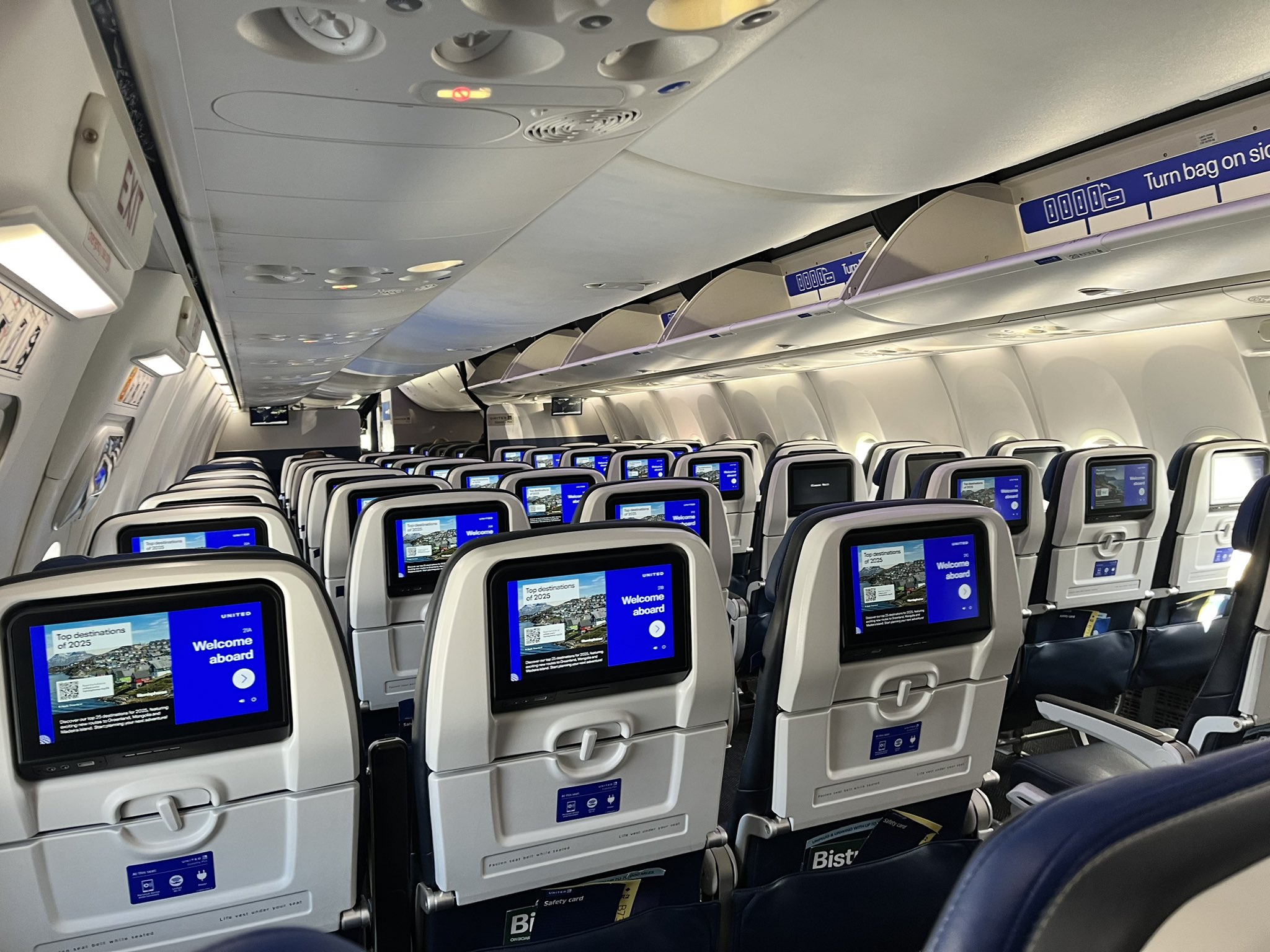
In other words, United has made real investments that make the economy experience better, not just the forward cabin. And American Airlines passengers would certainly benefit from being able to use United’s mobile app!
Why Would United Even Want This?
Of course, it would make United by far the largest airline in the world. By some metrics they already are, even without this deal. But it gives them:
- A larger footprint in New York
- Dominance in Los Angeles and Chicago
- A hub in the Southeast where they currently lack a presence
- Dominance to Latin America
- A much larger customer base for their loyalty program which – combined with greater relevance in key spend markets like New York, Chicago, Los Angeles and across the Sun Belt would drive significant high margin growth.

American has high debt, but the bet is that the airline’s assets have much greater potential than they’ve been used for today, so United could get more value out of them – that they’re worth more than the current market value reflected in their stock price.
There Are Real Downsides For Customers In A Merger, Too
None of this is to say that a merger between United Airlines and American Airlines would be an unequivocal win for consumers. United has been following Delta in the race to the bottom for its loyaly program, treating MileagePlus members as counterparties to be squeezed – pulling back award availability, driving higher prices for redemptions including on partner airlines, and pressuring customers to take their credit card or lose even basic mileage-earning for flying.
American AAdvantage has been a more generous program in most respects than MileagePlus over the past half dozen years, largely because it’s the only advantage American has had to lean into. When Scott Kirby led American we saw cutbacks in the program as well (and those were attributed by the airline’s executives to his personal decisions, and those of now-United Chief Commercial Officer Andrew Nocella).
Members of AAdvantage might benefit, though, from being able to redeem their miles on Star Alliance rather than oneworld, since Star has more members. And lifetime AAdvantage elites would see a more generous program. For instance, lifetime 4 million milers are merely Platinum Pros at American, but are Global Services at United. (It’s possible an influx of lifetime elites could drive United to increase its requirements for new lifetime status. Disclosure: I have 3.9 million lifetime miles with American.)
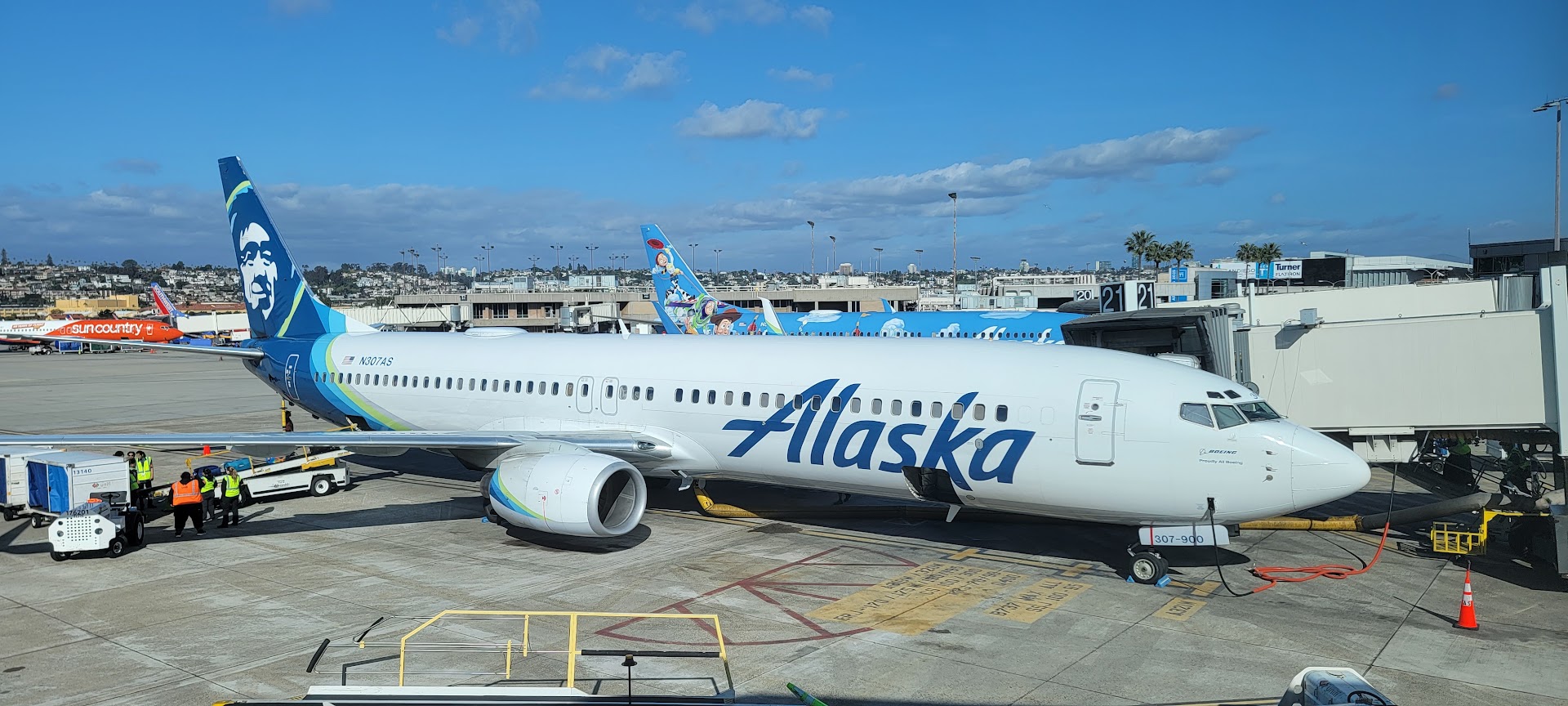
A move from oneworld to Star Alliance, and shifts in other partnerships, would have downstream effects for world airline competition as well. It would leave oneworld with just Alaska Airlines in the United States, unless Alaska comes along into Star Alliance too – but codesharing with United becomes harder under competition scrutiny for Alaska with a combined United-American than just with American, even with its pulldown in San Francisco.
United partners with Air Canada and Lufthansa Group across the Atlantic (versus British Airways, Iberia, Finnair and Aer Lingus), with ANA and with Air New Zealand across the Pacific (versus Japan Airlines and Qantas), and with Air Canada across the U.S. – Canada border. So there’d be a shakeup in international alliances. This would have both positive and negative effects.
And, of course, there’d simply be one fewer major airline in the United States competing – adding capacity, driving down prices – and that’s not simply a role that a new entrant can come in and replace given contraints at U.S. airports and in U.S. airspace especially in the Northeast, and barriers to starting new airlines.
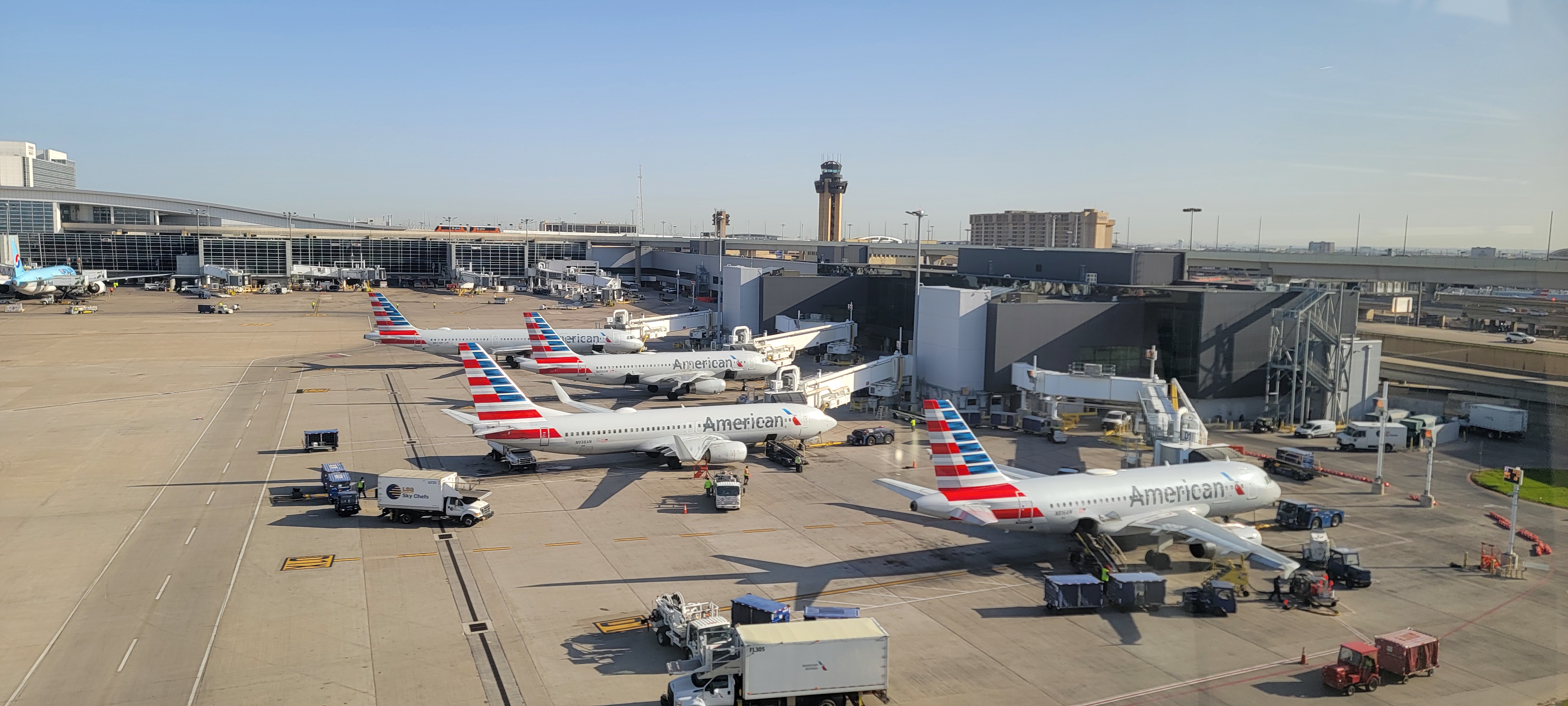
This would be bad for Houston, since American’s Dallas – Fort Worth hub is much stronger. It would also be bad for Phoenix, since that hub makes a lot less sense with a combined airline dominating Los Angeles. However, in both of those places, there would be plenty of room for other airlines to backfill any reduction in service from a combined United-American.



none of DL, UA or WN could take over AA as any of the three exist today.
AA as well as B6 could be “carved up” between one or more of the existing other big 3 carriers as well as rearranging other smaller carriers and adding more for AS.
The US industry will very likely consolidate in 2026 and 2027 but it will require a different approach to putting the pieces of existing carriers together than has been done in previous mergers.
The US airline industry is far too concentrated as it is! The top two results of such a merger would be higher airfares and fewer jobs. I’d much rather see some airlines split up into leaner more nimble organizations who might compete on fares.
Fares, inclusive of fees, have been headed downward on an inflation-adjusted basis even under consolidation..
What a terrible outcome that would be—it would serve only to further disadvantage U.S. consumers. Let’s hope it never comes to pass.
Gary, why are you normalizing/endorsing this insanity? “Fares headed downward”?? Psh, when? Where? This is some top-tier, pro-industry shilling, if I’ve ever seen it. Yikes.
Could a United-American merger even be accomplished before the end of Trump’s second term? I have to imagine a future Democratic administration in January 2029 suing on anti-trust grounds.
AA is basically a non profit jobs program, benefitting the mostly lazy overpaid grumpy employees, at the expense of everyone else. If this did happen, you’d see how useless most of them are when the layoffs hit.
Some retard communists might say “but it’s bad for the workers”. We’re all workers, comrade. Forcing other workers to pay extra in airfare to pay for lazy overpaid union slobs isn’t that progressive.
Of course UA is not buying AA, it’s just a negotiating ploy, and maybe a little Trump level trolling.
@Gary: Given the way United treats its passengers and, especially, its members, I do not see a single upside to a potential UA-AA merger. You speak of a possible benefit as being able to access Star Alliance which has many more carriers…at the cost of — what? — 2x, 3x, 4x the number of miles/points required currently? The redemption rates on international flights via UA and Star Alliance are almost as bad as Delta and SkyTeam! As a random example, flights on 7/7/26, LA to Tokyo, Flagship First is as low as 183k +$5.60. On UA, “Business Basic” is 250k + $5.60, but 225k if you have a Mileage Plus credit card. Meanwhile DL is 305k +$6, 259,200 w/a DL AMEX card. Similar results when flying to Europe.
Furthermore, this would cripple the oneworld alliance, as it would leave it without a true, nationwide carrier in the US. Alaska only covers a part of the US, and without a major expansion on their part, oneworld pax with have few connections once they arrive in this country.
There is no doubt that American is suffering from decades of poor leadership, and they need major changes at the top as well as rediscovering their raison d’être, but I can’t see even the Trump Administration signing off on this deal…well, OK, maybe they would, but as you pointed out the other day, states can block it, individual groups (with proper standing) can sue, and I’m sure the EU would have something to say about it.
I wouldn’t assume that the UA’s culture would change the views and behaviors of the legacy AA employees. The effects might actually roll in the opposite direction. If AA is to cease function as an independent airline, I believe selling it off piecemeal would be the best outcome for everyone, especially customers.
Gary you normally get things right but NOT this one!
The logical acquisition is JetBlue. Fixes UA northeast and nyc issues as well as Florida, while not destroying competition in the USA.
I think you wrote about this in the past.
I am not sure what happened at the Airliners debate but none debate forum but the entire topic of UA AA does not seem to exist any more in their highly censured parallel globalist alternative reality universe.
Thanks for providing a location to gather and frame information of this relative and highly important topic.
@KlimaBXsst — Define “globalist”…
For low information types wanting to engage regarding the term “globalists… “. Globalists are NOT those who flew under and for the Continental Globe on the tail of aircraft prior to the merger.
Hope that simplistically helps, or a i is a beautiful source to engage with for more detail about globalism.. At least we are getting away from the rampant TDS I see (chuckle) maybe!
The only thing a UA takeover of American fixes is those things called low fares. They will be history. Plus everyone will be sporting a United CC in their wallet, without which you cannot board the aircraft.
Gary is right.
Even with DL leading the industry in premium revenue, US airlines get more than half of their revenue from economy cabins. There are too many economy seats and a stable industry requires that the number of economy seats and players needs to shrink
@Gary: No. Get the advantages without the massive disadvantages of monopolisation. Change management.
I love how everyone thinks it would be “bad for PHX”. We heard this last time during the AA / USAir merger too. PHX is a connecting hub and a metro of over 5 million people, plus the fastest growing tech hub and a key vaction destination. LAX is a destination and transpacific jumping off point. I don’t see any errosion in PHX if this crazy merger happens. Houston also a city of over 7 million and is far enough away from DFW it can servive too. May they shrink a little but why lose them unless they are forced too. I think PHL is the real causalty but also, maybe they can blow up the airport and start over which may not be a bad thing.
Overall, not sure how I feel about this but WOW, if Kirby could turn around AA, I won’t hate it and would love the international reach of UA, just keep BA and Qantas in the new Star Alliance!
If American is apparently a failing airline, the correct course is to go out of business rather than a merger. Let interested parties buy on the open market the pieces that have actual value to them.
Refugee,
the problem is that the big 4 – and even other smaller airlines – are too big to fail w/o creating huge disruptions for the communities they serve.
If you have the government assist in carving up a couple weak players and dividing assets, it would be possible for pieces of at least a couple players to be divided between remaining carriers w/o the companies going out of business first. And it might not even be necessary for weak carriers to go through bankruptcy first.
AAL is by far the most indebted while even JBLU has over $7 billion in net debt.
For once, @L3 and I agree. Bob’s done enough damage already; time for new leadership.
@Tim Dunn — Don’t get too greedy here. You’re practically begging for re-regulation once the pendulum swings back. Would you want to see your dear Delta split up or nationalized? Heck, #47 may do that anyway. After all, he is ironically the most socialist president we’ve ever had, when it comes to taking ‘golden shares’ of companies (see Intel).
@KlimaBXsst — Ahh. Either that or Hyatt, right?
In reality I dont see the Govt alowing this, even with a biz friendly administration. Having said that and being a UA card holder and PHX resident….Please do it!
If United acquires American Airlines, will the resulting mega-airline alter its MileagePlus program to award frequent-flyer miles or cash in recognition of creative but controversial methods for re-accommodating passengers when seats are needed for their airline crews following involuntary passenger removal, such as those publicized in the Dr. Dao pummeling incident? This passenger’s beating resulted in a concussion, a broken nose, sinus injuries, and the loss of his two front teeth. Currently, MileagePlus lets passengers earn miles for customer service failures, shopping, and dining. These miles never expire and can be redeemed for flights, upgrades, and other perks.
Perhaps those communities need to be disrupted. Business travel is largely going online, tourism is rapidly becoming untenable, people need to adapt.
Keeping an outdated business model helps no one. In the not-too-distant future, the primary focus of air travel will be freight.
Eh, American has been hamstrung a bit by focusing on where business and population are moving to in the US (the Sunbelt) and missed much of the (largely unexpected) windfall of urban elites from declining cities spending their own money for premium travel and on loyalty credit card spend.. AA has recognized their mistake and are obviously now more focused on these newly emerged big spenders. While an improbable merger would certainly be good for AA shareholders (reduced competition) it would not be for the reasons you state.
You’ve been the CEO of how many airlines??? You’re obviously entitled to your opinion. But with all due respect, I’m simply questioning your background and competence when it comes to managing an airline. As Howard Cosell often observed, Hindsight is 20/20. But there are also instances where leaders have drawn the wrong conclusions from history.
If there’s a shining light in all this, maybe it’ll further shine the light on the absolute failure of Doug Parker’s tenure at AA. Failed choice after failed choice with strategic failures at nearly every turn — to include firing the smarter person in the room — Kirby.
It boggles my mind how Doug Parker does nonstop victory laps at the Wings Club and even today acting as though he’s the godfather of the modern industry when, in reality, he destroyed every shred of shareholder value post AMR bankruptcy.
There’s nothing structurally wrong with the AA network or underlying airline, but it’s just been mismanaged for so long. If anyone needs further proof, the direct downward financials of AA post Kirby leaving AA tells it all.
Why not throw in Spirit or whatever is left of them into the mix. United Spirit American airlines had a nice ring to it.
@1990 a globalist is a Hyatt member who has stayed 60 qualifying nights or earned 100,000 points. Or achieved it via some other promotion. Happy to help.
@IsaacM — Bah! I do enjoy Gary’s occasional post, where he’s like, ‘why do some people refer to me a globalist, like, do they know I’m a loyal Hyatt member or what?’ Yup.
@DesertGhost — Our ‘one-trick pony’ strikes again…
“Monopolies are GREAT!”
Said by no one – EXCEPT the monopolist.
Period.
Can we now please move on from this insanity?!?!
Only the bankers & those that worship at their altar of greed will win if this half baked, monopolists’ wet dream ever comes to pass.
The rest of us will lose – bigly.
End of story.
@DesertGhost – this isn’t hindsight, this was foresight, I wrote consistently about the effect of each of the decisions American Airlines was making at the time. But so what? They are where they are, their current gaps are what they are, and they are only just scratching the surface and haven’t articulated how they’ll really solve those.
@Chopsticks – you misread me, it would be good for AA shareholders because they’d get paid a premium for the stock. Beyond that, whether they should stay shareholders is another question. I do not recommend airlines as a good long-term investment! I’m simply saying that there are some structural problems at American that could be addressed by this merger. What specifically do you disagree with?
@Tim Dunn – both Scott Kirby and Ed Bastian have made the point that government will backstop them https://viewfromthewing.com/airline-ceos-were-going-to-come-for-more-bailouts-and-well-get-them/
Ed Bastian argued that Delta is investible precisely because bailouts are a put on the value of the stock, “We’ve proven that governments will be there for us if ever needed again”
@1990 – I’m not saying that ‘fares are heading downward in the face of the Iran conflict’ but the data is really clear on inflation-adjusted air travel costs over pretty much any multi-year period over the past 45 years.
Blame Parker (Former CEO) for the mess at AA. How the BOD let Parker destroy a once great airline.
Does anyone seriously believe DOJ/DOT would allow this merger to occur? Kirby has something in mind, but my guess is this merger talk is just noise.
How is it that Citibank has never come up in this discussion? AA flies essentially only to get their big check from Citi. My guess is that if they have any pull in DC, this is going nowhere.